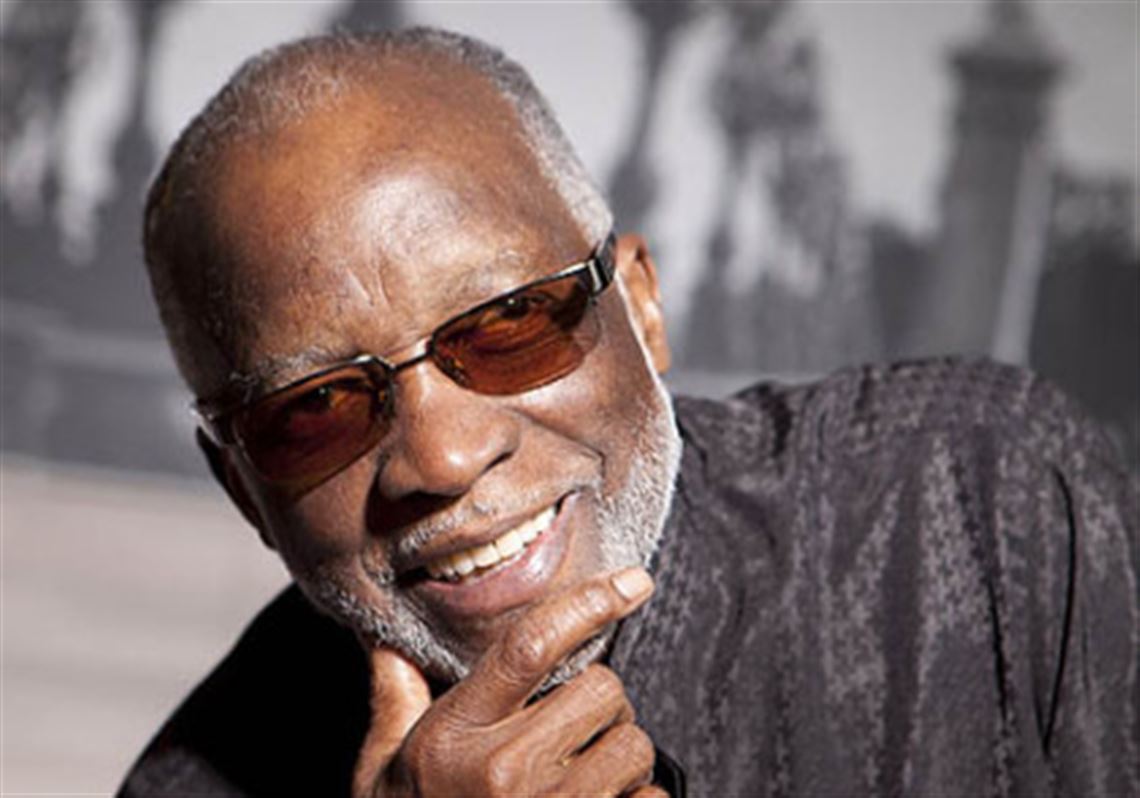
Ahmad Jamal(born Frederick Russell Jones) was born on July 2, 1930, in Pittsburgh, Pennsylvania. He was the youngest of four children (two boys and two girls) in his family. Jamal grew up in Pittsburgh’s East Liberty neighborhood and attended elementary school there alongside future jazz pianistsDodo Marmarosa and Erroll Garner.
His father worked in an open-hearth steel mill, and his mother supported the family through domestic work while caring for Jamal and his siblings.
Jamal showed musical ability very early. At age three he began playing piano by ear, copying pieces that his Uncle Lawrence played on the family’s upright piano. His mother had purchased the piano, hoping to learn herself, and encouraged her son’s interest.
By age ten Jamal was already composing and performing music: he wrote arrangements of Franz Lisztpieces and was exploring the works of jazz composers such as Duke Ellingtonand Art Tatum, as well as songs from the American Songbook. These experiences gave him an unusually broad early repertoire of both classical and jazz material.
For formal instruction, Jamal studied with prominent Pittsburgh teachers. He began piano lessons with Mary Cardwell Dawson, founder of the National Negro Opera Company, who first guided his technique. After Dawson moved to Washington, Jamal continued lessons with pianist James Millerin Pittsburgh’s Hill District.
In his teens, he attended Westinghouse High School, where he played piano in the school’s “K-Dets” jazz orchestra under music educator Carl McVicker.
During this period he also absorbed influences from family and community: an aunt provided him with sheet musicof popular tunes, and he learned classical theory (“Mozart”) alongside jazz styles. Jamal later cited pianists Art Tatum, Nat King Cole, and Erroll Garner as key early influences.
Thus, Jamal’s childhood in Pittsburgh combined a supportive family environment with rich musical resources. His parents’ encouragement and early teachers together with exposure to both classical music and local jazz greats helped shape his musical education from a very young age.
| Aspect | Short Verified Details |
| Birth Name | Born as Frederick Russell Jones |
| Date of Birth | July 2, 1930 |
| Birthplace | Pittsburgh, Pennsylvania |
| Family Position | Youngest of four children |
| Parents’ Work | Father worked in a steel mill; mother did domestic work |
| Childhood Area | Raised in Pittsburgh’s East Liberty neighborhood |
| Early Piano Start | Began playing piano by ear at age three |
| Musical Encouragement | Mother encouraged music and bought the family piano |
| Early Composition | Composed and arranged music by age ten |
| Musical Influences | Influenced by Duke Ellington, Art Tatum, and American Songbook |
| Formal Training | Studied with Mary Cardwell Dawson and James Miller |
| High School | Attended Westinghouse High School |
| School Music Role | Played in the “K-Dets” jazz orchestra |
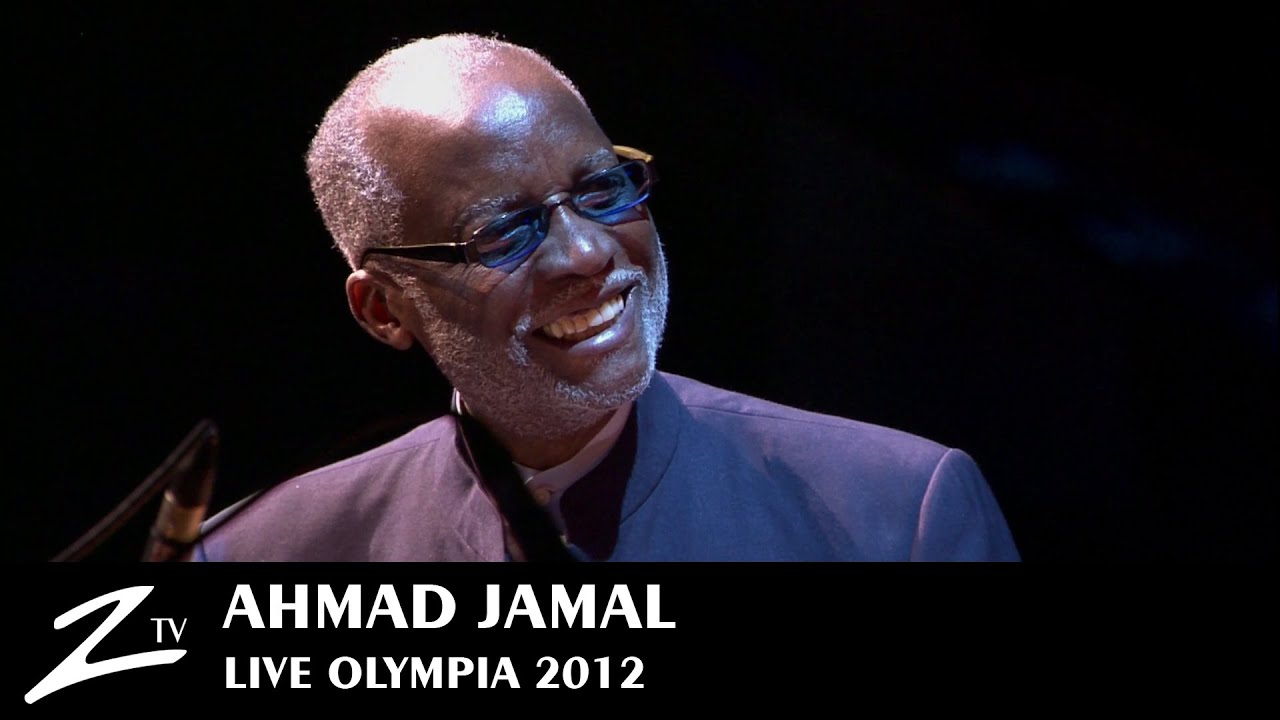
Ahmad Jamal - Poinciana - Olympia Paris - LIVE
Career Beginnings
Ahmad Jamal began his professional music career in the late 1940s as a working jazz pianist and bandleader. He first gained national exposure through steady performances with small ensembles, focusing on trio formats that emphasized clarity, rhythmic discipline, and dynamic contrast.
Early in his career, he established himself as a disciplined ensemble leader, developing a highly controlled approach to repertoire selection and group interaction that distinguished his work from other pianists of the period. His earliest recordings marked the start of a long association with the jazz trio as his primary creative vehicle.
International Breakthrough
Ahmad Jamal achieved international recognition in the late 1950s with the release of a live trio recording that became one of the most commercially successful jazz albums of its era. The recording remained on jazz sales charts for an unprecedented length of time and introduced his minimalist, space-oriented approach to a global audience.
This breakthrough positioned him as a leading figure in modern jazz and brought widespread attention to his restrained use of harmony, strategic silences, and rhythmic groove. His work during this period influenced major jazz musicians and reshaped expectations for small-group performance.
Major Performances & Concert Highlights
Throughout his career, Ahmad Jamal performed at the world’s most prestigious concert halls and international jazz festivals. He appeared regularly at major jazz festivals in North America, Europe, and Asia and maintained a long-standing presence at leading venues known for presenting elite jazz artists.
His performances were noted for their structural precision, dynamic control, and deep audience engagement. Jamal frequently presented extended residencies and headline concerts well into his later years, demonstrating sustained artistic vitality and global demand for his work.
Recordings & Discography
Ahmad Jamal recorded extensively over six decades, producing a large and influential body of work. His discography includes landmark live and studio albums that defined modern trio performance and expanded the expressive possibilities of jazz piano.
He recorded for major labels and later released critically acclaimed albums that reaffirmed his relevance across multiple generations. His recordings ranged from intimate trio sessions to projects incorporating larger ensembles and orchestral textures.
Even in the final years of his career, he continued releasing new albums that received strong critical recognition for their creativity and intensity.
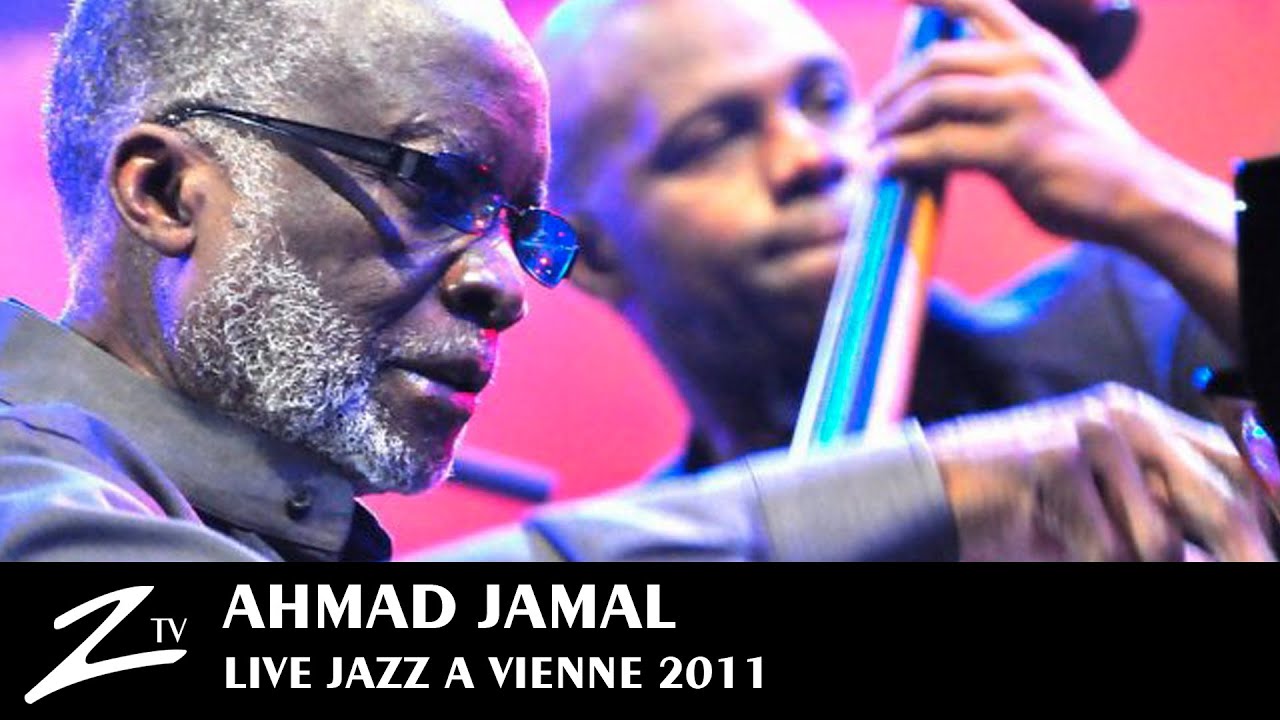
Ahmad Jamal - One - LIVE HD
Awards & Professional Recognition
| Honor | Description |
| NEA Jazz Master | Recognized by the National Endowment for the Arts for artistic excellence and influence |
| Grammy Lifetime Achievement Award | Awarded for lasting contributions to recorded music |
| Cultural Recognition | Honored by multiple cultural institutions and international organizations |
| Artistic Reputation | Widely regarded as a foundational figure in modern jazz |
Ahmad Jamal received some of the highest honors in American music. He was named a National Endowment for the Arts Jazz Master, recognizing his enduring artistic excellence and influence on jazz history.
He later received a Grammy Lifetime Achievement Award for his profound and lasting contributions to recorded music. Additional honors from cultural institutions and international organizations affirmed his status as a foundational figure in modern jazz and a model of artistic longevity and integrity.
Collaborations With Orchestras & Conductors
Although best known for his trio work, Ahmad Jamal collaborated with orchestras and large ensembles at key moments in his career. He appeared as a featured soloist with prominent jazz orchestras and participated in symphonic jazz projects that highlighted his compositional clarity and ensemble leadership.
These collaborations demonstrated his ability to adapt his minimalist aesthetic to broader instrumental forces while maintaining his distinctive musical identity.
Recent Career Activity
In the final phase of his career, Ahmad Jamal remained professionally active as a performer and recording artist. He continued touring internationally, presenting concerts at major jazz venues and festivals.
His late-career recordings were widely praised for their energy, depth, and originality, confirming his continued creative growth well into his later years. His final releases and performances reinforced his legacy as an artist who sustained artistic excellence across more than sixty years of professional activity.
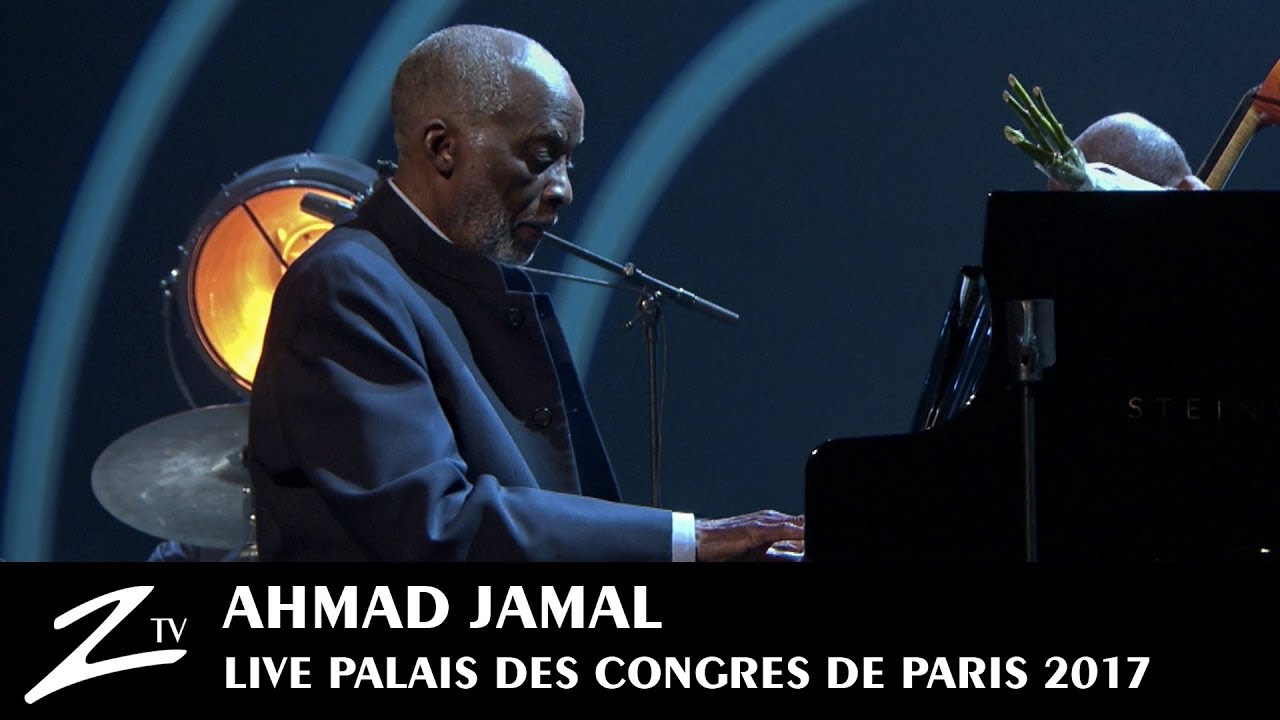
Ahmad Jamal - Autumn Leaves - Palais des Congrès Paris 2017 - LIVE HD
Performance Highlights
- Feb 2020 John F. Kennedy Center (Washington, DC):At age 89 Jamal headlined a 90-minute concert in the Center’s Concert Hall. The show opened to a pre-performance standing ovation and featured his core ensemble with James Cammack on bass, Manolo Badrenaon percussion and James Johnson on drums. This late-career appearance, part of a 70th-anniversary concert, underscored his enduring artistry and audience acclaim.
- Sept 2019 SFJAZZ Center (San Francisco):Jamal opened SFJAZZ’s 2019–20 season with a four-night residency at the Miner Auditorium. This rare multi-night engagement at a premier jazz venue demonstrated Jamal’s continued drawing power into his late 80s.
- June 2018 San Francisco Jazz Festival:His quartet headlined the festival’s 36th edition on June 6. The group featured longtime collaborator James Cammackon bass along with drummer Herlin Rileyand percussionist Manolo Badrena, showcasing new material from Jamal’s “Marseille” project and reaffirming his status as a major live act.
- July 2017 Jazz à Vienne (France):Jamal appeared as part of the Jazz à Viennefestival lineup, performing at the Théâtre Antique. He led a quartet with trumpeter Christian Scotton the bill, illustrating his international touring presence and collaborations with younger jazz artists.
- Sept 2014 Tokyo Jazz Festival (Japan):Jamal performed at the Tokyo International Forum, one of Asia’s leading jazz festivals. This appearance highlighted his global appeal, bringing his trio sound to a major international audience.
- Aug 2014 Jazz in Marciac (France):He recorded a live concert at the Jazz in Marciac festival. The performance featured Jamal with bassist Reginald Veal, drummer Herlin Rileyand percussionist Manolo Badrena, capturing the clarity and control of his live trio work.
Ahmad Jamal’s Piano Style And Musical Interpretation
Technical Approach And Piano Control
Ahmad Jamal is noted for an exceptionally disciplined and polished piano technique. His playing demonstrates precise finger independence and careful balance between hands. He exercises complete control over dynamics and tempo, moving seamlessly from gentle pianissimos to clear fortissimos as the music calls for.
He never plays at maximum speed or volume continuously but alternates intensity thoughtfully, fully valuing silence and restraint as part of the music’s architecture. Critics have observed that Jamal’s phrasing is built on discipline: he never fills every measure indiscriminately but instead leaves space and considers each rest intentional.
This economy in his technical approach means every note and gesture serves a purpose. Jamal’s command of rhythm and harmony also serves his technical style, he often uses rhythmic ostinatos or repeated vamps that require steady, locked-in coordination between his hands and the rhythm section.
Physically, Jamal’s touch is light and articulate, showing control over both delicate passages and more forceful chords. His fingers produce crisp, clean attacks when needed, yet he can soften them for a warm, singing tone.
Even when he plays with brisk momentum, his articulation remains clear and unforced. He navigates the entire keyboard fluidly, often moving from low root tones to sparkling high melodies without losing evenness of tone.
Pedal control is also precise: Jamal uses the sustain pedal to enrich chords and blend harmonies, but he releases it strategically to create space and clarity between voicings. Overall, his technique feels both effortless and intentional, as though the well-executed execution of each line is part of the composition itself.
Tone, Touch, And Sound Color
Jamal’s sound on the piano is consistently warm, transparent, and softly resonant. He typically coaxed a clear, bell-like tone from his Steinway grand, favoring a sweet, singing quality over a harsh or percussive attack.
His touch has often been described as delicate and lyrical: rather than striking the keys forcefully, he tends to caress them, allowing notes to ring gently. This produces a sound palette that ranges from gentle, intimate whispers to more vibrant, resonant tones, but always with a refined smoothness.
The pianist also explores the full tonal range of the piano for color contrast. In the lower registers he may use rich, almost orchestral bass notes, while his right-hand melodies often shimmer in the upper registers with a pearly clarity.
His chord voicings are tastefully voiced to let overtones bloom; for example, he frequently plays open, spread voicings that allow sympathetic strings to vibrate, giving his chords a spacious, lush quality.
He adapts his touch to the material, using a more percussive attack on rhythmic passages and a more legato, rounded touch on ballads or lyrical phrases, but always within a consistently warm timbral framework.
Overall, Jamal’s sound color is notable for being smooth and enveloping: even in faster or busier passages, the tone remains polished rather than brittle.
Rhythm, Phrasing, And Structural Clarity
Rhythmically, Jamal is both inventive and grounded. He often employs steady, repetitive patterns (ostinatos or vamps) in the left hand or bass that create a strong groove foundation, whether in a straight swing or a Latin-inflected rhythm.
These patterns give his improvisations a hypnotic quality and a clear rhythmic pulse. At the same time, Jamal’s phrasing in the right hand is highly flexible. He frequently uses syncopated accents and offbeat motifs, but he is equally known for strategic pauses and suspense.
In practice, he will deliberately break off a melodic line or pause in the middle of a phrase, creating a sense of anticipation. This use of silence and unexpected rests is a hallmark of his rhythmic style. Jamal’s overall phrasing tends to follow a loose narrative shape. He might introduce a motif and develop it over several cycles, gradually building intensity before resolving the idea.
He avoids overcrowding the texture; typically, each phrase is carefully shaped, and there is a clear sense of where it begins and ends. In many performances, especially live, one can hear that his improvisations and arrangements are organized with strong form.
For example, he often returns to a theme or riff in a way that makes the structure of the piece clear, almost as if telling a story with distinct chapters.
Even when he plays freely, there is no confusion about the underlying structure of the tune: listeners can sense introductions, main statements, bridges, and closing sections because Jamal accents those transitions with changes in rhythm, dynamics, or instrumentation (as when bass and drums respond to his piano).
Interpretative Approach To Repertoire
Jamal approaches repertoire with a composer’s mindset, treating each song as raw material to be re-envisioned. He has shown a preference for melodies that are lyrical and rich in character, often drawing on Broadway show tunes, Great American Songbook standards, and other melodic jazz numbers.
When he interprets a piece, he typically honors the original melody but quickly infuses it with his own harmonic and rhythmic vision. This can mean reharmonizing chords in subtle ways or stretching simple tunes into multi-part arrangements.
In practice, Jamal often creates extended intros or codas that bookend the main theme. His classic version of “Poinciana,” for instance, transforms the song into a series of vamped sections driven by the bass’s rhythmic figure; similarly, other standard ballads might become quasi-suite-like explorations under his fingers. In performance, Jamal’s respect for melody is paramount. He frequently states the main theme in a straightforward, song-like manner, giving each note space.
Then, instead of launching immediately into flurries of notes, he builds on that theme gradually. This approach often involves repeating phrases, varying them, and allowing each variation to flow naturally into the next. He is selective with embellishments, usually choosing a few clever modifications, such as a well-placed passing chord or a syncopated turn in the bass, rather than constant ornamentation.
If a piece calls for it, he may bring in elements of Latin or Afro-Cuban rhythm, adopting congas or bossa grooves, but even then he applies his characteristic restraint Overall, his interpretations feel fresh and personal, yet always grounded in the song’s original character; he never strays so far as to obscure the tune, but he stretches it just enough to make listeners hear it anew.
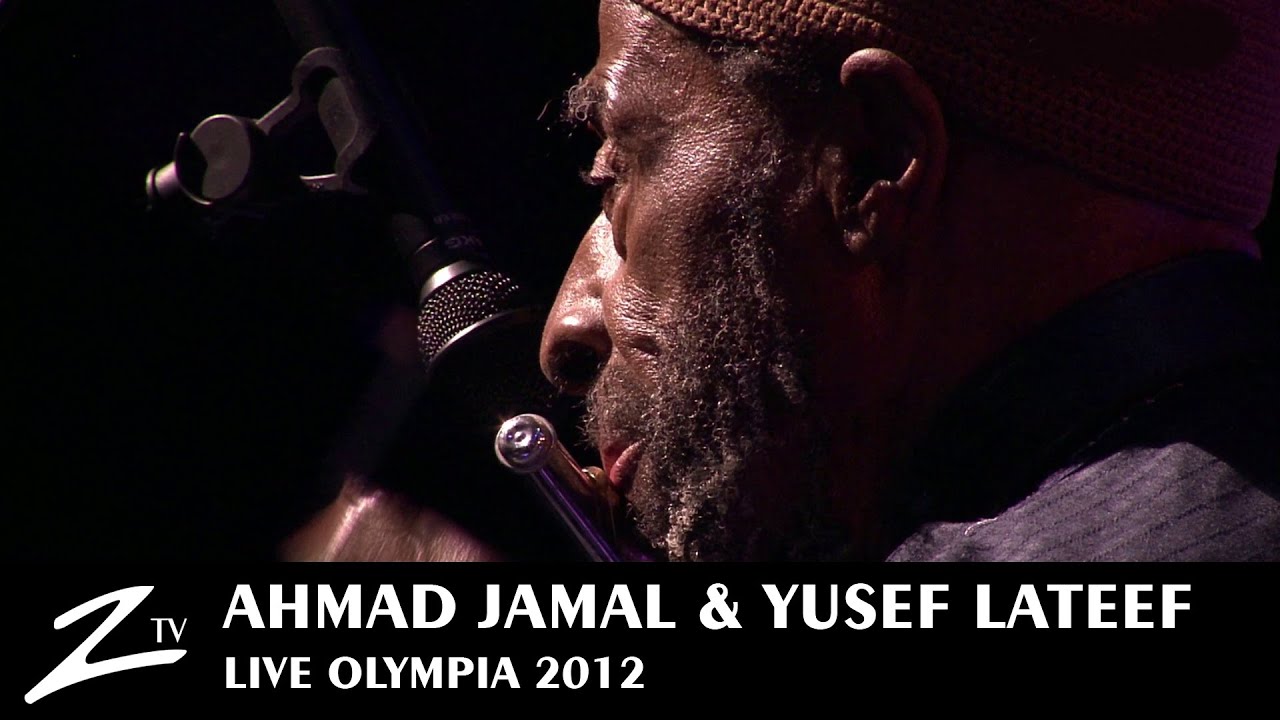
Ahmad Jamal & Yussef Lateef - Masara - Olympia 2012 - LIVE HD
Balance Between Precision And Expression
There is a constant interplay in Jamal’s style between exactitude and feeling. On one hand, his playing is meticulously precise: every chord is carefully voiced, every rhythmic accent is deliberate.
His articulation of each note is clean and confident, suggesting a very intentional execution. He maintains a strong sense of timing, seldom rushing or dragging unless musically called for, and his interplay with the bassist and drummer shows he feels the groove precisely.
At the same time, his precision does not make his playing mechanical. Jamal imbues even his simplest lines with warmth and personality.
He achieves this by nuanced timing (slightly delaying or anticipating certain notes for effect) and by shaping dynamics within phrases.
For example, Jamal might softly hesitate on a certain note, letting it hang before resolving, or he might swell a chord at just the right moment to highlight a peak.
These expressive touches are never flashy; instead, they are woven into the musical fabric with subtlety. Even when he plays very sparingly, listeners can sense a deep emotional undercurrent.
In sum, Jamal’s balance is such that technical control serves musical expression. His exactness does not stifle feeling; rather, it provides a clear canvas on which his expressive intentions stand out more vividly.
Each note is both accurate and deeply connected to the mood of the piece, so that his performances feel both carefully arranged and vibrantly alive.
Critical Observations And Musical Identity
Observers and critics have long highlighted Jamal’s unique musical identity: it combines classical refinement with a fresh approach to jazz. He consistently emphasized space and clarity, qualities that set him apart from many contemporaries. His performances are often described as elegant and uncluttered; he never overrides the listener with excess, but he commands attention through the sheer drama of minimalism.
Throughout his career, Jamal’s style remained remarkably consistent, focused on melody, rhythm, and dynamics rather than flashy showmanship, which became a signature in itself. In reviews and commentary, his playing is frequently noted for being spacious and lyrical.
Listeners and fellow musicians have pointed to his influence on the development of the small jazz ensemble; he treated the trio almost like a chamber group, ensuring that piano, bass, and drums all have clear roles and that the melody is always prominent.
Though some earlier critics dismissed his accessible style as background music, later assessments recognize the depth behind his restraint. Today Jamal is understood to have been a pioneer of what some call “less is more” in jazz improvisation.
His musical legacy is often summarized by noting how he transformed even familiar songs into something distinctly his own, and how he influenced an entire generation of players to think differently about touch, tempo, and tone. In all, Ahmad Jamal’s artistic persona is one of thoughtful innovation: a pianist whose economy of means and poetic pacing have earned him a distinct place in jazz history.
Ahmad Jamal Net Worth
At the time of death, jazz pianist Ahmad Jamal’s net worth was estimated to be between $1 million and $7 million.He earned this wealth through a career spanning more than six decades as a jazz pianist, composer and bandleader, recording over 70 albums and performing worldwide, including the bestselling 1958 release Live at the Pershing.
Jamal generated income from album sales, live performances and royalties on his extensive catalog of recordings, and he even opened a jazz club and restaurant in Chicago to supplement his earnings.
FAQs
1. Who Was Ahmad Jamal And Why Is He Important In Jazz History?
Ahmad Jamal was an influential American jazz pianist, composer, and bandleader known for his minimalist style and use of space. He played a major role in reshaping modern jazz piano and strongly influenced musicians such as Miles Davis.
2. What Is Ahmad Jamal Best Known For?
Ahmad Jamal is best known for his 1958 album Live at the Pershing: But Not for Me, one of the best-selling jazz recordings of its time. The album popularized his distinctive approach to trio performance and dynamic control.
3. What Was Unique About Ahmad Jamal’s Piano Style?
Jamal’s piano style emphasized restraint, rhythmic clarity, and strategic silence rather than constant virtuosity. His controlled dynamics and orchestral approach to the jazz trio set him apart from many contemporaries.
4. Did Ahmad Jamal Influence Other Major Jazz Musicians?
Yes, Ahmad Jamal had a significant influence on many leading jazz artists, most notably Miles Davis, who frequently cited Jamal’s sense of space and phrasing. His influence extended across generations of pianists and small-group jazz performers.
5. What Major Awards Did Ahmad Jamal Receive?
Ahmad Jamal was named a National Endowment for the Arts Jazz Master and later received a Grammy Lifetime Achievement Award. These honors recognized his lasting impact on jazz performance and recorded music.
6. When Did Ahmad Jamal Die And What Was The Cause Of His Death?
Ahmad Jamal died on April 16, 2023, at the age of 92. His death was due to prostate cancer, a diagnosis that had been publicly acknowledged before his passing.