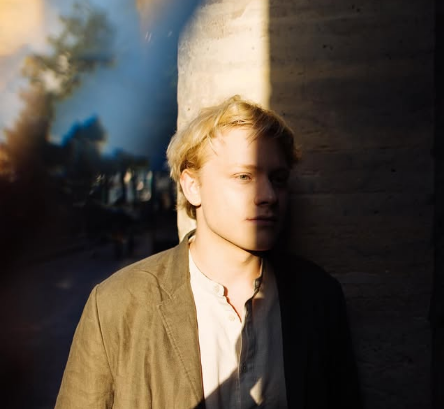
Alexander Malofeevwas born in Moscow in October 2001. He grew up in Moscow in a musical family environment: at age five his parents enrolled him at the N.P. Osipov Music School (a Gnessin children’s music school) to begin piano lessons.
His first piano teacher was Elena Vladimirovna Berezkina, who had also taught his older sister. (Public records do not provide detailed information about his parents’ occupations or wider family background.)
Music Education
- Early piano studies:At age five, Malofeev began formal piano training with Elena Berezkinaat the N.P. Osipov Music School in Moscow. Berezkina remained his teacher through his youth (she was also the teacher of his older sister).
- Schooling:Throughout his childhood, he attended a specialized linguistic gymnasium (a secondary school focusing on foreign languages) while continuing his music studies. He later graduated from the Gnessin Moscow Special Schoolof Music (the elite secondary music school associated with the Gnessin institutions) in Berezkina’s class.
- Early influences:Malofeev has said that he “can’t remember” a time without music in his life. In a 2019 interview he remarked that composer Pyotr Tchaikovsky’smusic had been “beside [him] since childhood,” reflecting how strongly Russian classical repertoire influenced him from an early age.
| Aspect | Verified Information |
| Birth | Born in Moscow in October 2001. |
| Family Background | Raised in a musical family environment in Moscow. |
| Start of Piano Studies | Began piano lessons at age five. |
| Music School | Enrolled at the N.P. Osipov Music School in Moscow. |
| First Piano Teacher | Studied with Elena Vladimirovna Berezkina. |
| Teacher Continuity | Remained in Berezkina’s class throughout his youth. |
| General Education | Attended a specialized linguistic gymnasium. |
| Advanced Music Education | Graduated from the Gnessin Moscow Special School of Music. |
| Early Musical Influence | Tchaikovsky’s music influenced him from childhood. |
Career Beginnings
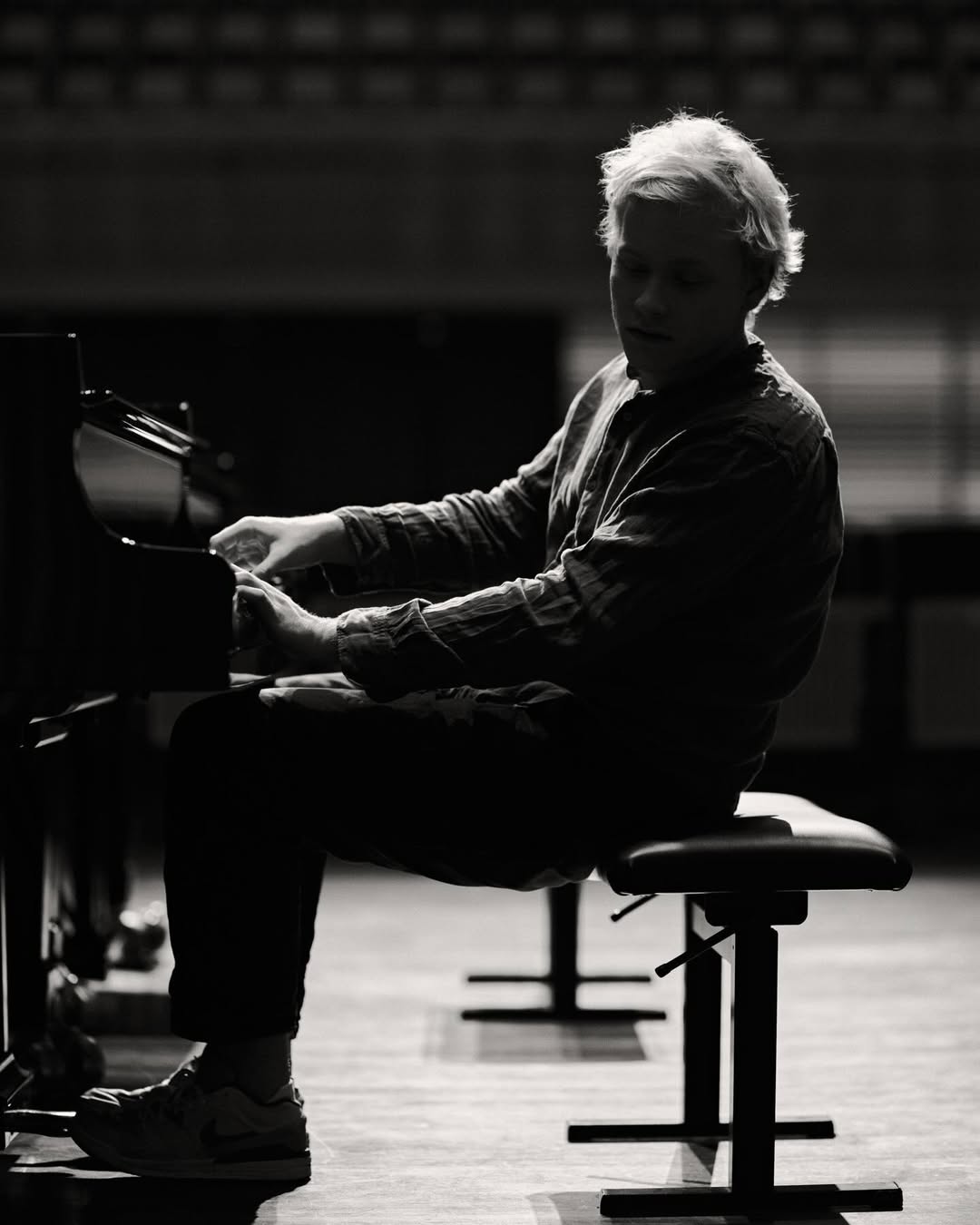
Alexander Malofeev first emerged as a child prodigy in Moscow. He won his first major international prize at age 11 when he took the top prize at the Astana Piano Passion competition, performing Grieg’s Piano Concerto with orchestra.
Soon after this success he began giving solo recitals and concerto performances in Moscow concert halls. In 2014, shortly before his 13th birthday, Malofeev captured worldwide attention by winning the gold medal in the junior division of the International Tchaikovsky Competition for Young Musicians.
Critics noted his performance showed an “incredible maturity” and technical command far beyond his years, setting the stage for his international career.
International Breakthrough
The Tchaikovsky Competition victory in 2014 immediately propelled Malofeev onto the world stage. Within months of his win he was invited to appear with many leading orchestras, and reviewers began to hail him as a phenomenon of the new generation.
He established a reputation for virtuosic performances and deep musicality, with journalists dubbing him a “Russian genius” and noting his ability to bring each phrase vividly to life. This breakthrough win led to frequent engagements abroad and collaborations with prominent conductors and ensembles.
Major Performances & Concert Highlights
Malofeev’s career features numerous high-profile concert tours. In 2019 he toured Asia alongside maestro Riccardo Chaillyand the Orchestra Filarmonica della Scala, giving concerts across China. During that tour he also performed with the Mariinsky Theatre Orchestra in St. Petersburg and gave concerts in Hong Kong and Tokyo.
In North America he made his orchestral debut on the U.S. West Coast, performing with the Pasadena Symphony in 2023 and stepping in as soloist with the Los Angeles Philharmonic at the Hollywood Bowl in 2024.
Malofeev also appears regularly as a recitalist and concerto soloist. He gave his Carnegie Hall solo recital debut in March 2024, presenting a program of Russian repertoire and Bach.
In September 2023 he made a critically acclaimed debut with the Vancouver Symphony Orchestra, performing Tchaikovsky’s Piano Concerto No.1 under conductor Otto Tausk. Reviewers praised the “virtuosic, dynamic” and intimately expressive nature of his playing in Vancouver.
In a notable substitute performance, he stepped in as soloist with the Frankfurt Radio Symphony in 2022 to play Rachmaninoff’s Third Piano Concerto; Gramophone magazine commended his rendition as “truly exciting,” noting his dazzling technique and dramatic cadenza.
He is also frequently invited to major international festivals, including Switzerland’s Verbier Festival and the Tanglewood and Aspen summer music festivals in the USA.
Recordings & Discography
| Recording Activity | Information |
| First Major Release | In 2020, Sony Classical released a Tchaikovsky anniversary box set featuring his recording. |
| Recorded Work | Tchaikovsky’s Piano Concerto No. 1 with the Tatarstan National Symphony Orchestra. |
| Label Partnership | He later signed an exclusive contract with Sony Classical. |
| Upcoming Album | His first full solo album, Forgotten Melodies, is scheduled for release in early 2026. |
| Album Repertoire | Works by Rachmaninoff, Medtner, Glazunov, and Glinka. |
| Artist Statement | He described recording as capturing a moment that feels magical and honest. |
Malofeev’s discography is in its infancy but growing. In 2020 the Sony Classical label released a Tchaikovsky anniversary box set that included Malofeev’s recording of Tchaikovsky’s Piano Concerto No.1 with the Tatarstan National Symphony Orchestra under Alexander Sladkovsky. More recently, Malofeev signed an exclusive contract with Sony Classical and is preparing his first full solo album.
That album, titled Forgotten Melodies, is scheduled for release in early 2026. It features works by Russian composers of the émigré generation including Rachmaninoff, Medtner, Glazunovand Glinkaand highlights Malofeev’s affinity for late-Romantic repertoire.
Malofeev has commented that he chose Sony Classical because of “genuine trust, openness and a shared sense of artistic curiosity,” and that for him recording “is about capturing a moment that feels magical and honest.”
Awards & Professional Recognition
Beyond the Tchaikovsky competition, Malofeev has won numerous international awards. In 2016 he took the Grand Prix at the first Grand Piano International Competition for Young Pianistsin Moscow.
In 2017 he was named Italy’s Premio Giovane Talento Musicale dell’anno (Best Young Musician of the Year) and became the first artist ever designated a Yamaha Young Artist. In 2019 he earned second prize and a silver medal at the inaugural China International Music Competition.
These honors have helped to cement Malofeev’s reputation, garnering him medals, prizes and press distinctions across Europe and Asia.
Collaborations With Orchestras & Conductors
Alexander Malofeev regularly appears with many of the world’s leading orchestras. As a soloist he has performed with ensembles such as the Philadelphia Orchestra, Boston Symphony Orchestra, Orchestra Filarmonica della Scala (Milan), Orchestra dell’Accademia Nazionale di Santa Cecilia (Rome), Lucerne Festival Orchestra, RAI National Symphony Orchestra, Mariinsky Theatre Orchestra, Russian National Orchestra and others.
He is equally sought-after by top conductors, having collaborated with notable maestros including Riccardo Chailly, Mikhail Pletnev, Charles Dutoit, Michael Tilson Thomas, Yannick Nézet-Séguin and JoAnn Falletta.
Conductors have praised his musicianship: Riccardo Chailly remarked that even as a young teenager Malofeev “already possesses depth and technical abilities” in his playing Across different concerts, Malofeev has also worked with Valery Gergiev, Susanna Mälkki, Marin Alsop, and other distinguished conductors.
Recent Career Activity
In recent years Malofeev has continued to expand his career both on stage and in the studio Based in Berlin, he announced in 2025 that he had signed an exclusive recording contract with Sony Classical.
The 2023–24 season saw him in residency with the Bournemouth Symphony Orchestra and touring in China, as well as performances in major European halls (Concertgebouw, Musikverein, Elbphilharmonie) and in New York.
He is currently preparing for forthcoming projects: notably, he is scheduled to perform Beethoven’s Piano Concerto No.2 (“Emperor”) with the Wiener Symphoniker under conductor Petr Popelka in Berlin on 10 November 2025.
Meanwhile, anticipation builds for his debut album release next year, which will mark the next chapter in his professional discography.
Alexander Malofeev Performance (2025–2026)
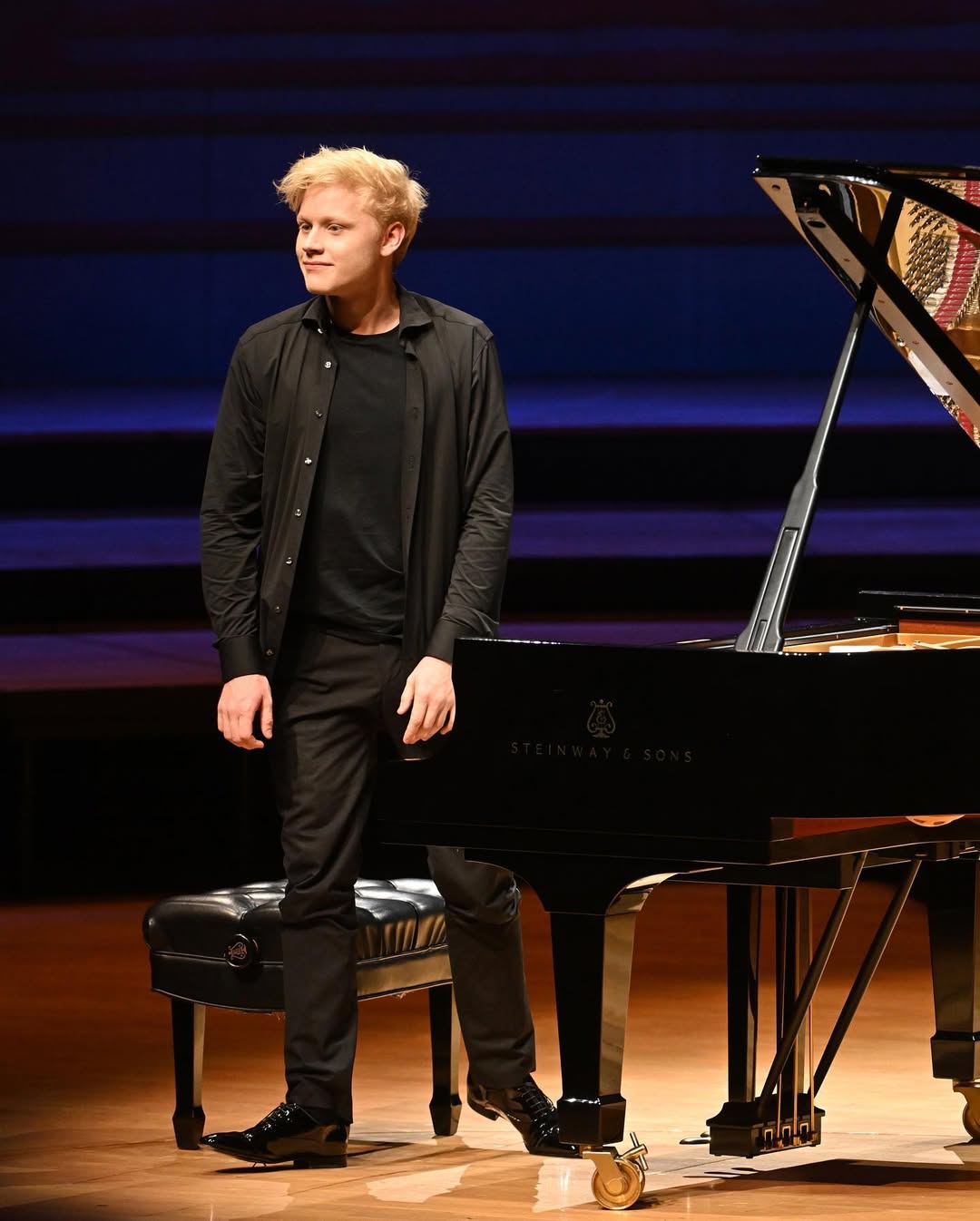
- International recital tour (2025–26):Malofeev embarked on an extensive series of solo recitals at major venues across Europe (Amsterdam, Frankfurt, Vienna, Hamburg) and Asia (Tokyo), as well as in the United States. These concert appearances underscored his global presence and drew acclaim for his virtuosic repertoire.
- Buffalo Philharmonic (Sept 2025):He opened the 2025–26 season as soloist with the Buffalo Philharmonic Orchestra under conductor JoAnn Falletta, performing Tchaikovsky’s Piano Concerto No. 1. Reviews noted his “dazzling musicianship” in this Romantic centerpiece.
- Frankfurt Radio Symphony (Oct 2025):Malofeev appeared as guest soloist with the hr-Sinfonieorchester (Frankfurt Radio Symphony) under Ivan Repušić. The program at Alte Oper Frankfurt featured Tchaikovsky’s Piano Concerto No. 1, highlighting his “technical brilliance and refined poetic instinct”.
- Concertgebouw Amsterdam (Oct 2025):He performed Rachmaninoff’s Rhapsody on a Theme of Paganiniwith the Netherlands Philharmonic (Nederlands Philharmonisch Orkest), conducted by Aziz Shokhakimov. This high-profile collaboration at Amsterdam’s Concertgebouw demonstrated his command of virtuosic Romantic repertoire.
- London Philharmonic (Feb 2026):At Hamburg’s Elbphilharmonie, Malofeev joined the London Philharmonic Orchestra under Karina Canellakis. He was featured in Mozart’s Piano Concerto in D minor (KV 466), with critics noting his “perfect balance and crystal clear sounds” in the lyrical passages.
- WDR Sinfonieorchester Cologne (Mar 2026):He made his debut with the WDR Symphony Orchestra (Cologne) led by Lionel Bringuier, performing Saint-Saëns’s Piano Concerto No. 2 in G minor, Op. 22. This concert at the Kölner Philharmonie showcased his virtuosity in late-Romantic solo concerto repertoire.
- Chamber recitals with María Dueñas (2025–26):Malofeev continued his duo partnership with violinist María Dueñasin a series of chamber-music recitals across Europe (notably at the Salzburg Festival and in Austria, Italy, Spain). These collaborations highlighted his skill in intimate, lyrical repertoire and expanded his artistic range beyond solo piano.
- Tokyo Spring Festival (Apr 2026):He toured Japan with violinist María Dueñas, appearing at the Tokyo Spring Music Festival (Tokyo Bunka Kaikan – Small Hall) on April 2, 2026. The program featured works by Schubert, Debussy, Franck and others, demonstrating Malofeev’s versatility and appeal to international audiences.
- Aspen Music Festival (Aug 2025):Malofeev returned to the Aspen Music Festival for a solo recital at Harris Concert Hall, presenting Romantic and early-20th-century repertoire (Schubert, Kabalevsky, Liszt, Scriabin, etc.). His performance drew praise for “rare poetic grace” and reaffirmed his standing as a rising piano star at a major summer festival.
Alexander Malofeev: Piano Technique And Interpretation
Technical Approach And Piano Control
Malofeev’s technique is marked by extraordinary facility and precision. He dispatches fast, dense passages with the confidence of a seasoned virtuoso, often taking tempos that many pianists would find extreme. Even at breakneck speed, listeners note that he rarely drops a note, and his fingerwork remains assured.
This command of the keyboard allows him to execute rapid runs, wide arpeggios and thick chordal textures with remarkable control. Critics have observed that his articulation stays clean and crystalline in almost all registers, ensuring that melodies and inner voices generally remain distinct.
Occasionally, when pressed to the absolute limit of speed, a reviewer has remarked that small compromises in clarity or bass overload can occur, but such moments are rare. In general, his approach blends technical rigor with a poised ease: review writers often comment that his flawless mastery of the notes gives him the freedom to play spontaneously and with expressive intent. His control extends to dynamics as well pianissimos are firm and focused, while fortissimos are powerful yet never blaring without purpose.
Tone, Touch, And Sound Color
Malofeev draws a broad palette of colors from the piano, ranging from radiant lyricism to thunderous power. He habitually shapes tone very deliberately: quiet passages can be tender and crystal clear, whereas climactic moments become full blooded and vivid.
Observers frequently highlight his imaginative tonal shadings, noting that he can make the piano sound almost orchestral. For example, in lyrical music he often produces a warm, singing tone reviewers liken this to a romantic glow or crystal clear intonation while in more dramatic music his touch can become percussive and incisive.
His technique of touch is supple: slender, delicate keys can shimmer under his fingers, and fast repeating notes can be struck with a sparkling clarity. At the same time, he is unafraid of generating very big sound when needed.
Strong accents and emphatic chords come across as vivid and forceful without sounding crude. Several critics note that he excels at balancing these extremes a single performance might move from intimate, velvety pianissimos to dazzling, orchestral fortissimos seamlessly. Through it all, his ear for color ensures that no dynamic level ever feels one dimensional.
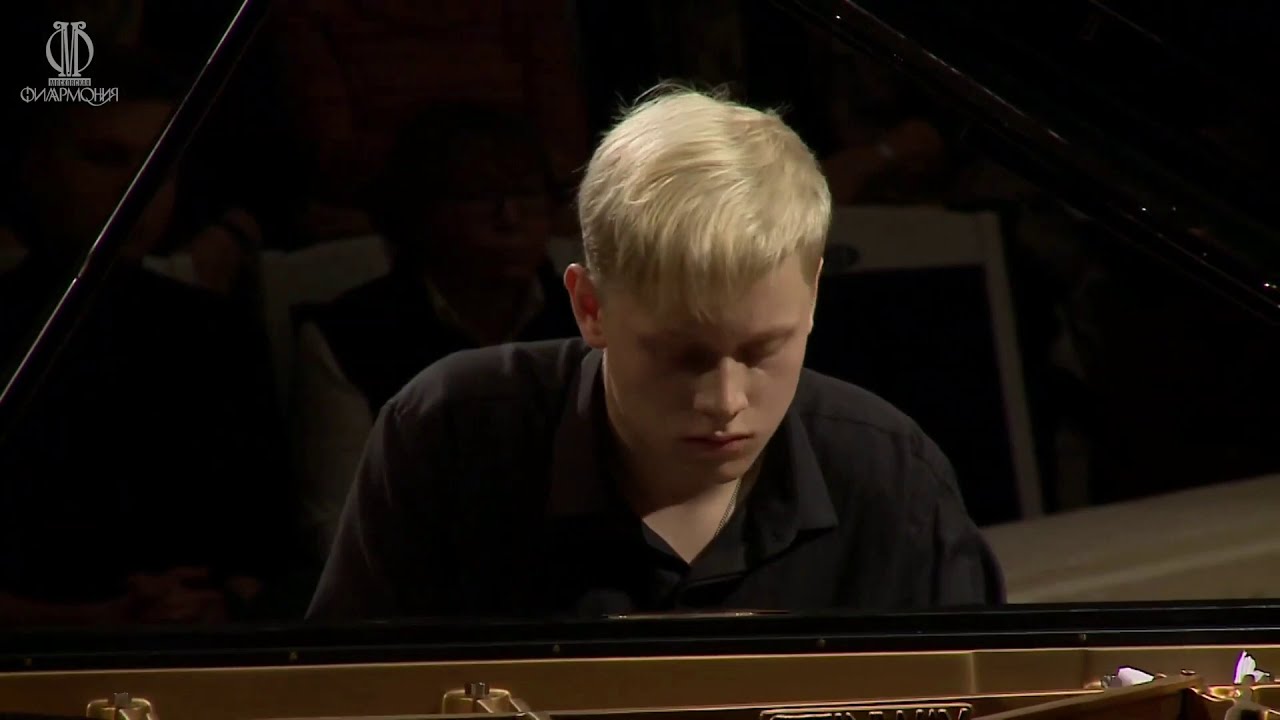
Alexander Malofeev Plays Tchaikovsky The Nutcracker - Pas de deux
Rhythm, Phrasing, And Structural Clarity
Malofeev’s rhythmic sense and phrasing are generally coherent and purposeful. He tends to choose tempos that keep the musical form clear: often moderate rather than excessively rushed, allowing melodies and harmonies to breathe.
In fast movements or virtuosic sections he maintains strong forward momentum, yet even there his clear articulation helps each rhythmic layer stand out. Critics note that in slow or lyrical passages he applies expressive rubato judiciously gentle hesitation or flexibility but always with respect for the pulse and shape of the phrase.
For example, in a slow movement he might slightly linger on a heartfelt melody line, then move steadily forward on the accompaniment, so that the overall momentum never flags. Listeners report that his phrasing usually traces the structure of the music well, making the architecture of themes and motifs understandable.
That said, in extremely fast writing the sheer speed can occasionally blur inner voices or short circuit larger gestures; a reviewer once commented that very rapid runs momentarily break the sense of long term narrative. On balance, however, the prevailing impression is that Malofeev constructs musical lines with purpose.
Climaxes are clearly built up, and transitions between sections feel logical. His phrasing often emphasizes the natural shape of each motif, which contributes to the perception of a coherent, unfolding musical journey.
Interpretative Approach To Repertoire
Malofeev approaches different styles thoughtfully, tailoring his interpretation to each composer’s idiom. In Baroque and early Classical works (for example, Handel or Bach transcriptions) he generally favors clarity and articulation: notes are sharply defined, ornamentation is light, and the overall reading is somewhat vocal in phrasing, reflecting an understanding of those composers’ style.
In Romantic era works (such as Chopin, Liszt, Rachmaninoff or Tchaikovsky) he balances lush lyricism with structural rigor. Critics have pointed out that he finds and highlights the poetry in Romantic melodies offering warm, expansive phrasing and a singing tone but without losing track of the rigorous rhythmic drive and formal clarity those pieces also require.
Transcriptions of orchestral or operatic music for piano, which Malofeev often programs, receive a special kind of treatment. He tends to make them sound complete on their own, sometimes even bringing out the sense of other instruments in the texture. For instance, in a piano version of an orchestral concerto or opera overture he may accentuate inner voices as if they were winds or strings.
He also displays sensitivity in 20th century and modern works. In pieces by Czech or Russian composers like Janáček, Scriabin or Medtner, Malofeev has been noted for taking the emotional and harmonic intricacies seriously.
A lyric passage in Janáček might become introspective and haunting under his hands, whereas a Prokofiev or Medtner scherzo would be crisp and witty. Even lesser known works for example a pedagogical Kabalevsky sonata or a rarely played transcription are treated as substantive music, not mere encore filler.
Observers praise that he never plays any repertoire in a purely superficial virtuoso manner; instead, he tries to mine each piece’s character. In sum, his interpretive approach is to respect the style of the composer and period, while looking for expressive depth.
Balance Between Precision And Expression
A defining feature of Malofeev’s playing is the balance he strikes between technical exactitude and emotional expression. Every performance demonstrates that he can be fast, loud and intense without losing control of the details.
Yet just as often he can play with great delicacy, shaping a phrase so that a simple melody line takes on profound feeling. Critics consistently remark that he does not treat virtuosity as an end in itself rather, his fluent technique supports musical expression.
For example, when a passage demands a gleaming sheen or a hushed sound, his fingers deliver it with the right weight and nuance; conversely, when a powerful climax is needed, he does not hold back but still remains precise.
This equilibrium means that even in his most spectacular moments the interpretation does not feel merely showy. One reviewer commented that Malofeev’s playing is driven by constant emotional seriousness rather than gratuitous flash.
In fast, complex sections his accuracy allows listeners to focus on the drama instead of questioning the notes, and in slower, lyrical sections his expressive intent is supported by meticulous tone production. Ultimately, he seems to regard each note as part of a larger expressive aim: none are sacrificed to mere speed or force.
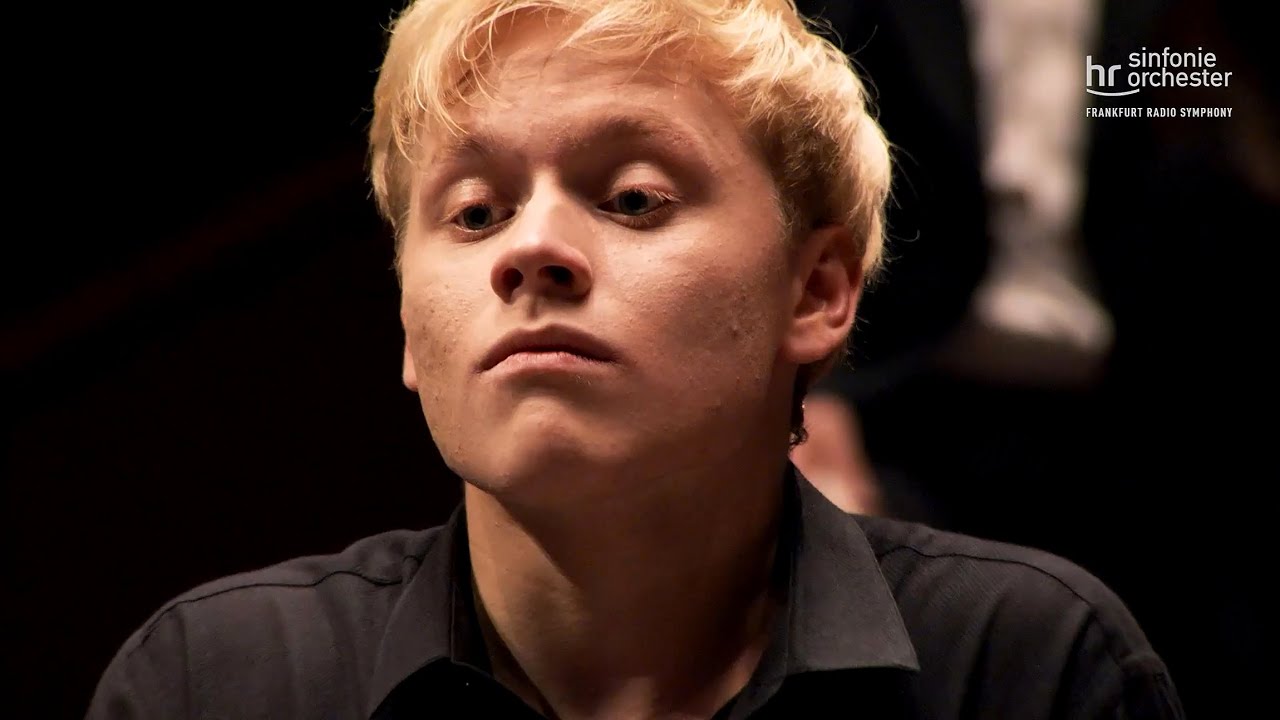
Medtner: Canzona Serenata op. 38 Nr. 6 ∙ Alexander Malofeev
Critical Observations And Musical Identity
Observers characterize Malofeev as a pianist of strong personality and individuality. Although still young, his playing often conveys mature conviction. Reviewers note that he combines the aura of a powerful virtuoso with a curious, almost intense introspection.
On stage he may appear calm or reserved at first, but once he begins to play his intensity becomes palpable critics have described it as overwhelming at times. His musical identity is marked by this duality: he can sweep across the keyboard with unstoppable energy, yet also find moments of surprising subtlety and calm.
Across performances, commentators see a consistent core style. For example, many say that his interpretation always has a serious, earnest quality he is not given to superficial prettiness or over the top flash.
In Romantic works especially, his readings have been called inventive and personal rather than formulaic, revealing phrases and shades that make even familiar pieces sound fresh.
When it comes to repertoire, his selections and performances suggest he identifies with the broad Russian piano tradition (big Romantic gestures, rich tone) but also with a more modern, analytical bent (clear textures, structural logic). He is sometimes likened to a keyboard demon in terms of raw power, yet others hear in him a lyric poet. Above all, critics agree he has a distinct voice.
Whether playing a waltz or a concerto, his sound and phrasing carry a recognizable stamp: powerful and colored with depth, yet measured by an underlying sense of purpose. This combination of strength and subtlety, honed since his days as a prodigy, now defines his artistic persona.
Alexander Malofeev Net Worth
As of 2026, Alexander Malofeev’s net worth is estimated to be between $1 million and $2 million. He has built this wealth through his career as a classical concert pianist and recording artist, including prize winnings from international competitions and touring.
Malofeev appears as soloist with leading orchestras worldwide (the Philadelphia Orchestra and Boston Symphony Orchestra). An exclusive recording contract with Sony Classical will also generate album income. These estimates come from online wealth trackers and are not confirmed by major financial publications.
FAQs
1. Who Is Alexander Malofeev?
Alexander Malofeev is a Russian classical pianist internationally recognized for his virtuosity and musical maturity. He first gained global attention after winning the International Tchaikovsky Competition for Young Musicians in 2014.
2. When And Where Was Alexander Malofeev Born?
Alexander Malofeev was born in October 2001 in Moscow, Russia. He grew up in a musical environment and began piano studies at a very young age.
3. Where Did Alexander Malofeev Study Music?
He studied piano at the N. P. Osipov Music School and later graduated from the Gnessin Moscow Special School of Music. His principal teacher throughout his early education was Elena Vladimirovna Berezkina.
4. What Competitions Has Alexander Malofeev Won?
Malofeev won the gold medal at the International Tchaikovsky Competition for Young Musicians in 2014 and the Grand Prix at the Grand Piano International Competition in 2016. These awards established him as one of the leading pianists of his generation.
5. What Repertoire Is Alexander Malofeev Best Known For?
He is especially known for Romantic and late-Romantic repertoire, including works by Tchaikovsky, Rachmaninoff, Liszt, and Medtner. Critics frequently praise his combination of technical precision and expressive depth in this repertoire.