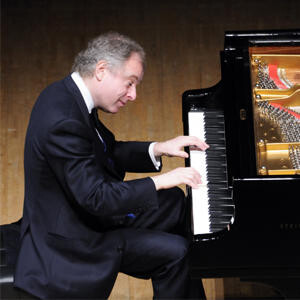
András Schiffwas born in Budapest, Hungary, on 21 December 1953. He was raised as the only child in a Jewish family. Both of his parents were survivors of the Holocaust. His father worked as a physician and was also an amateur violinist, and his mother had been trained as a pianist.
Music was a constant presence in Schiff’s early home life. A piano was kept in the household, and Schiff later recalled that he began picking out tunes by ear when he was about five years old. At that age he also began formal piano lessons with teacher Elisabeth Vadász.
He later continued his musical education at the Franz Liszt Academy of Musicin Budapest, where he studied under Pál Kadosa, György Kurtágand Ferenc Rados.
| Aspect | Details |
| Full Name | András Schiff |
| Date of Birth | 21 December 1953 |
| Place of Birth | Budapest, Hungary |
| Family Background | Only child, raised in a Jewish family; both parents were Holocaust survivors |
| Father | Physician and amateur violinist |
| Mother | Trained pianist |
| Early Musical Exposure | Piano present at home; began playing by ear around age five |
| First Piano Teacher | Elisabeth Vadász |
| Higher Education | Franz Liszt Academy of Music, Budapest |
| Notable Teachers | Pál Kadosa, György Kurtág, Ferenc Rados |
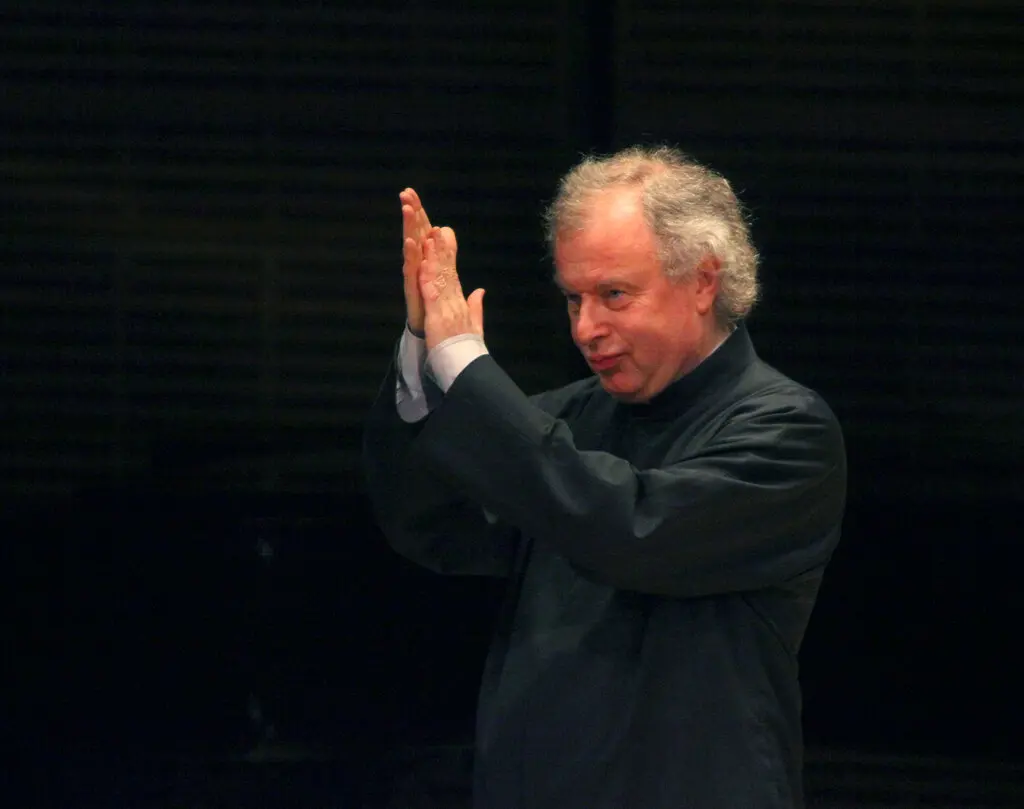
Career Beginnings
András Schiff trained as a pianist in Budapest and later in London, and first drew international attention through competition success in the 1970s. He won 4th prize at the 1974 Tchaikovsky International Piano Competitionand 3rd prize at the 1975 Leeds Piano Competition, results that helped launch his performing career.
These achievements led to invitations for concerts worldwide. Schiff’s earliest recordings were made for the Hungarian label Hungaroton, and he soon signed with Decca Records. On Decca he released landmark albums of Bach’s keyboard works, Mozart’s piano sonatas and other core repertoire, establishing him as a rising artist.
International Breakthrough
Building on his competition wins, Schiff quickly established a presence on the world stage. By the late 1970s and 1980s he was performing regularly in major concert halls across Europe, North America and Asia. He made London his base and continued to expand his career internationally. His early Decca recordings received critical acclaim and helped cement his reputation; these included complete cycles of Mozart piano sonatas and significant works by Beethoven and Bach. Over time he became known equally for his recital work and for performances with symphony orchestras as soloist.
Major Performances & Concert Highlights
Schiff is renowned for ambitious recital programs and festival appearances. He has performed complete cycles of major piano repertoire, for example, he presented all 32 Beethoven sonatas in concert series around the world, with one full cycle recorded live in Zurich. His recital programs often feature large spans of keyboard literature: he regularly plays J.S. Bach’s complete works, Haydn sonatas, Schubert, Chopin, Schumann and Bartók. Critics note his thoughtful, exacting style; he himself has remarked that hearing the Beethoven sonatas is “a stupendous journey” showing “how Beethoven developed through his creative life.”
Schiff is a frequent guest at leading concert venues and festivals. He has appeared year after year at London’s Wigmore Hall, earning that hall’s medal in 2008 for three decades of recitals. His performances of Bach have become an annual highlight at the BBC Proms in London, and he is a regular recitalist at the Verbier Festival, Salzburg Festivaland the Baden-Baden Festival. In chamber music circles he has also taken on leadership roles: he served as artistic director of Austria’s Musiktage Mondseefrom 1989 to 1998 and co-founded the Ittinger Pfingstkonzerte in Switzerland in 1995. Since 1998 he has curated the “Hommage to Palladio” concert series at the historic Teatro Olimpico in Vicenza.
Recordings & Discography
Since 1997 Schiff has recorded exclusively for ECM New Series, building a vast and varied discography. His albums include both solo programs and chamber collaborations. Notable recordings include the complete Beethoven piano sonatas, issued as a live 11-CD set from performances in Zurich, and solo albums devoted to J.S. Bach, particularly the Goldberg Variations, the Well-Tempered Clavier and the Six Partitas. Other highly regarded solo recordings include Schubert’s late piano works, a fortepiano album that won the 2015 International Classical Music Award, and Schumann’s Geistervariationen, winner of the 2012 ICMA.
Highlights of his chamber-music discography range widely. He has recorded two-piano works, Mozart, Reger, Busoni, with Peter Serkin, and art songs, Mozart and Debussy Lieder, with soprano Juliane Banse. He has partnered with cellist Miklós Perényion the complete Beethoven cello sonatas, and with clarinetist Jörg Widmannon Brahms’s clarinet sonatas. A recent major release is a 2024 album of Brahms and Schumann violin sonatas with violinist Yuuko Shiokawa. In total, Schiff’s recordings have set a benchmark for Classical and early Romantic keyboard repertoire and remain widely admired.
Awards & Professional Recognition
| Year | Award / Honor |
| 2006 | Honorary Member, Beethoven House Bonn |
| 2008 | Wigmore Hall Medal |
| 2011 | Robert Schumann Prize (Zwickau) |
| 2012 | Golden Medal, International Mozarteum Foundation |
| 2013 | Royal Philharmonic Society Gold Medal |
| 2014 | Knight Bachelor (UK) |
| 2022 | Bach Medal of Leipzig |
| 2024 | Bösendorfer Ring |
| Various Years | Grammy Award, Gramophone Award, Bartók International Award |
Sir András Schiff has received numerous honors recognizing his artistry. Major awards include the Grammy Award and the Gramophone Award for his recordings, as well as the Royal Philharmonic Society’s Gold Medal in 2013, one of Britain’s highest musical honors.
He won the International Mozarteum Foundation’s Golden Medal in 2012. Other prizes include the Royal Academy of Music Bach Prize, the Robert Schumann Prize awarded in Zwickau in 2011 and Hungary’s Béla Bartók International Award. In 2008 he was awarded the Wigmore Hall Medal and in 2006 was named an Honorary Member of the Beethoven House in Bonn, recognizing his lifelong work with those composers.
In the United Kingdom he was appointed Knight Bachelor in 2014 for services to music. Recent honors include the Austrian Cross of Honour for Science and Art and the Bösendorfer Ring in 2024, reflecting his enduring impact on the keyboard world.
Collaborations With Orchestras & Conductors
Schiff’s career spans both solo and orchestral work. He regularly appears with symphony orchestras as piano soloist and also as a conductor, often conducting from the keyboard. In 1999 he founded the Cappella Andrea Barca, a chamber orchestra of his friends and colleagues.
He maintains close partnerships with major ensembles: for example, he has played frequently with the Chamber Orchestra of Europe and with the Budapest Festival Orchestra, and he became an Associated Artist of the period-instrument Orchestra of the Age of Enlightenment in 2018.
In recent seasons he has appeared with leading conductors; for instance, in April 2024 he conducted the Philadelphia Orchestra, playing Haydn and Mozart piano concertos. Through these collaborations, Schiff brings his exacting style to orchestral repertoire by Mozart, Haydn, Brahms and beyond, as well as to 20th-century works.
Recent Career Activity
Sir András Schiff remains highly active in performance and recording. In the 2022–2023 season he was named Artist-in-Residence with the New York Philharmonic, giving solo recitals, chamber music concerts and conducting the orchestra over several engagements. In late 2023 he toured North America with solo recitals. In December 2024 he presented seven unique solo concerts in Japan, a series in which he famously announces each evening’s program to the audience on the spot.
Alongside touring, Schiff continues to record and innovate. His most recent ECM release in 2024 features Brahms and Schumann violin sonatas with Yuuko Shiokawa. He maintains his role as curator and educator: he remains on the faculty of the Kronberg Academy in Germany, teaching piano master classes since 2018, and continues to oversee the annual Vicenza chamber festival he founded. In 2022 he received the Bach Medal of Leipzig in recognition of his lifelong dedication to Bach’s music. Overall, Schiff’s recent activities show a still-thriving commitment to performance, recording and musical leadership at the highest international level.
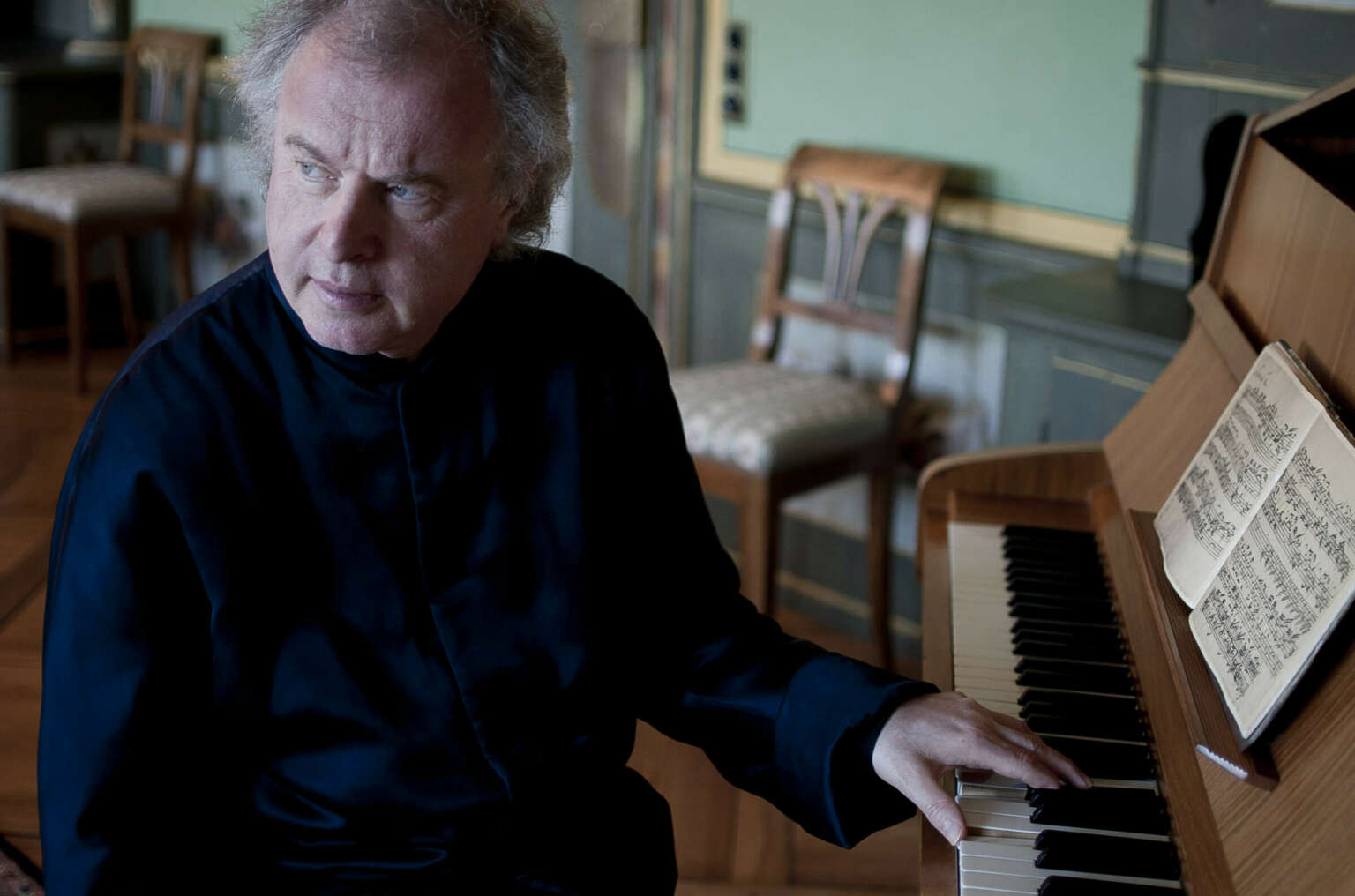
András Schiff Performance (2025–2026)
- Sep 2025, Kronberg Festival (Germany):Schiff conducted the Chamber Orchestra of Europe (with Kronberg Young Soloists) in Beethoven’s Triple Concerto(C-major, op.56) at the Casals Forum. He also performed chamber works there with Kronberg Young Soloists, including Mendelssohn’s Piano Trio op.49, Beethoven’s “Kreutzer” Sonata (No.9), and Schumann’s Piano Quartet op.47.
- Jul 2025, Salzburg Festival (Austria):Presented a solo recital at Salzburg’s Mozarteum, performing the complete Art of Fugue(Bach BWV 1080) in the main auditorium.
- Aug 2025, BBC Proms (London):Featured in a two-piano recital at Royal Albert Hall(Prom 20, 23 Aug 2025), performing Bach’s Art of Fuguewith pianist Schaghajegh Nosrati.
- Dec 2025, Berlin (Germany):Gave a solo piano recital series at Pierre Boulez Saal, focusing on classical sonatas (Mozart on Dec 21, Beethoven on Dec 26, Schubert on Dec 29, 2025).
- Dec 2025, Rome (Italy):Performed a “Carte Blanche” surprise solo recital at Santa Cecilia’s Sinopoli Hall(3 Dec 2025), presenting a self-curated program introduced live.
- Jan 2026, Zurich (Switzerland):Conducted the Tonhalle-Orchester Zürichin multi-work programs at the Tonhalle, including Beethoven (Piano Concerto No.1) and contemporary pieces (Bartók, Lutosławski) on Jan 14–15, 2026. He also led the orchestra in Bach’s Art of Fugueon Jan 17, 2026.
- Jan 2026, European tour (Baden-Baden and Vienna):Conducted his ensemble Cappella Andrea Barcain concerts at Baden-Baden Festspielhaus (23 Jan 2026) and Vienna Musikverein (26 Jan 2026). Programs included Mozart (piano concerto K.466, sonata K.488), Haydn (Symphony No.45), Beethoven, and other works.
- Jan–Feb 2026, France:Gave solo recitals in Lyon and Toulouse. On Jan 31, 2026 he performed a “Carte Blanche” recital in Lyon’s Auditorium(program revealed spontaneously). On Feb 3, 2026 he played a multi-composer program at Toulouse’s Halle aux Grains (featuring works by Bach, Haydn, Mozart, Beethoven, Schubert).
- Feb 2026, Hamburg (Germany):Performed a solo piano recital at the historic Laeiszhalle Großer Saalon Feb 16, 2026.
- Mar 2026, Kronberg (Germany):Solo recital at the Casals Forum (Großer Saal)on Mar 2, 2026, presenting Bach’s Art of Fugue(BWV 1080).
- 2025–2026, U.S. engagements:In March 2025 Schiff announced cancellation of all U.S. concertsin 2025–26 (an October 2025 solo tour and May 2026 orchestral appearances with the Philadelphia Orchestra and New York Philharmonic), citing political developments.
András Schiff’s Piano Playing Style And Musical Interpretation
Technical Approach And Piano Control
András Schiff’s pianism is distinguished by exceptional precision and control. His technique emphasizes refined finger independence and agility, enabling even complex counterpoint and rapid passagework to emerge with clarity and definition. He achieves true legato largely through hand technique rather than heavy pedal, smoothly connecting notes with well-trained fingers.
In fast or intricate music each voice is articulated distinctly, and hand-crossing or hand-over-hand passages are handled with full independence. Critics note that his touch remains even and assured even in the most demanding sequences. Remarkably, Schiff maintains this technical security over long programs, for example in marathon recitals of Bach or Beethoven, without any loss of clarity or focus.
Large leaps, double notes, and decorative runs are executed with confidence and finesse, reflecting a rigorously trained control. In sum, his approach is disciplined yet elegant. Every nuance of articulation and articulation is under exacting command, serving the structure of the music.
Tone, Touch, And Sound Color
Schiff draws a wide and nuanced palette of tone from the piano. His sound is often described as warm and singing, with a focus on round, velvety sonority even at high volume. Even in passages with crisp staccato or strong accents, the tone never becomes brittle or harsh.
Instead he preserves a full-bodied richness. He adapts his touch to the style of the piece. Baroque and Classical works are rendered with a more transparent, crystalline quality as if mimicking a harpsichord or fortepiano, while Romantic repertoire is imbued with greater warmth and lyrical weight.
He uses the piano’s color range judiciously, exploiting different registers for contrast, for instance favoring the deeper bass resonance of a Bösendorfer for certain lines or the singing treble of a Steinway for others. Schiff is also known for sparing use of the sustain pedal.
In Bach and Mozart, he typically relies on precise finger legato, keeping lines clean and articulate. In later music, such as Schumann and late Beethoven, he will employ pedal more freely, but always to enhance the music’s expressivity rather than blur detail.
Overall, his touch is sensitive and varied. Delicate phrases may be rendered with an almost intimate softness, while climactic moments are delivered with a solid, grounded weight that feels natural rather than forced. Critics consistently note that his tone is full and sonorous yet never indulgent, combining purity of sound with expressive richness.
Rhythm, Phrasing, And Structural Clarity
Schiff approaches rhythm and phrasing with a storyteller’s sense of direction. He often treats each work as a coherent narrative, shaping phrases so that they breathe and evolve organically. This means his tempo may ebb and flow within a movement.
He might begin a theme moderately, gradually accelerate through a run, and then pause or slow at a cadence, all while maintaining an underlying pulse. Importantly, this flexibility is always in service of musical structure. Transitions and rubato feel inevitable rather than random.
In fast movements his measured acceleration gives climaxes momentum, and when a new theme enters he typically rein back the pace for contrast. In contrapuntal sections each voice’s rhythmic profile is crystal clear. Entrances of fugues or multiple lines are precisely aligned so the counterpoint is transparent.
Schiff’s phrasing is highly detailed and nuanced. Small accents or lengthenings articulate the form, often highlighting inner voices or thematic connections. Critics emphasize that he avoids undue sentimentality in phrasing.
Each flexible moment is controlled and related to the work’s architecture. Whether in Baroque, Classical, or Romantic music, Schiff’s sense of rhythm always underscores the piece’s structural clarity, helping listeners perceive both the trees and the forest of the music simultaneously.
Interpretative Approach To Repertoire
Schiff’s interpretations are rooted in both scholarship and intuition. He is often described as a historically informed pianist. He studies scores meticulously and respects the stylistic conventions of each composer’s era.
For Baroque and Classical pieces, for example works of Bach, Haydn, and Mozart, this means lean, articulate performances with minimal added vibrato or pedal, drawing out inner voices as they might have been heard on period keyboards.
In Mozart and Haydn, he emphasizes elegance, balance, and the music’s graceful lines. In Bach, he brings out contrapuntal detail and often performs on or emulates the fortepiano for authenticity.
In Romantic repertoire, such as Beethoven, Schubert, and Schumann, he allows a broader emotional range but still with attention to form. He treats a Beethoven sonata as a narrative of drama rather than pure bravura, and approaches Schubert with introspective warmth rather than full-blown Romanticism.
In all cases he has spoken about clearing away accumulated performance habits to let the composer’s original voice be heard. This intellectual approach is combined with personal insight. Schiff’s readings consistently reveal structural connections and thematic interplay that make familiar works feel illuminated.
For example, his performances of late Schubert sonatas, often on period pianos, have been praised for exposing new colors and relationships in the music. Importantly, Schiff avoids exaggerated showiness. His goal is fidelity to the score.
Even in pieces ripe for dramatic gesture, he opts for sincerity and honesty in interpretation. In sum, his repertoire choices and execution reflect a deep respect for each composer’s intentions, interpreted through a lens of clarity and expressive nuance.
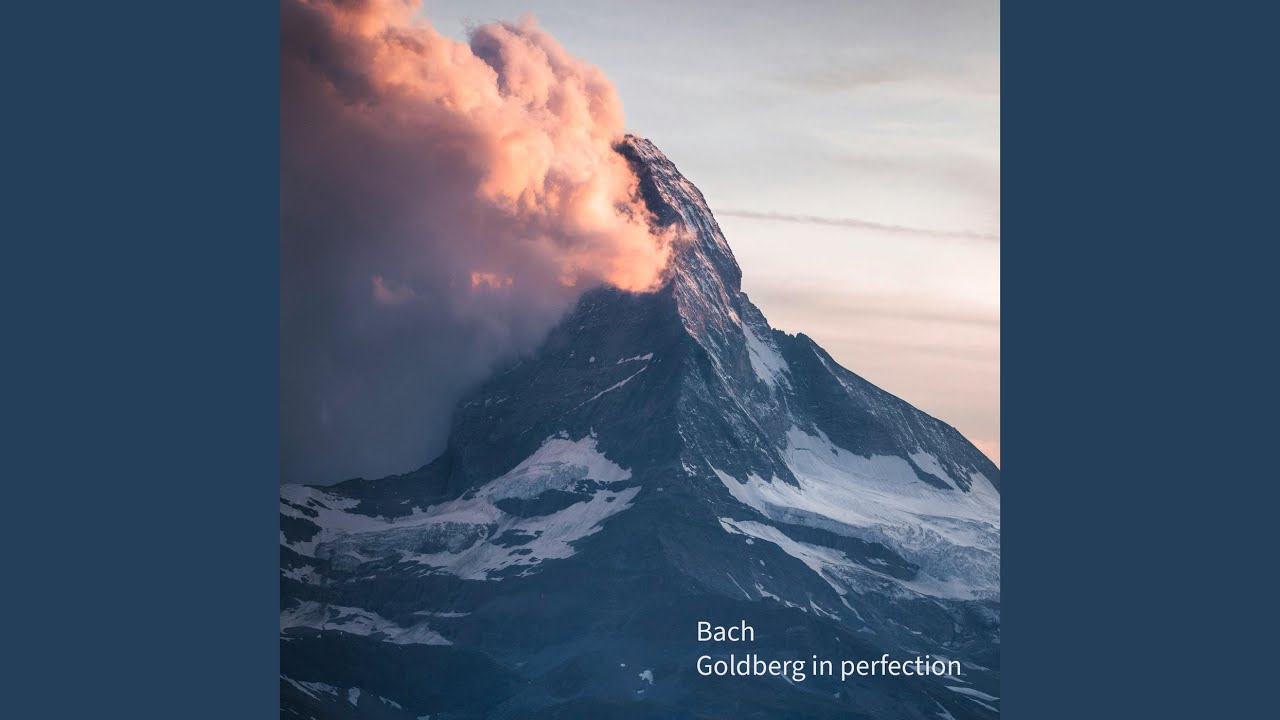
J.S. Bach: Goldberg Variations, BWV 988: Var. 4. a 1 Clav. (Live)
Balance Between Precision And Expression
A hallmark of Schiff’s style is the equilibrium he achieves between analytical control and lyrical expressivity. He maintains exacting precision in tempo, rhythm, and articulation, yet never at the expense of musical warmth.
His performances are meticulously crafted. Dynamics and articulations are placed with care. Within that framework he allows the music to breathe and speak. Observers note that Schiff prefers understatement to flamboyance.
Even his most passionate moments are delivered with a poised restraint. For instance, a fortissimo chord in a Beethoven finale is played with full strength but as part of the unfolding musical argument rather than mere display.
Likewise, his pianissimos are truly soft but never lost. They retain structure and line. In faster sections he locks rhythms together tightly but may add subtle phrase shaping. In slow movements he uses gentle tempo fluctuation, but the line always remains coherent.
This balance means that his playing feels both disciplined and deeply felt. He rarely indulges in overt rubato or coloristic effects that might obscure the music’s logic, yet he fully conveys the work’s emotional character.
Across the board, critics highlight that Schiff’s performances marry technical exactness with a profound communicative intensity. Each serves the other. The result is a musical voice that is precise without sounding dry, and expressive without losing form.
Critical Observations And Musical Identity
Critics consistently regard András Schiff as an intellectual and eloquent pianist. His playing is praised for its seriousness of purpose and clarity of thought. He has been called one of the leading interpreters of the central European repertoire, in particular Bach, the Classical masters Mozart, Haydn, and Beethoven, and the Romantic Germans Schubert and Schumann.
Reviewers often use terms like transparent, disciplined, and poetic in the same breath to describe him. Schiff’s musical identity is that of a scholar-performer. He brings high expertise and deep musical understanding to every program, while communicating with audiences in an intimate, narrative way.
He is known for holding listeners to a high standard of attention, reflecting the concentrated nature of his performances. His style is sometimes characterized as austere or restrained, but also as intimate and deeply sincere.
Rather than showmanship, listeners experience a sense that he is in direct dialogue with the music itself. Through this approach, Schiff has built an artistic persona centered on integrity and insight.
He allows the music’s inherent structure and emotion to emerge naturally, trusting that clarity and faithfulness in his playing will reveal the work’s beauty. In the final analysis, his musical voice is identified by its combination of rigorous technique and heartfelt communication, a blend that many critics believe places him among the most authoritative pianistsof his generation.
András Schiff Net Worth
As of 2026, Sir András Schiff’s net worth is estimated at between $4 million and $6 million. This figure is cited by online celebrity-wealth trackers and is not confirmed by major financial outlets. Schiff earns income from his career as a classical pianist and conductor: he tours internationally for solo recitals and often appears as a guest conductor with major orchestras. He has made numerous recordings for major labels like Decca. He also teaches, serving as a distinguished visiting professor of piano in Berlin.
FAQs
1. Who Is András Schiff And Why Is He Famous?
András Schiff is a Hungarian-born classical pianist and conductor, widely regarded as one of the leading interpreters of Bach, Beethoven, and Schubert. He is known for complete sonata cycles, historically informed performance, and long-standing international acclaim.
2. What Is András Schiff Best Known For Musically?
He is especially known for performing and recording the complete piano sonatas of Beethoven and Mozart, as well as major keyboard works by J.S. Bach. His playing is recognized for clarity, structural insight, and restrained expressiveness.
3. Has András Schiff Won Major Awards For His Work?
Yes, András Schiff has received numerous major honors, including a Grammy Award, Gramophone Award, and the Royal Philharmonic Society Gold Medal. He was knighted in the UK in 2014 for services to music.
4. Does András Schiff Still Perform And Conduct Concerts?
Yes, he remains active as both a pianist and conductor, appearing regularly in Europe and Asia. In recent seasons, he has given solo recitals, conducted orchestras, and curated long-running festival projects.
5. What Is András Schiff’s Approach To Piano Interpretation?
Schiff’s interpretations emphasize fidelity to the score, clarity of counterpoint, and historically informed style. He avoids excessive showmanship, focusing instead on musical structure and the composer’s intent.