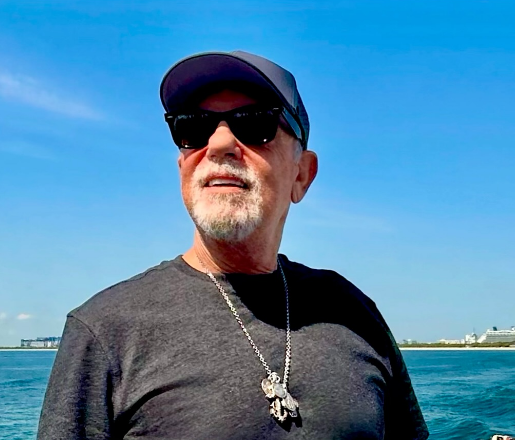
William Martin “Billy” Joel was born on May 9, 1949, in the Bronx borough of New York City. He spent his childhood in the Levittown section of Hicksville on Long Island, a middle-class postwar suburb. Joel’s parents were Helmut “Howard” Joel and Rosalind (Nyman) Joel, both Jewish.
His father was born in Germany and his mother in England. The family environment was musical: Howard Joel was a classically trained pianist, and from an early age his parents encouraged their son’s interest in music.
Joel grew up with a sister, Judith (“Judy”) Joel, and later learned he had a younger half-brother, Alexander Joel. His parents divorced when he was about eight years old, after which Joel and his sister were mainly raised by their mother.
For secondary education, Joel attended Hicksville High Schoolon Long Island, though he left before completing a diploma to focus on music.
Guided by his musically skilled family, Joel began formal piano lessons at the age of four. He studied classical piano during childhood; he reportedly practiced by learning to turn Beethoven sonatas into lively boogie-woogie pieces.
His early teachers included notable musicians such as Morton Estrin, reflecting serious classical training (although he pursued a variety of styles).
From an early age Joel absorbed a wide range of musical influences. He later cited composers like Beethoven, Chopin, and Debussy, as well as American composers Aaron Copland, George Gershwin, and Duke Ellington, among his inspirations.
By his teenage years he was also drawn to modern jazz, R&B and rock artists: his influences included pianist Dave Brubeckand singers Ray Charlesand Otis Redding, along with rock icons the Beatles and Jimi Hendrix.
In his teens Joel became especially enamored with the 1960s “British Invasion” pop and American soul music; by about age 14 he was already performing as a pianist in local bands.
| Detail | Information |
| Full Name | William Martin “Billy” Joel |
| Date of Birth | May 9, 1949 |
| Place of Birth | Bronx, New York City, USA |
| Childhood Home | Levittown, Hicksville, Long Island |
| Parents | Helmut “Howard” Joel and Rosalind (Nyman) Joel |
| Family Background | Jewish; father born in Germany, mother born in England |
| Siblings | Sister Judith (“Judy”) Joel; half-brother Alexander Joel |
| Parents’ Divorce | Around age eight |
| Early Musical Influence | Father was a classically trained pianist |
| Piano Training Began | Age four |
| Education | Attended Hicksville High School; left before graduating |
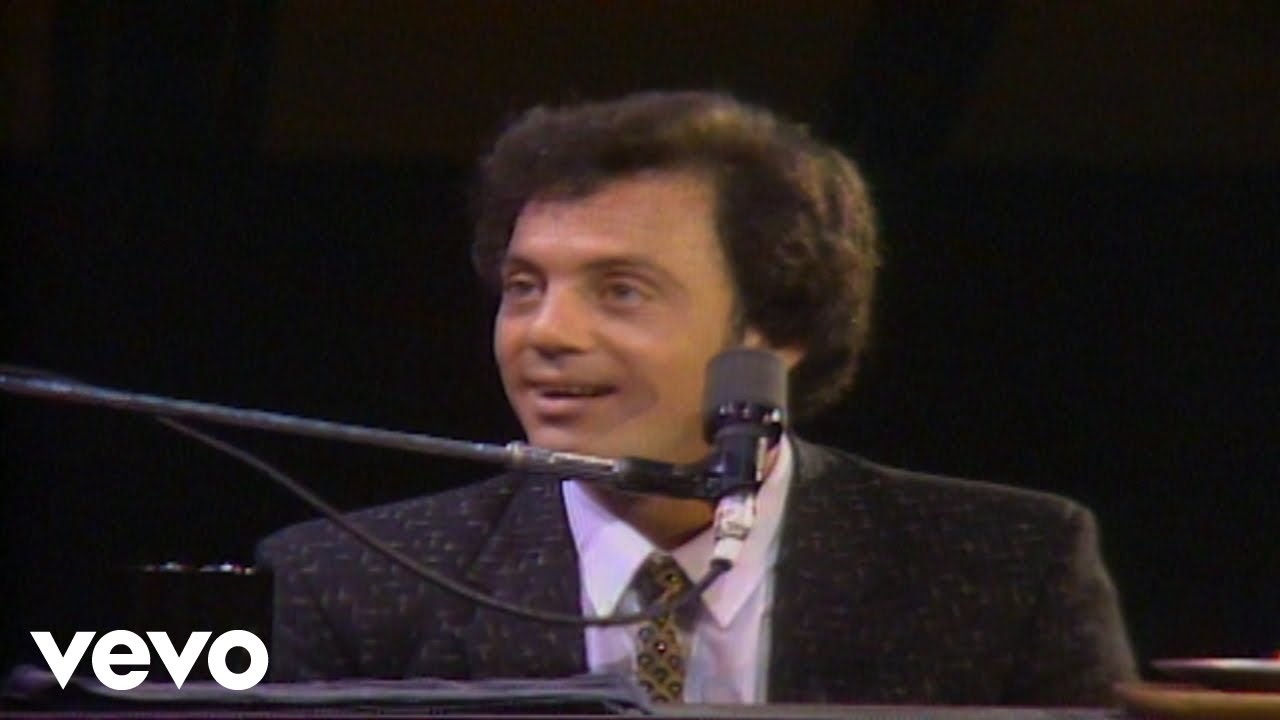
Billy Joel - Scenes from an Italian Restaurant (Live from Long Island)
Career Beginnings
Billy Joelbegan his music career in the 1960s as a member of Long Island bands (initially The Hassles, later the rock duo Attila). He signed his first solo recording contract in 1971 and released the debut album Cold Spring Harbor.
A breakthrough came when his live song “Captain Jack” drew attention, leading Columbia Records executive Clive Davisto sign him in 1973. That year Joel recorded Piano Man; the title track became his first Top 20 hit in 1974.
By 1975, his extensive touring had made him a rising concert draw – he even sold out a headline show at New York’s Carnegie Hall that year. These early successes established him as a solo artist on the verge of greater fame.
International Breakthrough
Joel’s worldwide breakthrough came in the late 1970s. The 1977 album The Strangerwas a massive hit, remaining Columbia Records’ biggest-selling album for years. Its 1978 follow-up, 52nd Street, became Joel’s first #1 album.
Over that period he won six Grammy Awards (including Record and Song of the Year in 1978). In 1980 he continued this streak with Glass Houses, which also reached #1 on the charts.
As his hits spread globally, Joel toured internationally – he performed at the historic Havana Jam festival in Cuba in 1979. In 1987 he became the first American pop-rock star to stage a full-scale concert in the Soviet Union (performing in Moscow and Leningrad). This era solidified Joel’s status as a global rock/pop star.
Major Performances & Concert Highlights
Joel has headlined numerous landmark concerts. He participated in major benefit events such as the 2001 Concert for New York City (for 9/11 relief) and the 12-12-12 benefit concert for Hurricane Sandy.
In 2008 he closed New York’s Shea Stadium on its final night before demolition – a historic concert later documented in the film The Last Play at Shea. Over his career he has also sold out large international venues and festivals, including multiple appearances at jazz and rock festivals worldwide.
A career highlight of the 2010s and 2020s was his record-breaking residency at Madison Square Garden (MSG) in New York. In January 2014 he was named MSG’s first-ever music franchise, beginning a monthly sold-out residency there.
He went on to become the venue’s most frequent performer, ultimately announcing that his July 25, 2024 show would be his 150th lifetime concert at MSG. His 100th Garden performance (in 2018) was celebrated with special guests including Bruce Springsteen and even a proclamation of “Billy Joel Day” by New York’s governor.
Throughout this run he drew massive crowds, reinforcing his legacy as a premier live entertainer.
Recordings & Discography
| Album | Release Year |
| Cold Spring Harbor | 1971 |
| Piano Man | 1973 |
| Turnstiles | 1976 |
| The Stranger | 1977 |
| 52nd Street | 1978 |
| Glass Houses | 1980 |
| The Nylon Curtain | 1982 |
| An Innocent Man | 1983 |
| Storm Front | 1989 |
| River of Dreams | 1993 |
| Fantasies & Delusions | 2001 |
Joel’s discography spans 13 studio albums (1971–1993) across pop and rock genres. Key early releases include Cold Spring Harbor(1971) and Piano Man(1973, featuring the signature title track).
His mid-1970s albums Turnstiles(1976) and The Stranger(1977) set the stage for mainstream success. He followed with 52nd Street(1978) and Glass Houses(1980), both of which debuted at #1 and generated hit singles.
In the 1980s he released albums like The Nylon Curtain(1982) and An Innocent Man(1983), and in 1985 he issued the hugely successful compilation Greatest Hits Volumes I & II.
Later albums included Storm Front(1989) and River of Dreams(1993); River of Dreamsdebuted at #1 on the Billboard chart. One notable departure was Fantasies & Delusions(2001), an album of solo piano compositions written by Joel (performed by classical pianists).
In total, his albums, singles and compilations have sold over 150 million copies worldwide, including the Greatest Hitscollection, which sold over 20 million units.
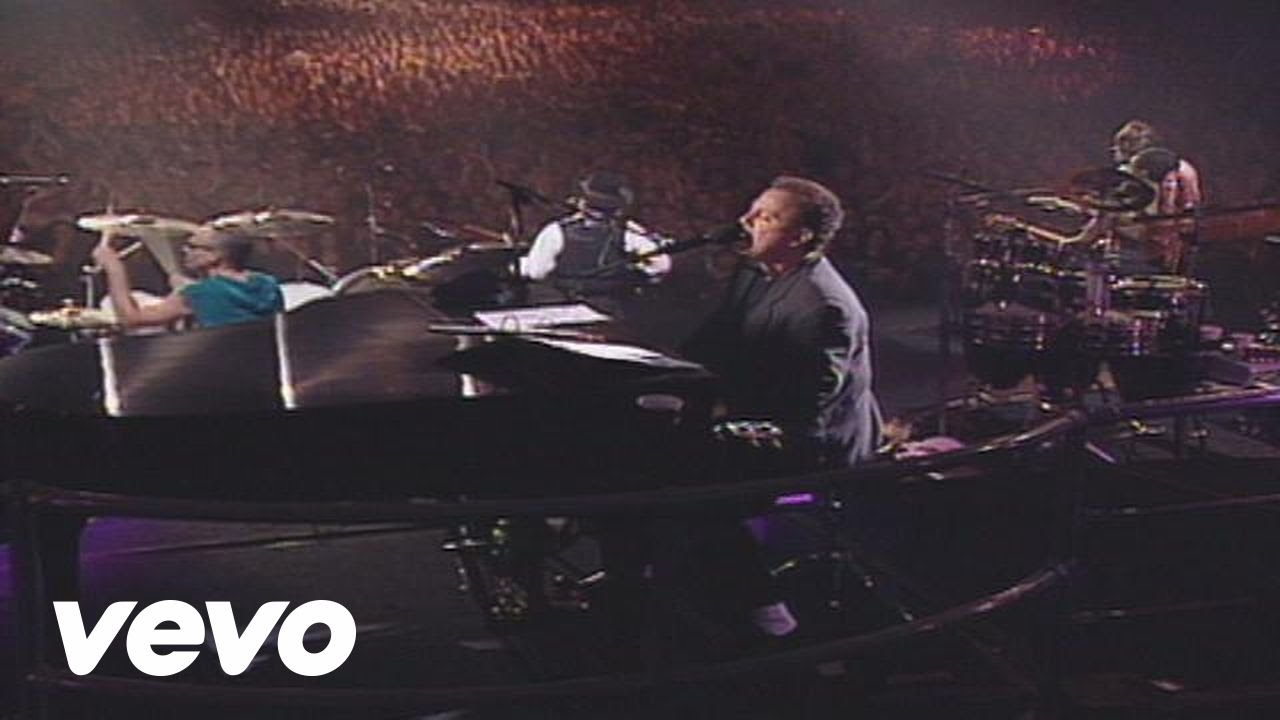
Billy Joel - My Life (Live From The River Of Dreams Tour)
Awards & Professional Recognition
Throughout his career, Joel has earned the highest honors in music. He won multiple Grammy Awards – six between 1978 and 1980 alone – for his recordings.
He was inducted into the Songwriters Hall of Fame in 1992 (later receiving its top honor, the Johnny Mercer Award, in 2001). In 1999 Joel was inducted into the Rock & Roll Hall of Fame and received the RIAA’s Diamond Award (for 10+ million album sales) that same year.
Later honors include the Library of Congress Gershwin Prize for Popular Song (2014) and the ASCAP Centennial Award (2014), both celebrating lifetime achievement in songwriting. He also received the Kennedy Center Honors in 2013 for his career in the arts.
His work has earned dozens of other accolades from organizations like ASCAP and BMI, underscoring his reputation as one of America’s most respected songwriters and performers.
Collaborations With Orchestras & Conductors
While primarily known as a rock/pop performer, Joel’s music has often been embraced by symphony orchestras. Major U.S. orchestras have presented tributes to his work with guest vocalists and full orchestral arrangements.
In 2025 the Detroit Symphony Orchestra performed The Billy Joel Songbookwith pianist-vocalist Tony DeSare, conducted by Enrico Lopez-Yañez. The Cleveland Orchestra similarly featured Joel’s hits in a 2025 Pops program led by conductor Stuart Chafetz.
Even pop music specialist Steven Reineke(Houston Symphony’s principal pops conductor) has conducted concerts of Billy Joel songs (with Tony DeSare as soloist) in celebration of Joel’s catalog. These orchestral productions illustrate how Joel’s compositions can cross into classical settings.
(In a related crossover, violinist Itzhak Perlman has also joined Joel on stage during live rock concerts, blending classical and pop elements.)
Recent Career Activity
In recent years Joel’s career has focused on live performance and archival releases rather than new pop albums. In 2007 he issued the single “All My Life,” his first new pop song in 14 years.
After another hiatus, he returned with “Turn the Lights Back On,” released in February 2024 – his first new pop release in decades.
In 2025 he released a major archival project: a 100-song digital collection titled Billy Joel: And So It Goes(to accompany a two-part documentary about his life). He has also overseen deluxe reissues of his classic albums – for example, several of his 1970s records were reissued on vinyl in 2024.
Throughout this period Joel continued touring in the New York/New Jersey area, wrapping up his unprecedented Madison Square Garden residency in July 2024 (150 shows in all). His recent focus on legacy projects and live performance underscores the enduring impact of his music and the continued demand for his concerts.
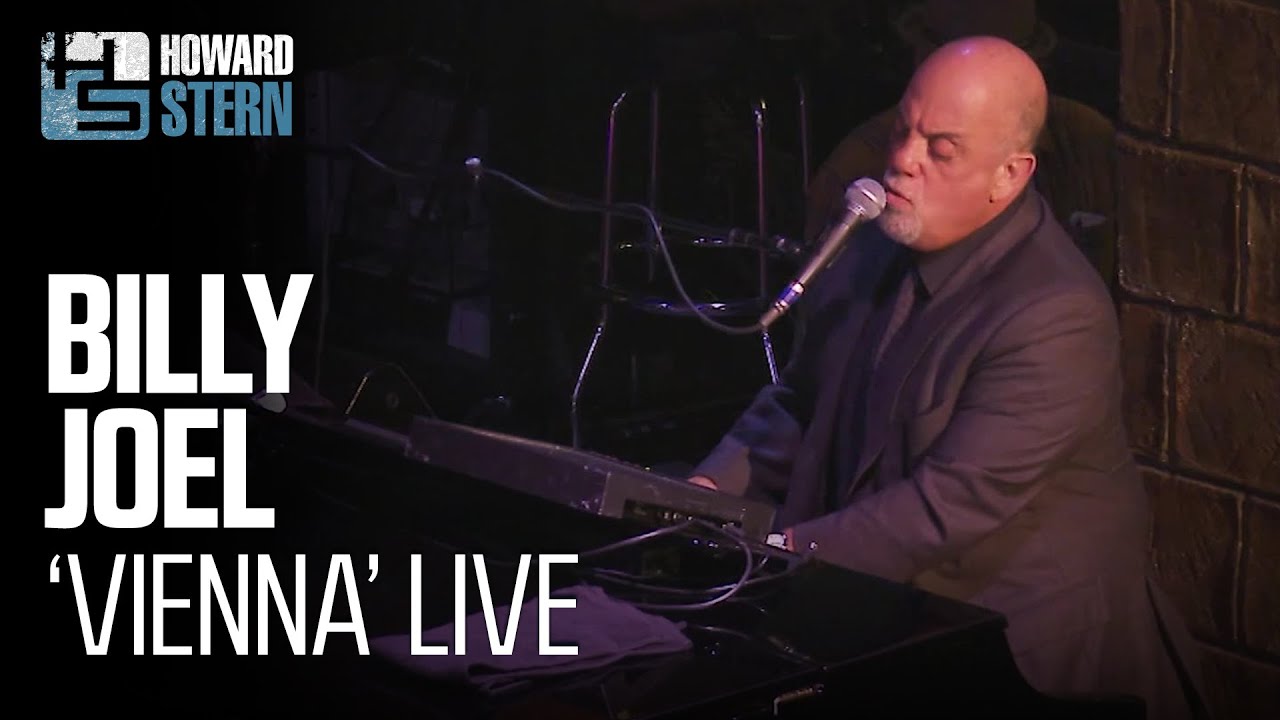
Billy Joel “Vienna” Live at SiriusXM’s Town Hall (2014)
Billy Joel Performance (2025–2026)
- Major stadium concerts announced:In early 2025 Joel planned a series of one-night “One Night – One Stage” stadium shows with fellow rock legends. He was slated to co-headline with Sting at Citi Field in Queens, NY on Aug 21, 2025, and with Stevie Nicks at Levi’s® Stadium (Santa Clara, CA) on Oct 4, 2025 and at the New Orleans Caesars Superdome on Oct 18, 2025.
- Historic venue debuts:Several scheduled shows marked first-time appearances: the Levi’s Stadiumshow was Joel’s first Bay Area concert in a decade, and the New Orleans event was his debut at the Caesars Superdome. (The Citi Field date also would have been his first concert there.)
- Collaboration with Rod Stewart:Joel announced a co-headlining concert with Sir Rod Stewart at Paycor Stadium in Cincinnati (Sept 20, 2025). This one-night event was billed as a dual set of each artist’s greatest hits, reflecting Joel’s continued engagement with top-tier peers.
- High-profile tour dates:The 2025 schedule also included major U.S. venues (Yankee Stadium, Citi Field, MetLife Stadium, etc.), underscoring Joel’s broad audience reach. Tickets for these events generated heavy fan interest and were sold via presale promotions.
- Postponement and cancellation:After undergoing surgery, Joel’s team announced in March 2025 that the tour would resume July 5 at Acrisure Stadium (Pittsburgh). However, a later diagnosis of Normal Pressure Hydrocephalus (a brain-fluid condition) led him to cancel all remaining 2025–2026 shows. (Official statements cite health recovery as the reason for postponing/canceling these dates.)
Billy Joel: Piano Style And Musical Interpretation
Technical Approach And Piano Control
He favors a smooth, controlled legato in his playing, especially in ballad-style pieces. Joel maintains careful pedaling and precise touch, as heard in instrumentals like “Nocturne,” where his classical legato is evident.
In fast, blues-rock passages he achieves impressive speed with a relaxed, economical technique. Critics note a polished smoothness to his solos that comes from efficient motion rather than flamboyant gestures.
Joel can execute very demanding passages. For example, the rapid toccata-like intro to “Prelude (Angry Young Man)” requires advanced hand coordination and endurance beyond what most songwriter-pianists attempt.
He has acknowledged physical limitations: due to past hand injuries he “mostly use[s] two fingers on [his] left hand” and relies on bold octave patterns. This means his control is straightforward and powerful, even if it sacrifices subtle fingering or inner-voice complexity.
Tone, Touch, And Sound Color
Joel’s touch is generally even and deliberate. In slower songs he uses the sustain pedal and legato playing to produce a warm, singing tone, allowing melodies to flow smoothly.
His sound is polished and blended rather than percussive. Observers describe a “relaxed sound” to his playing, with each note connected and full-bodied.
Because he moves with economy, his tone tends to be clear and refined rather than the harsh pounding one hears in some rock piano styles.
Rhythm, Phrasing, And Structural Clarity
Billy Joel plays with careful rhythmic placement to match each song’s groove. For instance, he accentuates beats one and three (a “backwards” rock pattern) on songs like “The Downeaster ‘Alexa’,” giving it a folk-driven shuffle rather than the usual on-two-and-four rock beat.
He crafts his phrasing to feel natural and flowing. Joel aims to hide complexity in transitions so that the music sounds effortless; as he put it, listeners “shouldn’t hear the seams and bolts” of the song’s construction. This approach ensures that even intricate arrangements come across as organic and well-shaped.
His classical training informs clear phrase structure and tension-and-release shapes. He has noted that he “hates to beat an idea to death,” preferring concise, song-like bridges and climaxes rather than extended ostinatos. This discipline gives his phrasing a logical arc and avoids monotony.
Interpretative Approach To Repertoire
When tackling different genres, Joel filters them through his personal style. His own piano compositions deliberately invoke Romantic-era models; the solo album Fantasies & Delusionswas written in the style of Chopin, Schubert, Rachmaninoff and even Debussy. In that project he openly emulated those idioms.
Even so, critics note that these classical-inspired pieces retain Joel’s distinctive melodic and rhythmic character. They describe the music as “genuinely beautiful” and unusually robust (even “muscular”) compared to the more yielding feel of his models; essentially, he borrows the surface style but keeps the music fundamentally his own.
Across his rock and pop repertoire, Joel’s focus is on song narrative. He seamlessly blends elements of rock, folk, gospel, and classical as needed, but always in support of the story.
Musicologists emphasize that he uses the piano to serve the song rather than to show off technical prowess. In practice, this means his performances of different styles are unified by his clear, song-centered interpretation.
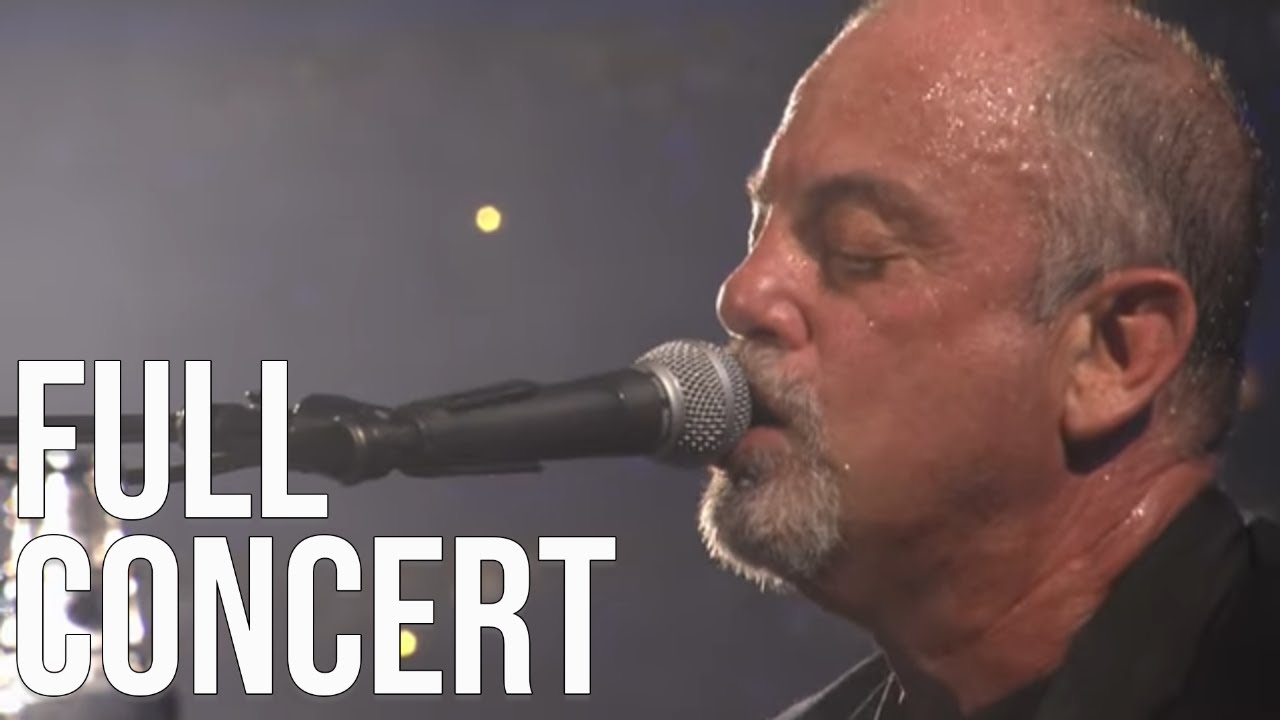
Billy Joel: Live at Shea Stadium | Full Concert
Balance Between Precision And Expression
Joel’s playing strikes a deliberate balance: it is technically clean without excessive flash. Analysts note that his solos are smooth and precise, lacking the overt bravado of a showman. He avoids “wild-man” antics and instead focuses on solid ensemble sound.
He admits his style is not about finesse. Joel himself has said that due to injury he has “no subtlety” and tends to use straightforward octave passages.
In other words, he opts for direct expression through volume and rhythm rather than delicate ornamentation. His classical background instilled discipline in his playing. He consciously avoids overplaying any motif: each idea is stated clearly and then released.
As he explained, his training taught him tension-and-release, so he rarely “beats an idea to death” in performance. In sum, critics observe that despite his extensive technique, Joel prioritizes the song. His precision and control are always in service of musical expression.
One scholar notes that Joel’s piano skill is “far in excess of almost all other rock pianists,” yet it is consistently used to enhance the music’s emotional impact, not to distract from it.
Critical Observations And Musical Identity
Observers frequently emphasize Joel’s dual role as virtuoso and songwriter. One musicologist remarks that although his technical prowess outstrips nearly all rock keyboardists, “he is a songwriter above all.”
In other words, his identity rests on storytelling; the piano is his tool, not the focal point.
Reviewers underscore that Joel forged a unique niche by marrying classical sensibility with mainstream songwriting. His polished, narrative-driven approach has given rise to a persona where the piano represents orchestral depth rather than rebellious show.
As noted above, scholars praise how “his piano serves his songs,” reflecting a style defined more by compositional discipline than by pure virtuoso display.
Billy Joel Net Worth
As of 2026, Billy Joel’s net worth is estimated to be between $225 million and $250 million. He built this fortune through a decades-long career in music and songwriting, becoming one of the best-selling artists with over 150 million records sold worldwide.
He also earned large sums from live concerts and touring including a decade-long residency at New York’s Madison Square Garden. He retains ownership of his entire song catalog, generating ongoing royalties, streaming revenue and licensing fees each year.
FAQs
1. How Old Is Billy Joel?
Billy Joel was born on May 9, 1949. As of 2026, he is 76 years old.
2. What Is Billy Joel’s Net Worth?
Billy Joel’s net worth is estimated between $225 million and $250 million as of 2026. His wealth comes primarily from record sales, touring, and long-term ownership of his music catalog.
3. Does Billy Joel Still Tour?
Billy Joel ended his monthly Madison Square Garden residency in July 2024 after 150 performances. In 2025–2026, he canceled remaining tour dates due to health-related issues.
4. What Are Billy Joel’s Most Famous Songs?
Billy Joel is best known for songs such as Piano Man, Uptown Girl, Just the Way You Are, and We Didn’t Start the Fire. These tracks remain staples of classic rock and pop radio worldwide.
5. Is Billy Joel Still Releasing New Music?
Billy Joel released the single Turn the Lights Back Onin February 2024, marking his first new pop song in many years. Since then, his focus has been on live performances and archival projects rather than new studio albums.