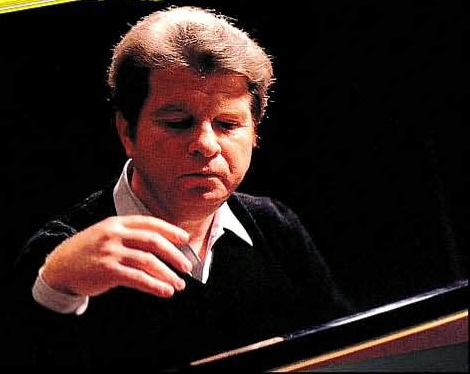
Emil Gilelswas born on 19 October 1916 in Odessa (then part of the Russian Empire). He was raised in a Jewish family: his father, Grigory Gilels, was a clerk at a local sugar refinery and his mother, Gesya, cared for the household. Gilels had a younger sister, Elizabeth (born 1919), who later became a noted violinist.
Musical Training
Gilels showed musical promise early and began formal piano lessons around age five under local instructor Yakov Tkach in Odessa. He gave his first public recital in Odessa in 1929 (at about age 12). In 1930 he was accepted into the Odessa Conservatory to study under pianist Berta Reingbald.
He graduated from the Odessa Conservatory in 1935 and then pursued advanced study at the Moscow Conservatory under Heinrich Neuhaus(1935–37). He later recalled that his Odessa teacher Tkach had provided him with a “firm foundation” in his technique. These years of study in Odessa and Moscow built on the strong technical groundwork laid by his childhood instructors.
| Aspect | Details |
| Full Name | Emil Grigoryevich Gilels |
| Date of Birth | 19 October 1916 |
| Place of Birth | Odessa, then part of the Russian Empire |
| Family Background | Born into a Jewish family |
| Father | Grigory Gilels, clerk at a local sugar refinery |
| Mother | Gesya Gilels, managed the household |
| Sibling | Younger sister Elizabeth (born 1919), later a violinist |
| First Piano Lessons | Began around age five with Yakov Tkach in Odessa |
| First Public Recital | 1929, Odessa |
| Odessa Conservatory | Studied under Berta Reingbald (from 1930) |
| Graduation | Graduated from Odessa Conservatory in 1935 |
| Moscow Conservatory | Advanced studies with Heinrich Neuhaus (1935–1937) |
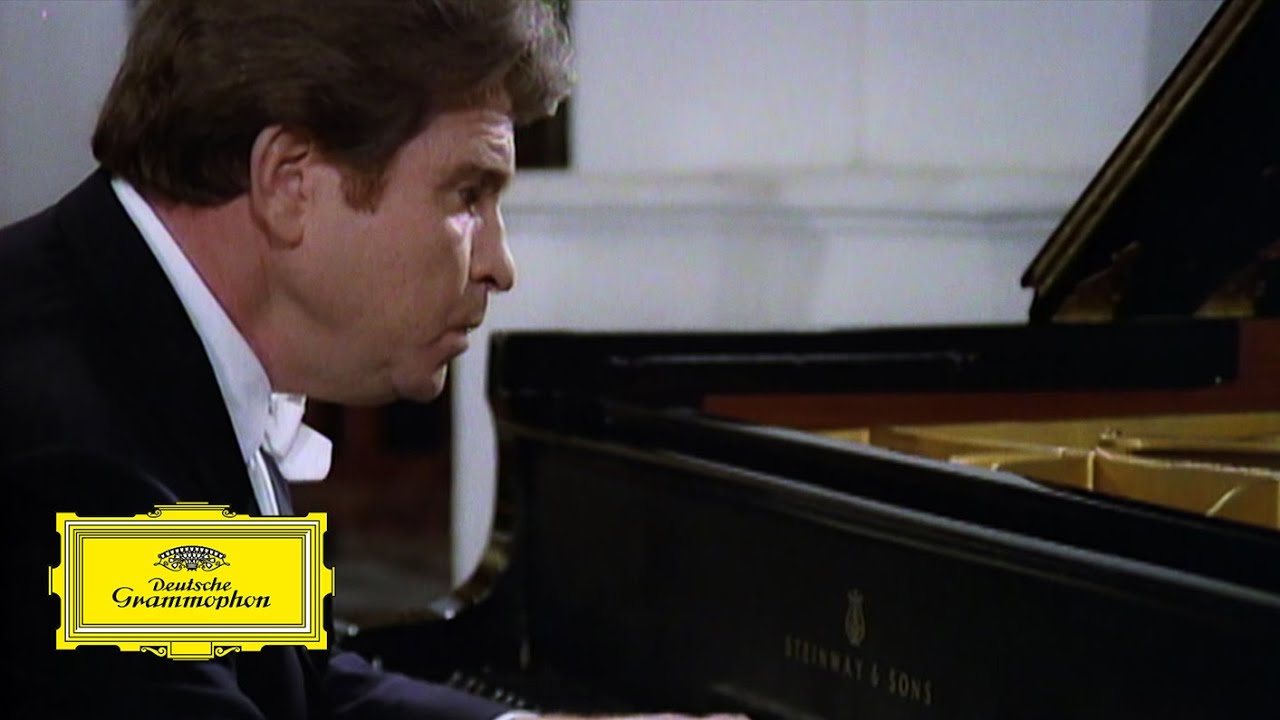
Emil Gilels - Beethoven: Piano Sonata No. 21 "Waldstein" in C Major, Op. 53: I. Allegro con brio
Career Beginnings
Gilels made his public debut as a pianist in 1929. His performing career took off after he won first prize in the first All-Union Musicians’ Competition in Moscow in 1933. This triumph launched him on extensive concert tours throughout the Soviet Union.
After graduating from the Odessa Conservatory in 1935, he moved to Moscow for advanced study with Heinrich Neuhaus and quickly became a rising star. In 1936, the distinguished conductor Otto Klempererchose Gilels to play Beethoven’s Piano Concerto No. 3 with his orchestra in Moscow, underscoring Gilels’s emerging stature in Soviet musical life.
International Breakthrough
Gilels’s international reputation was cemented in 1938 when he won the Queen Elisabeth (Ysaÿe) International Piano Competition in Brussels. His first-place finish made “the whole musical world begin to talk about Emil Gilels”.
The outbreak of World War II curtailed immediate overseas tours, but during the war Gilels continued to perform in the Soviet Union, including a famed 1943 concert of Stravinsky’s Petrushka in besieged Leningrad.
After 1945 he embarked on concert tours across Europe, giving recitals and concerto performances in Italy, the United Kingdom, France, Austria, Scandinavia and other countries.
In 1955 he became the first Soviet artist to tour the United States after the war; his American debut featured Tchaikovsky’s Piano Concerto No. 1 with the Chicago Symphony Orchestra under Fritz Reiner. His 1959 London debut similarly earned widespread acclaim.
Major Performances & Concert Highlights
Gilels appeared regularly in major concert halls with leading orchestras. Reviewers praised his combination of power and subtlety: the Los Angeles Times noted his “flair both for thunderous virtuosity and songful tonal manipulation,” while The New York Times lauded his “formidable, high-finish technique and beautiful control of nuance”.
He gave many landmark performances, such as the December 1944 premiere of Prokofiev’s Piano Sonata No. 8 at the Great Hall of the Moscow Conservatory. (He also gave celebrated performances of Brahms, Beethoven and Tchaikovsky concertos.)
Throughout the 1950s–70s he was in high demand worldwide, playing solo recitals and concerto appearances in Europe, North America, Japan and beyond.
Recordings & Discography
Gilels was an exceptionally prolific recording artist. He made studio recordings for Soviet and Western labels (Melodiya, RCA, Columbia, EMI, Deutsche Grammophon, etc.) spanning solo, concerto and chamber repertoire.
His discography includes celebrated versions of the Brahms Piano Concertos with conductor Eugen Jochum and the Berlin Philharmonic, and a complete Beethoven symphony cycle with George Szell and the Cleveland Orchestra.
He also recorded late-Romantic and modern works: for example, his 1984 recording of Beethoven’s “Hammerklavier” Sonata won a Gramophone Award that year.
In all, Gilels committed over 500 pieces to record. His recordings of Chopin, Rachmaninoff, Prokofiev and many others remain reference recordings today.
Awards & Professional Recognition
| Award | Year |
| Stalin Prize | 1946 |
| People’s Artist of the USSR | Awarded later in career |
| Lenin Prize | 1962 |
| Hero of Socialist Labour | 1976 |
| Orders of Lenin | Received twice |
Gilels received numerous top honors in the Soviet Union. He won the Stalin Prize in 1946, and was later named a People’s Artist of the USSR.
In 1962 he was awarded the Lenin Prize and in 1976 he became a Hero of Socialist Labour. He also received multiple state decorations (including two Orders of Lenin).
These awards reflected his status as one of the Soviet Union’s most eminent musicians.
Collaborations With Orchestras & Conductors
Gilels frequently performed with leading soloists, ensembles and conductors. He formed a celebrated piano trio with violinist Leonid Koganand cellist Mstislav Rostropovich, touring and recording the standard trio repertoire.
As a concerto soloist he appeared with the Soviet State Orchestra and Moscow Philharmonic under Evgeny Svetlanov, Kirill Kondrashin, Kurt Sanderlingand other prominent conductors.
In the West he collaborated with top orchestras such as the Chicago Symphony and Cleveland Orchestra, and conducted by Fritz Reiner, George Szelland others.
His recording legacy includes the Brahms concertos with Eugen Jochumand the Berlin Philharmonic, and Beethoven concertos and sonatas with Szell’s Cleveland Orchestra, all regarded as landmark interpretations.
Recent Career Activity
Gilels remained active into the early 1980s. In 1981 he suffered a heart attack after a recital in Amsterdam, but he soon returned to the stage and continued recording.
In the mid-1980s he was working on a final studio cycle of Beethoven’s complete piano sonatas.
Reflecting on his life late in his career, Gilels remarked, “When I was a child, it was a dream to be… an acclaimed, successful artist. If I am reincarnated, I would like to do it all again, only better”.
He passed away in 1985, shortly after completing many of the projects that defined his career.

Emil Gilels - Rachmaninov - Prelude No 5 in G minor, Op 23
Emil Gilels Performance Highlights
- 1945:Emil Gilels co-founded a celebrated piano trio with violinist Leonid Kogan and cellist Mstislav Rostropovich.
- 1955:Among the first Soviet pianiststo tour internationally, Gilels made his U.S. debut (Oct. 3) with conductor Eugene Ormandy and the Philadelphia Orchestra, performing Tchaikovsky’s Piano Concerto No. 1.
- 1958–1965:Gilels continued major U.S. concert tours, featuring works like Brahms’s Piano Concerto No. 2 (with Fritz Reiner and the Chicago Symphony) and Chopin’s Piano Concerto No. 1 (with Ormandy and the Philadelphia Orchestra).
- 1960:Gilels was the piano soloist at Carnegie Hallfor the U.S. premiere of the Moscow State Symphony (conducted by Constantin Ivanov).
- 1969:Gilels’s Salzburg Festival debut included Beethoven’s Piano Concerto No. 3 with conductor George Szelland the Vienna Philharmonic.
- 1979:Gilels performed Tchaikovsky’s Piano Concerto No. 1 with the New York Philharmonicunder Zubin Mehtain a televised benefit concert.
- 1981:Gilels’s final major recital was at Amsterdam’s Concertgebouw, after which he suffered a heart attack and subsequently ceased concertizing.
Emil Gilels: Piano Style And Interpretation
Technical Approach And Piano Control
Gilels was renowned for his formidable technique. His fingers commanded the keyboard with exceptional precision, delivering thunderous chords or the tiniest decorative figures with equal ease. Reviewers note that he could strike a key with great force when needed and immediately follow with a gentle, whisper-soft touch.
This remarkable control meant every note spoke clearly: even rapid, dense passages remain transparent and well-articulated. He cultivated smooth, even legato in all registers. In performance he favored balanced, symmetrical phrasing for example, in Beethoven sonatas his motifs form well-shaped arcs rather than abrupt, jagged accents.
In short, Gilels’s technique combined strength and accuracy. He achieved big, resonant sound without ever sounding heavy or frantic, a sign of his relaxed yet assured approach. Observers often describe his playing as the epitome of control: at full speed he maintains a taut precision, and in slow, melodic lines he sustains a seamless connection between phrases.
All told, his piano control was so reliable and refined that even the most complex virtuoso passages were delivered with apparent ease and unwavering clarity.
Tone, Touch, And Sound Color
The quality of Gilels’s tone was widely admired for its consistency and beauty. He produced a warm, clear, and burnished sound that remained rich at every dynamic level. In gentle passages his tone has a singing, liquid quality, as if each note is softly caressed.
In climactic moments his chords are full and golden, never thin or harsh. Critics often emphasize how his touch serves color: he could make a melody shimmer or glow even at low volume. For instance, some of his Chopin preludes give the impression of luminous, singing notes in the upper register.
At the same time, he was careful not to overuse pedal blur; his sound always retains crystalline clarity. Reviewers have specifically noted Gilels’s polished, even fingerwork. One critic remarked that his Chopin concerto was impressive for its surface sheen, with each note precisely placed.
Even when playing very softly, his attack is firm enough to speak clearly in the hall. His soft touch in lyrical works was frequently praised a live recording of a Rachmaninoff piece notes that Gilels’ soft touch is just what is required for delicate passages.
Conversely, his forte passages carry majestic power without any biting edge. Unlike the more flamboyant coloristic players, Gilels did not chase exotic tonal effects; he stayed grounded in a natural, resonant piano tone.
The net effect is a palette that feels broad and vivid yet controlled. He could conjure bright, singing highs and warm, rounded bass without ever sounding unpredictable. In short, his touch was so refined that it made every dynamic contour and phrase emerge in full color a rich but disciplined sound world that critics often describe as elegant and even luminous.

Emil Gilels - Schumann - Arabesque in C major, Op 18
Rhythm, Phrasing, And Structural Clarity
Gilels approached rhythm with unwavering steadiness and logical flow. He generally held to solid tempos and used rubato sparingly, so that the music’s structural outline remained clear at all times. In lively movements his pulse is energetic and driving; in slow movements he allows spacious breadth without ever losing momentum.
For example, his Beethoven performances are often described as lucid, weighty, spacious deliberate yet never dull. He takes time in climaxes but never feels restless or dragging. In faster scherzos and finales the tempo feels secure and forward-moving, never pushed hurriedly.
When it comes to phrasing, Gilels favors symmetry and balance. He tended to shape melodies so that each phrase has a clear beginning and ending, often giving thematic returns equal weight. One critic notes that Gilels’s phrasing in Beethoven’s concerto sidesteps the angular accentuation found in other readings, instead unfolding each line in a rounded, seamless arc.
This means that even complicated passages or fugues remain intelligible, as each layer of sound is articulated carefully. In practice, every motif and phrase is allowed to develop fully before moving on.
The result is that the architecture of the piece comes through clearly: sections like development and recapitulation in a sonata form are perfectly delineated, and recurring themes appear with firm rhythmic logic.
In ensemble settings, such as concertos or chamber music, Gilels’s rhythmic clarity helped him integrate smoothly with others. He played piano with a firm but natural pulse, and he adjusted supportively to the orchestra or chamber partners.
This ensured that ensemble textures never become muddied. To summarize, Gilels’s command of rhythm and pacing always served musical coherence. Phrases have weight and breathing space; tempos respect both drive and poise; and the formal outline of each work is never obscured.
All this contributes to a profound sense of structural clarity, making it easy for listeners to follow the music’s unfolding story under his hands.
Interpretative Approach To Repertoire
Gilels tailored his interpretations thoughtfully to each composer and style, while remaining true to his own principles of balance and clarity. In Classical-era works such as Mozart and Haydn he favored elegance and poise. Critics describe his Mozart as eminently stylish and moderated, with a naturally graceful flow.
He would take repeats when musically justified and play with refined phrasing, producing a performance that many find both clear and deeply expressive. Similarly, his Beethoven interpretations blend solidity with vision. He often chose broad, searching tempos but always maintained the music’s dramatic shape.
Reviewers praise these readings as weighty and majestic, yet still agile in the details. In Romantic repertoire, Gilels combined sweep with precision. His Chopin playing, for example, emphasizes lyricism and polish: one account calls his Sonata in B minor grand and abundantly lyrical.
He avoids indulgent rubato and instead crafts each line carefully, letting Chopin’s harmonies and melodies speak clearly. Likewise, in Liszt and Schumann he draws out the music’s passion without blurring its form.
He delivered Liszt’s torrents of notes with a brilliant but clean attack, and Schumann’s intricate textures with crisp clarity. When playing Romantic concertos Brahms, Rachmaninoff, Tchaikovsky Gilels unleashed the full weight of the piano with authoritative strength.
For instance, his account of Rachmaninoff’s famous C-sharp minor Prelude has been commended for having all the power and majesty required. Yet even at high volume, the melodic lines remain lustrous and controlled, not heavy-handed.
Gilels was also a tireless advocate of 20th-century music. He gave premieres of Prokofiev and Shostakovich piano works and championed many of their scores. His approach to Scriabin earned special notice: critics hailed him as an ideal Scriabin interpreter, capable of revealing the composer’s ethereal, otherworldly colors with a superb deft touch.
In Prokofiev’s music, Gilels is said to balance the modern, spiky edges with emotional depth and clarity. For example, his premiere of Prokofiev’s Eighth Sonata was praised for mastering its technical challenges while retaining lyrical warmth.
In Shostakovich’s piano works, he similarly highlighted both the surface charm and the undercurrents of tension. Reviewers note that he could make a Shostakovich concerto seem light and playful, yet always with a suggestion of its hidden irony.
Across all styles, Gilels’s interpretative aim was consistency with the score’s intent. He adapted to each era without losing himself: the classical logic of Mozart came through the same intellect that powered his modern Russian performances.
In every case he prioritized coherence of line and clarity of structure. Whether playing Baroque Scarlatti sonatas with poise and energy or Debussy’s impressionistic images with transparency, his interpretations remained grounded and intelligible.
In short, Gilels approached each work by respecting its style and rendered its essence with impeccable technique and conviction.
Balance Between Precision And Expression
A defining trait of Gilels’s artistry is the seamless union of precision and expressive depth. While his technique and rhythmic discipline were impeccable, they never overwhelmed the music’s feeling. Observers frequently emphasize that every technical effect served a musical purpose.
For example, he might use a sudden drop to pianissimo or a sharp fortissimo to heighten contrast, but such gestures always underscore the piece’s emotional arc. He was not given to idle showmanship: critics note that his extreme dynamics are employed to shape phrases rather than for flash.
His Chopin playing, noted for its evenness, still commands respect and induces awe precisely because it remains musical. Conversely, Gilels never let emotional expression compromise the internal logic of the music.
Even in the most impassioned moments, he maintained clear structure and clean lines. A reviewer of his Beethoven recordings remarked on his sublime slow movement in the Hammerklavier Sonata a passage full of feeling, yet each note is articulated with extraordinary finesse.
Similarly, in a Rachmaninoff concerto he played with a broad, elegiac sweep but without any sense of losing rhythmic control or clarity. As his artistry matured, many analysts observed that Gilels’s interpretations gained in subtlety without sacrificing strength.
His earlier playing could be more overtly fiery, but later performances became increasingly refined. One writer notes that over time Gilels evolved from impulsive bravura to a style imbued with greatest subtlety, delicacy and inner concentration.
This evolution illustrates how he learned to channel his technical power into nuance and expression. The balance he struck is also evident in his ensemble work: colleagues and critics say Gilels always played with collaborative restraint, fitting his grand gestures into the musical whole rather than overpowering it.
In sum, Gilels’s balance is one of control enriched by feeling. He trusted the music’s own emotional content, bringing it to life through clear, considered playing.
Listeners hear the architectural precision of a pianist confident in his craft, yet always enlivened by a genuine sense of purpose. This equilibrium of accuracy and sensitivity discipline allied to passion is a hallmark of his legacy.

Emil GILELS plays CHOPIN Ballade live /SU record
Critical Observations And Musical Identity
Critics have consistently placed Emil Gilels among the great pianists of the 20th century, noting a unique combination of qualities in his playing. He is often described as the archetypal representative of the Russian piano school technically superb yet fundamentally musical.
One commentator even wrote that Gilels was without a doubt one of the most outstanding examples of this tradition, ensuring that the history of the piano will always include a section about him. These kinds of assessments underline that experts regard him as essential listening for serious students of piano.
Throughout his career, reviewers noted that Gilels’s performances had a characteristic sincerity and honesty. He was not known for theatrics or exaggerated interpretation. Instead, his musical identity was built on reliability and depth.
Many listeners highlight that there was no sentimentality in his playing, only clear musical intent one writer particularly lauded his Scriabin recordings for showing deft touch in otherworldly music.
At the same time, he could inspire awe with sheer scale: at his death one critic remarked that the world had lost a superstar in the true sense of the word, implying the magnitude of his presence. Such comments reflect a consensus that Gilels balanced greatness with humility.
In ensemble and concerto settings, musicians admired his partnership skills he was seen as someone who elevated collaborators without drawing undue attention. The clarity of his technique meant one could hear every note, every inner voice; colleagues often remarked that nothing was forced or showy.
What Was Emil Gilels’s Net Worth At The Time Of His Death?
At the time of his death in 1985, Emil Gilels’s net worth was estimated at about $5 million (USD). However, this estimate comes from an online entertainment source and has not been verified by major financial outlets such as Forbes.
He was one of the first Soviet concert pianists to perform outside the USSR, debuting in the United States in 1955. Gilels earned money through a long career as a classical pianist, with income from international concert tours and teaching at the Moscow Conservatory.
FAQs
1. Who Was Emil Gilels?
Emil Gilels was a Soviet pianist widely regarded as one of the greatest classical pianists of the 20th century. He was known for his technical mastery, tonal richness, and authoritative interpretations of classical and modern repertoire.
2. When And Where Was Emil Gilels Born?
Emil Gilels was born on 19 October 1916 in Odessa, which was then part of the Russian Empire. Odessa later became part of the Soviet Union and is now located in Ukraine.
3. What Is Emil Gilels Most Famous For?
Emil Gilels is most famous for winning the 1938 Queen Elisabeth International Piano Competition and for his acclaimed performances of Beethoven, Brahms, and Russian composers. His recordings are still considered reference interpretations today.
4. Did Emil Gilels Perform Internationally?
Yes, Emil Gilels performed extensively across Europe, the United States, and Japan after World War II. In 1955, he became the first Soviet pianist to tour the United States during the Cold War era.
5. What Was Emil Gilels’s Piano Playing Style?
Emil Gilels was known for combining powerful technique with clarity, balance, and structural control. His playing emphasized musical integrity, precise rhythm, and a rich but disciplined tone.
6. When Did Emil Gilels Die, And What Was The Cause Of His Death?
Emil Gilels died on 14 October 1985, shortly before his 69th birthday. He passed away following health complications after suffering a heart attack earlier in the 1980s.