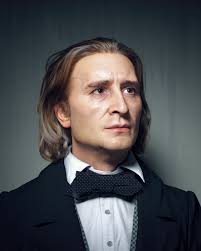
Franz Lisztwas born on October 22, 1811, in the village of Raiding (Doborján) in Sopron County in the Kingdom of Hungary. He was the only child of Adam Liszt and Marie Anna (née Lager) Liszt. Adam Liszt worked as an administrator (a sheep-accountant) for the Esterházy estate and was an accomplished amateur musician, he played cello in the court orchestra and often played piano at home. Liszt’s mother, Marie Anna, came from a working-class Viennese family and worked as a chambermaid.
The region of Raiding was German-speaking, and Franz Liszt grew up speaking German.
From an early age Liszt’s home life was filled with music. His father frequently hosted chamber-music gatherings at the Liszt home, and Adam recognized his son’s talent almost immediately. Franz began piano lessons with his father around age seven, and by age eight he was composing simple pieces of his own.
He even gave his first public performances in childhood. As Britannica notes, he showed interest in sacred and folk melodies and by eight was already composing. Liszt’s early education was thus informal but intensive, guided by his father and the musical circle around the Esterházy court.
In 1822, when Liszt was about ten years old, Adam Liszt moved the family to Vienna so Franz could receive more advanced musical training. In Vienna the boy studied piano with Carl Czernyand composition with Antonio Salieri. These distinguished teachers were so impressed with his talent that they gave him lessons without charge.
Wealthy patrons from Hungary also came forward to sponsor Liszt’s studies, Hungarian noblemen financed his education in Vienna for about six years.
In late 1823 Liszt traveled with his father to Paris with the aim of entering the Paris Conservatory. However, the Conservatory’s director, Luigi Cherubini, refused to admit him on the grounds that he was a foreigner. Undeterred, Adam Liszt arranged for Franz to continue his education privately in Paris.
He took lessons in advanced composition from the Italian composer Ferdinando Paër. These studies completed Liszt’s formal music training before he turned to a performing career in his late teens.
| Aspect | Details |
| Birth | Franz Liszt was born on October 22, 1811, in Raiding, Kingdom of Hungary. |
| Parents | He was the only child of Adam Liszt and Marie Anna Lager. |
| Father’s Role | Adam Liszt worked for the Esterházy estate and was an amateur musician. |
| Mother’s Background | Marie Anna Lager came from a working-class Viennese family. |
| Native Language | Liszt grew up speaking German. |
| Musical Home | Music was central to his home environment from early childhood. |
| First Lessons | He began piano lessons with his father at about age seven. |
| Early Composing | By age eight, Liszt was composing simple piano pieces. |
| Move to Vienna | The family moved to Vienna in 1822 for his musical training. |
| Piano Teacher | He studied piano with Carl Czerny in Vienna. |
| Composition Teacher | He studied composition with Antonio Salieri. |
| Financial Support | Hungarian noblemen funded his education. |
| Paris Education | After rejection from the Conservatory, he studied privately in Paris. |
| Final Training | He completed formal studies with Ferdinando Paër. |
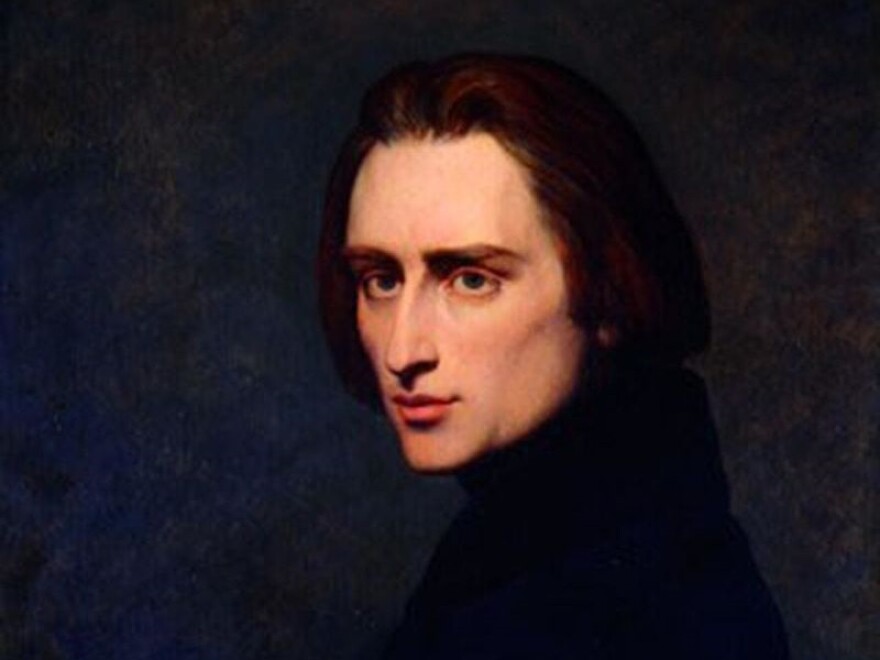
Career Beginnings
Franz Liszt emerged as a piano prodigy in early childhood. He composed by age eight and gave his first public concert at nine, winning the support of wealthy patrons who funded his studies in Vienna.
By his early teens he was already acclaimed on the international stage: in 1824 (at age 13) he debuted in Paris and the following year performed in London for King George IVat Windsor Castle.
These early successes established Liszt’s reputation as a virtuoso. He quickly built a repertoire of dazzling concert pieces, laying the foundation for a touring career.
International Breakthrough
Liszt’s popularity exploded during his mid-teen years and beyond. In the late 1830s he embarked on sweeping concert tours across Europe, performing solo recitals in major cultural centers.
In December 1839 in Rome he pioneered the format of the full solo piano recital – a dramatic departure from the mixed-artist programs of the time – and famously quipped “Le concert c’est moi” (“The concert is me”).
By this period his extraordinary technique and showmanship had made him a household name; the term “Lisztomania”was coined to describe the fan frenzy and hysteria that attended his performances.
His brilliance at the keyboard and innovative programming cemented his international breakthrough as one of the 19th century’s first superstars of classical music.
Major Performances & Concert Highlights
Throughout his career Liszt’s performances were landmark events. As a teenager he played for European royalty – in 1825 he gave a celebrated concert for King George IV of Britain.
In adulthood he continued to dazzle audiences with high-profile premieres and concerts. He premiered his own works as well: Liszt gave the first performance of his Piano Concerto No. 1 in E-flaton February 17, 1855 in Weimar (with Hector Berliozconducting).
He also composed grand sacred works and led their premieres, conducting the debut of his Legend of St. Elizabethoratorio in 1865 and later his Hungarian Coronation Massin June 1867 at the imperial coronation in Budapest.
On every tour Liszt tailored programs of virtuoso bravura pieces and transcriptions, often including his own dramatic compositions. He also used his concerts for philanthropy – notably organizing benefit concerts in 1839 for flood victims in Hungary.
These concerts and premieres, from the early 1820s through the 1860s, rank among the high points of Liszt’s performing career.
Recordings & Discography
Although Liszt died before recording technology existed, his music has been extensively recorded by later artists. Pianist Leslie Howard’s 99-CD box set(Hyperion Records, 2011) of Liszt’s complete solo piano musicis one of the most famous examples, containing every known note of Liszt’s keyboard works.
This monumental project earned a Guinness World Record as the largest solo recording series.
Other major recording efforts have focused on his symphonic poems and orchestral compositions, with labels like Naxos and Chandos issuing multi-volume Liszt sets.
Contemporary pianistshave recorded signature cycles (such as the Transcendental Étudesand Années de pèlerinage) on many labels.
New recordings continue to appear: for instance, pianist Kateryna Titova’s 2025 album Liszt: “Le concert c’est moi”highlights the works from Liszt’s historic 1839 recital program.
In summary, Liszt’s vast output remains a staple of the recording catalog, with complete surveys of his music available from many acclaimed pianists and ensembles.
Awards & Professional Recognition
| Recognition | Details |
| Nobility Title | In 1859, Emperor Franz Joseph I ennobled him as Franz Ritter von Liszt. |
| Weimar Appointment | Liszt served as court conductor and Kapellmeister in Weimar from 1848. |
| Hungarian Coronation | He composed and conducted the Hungarian Coronation Mass in 1867. |
| Music Education | In 1875, Liszt became the first president of the Royal Academy of Music in Budapest. |
| Religious Honors | Later in life, he took minor holy orders and became known as “Abbé Liszt.” |
Liszt received significant honors and appointments in his lifetime. In 1859 Emperor Franz Joseph I of Austria ennobled him as Franz Ritter von Liszt(Knight Liszt), a title Liszt seldom used in public.
He held prestigious musical posts: Liszt had already been named Kapellmeister Extraordinaireat Weimar and, from 1848 onward, served as the court’s official conductor, promoting contemporary composers there.
In 1867 he was specifically commissioned to compose and conduct the Hungarian Coronation Massfor the Emperor’s coronation as King of Hungary.
Liszt also played a leading role in institutional music education: in 1875 he became the first president of the newly founded Royal Academy of Music in Budapest (now the Liszt Academy), giving it his support and guidance.
He was named honorary president of the Allgemeiner Deutscher Musikverein (German Music Association) in 1873.
Late in life Liszt took minor holy orders (earning him the nickname “Abbé Liszt”) and was made an honorary canon in Albano in 1879.
These honors and positions – imperial orders, official titles, and educational appointments – reflected Liszt’s stature as one of Europe’s foremost musicians.
Collaborations With Orchestras & Conductors
Beyond his solo career, Liszt was deeply involved with orchestras and fellow musicians. Early on he expanded into conducting: in 1839–1840 he made his debut as an orchestral conductor in Pest and Pressburg.
As Music Director at the Weimar court, Liszt cultivated a broad orchestral repertoire. He championed new works by contemporaries, conducting premieres of operas and symphonic pieces.
He organized the first performance of Wagner’s Lohengrin– which Wagner had dedicated to Liszt – and staged Der fliegende Holländer.
Under his baton, Weimar audiences heard music by Berlioz, Verdi, Schumann, and others that had been little known in Germany.
Liszt also collaborated with other artists: for instance, he taught the young Hans von Bülow(who later became a celebrated conductor and Liszt’s son-in-law).
In many concerts Liszt would perform as piano soloist with orchestra, sometimes premiering his own piano concertos or transcriptions.
Throughout his career he worked closely with some of the era’s top musicians – both promoting their music and advancing his own – forging collaborations that amplified the reach of orchestral and piano repertoire alike.
Recent Career Activity
Liszt’s influence endures in the 21st century through ongoing performances, recordings, and festivals dedicated to his legacy. Major international events regularly feature his music.
Budapest’s Liszt Fest(an annual cultural festival) includes large productions of his works, from the oratorio Legend of St. Elizabethto solo piano recitals blending classical and contemporary styles.
In its 2024 edition, the Liszt Fest opened with an international performance of St. Elizabethand featured the Royal Philharmonic Orchestra with conductor Vasily Petrenko performing Liszt’s music.
Likewise, the American Liszt Society holds biennial conferences and concerts celebrating Liszt’s work.
The 2024 festival at the University of Georgia was explicitly themed “the ongoing legacy of Liszt,” with lectures and concerts by leading pianists.
New recordings keep his repertoire in circulation, such as recent albums by up-and-coming artists interpreting Liszt’s piano works.
Prestigious competitions named for him continue into the modern era: the Franz Liszt International Piano Competition in Budapest (first held in 1933) still attracts top talent.
Its upcoming 2026 edition is scheduled to be hosted at the Liszt Academy of Music.
In these ways – through festivals, concerts, recordings, and educational institutions – Liszt’s career remains very much alive in contemporary classical music.

Performance Highlights
- European Tours & “Lisztomania”Liszt’s concerts across Europe in the 1830s–40s earned him fame for “technical brilliance”. Audiences reacted with unprecedented enthusiasm (a frenzy dubbed Lisztomania) at his recitals.
- Pioneering Solo RecitalsHe invented the modern solo piano recitalformat. Liszt’s June 9, 1840 concert in London’s Hanover Square was the first all-piano “recital” in the modern sense, establishing a new performance model.
- Repertoire & MemorizationLiszt performed enormous programs entirely from memory, spanning J.S. Bach through Chopin. His recitals featured virtuosic originals (e.g. Grand galop chromatique) and daring transcriptions of orchestral and chamber works(Schubert Lieder, Berlioz symphonies, Beethoven pieces, etc.).
- Premieres & CollaborationsHe led landmark premieres. In Weimar (1850) Liszt conducted the debut of Wagner’s Lohengrin, and on February 17, 1855 he premiered his own Piano Concerto No.1 in Weimar, appearing as soloist with Hector Berlioz conducting.
- Royal Performances (1886)In April 1886, during his final European tour, Liszt gave high-profile concerts in London (St. James’s Hall) and performed privately for Queen Victoria at Windsor Castle, confirming his continued prestige late in life.
- High Output & ImpactAt his peak in the early 1840s, Liszt gave well over 1,000 public recitals. He frequently used performances for charitable causes, including benefit concerts supporting the Beethoven Monument in Bonn, while setting new technical and expressive standards for pianists.
- Final Recital (1886)Liszt’s last public concert took place on July 19, 1886, in Luxembourg. The Bechstein grand piano used for this performance is preserved in the Liszt Museum in Weimar.
Technical Approach And Piano Control
Liszt’s technique was built on rigorous practice and an intuitive command of mechanics. He studied with Czerny and adopted a finger-wrist foundation, later expanding it with supple wrist motion and whole-arm weight as needed.
His hand position remained relatively still pupils recall Liszt advising against unnecessary hand lifting while fingers were trained to be independent and flexible in every direction. He drilled virtuosic passages with exercises in thirds, sixths, octaves, trills and rapid scales, aiming for uniform control across all registers.
This methodical regime, combined with Liszt’s natural large reach and strength, gave him extraordinary command of big chordal leaps, wide spans and cascading runs.
Importantly, Liszt viewed technique as an extension of musical intent he believed a “mighty but delicate” hand should serve the soul of the music, blending physical command with mental precision. In this way, he achieved a balance of power and finesse, making the piano respond to the full scope of his expressive vision.
Tone, Touch, And Sound Color
Contemporaries emphasize the exceptional tonal palette Liszt produced. He could coax from the piano a singing, bell-like legato tone in soft passages and a full-blooded roar in loud ones always avoiding any harshness or dryness.
One observer noted that even Liszt’s most impetuous fortissimos remained “without harshness,” and that he drew from the instrument “tones that are purer, mellower and stronger” than any predecessor.
His touch was widely admired for its charm and subtlety. Caroline Boissier wrote that Liszt’s touch seemed to transform the piano into “storms, prayers, songs of triumph, transports of joy, heart-rending despair”, suggesting an almost orchestral range of color.
Similarly, pianist Amy Fay recalled that Liszt projected a broad, resonant tone that moved listeners “to weep,” describing it as ethereal and noble.
Liszt exploited the modern grand piano’s capabilities often performing with the lid fully raised so he could use its sustained resonance and full dynamic range. Whether playing the most delicate passage or a thunderous chord, he melded a transparent, singing line with rich, layered sonorities, treating the piano almost like a full orchestra in its coloristic potential.
Rhythm, Phrasing, And Structural Clarity
Rhythmically, Liszt combined rhythmic discipline with expressive flexibility. He was said to hold a steady underlying pulse even while allowing the surface rhythm to breathe with rubato where the music called for it.
Reports indicate he could maintain an “absolute tempo” when needed a skill honed by strict practice yet he would also suspend and accelerate gestures in service of the phrase.
Phrasing in his playing flowed with naturalness Liszt avoided exaggerated or contrived accents, insisting on “truth in musical sentiment”.
His lines were shaped by the music’s emotional curve, so that a triumphant outburst might seamlessly give way to a more subdued or melancholic continuation, mirroring what he believed to be nature’s way of expression.
Even in richly ornate or improvisatory passages, observers noted that Liszt maintained structural clarity the architecture of themes and motifs remained audible beneath his expressive flourishes.
In sum, his phrasing balanced spontaneity with coherence, as Liszt himself studied the psychological flow of each piece to determine where intensity and repose should fall.
Interpretative Approach To Repertoire
Liszt approached each work as an organic narrative, adapting his style to the composer and period. He was known to treat Classical-era compositions such as works of Mozart and early Beethoven with respect for their form and balance, yet he still infused them with Romantic warmth.
By contrast, in purely Romantic repertoire including works by his contemporaries or his own music, he felt free to stretch timbre and tempo for dramatic effect.
In all cases he sought authenticity of sentiment critics noted he was “the enemy of affected, stilted expressions,” preferring sincerity above virtuosity for its own sake.
This meant Liszt would not mechanically mimic older styles or inject unnecessary ornamentation instead he maintained each composer’s character while exploring its emotional depth.
For example, in arranging orchestral or operatic themes by Wagner, Beethoven or others into piano transcriptions, Liszt strove to honor the original structure and inner voices even as he enriched them with pianistic color.
Whether playing a Bach fugue, a Beethoven sonata or one of his own poetry-inspired rhapsodies, Liszt’s interpretations were guided by a deep sense of the work’s narrative and a commitment to convey its intrinsic mood faithfully.
Balance Between Precision And Expression
Liszt’s performance style exemplified a rare equilibrium between technical precision and passionate abandon. Contemporary reviewers praised the sheer brilliance and power of his playing while also remarking on its emotional intensity.
He could unleash lightning-fast passages with uncanny accuracy, yet immediately afterward produce a smooth, singing legato that spoke directly to listeners’ hearts.
In this way, every element of his technique served musical expression he often said that mechanics must follow the spirit, not the other way around.
On stage he combined flamboyant expressivity with disciplined control sitting erect and playing with a proud intensity, he never sacrificed clarity for show.
The result was an electrifying blend thunderous chords and brilliant runs delivered with clinical exactitude, seamlessly integrated with subtler shadings and rubato that gave each phrase life.
Liszt’s ability to give full rein to the music’s emotion without losing rhythmic or tonal precision became a hallmark of his pianism.
Critical Observations And Musical Identity
Scholars and critics alike identify Liszt’s piano style as a synthesis of intellect and inspiration. He viewed technique as the “organ of the soul,” emphasizing that true virtuosity arose from the mind’s conception of the music rather than raw physical force.
Throughout his career he projected a musical identity that married boundless imagination with meticulous mastery.
Critics contemporaneous with Liszt often noted the nobility and sincerity of his interpretations qualities later affirmed by historians.
They saw in him a paradigm of the Romantic pianist a performer who fully embodies the character of each piece.
Notably, Liszt himself insisted that what mattered most was conveying genuine feeling as one diary put it, he sought psychological truth in every phrase and scorned anything contrived.
This insistence on artistic honesty, coupled with his unparalleled technique, cemented his reputation.
Franz Liszt Net Worth
At the time of his death, Franz Liszt's net worth is sometimes estimated by online sources at roughly $1–$3 million(USD), though no major financial outlet confirms this. He earned wealth through a lengthy career as a touring virtuoso pianist, performing hundreds of concerts across Europe for high fees; by his mid-40s he had earned so much that he donated virtually all his later concert income to charity.
He also supplemented his income by composing piano works and giving paid piano lessons. Later he became Kapellmeister at the Weimar court, conducting concerts for nobility on a regular salary.
FAQs
1. Who Was Franz Liszt And Why Is He Important?
Franz Liszt was a 19th-century Hungarian composer and pianist widely regarded as one of the greatest virtuosos in music history. He transformed piano technique, pioneered the solo recital, and influenced generations of composers and performers.
2. What Is Franz Liszt Best Known For?
Franz Liszt is best known for his extraordinary piano virtuosity, innovative concert style, and influential compositions such as the Hungarian Rhapsodiesand Transcendental Études. He also introduced the symphonic poem as a new orchestral form.
3. Did Franz Liszt Invent The Modern Piano Recital?
Franz Liszt is widely credited with establishing the modern solo piano recital format. He was among the first to perform entire concerts alone, from memory, with programs centered on the piano.
4. How Did Franz Liszt Earn His Income?
Franz Liszt earned income primarily through concert performances, composition, and piano teaching. Later in life, he held salaried positions as a conductor and music director and donated much of his concert earnings to charitable causes.
5. Why Is Franz Liszt Still Relevant Today?
Franz Liszt remains relevant due to his lasting influence on piano technique, concert performance, and music education. His works continue to be performed, recorded, and studied worldwide, and major competitions and institutions still bear his name.
6. When Did Franz Liszt Die, And What Was The Cause Of His Death?
Franz Liszt died on July 31, 1886, in Bayreuth, Germany, at the age of 74. His death followed complications from pneumonia, after a period of declining health during his final years.