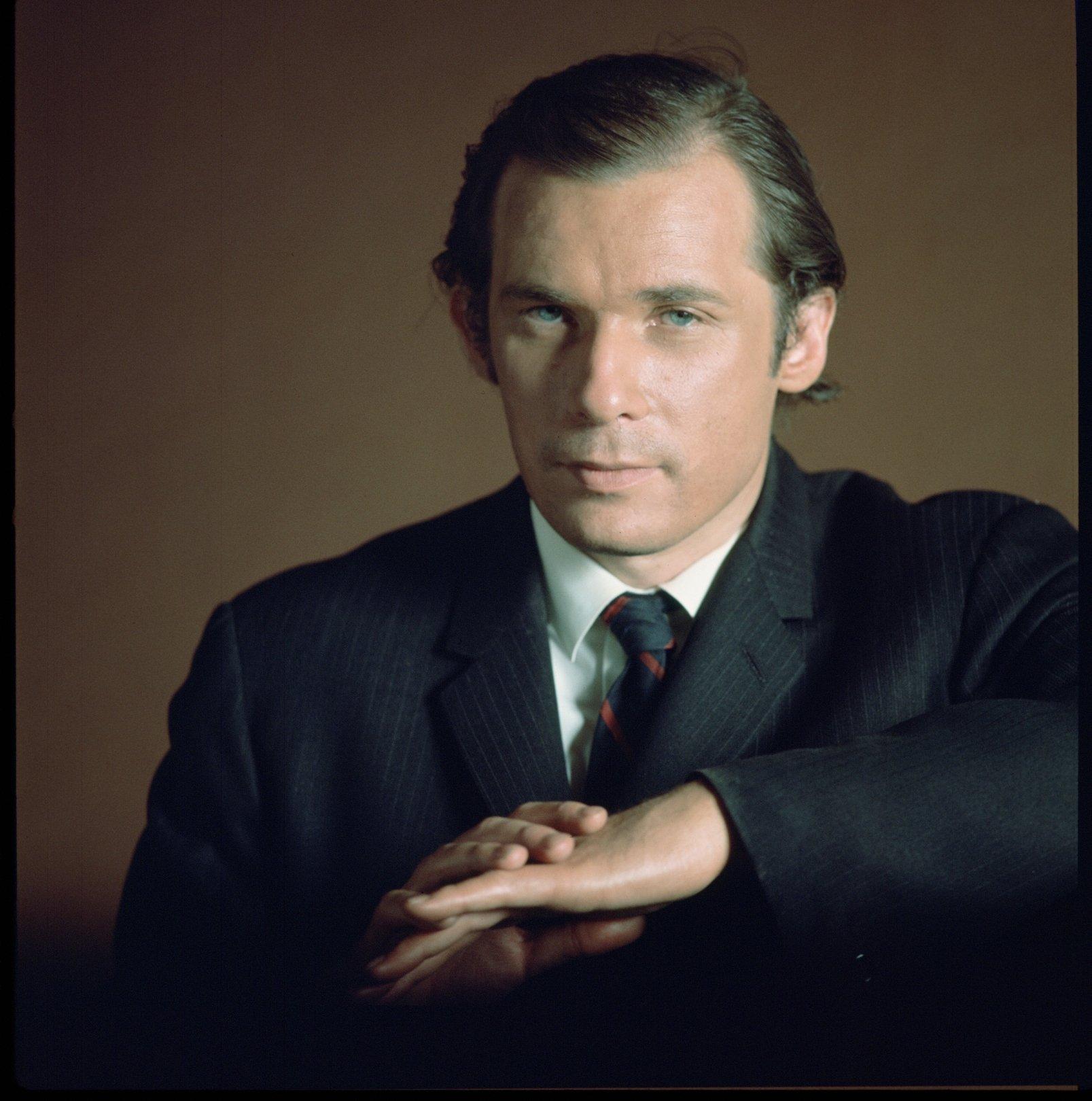
Glenn Herbert Gould was born on September 25, 1932, in Toronto, Ontario. He grew up as the only child of Russell Herbert (“Bert”) Gould and Florence Emma (née Greig) Gould. His father was a fur merchant and both parents were musically trained; his mother taught him piano and voice from early childhood. The family home was in Toronto’s Beach neighbourhood, where Gould enjoyed a sheltered, privileged upbringing.
From infancy Gould showed strong musical gifts. Around age three he began formal piano lessons with his mother. As a child he attended Williamson Road Public School and later Malvern Collegiate Institute in Toronto. He also pursued music studies: at age ten he entered the Toronto Conservatory of Music (now the Royal Conservatory) for advanced training. His two piano teachers were first his mother (through age 10) and then the Chilean-Canadian pianist Alberto Guerrero. (He went on to earn the Conservatory’s Associate Diploma in piano by the mid-1940s.)
Overall, Gould’s early childhood was marked by a music-rich home environment and formal study from a young age. He was raised in a middle-class Toronto family with a strong musical background, and he combined regular school attendance with intensive piano training. This foundation – lessons with his mother and later at the Conservatory under Guerrero – set the stage for his later development as a pianist.
| Aspect | Details |
| Full Name | Glenn Herbert Gould |
| Date of Birth | September 25, 1932 |
| Place of Birth | Toronto, Ontario, Canada |
| Toronto, Ontario, Canada | Russell (“Bert”) Gould and Florence Emma Gould |
| Family Background | Musically trained, middle-class family |
| Childhood Area | Toronto’s Beach neighbourhood |
| Early Training | Piano and voice lessons from his mother |
| Start of Piano Study | Around age three |
| Primary School | Williamson Road Public School |
| Secondary School | Malvern Collegiate Institute |
| Conservatory Entry | Toronto Conservatory at age ten |
| Main Piano Teacher | Alberto Guerrero |
| Diploma | Associate Diploma in Piano |
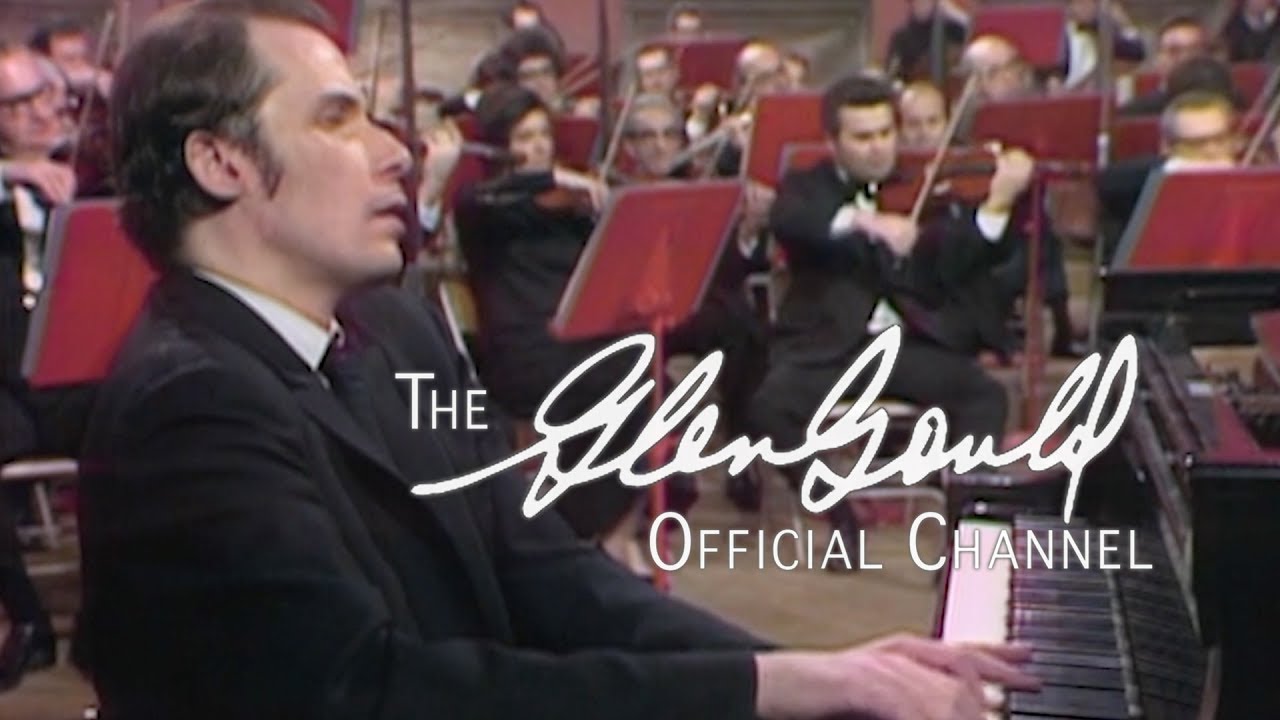
Glenn Gould - Beethoven, Concerto No. 5 in E-flat major op.73 "Emperor" - Part 1 (OFFICIAL)
Career Beginnings
Glenn Gould’s professional career began in Toronto, where he emerged as a precocious pianist in the 1940s. At age 12 he gave his first public performance on the organ in 1945 and the following year made his orchestral debut, playing Beethoven’s Fourth Piano Concerto with the Toronto Conservatory Symphony.
By his mid-teens he had earned top diplomas and won national competitions, including the Kiwanis Music Festival piano trophy. In 1947 Gould gave his first full-length piano recital and shortly thereafter became a professional concert pianist. These early successes laid the foundation for his career.
International Breakthrough
Gould’s international reputation was established in the mid-1950s. He made his American recital debut in January 1955 at Washington’s Phillips Gallery and soon after performed at New York’s Town Hall, where Columbia Masterworks signed him to a recording contract.
Later that year he recorded Bach’s Goldberg Variationsin June 1955, and its release in January 1956 brought him widespread acclaim. This landmark recording, released by Columbia, effectively launched his global career.
Within two years Gould was touring abroad. In 1957 he gave concerts in the Soviet Union, becoming the first North American pianist to perform in Moscow and Leningrad since World War II, and made his debuts with major European orchestras.
He also began appearing at international festivals, solidifying his standing as a leading concert artist.
Major Performances & Concert Highlights
Throughout the 1950s and early 1960s, Gould gave notable performances around the world. In January 1957 he made his Carnegie Hall debut with the New York Philharmonic under Leonard Bernstein, playing Beethoven’s Piano Concerto No. 2.
That spring he appeared with the Cleveland Orchestra under George Szell, again performing Beethoven’s Second Concerto. His European highlights included a debut with the Berlin Philharmonic under Herbert von Karajanin 1957, performing Beethoven’s Third Concerto, and recitals at the Vienna Festival in June 1957.
He also performed at prestigious summer festivals such as Salzburg and Lucerne. In 1959 he played Bach’s D minor Keyboard Concerto with Karajan at Lucerne, his last public performance outside North America.
Domestically, he appeared with Canadian ensembles such as the Toronto Symphony and Montreal Symphony. He famously limited live concerts and gave fewer than forty overseas engagements overall.
Recordings & Discography
| Category | Details |
| Primary Label | Columbia Masterworks (later Sony Classical) |
| Signature Work | Bach’s Goldberg Variations (1955, 1981) |
| Bach Recordings | Well-Tempered Clavier, Italian Concerto, Art of Fugue |
| Beethoven Recordings | Late Piano Sonatas; Complete Piano Concertos |
| Late Piano Sonatas; Complete Piano Concertos | Piano sonatas and concerto transcriptions |
| Modern Composers | Berg, Schoenberg, Hindemith |
| Compositions | String Quartet (1960) |
| Legacy Status | Many recordings considered definitive |
Gould’s recorded legacy is extensive, especially his pioneering interpretations of Bach and Beethoven. His studio output with Columbia, later Sony Classical, includes landmark albums spanning Baroque through 20th-century repertoire.
Early releases featured Bach’s Goldberg Variationsand Beethoven’s late sonatas, Opp. 109–111. He went on to record virtually all of Bach’s major keyboard works, including the Italian Concerto, The Art of Fugue, Well-Tempered ClavierBooks I and II, and a second recording of the Goldberg Variationsin 1981.
He also recorded Mozart sonatas and concerto transcriptions and a complete Beethoven concerto cycle, often collaborating with renowned orchestras. Beyond the classics, Gould recorded modern works, including Berg’s and Schoenberg’s piano pieces, and championed contemporary music.
His few compositions, such as his String Quartet from 1960, also appeared on record. Nearly all his releases are regarded as definitive interpretations, and many remain in active circulation.
Awards & Professional Recognition
Gould received numerous honors for his artistry. He won multiple Grammy Awards during his lifetime, four Grammys in total, including Best Classical Album for his later recording of the Goldberg Variations.
In 1973 he earned a Grammy for best album notes for a Hindemith recording, and in 1982 he won for the Goldberg Variations. He was posthumously awarded the Grammy Lifetime Achievement Award in 2013.
In Canada he also won Juno Awards, notably Best Classical Album in 1979 for Hindemith’s Das Marienlebenwith soprano Roxolana Roslak, and again in 1983 for the Goldberg Variations.
In 1983 Gould was posthumously inducted into the Canadian Music Hall of Fame. He was later named a Canadian Walk of Fame inductee in 1998 and a National Historic Person in 2012.
His first recording of the Goldberg Variationswas honored by induction into the Grammy Hall of Fame in 1983. These awards and honors reflect his enduring impact on classical music.
Collaborations With Orchestras & Conductors
Gould’s career included collaborations with many of the world’s leading orchestras and conductors. He frequently appeared with the New York Philharmonic under Leonard Bernstein, including their Carnegie Hall debut.
He also recorded Bach keyboard concertos and Beethoven concertos with Bernstein conducting Columbia’s orchestra. In Europe he partnered with Herbert von Karajanand the Berlin Philharmonic, in Beethoven’s Third Piano Concerto in 1957.
In North America he performed under George Szellwith the Cleveland Orchestra and Walter Susskindwith the Toronto Symphony, notably in the Canadian premiere of Schoenberg’s Piano Concerto.
He also recorded Beethoven’s “Emperor” Concerto with Leopold Stokowskiand the American Symphony Orchestra. Other notable associations include working with Josef Kripsand the London Symphony.
Additional collaborations included Zubin Mehtain Toronto in Brahms’s Second Concerto, and conductors Robert Craftand Walter Susskind on a CBC Symphony recording of Mozart and Schoenberg concertos. Through these collaborations, Gould reached diverse audiences and explored a broad repertoire.
Recent Career Activity
After retiring from the concert stage in 1964, Gould continued to focus on studio work. In the late 1970s and early 1980s he produced several acclaimed recordings, including extensive Bach surveys and modern compositions.
In 1982 he made his first foray into conducting, recording an orchestral work that summer. His final project was a new studio recording of Bach’s Goldberg Variations, recorded in 1981.
The second Goldberg Variationswas released just weeks after Gould’s sudden death in October 1982. That recording went on to win two Grammy Awards posthumously.
With his passing, Gould’s active musical career ended, but his recordings and the institutions he inspired, such as the Glenn Gould Foundation, continue to preserve his legacy.
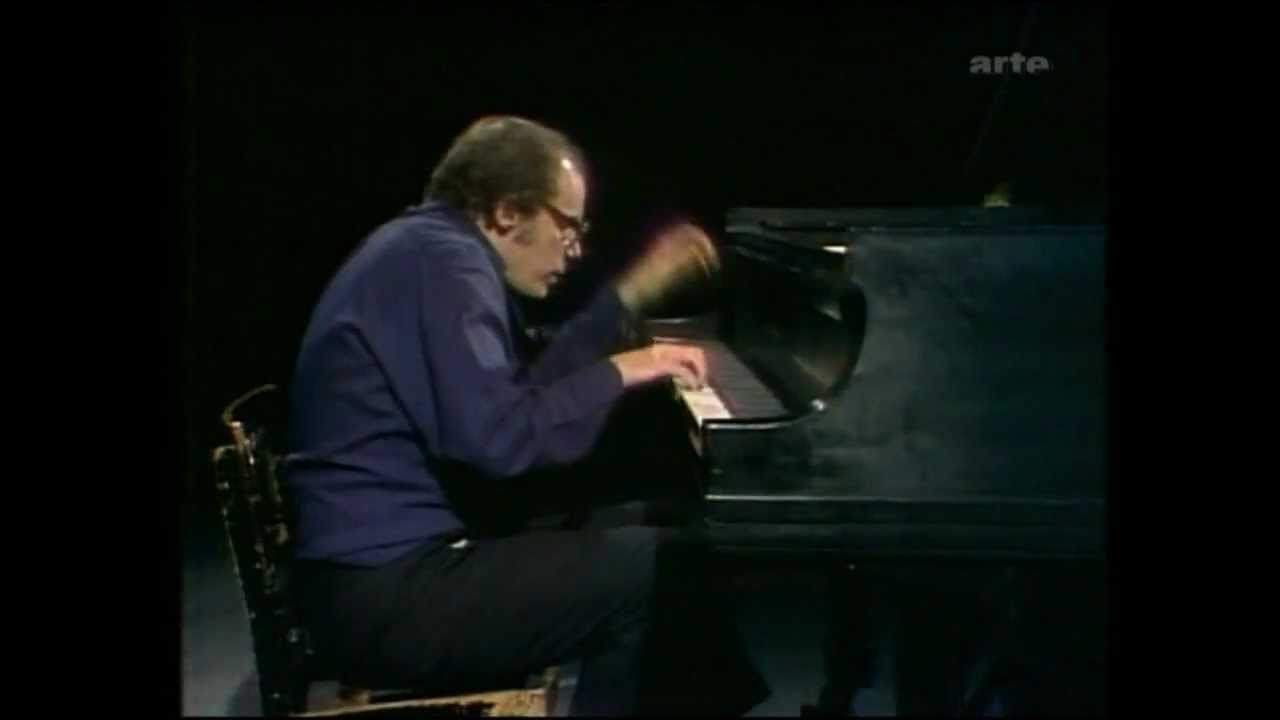
Glenn Gould-J.S. Bach-The Art of Fugue (HD)
Glenn Gould Performance
- Historic tours:In May 1957 Gould became the first North American pianist to tour the Soviet Union, giving concerts in Moscow and Leningrad. He presented works by Bach, Beethoven and modern composers (Schoenberg and Berg) that had been largely unfamiliar to Soviet audiences.
- Orchestral debuts:In 1957 Gould made high-profile concerto debuts with major orchestras, notably at Carnegie Hall with Leonard Bernstein conducting (Beethoven Piano Concerto No. 2), and in Berlin with Herbert von Karajan at the Philharmonic (Beethoven Piano Concerto No. 3). He also collaborated with other leading conductors such as Leopold Stokowski and Zubin Mehta.
- Television and studio performances:Gould’s only U.S. televised performance was on 31 January 1960, playing Bach’s Keyboard Concerto in D minor with Bernstein and the New York Philharmonic. He frequently recorded or broadcast concert works, often preferring the precision of the studio.
- Festival roles:Gould was active in festival settings, for example, co-directing the Stratford Festival’s music programs (1961) and giving lecture-recitals there, as well as appearing in the Vancouver International Festival. These engagements highlighted both his performance skill and his scholarly approach to the repertoire.
- Limited concert career:Despite global fame, Gould performed remarkably few live recitals, fewer than 200 in total (and under 40 outside Canada). This unusually small touring schedule reflected his growing discomfort with public concerts.
- Final recital:Gould’s last public performance took place on 10 April 1964 at the Wilshire Ebell Theatre in Los Angeles. The recital program included Beethoven, selections from Bach’s Art of Fugue, and Hindemith’s Piano Sonata No. 3. He abruptly abandoned live concerts after this date, shifting entirely to studio recording.
Glenn Gould Piano Style And Musical Interpretation
Glenn Gould’s pianism was defined by extraordinary precision and clarity. His technique combined lightning fast light touches with the ability to make each note stand out distinctly. Critics noted his lightness of touch and quickness of movement that allowed notes to be crystal clear even at furious tempos.
He cultivated finger independence to articulate multiple voices independently rarely using the pedal for legato. Instead his legato came from connecting notes purely through finger action. This approach an economy of motion with deliberate finger staccato gave his playing a mechanical precision each line in a fugue or complex texture emerged sharply yet all lines wove together seamlessly under his control.
Tone Touch And Sound Color
Gould’s tone production was notable for its purity and transparency. He often produced a clear singing tone on the piano even at soft dynamic levels. Reviewers praised his dynamic versatility and wide range in colouring meaning he could shade tones from delicate pianissimo to assertive forte without losing clarity.
Unlike many pianistswho use pedal for a lush sound Gould favored a more detached touch giving his playing an almost harpsichord like directness. One critic observed that Gould freed Bach’s music from the authentic twang of the harpsichord and from the idea of using the piano solely for richly crashing chords.
In practice his sound was often described as lean and crisp rather than warm or velvety. Nonetheless he achieved subtle tonal colors through precise control of touch by adjusting finger weight and timing he could convey expressivity without the thick legato typical of Romantic style.
Rhythm Phrasing And Structural Clarity
Rhythm and structure were at the core of Gould’s interpretation. He imbued even the most complex passages with a steady inner pulse. Critics noted a forward drive and rhythmic spring in his playing especially in Bach.
His tempos were often brisk and unwavering which gave large scale works a sense of propulsion. According to observers all the notes in his performance seem distinct and yet connected by phrasing and pulse. This means that while each note stood out Gould shaped phrases so that they flowed logically.
He typically avoided arbitrary rubato any agogic changes followed the music’s architecture. For example even in slow movements he maintained an underlying structure. At times he deliberately chose unconventional speeds famously an exceptionally slow opening to a Brahms concerto to highlight the form a decision grounded in his belief that tempo should serve musical design.
Overall his phrasing consistently emphasized clarity of form and voice leading making the architecture of each piece transparently clear to the listener.
Interpretative Approach To Repertoire
Gould’s interpretative choices were guided by the music’s intellectual content. He gravitated toward repertoire that rewarded his analytical style Baroque counterpoint and classical era clarity were prime and 20th century works that aligned with those principles. He was especially associated with J S Bach recording virtually all of Bach’s keyboard music.
In Bach he sought out the contrapuntal structure treating each voice like an independent melody. His programs often paired early music with modern pieces for example a recital mixing works by Gibbons Sweelinck Schoenberg and Webern alongside Bach and Beethoven reflecting his view that all periods could share a rigorous approach to line and form.
He avoided most Romantic piano literature critics emphasize that after leaving school he never performed Chopin Liszt or Schumann considering much of their music too overtly emotional for his taste. In contrast he championed composers like Mozart Beethoven Haydn Brahms and various modernists Berg Hindemith Korngold Krenek Schoenberg and Scriabin.
For each composer he applied the same clarity first philosophy. For instance his Mozart sonatas emphasize structural contrasts and dynamic precision rather than gentle elegance and his Beethoven performances used very strict tempos to highlight formal architecture.
In modern works such as Schoenberg and Berg he delivered meticulous precision his recording of Berg’s Piano Sonata Op 1 became a benchmark performance while his Schoenberg recordings were noted for their sober almost Bach like lucidity. In all his interpretations Gould stayed close to the score crafting tempo and articulation through deep score analysis.

Bach gone crazy
Balance Between Precision And Expression
At the heart of Gould’s style was a balance of exactitude with musical warmth that emerges indirectly. He treated technical accuracy as the basis for expression by articulating every voice and phrase precisely he believed the music’s expressivity would follow.
His extreme precision was not an end in itself it was intended to bring out the composition’s inherent expressiveness. For example critics have observed that Gould deliberately avoided piling on heavy romantic sentiment he freed Bach from the harpsichord twang and from stereotypical Romantic grandeur but he conveyed emotion through subtle shadings.
Under his fingers fast runs and delicate passages alike maintained elegance and character. Some listeners find this approach cool or cerebral but proponents argue that Gould’s control actually clarifies the emotional content embedded in the music’s lines.
In essence Gould’s playing was precise to the point that the smallest dynamic or timing detail becomes a means of expression. Rather than exuberant rubato or lush tone his expression lay in the interplay of clear voicing and rhythmic momentum. As one critic noted of his work he did not abandon feeling but he channeled it through an almost architectural discipline.
Critical Observations And Musical Identity
Glenn Gould’s musical identity was unmistakable and often polarizing. Critics have long remarked that he stands out as an exception in the world of piano playing. He insisted on putting a personal stamp on every piece famously asserting that the only reason to record a composition is to do it differently as if it’s never been heard before.
Thus his versions often confounded expectations for example some commentators describe his Mozart as playfully exaggerated in contrast and dynamics deliberately shattering the notion of Mozart as purely delicate. This individualism is central to his identity even those who do not enjoy his mannerisms acknowledge the unity of his approach.
In historical retrospectives Gould is acknowledged as redefining piano performance with his analytical clarity and distinctive sound. One critic called him without doubt the most interesting pianist of his generation precisely for this bold originality.
His niche in music history rests on the idea of the pianist as an interpreter who thoroughly illuminates every detail of the score. In summary Gould’s critical legacy is that of a consummate musician whose precise cerebral approach created a remarkably personal and influential style a style that remains both admired for its insights and debated for its eccentricities.
Glenn Gould Net Worth
At the time of death, Glenn Gould’s net worth was modest some entertainment websites suggest roughly $0.5–1.0 million, though no reputable financial outlet confirms any figure. He earned income mainly from his career as a classical pianist, especially through recordings and broadcasting.
He produced TV and radio programs about classical music and earned royalties from numerous recordings. He did not tour internationally or endorse products, so his income came almost entirely from record sales and media. By age 31 he had largely stopped live concerts to focus on studio projects and broadcasting.
FAQs
1. Who Was Glenn Gould And Why Is He Famous?
Glenn Gould was a Canadian classical pianist best known for his interpretations of Johann Sebastian Bach. He became internationally famous after his 1955 recording of The Goldberg Variations, which remains one of the most influential piano recordings in history.
2. Why Did Glenn Gould Stop Performing Live Concerts?
Glenn Gould retired from live concert performance in 1964 due to discomfort with touring, audience conditions, and his preference for artistic control. He believed studio recording allowed greater precision and better served the music.
3. What Is Glenn Gould’s Most Famous Recording?
Glenn Gould is most famous for his two recordings of Bach’s Goldberg Variations, released in 1955 and 1981. Both recordings are widely studied and cited for their contrasting interpretive approaches.
4. What Was Unique About Glenn Gould’s Piano Playing Style?
Glenn Gould was known for exceptional clarity, precise articulation, and minimal use of the sustain pedal. His playing emphasized contrapuntal structure, rhythmic control, and analytical interpretation rather than Romantic expressiveness.
5. Did Glenn Gould Compose Music As Well As Perform?
Yes, Glenn Gould composed a small number of works, including a String Quartet completed in 1955. However, composition was a minor part of his career compared to performance, recording, and broadcasting.
6. When Did Glenn Gould Die, And What Was The Cause Of His Death?
Glenn Gould died on October 4, 1982, in Toronto, Canada, at the age of 50. The cause of death was a stroke following complications from hypertension.