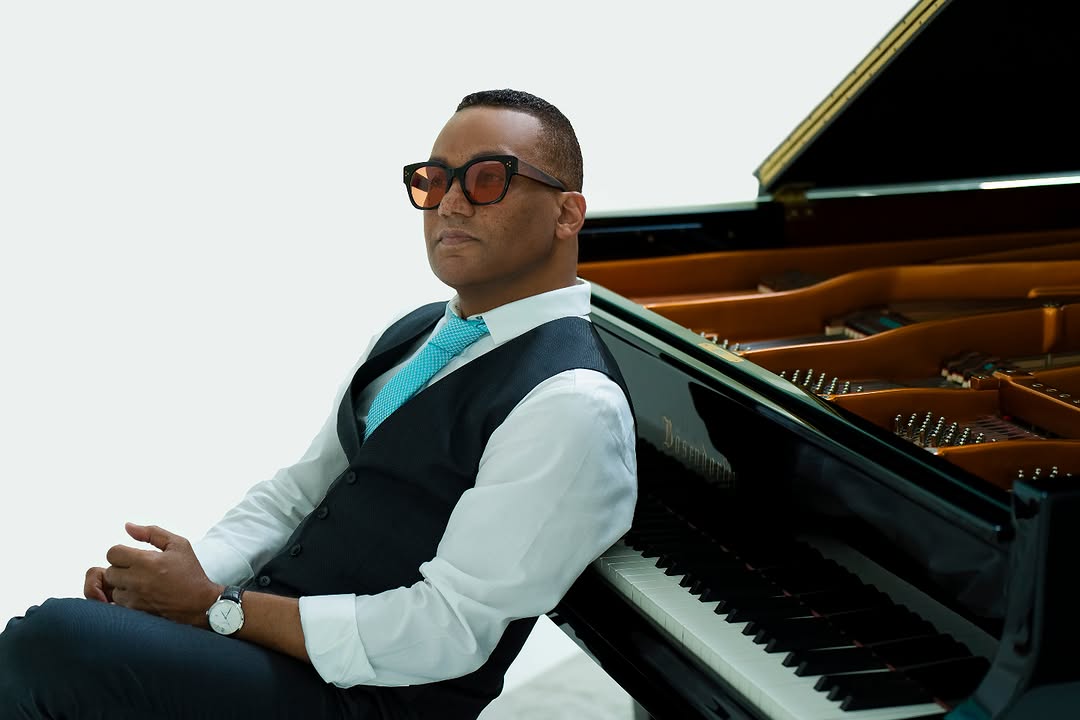
Gonzalo Rubalcabawas born on May 27, 1963 in Havana, Cuba. He grew up in a prominent musical family: his father, Guillermo Rubalcaba, was a pianist and bandleader who had played in Enrique Jorrín’s orchestra, and his grandfather, Jacobo Rubalcaba, was a noted composer of Cuban danzones.
He also has two brothers who are professional musicians. The Rubalcaba family home was a rehearsal and hangout space for many of Cuba’s leading musicians; as a child he often met prominent Cuban artists (for example, singers like Omara Portuondoand percussionist Changuito) in his parents’ living room.
Musical Training: Rubalcaba showed early talent on percussion. By age six he was playing drums in his father’s orchestra. Around age eight he switched focus to piano and began formal music study on that instrument. (Rubalcaba later recalled that he took up piano lessons largely “to please [his] mother”.) This dual exposure to drums and piano formed the basis of his early musical training.
He received structured music education at Havana’s conservatories. He began classical piano training around age nine at the Manuel Saumell Conservatory and later continued at the Amadeo Roldán Conservatory. After his conservatory studies he graduated in 1983 from Havana’s Instituto Superior de Arte (Institute of Fine Arts) with a degree in music composition.
Rubalcaba grew up immersed in both Cuban genres and American jazz. In childhood he absorbed jazz through recordings of masters like Thelonious Monk, Bud Powell, Oscar Peterson, Charlie Parkerand Dizzy Gillespie.
He has said the drums were his first instrument and cites jazz drummers Max Roach, Elvin Jonesand Cuban percussionist Changuito among his formative influences. (His early years blended classical training with rich Afro-Cuban musical traditions.)
| Aspect | Details |
| Full Name | Gonzalo Rubalcaba |
| Date of Birth | May 27, 1963 |
| Place of Birth | Havana, Cuba |
| Family Background | Raised in a well-known Cuban musical family |
| Father | Guillermo Rubalcaba, pianist and bandleader |
| Grandfather | Jacobo Rubalcaba, danzón composer |
| Siblings | Two brothers, both musicians |
| Home Environment | Family home used for rehearsals |
| Early Exposure | Met leading Cuban musicians in childhood |
| Notable Figures | Omara Portuondo, Changuito |
| First Instrument | Drums |
| Age Began Performing | Played drums in his father’s orchestra by age six |
| Switch to Piano | Around age eight |
| Reason for Piano Studies | Began piano lessons primarily to please his mother |
| Advanced Conservatory |
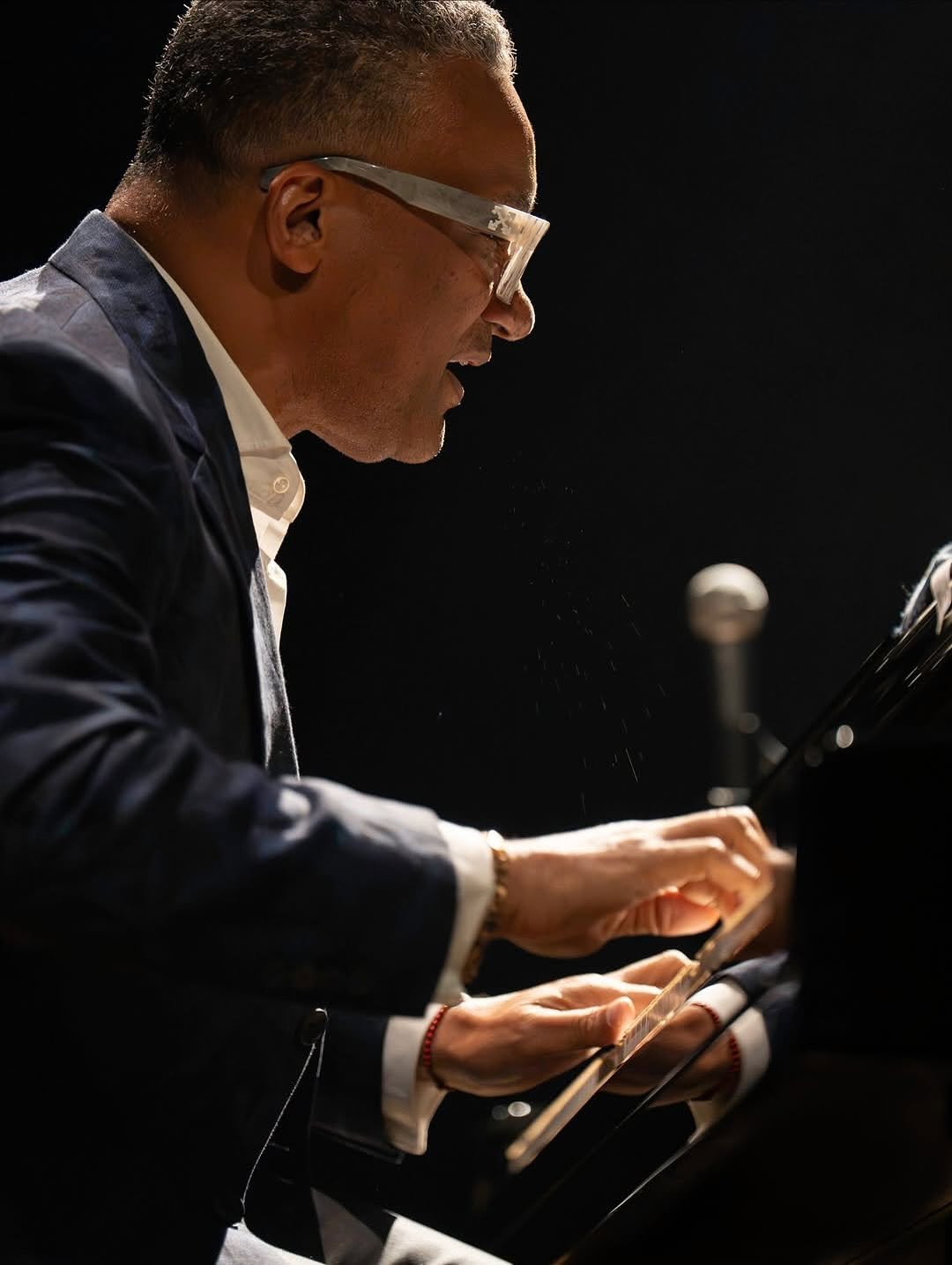
Career Beginnings
Gonzalo Rubalcaba’s career began in Havana, Cuba, where he emerged as a prodigious young talent. By his mid-teens he was already performing as a drummer and pianist in Havana’s jazz clubs and concert halls.
After graduating, he toured internationally with the famed Orquesta Aragón and played as a sideman with various jazz groups. In 1984 he formed his own Afro-Cuban jazz-rock fusion band called Grupo Proyecto.
This early period of performing in Cuba and abroad laid the foundation for his style. His success at home culminated in 1985 when legendary trumpeter Dizzy Gillespiediscovered him during a Havana visit, famously calling Rubalcaba “the greatest pianist I’ve heard in the last ten years.” Gillespie’s endorsement helped Rubalcaba gain entry to the international jazz scene, setting the stage for his broader career.
International Breakthrough
After being championed by Gillespie and later by bassist Charlie Haden, Rubalcaba began recording and touring outside Cuba. In the late 1980s he recorded a series of albums with his Cuban Quartet on the German Messidor label, including Mi Gran Pasión, Live in Havana, and Giraldilla.
These works captured his blend of Cuban rhythms and modern jazz. In 1990 he released Discovery Live at Montreux on Blue Note Records, a live album from the Montreux Jazz Festival, followed by studio albums like The Blessing.Throughout the early 1990s he toured extensively, performing at major European and Asian festivals, including the Mount Fuji Jazz Festival in Japan.
By 1991 he had moved to the Dominican Republic, and in 1996 he settled in Miami, fully establishing himself as an international jazz artist. This period saw Rubalcaba introducing his virtuosic Afro-Cuban jazz to new audiences across North America, Europe, and Asia.
Major Performances & Concert Highlights
Rubalcaba has headlined numerous prestigious jazz festivals and venues worldwide. He performed multiple times at the Montreux Jazz Festival in Switzerland and at Japan’s Mount Fuji Jazz Festival, showcasing his trio and quartet in prominent festival settings.
In Europe he was a featured artist at the Munich Summer Piano Festival in the early 1990s. In the United States, Rubalcaba has played landmark concerts at major halls and clubs.
In 2015 he joined Chucho Valdés and Michel Camilo at San Francisco’s Davies Symphony Hall for a tribute to Cuban composer Ernesto Lecuona. He has also appeared at Jazz at Lincoln Center’s Dizzy’s Club in New York City and at the Blue Note Jazz Club in Tokyo.
A 2022 residency at Dizzy’s Club with Chris Potter, Larry Grenadier, and Eric Harland was recorded for the album First Meeting Live at Dizzy’s Club, released in 2025. In recent years he has toured with his trio and quartet at major jazz venues, including festival appearances in Europe and concerts such as the International Jazz Day celebration in Havana and the Bayfront Jazz Festival with singer Aymée Nuviola.
Recordings & Discography
Rubalcaba’s discography is extensive, spanning dozens of albums as leader. In the late 1980s he released Cuban recordings such as Mi Gran Pasión and Live in Havana.
Moving into the 1990s under Blue Note Records, he issued albums including Discovery Live at Montreux and The Blessing. During that decade he explored various formats, including the trio album Flying Colors and composition-focused projects such as Suite 4 y 20 and Diz, a tribute to Dizzy Gillespie.
Notable collaborations include two studio albums with bassist Charlie Haden, Nocturne and Land of the Sun, which focused on Latin ballads and boleros and received wide critical acclaim.
In the 2000s and 2010s Rubalcaba continued to expand his output. He released a solo piano album titled Solo and later co-founded the 5Passion record label, through which he released Fe, XXI, Volcán, and Live Faith.
Other significant recordings include Suite Caminos, Charlie, and Tokyo Adagio. More recent releases include Skyline, a trio album with Ron Carter and Jack DeJohnette, and Borrowed Roses. Skyline won the 2022 Grammy Award for Best Jazz Instrumental Album, while Borrowed Roses received broad critical recognition.
Awards & Professional Recognition
| Recognition | Verified Details |
| Grammy Awards | Rubalcaba has won three Grammy Awards, including Best Latin Jazz Album and Best Jazz Instrumental Album. |
| Latin Grammy Awards | He has received four Latin Grammy Awards across multiple categories. |
| Historic Achievement | He became the first Latin American artist to win the Grammy Award for Best Jazz Instrumental Album as a leader. |
| Critical Honors | In 1999, Piano and Keyboard magazine named him among the great pianists of the twentieth century.m |
Rubalcaba has won three Grammy Awards and four Latin Grammy Awards. His album Nocturne received the Grammy Award for Best Latin Jazz Album, followed by Land of the Sun.
He later won the Grammy Award for Best Jazz Instrumental Album for Skyline, becoming the first Latin American artist to win in that category as a leader. In the Latin Grammy field, he won Best Latin Jazz Album for Supernova and Solo, and later shared a Best Traditional Tropical Album award for Live in Marciac.
In 1999 he was named one of the great pianistsof the twentieth century by Piano and Keyboard magazine. His artistry has been praised by leading figures in jazz and classical music, and he has received major international honors including France’s Grand Prix du Jazz and Poland’s Empik award.
Collaborations With Orchestras & Conductors
Rubalcaba has also performed extensively with orchestras. In 2016 he collaborated with pianist Makoto Ozoneand the Tokyo Metropolitan Symphony Orchestra in a performance of Béla Bartók’s Concerto for Two Pianos, Percussion and Orchestra.
The following year he performed Bartók’s Piano Concerto No. 2 with the same orchestra. These appearances demonstrated his ability to integrate jazz expression with symphonic repertoire. His orchestral collaborations highlight his versatility and his connection to both classical and Afro-Cuban musical traditions.
Recent Career Activity
Rubalcaba remains highly active as a performer and recording artist. In 2023 he released Borrowed Roses, which received widespread acclaim. The same year he earned a Latin Grammy Award for Live in Marciac and received France’s Académie du Jazz Album of the Year recognition for his duet album with Pierrick Pédron.
His upcoming projects include First Meeting Live at Dizzy’s Club, scheduled for release in 2025, and a Latin jazz tribute album honoring Benny Moré and Nat King Cole. He continues to tour internationally with new ensembles and remains a central figure in contemporary Afro-Cuban jazz.
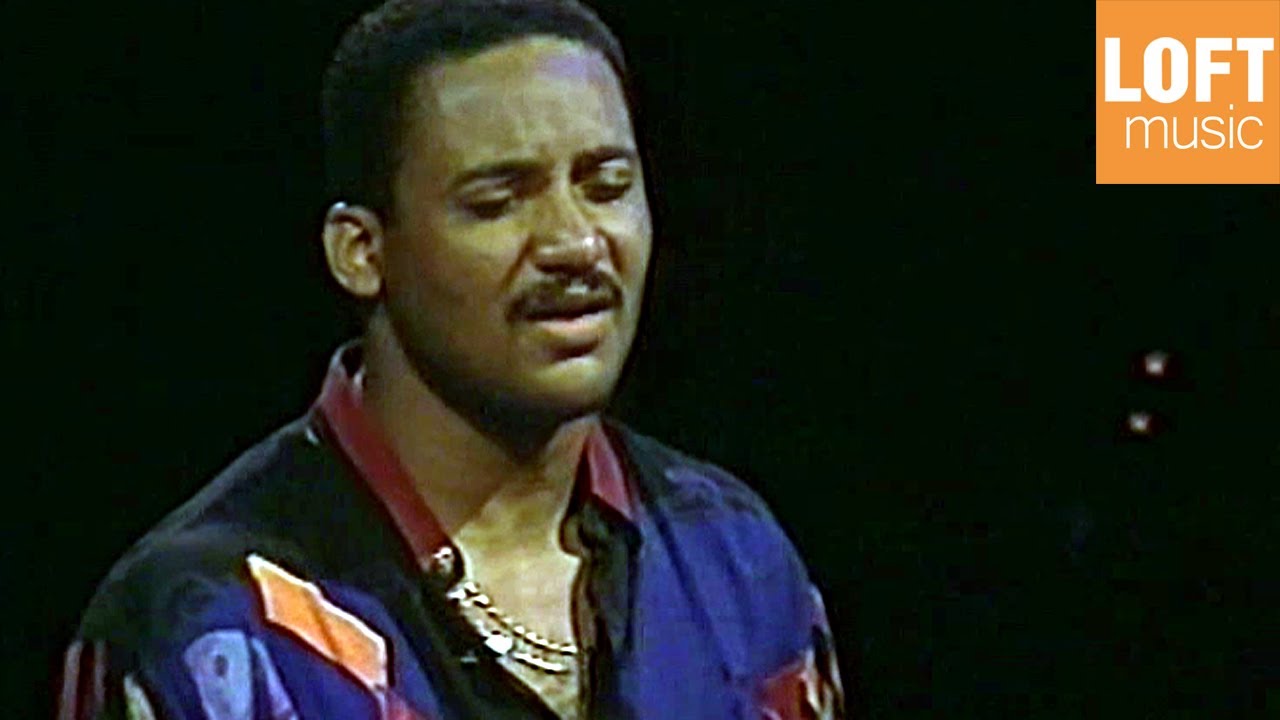
Gonzalo Rubalcaba Trio: Live at the Münchner Klaviersommer (Munich, 1994)
Gonzalo Rubalcaba Performance (2025–2026)
- US trio concerts:Headlined the Indy Jazz Fest Sunset Series(Schrott Center for the Arts, Indianapolis) on Sept 19, 2025, performing with his trio (Eric Harlandon drums, Ricky Rodríguezon bass). He then played two nights at New York’s Blue Note Jazz Club (Sept 20–21, 2025) with the same lineup.
- Latin jazz festivals:Featured a Cuban-Brazilian set at the Curaçao North Sea Jazz Festival (Aug 30, 2025)alongside mandolinist Hamilton de Holanda, with Brazilian stars Ivan Lins and Gabriel Grossias special guests.
- European ‘Collab’ duo tour (France/Switz):Presented duo concerts with bandolim virtuoso Hamilton de Holanda at major jazz festivals at Jazz en Têtein Clermont-Ferrand, France (Oct 25, 2025) and at JazzOnze+ in Lausanne, Switzerland (Oct 29, 2025).
- European ‘Collab’ duo tour (Germany/UK):Continued the Rubalcaba–de Holanda collaboration with concerts at Berlin’s Konzerthaus Kleiner Saal(Nov 3, 2025) and at Ladbroke Hall in London (Nov 15, 2025). These shows showcased their Grammy-nominated Collabrepertoire, emphasizing Rubalcaba’s deep Afro-Cuban jazz roots.
- French solo headline:Led a concert at Salle Guy Obinoin Vitrolles, France (Nov 8, 2025) as the sole headliner, demonstrating his solo pianism and international draw.
Gonzalo Rubalcaba’s Piano Technique And Interpretation
Technical Approach And Piano Control
Rubalcaba’s pianism is marked by prodigious technique and commanding control. He effortlessly intertwines rapid right-hand runs with complex left-hand voicings, executing fast scales and arpeggios with crystalline precision.
His dynamic control is equally broad: he can surge to fortissimo and then instantly pivot to a near-whisper pianissimo, covering a wide expressive range within a single improvisation.
Critics frequently emphasize the exceptional nature of his skills, noting that his playing speed and articulation in bright tempos can be overwhelming in their intensity. His technique is formidable, yet it is applied with discipline and accuracy, ensuring that every note remains clearly articulated and structurally purposeful.
Tone, Touch, And Sound Color
Rubalcaba’s touch at the keyboard produces a consistently clear and singing tone. His sound is widely described as refined and even, with careful shaping of melodic lines and precise control over attack and release.
In softer passages, his touch retains stability and clarity, allowing lyrical material to unfold without loss of definition. His tone production supports both powerful chordal statements and delicate melodic phrasing.
Observers have noted an increased refinement in his touch over time, particularly in slower and more introspective contexts. He makes deliberate use of pedal to blend harmonies and extend resonance, creating a layered sound palette that enhances harmonic depth without obscuring articulation.
Rhythm, Phrasing, And Structural Clarity
Rhythm plays a central role in Rubalcaba’s playing, reflecting a deep internalization of Afro-Cuban rhythmic traditions. His sense of pulse is highly developed, and rhythmic precision remains evident even in freely paced passages. The left hand frequently articulates syncopated figures that reinforce forward momentum, while the right hand navigates complex rhythmic groupings with accuracy.
His phrasing demonstrates careful balance between flexibility and structure. Even when stretching or compressing time for expressive effect, the underlying rhythmic framework remains perceptible. Improvisations that explore contrasting ideas typically resolve into coherent formal shapes, preserving clarity across extended passages.
Interpretative Approach To Repertoire
Rubalcaba approaches repertoire with close attention to musical meaning and internal narrative. His interpretations reflect careful consideration of melodic contour, harmonic direction, and structural balance.
He adapts his interpretative choices according to stylistic context, whether engaging with jazz standards, Cuban forms, or works drawn from broader musical traditions Reharmonization and rhythmic variation are employed selectively and with restraint, serving expressive intent rather than technical display.
His interpretations maintain fidelity to the core character of each work while allowing space for personal voice, resulting in performances that are both individualized and stylistically grounded.
Balance Between Precision And Expression
A defining aspect of Rubalcaba’s playing is the equilibrium between technical accuracy and expressive depth. Virtuosic passages are executed with clarity, yet they remain integrated into the broader musical narrative.
He frequently allows harmonic tension to remain unresolved for expressive effect, using restraint to shape emotional impact. Over time, his use of technical resources has become increasingly selective, favoring musical coherence over overt virtuosity.
Fast passages retain sharp definition, while slower sections emphasize sustain, spacing, and tonal resonance. This balance ensures that expressive intent is consistently supported by technical control.
Critical Observations And Musical Identity
Rubalcaba’s musical identity is shaped by the integration of Afro-Cuban rhythmic foundations with contemporary jazz language. Rhythmic vitality remains present even in abstract or harmonically exploratory contexts, providing continuity across stylistic boundaries.
His melodic vocabulary departs from conventional bebop phrasing, reflecting a personal and evolving approach to line construction. Observers consistently note his emphasis on communication through sound rather than external gesture or commentary.
His playing reflects a synthesis of precision, rhythmic depth, and interpretative clarity, establishing a distinct pianistic voice grounded in tradition while open to continual exploration.
Gonzalo Rubalcaba Net Worth
As of 2026, reliable public sources have not published an estimated net worth for Gonzalo Rubalcaba, and no figure has been confirmed by major financial or business outlets. Gonzalo Rubalcaba (born May 27, 1963) is a world-renowned Cuban jazz pianist and composer widely regarded as one of the most virtuosic and influential figures in Afro-Cuban jazz.
His income is generated through international concert performances, album releases, recording royalties, and long-term collaborations with leading jazz musicians. He also earns from music education activities, masterclasses, and academic roles, which contribute to maintaining his professional financial standing without public disclosure of personal wealth.
FAQs
Who Is Gonzalo Rubalcaba?
Gonzalo Rubalcaba is a Cuban jazz pianist and composer known for integrating Afro-Cuban rhythms with modern jazz. He is regarded as one of the most influential Latin jazz pianists of his generation.
Where Was Gonzalo Rubalcaba Born?
Gonzalo Rubalcaba was born on May 27, 1963, in Havana, Cuba. He grew up in a family deeply rooted in Cuban music traditions.
What Instruments Does Gonzalo Rubalcaba Play?
Rubalcaba is primarily known as a pianist, though his first instrument was percussion. His early experience as a drummer strongly shaped his rhythmic approach to piano.
What is Gonzalo Rubalcaba best known for?
He is best known for his virtuosic piano technique and his role in advancing Afro-Cuban jazz internationally. His work bridges Cuban musical forms, classical training, and contemporary jazz improvisation.
How Did Gonzalo Rubalcaba Gain International Recognition?
He gained major international attention in the mid-1980s after being endorsed by Dizzy Gillespie. This recognition led to recording opportunities and performances at major jazz festivals worldwide.