![How I Make Passive Income With My Piano Skills [And How You Can Too]](https://multiplayerpiano.com/wp-content/uploads/2024/04/b5a331435367ff3c/how-to-make-passive-income-with-your-piano-skills.jpeg)
If you've been playing piano for years and the only income advice you ever get is "teach lessons" or "play weddings," I understand the frustration. Both of those are fine ways to earn money. But the moment you stop showing up, the income stops too.
I spent the first eight years of my music career trading time for money. Private students, wedding ceremonies, and hotel lobbies on Friday nights. I was busy, sometimes well-paid, and completely exhausted. The shift came when I started building income streams that didn't require me to be physically present for every dollar.
It wasn't overnight, and it wasn't effortless, but it changed everything about how I relate to my piano and my schedule. I want to walk you through every meaningful method I know, ranked honestly by how scalable each one actually is.
Key Takeaways
- Passive piano income means earning repeatedly from a one-time effort like recorded tracks, online courses, licensed music, or downloadable products.
- The most scalable methods are sync licensing, streaming royalties, sheet musicsales, and digital courses.
- Most passive income streams require 6 to 18 months of consistent effort before generating meaningful recurring revenue.
- Niche specialization (lo-fi, meditation, cinematic piano) significantly improves both streaming and licensing results.
- You do not need a professional studio to start. A quality audio interface and a basic DAW are sufficient.
What Passive Income Actually Means For Pianists
Most articles about making money with piano skills list weddings, teaching, and bar gigs right alongside sync licensing and streaming royalties, as if they belong in the same category. That framing is misleading, and I think it's responsible for a lot of disappointment among musicians who wanted freedom and ended up with a fuller calendar instead.
Active income requires your presence every single time. You teach a lesson, you get paid. You don't show up, you don't get paid. There is nothing wrong with this model, but it doesn't scale. Your earning ceiling is set by the number of hours in your week.
Passive income works differently. You put in the work once, and then that work continues to earn without you repeating it. The upfront effort can be significant, but the income compounds over time rather than resetting every Monday morning.
How To Evaluate Any Piano Income Stream
Before committing to any strategy, I think it helps to ask two questions. First, once the initial work is done, does it keep earning without me doing it again? Second, does my earning potential grow as I add more work, or stay capped at a fixed hourly rate?
A sync licensing track I uploaded three years ago still earns license fees while I sleep. A piano lesson I taught last Tuesday will not.
I use a simple three-tier framework to evaluate every income stream:
- Fully passive:Earns without ongoing input after initial creation (streaming royalties, sync licenses on existing tracks, sheet music sales).
- Semi-passive:Requires periodic content creation or maintenance, but earns significantly beyond your time investment (YouTube, Patreon, online courses updated occasionally).
- Active:Requires direct participation each time income is generated (private lessons, live gigs, accompaniment work).
This article focuses on the first two tiers.
The One Thing You Need Before Any Of This Works
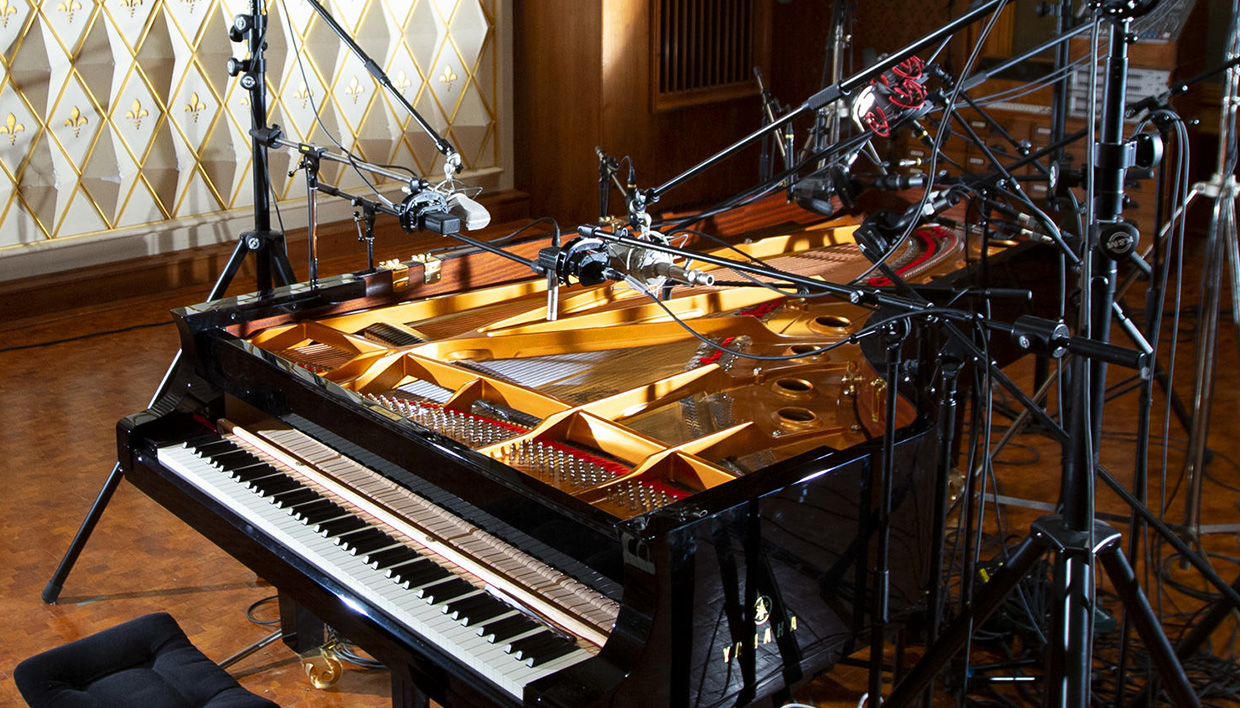
Every truly passive income stream I'll describe involves recorded audio or digital delivery. Before you pursue any of them seriously, you need two things in place: a home recording setup that produces clean, professional-sounding piano, and registration with a Performing Rights Organization. Skip either one and you'll leave real money uncollected.
The Minimum Recording Setup To Start Earning Digitally
You don't need a studio. I recorded my first sync tracks in a spare bedroom with acoustic panels made from moving blankets stapled to wooden frames. What you do need is a decent audio interface, a good microphone or a quality MIDI controller with a virtual piano instrument, and a DAW (digital audio workstation) to record and mix in.
For acoustic piano recording, a pair of small-diaphragm condenser microphones paired with an audio interface like the Focusrite Scarlett series gives you clean results at a reasonable cost. For digital or MIDI-based production, a quality weighted controller paired with reliable piano softwaresuch as Pianoteq or Native Instruments' Una Corda can produce results that are indistinguishable from a recorded acoustic instrument on most stock music platforms.
Do You Need Professional Equipment?
Honestly, no. The barrier to entry has dropped significantly. Many sync licensing platforms accept home recordings, and streaming listeners rarely scrutinize recording quality in ambient or lo-fi genres. My honest threshold is if you can listen back to your recording without wincing at the sound quality, it's probably good enough to submit.
Register With A Performing Rights Organization Before You Release Anything
This is the step that costs pianistsreal money when they skip it. Before you release any music publicly, register as a songwriter and publisher with a Performing Rights Organization (PRO). In the US, the main options are ASCAPand BMI, both of which are free to join as a songwriter. In the UK, it's PRSfor Music. In Canada, SOCAN.
According to ASCAP, public performance royalties are collected and distributed when your music plays on the radio, television, streaming services, or in public venues. Without PRO registration, those royalties go uncollected. You are leaving money on the table from the moment your first track goes live. Registration takes about 15 minutes and costs nothing.
Sync Licensings
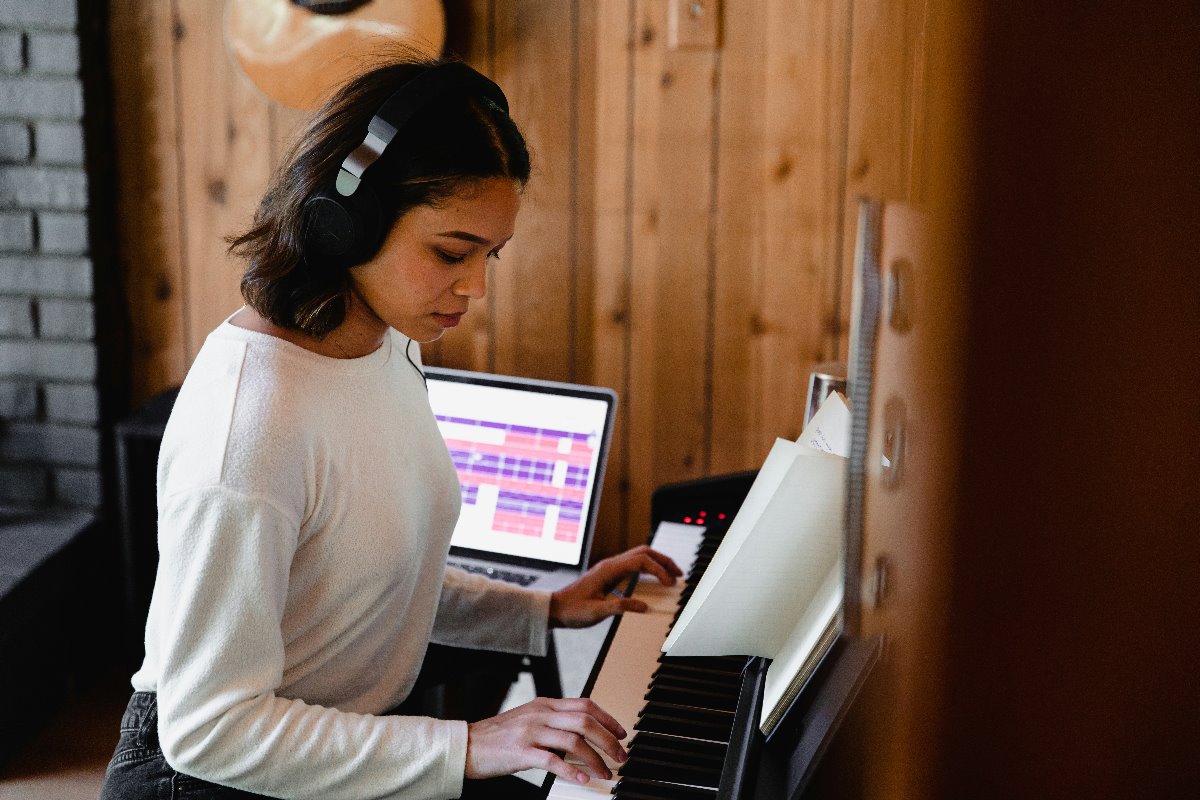
Sync licensing consistently offers the highest per-use payout of any passive music income stream, and solo piano is one of the most requested instrumental categories on licensing platforms. If I had to recommend one stream to a pianist starting from scratch with strong recording skills, this would be it.
Sync licensing is the placement of your recorded music in video content such as films, TV shows, YouTube videos, corporate presentations, podcasts, advertisements, and mobile apps. When a content creator licenses your track, they pay either a one-time sync fee, an ongoing royalty, or both.
Piano musicis disproportionately well-represented in sync licensing because it's emotionally versatile and production-friendly. It sits under dialogue without competing with it. It works in emotional narrative scenes, background corporate content, instructional videos, and documentary footage.
Having placed piano tracks in everything from a retirement community's promotional video to a meditation app, I can tell you that demand is consistent and year-round.
The Best Platforms For Piano Sync Licensing
Here are the platforms I've used or researched directly:
- Musicbed:Curated and non-exclusive, with higher-quality standards and better per-license payouts. Excellent for cinematic and ambient piano.
- Artlist:Subscription-based licensing for content creators. Lower per-track revenue, but high volume potential if your tracks gain traction.
- Pond5:Non-exclusive marketplace where you set your own prices. No approval waiting period, which makes it ideal for building a catalog quickly.
- Epidemic Sound:Invitation-only for new artists as of early 2025. Pays a monthly split based on streams within the platform's library, with very high volume potential.
I recommend starting with Pond5 and Musicbed in parallel. Pond5 lets you get tracks live immediately, while you polish your Musicbed submissions to meet their curation standards.
What Kind Of Piano Music Gets Licensed Consistently
From my own licensing experience and what I've observed across the industry, the tracks that perform best are mood-specific (melancholy, uplifting, tense, peaceful), have a clear emotional arc without being overly complex, and are tagged thoroughly with descriptive keywords on upload.
The genres with the strongest current demand are cinematic piano for documentaries and drama, lo-fi piano for study and productivity content, meditative and sleep piano for wellness apps and YouTube channels, and corporate-inspirational piano for business explainer videos.
How Long Before A Sync Catalog Generates Consistent Monthly Income?
I'll give you the straight answer; most sync composers I've spoken with report needing at least 50 to 100 tracks in their catalog before monthly income becomes consistent rather than occasional. With a catalog that size, income between $100 and $500 per month is realistic, depending on platform and placement frequency. With 200 or more tracks and strong placements, some composers reach $1,000 or more per month.
That kind of catalog takes time. Plan for 12 to 24 months of consistent output before the numbers become significant.
Step-by-Step Launch Checklist For Your First 10 Sync Tracks
- Register with ASCAP or BMI before releasing anything.
- Choose a specific niche (cinematic, lo-fi, or meditative) and stay consistent across your first batch.
- Record 10 tracks ranging from 60 seconds to 3 minutes. Sync buyers often need multiple length versions of the same piece.
- Mix for clarity. Your piano should sit cleanly without muddiness in the low midrange.
- Create an account on Pond5 and upload your first five tracks with thorough keyword tagging.
- Submit your three strongest tracks to Musicbed for their review process.
- Register each track with your PRO and with your music distribution platform.
- Keep a simple spreadsheet of which tracks are on which platform and their licensing terms.
- Listen to each track before uploading and ask honestly; can I name a specific scene or mood this fits?
- Set a standing calendar commitment to add five new tracks each month for the next six months.
Building a sync catalog is not a one-time project. It's an ongoing practice, the same as learning a difficult repertoire piece.
Streaming Royalties
Streaming royalties are the most commonly misunderstood passive income stream in music. I want to give you a realistic picture before you invest significant time here, because the numbers surprise most people.
How Streaming Royalties Work For Independent Piano Artists
When someone plays your track on Spotify or Apple Music, you earn a small royalty payment per stream. Spotify pays approximately $0.003 to $0.005 per stream on average, though the exact amount varies by listener country, subscription type, and other platform-specific factors.
To earn $1,000 per month from Spotify alone, you would need roughly 200,000 to 333,000 streams in that month. That's a significant number. But across a large catalog, and in niches where listeners use music for extended sessions such as study, sleep, or focus work, those numbers become more achievable than they initially sound.
The key insight I keep coming back to is streaming rewards catalog depth and volume more than it rewards individual hit tracks.
Realistic Income Expectations At Different Streaming Volumes
| Monthly Streams | Estimated Monthly Earnings |
| Under 10,000 | $30 to $50 |
| 10,000 to 50,000 | $50 to $250 |
| 50,000 to 200,000 | $250 to $1,000 |
| 200,000 to 500,000 | $1,000 to $2,500 |
| 500,000 and above | $2,500 and above |
These figures assume a combination of streaming royalties and PRO performance royalties and do not account for platform-specific bonuses or playlist inclusion premiums.
The Niche Strategy That Makes Piano Music Stand Out
The most common mistake I see piano artists make on streaming platforms is releasing generic solo piano or classical recordings with no defined listener in mind. The competition in that space is enormous, and algorithmic discovery without an existing fanbase is nearly impossible. The strategy that actually works is to pick a specific, searchable niche with consistent listener demand.
Lo-fi piano, rain and piano ambience, study music, sleep piano for babies, 432Hz relaxation piano. These are real search terms with substantial monthly listeners on Spotify. When you record within a defined niche, you get discovered through playlist placements and algorithmic recommendations, not just through people already searching for your name.
Some of my most consistent streaming income doesn't come from my technically strongest recordings. It comes from a batch of 30-minute lo-fi piano pieces I produced in a single week, specifically targeting a study music playlist I pitched to directly after noticing a gap in that playlist's catalog.
How To Distribute Your Piano Music Without A Label
Platforms like DistroKid, TuneCore, and CD Baby allow independent artists to upload music directly to Spotify, Apple Music, Amazon Music, and dozens of other services for an annual fee or per-release cost. DistroKid currently offers unlimited uploads for a flat annual fee, which makes it particularly efficient for artists building large catalogs rather than releasing singles occasionally.
If you're uploading frequently or working across multiple platforms, it's also worth using a secure connection tool like VeePNto protect your data and maintain stable access to distribution services, especially when handling large audio file transfers.
Selling Sheet Music And Arrangements
This is one of the most overlooked passive income opportunities for pianists, and one I genuinely wish I had started earlier. Once your sheet music is listed, it sells around the clock with zero ongoing effort required.
Where To Sell Original Piano Compositions And Arrangements
For original compositions, the simplest path is selling PDFs directly through your own website using a platform like Gumroad or Payhip. Both handle payment processing and automatic digital delivery. You upload once, set a price, and every sale becomes pure passive income.
For reaching a broader audience without building your own traffic, platforms like Sheet Music Plus and Musicnotes have existing customer bases actively searching for music to purchase. The tradeoff is a platform commission, but you gain access to consistent organic traffic.
The Copyright Question
This is where many pianists make an expensive mistake. You can freely sell your own original compositions without any additional licensing. If you want to sell an arrangement of someone else's copyrighted song, however, you need a mechanical license.
According to the US Copyright Office, reproducing or distributing a copyrighted musical work without authorization constitutes infringement, regardless of how significantly you've rearranged it. The practical solution is platforms like Musicnotes that manage licensing through their own publisher agreements for approved arrangements, so if your arrangement is accepted onto their platform, the licensing is handled for you.
For your own website, stick to original compositions only, unless you've obtained the appropriate mechanical license separately.
How To Price Your Sheet Music
From my own sales experience and observing market trends, the pricing sweet spot for individual piano pieces sits between $3 and $7 for shorter works and $8 to $15 for longer or more complex arrangements. Bundles of five to ten pieces typically convert well at $15 to $30.
Pricing too low is a consistent mistake. A $2 price point signals lower perceived value and rarely increases volume enough to compensate for the reduced margin. Charge what professional sheet music sells for, because that's exactly what yours is.
Online Piano Courses And Digital Products
Of all the semi-passive income streams available to pianists, online courses and digital products have the highest earning ceiling. They require the most upfront work, but a well-built course can sell for years without significant updates.
The Difference Between A Course And A Digital Product
A digital product is a single downloadable item such as a practice worksheet, a chord chart, a backing track collection, or a PDF guide to a specific technique. It's quick to create, easy to price, and the ideal way to test what your audience actually wants before committing weeks to a full course build.
A course is a structured learning sequence delivered through video, audio, or written content, usually hosted on a dedicated platform and priced significantly higher. A strong course takes weeks to develop but can sell at $50, $100, or $200 per enrollment without additional effort after launch.
My recommendation is to build a digital product first. It reveals what your audience genuinely needs before you invest heavily in a full course.
What Piano Topics Sell Well As Courses Or Downloads
Based on what I've seen perform consistently across the market and from my own product sales, the topics with the most reliable demand are playing by ear, beginner chord theory for pianists, improvisation in specific styles (jazz, gospel, pop), reading lead sheets, and structured practice routines for adult beginners returning to the instrument.
The clearer and more specific the outcome, the better the product converts. "Learn jazz piano" is too broad to compel a purchase. "How to play a jazz ii-V-I progression in any key in 30 days" is something a motivated learner will pay for without hesitation.
Platforms To Host And Sell Your Piano Course
- Teachable and Thinkific:Full course hosting with integrated payment processing. Suitable for higher-priced structured programs.
- Gumroad:Low-fee, straightforward platform that handles both single digital products and full courses. A strong starting point for most pianists.
- Your own website:Maximum control and no ongoing platform fees, but requires more technical setup and separate payment integration.
I started on Gumroad before migrating my main courses to Teachable. The transition was smooth, and the more polished course environment made a measurable difference to enrollment conversion rates.
How To Create Your First Digital Piano Product Without A Large Audience
You don't need 10,000 followers to make your first sale. You need to solve one specific problem clearly.
Start by asking the students, friends, or community members you already interact with, "What's the one thing you struggle with most at the piano right now?" Build a product around the most common answer. Price it between $7 and $15, share it honestly wherever you have any presence, and see what happens. The first sale is always the hardest, and it's almost always closer than you think.
YouTube Monetization
YouTube is the slowest path to passive income in this list. It's also one of the most valuable, because it builds a compounding audience that accelerates every other income stream you develop alongside it.
How Piano Channels Actually Make Money On YouTube
AdSense revenue is the most visible form of YouTube income, but for most piano channels, it's not the primary earner. Real income comes from a combination of ad revenue, affiliate links to instruments and software, sponsored content from music gear brands, and direct sales of your own courses and sheet music. The pianists I know earning the most from YouTube treat the platform as a distribution channel for their paid products, not just an ad revenue machine.
The Piano Niches That Attract Consistent Viewership
From my observations, what performs consistently on YouTube is tutorials for popular songs, beginner theory explained accessibly, how-to-play-by-ear content, and long-form, relaxing piano music for study or sleep. Content targeting search-driven topics like classical piano songs for beginnersalso performs well because it aligns directly with what new learners are actively looking for.
The mistake I made in my early YouTube years was recording "whatever I felt like playing" and wondering why nobody was watching. Consistency in the niche is as important as consistency in the upload schedule. The algorithm needs to know who to show your content to.
What To Expect Realistically In Year One, Year Two, And Beyond
Year one is almost entirely investment. You are building a library of content, learning what your audience responds to, and earning very little. Most channels with consistent weekly uploads reach YouTube's Partner Program threshold, which is 1,000 subscribers and 4,000 watch hours, somewhere between months 8 and 18.
Year two is where momentum starts. With 50 to 100 videos indexed and a growing subscriber base, algorithmic discovery begins compounding your views and revenue.
By year three, a focused piano channel in a well-defined niche can realistically generate $500 to $3,000 per month from combined sources. That is not guaranteed for everyone, but it is achievable with consistency and smart content planning.
How To Use YouTube As A Funnel For Your Other Passive Income Streams
Every video is an opportunity to direct viewers toward your truly passive income streams. I include links to my sheet music, digital courses, and streaming catalog in every video description.
A viewer who finds my tutorial on a romantic piano piece might buy the sheet music, enroll in my chord theory course, and add my lo-fi album to their study playlist on Spotify. One piece of content can generate income across four separate streams simultaneously.

Patreon And Membership Models
Patreon is not the most passive stream in this article, but it is the most predictable. There is a meaningful psychological and financial difference between royalties that vary month to month and a subscription income that arrives on the first of every month, regardless.
How The Patreon Model Works For Piano Content Creators
Patreon allows your fans to subscribe to your content on a monthly basis in exchange for exclusive access. As a pianist, your tiers might include early access to new recordings, downloadable sheet music each month, behind-the-scenes practice videos, or a live monthly Q&A session.
Even a small, dedicated audience of 50 to 100 patrons paying between $5 and $10 per month generates between $250 and $1,000 in predictable recurring monthly income.
What Exclusive Content Piano Players Can Offer Supporters
The most successful piano Patreon accounts I've studied offer a clear, specific monthly deliverable. Not just "exclusive content," but a concrete promise: one new original sheet music arrangement per month, a 30-minute technique tutorial recorded on request, or first access to new recordings before they hit any streaming platform.
Specificity is what converts casual followers into paying subscribers. "Exclusive piano content" convinces nobody. "One new original sheet music piece every month, plus a tutorial video on how I composed it" gives a person a concrete reason to subscribe today.
Is Patreon Worth It If You're Starting From Zero?
Not yet, if you have no existing audience. Patreon works when people already love what you do and want more of it. Starting Patreon before you have an engaged following leads to discouragement and abandonment.
Focus first on building your audience through YouTube, streaming, or sync licensing. Then introduce Patreon as a way to deepen the relationship with people who are already following your work.
Which Passive Income Stream Should You Start With?
You don't need to pursue all of this simultaneously. Spreading across six income streams at once is one of the fastest ways to make slow progress on all of them. Focus is the most underrated strategy in passive income building.
If You Have Strong Recording Skills But No Audience
Start with sync licensing and streaming. You don't need followers to place a track on Pond5 or release a lo-fi piano album on Spotify. Focus on catalog building first, then build your audience around the music as it accumulates.
If You Have An Audience But No Recordings
Start with a digital product or a short online course. You already have people who trust your teaching. Build one focused product that solves a specific problem, launch it to your existing audience, and use that revenue to invest in your recording setup.
If You're An Intermediate Player Just Getting Started
Start with YouTube and sheet music sales. Both are accessible at an intermediate level, both build valuable skills over time, and neither requires a significant upfront financial investment. Use YouTube to grow your audience, then sell your original sheet music to that same audience directly.
A 90-Day Action Plan To Launch Your First Passive Piano Income Stream
Month 1: Foundation
- Choose one income stream based on the comparison table above and your current skill set
- Register with ASCAP or BMI
- Set up your basic home recording setup, or finalize your first digital product idea
- Research your target niche and analyze what's already performing well
Month 2: Creation
- Record your first five sync tracks, publish your first four YouTube videos, or complete your first digital product
- Set up your distribution or selling account (DistroKid, Pond5, Gumroad)
- Upload everything with thorough tagging, descriptions, and metadata
Month 3: Consistency And Iteration
- Add at least four to five new pieces of content (tracks, videos, or products)
- Analyze what's performing and refine your niche focus accordingly
- Set a monthly output target you can realistically sustain for the next 12 months
The first three months rarely produce meaningful income. They produce the foundation that income grows from. The pianists who abandon the process at month two never get to see what month twelve looks like.
Frequently Asked Questions
Do I Need To Be Classically Trained To Make Money Playing Piano?
Many of the highest-demand sync and streaming niches actually favor simplicity and emotional mood over technical complexity.
Can I License Music I've Already Recorded?
Existing recordings can be submitted to sync licensing platforms at any time, as long as you own all rights to both the composition and the recording. If you previously recorded a cover of a copyrighted song, you would need to resolve the licensing situation before submitting it to any commercial platform.
What DAW Is Best For Recording Solo Piano At Home?
Logic Pro is my personal preference on Mac, and excellent value at its current price. Reaper is a strong cross-platform option available at a low one-time cost. GarageBand is free and genuinely capable for anyone wanting to test the process before committing to a paid tool.
Final Thoughts
Passive income from piano skills is real, but it is not quick. The musicians I've seen build it successfully chose one direction, committed to it for at least a year, and resisted the urge to pivot every time progress felt slower than expected.
My suggestion for most people reading this is to start with sync licensing or streaming if you have recording skills, or start with a digital product if you already have an audience.
Build your catalog the same way you'd approach a technically demanding piece by staying consistent, with attention to quality, knowing that the results arrive later than you want but compound in ways you won't expect. Your piano skills are a genuine asset. The only question is how intentionally you put them to work.