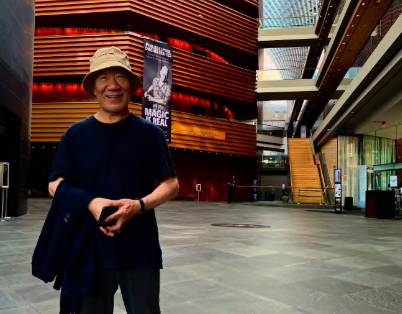
Joe Hisaishi(born Mamoru Fujisawa) was born on December 6, 1950 in Nakano, Nagano Prefecture, Japan. He was raised in Nakano, where his father taught high-school science and “loved chemistry.” Hisaishi later recalled that neither of his parents was musically trained, but that he listened to a wide variety of music on his father’s gramophone from an early age. His father often took him to the cinema, and Hisaishi said he saw “hundreds of films” during his childhood.
He began musical training very early. One source reports that he “discovered classical music at the age of 4, learning the violin at a school that adopted the Suzuki method,” while another notes he started violin lessons at age five. In junior high he joined his school’s brass band, playing trumpet, trombone and saxophone and even conducting the ensemble. He continued his music education at Tokyo’s Kunitachi College of Music.
As a teenager Hisaishi explored diverse musical interests. He recalled listening to “all kinds of jazz” during high school and studying classical works (such as Bach’s inventions) and modern composers like Shostakovich and Schoenberg while preparing for college music exams. He also mentioned being influenced by contemporary experimental music, noting he was “shocked by Terry Riley’s‘A Rainbow in Curved Air’” during that period.
| Aspect | Verified Details |
| Birth Name | Mamoru Fujisawa |
| Date of Birth | December 6, 1950 |
| Birthplace | Nakano, Nagano Prefecture, Japan |
| Upbringing | Raised in Nakano |
| Family Background | Father was a high-school science teacher |
| Early Music Exposure | Listened to various music at home |
| Childhood Interests | Frequently attended films |
| First Instrument | Violin |
| Start of Training | Began violin lessons at age 4–5 |
| Method Studied | Method Studied |
| School Music Activity | Member of junior high brass band |
| Instruments Played | Trumpet, trombone, saxophone |
| Early Leadership | Conducted school ensemble |
| Higher Education | Kunitachi College of Music, Tokyo |
Career Beginnings
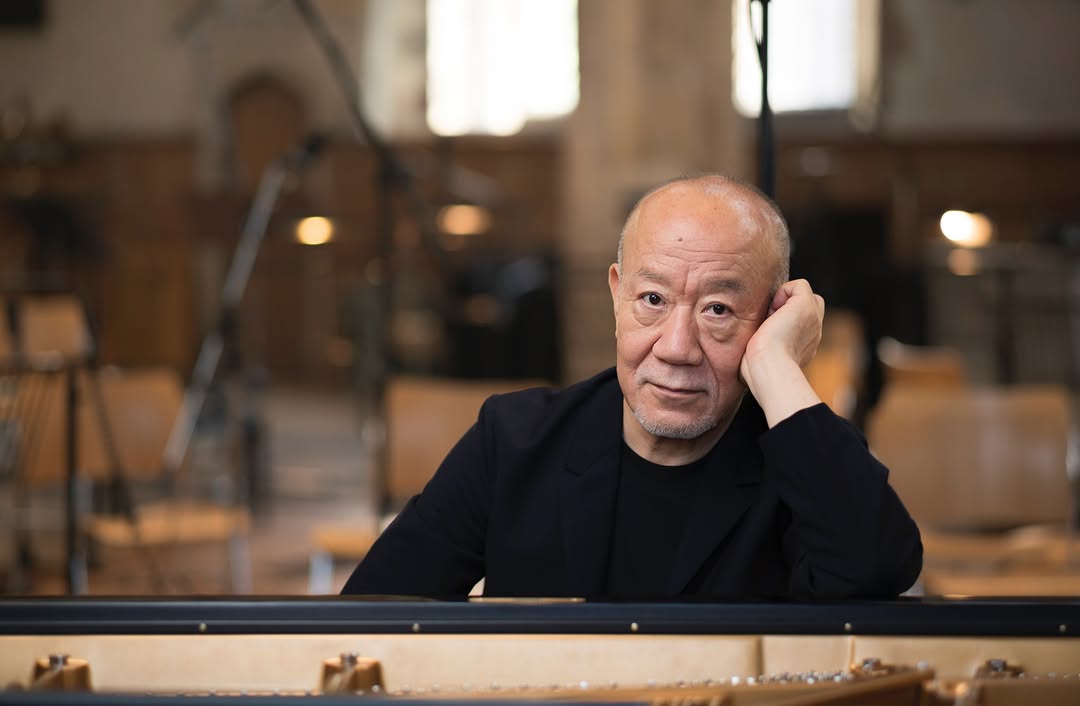
Joe Hisaishi (born Mamoru Fujisawa) began his career in the early 1980s as a composer of modern classical and minimalist music. He first gained attention in 1981 with the premiere of his composition MKWAJU, and in 1982 he released his debut solo album Information.
These works marked the launch of his recording career, which ultimately encompassed roughly forty solo albums exploring electronic and orchestral textures. During this period he also developed skills as a pianist and conductor.
In the mid 1980s Hisaishi expanded into film scoring: his first major soundtrack was for Hayao Miyazaki’s animated feature Nausicaä of the Valley of the Wind(1984), a project initiated by producer Isao Takahatathat established a long running collaboration with Studio Ghibli.
International Breakthrough
| Film Title | Release Year |
| My Neighbor Totoro | 1988 |
| Princess Mononoke | 1997 |
| Spirited Away | 2001 |
| Howl’s Moving Castle | 2004 |
| Ponyo | 2008 |
| Hana-bi | 1997 |
| Departures | 2008 |
| The Boy and the Heron | 2023 |
Throughout the 1990s and 2000s, Hisaishi’s reputation spread worldwide through his film scores. He composed the music for many of Studio Ghibli’s most beloved films, including My Neighbor Totoro(1988), Princess Mononoke(1997), Spirited Away(2001), Howl’s Moving Castle(2004) and Ponyo(2008).
The global success of these movies brought international acclaim to his music. Hisaishi won multiple Japan Academy Prizes for Best Music for films such as Kitano’s Hana bi(1997) and Takita’s Departures(2008).
His score for Spirited Awayearned an Annie Award (2003) for Best Music in a Feature, highlighting his impact on audiences outside Japan. He also received awards at film festivals in Asia, including Hong Kong and Korean film honors.
In 2004 Hisaishi made history at the Cannes Film Festival by becoming the first Japanese musician to conduct an orchestra live to film (he conducted a score for Buster Keaton’s The General). This event, along with international tours of his music, cemented his standing as a global composer.
Major Performances & Concert Highlights
Hisaishi has brought his music to concert halls around the world through a variety of high profile events. Beginning in 2014 he created the JOE HISAISHI presents MUSIC FUTUREseries in Japan, a popular concert program that features contemporary works and collaborations.
In 2017 he launched an international touring concert, Joe Hisaishi Symphonic Concert: Music from the Studio Ghibli Films of Hayao Miyazaki, performing live with full orchestras in cities such as Paris, Melbourne, San Jose, Los Angeles, New York and Prague.
These concerts typically showcase his famous film themes with an orchestra (often including choir and guest soloists). In 2019 he started the Future Orchestra Classics (FOC)series, conducting the New Japan Philharmonic in programs of classical repertoire; under this banner he led performances of the complete Beethoven symphonies and released a recording of the cycle.
Hisaishi’s live events routinely fill major venues. For example, in 2024 he sold out multiple nights at New York’s Madison Square Garden and held multi night concerts at London’s Royal Albert Hall.
He has also led special programs such as concerts accompanying silent films, and in late 2024 presented Pictures at an Exhibitionwith orchestras in Tokyo and abroad. In all these performances, Hisaishi often serves as conductor of the orchestra, bringing cinematic and classical music to large audiences.
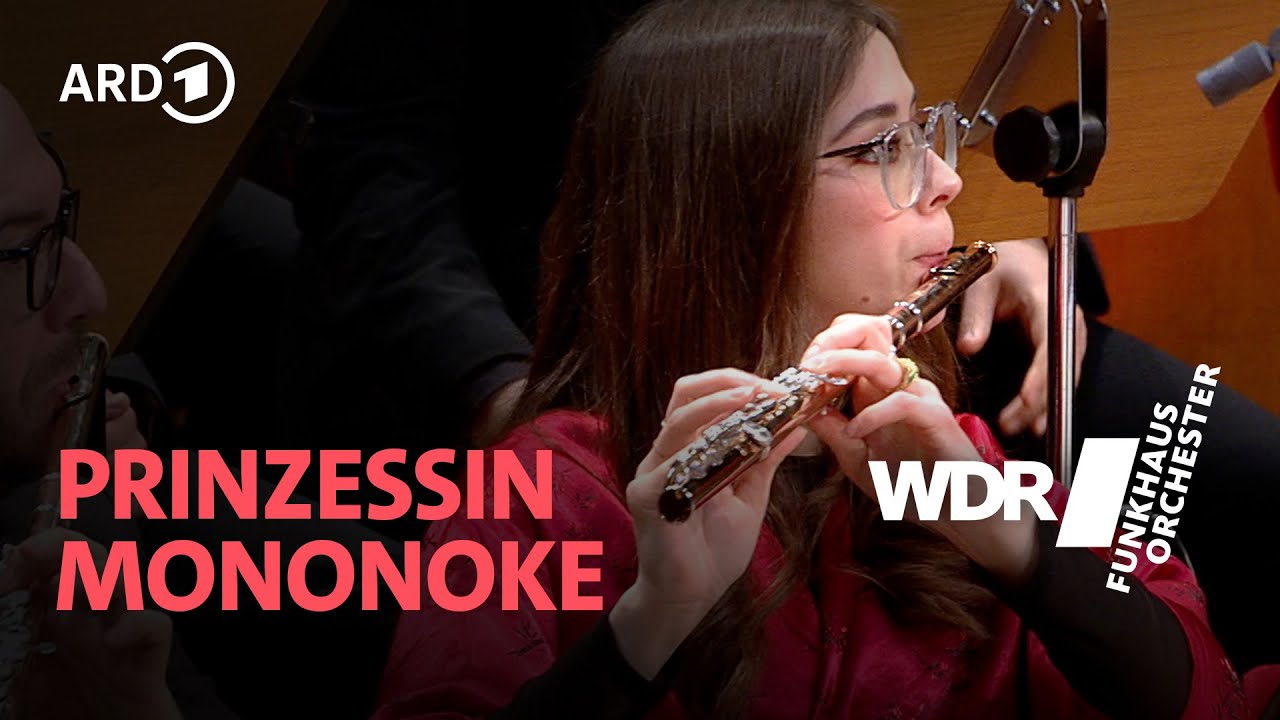
Prinzessin Mononoke - The Legend of Ashitaka - Joe Hisaishi | WDR Funkhausorchester
Recordings & Discography
Hisaishi’s discography is extensive, including nearly forty solo albums and over one hundred film soundtrack recordings. His first album, Information(1982), showcased his early minimalist style.
Solo albums over the years have blended piano, electronic and orchestral elements (notable titles include MinimalRhythmand Melodyphony). His soundtrack recordings encompass many top grossing Japanese films.
The Studio Ghibli scores (Totoro, Mononoke, Spirited Away, Howl’s Moving Castle, etc.) have all been released on CD or digital formats. In 2020 he compiled two retrospective albums Dream Songs: The Essential Joe Hisaishiand Songs of Hope: The Essential Joe Hisaishi, Vol.2on the Decca Gold label, which gathered highlights from his career.
In 2023 he released A Symphonic Celebration Music from the Studio Ghibli Films of Hayao Miyazakion Deutsche Grammophon. This orchestral album, featuring new arrangements of his famous themes, debuted at No. 1 on the U.S. Billboard Classical Albums and Classical Crossover charts.
He has also recorded modern orchestral works of his own: for example, Joe Hisaishi in Vienna(2023) on DG features the world premiere recordings of his Symphony No. 2 and Viola Sagawith the Vienna Symphony. Overall, Hisaishi’s recordings span studio albums, compilations, and live concert albums, reflecting both his film and classical output.
Awards & Professional Recognition
Hisaishi’s achievements have been recognized by numerous prestigious awards. He is an eight time winner of the Japan Academy Prize for Best Music, reflecting multiple film scores that were honored domestically.
Internationally, he won a 2003 Annie Award(the animation industry’s top U.S. honor) for his score to Spirited Away. His music has also received awards at the Hong Kong Film Awards (for The Postmodern Life of My Aunt) and at the Asian Film Awards (for Our Time Will Come).
In Japan he was awarded the Medal with Purple Ribbonin 2009 (a national honor for cultural achievement). In 2023 he was further honored with the Order of the Rising Sun, Gold Rays with Rosetteby the Emperor of Japan.
In 2024 he received the Winsor McCay Awardat the Annie Awards (a lifetime achievement honor for animation music) in recognition of his “unparalleled achievement” in film scoring. These awards and honors from industry and state bodies alike underscore Hisaishi’s status as a highly respected composer and conductor.
Collaborations With Orchestras & Conductors
Hisaishi has worked closely with many of the world’s leading symphony orchestras and conductors. He has guest conducted or collaborated with ensembles such as:
• Vienna Symphony Orchestra • Helsinki Philharmonic Orchestra • London Symphony Orchestra • Melbourne Symphony Orchestra • Chicago Symphony Orchestra • Toronto Symphony Orchestra • San Francisco Symphony Orchestra • Los Angeles Philharmonic • New Japan Philharmonic (as Music Partner and through his World Dream Orchestra project) • Royal Philharmonic Orchestra (as Composer in Association)
In these collaborations, he often conducted the orchestra performing his own compositions and, at times, classical repertoire. He has also engaged in cross genre projects with prominent musicians: he worked with cellist Mischa Maiskyon concert programs, and he brought in contemporary composers like Philip Glassand David Langfor joint performances in his Music Futureseries.
In leadership roles he has close ties to orchestras: he served as Music Partner of the New Japan Philharmonic (2020 2025) and is the Music Director designate of the Japan Century Symphony Orchestra (starting April 2025). In April 2024 he was appointed Composer in Association of the Royal Philharmonic Orchestra.
Through these positions and guest appearances, Hisaishi continues to build bridges between film music and the classical concert world.
Recent Career Activity
Hisaishi’s career remains extremely active in the 2020s. He has composed and released new large scale works: for instance, his Symphony No. 2(2021) and the orchestral suite Viola Saga(2022) were premiered and recorded with the Vienna Symphony (DG 2023).
He released the solo album MinimalRhythm 4in 2021, and in 2023 he issued new recordings on Deutsche Grammophon including Merry Go Round of Life(orchestral reworks) and A Symphonic Celebration.
That same year he scored Hayao Miyazaki’s latest film The Boy and the Heron(also known in Japan as How Do You Live?). In November 2024 the Los Angeles Philharmonic premiered his new Harp Concerto, a work jointly commissioned by four orchestras, with their principal harpist Emmanuel Ceysson as soloist.
On stage, Hisaishi has led sold out concerts of Ghibli music across the U.S., Europe and Asia during 2023 2024, and he presented his Pictures at an Exhibitionorchestral program with symphony orchestras in late 2024.
In 2024 he began a tenure as Composer in Association of the Royal Philharmonic Orchestra, and he will formally take up the Music Director post of the Japan Century Symphony in 2025.
All these activities new compositions, international tours, collaborations, and honorary appointments demonstrate Hisaishi’s ongoing influence in the world of orchestral and film music.
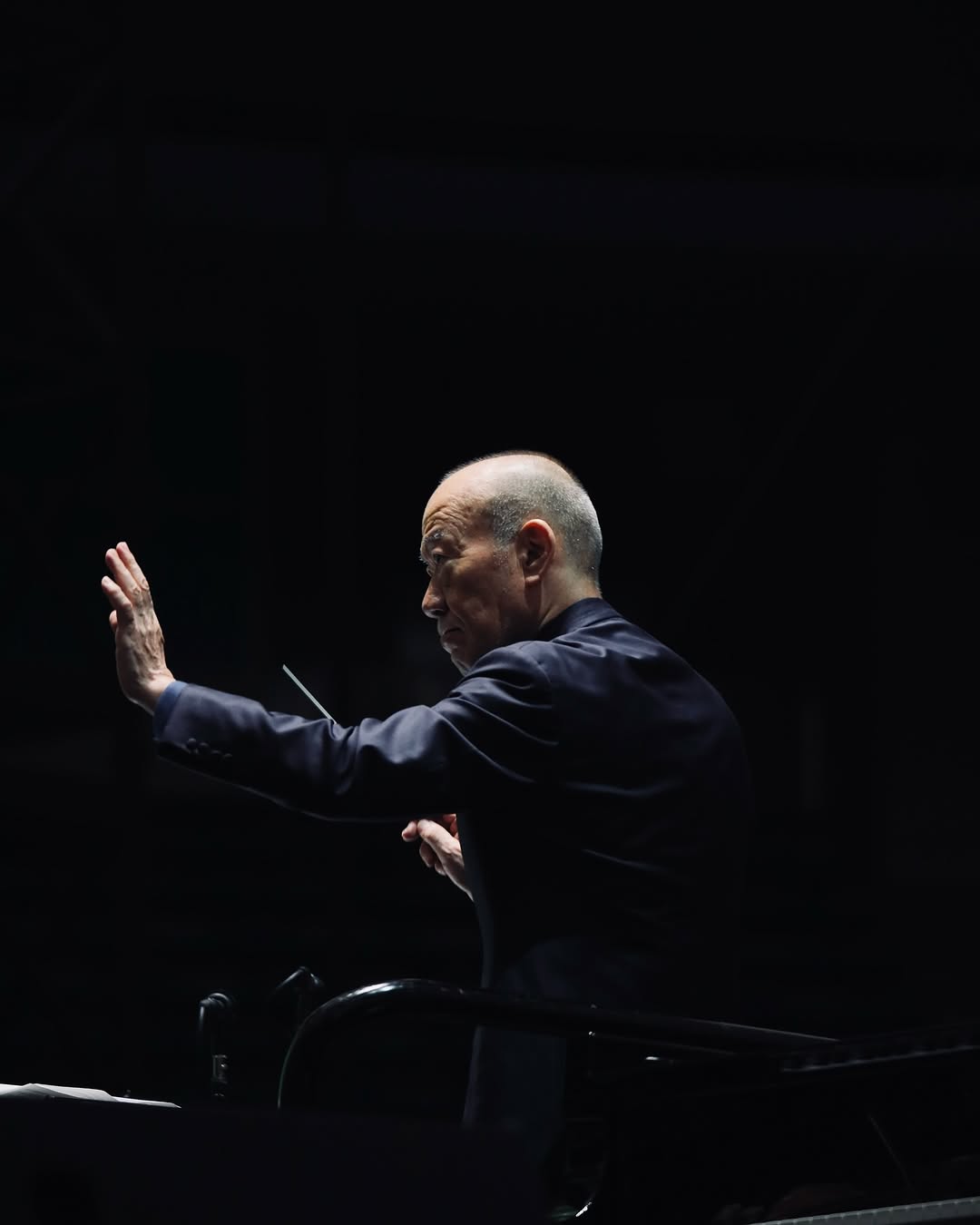
Joe Hisaishi Performance (2025–2026)
- Feb Mar 2025:Led an international European tour conducting the Bordeaux Aquitaine National Orchestra at L’Auditorium de Bordeaux (Feb 27 28) and Paris’s Philharmonie de Paris, and the Rotterdam Philharmonic at De Doelen (Mar 28 29, 2025).
- May 9, 2025:Contributed new compositions to Pianographique, an interdisciplinary performance at Expo 2025 Osaka (Europe Day, EU Pavilion) melding piano, dance and visuals.
- Jul 16 17, 2025:Concluded his “Studio Ghibli Film Concert Tour” at Tokyo Dome with the Royal Philharmonic Orchestra performing suites from My Neighbor Totoroto Spirited Away. The two-day run drew about 130,000 fans across three sold-out shows.
- Aug 2025:Conducted the Japan Century Symphony Orchestra in a four-city “A Song of Prayer” concert series (Aichi, Osaka, Hyogo, Tokyo), featuring selections from his film score The Boy and the Heron.
- Apr 23 26, 2026 (USA):Led the Chicago Symphony Orchestra at Symphony Center in Chicago presenting an all-Hisaishi program including Symphony No.2, Castle in the Skyfor trumpet, and a Spirited Awaysuite. He then conducted the National Symphony Orchestra at Washington, D.C.’s Kennedy Center (May 14 16, 2026) as part of the same North American tour.
- May 28 30, 2026:Conducted the Toronto Symphony Orchestra at Roy Thomson Hall for the “Hisaishi Returns”series, premiering his new Concerto for Orchestra(TSO co-commission) and performing Viola Sagawith soloist Antoine Tamestit.
Technical Approach And Piano Control
Hisaishi’s piano technique is solid and deliberate, with an emphasis on clarity over flash. He typically plays with even articulation and secure hand control, providing firm harmonic support.
In performance he often alternates between conducting and playing his own piano parts, delivering them with confidence for example, a reviewer noted that when he sat at the piano he “laid down some of the best chords ever written”. This suggests his chordal writing and execution are handled with precision.
His accompaniments tend to avoid excessive ornamentation or virtuoso display instead, the piano part under Hisaishi’s hands is cleanly projected and rhythmically steady, serving the music’s structure with controlled technique.
Tone, Touch, And Sound Color
Hisaishi favors a warm, singing piano tone that blends with the orchestral palette. His touch is often described as expressive and soulful, allowing melodies to sing clearly above the accompaniment.
He typically uses a smooth legato on lyrical lines and lighter staccato where texture is needed, achieving a rich tonal palette without harshness.
Dynamic contrast is used thoughtfully pianissimos are tender and delicate, while fuller chords unfold with a gentle weight, creating an overall sound that is luminous but never heavy-handed.
Critics note that he avoids overly sharp accents, preferring instead a rounded, flowing sound that highlights the color of each chord and the continuity of the line.
Rhythm, Phrasing, And Structural Clarity
Hisaishi’s playing is built on clear rhythmic foundations. Many of his pieces use steady, repetitive pulses as one review observes, percussion often keeps steady time while repeated motifs snake through different sections.
In his piano writing this translates to ostinato figures and simple grooves that give the music forward momentum. He layers these patterns in a way that gradually builds tension and release, so the phrasing feels organic even within a repeating structure.
At the same time, Hisaishi is not a slave to uniformity he has acknowledged that some works contain very intricate rhythms, describing one modern suite’s pulse as quite complex, and playing it is not straightforward.
His phrasing thus strikes a balance between exact patterning and expressive timing. Phrases often conclude clearly on the strong beats, and he leaves room for rubato and lyrical shaping at important moments.
Overall, the form of each piece remains transparent to the listener because he frames melodies with consistent pulse and coherent repetition.
Interpretative Approach To Repertoire
Hisaishi adjusts his pianistic approach to the style of each work. When performing his own film music especially romantic or narrative themes, he adopts a lush, orchestral tone and expansive phrasing akin to late Romantic playing.
In contrast, his solo and modern concert works are treated more austerely, with a leaner touch and emphasis on minimalism. He himself has noted this distinction in film scores he writes with a classical symphonic sensibility, whereas his independent compositions lean toward minimalist patterns.
For example, wistful song like themes are often interpreted with rubato and gentle dynamics, whereas trance like figures are given a strict rhythmic clarity.
His work consciously blends traditions as one overview notes, Hisaishi blends romantic orchestral traditions, the repeated patterns of minimalism and Japanese folk influences so when playing different genres he finds ways to unify them through a personal tone.
Thus, in a Romantic setting he may shape melodies with warm rubato, while in a modern or classical context he applies precise, consistent articulation to let the structure speak for itself.
Balance Between Precision And Expression
Across all repertoire Hisaishi achieves a harmonious mix of accuracy and feeling. He often constructs music from simple, precise motifs, yet infuses them with emotional breadth.
Critics observe that he builds simple, memorable motifs and orchestrates them into expansive works, meaning his piano lines are usually clean and exact, even as they remain lyrical.
This approach means he maintains technical discipline in execution each motif is articulated with care while drawing expressive nuance from dynamics and phrasing.
Reviewers note that although he is frequently called a minimalist composer, his piano playing nonetheless evokes huge emotional and psychological responses from very simple themes.
In practice this balance shows up as steady, well controlled passages that can quickly bloom into rich sonority. For example, a repeated arpeggio pattern might be delivered with strict evenness but swells naturally into a dramatic climax.
The result is music that is impeccably clear in design yet warmly expressive in effect.
Critical Observations And Musical Identity
Observers consistently emphasize Hisaishi’s clear melodic gift and unique voice. He is often likened to familiar figures one reviewer calls him the John Williams of anime but critics stress that his style is distinct.
His identity lies in the blend of simplicity and depth straightforward melodies and chords are given weight by evocative harmony and timing.
As one music writer puts it, Hisaishi’s pieces celebrate humanity by weaving every note into an emotionally engaging whole, his themes frequently carry a nostalgic, tender character.
He has said that minimalism influences him deeply comparing it to Baroque repetition yet his piano interpretations never feel dry or academic.
Instead, his playing unites Eastern and Western elements, grounding folk like themes in solid classical technique.
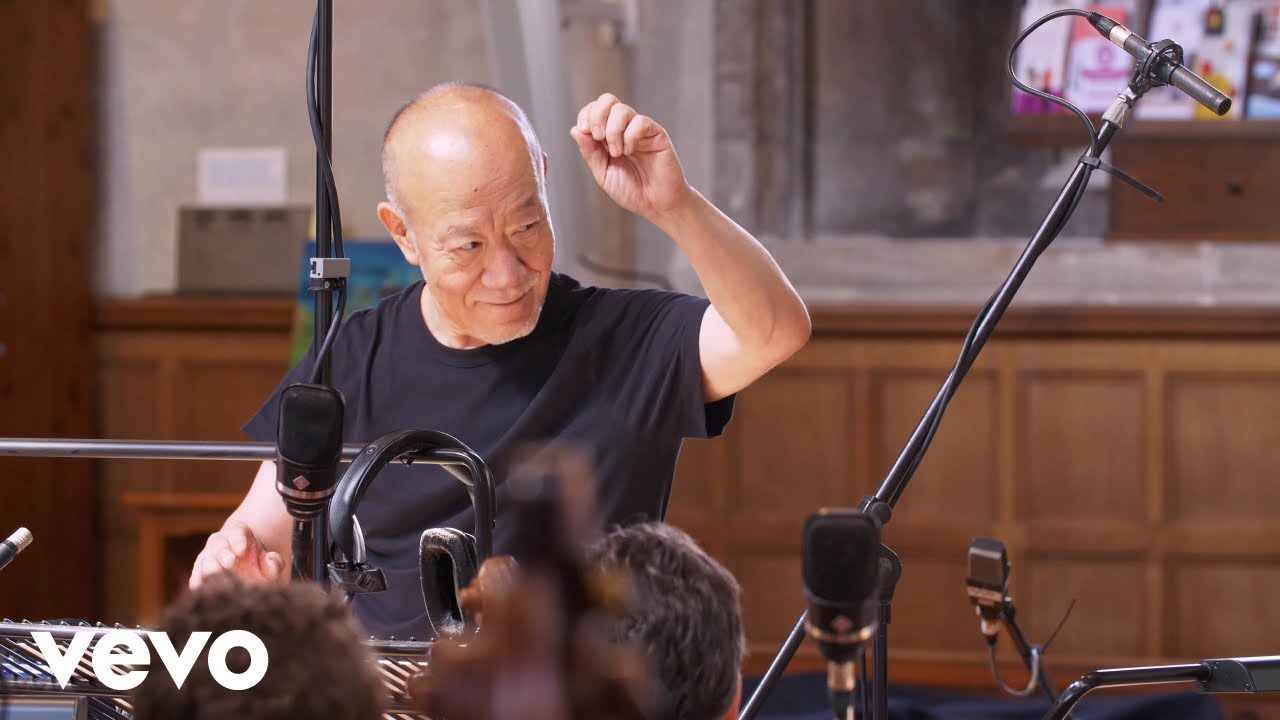
Joe Hisaishi - Merry-Go-Round of Life (from “Howl’s Moving Castle”)
Joe Hisaishi Net Worth
As of 2026, Joe Hisaishi’s net worth is estimated by some online sources to be between $10 million and $12 million, though this figure should be viewed cautiously given the lack of confirmation from reputable outlets. Hisaishi is a Japanese composer and conductor who has created more than 100 film scores and solo albums. He also heads his own orchestra, reflecting his role in performing his music on international concert tours. He generates income from soundtrack commissions, album sales, and fees from concert performances.
FAQs
1. Who Is Joe Hisaishi?
Joe Hisaishi is a Japanese composer, conductor, and pianist best known for his long-standing collaboration with filmmaker Hayao Miyazaki and Studio Ghibli. He has composed music for over 100 films as well as numerous concert and symphonic works.
2. What Is Joe Hisaishi Famous For?
Joe Hisaishi is most famous for composing iconic film scores such as My Neighbor Totoro, Spirited Away, and Howl’s Moving Castle. His music is widely recognized for blending lyrical melodies with minimalist and orchestral techniques.
3. Is Joe Hisaishi Classically Trained?
Yes, Joe Hisaishi received formal classical training and studied composition at Kunitachi College of Music in Tokyo. His education includes classical theory, modern composition, and performance, which strongly influences his concert and film music.
4. Does Joe Hisaishi Still Compose And Perform Today?
Joe Hisaishi remains active as a composer and conductor, regularly premiering new orchestral works and leading international concert tours. In the 2020s, he has released new recordings, conducted major orchestras, and scored recent films.
5. What Awards Has Joe Hisaishi Won?
Joe Hisaishi has won multiple Japan Academy Prizes for Best Music and received international recognition including an Annie Award. He has also been honored by the Japanese government for his cultural contributions.