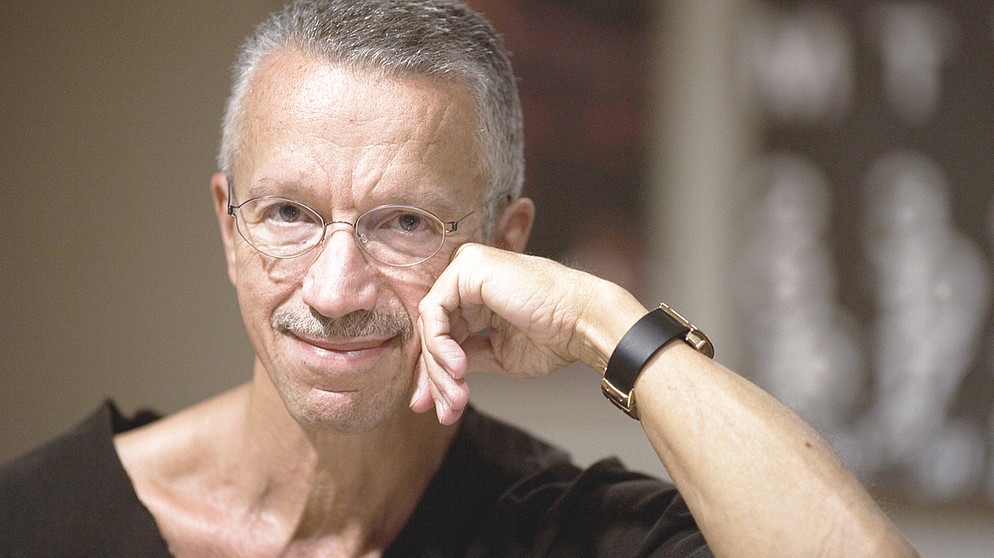
Keith Jarrettwas born on May 8, 1945, in Allentown, Pennsylvania. His mother was of Slovenian Hungarian ancestry and his father of French or Scots Irish background. He grew up in suburban Allentown, where he had extensive early exposure to music. From childhood Jarrett showed prodigious musical ability he reportedly had perfect absolute pitch and demonstrated musical talent at a very young age.
Jarrett began formal piano lessons before he was three years old. By age seven he gave his first solo piano recital, performing classical works by composers such as Mozart, Bach, Beethoven, and Saint Saëns. His mother encouraged him in these early studies, and he trained with a series of teachers. In particular, he studied classical piano with Eleanor Sokoloffof the Curtis Institute in Philadelphia.
During his teens while attending Emmaus High Schoolin Emmaus, PA, Jarrett developed a strong interest in jazz as well as classical music. He became proficient in jazz during high school a live concert by pianist Dave Brubeckmade a strong early impression on him. He also undertook formal composition study around age 15 and briefly attended the Berklee College of Musicin Boston.
| Aspect | Details |
| Birth | Born May 8, 1945, in Allentown, Pennsylvania. |
| Family Roots | Mother of Slovenian-Hungarian ancestry; father of French or Scots-Irish background. |
| Childhood Setting | Raised in suburban Allentown with early musical exposure. |
| Musical Gift | Displayed exceptional musical ability and absolute pitch as a child. |
| Piano Lessons | Began formal piano training before age three. |
| Early Recital | Gave first solo piano recital at age seven. |
| Classical Repertoire | Performed works by Mozart, Bach, Beethoven, and Saint-Saëns. |
| Key Teacher | Studied classical piano with Eleanor Sokoloff. |
| High School | Attended Emmaus High School in Emmaus, Pennsylvania. |
| Jazz Influence | Inspired by a live performance by Dave Brubeck. |
| Composition Study | Began formal composition study around age fifteen. |
| Music College | Briefly attended Berklee College of Music in Boston. |
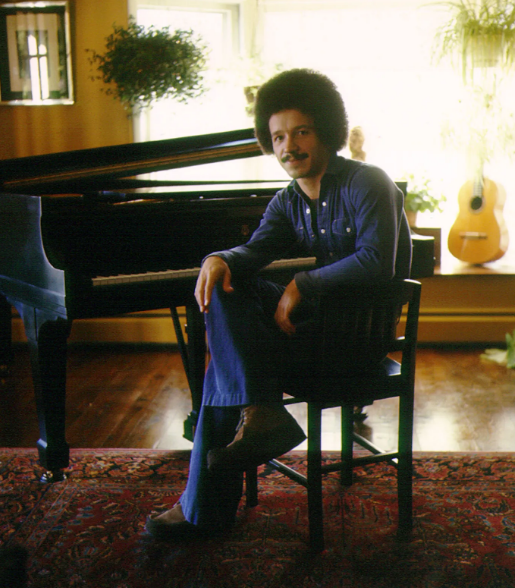
Career Beginnings
Keith Jarrett switched from classical music to jazz in the mid-1960s. In 1964 he moved from Pennsylvania to New York City and quickly joined Art Blakey’s Jazz Messengers.
He then became a member of Charles Lloyd’s quartet (1966–1968), touring internationally with Cecil McBeeand Jack DeJohnette.
Jarrett later recalled getting hired by Blakey on the spot after a brief jam session: “I played for 10 minutes with this band… I got hired. And that was the beginning”.
By 1970 he was playing electric piano with Miles Davis’sexperimental ensemble. After leaving Davis in 1971, Jarrett formed his own quartet, featuring bassist Charlie Haden, drummer Paul Motianand saxophonist Dewey Redman, which would go on to record a dozen albums together.
International Breakthrough
Jarrett’s breakthrough as a bandleader came in the early 1970s. He signed with Manfred Eicher’s ECM Records in 1971 and released Facing You, his first solo piano album.
ECM then organized an 18-concert European tour (1973) of Jarrett’s solo improvisations recorded on the triple LP Solo Concerts: Bremen/Lausanne which earned widespread acclaim.
This set the stage for his landmark 1975 performance at the Cologne Opera House. The resulting recording, The Köln Concert (1975), became a global sensation a lyrical, hour-long improvisation that remains the bestselling solo piano album in history.
ECM celebrated Jarrett’s four decades with the label by releasing Rio (2011), a marathon 105-minute solo performance from a concert in Brazil, underscoring that he was still exploring new musical directions.
Major Performances & Concert Highlights
Jarrett became renowned for improvising entire concerts spontaneously. He often took the stage with no predetermined pieces, simply beginning to play without knowing where the music might lead, producing extraordinarily broad and often lyrical performances that critics and fans widely acclaimed.
Over the years he has headlined major jazz festivals and concert halls around the world as both a soloist and with his groups.
His long-running Standards Trio (with Gary Peacock and Jack DeJohnette) played three sold-out nights at New York’s Blue Note jazz club in June 1994.
The concerts were issued as a 6-CD set (At the Blue Note), and reviewers praised Jarrett’s improvisations – The New York Times noted that “Jarrett makes each new note sound like a discovery… The music whispered and glimmered” during those nights.
(Jarrett has also appeared in other legendary venues such as Carnegie Hall and the Montreux Jazz Festival, often to standing-room-only audiences.)
Recordings & Discography
Jarrett has an extensive discography spanning jazz and classical music. In total he has recorded more than 60 albums for ECM (and a handful for other labels).
Key recordings include Treasure Island (Impulse! 1974) and The Köln Concert (ECM 1975). He also released numerous solo piano albums (e.g. Facing You, Sun Bear Concerts) and duet/trio albums.
Highlights of his quartet and trio work include The Survivors’ Suite (1976) with Haden Motian Redman, and the Standards Trio’s Standards, Vol. 1 (1983) and Live at the Blue Note (1995).
ECM’s catalog also features his duet recording Jasmine with Charlie Haden (2007) and the trio recording Somewhere (2009) with Peacock DeJohnette.
In addition to jazz, Jarrett has recorded landmark classical repertoire. He released Bach’s Wohltemperiertes Klavier (Books I & II, 1987–90) and Goldberg Variations (1989), Shostakovich’s 24 Preludes and Fugues, Op.87 (1996), and Handel’s keyboard suites, among others.
He recorded two volumes of Mozart piano concertos (mid-1980s) with the Stuttgart Chamber Orchestra under conductor Dennis Russell Davies.
He also composed orchestral and ensemble works his jazz/classical suite Bridge of Light (1993, ECM) and chamber pieces which ECM has issued.
In the 1980s he formed the Standards Trio whose catalog of Great American Songbook recordings spans over 30 years, earning a reputation as one of the most prolific and enduring small ensembles in jazz (albums include Changes (1984) and Standards Live (1986)).
Awards & Professional Recognition
| Award | Year / Recognition |
| NEA Jazz Master | Awarded in 2014 by the United States government. |
| Polar Music Prize | Received Sweden’s prestigious international music award. |
| Léonie Sonning Prize | Honored by Denmark for lifetime musical achievement. |
| Jazz Hall of Fame | Inducted by DownBeat magazine readers in 2008. |
| Grammy Hall of Fame | The Köln Concert inducted in 2010. |
Jarrett’s artistry has been widely recognized with top honors. In 2014 he was named a U.S. NEA Jazz Master.
He has won prestigious international prizes, notably Sweden’s Polar Music Prize and Denmark’s Léonie Sonning Music Prize. In 2008 Jarrett was inducted into DownBeat magazine’s Jazz Hall of Fame (an honor voted by readers).
The Köln Concert has received special distinction: in 2010 it was inducted into the Grammy Hall of Fame as a recording of lasting significance.
Among his other honors are fellowships and recording awards in Europe (e.g. France’s Prix Charles-Cros, multiple Deutscher Schallplattenpreis awards).
Collaborations With Orchestras & Conductors
Though primarily known as a jazz pianist, Jarrett frequently bridged into the classical world. In the mid-1980s he recorded Mozart’s piano concertos (K. 271, 453, 466, etc.) with the Stuttgart Chamber Orchestra under Dennis Russell Davies, blending his intuitive style with classical repertoire.
In 1984–87 he performed and recorded major 20th-century concertos as well: ECM’s 2015 releases included performances of Samuel Barber’sPiano Concerto and Béla Bartók’sPiano Concerto No. 3 (recorded in the mid-1980s) with the New York Philharmonic and the Cleveland Orchestra (conductors Lorin Hollanderand Béla Drahos, respectively).
These projects showed Jarrett’s versatility in playing with large ensembles. He also collaborated in chamber settings; Jarrett joined violinist Gidon Kremerto record Arvo Pärt’s Fratres on the album Tabula Rasa (1984).
Throughout his career he worked with notable conductors (such as Davies and others) to present both standard and contemporary works, demonstrating a unique dialogue between jazz improvisation and composed music.
Recent Career Activity
Jarrett’s last major tour was in 2016. That year he gave solo concerts across Europe, which were released on ECM as Munich 2016, Budapest Concert, Bordeaux Concert and New Vienna.
These live albums capture Jarrett still at “the peak of his powers,” creating fully improvised music in real time.
However, in early 2018 Jarrett suffered two serious strokes that left his left side partially paralyzed. He announced that he is unlikely ever to perform in public again.
According to his label, these health issues “brought Jarrett’s performing life to a premature end”. Since then Jarrett has not toured, and no new performances have been scheduled.
ECM has continued to issue archival recordings: for instance, After the Fall (2018) was a 1998 solo concert album released post-retirement.
As of 2025, Jarrett’s active career is effectively over, but his legacy of groundbreaking concerts and recordings remains highly influential.
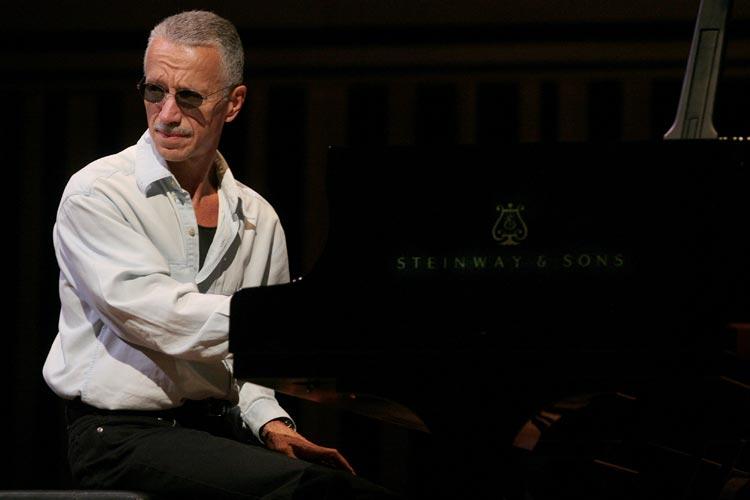
Keith Jarrett Performance
Jarrett did not perform live during 2025–26 (his last concerts were in 2016), but these releases and tribute concerts underscored the enduring impact of his playing: archived recordings were newly issued and his music was celebrated by leading artists, reinforcing his lasting influence on jazz improvisation.
Technical Approach And Piano Control
Keith Jarrett’s playing reflects a deep classical training and careful pianistic control. He treats each hand as an independent voice, ensuring neither hand is “dead” or merely accompanying.
This voice-leading approach means his left hand often contributes melodic or contrapuntal material instead of just simple chords.
Technically, Jarrett is agile: he can execute rapid scalar or arpeggiated passages with clarity, using a wide array of articulations. He modulates his attack constantly, adjusting finger technique and dynamics to shape each sound precisely, so that fast passages remain clean and every note serves the harmonic voice-leading.
Tone, Touch, And Sound Color
Jarrett is renowned for the variety of tones and colors he draws from the piano. He produces a singing, bell-like quality in the upper register critics describe his treble lines as “glittering” and lucid while coaxing rich overtones from even sparse gestures.
Jarrett exploits the piano’s full sonic range, from whisper-soft pianissimos to full-bodied fortissimos, by finely adjusting his touch and pedal.
Reviewers note he “coaxes overtones and contrasts” out of relatively few notes, demonstrating a mastery of the instrument’s resonance.
His tone can be delicate and crystalline in one moment and warm and rounded the next, as he balances a legato singing style with crisp, percussive articulation when needed to contrast textures.
Rhythm, Phrasing, And Structural Clarity
Jarrett’s improvisations unfold with a clear sense of form even while remaining spontaneous. He frequently starts phrases with rubato and organic timing “blithely” crossing barlines so that melodies flow naturally beyond strict meter.
Throughout a solo concert he builds momentum by repeating rhythmic patterns or ostinati in the left hand, providing a pulsing foundation for the right hand’s lines.
Each performance contains discernible sections: Jarrett develops motifs and contrasts themes as if composing in real time, giving the improvisation an architecture.
Critics have observed that his solos fuse free invention with compositional symmetry melodies and riffs emerge and return in a way that feels planned and coherent.
He easily shifts between styles within a piece, yet the overall arc stays coherent, with each passage flowing into the next.
Interpretative Approach To Repertoire
Jarrett adapts his style thoughtfully to different repertoires. In jazz settings he usually states a tune plainly but then takes it in fresh directions.
Reviewers note he typically does not radically reharmonize standards; he might play “All the Things You Are” in a straightforward swing, but then spin inventive new lines that stretch the harmony and tension.
In classical repertoire he generally honors the score while adding subtle personal inflections. Commentators note that Jarrett lets the original music “speak for itself” yet brings in his improvisational instincts applying nuanced rubato, delicate ornamentation or unexpected rhythmic freedom so that the pieces gain a gentle, exploratory character.
Critics describe his classical interpretations as balanced and imaginative: he will state a melody boldly, then draw back with refined phrasing, all with lyrical sensitivity.
Whether playing Bach, Mozart, or modern works, Jarrett combines structural respect with a natural, spontaneous-feeling expression rooted in his jazz background.
Balance Between Precision And Expression
Jarrett’s playing epitomizes an unusual mix of exactness and expressivity. Technically he is meticulous fast runs and complex harmonies are executed with precision yet every phrase feels emotionally driven.
Critics have emphasized that his style merges “boundless spontaneity” with “supreme control” of tone.
Even in passages that sound free and impetuous, Jarrett carefully shapes dynamics and touch: small accentuations and gradations are deliberate, not random.
This means his improvisations, though fresh and unpredictable, never sound sloppy or arbitrary. Instead they unfold with the careful pacing and detail of composed music, each inflection chosen to heighten the expressive impact.
Critical Observations And Musical Identity
Jarrett is widely recognized as a uniquely versatile pianist. Critics often note that he bridges the jazz and classical worlds crossing a chasm that separates most performers and bringing the character of each into the other.
His musical identity is defined by total improvisation: he famously takes the stage with no preconception of the music (“no idea what even the first note is going to be”).
As a result, his concerts are singular experiences, drawing on everything from Baroque counterpoint to folk, blues, gospel or minimalist motifs in the same performance.
While Jarrett’s style has evolved over decades, most writers agree he has maintained a consistent personal voice: at times reflective and lyrical, at others intense and rhythmic, but always direct and intimate.
Commentators highlight his candid presence on stage vocalizing along with phrases and moving with the music as part of this authenticity.
Ultimately his musical identity rests on that mix of raw spontaneity and deep craft, a combination that has earned him a distinctive place in modern piano literature.
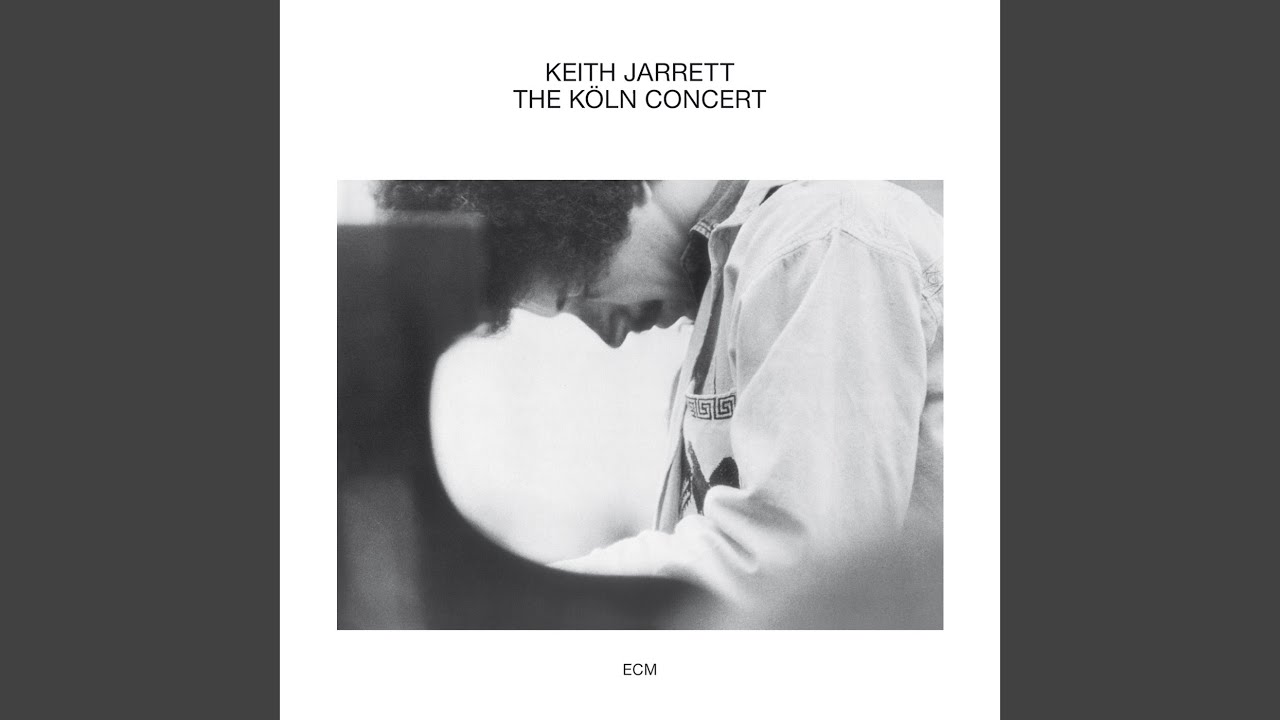
Köln, January 24, 1975, Part I (Live)
Keith Jarrett Net Worth
As of 2026, Keith Jarrett’s net worth is estimated between $20 million and $250 million, according to various online sources. However, these figures vary widely and have not been verified by major financial outlets. Jarrett earned his wealth primarily through his long career as a jazz pianist and composer. His income came from global touring and album sales, his 1975 album The Köln Concertremains the best-selling solo piano album in history. He also benefited from endorsement deals and smart investments.
FAQs
1. Is Keith Jarrett Still Performing Live?
Keith Jarrett has not performed live since 2016. After suffering two strokes in 2018 that affected his mobility, he stated that a return to public performance is unlikely.
2. Why Is Keith Jarrett Famous?
Keith Jarrett is best known for his fully improvised solo piano concerts and for The Köln Concert(1975), the best-selling solo piano album in history. He is also respected for bridging jazz improvisation with classical performance.
3. What Instruments Does Keith Jarrett Play?
Keith Jarrett is primarily a pianist but has also played electric piano, organ, soprano saxophone, percussion, and recorder. His professional reputation is centered almost entirely on acoustic piano.
4. Did Keith Jarrett Play Classical Music As Well As Jazz?
Yes, Keith Jarrett had a dual career in jazz and classical music. He recorded major works by Bach, Mozart, Shostakovich, and Handel while maintaining an extensive jazz discography.
5. What Is Keith Jarrett’s Most Important Album?
The Köln Concert(1975) is widely regarded as Keith Jarrett’s most important and influential album. It remains a landmark recording in both jazz and solo piano history.