How To Build An Online Piano Learning System That Actually Works
Trying to learn piano online sounds amazing, but the reality can be frustrating. Many beginners download three different apps, watch endless YouTube videos, and end up quitting within the first few weeks.
As a music educator who has spent over a decade building online piano courses, I can tell you the truth: scrolling bars on a screen can teach you which keys to press, but they cannot check your hand posture or teach you how music actually works. If you only practice by chasing moving lines on a tablet, you will feel lost the moment you look at a real piece of music.
You do not need expensive private lessons to succeed, but you do need a system. This guide will show you how to set up your keyboard correctly, protect your wrists from strain, and use modern software to build real, lasting musical skills in just 20 minutes a day.
Key Takeaways
- You can learn piano effectively online; most successful beginners combine a structured app or course for daily practice with occasional live feedback.
- Expect 1 to 4 months to play simple two-hand songs and 6 to 12 months to reach a comfortable beginner level, assuming 15-30 minutes of daily practice.
- Costs range from free (YouTube) to roughly $100-$200 a year for apps to $30-$100 per session for live online teachers (Data as of July 2026 - check current pricing).
- You'll need a keyboard or piano with at least 61 full-size keys and a device to run your chosen app or platform.
- The specific tool matters less than consistency; a decent app used daily beats a great one used sporadically.
Does Online Piano Learning Actually Work?

Yes, for most hobbyist goals, but online piano learningisn't one thing, and that's where much of the confusion starts. Different methods from apps and video courses to live teachers, offer unique advantages depending on your goals and learning style.
What Online Learning Can And Can't Replace
Online tools are genuinely strong at the parts of piano learning that benefit from repetition and instant feedback: note recognition, rhythm, basic hand independence, and building a song repertoire.
Apps like Simply Piano or Flowkey listen to what you play and tell you immediately whether you hit the right note, which is something a once-a-week lesson simply can't do in real time.
Where online-only learning tends to fall short is in posture, hand tension, and technique correction the kind of subtle physical habits a teacher notices by watching you, not just hearing what you play. A student can practice a wrist-tension habit for months without an app ever flagging it, because the app is only listening for correct notes, not correct form.
Who Succeeds Learning Piano Online (and Who Struggles)
Picture two beginners starting the same week. One opens an app for ten minutes between meetings, skips days when work gets busy, and never revisits mistakes. The other sets a fixed 20-minute slot, follows a structured course from start to finish, and books an occasional live lesson to check their form.
The second learner isn't more talented; they've simply built structure around the tool, rather than expecting the tool to build it for them. They also understand that consistent piano playing can reduce stressonly if the practice session itself isn't rushed or chaotic.
Learners who struggle online usually share one pattern: they treat the app or course as entertainment rather than practice, jumping between songs without mastering fundamentals first. Learners who succeed treat their platform as a structured coach, not a game to win.
The Three Things Every Online Piano Learner Needs
Every method that actually works, app, course, live teacher, or free YouTube succeeds or fails based on three ingredients, not the brand name attached to it.
- Practice:a consistent, scheduled block of time, not "whenever I feel like it."
- Feedback:something or someone that tells you when you're making a mistake, ideally in real time.
- Repertoire:music you actually want to play, so motivation doesn't run out before your skills do.
Miss any one of these and progress stalls, regardless of how polished the platform is. A student with perfect feedback but no consistent practice schedule won't improve. A student who practices religiously but only plays music they find boring usually quits within a few months.
Why Most Beginners Quit - And How To Structure Around It
A common mistake we see is beginners choosing a platform based on marketing rather than matching it to their own habits. Someone who knows they need external accountability signs up for a self-paced app, gets busy, and never opens it again, not because the app failed but because it needed self-motivation the learner didn't have.
The fix is simple: be honest about which of the three ingredients you're weakest at, and pick a method that compensates for it.
- If you struggle with consistency, choose a platform with built-in reminders, streaks, or a live teacher who expects you to show up.
- If you struggle with feedback, avoid pure video-watching (YouTube alone) and choose something that listens to your playing.
- If you struggle with motivation, prioritize a method that lets you pick easy piano songsearly, rather than one that fronts weeks of boring drills before you play anything recognizable.
With that framework in place, the next step is matching it to an actual method.
The 4 Ways To Learn Piano Online
There are really only four categories of online piano learning. Everything else is a variation within one of these.
1. Interactive Gamified Apps
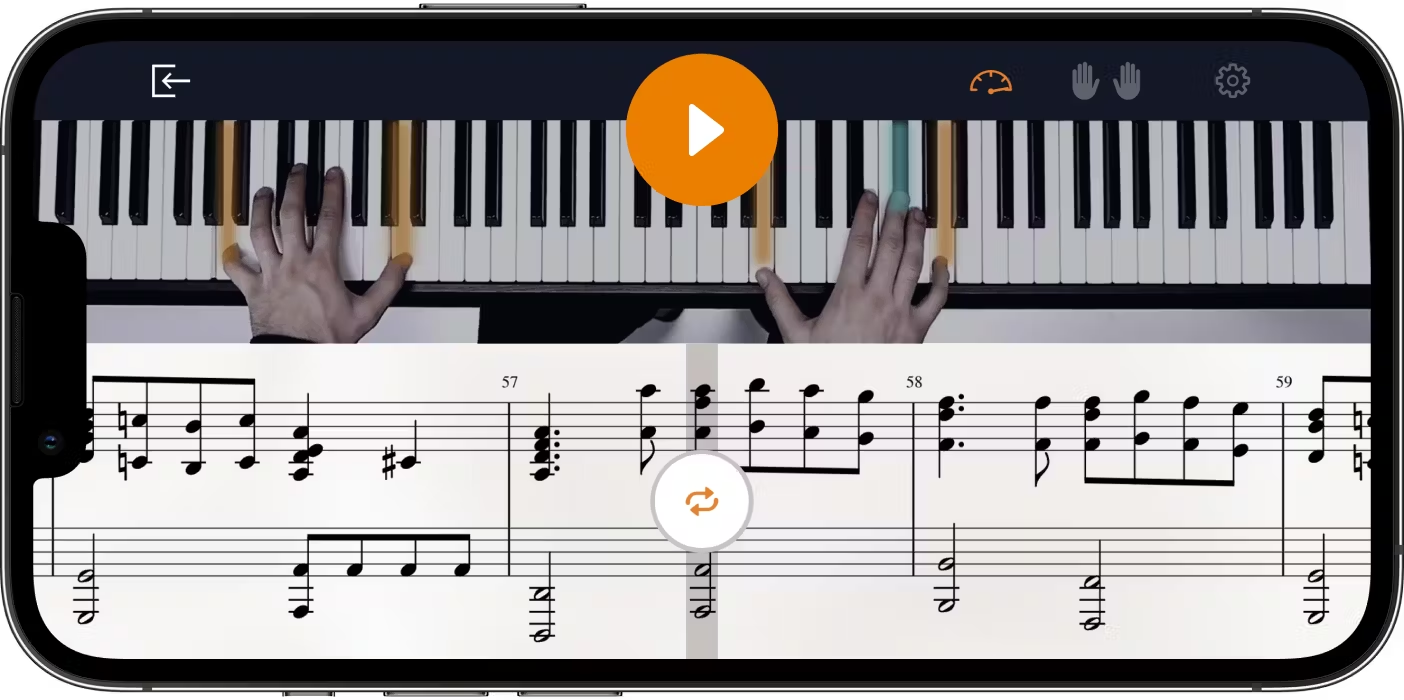
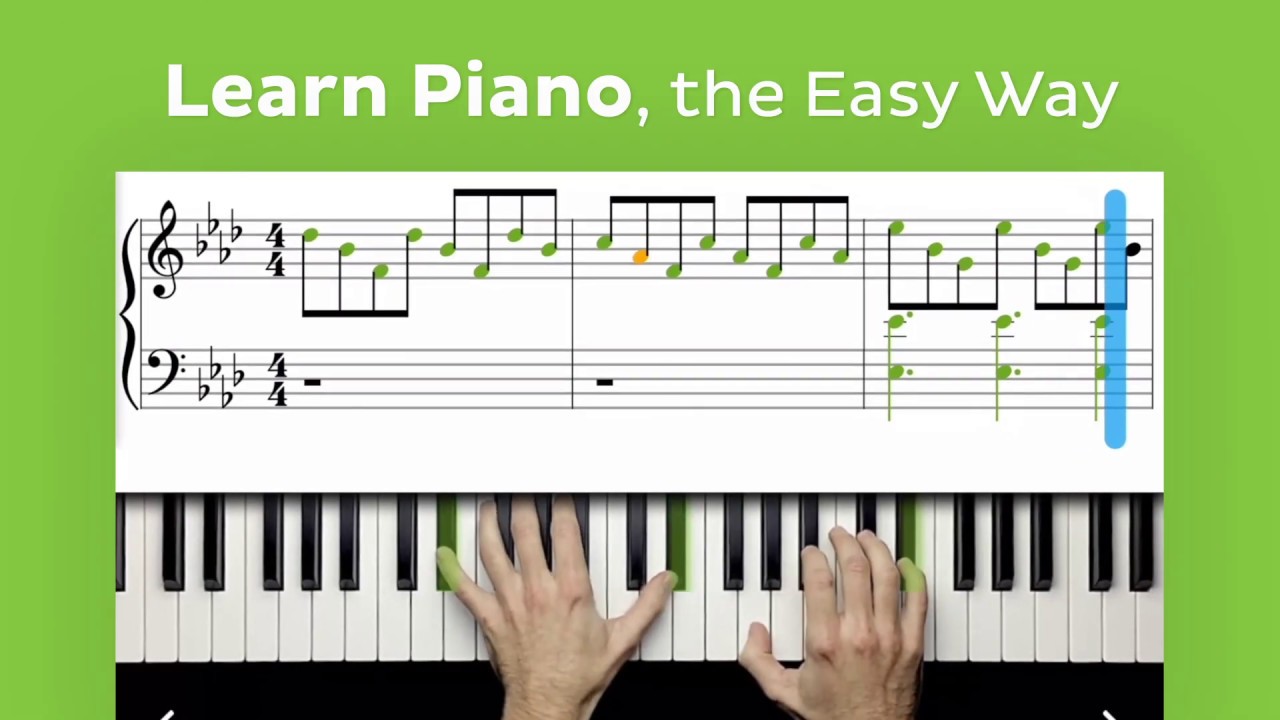
Platforms like Simply Piano, Flowkey, Skoove, and Playground Sessions connect directly to your instrument via a digital MIDI connection or use your device's microphone to listen to your acoustic playing. They display notes or visual bars scrolling across the screen in real time, instantly turning green when you hit the correct note or red when you make a mistake. Interactive learning platformslike these are particularly effective for beginners because they combine structured lessons with instant feedback, making it easier to build confidence while reinforcing correct note accuracy and rhythm from the very beginning.
- Best For:Complete beginners who want to play recognizable pop songs quickly and need instant feedback on note accuracy.
- The Pro:Exceptional at providing immediate pitch and rhythm correction, which prevents you from practicing mistakes into your muscle memory.
- The Con:Completely blind to physical hand position, wrist tension, and proper posture, meaning bad habits can easily go unchecked.
2. Structured Video Courses
Platforms such as Pianote, Hoffman Academy, and Pianoforall abandon scrolling bars in favor of pre-recorded, comprehensive video modules taught by human instructors. Instead of treating the piano like a video game, these courses use a split-screen camera angle to show the teacher's hands while explaining the concepts behind the music.
- Best For:Self-starters who want to learn the "why" behind music theory, chord progressions, and ear training.
- The Pro:Deeply educational; teachers explain physical technique cues and practice strategies that apps cannot convey.
- The Con:Requires high personal discipline, as there is no automated software tracking your notes to tell you if you played correctly.
3. Live 1:1 Online Teachers
Marketplaces like Preply allow you to hire a private, credential-verified instructor for remote, face-to-face video lessons. This replicates the exact dynamic of a traditional living room studio, but removes the geographical limits and travel time.
- Best For:Adult learners who want professional accountability and require precise technique monitoring.
- The Pro:The only digital format that can actively look at your wrists through a camera and fix structural posture mistakes in real time.
- The Con:The most expensive online method; rates range from $30 to $100 per hour, though this tracks roughly 10% to 25% cheaper than traditional in-person lessons due to lower studio overhead (Data as of July 2026).
4. Free Resources (YouTube & Open-Source)
Free content creators, university audit paths, and open channels offer thousands of standalone song tutorials, finger exercise walkthroughs, and chord breakdowns.
- Best For:Casual experimenters who want to test their initial interest in the instrument before spending any money.
- The Pro:Entirely free, endlessly diverse, and great for learning a specific, isolated melody on a weekend.
- The Con:Total lack of structural continuity; bouncing between random videos creates an "illusion of progress" without building core foundational skills.
By understanding how these four paths operate, you can confidently eliminate the systems that don't fit your lifestyle and focus on the tools that align with your musical goals.
How Much Do Online Piano Lessons Cost?
Cost is one of the biggest hesitations for new learners, and the range is wider than most comparison articles admit.
Apps And Subscriptions
Most mainstream piano apps price annual plans between roughly $100 and $200 per year, which typically works out 40-60% cheaper than paying monthly. Several platforms, including Hoffman Academy and Piano Marvel, offer meaningfully generous free tiers, so testing before you commit financially is realistic (Data as of July 2026).
Live Online Teachers Vs. In-Person Rates
Private piano lessons broadly range from $30 to $100 per session, depending on lesson length, teacher experience, and delivery format, with online lessons landing toward the lower end of that range because teachers save on travel and studio costs. A useful rule of thumb from lesson marketplaces: online sessions run about 10-25% less than in-home lessons for comparable instruction quality (Data as of July 2026 - check the latest official pricing on any platform you're considering).
What You Need Before You Start
Every method above assumes one non-negotiable: you need something to actually play.
Keyboard Vs. Digital Piano Vs. Acoustic
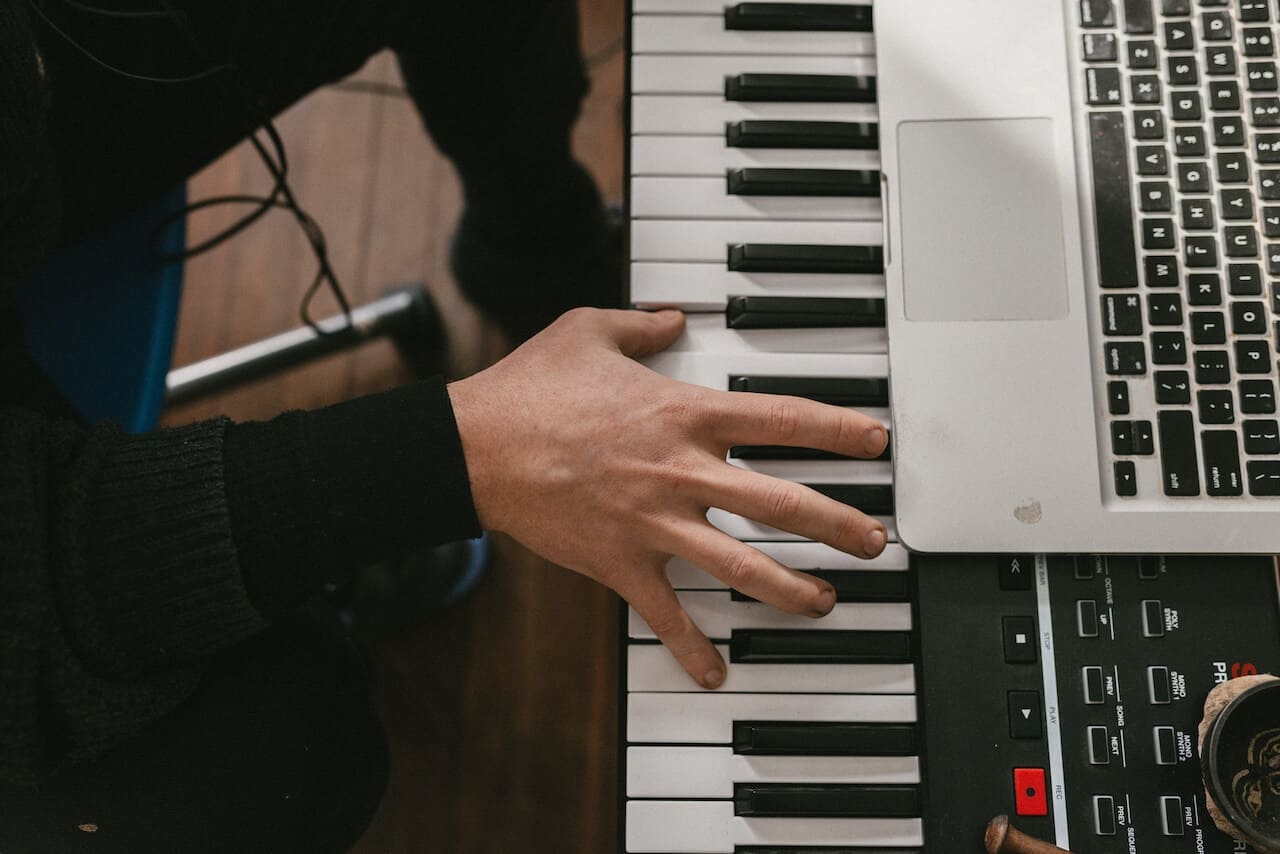
You do not need an acoustic piano to start. A digital keyboard with at least 61 full-size, weighted or semi-weighted keys is enough for a genuine beginner and significantly cheaper and more portable than an acoustic instrument.
Learning how the physical piano keysrespond to your finger strength early on is essential for developing proper dynamic control. If you already own an acoustic piano, that works fine too; you'll simply rely on microphone-based feedback rather than MIDI.
MIDI Vs. Microphone-Based Apps
This distinction affects which apps will work well for your setup:
- MIDI keyboardsconnect directly to your device (usually by USB), letting the app read the exact notes you play with high accuracy. The best option if you're using an app for regular feedback.
- Microphone-based detectionanalyzes the sound your piano makes to identify pitch. It works with any instrument, including acoustic pianos, but can struggle in noisy rooms or with fast, complex passages.
If you're planning to lean heavily on app-based feedback, a MIDI-capable keyboard is worth the modest extra cost. If you already own an acoustic piano or prefer a video-course/live-teacher path, a MIDI connection matters far less.
How Long Does It Take To Learn Piano Online?
Timelines depend heavily on consistency, but the general pattern holds across most structured methods, whether app, course, or live teacher.
Realistic Timeline By Stage
Assuming 15-30 minutes of consistent daily practice, most adult beginners follow a fairly predictable arc:
| Stage | What You Can Do |
| First two-hand song 1-4 months | Play a simple melody with both hands at a steady, slow tempo |
| Comfortable beginner6–12 months | Play a range of simple-to-moderate pieces fluently |
| Early intermediate 1-2 years | Read more complex pieces, start developing personal style |
Self-taught learners relying only on scattered free videos, without any structured sequence, typically progress more slowly through the intermediate stages, since technique errors and theory gaps become harder to catch without any feedback loop.
Your First 7 Days: A Simple Starting Plan
Most guides tell you what to buy and stop there. Here's what to actually do once you've picked a method, regardless of which of the four categories you chose.
- Day 1:Set up your equipment, confirm your app/platform connects correctly, and learn proper hand position and posture before playing a single note.
- Day 2-3:Learn note names on the keyboard and practice basic five-finger hand position exercises, right hand only.
- Day 4:Repeat the five-finger exercises with your left hand; keep sessions to 15-20 minutes to avoid frustration fatigue.
- Day 5:Attempt your first simple two-hand exercise, even if it's just alternating single notes.
- Day 6:Choose one short, simple song you genuinely like from your platform's library and start learning it in small sections.
- Day 7:Review everything from the week at a slow tempo before adding anything new; resist the urge to rush ahead.
Tip:by day 7, you won't be fluent, but you'll have built the practice habit that determines whether months two through twelve actually happen.
Choosing The Right Path For Your Goals
Circling back to the "Practice, Feedback, Repertoire" framework, here's how it translates into an actual decision.
Quick Decision Table
| If Your Goal Is | Start With |
| Playing pop/movie songs fast, casually | An app-based platform (Simply Piano, Flowkey, Skoove) |
| Understanding music theory and "why," not just scoring | A structured video course (Hoffman Academy, Pianote) |
| Fixing technique, posture, or bad habits | A live online teacher, even occasionally alongside an app |
| Testing interest before spending money | Free YouTube content or an app's free tier |
| Fastest overall progress with a real budget | An app for daily practice + a live teacher for monthly check-ins |
That last row deserves emphasis: the strongest results we've seen from illustrative beginner case studies come from hybrid approaches, daily app or course practice for repetition and repertoire, paired with occasional live sessions purely for technique correction. Neither piece alone typically outperforms the combination.
People Also Ask
Can You Actually Learn Piano Online Without A Real Teacher?
Yes, for fundamentals and repertoire; most learners get the best long-term results combining app or video practice with at least occasional live feedback for technique correction.
What's The Best Way To Learn Piano Online For Beginners?
Combine a structured app or video course for daily practice with periodic live lessons for technique and posture correction, rather than relying on just one method alone.
Do I Need A Keyboard To Learn Piano Online?
Yes, you need a digital piano or MIDI keyboard with at least 61 (preferably 88) keys to practice effectively with online platforms.
Are Piano Apps Worth The Money?
Yes, for self-starters, piano apps offer immense value, providing affordable, structured pathways at a fraction of the cost of private teachers.
Final Thoughts
Learning piano online isn't a compromise anymore; it's a legitimate, often more flexible path than driving to a weekly studio lesson. What determines whether it works isn't the app logo on your home screen; it's whether you've built consistent practice, a real feedback loop, and music you actually care about playing into your routine.
Start with the method that covers your weakest ingredient, commit to the first seven days outlined above, and reassess after a month rather than switching platforms every time progress feels slow. The learners who make it past year one aren't the ones who found the perfect app; they're the ones who kept showing up to whichever one they picked.