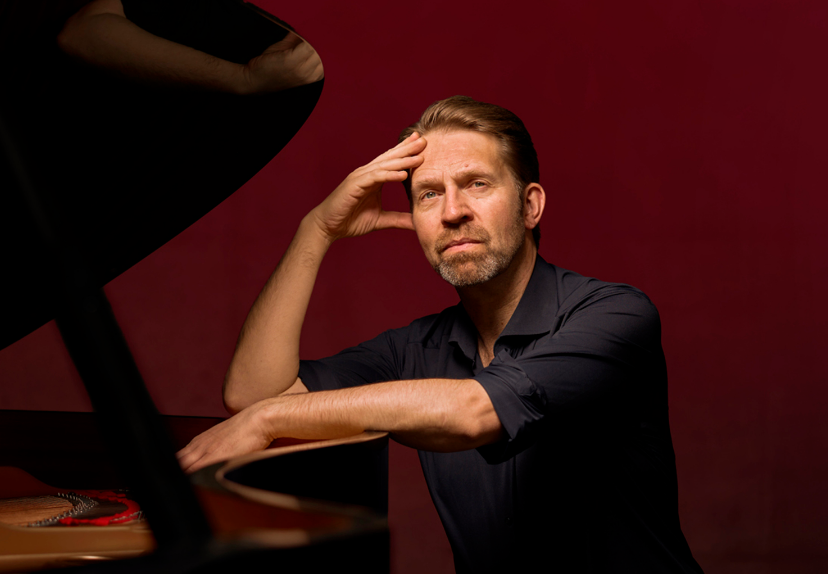
Leif Ove Andsneswas born on 7 April 1970 in Karmøy, Rogaland, Norway. He is the eldest of four children in a musical family. Both of his parents were music teachers and pianists, and his father additionally served as a local band conductor.
Andsnes grew up on the rural island of Karmøy off Norway’s west coast. In this countryside environment he had few peers interested in music – as one source notes, he “had no friends who played the piano or worked on music” during childhood – so his musical upbringing was shaped mainly by home and school.
Andsnes began studying piano at age four, initially taught by his own parents. He studied with them for about three years before switching to another local piano teacher.
Throughout his youth he also attended a state-funded municipal music school, where he studied piano for eight years. In addition to piano, Andsnes played euphonium in his school’s brass band, reflecting his father’s influence as band conductor.
He has recalled that his early practice was modest – just an hour or two a day – and that he did not intensify his training until his mid-teens.
At age 16 Andsnes moved from Karmøy to Bergen to pursue advanced musical training. He entered the Bergen Music Conservatory (part of the Grieg Academy) and studied under the Czech-born professor Jirí Hlinka.
Hlinka was the renowned piano teacher of many Norwegian pianists, and under his guidance Andsnes completed his formal piano education. These formative years in Bergen, following his solid groundwork at home and the local music school, provided the musical foundation for his later career.
| Aspect | Aspect |
| Birth | Born on 7 April 1970 in Karmøy, Norway |
| Family Background | Raised in a musical household |
| Parents | Both parents were pianists and music teachers |
| Early Piano Start | Began piano studies at age four |
| First Teachers | Initially taught by his parents |
| Local Music School | Studied piano for eight years |
| Other Music Activity | Played euphonium in a school brass band |
| Advanced Training Move | Relocated to Bergen at age 16 |
| Conservatory | Studied at Bergen Music Conservatory |
| Main Mentor | Student of piano professor Jirí Hlinka |

Leif Ove Andsnes: Tiny Desk (home) Concert
Career Beginnings
Leif Ove Andsnes began his career with rapid success in his teens. Born in Karmøy, Norway in 1970, he trained under Czech professor Jirí Hlinka at the Bergen Conservatory. By age 17 he had already won major competitions notably the Paul Hindemith Prize in Frankfurt in 1987 and he gave his first big concerts in Oslo that year.
In 1988 he collected several Norwegian awards the Levin Prize, Music Critics’ Prize and Bang & Olufsen Prize and took second place in the Eurovision Young Musicians contest. These accomplishments led to early festival and orchestra appearances.
He debuted at Scotland’s Edinburgh Festival in 1989 with the Oslo Philharmonic, and in 1990 made his U.S. debut as soloist with the Cleveland Orchestra under conductor Neeme Järvi.
International Breakthrough
In the 1990s Andsnes’s reputation quickly grew beyond Norway. Critics and audiences praised the “clarity and lyricism” of his playing especially in large scale concertos and Nordic repertoire.
He became closely associated with Edvard Grieg’s music as well as Romantic works by Brahms, Rachmaninoff and others. Highlights of this era include his performance of Grieg’s Piano Concerto at the Last Night of the BBC Proms in 2002 a milestone that confirmed his international stature.
During this time he also began an extensive recording career initially with EMI and Virgin and appeared regularly with leading orchestras and at music festivals worldwide. By the late 1990s Andsnes was a fixture on major concert series and recital platforms, securing his breakthrough as one of the outstanding pianists of his generation.
Major Performances & Concert Highlights
Andsnes’s concert career has encompassed the world’s top venues and ensembles. He has played at illustrious halls such as New York’s Carnegie Hall and London’s Wigmore Hall, and at signature festivals including the BBC Proms and Lucerne Festival.
In 2004 to 2005 he became the youngest musician and first Scandinavian to curate Carnegie Hall’s prestigious Perspectives series, reflecting his growing influence. He later served as Artist in Residence with the Berlin Philharmonic in 2010 to 2011, New York Philharmonic in 2017 to 2018 and Gothenburg Symphony in 2019 to 2020.
As a concerto soloist he has appeared with virtually every major orchestra for example performing Beethoven’s “Emperor” Concerto with the New York Philharmonic and London Symphony, and Rachmaninoff’s Third Concerto with the Philadelphia Orchestra and Orchestre de Paris.
In chamber music, Andsnes has collaborated in high profile projects, winning a Gramophone Award for recordings with string quartets and appearing with violinist Christian Tetzlaff, cellist Truls Mørkand singer Matthias Goerne.
In recent seasons he has toured extensively. His 2024 to 2025 schedule includes concerts of Beethoven, Haydn and Debussy concertos with orchestras such as the Leipzig Gewandhaus and Barcelona Symphony, as well as high profile recitals around the world.
Recordings & Discography
Leif Ove Andsnes has built a vast and acclaimed discography of over fifty recordings, covering solo, concerto and chamber repertoire. He has recorded for Virgin, EMI and later for Sony Classical.
Early in his career his EMI recordings of Grieg’s works drew widespread praise. For instance, his 2004 Grieg Piano Concerto with Mariss Jansons and the Berlin Philharmonic was named a New York Times “Best CD of the Year”.
He has won multiple Gramophone Awards for albums ranging from Brahms and Schumann concertos to Bartók piano works. Notable collaborations include Mozart’s Piano Concertos Nos. 9 and 18 another New York Times “Best of the Year” recording and Rachmaninoff’s Piano Concertos Nos. 1 and 2 with Antonio Pappano and the Berlin Philharmonic, which won another Gramophone Award.
In 2012 to 2015 Andsnes undertook the Sony Classical Beethoven Journey, a multi season cycle of all five Beethoven piano concertos with the Mahler Chamber Orchestra. This tour spanning 27 countries and 230 performances was captured in a three volume recording series that earned international awards.
His more recent projects include the three volume Mozart Momentum 1785 1786 series from 2021 to 2022 with the Mahler Chamber Orchestra, which received a Gramophone Award for Special Achievement, and recordings of contemporary piano works notably world premiere concertos by Marc André Dalbavie and Bent Sørensen written for him.
A 36 CD retrospective, Leif Ove Andsnes The Complete Warner Classics Edition 1990 to 2010, was released in 2023 to great acclaim. Recent Sony Classical albums feature Dvořák’s Poetic Tone Pictures, Chopin’s Ballades and Nocturnes, and a best selling Sibelius album all recorded with major European orchestras.
He has also ventured into chamber repertoire on disc for example, a piano four hands album of Stravinsky with Marc André Hamelin and a Schumann Lieder recital with Matthias Goerne, both of which earned Grammy nominations.
Awards & Professional Recognition
Andsnes’s many honors reflect his impact on classical music. He has been nominated for eleven Grammy Awards and has won seven Gramophone Awards.
Major accolades include the U.S. Gilmore Artist Award in 1997 and Norway’s Lindeman Prize in 1997, as well as the Royal Philharmonic Society Instrumentalist Award in the United Kingdom in 2000.
In Norway he was appointed Commander of the Royal Norwegian Order of St. Olav in 2002 and received the country’s Peer Gynt Prize in 2007. He has also earned numerous Spellemannprisen Norwegian Grammy awards in various categories.
In recognition of his career achievements he was inducted into the Gramophone Hall of Fame in 2013. Notably, the New York Times described Andsnes as “a pianist of magisterial elegance, power and insight,” and the Wall Street Journal dubbed him “one of the most gifted musicians of his generation.”
In 2005 Vanity Fair named him one of its “Best of the Best,” underscoring his crossover appeal beyond the classical field.
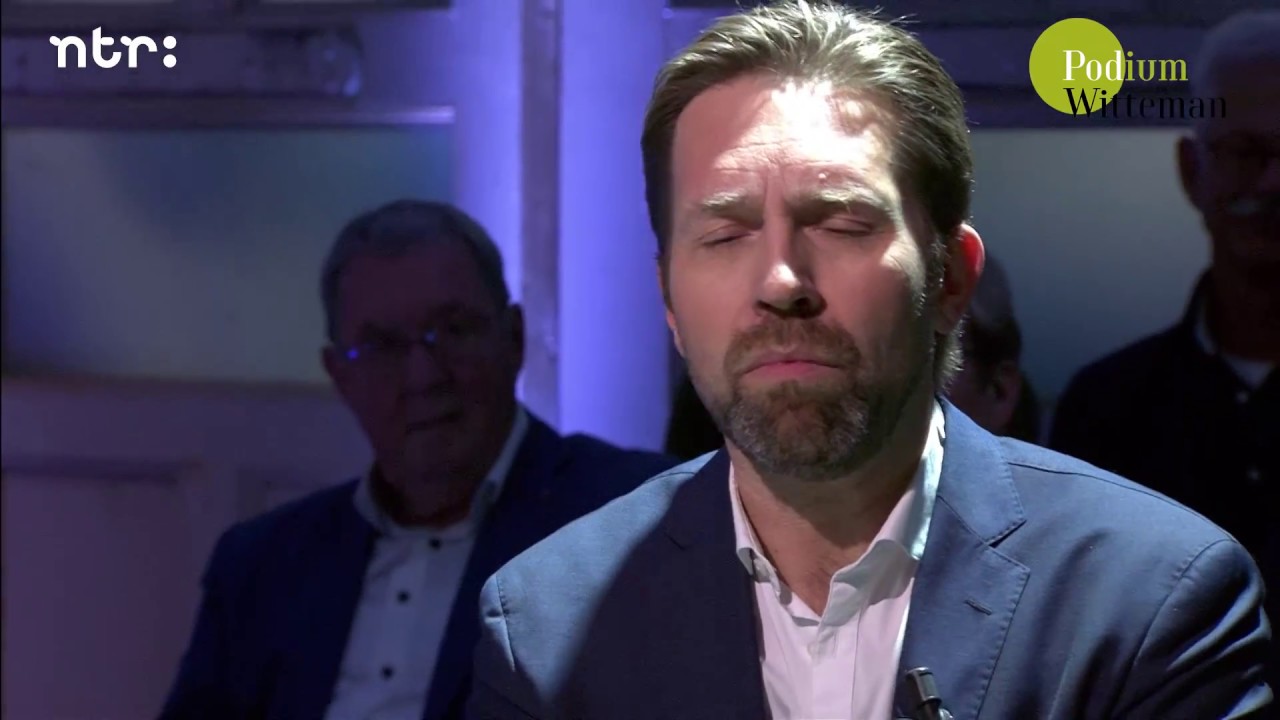
Leif Ove Andsnes speelt Sibelius | Podium Witteman
Collaborations With Orchestras & Conductors
Andsnes’s career has been marked by partnerships with the world’s leading orchestras and conductors. He is a frequent soloist with ensembles such as the London Symphony Orchestra often under Antonio Pappano, the Berlin Philharmonic working with Sir Simon Rattleand others, and the Royal Concertgebouw Orchestra.
He performed Rachmaninoff concertos with the London Symphony and Berlin Philharmonic under Antonio Pappano, and recorded Grieg works with Mariss Jansons. Other notable conductor partnerships include Neeme Järviwith the Cleveland Orchestra, Pierre Boulezwith Berlin for Bartók, and Sakari Oramowith the BBC Symphony.
A special affiliation has been with the Mahler Chamber Orchestra MCO. Andsnes serves as its first Artistic Partner, leading the ensemble from the keyboard in major projects.
He has jointly recorded and performed complete Mozart piano concerto cycles with the MCO the Mozart Momentum series and has been touring with them on Beethoven repertoire. He also appears regularly with the Norwegian Chamber Orchestra with which he recorded Haydn concertos and other national ensembles.
In chamber music, he has collaborated in dozens of recitals and recordings with distinguished partners including the Artemis Quartet, violinist Christian Tetzlaff, cellist Truls Mørk and baritone Matthias Goerne.
Additionally, Andsnes has taken on artistic leadership roles. He co founded and for many years directed the Risør Chamber Music Festival and in 2016 became founding director of Norway’s Rosendal Chamber Music Festival, bringing top soloists and ensembles together each summer.
Recent Career Activity
Into the 2020s, Leif Ove Andsnes remains highly active on stage and in the studio. His 2024 to 2025 season exemplifies his continued focus on core repertoire.
He is touring performances of Beethoven’s Piano Concerto No.5 “Emperor” and Rachmaninoff’s Third Concerto with major orchestras in New York, London, Washington DC, Leipzig and elsewhere. He is slated to perform Grieg’s Piano Concerto in B flat with the Czech Philharmonic and has engagements with the Barcelona Symphony and NDR Elbphilharmonie Orchestra.
Alongside these concertos, he is playing extensive solo recitals. His current program pairs Chopin’s 24 Preludes with Norwegian piano sonatas by Grieg and Geirr Tveitt, with tours that include Carnegie Hall and London’s Wigmore Hall as highlights.
He also has a season long residency at Wigmore Hall, culminating in chamber projects with pianist Bertrand Chamayouand the Mahler Chamber Orchestra.
In recent years Andsnes has continued to release recordings and take on creative projects. He directed California’s Ojai Festival in 2012 and continues in demand as a chamber music mentor.
He remains a professor in Oslo and Copenhagen, influencing the next generation of pianists. Overall, Andsnes’s career is distinguished by both virtuosic solo performances and collaborative ventures, and he continues to be regarded as one of today’s leading pianists, regularly appearing on concert stages worldwide with new recordings and initiatives.
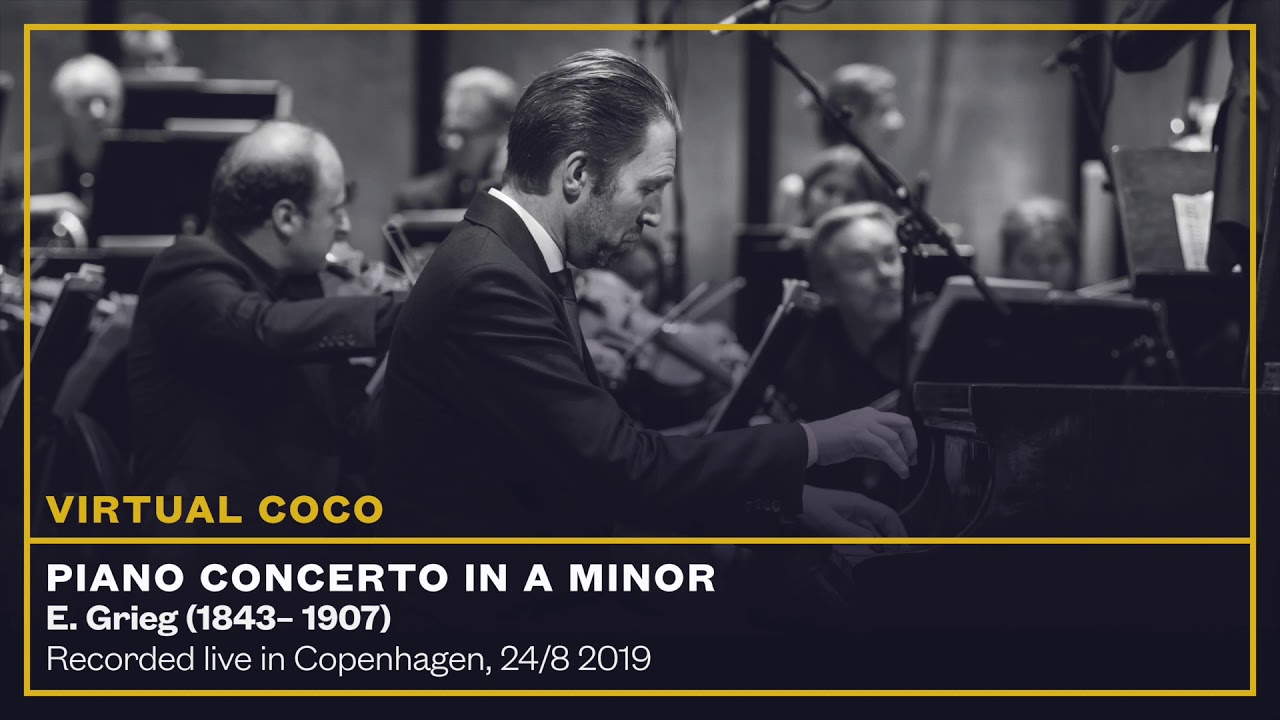
Leif Ove Andsnes - Piano Concerto in A Minor, Op. 16
Performance (2025–2026)
- Montreal Bourgie Hall (Sept 2025):Kicked off 2025–26 with a solo recital opening Montreal’s Bourgie Hall season.
- U.S. Solo Recital Tour (Jan 2026):Completed a five-city tour (Jan 21–30) playing Schumann, Janáček and Kurtág. Highlights included a Carnegie Hall recital (NYC, Jan 27) and a Jordan Hall recital (Boston, Jan 30).
- Atlanta & Chicago Symphonies (Mar 2026):Performed Beethoven’s Piano Concerto No. 3 in March with the Atlanta Symphony under Nathalie Stutzmann(Mar 5–7) and with the Chicago Symphony under Jakub Hrůša(Mar 12–14).
- European Beethoven Tour (2026):Gave multiple performances of Beethoven’s Third Piano Concerto across Europe, with ensembles including the Gothenburg Symphony (Jan 9–10), Italian Filarmonica della Scala (Mar 30), Danish National Symphony (Apr 30–May 1), Portugal’s Gulbenkian Orchestra (May 7–8), the London Symphony Orchestra (May 14), and the Bamberg Symphony (May 22–23).
- World Premiere (Feb 2026):Joined the Oslo Philharmonic (conductor Thomas Søndergård) to premiere a new piano concerto by Norwegian composer Ørjan Matre(Feb 26–27, 2026).
- Brahms Concerto (Fall 2025):Performed Brahms’s Piano Concerto No. 2 with major orchestras in late 2025: Spain’s Orquesta Nacional (Madrid, Oct 17–19), Japan’s NHK Symphony (Tokyo, Oct 24–25), Sweden’s Norrköping Symphony (Dec 11), and the Vienna Symphony (Dec 17–19).
- Chamber Tours (Fall 2025):Embarked on European duo tours: with violinist Christian Tetzlaff (Mozart, Ravel, Brahms sonatas at Bucharest, Copenhagen, Berlin, London, Sept 13–17) and with pianist Bertrand Chamayou(Schubert four-hands and Kurtág arrangements in Dijon, Madrid, Oslo, Brussels, Amsterdam, Berlin, Nov 18–Dec 5).
- Asia & South America Tours (Late 2025):Gave solo recitals of Grieg, Chopin and Schumann in Asia and South America: in São Paulo (Sept 28–29) and on an Asian tour (Taipei Oct 26; Tokyo Oct 30; Yokohama Nov 1; Hyogo Nov 3, 2025).
Piano Playing Style And Interpretation Of Leif Ove Andsnes
Technical Approach And Piano Control
Leif Ove Andsnes is universally praised for his formidable technique and masterful control of the piano. Critics frequently emphasize the crystalline clarity of his fingerwork, even in the fastest, most complex passages. He maintains perfect evenness in rapid runs and arpeggios, and his trills and ornamentation are executed with precision.
Andsnes also demonstrates exceptional dynamic control: he can shape long phrases with subtle gradations of volume and still preserve articulate clarity at every level from pianissimo to fortissimo. Technically difficult elements – wide leaps, quick octave passages and large chords – are handled with apparent ease and stability.
In performance, this translates to clean, assured textures and sharply defined articulation. In sum, his pianism is marked by impeccable control over touch and rhythm, yielding a sound that is always secure and confidently projected.
Tone, Touch, And Sound Color
Andsnes produces a notably rich and warm tone, especially in lyrical and slow passages. Observers note that his sound remains rounded and full-bodied even at lower volumes, while his loud chords are grand but never harsh. His touch is highly nuanced: in delicate or impressionistic music he uses an extremely gentle, responsive attack that brings out glassy, shimmering colors, whereas in Romantic and virtuosic repertoire he applies a broader, more forceful touch for intensity and weight.
For example, in modern or coloristic pieces his fingers might lightly caress the keys for a shimmering effect, while in Brahms or Grieg he might employ a lush, resonant tone. Critics also remark on his sensitive use of the sustain pedal and finger legato; Andsnes adds just enough pedal to enhance warmth and sustain without blurring the line between notes.
This refined tonal control gives him a wide palette of sound colors: from crystal-clear delicacy to an imperialrichness, always molded with great finesse and consistency.
Rhythm, Phrasing, And Structural Clarity
A strong sense of form and architecture underlies Andsnes’s phrasing. He places clear emphasis on the structure of each piece, making every phrase feel naturally shaped and cohesive. Even irregular or asymmetrical phrases are rendered so that they sound inevitable and balanced, thanks to his clean articulation.
His rhythmic precision is equally admired: rhythms are crisp and forward-moving, yet never rushed. He tends to choose measured tempi that highlight the musical structure, rather than tempos that prolong drama for its own sake. When he does introduce rubato or flexibility, it is done with restraint and always in service of the piece’s momentum, never disturbing the underlying pulse.
Critics have specifically noted how he links themes and sections smoothly, giving listeners an easy sense of continuity. In sum, Andsnes’s phrasing illuminates the inner architecture of the music – listeners can clearly hear how motives unfold and resolve, and how each section connects to the next, resulting in performances of striking structural clarity.
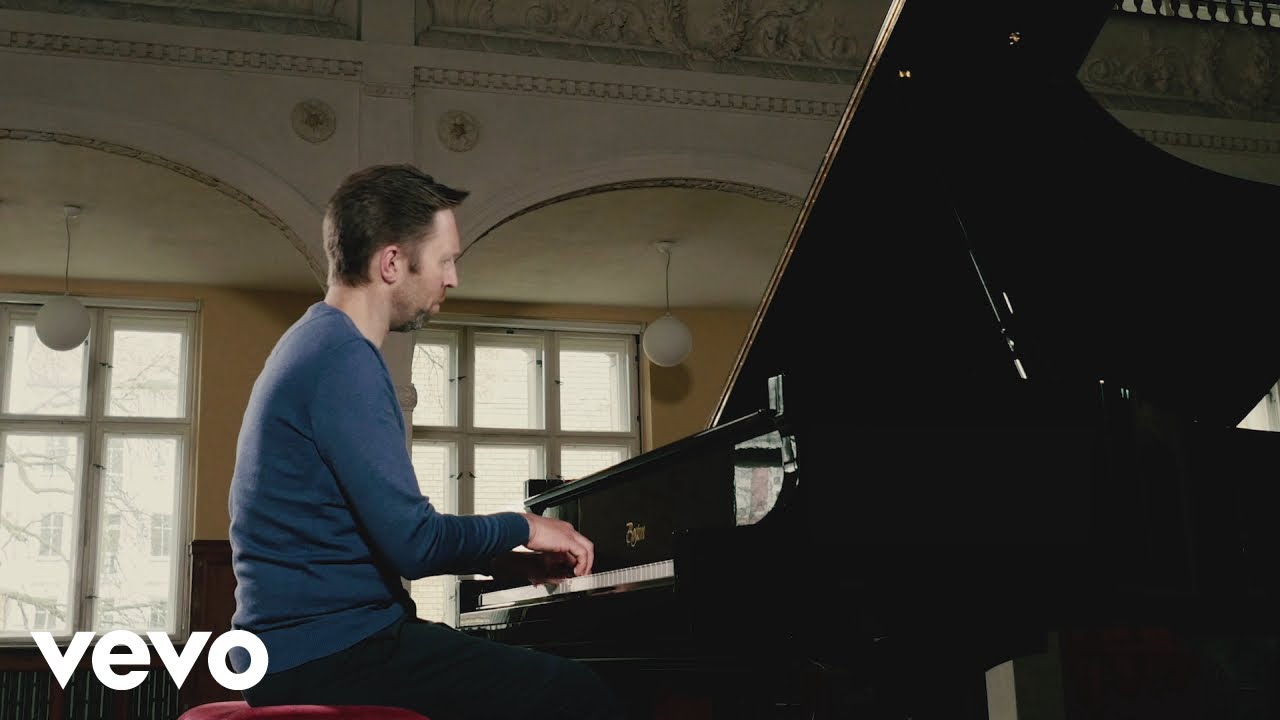
Leif Ove Andsnes - Ballade in G Minor, Op. 23, No.1 Official Video
Interpretative Approach To Repertoire
Andsnes tailors his interpretative approach carefully to the stylistic demands of each composer and era. Broadly speaking, his manner can be summarized as follows:
- Classical-era works:In music by composers such as Haydn and Beethoven, he emphasizes clarity and balance. Textures are transparent and voices are clearly delineated, reflecting a classical restraint. Tempos tend to be poised and even, allowing the architecture of the composition to emerge.
In these works his phrasing is elegant and orderly rather than heavily colored or romanticized. He often highlights the formal logic and motivic development in classical pieces, giving them a sense of timeless poise.
- Romantic repertoire:When playing Romantic composers (Chopin, Liszt, Brahms, Grieg and the like), Andsnes brings a warmer, more expansive tone and a singing legato to melody lines. His approach remains controlled, however; he avoids excessive sentimentality or virtuoso showmanship.
In Chopin he uses artful pedaling and careful timing to create lyrical calm in nocturnes or ballades, yet he never over-dramatizes the emotional content. In Grieg and other nationalistic works he infuses a gentle warmth and folklike character, but critics note that he restrains the tendency toward rubato or rustic flair, preferring refined expressiveness.
- Impressionist and 20th-century works:Andsnes’s performances of Debussy, Ravel, Bartók and other modern composers are guided by attention to color and rhythmic detail. He often employs a very light, delicate touch and a shimmering tone in impressionistic textures, carefully voicing the inner lines so that even complex harmonies are transparent.
In rhythmically intricate 20th-century music, his articulation keeps patterns clearly defined and energetic. Reviewers have noted, for instance, that he produces a resonant, textured sound in Bartók’s percussive passages, yet maintains a dance-like precision.
Across this repertoire, he is praised for making each musical gesture clear, highlighting subtle nuances in timbre while maintaining a firm sense of pulse and ensemble between hands. Overall, he adapts idiomatically to each style: whether bringing gentle lilt to a folk-like melody or crystalline detail to atonal harmonies, his interpretations are faithful yet fresh.
Balance Between Precision And Expression
Andsnes strikes a distinctive balance between exactitude and musicality. By nature he prioritizes precision and clear execution – performances are almost always technically immaculate, even down to the smallest detail. At the same time, he channels expression into controlled, thoughtful gestures rather than overt theatrics.
His dynamic contrasts and timing choices are generally measured rather than extreme, and he rarely indulges in flashy tempo fluctuations or exaggerated emotional outbursts. Some critics describe the result as an elegant, almost reticent style: the music speaks through clean lines and subtle shading rather than dramatic bravura.
This approach has two effects. On one hand it ensures that the inner logic and lyricism of the music are fully audible – one can hear every voice in the texture and follow the musical argument clearly. On the other hand, it can make his readings sound conservative compared to more flamboyant interpreters.
Even so, Andsnes’s controlled expressiveness is often praised for its sincerity: he infuses pieces with warmth, tenderness or tension when needed, but always within a framework of clarity. In short, he consistently balances technical precision with restrained yet genuine expression, letting the inherent qualities of the music emerge above all.
Critical Observations And Musical Identity
Across many reviews, a clear picture of Andsnes’s musical identity emerges. Critics repeatedly note that he is a thoughtful, methodical pianist who places the composer’s intent above personal showmanship. His playing is described as elegant, well-structured and transparent.
He brings intellectual rigor to interpretation: details like counterpoint, form and balance are carefully attended to. Many observers highlight his sincerity and lack of vanity – he “serves the music” rather than drawing attention to himself. This has led to praise for his unfailingly polished sound and emotional honesty.
For example, reviewers often applaud how he uncovers fresh insights in familiar works simply through clarity and attention to detail. However, a few commentators have wished for more spontaneous flair or risk in some performances, suggesting that he sometimes errs on the side of caution.
In essence, though, Andsnes’s style is consistently defined by its clarity, refinement and integrity. He is seen as a pianist whose authority comes from technical mastery and deep understanding of the repertoire, giving his interpretations a character that is consistently clear-headed, passionate in measured doses, and fundamentally true to the spirit of the music.
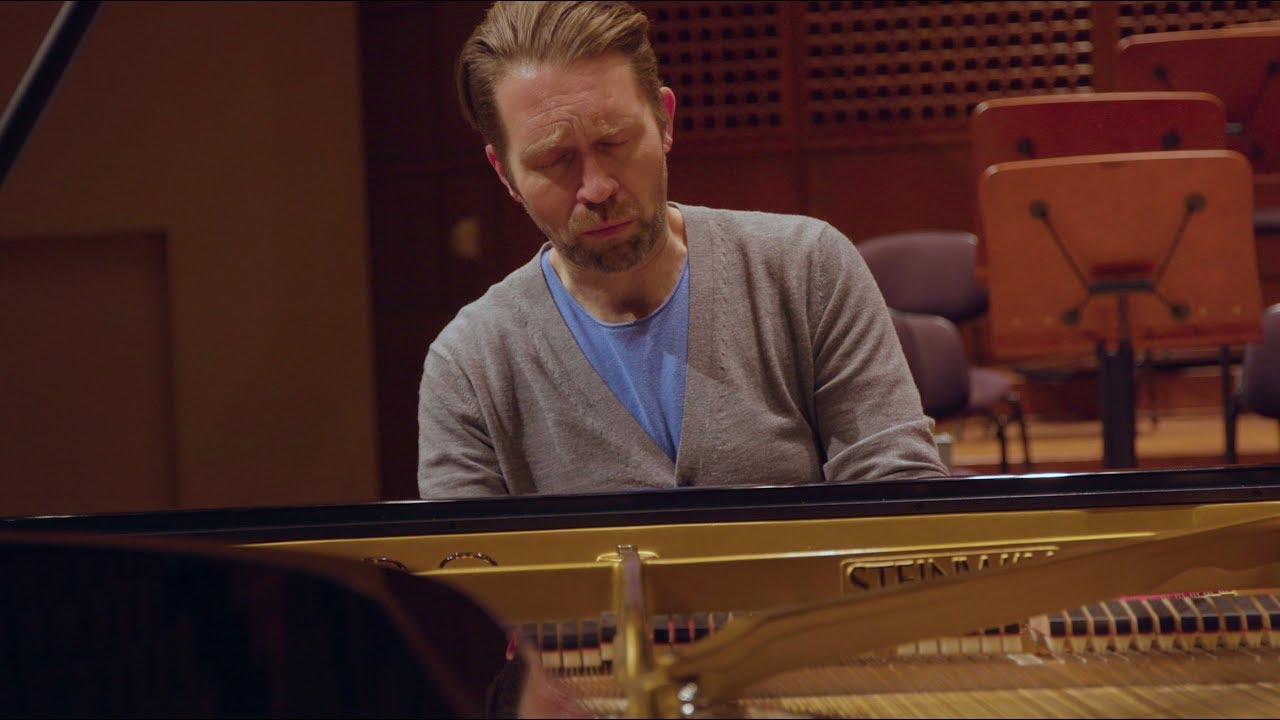
Leif Ove Andsnes Plays Mozart's Piano Concerto No. 22
Leif Ove Andsnes Net Worth
As of 2026, entertainment websites estimate Leif Ove Andsnes’s net worth to be between $5 million and $10 million, though no authoritative source has confirmed this figure. He earns income from a long career as a classical pianist, performing internationally (often at prestigious concert halls) and recording albums.
Andsnes has recorded for major labels such as Virgin, EMI and Sony Classical, and also serves as the founding director of Norway’s Rosendal Chamber Music Festival. These concerts, recordings and related projects are his primary sources of earnings.
FAQs
1. Who Is Leif Ove Andsnes?
Leif Ove Andsnes is a Norwegian classical pianist internationally known for his performances of Beethoven, Grieg, Mozart, and Brahms. He is regarded as one of the leading pianists of his generation.
2. Where Was Leif Ove Andsnes Born And Trained?
Leif Ove Andsnes was born in Karmøy, Norway, in 1970. He received his advanced musical training at the Bergen Music Conservatory under the renowned piano teacher Jirí Hlinka.
3. What Is Leif Ove Andsnes Best Known For?
Leif Ove Andsnes is best known for his clear, structured interpretations and his award-winning recordings. His complete cycles of Beethoven and Mozart piano concertos have received international critical acclaim.
4. Has Leif Ove Andsnes Won Major Awards?
Yes, Leif Ove Andsnes has received several major honors, including the Gilmore Artist Award and multiple Gramophone Awards. He has also been appointed Commander of the Royal Norwegian Order of St. Olav.
5. Is Leif Ove Andsnes Still Performing Internationally?
Yes, Leif Ove Andsnes remains actively engaged in international performances. His recent and upcoming seasons include solo recitals, concerto appearances, and collaborations with leading orchestras worldwide.