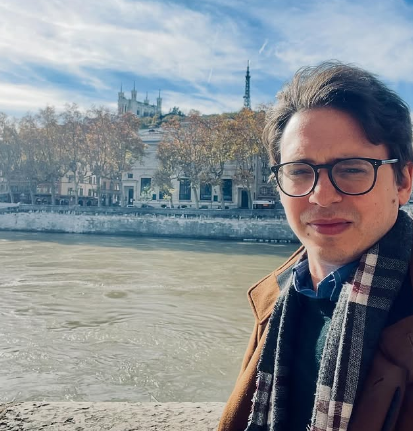
Lucas Debarguewas born on 23 October 1990 in Paris, France. He spent his childhood in the town of Compiègne (about 90 km north of Paris). He grew up in a non musical family neither of his parents had a musical background. As a child he enjoyed music at home discovering classical records around age nine and teaching himself basic music reading.
Despite the lack of musicians in his family Debargue showed early interest in piano. Around age ten he began formal piano lessons with Christine Muenier in Compiègne. He started at the local music school and soon studied at the Compiègne Conservatory under Mme Muenier. In these years his teacher encouraged him to explore challenging piano works helping him make rapid progress.
In his mid teens Debargue temporarily put aside the piano. At about age 15 he ceased formal piano study saying he wanted to broaden his interests. He focused on his academics completing his baccalauréat (high school diploma) and even played bass guitar in a rock band during high school. Between ages 16 and 19 he largely left the piano and turned to other pursuits notably literature.
At 17 Debargue moved to Paris for higher education. He enrolled at Paris Diderot University to study arts and literature. During this period he did not play piano (he has said he took about three years away from the instrument). This academic study deepened his artistic interests outside music.
Around age 20 Debargue resumed serious piano study. In 2010 he returned to music by playing at a local festival in Compiègne and soon afterward he began studying with the Russian pianist Rena Shereshevskaya. Shereshevskaya brought him into the École Normale de Musique in Paris marking the renewal of his formal music education.
| Aspect | Details |
| Birth | Born on 23 October 1990 in Paris, France |
| Childhood | Grew up in Compiègne, around 90 km north of Paris |
| Family Background | Raised in a non-musical family |
| Early Musical Interest | Discovered classical music records around age nine |
| First Piano Lessons | Began piano lessons at age ten with Christine Muenier |
| Early Training | Studied at the local music school and Compiègne Conservatory |
| Teenage Break | Stopped formal piano study around age 15 |
| Academic Focus | Completed his baccalauréat and focused on studies |
| University Education | Studied arts and literature at Paris Diderot University |
| Return to Piano | Resumed serious piano study around age 20 |
| Advanced Studies | Studied with Rena Shereshevskaya at École Normale de Musique |
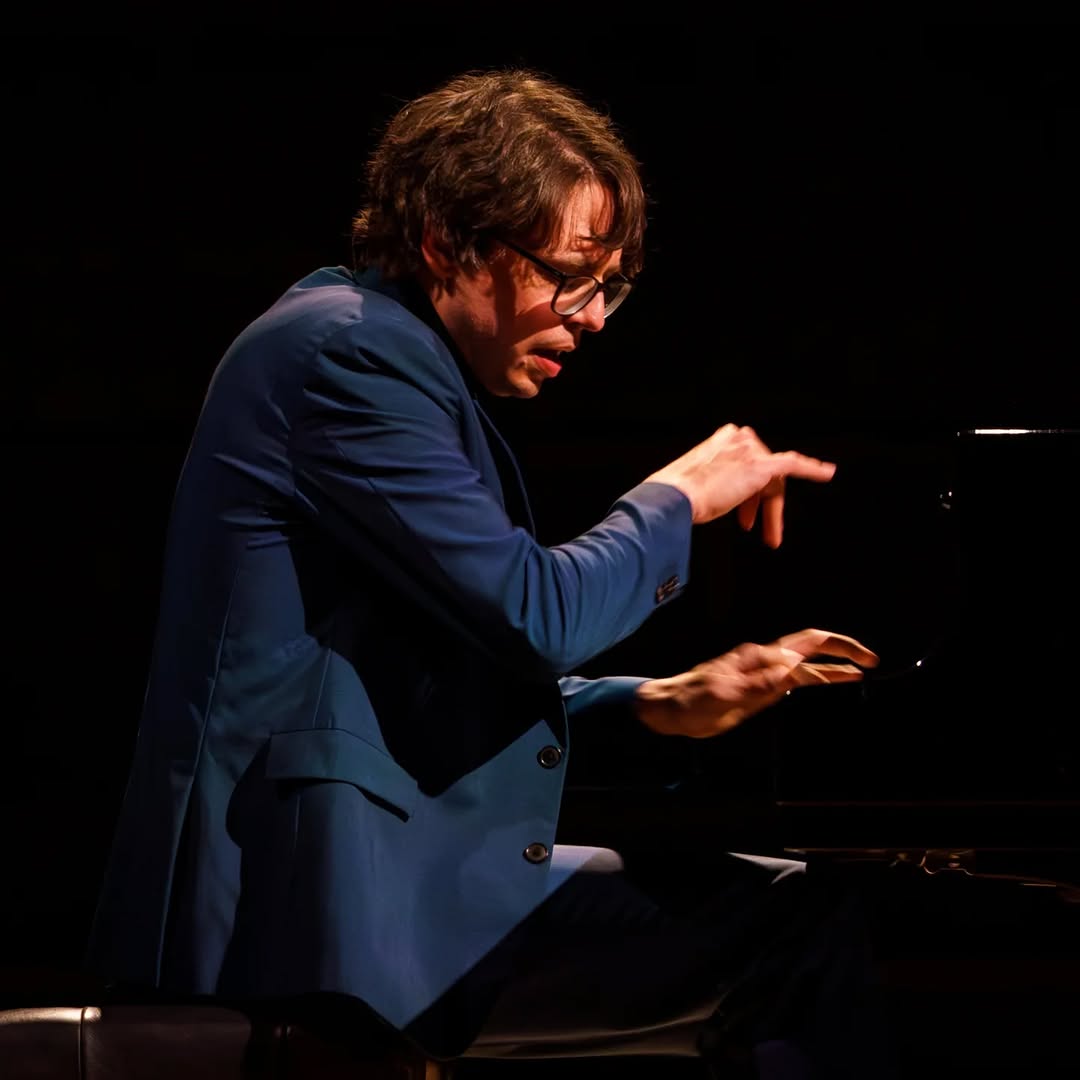
Career Beginnings
Shortly after his breakout in 2015, Lucas Debargue signed an exclusive contract with Sony Classical. He quickly began recording solo albums: his 2016 debut disc featured Ravel’s Gaspard de la nuitas a centerpiece.
A second album released in 2016 included Nikolai Medtner’s Piano Sonata No. 1, earning strong critical praise and winning the Echo Klassik 2017 Newcomer of the Yearaward. These early recordings established his reputation for bold programming and virtuosity.
International Breakthrough
Debargue’s international profile was cemented by the 2015 International Tchaikovsky Competition in Moscow. Despite entering the contest as a relative unknown, he delivered highly individual performances, notably Ravel’s Gaspard de la nuitand Medtner’s Sonata in the second round, that impressed both jury and public.
He ultimately placed fourth overall and was awarded the Moscow Critics’ Prize as “the pianist whose incredible gift, artistic vision and creative freedom have impressed the critics as well as the audience.” This dual recognition led directly to his professional breakthrough.
Major Performances & Concert Highlights
Since then, Debargue has appeared in major venues worldwide. He has performed at the Berlin Philharmonie, Amsterdam’s Concertgebouw, Vienna’s Konzerthaus and Musikverein, Paris’s Théâtre des Champs-Élysées and Philharmonie de Paris, London’s Wigmore Hall and Royal Festival Hall, Frankfurt’s Alte Oper, Cologne’s Philharmonie, Tokyo’s Suntory Hall, the Great Hall of the Moscow Conservatory, and New York’s Carnegie Hall.
He is also a regular guest at leading international festivals, including La Roque d’Anthéron and the Verbier Festival. In February 2024, Debargue gave a solo recital at Carnegie Hall that received strong critical acclaim.
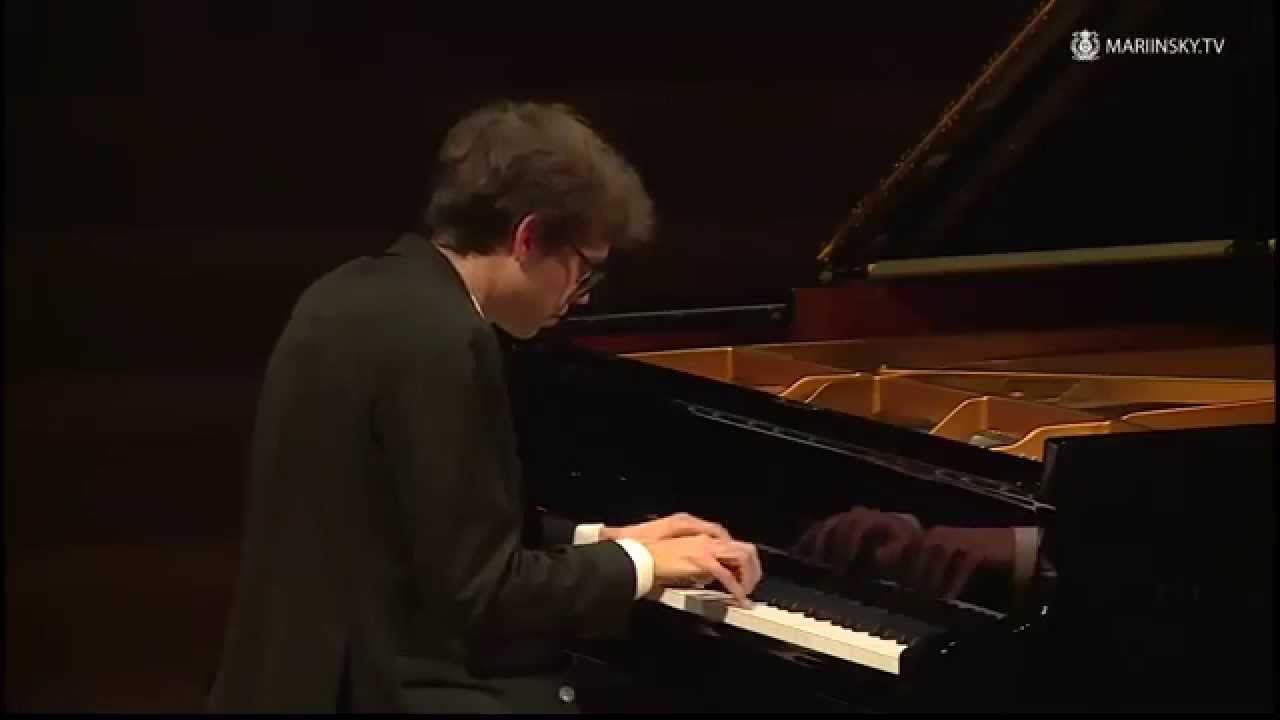
Lucas Debargue's jazz improvisation in Russia, after classical recital
Recordings & Discography
| Release | Description |
| Debut Album (2016) | Featured Ravel’s Gaspard de la nuit |
| Second Album (2016) | Included Medtner’s Piano Sonata No. 1 |
| Major Project (2019) | Four-CD set of 52 Scarlatti sonatas |
| Fauré Box Set (2024) | Four-disc release of Gabriel Fauré’s complete piano works |
| Chamber Music | Recordings with Janine Jansen, Martin Fröst, Gidon Kremer, and Kremerata Baltica |
| Label | Sony Classical |
Debargue’s discography on Sony Classical includes five solo albums covering both standard and lesser-known repertoire. A landmark project was his four-CD set of 52 sonatas by Domenico Scarlatti released in 2019, which received international recognition and was selected by major media outlets as a significant classical release of the decade.
In March 2024, he released a four-disc box set of Gabriel Fauré’s complete piano works. In addition to his solo recordings, he has appeared on chamber music projects, including Olivier Messiaen’s Quatuor pour la fin du tempsrecorded with Janine Jansen and Martin Fröst, and Zal: The Music of Miłosz Maginwith Gidon Kremer and Kremerata Baltica.
Awards & Professional Recognition
Debargue has received multiple professional distinctions. At the 2015 Tchaikovsky Competition, he was awarded the Moscow Critics’ Prize. In 2017, he was named Newcomer of the Yearat the Echo Klassik Awards.
His recordings have also earned major honors, including multiple French classical music awards for his Fauré anthology, as well as recognition from national classical music organizations. These accolades have reinforced his standing as a leading pianist of his generation.
Collaborations With Orchestras & Conductors
Debargue performs regularly with major orchestras around the world. He has appeared as a soloist with ensembles including the London Philharmonic, Toronto Symphony Orchestra, Warsaw Philharmonic, Orchestre de Radio France, Orchestre National de France, Orchestre de la Suisse Romande, Netherlands Philharmonic, Rotterdam Philharmonic, and the Yomiuri Nippon Symphony Orchestra.
He has collaborated with conductors such as Mikhail Pletnev, Vladimir Jurowski, Andrey Boreyko, Tugan Sokhiev, Ludovic Morlot, and Bertrand de Billy.
Recent Career Activity
In 2024, Debargue released Fauré: Complete Music for Solo Piano, a four-CD box set that received widespread critical recognition and multiple industry awards. In February of the same year, he returned to Carnegie Hall for a solo recital as part of the Cherry Orchard Festival.
In September 2025, he recorded George Gershwin’s Piano Concerto in F with the Orchestre de Paris under the direction of Elim Chanfor a forthcoming Sony Classical release. His 2025 to 2026 season includes recitals at Hamburg’s Elbphilharmonie, Vienna’s Konzerthaus, and London’s Wigmore Hall, as well as concert engagements with the Warsaw Philharmonic and Zurich Chamber Orchestra, alongside tours in Asia and Australia.
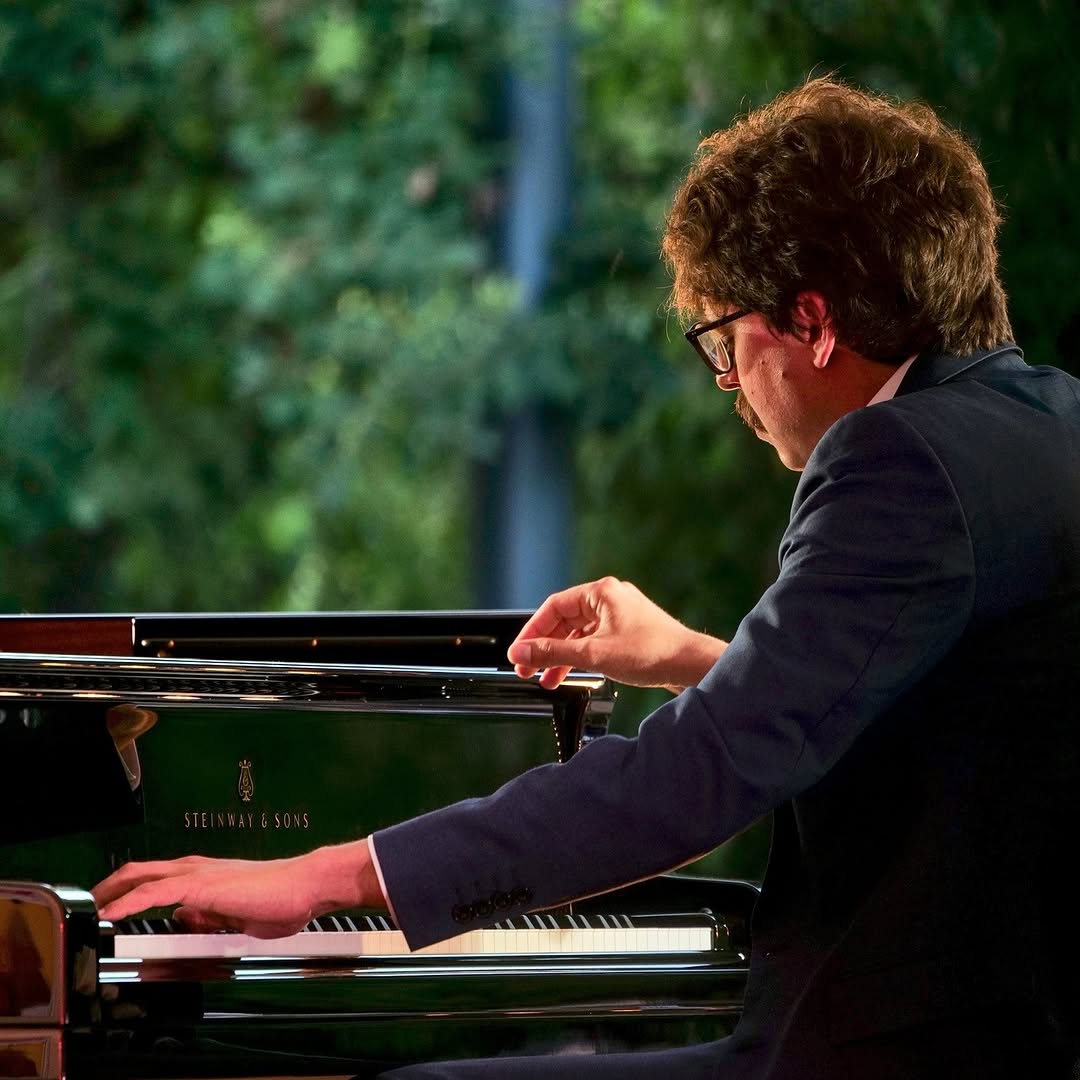
Lucas Debargue Performance (2025–2026)
- Major recitals at prestigious halls:Debargue gave solo concerts in top venues including a Kleiner Saal recital at the Elbphilharmonie Hamburg in January 2026, a solo piano program at London’s Wigmore Hall in March 2026, and an appearance at the Vienna Konzerthaus in March 2026. These engagements highlight his standing as a leading pianist invited to perform demanding programs in world-class halls.
- High-profile orchestral collaborations:He was featured as piano soloist with leading ensembles. He performed Rachmaninoff’s Piano Concerto No. 2 and Gershwin’s overture with the George Enescu Philharmonic under Paul Daniel in Bucharest in February 2026, and Mozart’s Piano Concerto K.449 with Gidon Kremer’s Kremerata Baltica at Kronberg Academy in September 2025. He also joined the Zürcher Kammerorchester for concerts at Zürich’s Tonhalle and Dresden’s Frauenkirche in April 2026, and played with Sinfonia Varsoviain Warsaw in May 2026. Working with respected conductors and ensembles in such programs demonstrates his musical expertise and professional authority.
- International debuts and premieres:Debargue expanded his global reach, making first appearances in new regions. He gave his Australian debut in Sydney in June 2026 in the “L’Enigme Française” series, and also performed a recital in Istanbul in February 2026. In Dresden he led the world premiere performance of Milosz Magin’s Piano Concerto No. 4 with the Zürich Chamber Orchestra. These highlights underscore his adventurous repertoire and growing international profile.
- Key European tours:His 2025–2026 schedule included tours across Europe with solo recitals at Milan’s Conservatorio di Milano in March 2026, Lyon’s Salle Molière in November 2025, and Leipzig’s Gewandhaus in November 2025. These concerts in varied cultural centers reflect broad audience appeal and institutional trust.
Lucas Debargue’s Piano Style And Interpretation
Technical Approach And Piano Control
Debargue’s technique is formidable yet distinctly personal. He developed an unconventional fingering style for example executing rapid scale passages with essentially just thumb and index but critics note that this yields smooth cohesive dexterity.
He negotiates virtuosic passages with apparent ease tossing off the blazing octaves and runs without resorting to self indulgence. In performance he is known for precise control even in the most demanding passages.
Debargue himself has said that adapting to an unusually responsive Steinway with 102 keys changed his technique and music making requiring adjustment to the instrument’s extremely sensitive touch.
Tone, Touch, And Sound Color
Critics praise Debargue’s wide tonal palette and refined touch. For instance his playing of Ravel’s Ondine was described as evoking the depth of the water and the sparkle of its surface thanks to a vivid piano tone. In Gabriel Fauré’s music his touch yields smoothly lyrical lines one reviewer wrote that Debargue’s treatment of Fauré melodies is lyrical fluid and calming even in moments of tension.
He carefully balances voices in polyphonic textures Debargue brings out inner lines clearly using the piano’s resonance so that each strand is heard with a good deal of clarity.
Debargue has noted that playing on the special extended range piano led him to explore new sonorities adapting his touch to the instrument’s extra sensitive action.
Rhythm, Phrasing, And Structural Clarity
Debargue favors expressive flexibility in rhythm and phrasing rather than strict pulse. His rubato can be quite free in one review his rendering of Chopin’s Ballade No.2 was said to stretch the opening 6 8 pulse so much that it became tempo less prioritizing emotional shape over strict time.
At the same time he maintains a clear sense of overall form in large works. Reviewers noted that his performance of Liszt’s Dante Sonata displayed confident architectural pacing its dramatic timing and flow kept the music’s structure lucid from beginning to end.
In general Debargue uses tempo changes and accents to highlight phrasing and guide musical narrative ensuring that even adventurous pulse choices serve the piece’s dramatic shape.
Interpretative Approach To Repertoire
Debargue approaches each work with an emphasis on musical narrative and clarity. He has said he treats interpretation like translating a book aiming to make the music as clear as possible rather than showing off technical fireworks.
Critics observed that even at the Tchaikovsky Competition his focus was on sound and character one reviewer highlighted his absorption on sound rather than technique noting that his performances of Mozart and Ravel concentrated on mood over speed.
Commentators also praise his ability to reveal intimacy in large scale repertoire for example his performance of Liszt’s Piano Concerto No. 2 was said to illuminate the score’s chamber like delicacies and tender interplay.
In sum Debargue is noted for treating each score thoughtfully one critic remarked that his interpretations are like no other in current pianism stressing that he seeks to uncover the music’s essence rather than imposing ego.
Balance Between Precision And Expression
Critics note that Debargue marries technical precision with bold expression. He can play tricky passages cleanly and securely as one review put it he made easy work of the difficult passages in Liszt throwing off fast octaves without excessive show.
Yet Debargue does not pursue sterile perfection at the expense of spontaneity. He has said he would willingly allow a few mistakes if it meant conveying the piece’s unique character.
This approach aligns with other observers’ remarks that he consistently favors expressive imagination over rigid exactitude. The result is playing that feels genuine and communicative technical control is clearly present but it serves expressive ends rather than ostentation.
Critical Observations And Musical Identity
Overall reviewers emphasize Debargue’s individuality and insight. The Guardian praised his Fauré performances as thoughtful and alert noting that he uncovered kaleidoscopes of harmonic colour and something fresh and revealing in nearly every piece.
Other commentators describe a very personal style one said Debargue is very unique with an old soul and many highlight his honesty and sincerity at the keyboard.
In essence critics see Debargue as an unconventional artist who prioritizes musical substance. They consistently note his imaginative vision and commitment to the music which give him a distinctive identity in the concert hall.
Lucas Debargue Net Worth
As of 2026, reliable public sources have not published any verified estimate of Lucas Debargue’s net worth, and no figures have been confirmed by major business or financial outlets. Lucas Debargue is a French pianist and composer. He was awarded fourth prize at the XV International Tchaikovsky Competition.
His income is primarily derived from international concert performances, recital tours, and appearances with major orchestras. He also earns revenue through commercial recordings, album sales, and royalties, as well as from his work as a composer of solo and chamber music.
FAQs
1. Who Is Lucas Debargue?
Lucas Debargue is a French classical pianist and composer. He gained international recognition after winning fourth prize and the Moscow Critics’ Prize at the 2015 International Tchaikovsky Competition.
2. What Is Lucas Debargue Best Known For?
He is best known for his highly individual interpretations and for championing both standard and lesser-known piano repertoire. His performances of works by Ravel, Medtner, Scarlatti, and Fauré have received significant critical acclaim.
3. Did Lucas Debargue Have Formal Musical Training As A Child?
Yes, he began formal piano lessons around the age of ten at the Compiègne Conservatory. However, he temporarily stopped piano studies during his teenage years before resuming professional training in his early twenties.
4. What Recordings Has Lucas Debargue Released?
Lucas Debargue has released several solo albums on Sony Classical, including Scarlatti’s 52 Piano Sonatas and Fauré’s complete works for solo piano. These recordings have been widely reviewed by major classical music publications.
5. Is Lucas Debargue Considered An Unconventional Pianist?
Yes, critics often describe Debargue as unconventional due to his distinctive technique, flexible approach to rhythm, and emphasis on musical narrative. His interpretations prioritize expressive depth over purely technical display.