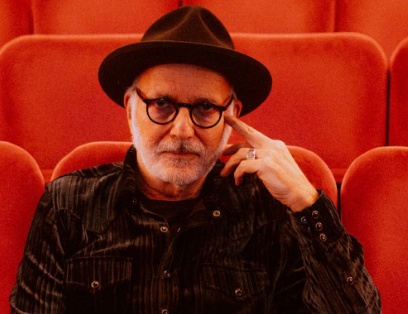
Ludovico Einaudiwas born in Turin, Italy, on 23 November 1955. He grew up in a culturally prominent family: his paternal grandfather, Luigi Einaudi, served as President of Italy from 1948 to 1955, and his father, Giulio Einaudi, ran a respected book publishing house. His mother, Renata Aldrovandi, was a pianist and composer who taught him to play piano as a child.
Einaudi was the youngest of six children, and he spent his childhood in a lively, intellectual household. His father regularly hosted literary gatherings at the family home and publishing house, often attended by notable Italian writers (including Italo Calvino, Natalia Ginzburg, Elsa Moranteand Primo Levi). Music was an everyday presence at home.
He learned piano from his mother at a very young age, and she often played classical piano pieces (by Chopin, Mozart and Bach) during family life. As a youth he also embraced contemporary music: he has recalled being drawn to The Beatles, and he grew up hearing rock and folk artists (such as Jimi Hendrixand Bob Dylan) played by his older siblings.
Einaudi received formal musical training at Italy’s conservatories. He began his studies at the Turin Conservatory and later continued at the Conservatorio Giuseppe Verdi in Milan. He earned his diploma in composition at Milan under teacher Azio Corghi. After graduating, he pursued advanced studies with the composer Luciano Berio.
| Aspect | Details |
| Full Name | Ludovico Maria Enrico Einaudi |
| Date of Birth | 23 November 1955 |
| Place of Birth | Turin, Italy |
| Family Background | Raised in a culturally prominent Italian family |
| Grandfather | Luigi Einaudi, former President of Italy |
| Father | Giulio Einaudi, Italian publisher |
| Mother | Renata Aldrovandi, pianist and composer |
| Childhood Environment | Grew up in an intellectual household |
| Early Piano Training | Learned piano from his mother |
| Classical Exposure | Heard works by Chopin, Mozart, and Bach |
| Contemporary Influences | Influenced by The Beatles and folk-rock music |
| First Conservatory | Turin Conservatory |
| Advanced Studies | Conservatorio Giuseppe Verdi, Milan |
| Advanced Mentorship | Continued studies with Luciano Berio |
Career Beginnings
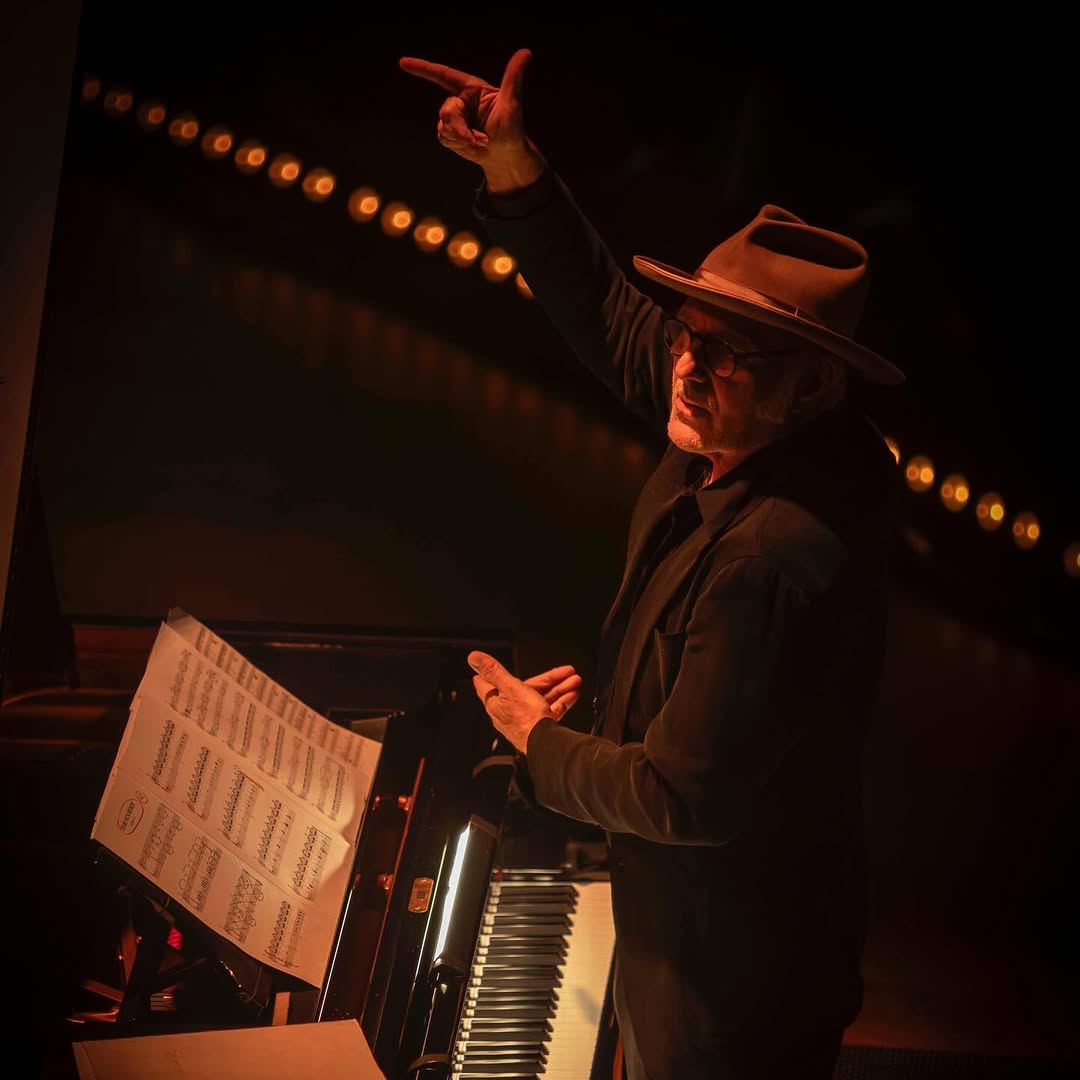
Ludovico Einaudi began his professional career as a classically trained composer, having earned a composition diploma in Milan and studied under avant-garde maestro Luciano Berio. In the 1980s he wrote music for ballet, theater and chamber ensembles, with early works performed at prestigious venues like Milan’s La Scala and New York’s Lincoln Center.
His first studio album Le Onde(1996) marked a turning point: built on the textures of minimalism and inspired by Virginia Woolf’s novel The Waves, it achieved mainstream success in Italy and the UK.
This debut signaled a shift from academic composition to a more personal, melodic style, blending classical piano with folk and ambient influences.
International Breakthrough
Building on Le Onde, Einaudi’s follow-up albums in the late 1990s and early 2000s – including Eden Roc(1999) and I Giorni(2001) – established him internationally. These records expanded his sound to include strings and world-music elements (for example, I Giornifeatures a duet with Armenian duduk), and the title track “I Giorni” became a signature piece.
By the 2000s he was touring globally, selling out concert halls across Europe and beyond. During this period he also began scoring films and television, contributing music to high-profile projects like the British film This Is Englandand a TV adaptation of Doctor Zhivago.
His work on the TV series This Is England ’86earned him a BAFTA nomination, helping raise his profile with broader audiences. By the late 2000s Einaudi was routinely topping classical charts around the world, reflecting the growing popular and critical recognition of his distinctive contemporary-classical style.
Major Performances & Concert Highlights
Einaudi is known for large-scale concert tours and special events. He has repeatedly sold out major venues – for example, he played seven consecutive nights in 2019 at London’s Barbican Centre in support of his Seven Days Walkingproject.
In June–July 2025 he will make history by performing five back-to-back sold-out shows at London’s Royal Albert Hall, the longest continuous headline run ever by a solo pianist at that hall. His concerts often feature a small ensemble and are described as immersive musical meditations that end in spontaneous applause.
Einaudi has also given standout unique performances: in 2016 he played on a specially built platform in the middle of the Arctic Ocean as part of a Greenpeace event raising awareness of climate change.
In late 2024, between sold-out runs at the London Palladium, he surprised travelers by giving an impromptu piano concert at London’s St Pancras railway station, performing popular pieces like “I Giorni” and previewing works from his forthcoming album.
He has likewise toured Asia-Pacific extensively – in early 2024 he performed in Dubai, Singapore and a multi-date Australian tour including a sold-out residency at the Sydney Opera House – and in late 2023 he returned to the UK for concerts in Cardiff, Leeds, Birmingham and Liverpool. Einaudi’s live appearances continue to draw huge audiences and press attention worldwide.
Recordings & Discography
| Album / Project | Release Context |
| Le Onde | 1996 debut album inspired by Virginia Woolf’s The Waves |
| Eden Roc | Expanded his sound with ensemble textures |
| I Giorni | Piano-focused album that became one of his signature works |
| Diario Mali | Collaborative project with kora player Ballaké Sissoko |
| Una Mattina | Return to solo piano compositions |
| Divenire | Piano and string orchestra project including “Primavera” |
| Nightbook | Introduced electronic textures alongside piano |
| Seven Days Walking | Seven-album conceptual series released in 2019 |
| Underwater | Solo piano album reflecting the pandemic period |
| The Summer Portraits | 2025 piano album inspired by memories of summer |
Einaudi’s recording career spans decades and dozens of albums. His discography includes early works like Le Onde(1996) and Eden Roc(1999), which established his solo piano style.
Albums of the 2000s expanded his palette: I Giorni(2001) was piano-focused, while Diario Mali(2003) was a collaborative project with Malian kora virtuoso Ballaké Sissoko, and Una Mattina(2004) returned to solo piano.
In 2006 he released Divenire, featuring piano with string orchestra, which included the popular track “Primavera.” His 2009 album Nightbookincorporated electronic textures alongside piano.
This blend of acoustic and electronic elements continued on In a Time Lapse(2013) and Elements(2015), both of which were accompanied by extensive tours.
In 2019 Einaudi launched the ambitious Seven Days Walkingseries – seven separate albums released over seven months – each accompanied by live performances across Europe (culminating in the Barbican concerts).
More recent releases include Underwater(2020), a solo-piano album reflecting on the stillness of the pandemic era, and The Letters(2022), a collaborative work featuring voices and poetry.
In January 2025 he released The Summer Portraits, a new album of thirteen piano pieces inspired by memories of summer; its title track cycle was launched with substantial media attention.
Throughout his career, Einaudi has recorded for major classical labels such as Decca and Deutsche Grammophon, and his albums consistently chart in the classical and crossover categories.
Awards & Professional Recognition
Einaudi’s work has garnered numerous honors. In his native Italy he received national awards for film music – notably a David di Donatello (Italian film award) for Best Score for Giuseppe Piccioni’s Luce dei miei occhi(2002) – and he was appointed an Officer of the Order of Merit of the Italian Republic (OMRI) in 2005.
He has also been recognized abroad: for example, he won the Echo Klassik Award in Germany (2002) for Best Soundtrack (Fuori dal mondo). In 2004 he earned the prize for Best Film Music at the Avignon Film Festival (Sotto falso nome).
More recently, mainstream music industry awards have acknowledged his impact: in March 2023 he was voted “Best Classical Artist” at the UK’s Global Awards, an honor he accepted with gratitude (“Thank you Global and Classic FM… it’s an honour to receive this prize,” he commented).
Critics and peers often note his unique position as a crossover composer whose discography has repeatedly topped classical charts. His music has also been embraced by celebrities and used in media worldwide – for instance, sports figures like Emma Raducanu have cited Einaudi’s pieces as personal favorites – underlining his status as one of the most listened-to contemporary composers.
Collaborations With Orchestras & Conductors
While Einaudi primarily composes for piano, he has undertaken significant collaborations with orchestras and soloists. In 2016 he wrote Domino, his first piano concerto, commissioned jointly by the Royal Liverpool Philharmonic and West German Radio (WDR).
Dominopremiered in March 2016 at Liverpool’s Philharmonic Hall, with pianist Ji Liuperforming alongside the Royal Liverpool Philharmonic under conductor Damian Iorio. The work, scored for piano, harp and strings, was conceived to celebrate the Philharmonic’s 175th anniversary.
He has also composed for larger ensembles: for World Environment Day 2013, China’s National Centre for the Performing Arts (NCPA) in Beijing commissioned his orchestral piece Wetlands, which was premiered by the NCPA Symphony Orchestra.
On tour he regularly teams up with orchestras or chamber ensembles in major cities; his albums In a Time Lapseand Elementswere recorded with the Novecento Orchestra, conducted by Eivind Aadlandand Michelangelo Mazzarespectively, and live performances often feature string quartets or small string sections.
Beyond formal commissions, he has engaged in cross-genre projects – collaborating, for instance, with Armenian duduk player Djivan Gasparyanand Malian kora player Ballaké Sissoko on past recordings – underscoring his practice of blending classical piano with diverse musical traditions.
Recent Career Activity
In the past two years Einaudi’s career has remained extraordinarily active. He has toured continuously, playing dozens of concerts worldwide each year.
In late 2023 he was invited to perform at a United Nations concert for Human Rights Day in New York, commemorating the 75th anniversary of the Universal Declaration of Human Rights.
Early 2024 saw him headline festivals and halls across Asia and Australia, including a six-night Sydney Opera House residency that sold out quickly.
In November 2024 he returned to London for two sold-out nights at the Palladium Theatre, followed in December by an Italian tour with multiple dates at Milan’s Teatro Dal Verme.
On the recording front, he launched his latest album The Summer Portraitson 31 January 2025, receiving positive press for its lush, expressive piano compositions.
He is currently supporting that release with a world tour – in summer 2025 he will play five consecutive nights at London’s Royal Albert Hall (a record for a solo pianist), alongside concerts across Europe and North America.
Additionally, Einaudi has branched into new media: in late 2023 a dramatized podcast series titled Experience: The Ludovico Einaudi Storywas released, featuring cinematic storytelling about his life and music.
Overall, his recent projects (from record-breaking concert runs to multimedia ventures) continue to demonstrate his status as a leading figure in contemporary piano music.
Performance (2025–2026)
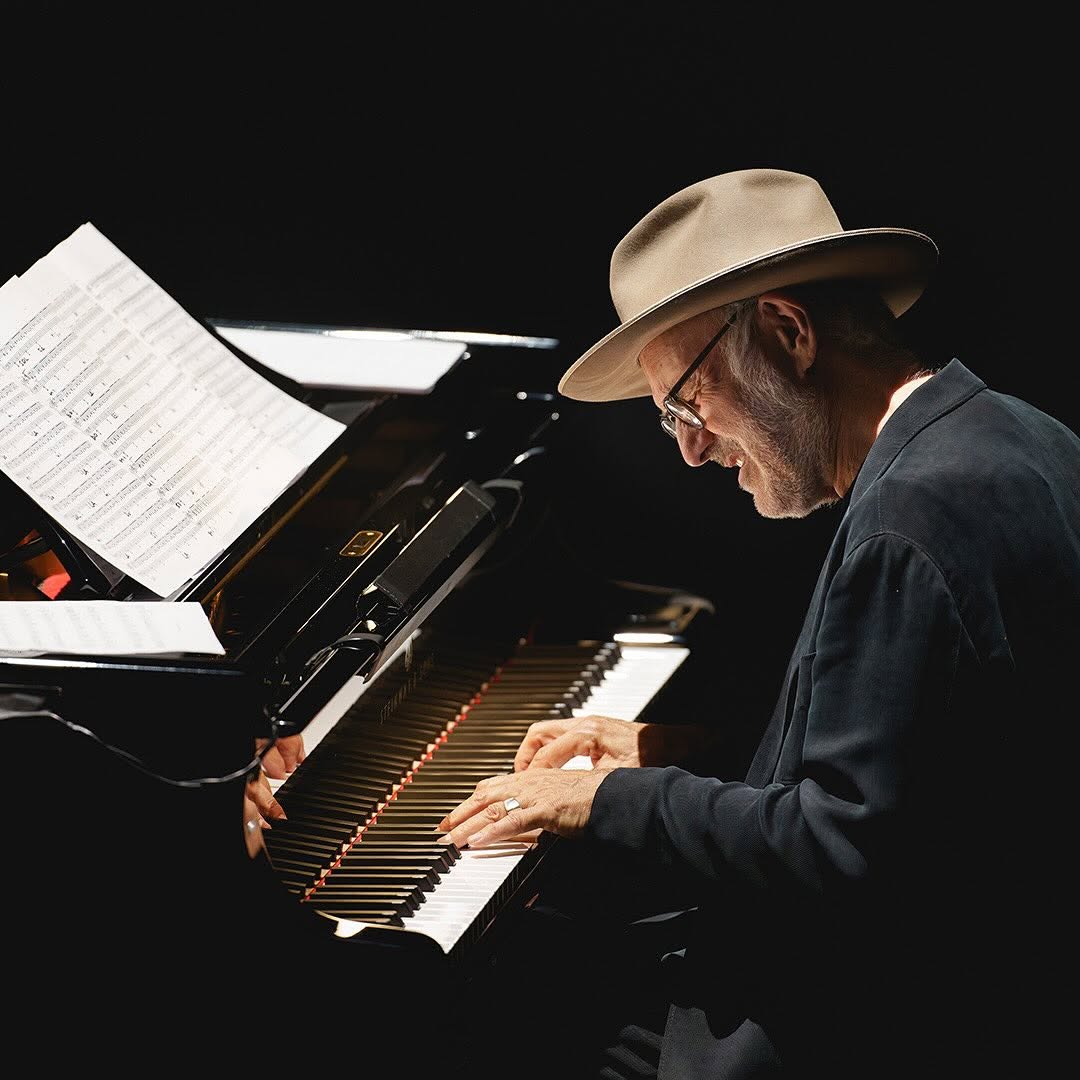
- Sydney Opera House residency (Jan 2026):Einaudi staged an unprecedented six-night solo residency in the Opera House Concert Hall, performing works from his new album The Summer Portraitsalongside signature pieces. He was accompanied by his full seven-piece ensemble throughout, highlighting the album’s expanded orchestration.
- Royal Albert Hall run (London, Jun–Jul 2025):Five consecutive sold-out concerts from June 30 to July 4, 2025 set a venue record, the longest continuous headline run ever by a solo pianist at the Royal Albert Hall. This record-setting residency underscored his commanding audience draw in the UK.
- North American tour (Sep–Oct 2025):A 13-city fall tour spanned key venues from Chicago’s Auditorium Theatre through Massey Hall (Toronto) and Radio City Music Hall (NY), concluding with a Mexico City performance on Oct 28. This extensive schedule highlighted Einaudi’s strong North American fan base.
- O2 Arena London (Jul 2026):Announced as his biggest-ever UK concert, Einaudi will headline the 20,000-seat O2 Arena on July 10, 2026. The one-night event will feature the full band (his only UK ensemble show in 2026) and opening music by noted organist Anna Lapwood, underscoring the evening’s prominence.
- Teatro Real, Madrid (Mar 2026):Einaudi will perform two solo recitals (March 18–19, 2026) at Madrid’s historic Teatro Real, previewing material from his new project. Presenting concerts at Spain’s premier opera house highlights his engagement with major European classical venues.
- Doha & Abu Dhabi (Jan 2026):He expanded his reach to the Gulf region with solo shows at Doha’s Katara Amphitheatre (Jan 9) and Abu Dhabi’s Saadiyat Island (Jan 10). These performances, tied to cultural festival programs, attracted significant local attention.
Ludovico Einaudi’s Piano Style And Interpretation
Technical Approach And Piano Control
Einaudi’s piano technique is deliberately understated, favoring precision and consistency over virtuosic display. His playing relies on simple patterns often broken chords and arpeggios executed with even dynamics and minimal ornamentation. Critics observe that he takes a “much softer, less technically demanding approach” than traditional concert pianists.
Even so, reviewers note that he performs with great control and clear phrasing: one writes that he can “finesse a phrase” despite eschewing flashy fireworks. In practice, each repeated pattern or motif is played with careful articulation and consistency, so that subtle changes in touch or rhythm become expressive moments.
Rather than fast runs or complex finger work, his control manifests in smooth transitions between passages and steady pacing that serves the music’s introspective mood.
Tone, Touch, And Sound Color
Einaudi’s tone is often described as warm, gentle, and meditative. In recordings he even prepares the piano adding extra felt to the hammers in order to achieve a particular muted timbre.
The result is a sound that critics call “minimalist” but highly evocative: one reviewer speaks of hearing “gentle performance hues and meditative” sonorities in his live music. He generally employs a light, legato touch, using the pedal sparingly to let notes blend into one another smoothly.
In performance the piano’s voice is never harsh; instead passages are rounded and sustained. Reviewers highlight his “original piano hues with impressive keyboard control and exquisite phrasing,” noting that his touch brings out a delicate shimmer in the harmonies.
Rhythm, Phrasing, And Structural Clarity
Einaudi’s rhythmic approach is centered on repetition and steady pulse. Many pieces are built from simple ostinato patterns for example, a recurring broken chord figure in the left hand beneath a recurring melody in the right.
These repetitions create a meditative regularity, and he shapes form by introducing gradual variations over time. One critic describes his performances as a “masterclass in clear, emotive storytelling,” noting that each theme is presented plainly before being slowly elaborated.
Indeed, Einaudi often uses a slow build or crescendo effect: starting very quietly and adding layers or intensity bit by bit. Observers note his use of “slow build, delayed resolution and veiled generation of variation.”
In practice, a simple motif may be repeated many times with tiny rhythmic or dynamic inflections; this gives the music a clear architecture even though nothing flashy is happening on the surface.
The phrasing itself is typically straightforward often grouping notes into regular, predictable patterns but Einaudi varies timing ever so slightly and uses pauses or rubato sparingly to delineate sections.
The result is that form remains transparent: listeners perceive when a piece is unfolding or resolving, because the core motif returns and changes gently rather than being hidden by complexity.
Interpretative Approach To Repertoire
Einaudi’s public performances and recordings overwhelmingly feature his own compositions, so his interpretative approach is essentially self-defined. He has described his piano pieces as “songs without words” rooted in the classical tradition, yet infused with elements from folk, rock and pop.
Trained in modernist techniques (he studied with composers like Berio), Einaudi consciously rejects atonal or dissonant idioms; instead he favors consonant, flowing melodies reminiscent of late-Romantic music.
In this sense, any Romantic or Classical heritage in his playing is filtered through a contemporary lens: he will shape a simple Chopin-like ballade to sound more like a modern lullaby, for instance.
When adapting his style for film scores or collaborations, he brings the same emphasis on clear narrative mood rather than strict period style.
Overall, his interpretive stance blends respect for classical phrasing with a “feel” for popular song forms neither confined to historical authenticity nor to the demands of jazz or rock.
If he performs actual works by past composers (which he rarely does in concerts), he tends to simplify the harmony and focus on lyrical expression.
The consistent goal in any repertoire old or new is to highlight emotional content through clear melody and texture rather than elaborate technical display.
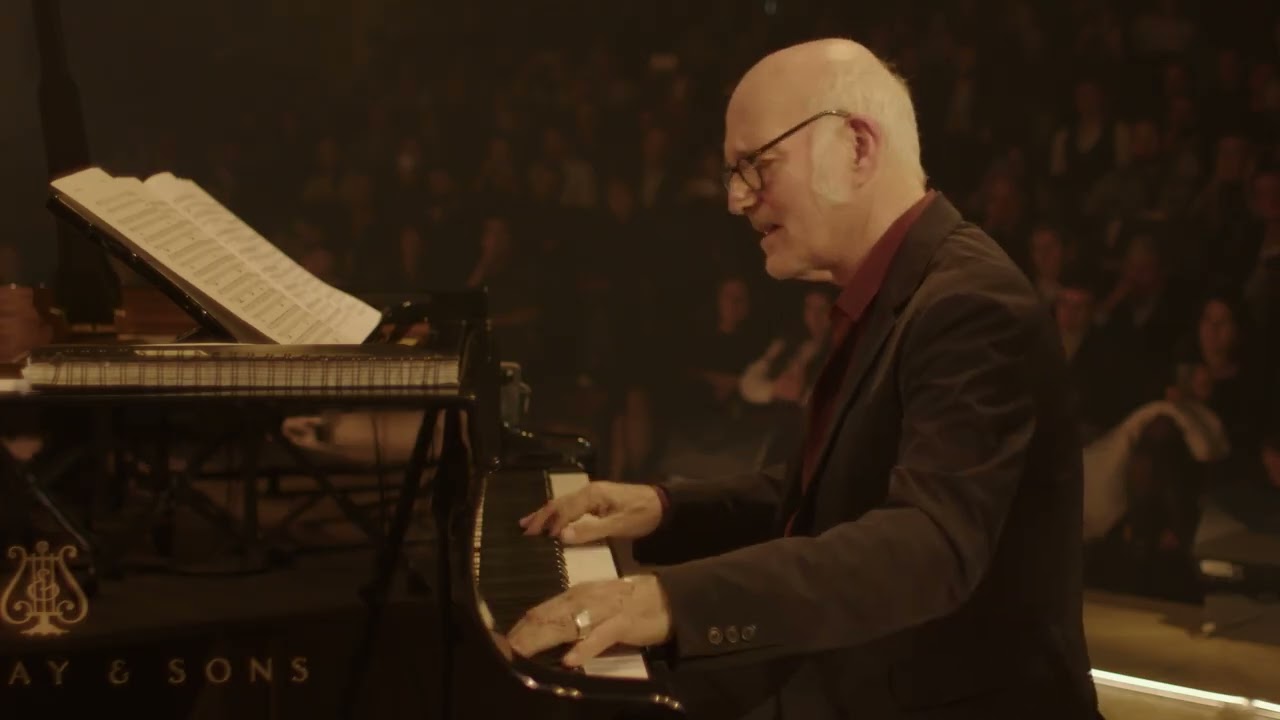
Ludovico Einaudi - Experience (Live from Teatro dal Verme, Milano)
Balance Between Precision And Expression
Across his playing, Einaudi maintains a careful balance between accuracy and emotional freedom. While technically understated, his precision is key to the music’s expressive impact.
Reviewers note that he often “finesses a phrase” with delicate nuance, even as he avoids virtuosic bravura. In performance, he consistently executes each repeated figure with metronomic steadiness, which in turn allows listeners to focus on the subtle expressive details slight shifts in dynamics or touch in the melody.
One reviewer praises his “impressive keyboard control and exquisite phrasing,” highlighting that through controlled articulation Einaudi makes simple material compelling.
He rarely rushes or strains; instead he allows the music to breathe, holding back fully to let phrases sing.
This means that expressive climaxes (when they come) feel earned because the groundwork was laid by precise playing.
In short, his style pairs the precision of repeating patterns with a measured use of rubato and dynamics, so that the emotional weight comes not from flashy technique but from the purity and clarity of the expression.
Critical Observations And Musical Identity
Critics often identify Einaudi’s style with a modern minimalist aesthetic. His music is described as “minimalist and meditative,” built on repeating cycles of chords and simple melodies.
Proponents argue this simplicity allows deep emotion to emerge: one journalist writes that through “spirals of repetition and subtle turns of elaboration” his pieces reveal listeners’ own feelings. In performance, he projects a pure, direct emotional narrative that many find cathartic.
However, opinions are sharply divided. Some reviewers dismiss his language as extremely limited: a 2019 Guardian review said he “pureed” his vocabulary into “generic, soulless chord sequences” of minor sighs and arpeggios.
Other critics have used terms like “unmemorable,” “soulless,” or “cheap” to describe what they see as formulaic simplicity.
Despite such critiques, Einaudi’s musical identity has clearly resonated with wide audiences: he is seen as bridging classical and pop sensibilities.
Some see him carrying on the 19th-century tradition of pianist-composers (albeit with much less technical bravura), bringing the immediacy of pop-like songwriting to the concert hall. Others feel his approach eschews the modernist legacy in favor of sheer accessibility.
In sum, Einaudi’s style is defined by its clear, consonant simplicity and meditative character a style that some celebrate as emotionally resonant and others criticize as stylistically narrow.
His identity as a composer and performer thus lies at the intersection of these views, making him one of the most popular yet polarizing figures in today’s piano music.
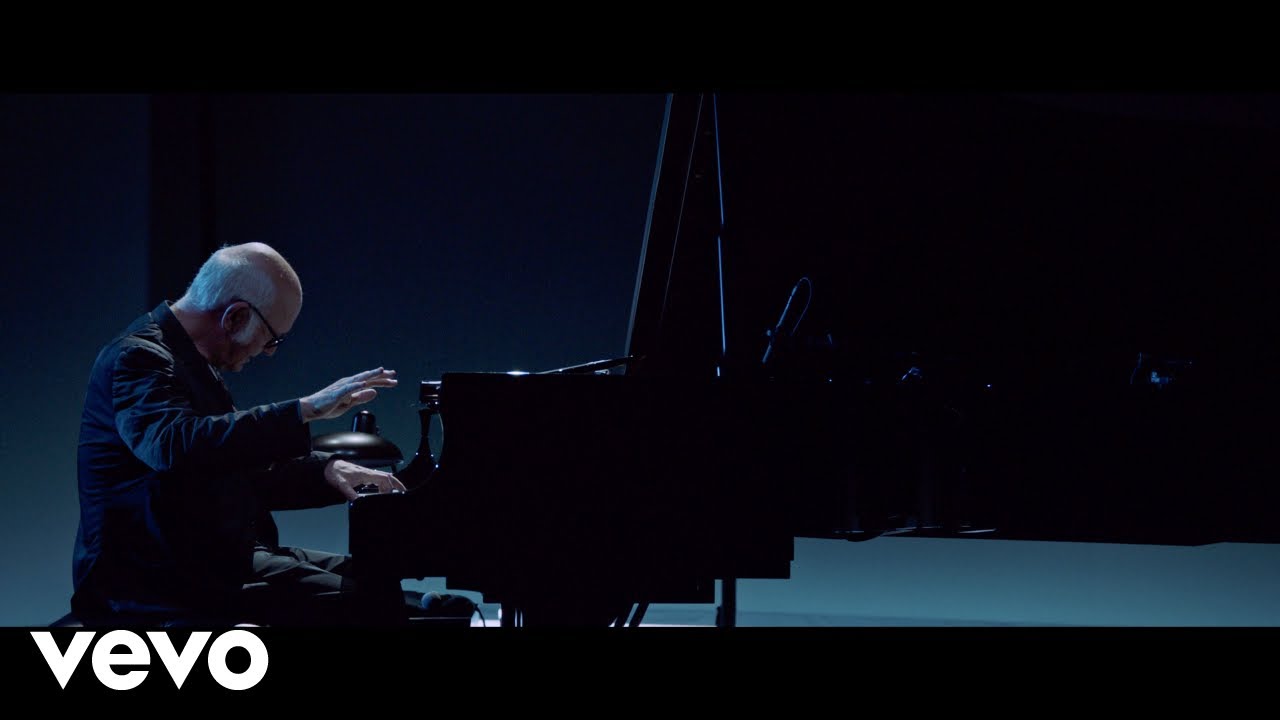
Ludovico Einaudi - Nuvole Bianche (Live From The Steve Jobs Theatre / 2019)
Ludovico Einaudi Net Worth
As of 2026, Ludovico Einaudi’s net worth is estimated to be between $0.3 million and $6 million. These figures come from online estimate sites and have not been confirmed by major business outlets. Published estimates vary and should be treated as approximate. Einaudi earns his wealth through his career as a composer and pianist. He has scored films (e.g. This Is England, The Intouchables) and released many solo albums. His income is generated by album sales, publishing royalties, and concert tours worldwide.
FAQs
1. Who Is Ludovico Einaudi?
Ludovico Einaudi is an Italian composer and pianist known for contemporary classical music that blends minimalism, classical, and ambient styles. He is one of the most streamed living classical composers worldwide.
2. What Kind Of Music Does Ludovico Einaudi Compose?
Ludovico Einaudi composes primarily for piano, often using repetitive patterns, simple harmonies, and gradual development. His music is frequently described as minimalist, emotional, and accessible to both classical and non-classical audiences.
3. What Are Ludovico Einaudi’s Most Famous Compositions?
Some of Ludovico Einaudi’s best-known works include Nuvole Bianche, I Giorni, Una Mattina, and Experience. These pieces are widely performed, streamed, and used in film and television.
4. How Does Ludovico Einaudi Earn His Income?
Ludovico Einaudi earns income through album sales, streaming royalties, live concert tours, and film and television music licensing. He also works with major classical record labels and performs internationally each year.
5. Is Ludovico Einaudi Still Active As A Composer And Performer?
Yes, Ludovico Einaudi remains highly active, releasing new music and touring globally. His recent projects include new albums and sold-out performances scheduled through 2026.