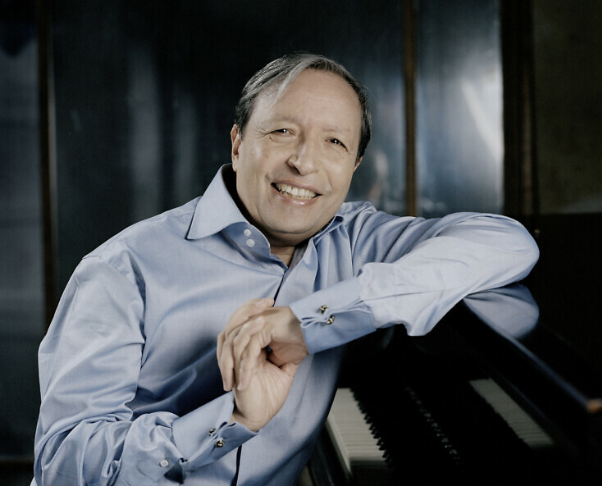
Murray David Perahia was born on April 19, 1947, in the Bronx borough of New York City. He grew up in an Orthodox Sephardic Jewish family. His parents were Greek Jews from Thessaloniki (Salonika) who emigrated to New York in 1935.
In the Perahia household the family spoke Judeo-Spanish (Ladino) and regularly attended the local Sephardic synagogue. From about age three, Murray accompanied his family to the Metropolitan Opera; he later recalled being captivated by the power of the operatic singers’ performances.
Perahia began formal piano lessons at age four. He has noted that he did not truly focus on diligent practice until he was a teenager (around age fifteen).
At seventeen he entered the Mannes College of Music in New York City, where he studied piano (keyboard), conducting, and composition under the pianist Mieczysław Horszowski. During his Mannes years he also spent summers at the Marlboro Music School and Festival, studying chamber music with musicians such as Rudolf Serkin, Alexander Schneiderand Pablo Casals.
| Aspect | Verified Details |
| Full Name | Murray David Perahia |
| Date of Birth | April 19, 1947 |
| Place of Birth | Bronx, New York City, United States |
| Family Background | Born into an Orthodox Sephardic Jewish family |
| Ancestry | Parents were Greek Jews from Thessaloniki |
| Childhood Language | Judeo-Spanish (Ladino) spoken at home |
| Early Musical Exposure | Attended the Metropolitan Opera regularly from early childhood |
| Piano Studies Began | Started formal piano lessons at age four |
| Formal Education | Entered Mannes College of Music at age seventeen |
| Teachers | Studied under Mieczysław Horszowski |
| Additional Training | Summers at Marlboro Music School and Festival |

Murray Perahia plays Beethoven's Moonlight Sonata 3rd Movement [HQ]
Career Beginnings
Murray Perahiabegan piano studies as a child in New York and later attended Mannes College, studying conducting and composition. He spent summers at the Marlboro Music Festival working with Rudolf Serkinand Pablo Casals, and he played chamber music with the Budapest String Quartet.
His early training included lessons from Artur Balsam and Mieczysław Horszowski. In March 1972 he made his debut with the New York Philharmonic, and later that year he won the Leeds International Piano Competition, becoming the first North American pianist to do so.
International Breakthrough
Winning Leeds brought Perahia international prominence. In 1973 Benjamin Britteninvited him to perform at the Aldeburgh Festival, where he later accompanied tenor Peter Pears in Lieder recitals.
He served as co-artistic director of the Aldeburgh Festival from 1981 to 1989. He also toured extensively across Europe, Asia and the Americas in the following decades.
Major Performances & Concert Highlights
Perahia has given concerts worldwide at major halls and festivals. He is a frequent recitalist at New York’s Carnegie Hall, where critics praised the emotional depth of his performances in a 2017 program.
In 2013 he gave his first tour of Australia, performing at the Sydney Opera Houseand in Melbourne. He has also toured extensively in Europe and Asia, appearing at leading venues around the world.
As a concerto soloist Perahia has worked with many of the world’s great orchestras. Recent highlights include Schumann’s Piano Concerto with the Boston Symphony Orchestraunder Sir Bernard Haitink and Beethoven’s Piano Concerto No. 4 with the Cleveland Orchestraunder Franz Welser-Möst.
He has also appeared with the Israel Philharmonicand other leading ensembles. His live programs often combine solo works and chamber music, demonstrating his wide-ranging repertoire.
Recordings & Discography
Perahia has an extensive discography on major classical labels. His Sony Classical recordings include collections of Chopin études, Bach’s Partitas and early Beethoven sonatas.
He won Grammy Awards for his recordings of Chopin’s complete Études and Bach’s English Suites. In 2016 he signed exclusively with Deutsche Grammophon; his releases for that label include Bach’s French Suites(2016) and albums of Beethoven’s late piano sonatas in 2018.
Sony also issued a boxed anthology titled The First 40 Years, compiling his early recordings. Perahia has undertaken scholarly projects as well, editing all of Beethoven’s piano sonatas for the Henle Urtext edition and producing a curated recording of Alfred Cortot’s master classes.
Awards & Professional Recognition
| Award / Honor | Details |
| Avery Fisher Prize | Shared inaugural prize in 1975 |
| Grammy Awards | Won multiple Grammys for Chopin and Bach recordings |
| Gramophone Awards | Recipient of nine Gramophone Awards |
| RPS Honor | Named Instrumentalist of the Year in 1997 |
| British Honor | Appointed Honorary KBE in 2004 |
| Academic Honors | Honorary fellowships at Royal Academy of Music and Royal College of Music |
| Honorary Doctorates | Awarded by Oxford, Leeds, and Duke universities |
Perahia’s achievements have been recognized by numerous prestigious awards. He shared the inaugural Avery Fisher Prize in 1975 (following his Leeds victory in 1972) and has won multiple Grammy Awards, including those for Chopin’s Étudesand Bach’s English Suites.
He has received nine Gramophone Awards, including the Gramophone Instrumental Album Award in 2012. In 1997 he was named Instrumentalist of the Year by the Royal Philharmonic Society.
In 2004 he received an honorary Knight Commander of the Order of the British Empire (KBE) for his services to music. He also holds honorary fellowships at the Royal Academy of Musicand Royal College of Musicand has been awarded doctorates by universities including Oxford, Leeds and Duke.
Collaborations With Orchestras & Conductors
Perahia is closely associated with Sir Neville Marriner’sAcademy of St. Martin in the Fields, serving as its principal guest conductor and touring as a soloist with the ensemble.
He has performed concertos with orchestras including the London Symphony Orchestra, Cleveland Orchestra, Boston Symphony Orchestraand the Israel Philharmonic, among others.
He has worked with renowned conductors such as Sir Georg Solti, Sir Colin Davis, Bernard Haitinkand Franz Welser-Möst. In chamber music he collaborated with tenor Peter Pearsin lieder recitals under Benjamin Britten’sdirection and with cellist Pablo Casalsand the Budapest String Quartet.
Recent Career Activity
After an extended pause due to a hand injury, Perahia has been making a gradual return to performing. In April 2024 he returned to the stage in London, performing Schumann’s Piano Quintet with the Academy of St. Martin in the FieldsChamber Ensemble at Wigmore Hall in a concert celebrating Neville Marriner’s centenary.
This was his first recital in six years, marking a significant comeback. He continues as Principal Guest Conductor of the Academy of St. Martin in the Fields and remains active in recording and scholarship. His ongoing projects include editing Beethoven’s piano sonatas for publication and releasing newly discovered historical recordings.
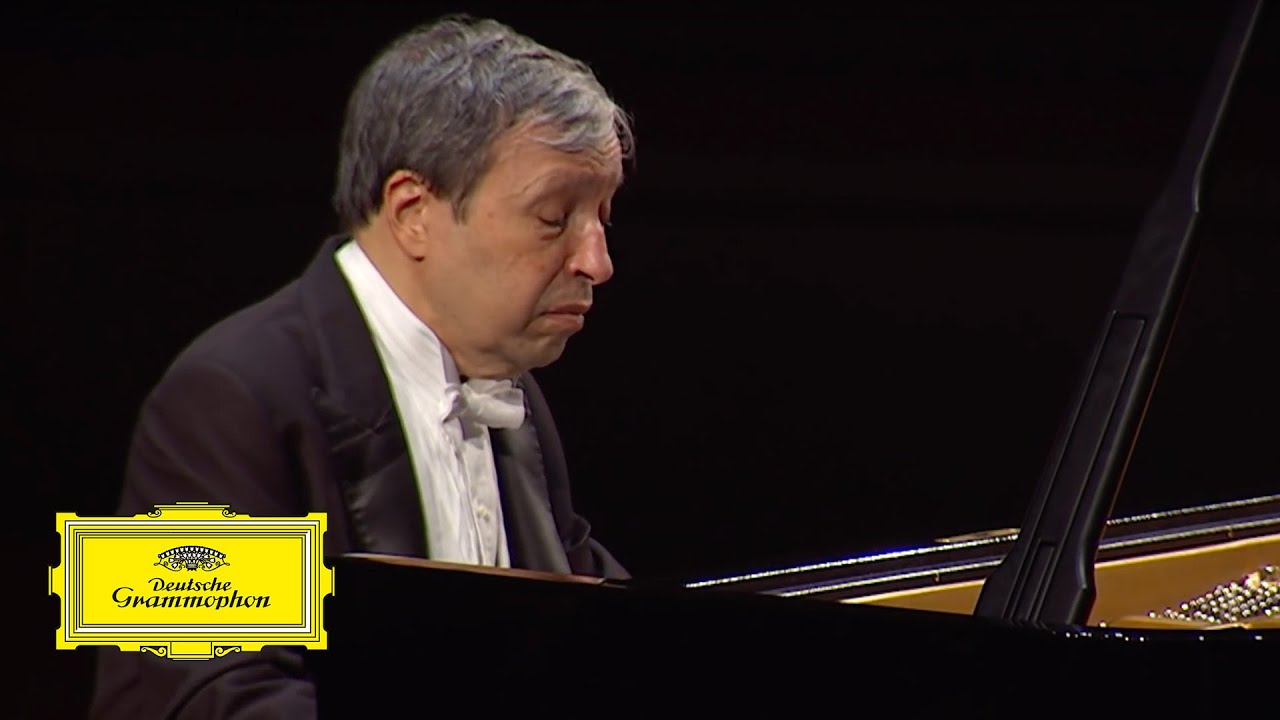
Murray Perahia – Bach: French Suite No. 5 in G, BWV 816, “Courante”
Performance (2025–2026)
- Dec 2025: Led an advanced piano masterclass at the Jerusalem Music Centre masterclass event, coaching outstanding young pianistson Haydn, Beethoven and Chopin repertoire at the Jerusalem Music Centrein Jerusalem.
- Apr 28, 2026: Murray Perahia: Not of This World was screened as part of the 2026 Irving S. Gilmore International Piano Festivalin Kalamazoo, Michigan, where the film showcased his artistic work and legacy.
- 2025 (year): Official schedules show no major public recitals or tours announced for Perahia during this period.
Piano Style And Interpretation Of Murray Perahia
Technical Approach And Piano Control
Perahia’s pianism is consistently noted for its impeccable technique and control. Critics emphasize his flawless finger work and evenness, with every passage articulated clearly and all voices balanced.
He maintains absolute control even at the softest dynamics, ensuring that quiet notes bloom in the air rather than disappear. This disciplined technique enables him to tackle the most demanding repertoire without strain, always allowing the music to come through rather than focusing on virtuosity.
- Even, legato scales and crisp polyphonic articulation, voicing each line distinctly.
- Firm two-hand coordination and balance in complex textures, such as fugues or contrapuntal passages.
- Subtle dynamic control at all levels, from whisper-soft pianissimo to full forte, without losing clarity.
Tone, Touch, And Sound Color
Perahia’s touch produces a luminous, pearly sound that shines in every register. He draws a singing, legato tone from the piano, making melodic lines bloom with warmth and resonance.
His mastery of touch is highly flexible: he can make the piano sound gentle and intimate or vibrant and full-bodied as needed.
In Classical works for example Mozart and Bach he generally uses minimal pedal and a clean, transparent timbre, whereas in Romantic pieces such as Chopin or Brahms he employs more pedal and richer sonorities to heighten warmth.
- Radiant, transparent tone quality praised for its clarity quiet chords still sound radiant in the hall.
- Seamless legato and singing touch on melodic lines, with each note resonating fully.
- Nuanced use of the sustain pedal and voicing: very restrained pedaling in Mozart and Bach to maintain clarity, more blended and warm color in Chopin and Brahms to enhance lyricism.
Rhythm, Phrasing, And Structural Clarity
Perahia’s phrasing is often described as lyrical and conversational, with a natural ebb and flow like a spoken or sung line.
He takes ample breathing room in phrases, shaping each musical gesture with thoughtful weight so that every inflection feels expressive.
His sense of rhythm is supple and guided by the music’s inner voice-leading: instead of rigid metronomic time, he allows subtle rubato where the melodic line or harmonic tension demands it.
This creates a feeling that the music unfolds inevitably, as one critic noted in Beethoven: each surge and climax coincidentally grows naturally from what came before.
- Clear articulation of phrase endings and inner voices, making structures fugues, sonata forms, etc. transparent.
- Thoughtful rhythmic flexibility rubato that follows harmonic suspensions and emotional contour.
- Expansive yet controlled phrasing: long lines flow smoothly without dragging, creating a sense of musical narrative.
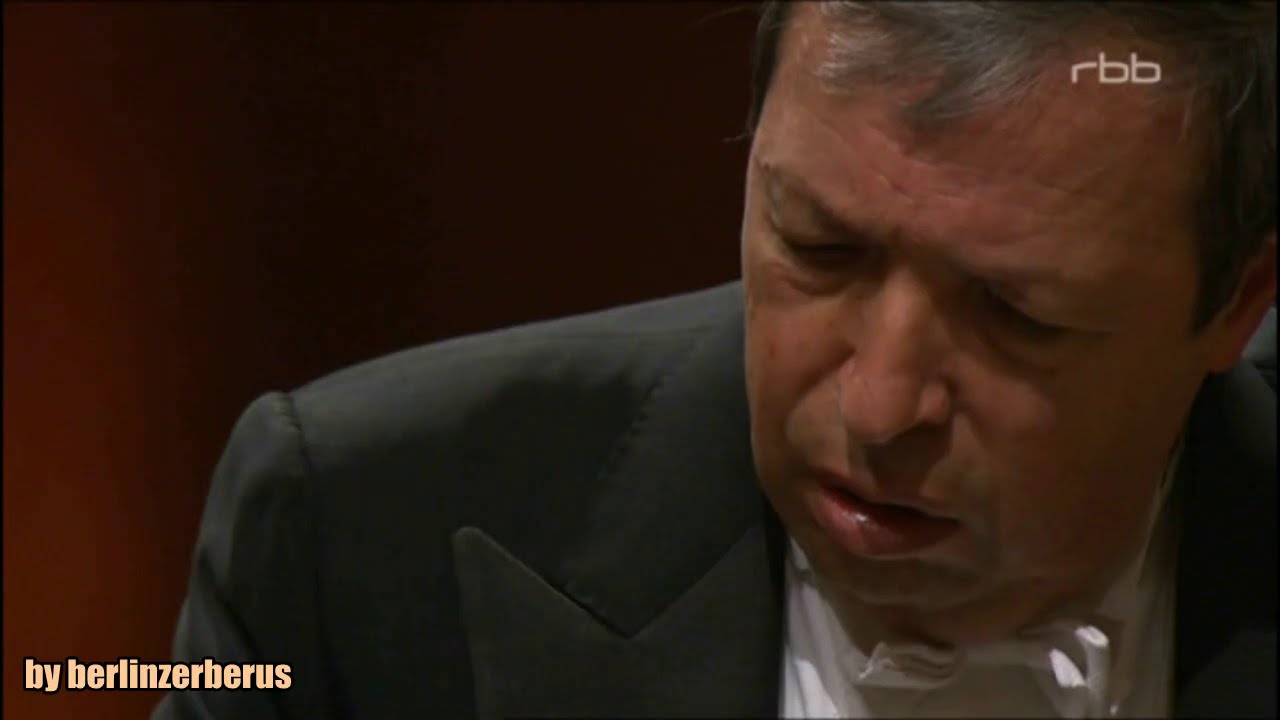
MURRAY PERAHIA IN WARSCHAU - BEETHOVEN
Interpretative Approach To Repertoire
Perahia is known for a deeply studied, composer-centered interpretation. He prefers to channel the composer’s intentions rather than impose his own personality, seeking clarity in the score and faithfulness to style.
In Baroque and Classical works Bach, Haydn, Mozart, he emphasizes architectural balance, classical proportions and inner counterpoint, often adding only subtle ornamentation or phrasing nuance.
In Romantic repertoire he maintains precision but combines it with poetic expression and emotional depth for example, Schumann and Chopin emerge under his hands with full color and feeling, yet never excessive sentimentality.
Throughout all styles, he brings out inner voices and structural details: critics note that even in dense music his inner lines and countermelodies remain audible and coherent.
- Baroque/Classical: Lightly embellished, transparent textures. Deliberate articulations often with some pedal for smoothness that highlight counterpoint and formal design.
- Romantic: Warm, singing tone with controlled rubato. Romantic phrasing that accentuates lyrical melodies without indulgence; dynamic contrasts are bold but measured.
- Overall: A scholarly approach informed by historical practice and score study ensures that tempo and dynamics speak the language of each composer’s era.
Balance Between Precision And Expression
A hallmark of Perahia’s artistry is the unity of precision with musical feeling. He combines exact technique and clear structure with genuine expressiveness.
For example, critics praise how nothing in his playing ever sounds mechanical or thin every chord is full-bodied and every accent purposeful yet he never over-scores or dramatizes the music.
The result is an interpretation that is inward and refined, conveying emotion through subtle color and contour rather than grand gestures.
One reviewer observed that even in fiery works Chopin scherzos, Beethoven finales he maintains control and clarity, so that intensity feels powerful rather than rushed or blunt.
- High technical accuracy serves musical expression: formidable technique can step out of the way and let the real music glow through, as one critic put it.
- Tonal and dynamic control carefully calibrated: he rarely plays to show off, choosing instead a balanced blend of clarity and warmth.
- Measured emotional delivery: tension is built deliberately for example Beethoven’s climaxes built layer by layer, giving performances weight without excess.
Critical Observations And Musical Identity
Critics consistently describe Perahia as a clean, thoughtful pianist whose playing is self-effacing in the best sense focused on the music rather than performer personality.
Reviews often highlight his luminescent or transparent texture and unfailingly pure tone.
He is regarded as a consummate classicist in outlook, bringing calm authority to scores, yet with a poetic sensibility that allows inner passion to emerge.
Observers note that he rarely takes extreme tempos or flashy liberties; his point of view is instead one of subtlety and integrity. Over decades, this balance of rigorous craft with gentle expressiveness has come to define Perahia’s musical identity.
Murray Perahia Net Worth
As of 2026, Murray Perahia’s net worth is estimated to be between $1 million and $5 million. He built this wealth through a long career as a classical pianist, earning income from concert performances around the world. His acclaimed recordings for labels like Sony Classical have contributed to his earnings.
He also gives masterclasses and has held teaching posts at institutions like the Juilliard School, supplementing his income. He continues to perform internationally and at music festivals, adding to his income.
FAQs
1. Who Is Murray Perahia?
Murray Perahia is an American classical pianist and conductor, widely regarded as one of the leading pianists of his generation. He is especially known for his interpretations of Bach, Mozart, Beethoven, and Chopin.
2. What Is Murray Perahia Best Known For?
Murray Perahia is best known for winning the Leeds International Piano Competition in 1972 and for his refined, composer-focused interpretations. His recordings of Bach and Chopin have received multiple Grammy Awards.
3. Is Murray Perahia Still Performing?
Murray Perahia has significantly reduced public performances due to past hand injuries. He made a notable return to the stage in 2024 and remains active through select performances, masterclasses, and scholarly projects.
4. What Awards Has Murray Perahia Received?
Murray Perahia has won multiple Grammy Awards, nine Gramophone Awards, and the Avery Fisher Prize. In 2004, he was appointed an honorary Knight Commander of the Order of the British Empire (KBE) for services to music.
5. What Is Murray Perahia’s Net Worth?
Murray Perahia’s net worth is estimated to be between $1 million and $5 million as of recent years. His income primarily comes from concert performances, recordings, teaching, and editorial work in classical music.