A Few Things Worth Knowing Before You Read On
- The piano reached Calcutta in the late 18th century as a colonial status symbol, long before any Indian musician took a serious artistic interest in it.
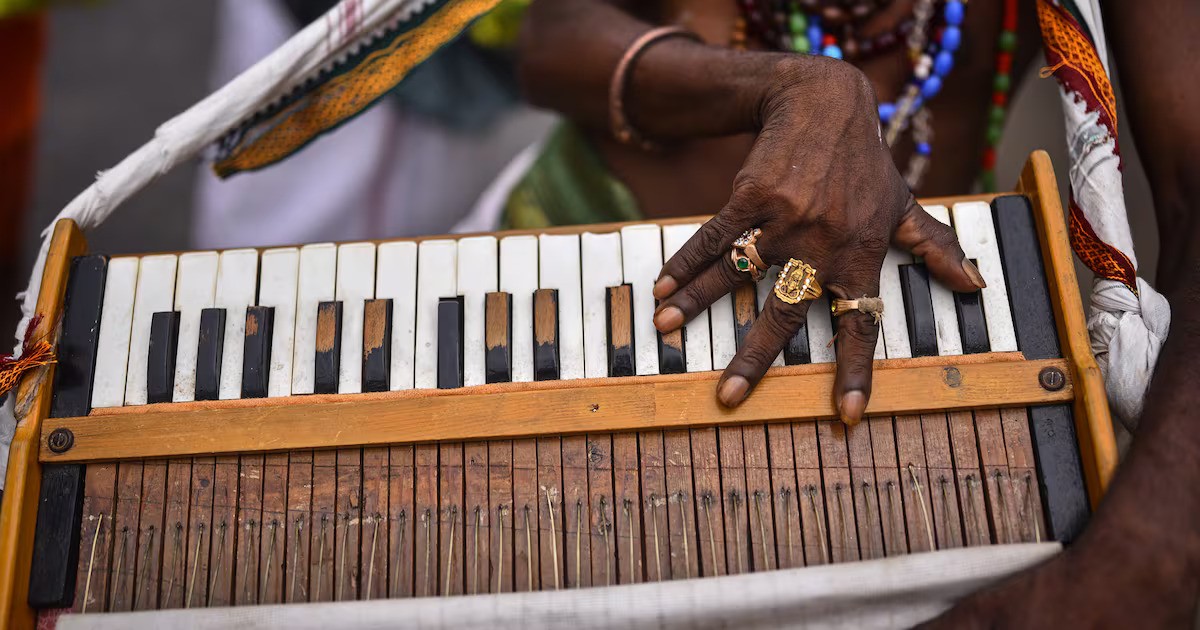
- The instrument's fixed pitch created a genuine musical barrier with Indian classical traditions, specifically through the absence of a technique called meend.
- Bollywood's Golden Age composers used the piano as a bridge between Indian melody and Western orchestration, giving it its widest Indian audience.
- The Bengali Bhadralok class made the piano their own through Rabindra Sangeet and domestic cultural life in ways that no other Indian community did.
- Modern artists like Utsav Lal have developed pianistic approaches to playing Hindustani ragas, reframing what the instrument can actually do in an Indian context.
The piano first arrived in India in the late 18th century, brought by British colonial traders, officers, and missionaries, with Calcutta serving as the primary entry point.
It was not welcomed by Indian classical musicians immediately. The instrument's fixed pitch conflicted directly with the fluid, microtonal character of Indian music.
Over the following two centuries, through colonial education, Bollywood film scores, Bengali cultural life, and eventually digital technology, the piano was gradually absorbed into the Indian musical mainstream.
Today it appears in film music, classical experiments, independent pop, and music schools across the country.
The Piano Lands In India
The piano's arrival in India was not a cultural exchange. It was luggage. When British colonial officers, traders, and missionaries sailed to India in the late 18th century under the British East India Company, they brought the material culture of their home. That included furniture, silverware, books, and, for those with both the means and the social ambition, pianos.
The first pianos in India were almost certainly in Calcutta, which served as the seat of British colonial administration from 1772. Getting a piano there was not a small feat. The instruments were heavy, fragile, and entirely unsuited to sea travel across the Indian Ocean. Many did not survive the journey intact.
Those who did were placed in British homes, clubs, and churches. They were not there to communicate with India. They were there to recreate England.
William Bird's Airs Of Hindustan (1789)
The first documented evidence of the piano engaging with Indian musical material appears in 1789, when Englishman William Bird published a collection from Calcutta called Airs of Hindustan. The pieces were short keyboard compositions written in a European classical style but built around Indian melodies that Bird had collected during his time in the subcontinent.
The result was, as later musicologists have noted, European music with a slight Indian flavor. Bird transcribed Indian tunes but fitted them into the equal-temperament framework of the Western keyboard, smoothing out the microtonal inflections that gave those melodies their original character. Still, it was the first recorded moment of the piano reaching toward Indian music.
Sophia Plowden also matters in this early phase. The same British Library account connects her to the collection of songs that fed this Hindustani airs repertoire, which means the exchange was not just a one-way export of European sound into India. It already involved collection, translation, and musical filtering across languages and social worlds.
What existed at this point was not Indian piano musicin the modern sense. It was a colonial keyboard culture learning how to package Indian melodic material for European hands and ears. That is an important beginning, but it is still only the beginning.
All India Radio And The Piano's Journey Into Ordinary Indian Homes
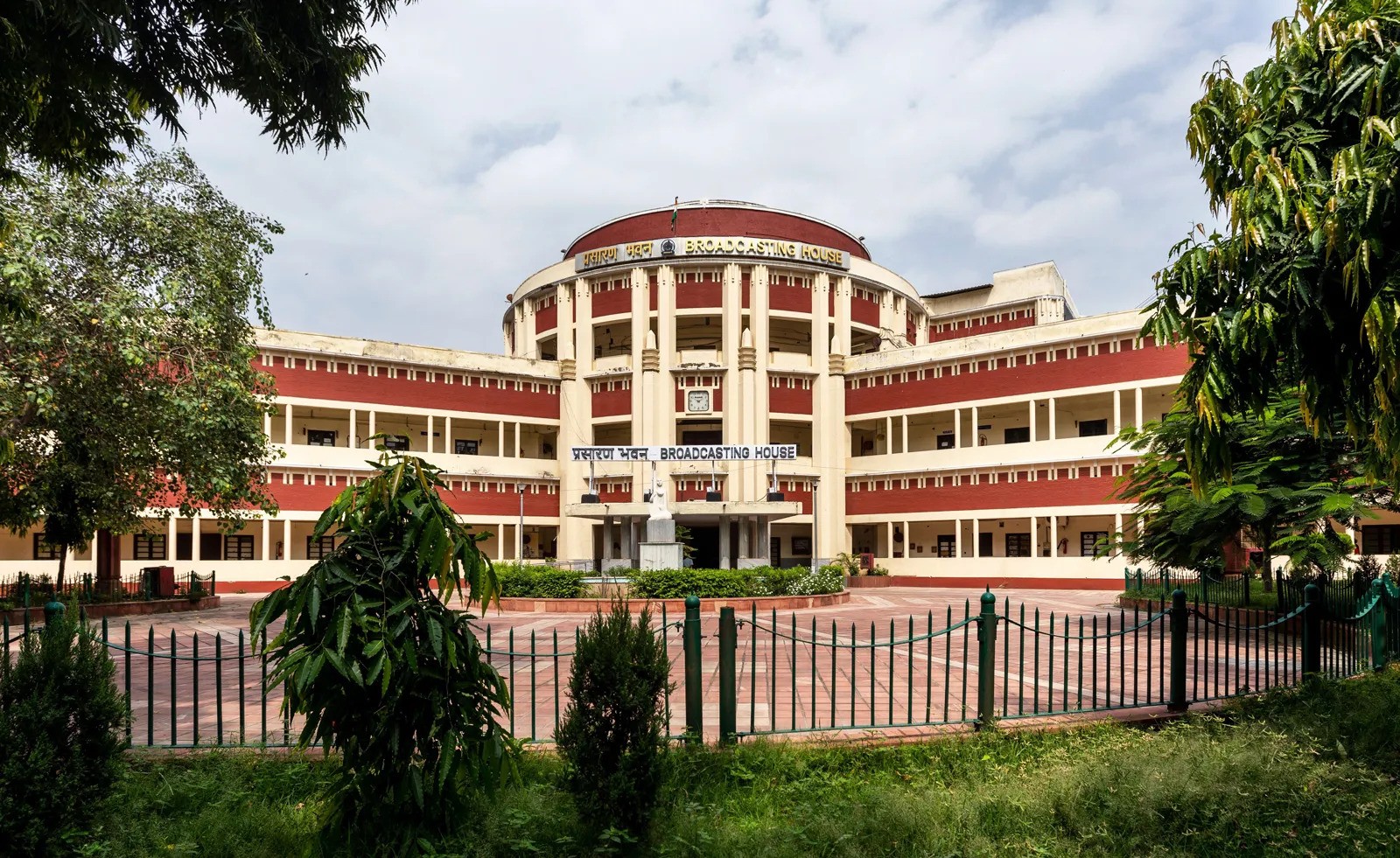
From the 1930s onward, All India Radio became one of the most powerful forces in Indian cultural life. For the piano, the radio was a critical mechanism of normalization.
Most Indians in the first half of the 20th century had never seen a piano. Radio changed what they heard without requiring them to see anything. When All India Radio broadcast Western classical music, Indian film songs, and hybrid Western-Indian compositions, the piano's sound entered living rooms across the country through radio receivers, not concert halls.
The psychological effect of this was significant. Familiarity does not require understanding. Generations of Indian listeners grew up hearing piano sounds as part of an ambient musical landscape, even if they could not have named the instrument. When Bollywood film music made the piano even more present from the 1940s onward, audiences were already primed to receive it.
Radio removed the class barrier from piano listening even as the class barrier around piano ownership remained largely intact. You did not need to be Bhadralok to know what a piano sounded like. You just needed a radio.
Bollywood's Golden Age And The Piano's Most Important Stage
The single most important factor in the piano's broad Indian adoption was not colonial education, royal courts, or Bengali drawing rooms. It was Bollywood.
Hindi film music from roughly the 1940s through the 1960s, often called the Golden Age, used the piano in ways that reached every corner of the country. Composers of this era were working in a genuinely hybrid tradition, drawing simultaneously on Indian classical music, folk traditions, Western orchestration, and jazz. The piano was central to that synthesis.
How Composers Used The Piano As A Bridge Between Two Musical Worlds
The great composers of the Bollywood Golden Age, figures like S.D. Burman, Salil Chowdhury, and the duo Shankar-Jaikishan, used the piano not to replace Indian instruments but to anchor the Western orchestral elements of their arrangements while Indian melodic lines ran above or around it.
The piano provided harmonic stability and rhythmic clarity that strings and brass could play against. It was, in orchestral terms, a foundation instrument. At the same time, these composers ensured that the Indian melodic content of their songs remained with the voices, strings, and woodwinds, where ornamental techniques were still possible.
This division of labor was elegant. The piano did what the piano does best. The Indian instruments did what they did best. The result was a sound that was neither purely Western nor purely Indian but felt natural to both audiences.
Why The Piano Suited Romance And Melancholic Scenes
Hindi cinema's filmmakers quickly discovered that the piano's sustained, bell-like tone had a particular emotional usefulness for scenes of romance, longing, and grief. The instrument's decay pattern, where a note fades gradually rather than cutting off sharply, suited the cinematic language of slow close-ups and emotional swells.
Audiences who watched these films internalized the piano's emotional register without thinking about it analytically. They simply felt what it communicated. Over decades of filmgoing, the piano became part of the shared emotional vocabulary of Indian cinema audiences, and it has stayed there ever since.
The Piano Becomes Bengali
While Bollywood gave the piano its widest Indian audience, Bengal gave it its deepest roots. Rabindra Sangeet, the body of roughly 2,200 songs composed by Rabindranath Tagore, is one of the pillars of Bengali cultural identity. These songs draw on both Indian classical traditions and Western harmonics that Tagore encountered through his travels and reading. The piano became a standard accompanying instrument for Rabindra Sangeet among Bengali musicians, a choice that reflected Tagore's own documented openness to Western musical forms.
In his memoir Reminiscences, Tagore references musical encounters with Western instruments and compositions that shaped his sensibility. When Bengali musicians set his songs for piano accompaniment, they were following a logic that was already present in the compositions themselves.
Calcutta Sonata And The Documentary Evidence
Subha Das Mollick's 2018 documentary Calcutta Sonata provides the most thorough available record of the piano's physical and sonic journey through Kolkata. Through archival research, musician interviews, and visits to workshops that repair old instruments, Mollick traces how the piano moved from colonial households into the broader fabric of Bengali cultural life.
Music scholar Dr. Devajit Bandopadhyay, interviewed in the documentary, observes that Calcutta was the first Indian city to receive most European innovations, giving it a unique role as the laboratory for cultural synthesis between India and the West. The piano's deep Bengali roots are inseparable from this geographic and historical reality.
Park Street, Jazz, And The Piano's Cosmopolitan Calcutta Life
The piano's presence in Kolkata extended beyond classical and Rabindra Sangeet traditions. Park Street, the city's most cosmopolitan commercial thoroughfare, hosted restaurants and clubs from the 1940s onward, where jazz piano became a regular feature of nightlife.
This was a different kind of piano culturefrom the drawing-room instrument of the Bhadralok. It added a third dimension to what the piano meant in the city, alongside Rabindra Sangeet accompaniment and domestic music education. Veteran musicians connected to this scene, including the jazz guitarist Carlton Kitto, who gave one of his last interviews to Mollick before he died in 2016, grew up in a musical environment where the piano was central.
The piano's presence in Calcutta was genuinely multidimensional. Classical accompaniment, domestic education, film score composition, and jazz performance all coexisted within a few square kilometers of the same city, which tells you something important about how thoroughly the instrument had been absorbed.
Related: The History Of Piano Music
Why The Piano Stayed Relevant After Independence
Independence did not turn the piano into India’s central classical instrument, but it did not push the instrument out either. Instead, the piano found a few durable roles that still make sense today.
Formal Music Education
One reason the piano stayed relevant was formal music education. Trinity says it has a long heritage in India going back more than 125 years, while ABRSM’s official history notes that it already had representatives in India by 1948.
That long institutional presence helps explain why these exam systems remain familiar reference points in Indian piano culture. The instrument works especially well for graded study because it fits syllabuses, set pieces, technique lists, and measurable progress.
Church And Choir Culture
Another reason was the church and choir culture. Sahapedia notes an ongoing tradition of church and choir music in Pune from before Independence, and that reflects a wider pattern across several Indian cities.
Keyboard instruments suit congregational singing, rehearsal, and part-based music more naturally than they suit orthodox raga performance. That does not make them more important than Indian classical instruments. It simply explains why they remained socially useful.
The Urban Home And Teaching Studio
A third reason was the urban home and the teaching studio. From a practical teaching point of view, the piano offered something parents and students could recognise immediately. It made rhythm, hand coordination, reading, and listening visible in a very direct way.
Later, digital pianos widened access. Families could avoid the transport, space, and maintenance burden of an acoustic upright while still learning keyboard basics. It was not a glamorous shift, but it was an important one.
Why That Pattern Still Matters
The same pattern still holds today. The piano thrives in India as a bridge instrument. It connects Western classical training, school music, church repertoire, studio composition, and selected Indian melodic work.
It never replaced the instruments at the centre of gharana traditions, and it did not need to. Its place came from usefulness, not supremacy.
How Modern Artists Gave The Piano An Indian Voice
The modern phase is not about pretending the old technical objections have disappeared. It is about hearing how serious musicians work within those limits and still make something convincing.
What Indian Music On Piano Means Today
Indian music on the piano can mean several different things. Sometimes it means playing a song by ear on the keyboard. Sometimes it means arranging a film melody with Western harmony. At its most ambitious, it means building a pianistic language that respects the time sense, phrase logic, and emotional patience of raga without claiming exact equivalence with voice or string technique.
Why Utsav Lal Matters
Utsav Lal is one of the clearest examples of that modern effort. His official biography describes him as an Indian pianist recognised for his rendition of ragas on the piano and notes that he is often called the Raga Pianist. That label matters because it points to a conscious artistic project, not a casual crossover trick.
The aim is not to paste Indian scales onto European pianism. The aim is to reshape touch, pacing, repetition, resonance, and melodic attention so the piano can host a different musical imagination.
What Modern Pianists Are Really Doing
The strongest modern players are not trying to make the piano behave like a sitar or sarod. They are using the instrument on its own terms while still drawing from Indian musical ideas.
In practice, that often means using repetition in place of glide, pedal to suggest atmosphere, and delayed resolution to hint at raga feeling, even when literal ornament cannot be reproduced. None of this erases the piano’s limits. It turns those limits into a style problem rather than a dead end.
What This Means For Learners
From a teacher’s perspective, this is the most useful lesson for students. The piano gains an Indian voice when the player stops forcing imitation and starts understanding the instrument’s own strengths.
A good approach usually depends on three things
- Patience in phrasing
- control of resonance
- Clarity about what the piano can and cannot do
That is a better goal than trying to copy another instrument note for note.
The Piano In Modern India
The final phase of the piano's Indian history is still unfolding, and technology has been the primary driver.
Upright pianos began entering Indian middle-class homes in larger numbers from the 1970s and 1980s. Space was always a constraint in Indian urban housing, but the upright's smaller footprint made it manageable. Cost was the larger barrier, and it remained significant until the digital pianochanged the economics of the entire category.
Digital Pianos And The End Of The Old Barriers
Digital pianos arrived in India through the 1990s and 2000s and dismantled the three traditional objections to piano ownership: size, cost, and maintenance. A digital piano requires no tuning, fits into a standard apartment, costs a fraction of an acoustic instrument, and can be practiced with headphones, which matters enormously in the close-quarters living arrangements common to Indian cities.
The result was a substantial expansion of the piano-learning population. Children who could never have accessed an acoustic instrument began taking lessons on digital keyboards. Music schools in smaller cities and towns began offering piano instruction for the first time.
That wider reach also changed the instrument's cultural image. For some younger learners and listeners, the piano became part of a broader modern Indian lifestyle that values creativity, self-discipline, and even ideas such as balancing mindfulness and adventure in India, especially in urban spaces where music, wellness, and personal expression increasingly overlap.
A.R. Rahman And The Piano As A Fully Indian Sound
The composer A.R. Rahman, whose work spans Hindi and Tamil film music as well as international collaborations, represents the most complete version of the piano's indigenization in contemporary Indian music. Rahman uses the piano not as a Western element imported into an Indian arrangement but as a native voice that has absorbed Indian rhythmic sensibility and melodic thinking.
In his work, the piano does not signal Western influence. It signals Rahman. This is arguably the end state of the long process that began in colonial Calcutta: an instrument so thoroughly absorbed into an Indian artist's musical language that its origins stop being the relevant question.
Online Learning And The Piano's Reach Into Small-Town India
The acceleration of online music education extended the piano's reach into parts of India that had never had local piano teachers. Students in smaller towns began learning through video platforms and live online lessons, practicing on digital instruments purchased locally or through e-commerce.
The piano's journey from elite Calcutta drawing rooms to a student in a small-town apartment practicing with headphones at night is, in its own way, the full arc of what assimilation actually looks like over 250 years.
Read Also: Best Piano Brands In India
Timeline Of Piano History In India
If you want the short version in sequence, these eight milestones carry the history clearly.
- Late 18th-century:British commercial expansion turns India into a growing market for European instruments, with Calcutta emerging as a key centre.
- 1789William Hamilton Bird publishes The Oriental Miscellanyin Calcutta, arranging Hindustani airs for keyboard and proving early adaptation of Indian melody for European domestic performance.
- Early 19th-century:The piano remains concentrated in colonial and elite urban spaces, valued as much for status and polish as for sound.
- Mid to late 19th-century:Bengali print culture produces manuals, treatises, and songbooks that make music teachable in new ways.
- 1871"Bengal Music School opens in Calcutta under the influence of Sourindro Mohun Tagore, helping formalise music instruction.
- Late 19th-century into early 20th-century:Rabindra Sangeet and Bengali urban culture keep a selective openness to Western melodic materials while remaining rooted in Indian and folk traditions.
- Post Independence broadcasting era:Vividh Bharati launches in 1957 with popular film music, widening national familiarity with mixed orchestral sound worlds that included piano.
- Late 20th-century to the present:Graded exams, private teaching, digital keyboards, and artists such as Utsav Lal keep the piano active in education, film, and contemporary Indian performance.
Frequently Asked Questions
Was Early Indian Keyboard Repertoire Written In Western Notation?
The best-known early example is Bird's 1789 Calcutta publication of Hindustani airs for harpsichord, which presented Indian melodies through a European keyboard format.
Did Women Help Shape Early Keyboard Exchange In India?
British Library material on Sophia Plowden shows that song collection and transmission across social circles helped feed the Hindustani airs repertoire, later adapted for keyboard publication.
Did All India Radio Always Welcome Imported Fixed Pitch Instruments?
Britannica notes that All India Radio banned the harmonium in 1940 as part of an effort to define a national sound distinct from Western influence. That shows how contested instrument choice could be in public culture.
Why Do Many Indian Piano Learners Follow ABRSM Or Trinity?
Both systems offer graded pathways that fit piano study very well. Trinity highlights its long history in India, and ABRSM's official history shows that it had representatives in India by 1948.
Is The Piano More Common In Churches And Choirs Than In Gharanas?
In broad terms, yes. Church and choir traditions have long used Western keyboard logic, while gharana-based classical performance relies on vocal and instrumental techniques that fixed keys do not naturally support.
Can A Digital Piano Teach Indian Melodies Well?
It can teach note layout, contour, rhythm, and some aspects of phrasing. It cannot reproduce the full microtonal and sliding nuance that many Indian classical styles depend on.
Why Do Old Kolkata Pianos Matter Culturally?
They are material evidence of Bengal's encounter with colonial power, urban education, domestic music making, and later local adaptation. They hold social history as much as musical history.
Final Thoughts
The piano did not become Indian by defeating Indian instruments. It became Indian by finding jobs that mattered in Bengal, in schools, in radio, in cinema, and in later experimental performance. That is why the instrument's place in India makes more sense as a bridge than as a takeover.
If you keep that distinction in mind, the whole subject becomes clearer. The piano entered the empire, but it stayed through adaptation. That is the real value of piano history in India. It shows how a culture can absorb a foreign instrument, refuse its assumptions where needed, and still turn it into something locally meaningful.