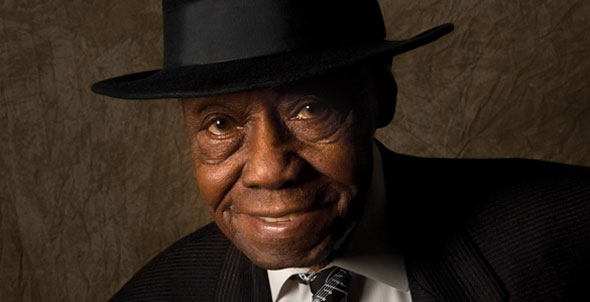
Joe Willie “Pinetop” Perkins was born on July 7, 1913, on the Honey Island Plantation near Belzoni, Mississippi. He grew up in a large cotton-farming family, his parents worked the land on Mississippi Delta plantations.
His childhood was spent moving around the Delta region, living with his mother, other relatives, or friends on different farms. From a young age he did farm work such as picking cotton and driving tractors. Perkins later recalled having virtually no formal schooling, saying he “came up the hard way” with “no schooling worth a damn.”
Perkins was largely self-taught musically. He began playing guitar by about age ten and added piano in his early teens. He learned by ear, guided by a local piano tuner and by listening to blues records.
To practice, he even built a makeshift piano out of spare parts, tuning it with his guitar and teaching himself a barrelhouse blues style. His early influences included the recordings of Clarence “Pine Top” Smith – notably Smith’s 1929 boogie-woogie hit – which was very popular in the region.
Growing up on Mississippi plantations, Perkins absorbed the music around him: he later spoke of learning from the field hollers of cotton workers and from the blues played at local juke joints. These experiences shaped his playing long before he ever became a professional musician.
| Aspect | Details |
| Birth | Born on July 7, 1913, on the Honey Island Plantation near Belzoni, Mississippi. |
| Family Background | Raised in a large cotton-farming family in the Mississippi Delta. |
| Childhood Life | Moved frequently across Delta farms, living with relatives and friends. |
| Early Work | Worked on farms from a young age, including picking cotton and driving tractors. |
| Education | Had almost no formal schooling and learned through life experience. |
| Musical Environment | Grew up hearing field hollers, plantation sounds, and local blues music. |

Pinetop Perkins
Career Beginnings
Joe Willie “Pinetop” Perkins began his career in the Mississippi Delta blues scene in the late 1920s and 1930s. He initially played guitar but learned piano by studying boogie-woogie records such as Clarence “Pine Top” Smith’s hits.
His first professional job was playing guitar for slide-guitar legend Robert Nighthawk. In the 1940s he appeared on the King Biscuit Timeradio show backing Sonny Boy Williamsonand even mentored a young Ike Turner on piano.
After a hand injury ended his guitar playing, Perkins focused entirely on piano. In 1953 his recording of “Pinetop’s Boogie Woogie” (originally by Clarence Smith) earned him the nickname “Pinetop” and national notice as a great blues pianist.
International Breakthrough
Perkins’s international profile rose dramatically when he joined Muddy Waters’sband in 1969, replacing pianist Otis Spann. Over the 1970s he toured worldwide with Waters’s group, bringing his driving piano style to international audiences.
This exposure led to Perkins’s own recording debut in 1976 on the French Black & Blue label. In 1980 Perkins and several Waters sidemen left to form the Legendary Blues Band. That group recorded two albums for Rounder Records and earned several Grammy nominations, before Perkins embarked on a solo career of his own in the mid-1980s.
Major Performances & Concert Highlights
In the 2000s, Perkins was a sought-after performer at major blues festivals and concert halls. In 2008 he appeared at the Kennedy Center in Washington, D.C., bringing Mississippi Delta blues to a national stage.
He continued touring extensively well into his 90s, often headlining large blues festivals across the U.S. and Europe. Audiences and critics alike noted the warmth and vigor of his live performances during this period, as he carried the blues piano tradition on stage even as a nonagenarian.
Recordings & Discography
Perkins’s solo discography expanded significantly once he left the Muddy Waters band. Notably, he did not release a full-length album under his own name in the United States until 1988, when he was 75 years old.
After that point he recorded over fifteen albums in the next two decades. Major releases include the 2008 album Pinetop Perkinsand Friends, which featured guitar greats Eric Clapton, B.B. Kingand Jimmie Vaughanamong others.
He also released the 2010 duet album Joined at the Hipwith former Muddy Waters drummer Willie “Big Eyes” Smith. He appeared on blues compilation and tribute projects, such as Last of the Great Mississippi Delta Bluesmen(2007), contributing tracks that helped those albums earn Grammy Awards.

Pinetop Perkins Plays Live
Awards & Professional Recognition
| Award Type | Recognition |
| Grammy Lifetime Achievement | Awarded in 2005 for his long and influential career. |
| Grammy Awards | Won Best Traditional Blues Album awards in 2007 and 2011 (shared projects). |
| NEA Fellowship | Received the National Heritage Fellowship in 2000. |
| Blues Music Awards | The piano category was renamed “Pinetop Perkins Piano Player of the Year” in his honor. |
| Hall of Fame | Inducted into the Blues Hall of Fame in 2003. |
| State Recognition | Received Mississippi’s Governor’s Award for Excellence in the Arts in 2011. |
Perkins received top honors recognizing his contribution to blues music. In 2005 he was given a Grammy Lifetime Achievement Award in recognition of his long career. He also won Grammy Awards for Best Traditional Blues Album (shared projects) in 2007 and 2011. In 2000 he received a National Heritage Fellowship from the U.S. National Endowment for the Arts, one of the nation’s highest honors for folk and traditional musicians.
He accumulated many Blues Music Awards for his piano playing; in fact, the award category was eventually renamed “Pinetop Perkins Piano Player of the Year” in his honor. Perkins was inducted into the Blues Hall of Fame in 2003 and received Mississippi’s Governor’s Award for Excellence in the Arts in 2011. These honors collectively underscore his status as an elder statesman of the blues.
Collaborations With Orchestras & Conductors
Perkins’s career was rooted firmly in the blues tradition rather than the classical or symphonic world. He never performed with a symphony orchestra or under a formal conductor.
Instead, all his collaborations were with fellow blues musicians and bandleaders. He is best known for his work in blues bands, for example supporting legends like Muddy Waters and Earl Hooker, rather than appearing with orchestral ensembles. His recordings and live performances always featured small-group blues instrumentation (guitar, harmonica, drums, etc.) rather than orchestral arrangements.
Recent Career Activity
Perkins remained musically active until the very end of his life. In 2010, at age 96, he recorded Joined at the Hipwith Willie “Big Eyes” Smith. The album was released in late 2010 and won a Grammy Award in early 2011. He maintained a regular touring schedule through 2010, appearing at clubs and festivals worldwide right up until the last months of his life.
Perkins passed away in March 2011 at the age of 97, concluding a career that had spanned more than eight decades and left a lasting impact on the blues piano tradition.
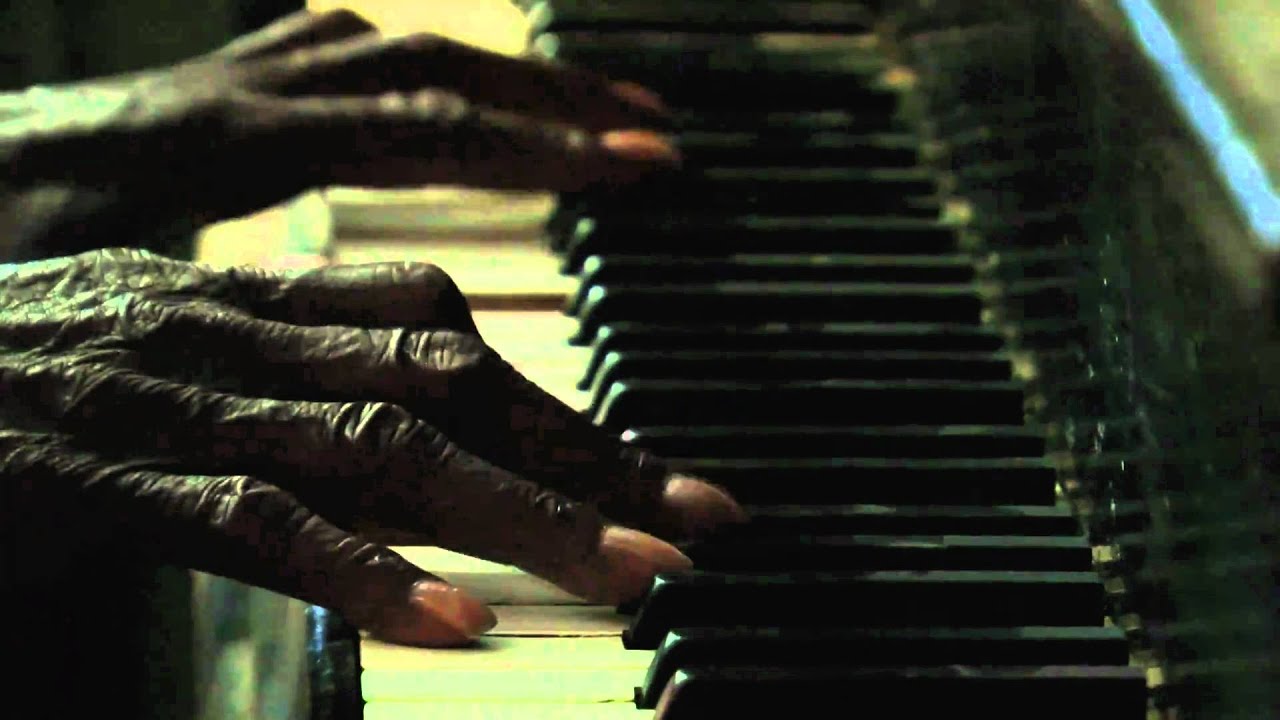
R.I.P. Pinetop Perkins, Clarksdale Mississippi 2009
Pinetop Perkins Performance Highlights
- Mid 20th century tours:In the 1940s 50s Perkins was a sought after sideman. He backed harmonica legend Sonny Boy Williamson on the King Biscuit Timeradio showand spent the 1950s touring with rock and roll pioneer Ike Turner,also performing with blues greats like Robert Nighthawk.
- Muddy Waters band (1969 80):Perkins served as the pianist in Muddy Waters’s touring band for over a decade, playing worldwide shows from Chicago to Europe. After leaving Waters in 1980, he co founded and fronted the Legendary Blues Bandduring the 1980s.
- Major album tour (1988):His first solo album After Hours(1988)was followed by a national tour. For this project he was backed by blues veterans Hubert Sumlin(guitar) and Jimmy Rogers(vocals guitar).
- Notable festival appearance (2001):Perkins appeared at the Chicago Blues Festival in 2001alongside Ike Turner, demonstrating his continued prominence on major blues stages well into his late 80s.
- Austin residencies:After moving to Austin, he became a local blues fixture. From the mid 2000s onward he played multiple nights per week at venues like Momo’s Bar on Sixth Street. Even at age 97 he was still performing livehis agent noted he had 20+ shows booked in early 2011.
- Recording projects:Beyond live shows, Perkins was prolific in the studio. His first solo album (Boogie Woogie King, 1976) was followed by a burst of creativity in the 1990s and 2000s about 15 albums released from 1992 2007 many documenting his live performances and collaborations.
Pinetop Perkins: Piano Style And Musical Interpretation
Technical Approach And Piano Control
Pinetop Perkins’s technique is firmly rooted in traditional blues and boogie-woogie piano. His left hand relentlessly drives each piece with a steady bass pattern often a churning, eight-to-the-bar boogie rhythm while his right hand dances atop with improvised riffs and horn-like melodies.
This split approach gave him the sound of a full band: the left hand keeps precise time and bass motion, and the right supplies the tune and fills. Perkins learned piano after a hand injury ended his guitar playing, and he developed a commanding touch.
Even into his nineties observers noted his remarkable finger agility and stamina, with fast, fluid passages that belie his age. Throughout his career, he maintained strong control of the instrument, balancing solid left-hand foundations against nimble, responsive right-hand lines.
Tone, Touch, And Sound Color
Perkins’s tone is a classic blues piano timbre that shifts with the mood of each song. On upbeat boogies his touch is percussive and bright chords and runs snap with clear attack and punch whereas on slower ballads he can coax a softer, more tender tone from the keys.
Critics have noted a warm, delicate quality in his phrasing when he plays gently, showing that even simple blues tunes can breathe with feeling under his fingers. In general, he favors a rich midrange and lively high register.
The lowest notes thump with weight in the bass, while the treble often rings out in a crisp, resonant timbre. Dynamic contrast is part of his palette as well: he will lay into the keys for dramatic emphasis but also ease back for quiet moments, using subtle pedal or finger technique to vary sustain and clarity.
Rhythm, Phrasing, And Structural Clarity
Rhythm is the heart of Perkins’s playing. From the first chord he establishes a strong, rolling groove, keeping the beat steady so the music never drifts. His phrasing is straightforward and unhurried, often pushing gently forward with a shuffle or swing. Each riff and chord is placed clearly in the measure, giving even improvised passages a sense of form and continuity.
He works within standard blues song structures typically twelve-bar progressions and articulates chord changes in the left hand so the form is always evident. When performing solo or in duets, Perkins outlines the changes with bold left-hand figures and punctuated right-hand phrases.
In full band settings he locks in tightly with drums or guitar, anchoring the ensemble’s rhythm. This clear, punchy phrasing described by reviewers as a “rolling, upbeat boogie” pulse makes the overall structure of each tune immediately perceptible to the listener.
Interpretative Approach To Repertoire
Perkins’s repertoire remained firmly in the blues tradition. He favored classic boogie-woogie and Chicago-blues numbers, along with personal favorites and Muddy Waters-era tunes. Rather than reinventing songs, he interprets them with faithfulness and flair: his versions of standards like “Got My Mojo Working” or “Hoochie Coochie Man” stay true to the originals’ grooves, but he adds his characteristic embellishments.
His approach is generally matter-of-fact and informal he doesn’t rewrite the chord changes or borrow heavily from other genres instead he puts his own energy and timing into well-known material. In ballads and slow blues he plays the melody and lyrics with expressive sensitivity, subtly highlighting emotional moments.
In uptempo numbers he emphasizes the danceable, feel-good aspects, often launching straight into a boogie-woogie groove. Throughout, his interpretations feel natural and unforced; he treats the blues as a living tradition, focusing on groove and feel rather than strict virtuosity or dramatic reinterpretation.
Balance Between Precision And Expression
Perkins’s playing strikes a balance between technical precision and heartfelt expression. His rhythms and lines are crisp and well placed, yet he always retains the relaxed swing and slight irregularities that give blues its human touch.
Even as his fingers blur through fast passages, he never loses the underlying pulse the music always breathes and swings freely. Listeners often comment on how effortlessly he plays; to him it all sounds easy and spontaneous, but it’s backed by decades of experience.
In performance he leaves space around phrases and lets small pauses or accents heighten the groove. He is not a player who crowds every beat or rushes instead, he plays just a bit behind or ahead of the strict metronome in a tasteful way, which adds an expressive, conversational quality to the music. This combination of tight ensemble playing with a laid-back feel allows Perkins to be both articulate and deeply soulful at the same time.
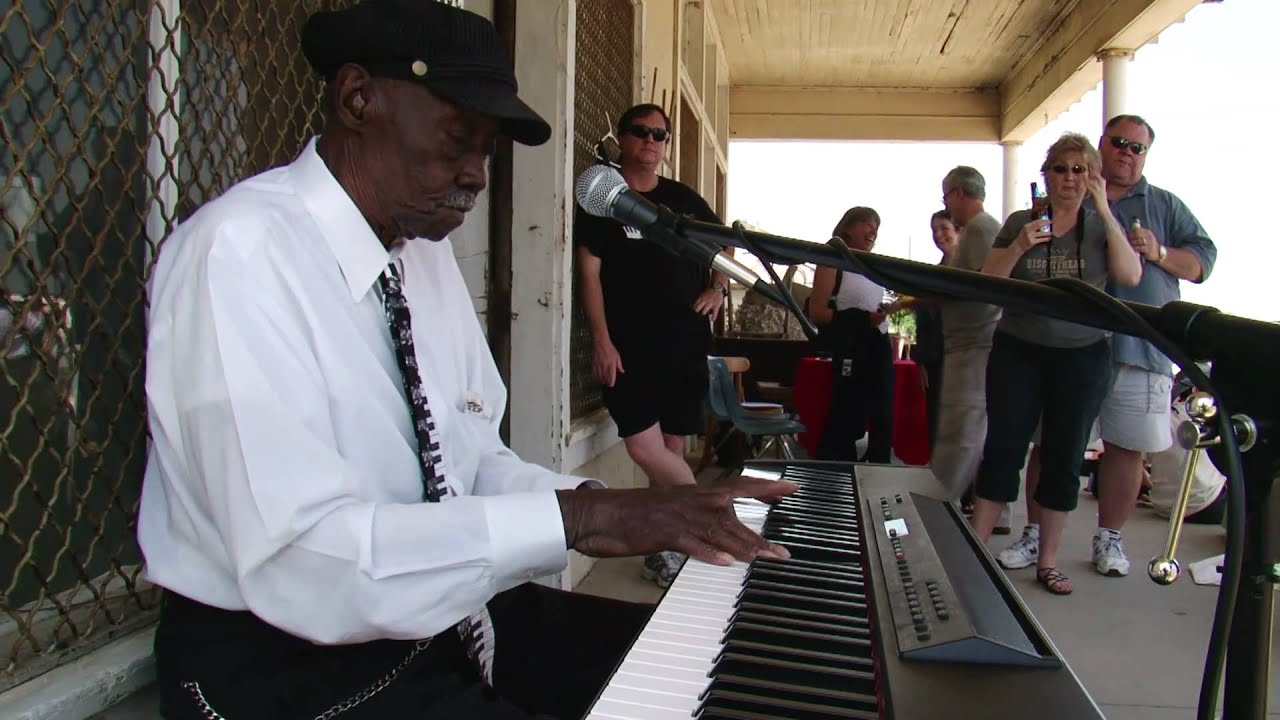
Pinetop Perkins at the Store
Critical Observations And Musical Identity
Observers consistently identify Pinetop Perkins as a quintessential blues pianist. He is widely acknowledged as one of the archetypal Chicago-blues keyboardists, and other musicians have called him “the classic Chicago blues piano player.”
His personal style became a benchmark: many note that his mix of a pounding left-hand bass and a lyric, horn-like right hand created an unmistakable sound. Indeed, listeners have said his right-hand figures essentially replicate a horn section while his left hand provides the strong foundation. This pattern later influenced swing and early rock piano. Critics and peers regard him as a yardstick by which great blues pianistsare measured.
Despite decades of playing, the core of Perkins’s identity stayed remarkably consistent: energetic boogie grooves, deep-rooted blues phrasing, and an unpretentious, genuine approach. He never veered into jazz complexities or classical concert repertoire; he remained true to the Mississippi-to-Chicago blues lineage.
In sum, his musical personality playful yet commanding, simple on the surface yet deeply ingrained with blues feeling is exactly what made him a living legend of blues piano.
Pinetop Perkins Net Worth
At the time of death, reliable sources had not published an estimate of Pinetop Perkins’s net worth. Perkins was a Grammy-winning American blues pianist whose career spanned seven decades.
He performed with blues legends like Muddy Waters playing in Waters’s band for 11 years and recorded at least 20 albums. Perkins earned his income through music from concert tours, record sales and royalties on his recordings rather than from other businesses or investments.
FAQs
1. Who Was Pinetop Perkins?
Pinetop Perkins was an American blues pianist and singer known for his boogie-woogie and Chicago blues style. He was one of the longest-active blues musicians, performing professionally for more than 80 years.
2. Why Was Pinetop Perkins Famous In Blues Music?
Pinetop Perkins was famous for his powerful blues piano playing and for serving as the pianist in Muddy Waters’s band. He became a defining figure in Chicago blues and a global ambassador for traditional blues piano.
3. When Did Pinetop Perkins Start His Music Career?
Pinetop Perkins began performing professionally in the late 1920s and 1930s in the Mississippi Delta. He initially played guitar before switching fully to piano after a hand injury.
4. Did Pinetop Perkins Win Any Major Awards?
Yes, Pinetop Perkins received a Grammy Lifetime Achievement Award and won multiple Grammy Awards for traditional blues recordings. He also received a National Heritage Fellowship from the U.S. National Endowment for the Arts.
5. How Old Was Pinetop Perkins When He Died?
Pinetop Perkins passed away in March 2011 at the age of 97. He remained musically active and continued performing and recording almost until the end of his life.