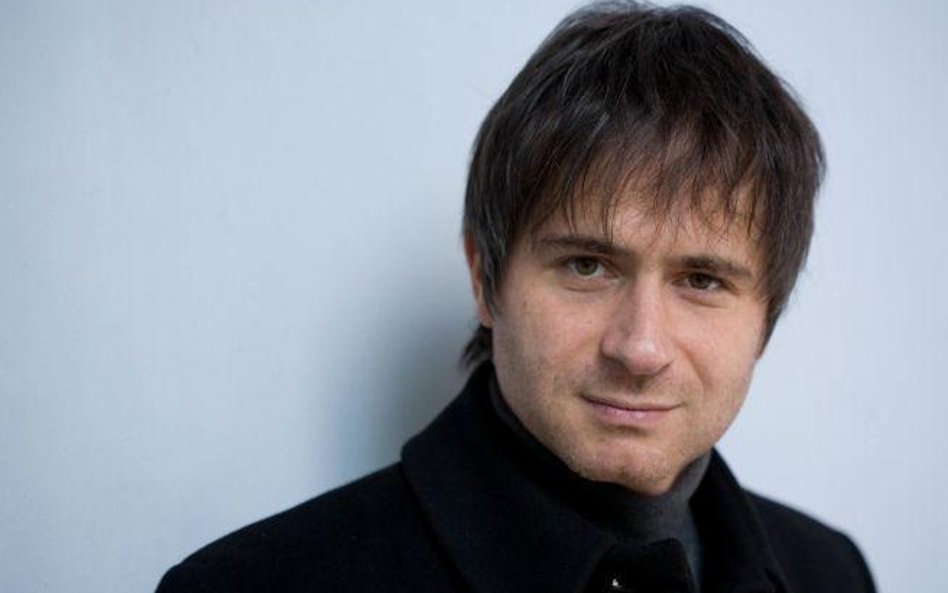
Piotr Anderszewskiwas born on 4 April 1969 in Warsaw, Poland. His father was Polish and his mother Hungarian. Anderszewski spent his childhood in a multilingual, multicultural environment: his family lived in Poland and also abroad. During his youth he spent time in the United States (in Los Angeles) and in France (in Lyon and Strasbourg).
He began formal piano studies at age six. He later attended music schools in several countries, including:
- The conservatory in Lyon, France.
- The conservatory in Strasbourg, France.
- The Academy of Music in Warsaw, Poland.
- The University of Southern California(in Los Angeles, USA).
- He also took part in master classes in Italy with pianistsFou Ts’ong, Murray Perahiaand Leon Fleisher.
Through this education beginning in childhood and continuing in France, Poland and the U.S., Anderszewski built his musical foundation from a very early age.
| Category | Verified Information |
| Full Name | Piotr Anderszewski |
| Date of Birth | 4 April 1969 |
| Place of Birth | Warsaw, Poland |
| National Background | Father Polish, mother Hungarian |
| Childhood Environment | Raised in a multilingual and multicultural environment |
| Countries Lived In | Poland, United States (Los Angeles), France (Lyon, Strasbourg) |
| Age When Piano Studies Began | Six years old |
| Conservatory | Conservatory in Lyon, France |
| Higher Music Education | Academy of Music in Warsaw, Poland |
| University Studies | University of Southern California, Los Angeles |
| Master Classes With | Fou Ts’ong, Murray Perahia, Leon Fleisher |
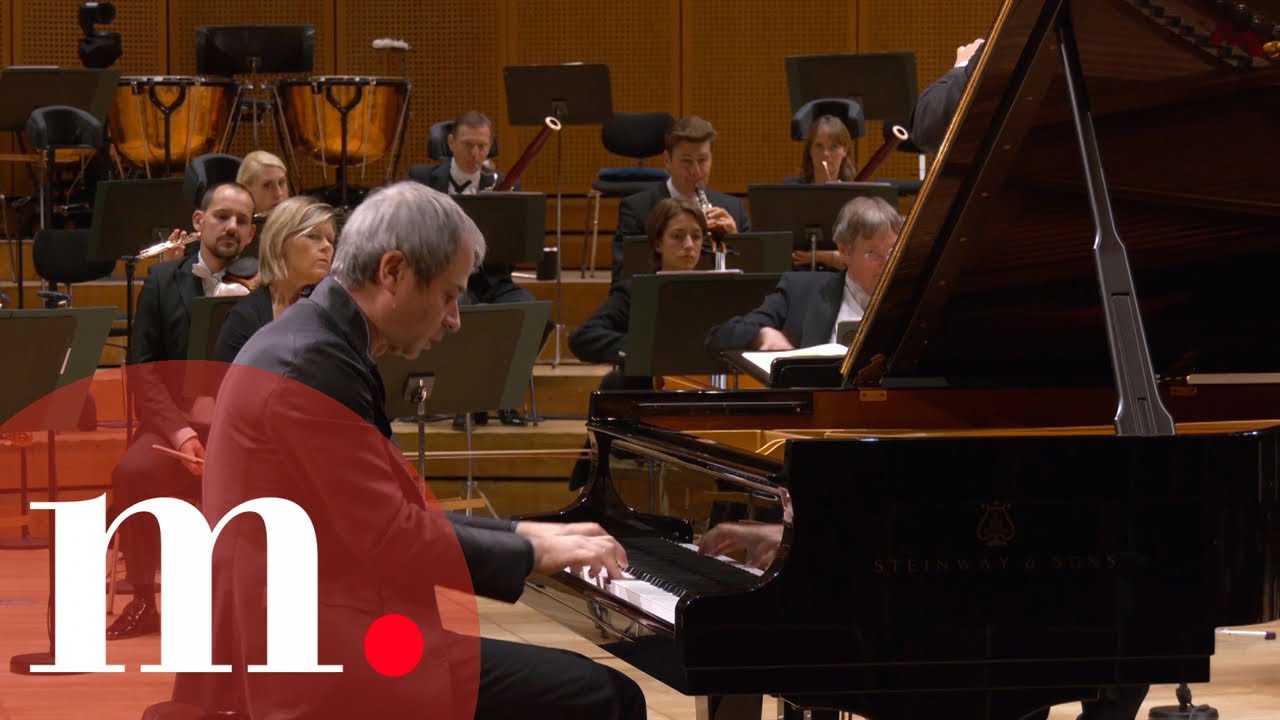
Jakub Hrůša with Piotr Anderszewski - Mozart: Piano Concerto No. 17 in G Major, K. 453
Career Beginnings
Piotr Anderszewski first attracted international attention in 1990 at the Leeds International Piano Competition, where his performance of Beethoven’s Diabelli Variations in the semi-finals made a strong impression even though he did not win a prize. Soon after Leeds, he made his London debut at Wigmore Hall, beginning a steady stream of recital engagements.
In the mid-1990s he toured extensively as a chamber musician notably with violinist Viktoria Mullova and made his first commercial recordings: a 1995 album of Debussy, Janáček and Prokofiev sonatas, and a 1997 Brahms sonatas disc both with Mullova.
Returning to Poland, Anderszewski launched his solo recording career: his 1996 debut album works by Bach, Beethoven and Webern on the Accord label earned Poland’s Fryderyk Award as best recording of the year. By the late 1990s he was giving solo recitals across Europe and building a reputation for deep, thoughtful interpretations of core repertoire.
International Breakthrough
In 2000 Anderszewski signed exclusively with Virgin Classics now Warner Classics, marking the start of his global recording career. His first Virgin recording was Beethoven’s Diabelli Variations 2001, which won critical acclaim in Europe.
He soon followed with award-winning albums of Bach and Schumann: a 2004 disc of Bach’s Partitas Nos. 1, 3 and 6 earned a Grammy nomination, and his 2011 album of Schumann piano works won the BBC Music Magazine Recording of the Year.
His recordings of Polish composer Karol Szymanowski’s solo piano musicwon the 2006 Gramophone Award for Best Instrumental Album after a prior Grammy nomination. These successes cemented his reputation. By the mid-2000s Anderszewski was regularly appearing on concert stages worldwide, and major prizes soon followed.
Major Performances & Concert Highlights
Anderszewski has performed at the world’s leading concert halls and festivals. His solo recitals have taken place at venues such as London’s Barbican Centreand Wigmore Hall, Vienna’s Konzerthaus, New York’s Carnegie Hall, Munich’s Herkulessaal and Amsterdam’s Concertgebouw.
He has also appeared at major festivals for example the Edinburgh International Festival and Warsaw’s Chopin Festival Ascona are among those featuring his appearances.
His programs often focus intensively on a composer or set of works: for instance, a London recital in 2023 presented Bach’s Partita No. 6, selected Szymanowski mazurkas and Webern’s Variations, followed without pause by Beethoven’s late Sonata Op. 110.
Anderszewski’s approach to concert programming is meticulous and rigorous, and critics have noted the explosive power and precision of his playing in these high-profile performances.
On the orchestral stage he has been a soloist in landmark projects: he performed a cycle of Beethoven piano concertos with the Münchener Philharmoniker in 1996 and played Szymanowski’s Sinfonia Concertante in Paris under Charles Dutoit in 2001.
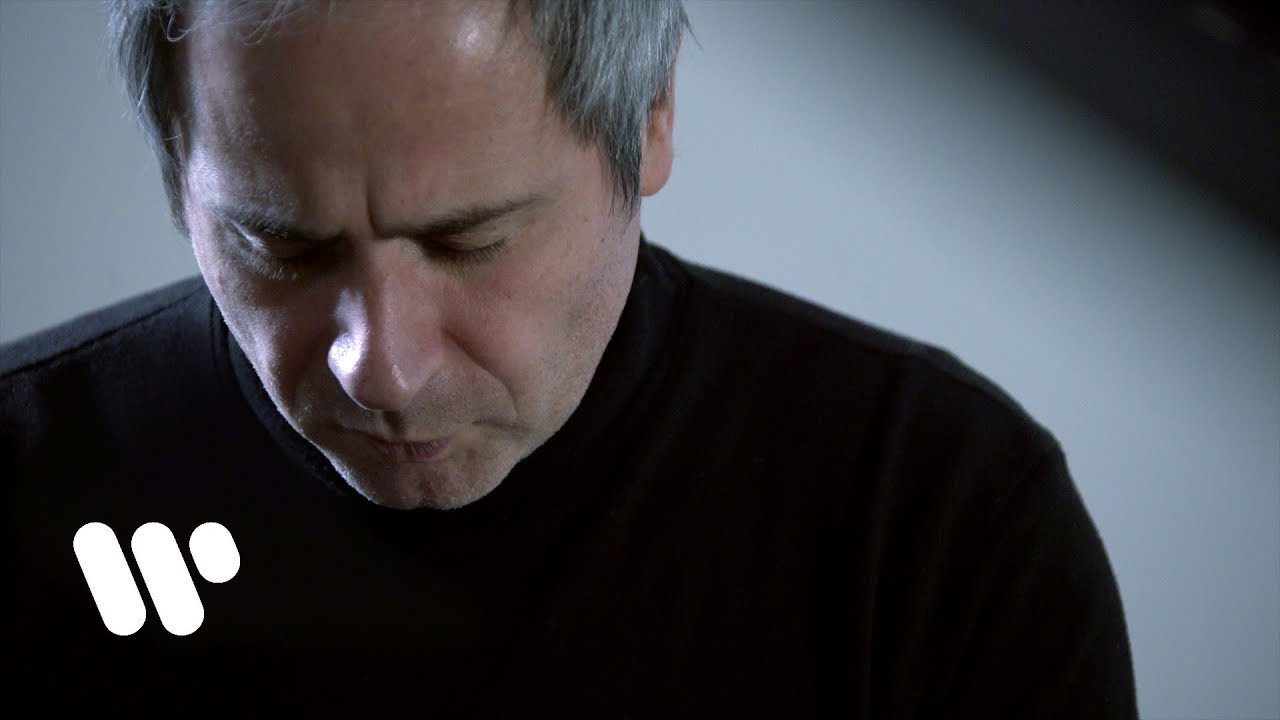
Piotr Anderszewski – J.S. Bach: Well-Tempered Clavier, Book 2: Prelude and Fugue No. 12 in F Minor
Recordings & Discography
| Recording | Year / Label |
| Beethoven – Diabelli Variations | 2001, Virgin Classics |
| Bach – Partitas Nos. 1, 3 & 6 | 2004 |
| Chopin – Ballades, Mazurkas, Polonaises | 2003 |
| Schumann – Late Piano Works | 2011 |
| Bach – English Suites Nos. 1, 3 & 5 | 2014 |
| Bach – Well-Tempered Clavier Book II | 2021 |
| Bartók, Janáček & Szymanowski | 2024, Warner Classics |
Anderszewski’s discography spans solo piano works, concertos and chamber music. His catalog of solo piano recordings emphasizes Classical and Romantic repertoire as well as 20th-century Polish and Central European composers.
Notable solo albums include Beethoven’s Diabelli Variations 2001 and a survey of Chopin’s Ballades, Mazurkas and Polonaises 2003, both of which drew wide praise.
He also recorded Bach’s Partitas Nos. 1, 3 and 6 2004 and Schumann’s late piano works album released 2011, each earning award recognition.
In 2014 he released a disc of Bach’s English Suites Nos. 1, 3 and 5 to critical acclaim, and in 2021 he issued a specially curated selection of Bach’s Well-Tempered Clavier Book II.
His most recent solo album 2024 Warner Classics presents works by Bartók, Szymanowski and Janáček, continuing his long-standing interest in 20th-century Central European music.
In the chamber and concerto arenas, Anderszewski has an equally distinguished recording profile. He began with violin-piano sonata recordings with Mullovaas noted above, then moved into concerto projects: Mozart’s Piano Concertos Nos. 25 and 27 recorded in 2018 with the Chamber Orchestra of Europe and Beethoven’s Piano Concerto No. 1 recorded with the Deutsche Kammerphilharmonie Bremen.
He has also explored chamber repertoire, such as the complete Brahms violin sonatas with Mullova and works for piano quintet: notably a 2018 recording of Shostakovich’s Piano Quintet with the Belcea Quartet.
Throughout his recordings, Anderszewski is praised for clarity of touch and structural insight, qualities that have become hallmarks of his interpretive style.
Awards & Professional Recognition
| Award / Honor | Details |
| Gilmore Artist Award | Awarded in 2002 |
| Royal Philharmonic Society Award | Instrumentalist Award, 2001 |
| Karol Szymanowski Award | Received in 1999 |
| Gramophone Award | Best Instrumental Album for Szymanowski recordings |
| BBC Music Magazine Award | Recording of the Year for Schumann album (2011) |
| Grammy Nominations | Bach Partitas and Szymanowski recordings |
| National Honor | Knight’s Cross of the Order of Polonia Restituta (2015) |
Anderszewski’s artistry has been recognized by many of the music world’s top honors. In 2002 he was named a Gilmore Artist one of only a handful of pianists to receive this prestigious quadrennial award.
Earlier, in 2001 he won the Royal Philharmonic Society’s Instrumentalist Award for Best Instrumentalist. He also received Poland’s Karol Szymanowski Award in 1999 and in recognition of his cultural contributions was decorated with the Knight’s Cross of the Order of Polonia Restituta by the Polish government in 2015.
His recordings have earned major industry prizes as well: for example, he won Gramophone Awards for his Bach recordings English Suites 2015 and Well-Tempered Clavier Book II 2021 and the BBC Music Magazine’s Recording of the Year for the 2011 Schumann disc.
His albums have also garnered multiple Grammy nominations for Bach Partitas in 2001 and Szymanowski in 2005 and other distinctions such as France’s Choc du Monde de la Musique and Germany’s ECHO Klassik the latter awarded to his Diabelli Variations disc.
Collaborations With Orchestras & Conductors
As a concerto soloist, Anderszewski has worked with many leading orchestras and conductors. He has appeared with the world’s major symphony orchestras for instance the Berlin Philharmonicand Staatskapelle Berlin; the London Symphonyand Philharmonia orchestras; the Munich Philharmonic; the Concertgebouw Orchestra; the symphony orchestras of Boston, Chicago and Los Angeles; and Tokyo’s NHK Symphony Orchestra.
He frequently serves as both soloist and musical director when performing concertos: his recordings often feature him conducting from the keyboard.
Notably, he has recorded Mozart piano concertos eg. K.467 and K.491 as conductor-soloist with ensembles such as the Chamber Orchestra of Europeand the Scottish Chamber Orchestra, and he led the Deutsche Kammerphilharmonie Bremen in a recording of Beethoven’s Piano Concerto No. 1.
In live performance he has collaborated with eminent conductors as well; he appeared under Charles Dutoitfor Szymanowski’s Sinfonia Concertante in Paris 2001.
These collaborations demonstrate Anderszewski’s versatility: he is equally at home as a solo recitalist, a chamber partner, or a concerto soloist at the helm of the ensemble.
Recent Career Activity
Piotr Anderszewski continues to maintain a busy international career. In recent seasons he has given acclaimed recitals worldwide.
In late 2025 he toured Australia presented by Musica Viva, performing programs of Brahms and Bach that received enthusiastic reviews.
He has also remained in demand at Europe’s concert halls and festivals: upcoming engagements include solo recitals at London’s Wigmore Hall, the Philharmonie de Paris, Amsterdam’s Muziekgebouw and Zurich’s Tonhalle, as well as appearances at the Ascona and Edinburgh international festivals.
In 2024 he released a new solo album on Warner Classics featuring piano works by Bartók, Janáček and Szymanowski.
Looking ahead, Anderszewski is preparing an album of late piano works by Johannes Brahms scheduled for January 2026.
He has also ventured into film and writing: his recent Warsaw Is My Name documentary has been released, and he is reportedly working on a book about his experiences as a musician. Through recording, performance and now writing, Anderszewski continues to share his deep musical insights with audiences worldwide.
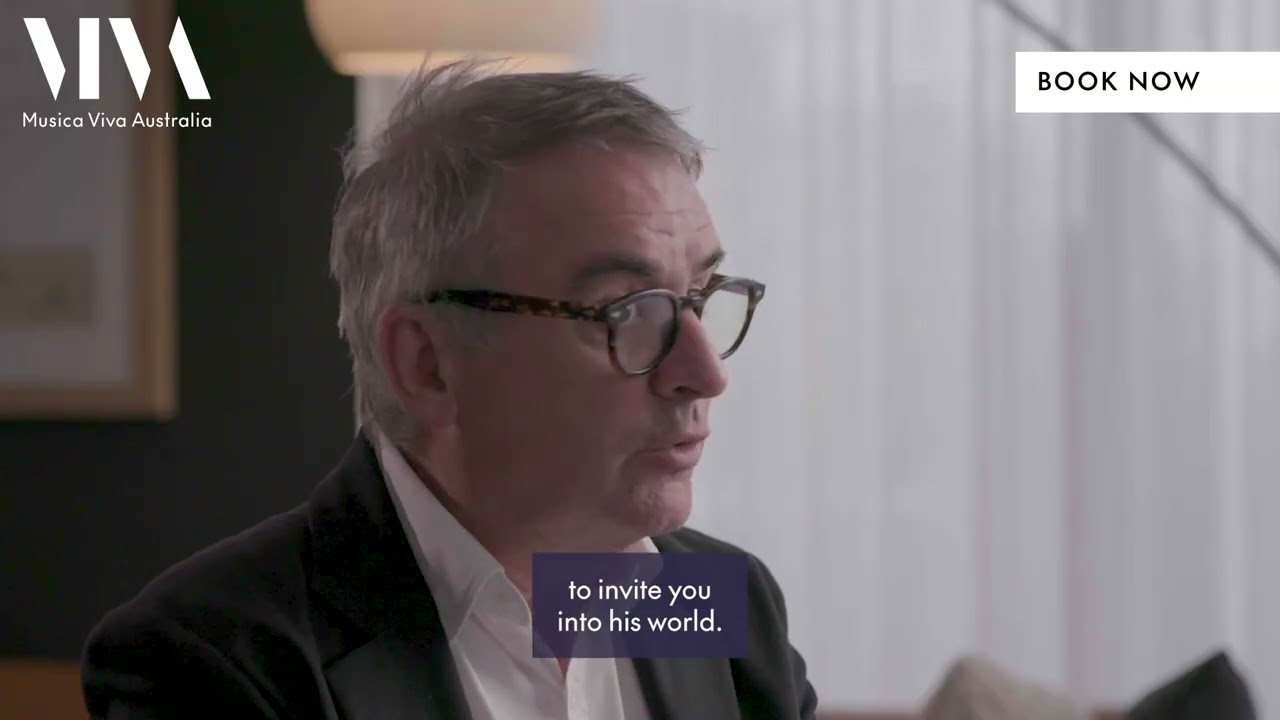
Piotr Anderszewski | Australian Tour | 10 to 23 November 2025
Performance (2025–2026)
- Late 2025 – Global recital tours: Andersenwski undertook an extensive international tour, giving solo recitals across China (Shanghai, Shenzhen) and throughout Australia (Sydney, Adelaide, Perth, Brisbane, Melbourne, etc.).
- 27 Nov 2025 – Tokyo (Yomiuri Nippon SO): Soloist with the Yomiuri Nippon Symphony Orchestra in Tokyo, performing Bartók’s Piano Concerto No.3 under conductor Pietari Inkinen.
- 7 Dec 2025 – Lausanne (Salle Métropole): Solo recital in Switzerland featuring late Brahms Klavierstücke (Opp.116–119), Bach preludes/fugues and Beethoven’s Sonata Op.110.
- 31 Jan 2026 – Katowice (NOSPR Concert Hall): Solo recital in Poland (NOSPR) presenting Schubert’s Piano Sonata D.958 and a cycle of Brahms piano pieces (Fantasia Op.116; Intermezzi Opp.117–119).
- 2 Feb 2026 – Paris (Philharmonie de Paris): Solo recital titled A Musikalische Panorama, performing Schubert’s C-minor Sonata and Brahms’s late piano cycles at Paris’s Grande Salle Pierre Boulez.
- 13 Feb 2026 – Łódź (Łódź Philharmonic): Solo recital with Schubert’s C-minor Sonata D.958 and selections from Brahms’s Klavierstücke Op.116–119.
- 20–21 Feb 2026 – Stockholm (Berwaldhallen): Soloist in a Mozart concerto performance – Anderszewski played Mozart’s Piano Concerto No.24 in C minor (KV 491) with the Swedish Radio Symphony Orchestra under conductor Eun Sun Kim.
- 27 Feb 2026 – London (Wigmore Hall): Solo piano recital at Wigmore Hall (London) featuring Schubert’s Sonata in C minor D.958 and Brahms Intermezzi, demonstrating his mastery of complex late-Romantic repertoire.
- 6 Jun 2026 – London (Wigmore Hall): Accompanist to tenor Ian Bostridge in a Schumann song recital (Dichterliebe and Liederkreis) at the Wigmore Hall 125th Anniversary Festival.
- 1 Mar 2026 – Amsterdam (Concertgebouw): Featured recital “Brahms’ Later Works” in the Grote Zaal, with Schubert’sC-minor Sonata D.958 and a selection of Brahms’s late Klavierstücke (Opp.116–119).
- 16 & 19 Apr 2026 – Munich/Linz (Münchener Kammerorchester): As guest soloist with the Munich Chamber Orchestra, performed Mozart’s Piano Concerto No.24 in C minor (KV 491) in Munich’s Prinzregententheater and at Linz’s Brucknerhaus.
Piotr Anderszewski: Piano Style And Interpretation
Technical Approach And Piano Control
Piotr Anderszewski’s piano technique combines extraordinary strength with fine control. He delivers powerful climaxes with muscular precision while maintaining complete command down to the softest pianissimo. Reviewers have noted that even his loudest chords sound deliberately shaped – as if sculpted with a hammer-and-chisel impact – but every attack is carefully prepared by measured finger work.
In fast or complex passages, Anderszewski’s fingers remain crisply articulated, and in slower passages each note is placed with the same exacting intent. This balance of power and finesse means that even virtuosic runs or dense textures emerge clearly; he never lets technical display overshadow musical coherence. In short, his control of the keyboard is both robust and refined, making every nuance audible without strain or excess.
Tone, Touch, And Sound Color
Anderszewski draws from the piano a remarkably broad palette of colors. At one extreme his touch can be feather-light and cushioned, yielding a sweet, singing tone that glows warmly in lyrical passages. At the other extreme his forte tone is bold and incisive, with thunderous bass and sharp high notes that still ring clearly.
Critics often describe his soft playing as having a “crystalline”clarity – even the quietest notes sparkle distinctly as if each were individually chiseled. He also conjures seductive and varied colors in Romantic and modern repertoire: for example, in Szymanowski mazurkas he produces a wide range of lush, almost orchestral timbres, shifting seamlessly from dark, brooding bass to delicate, elegiac treble.
Importantly, he exploits the modern concert grand fully yet avoids blurring lines: pedaling and resonance are used judiciously so that textures stay transparent. Overall, Anderszewski’s touch is exceptionally sensitive – capable of yielding both a velvety, intimate sound and a bright, sustained tone – giving his interpretations a flexible, almost vocal quality.
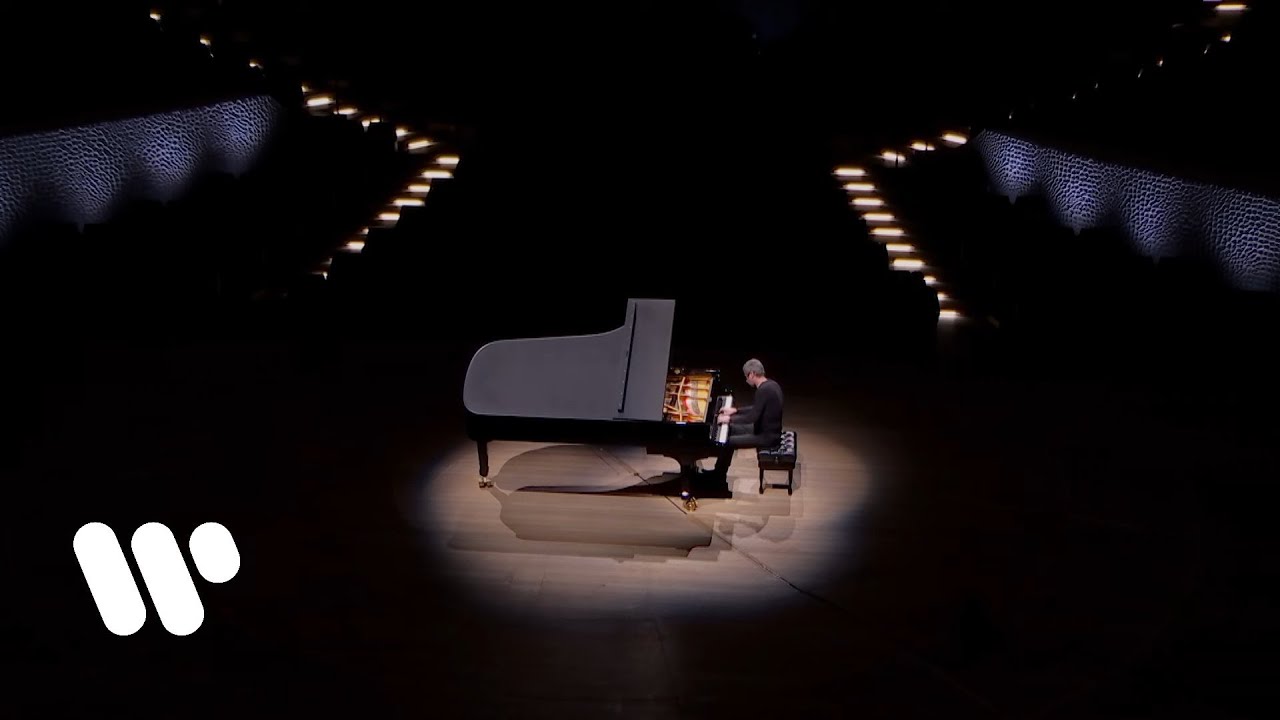
Piotr Anderszewski plays J.S. Bach: Well-Tempered Clavier, Book 2: Prelude No. 12 in F Minor
Rhythm, Phrasing, And Structural Clarity
A defining feature of Anderszewski’s style is rhythmic precision and structural clarity. He rarely indulges in gratuitous rubato: instead, the pacing of his performances tends to be deliberate and steady, allowing the inner logic of each work to emerge clearly. In Baroque and Classical pieces, for instance, he articulates every beat so crisply that each fugue entrance or theme statement is unmistakable.
Slight tempo adjustments, when they occur, serve expressive purpose – such as a subtle delay at a phrase’s end to heighten expectation – rather than drawing attention to themselves. His phrasing emphasizes musical architecture: motives are laid out transparently, and dialogues within a piece (for example, a singer-like melody against a staccato accompaniment) are clearly differentiated.
Reviewers note that he often accents “question-and-answer” figures or balances legato lines against crisp chords, making the form of each movement easy to follow. In effect, Anderszewski treats each phrase as an organic part of a whole, so that listeners can effortlessly track how themes unfold and transform. This disciplined attention to rhythm and phrase structure gives his readings a feeling of inevitability and coherence.
Interpretative Approach To Repertoire
Anderszewski adapts his interpretative style carefully to the character of each composer and era. In Baroque works (such as Bach), he prefers a clean and balanced approach: voices in counterpoint are voiced evenly, ornamentation is tasteful rather than showy, and he resists the temptation to add Romantic-era expressiveness.
In practice this means he exploits the full dynamic range of the modern piano while maintaining the rhetoric of early music – for example, using sustain sparingly so that polyphony remains transparent. In Classical works (like Mozart or early Beethoven), his performances are often described as forthright and poised.
A reviewer noted that even in Mozart’s stormiest fantasia passages, Anderszewski’s touch remained soft and pureand he never broke the piece’s tension – he kept a high drama intact through controlled, seamless phrasing. In Romantic repertoire (Schumann, Brahms, Chopin), he typically shifts toward introspection and lyricism.
His Romantic interpretations have been praised for their depth and subtlety: critics highlight that he brings out hidden contrasts and emotional weight – for instance, his renditions of Schumann’s late piano works are marked by a tender but stern sensitivity, emphasizing their soulful, often somber character.
In 20th-century and modern pieces, Anderszewski is equally thoughtful. In folk-infused works by Bartók or Szymanowski, he draws out rhythmic drive and native color: the bass may rumble with earthiness under delicate mazurka melodies, capturing folk dance roots with a restrained intensity.
In more avant-garde pieces (Webern, Janáček), he applies the same clarity that served him in Bach: every note is defined, accents are crisp, and dynamics are carefully shaded. For example, in Webern’s pointillistic music he reveals astonishing detail – even hushed lines sparkle, making the serial textures lucid rather than dissonant noise.
Conversely, in intensely emotional modern works, he does not shy away from passion: a Beethoven late sonata under his hands has been described as “raw and astonishing,”its wild energies fully unleashed yet always channeled through his disciplined technique. Overall, his interpretive approach is to respect each composer’s idiom: he never imposes one style on all music. Instead, he shapes his sound and phrasing to each score, whether that means marrying classical balance to 18th-century pieces or bringing a probing intensity to Romantic and modern works.
Balance Between Precision And Expression
Across Anderszewski’s performances, there is a striking balance between mechanical precision and expressive intensity. Many observers comment that his meticulous accuracy – every note in tune, every chord exactly in balance – might seem like a recipe for dryness, yet in fact it reinforces the music’s impact.
Because nothing in his playing sounds accidental, even the most spontaneous passages have a feeling of inevitability. Listeners often remark on the “complete” quality of his interpretations: the performance seems so thoroughly realized that one gets a sense of the composer’s intent laid bare.
His exacting control actually amplifies emotion. For instance, a very soft phrase rendered with crystal-clear detail can feel more emotionally charged precisely because we hear every nuance; similarly, bold climaxes are more effective because of the controlled buildup that leads to them.
In effect, Anderszewski treats technical precision as a means to an expressive end. The result is that structure and feeling are always in harmony – his intellect and his passion serve each other. In critical terms, his playing is frequently described as achieving “perfection” in a musical sense: not sterile perfection, but an utter clarity of purpose that sounds at once inevitable and deeply felt.
Critical Observations And Musical Identity
Reviewers consistently emphasize Anderszewski’s analytical, introspective musical personality. His performances are rarely flashy – he eschews grand gestures and concentrates intensely on the music itself. This has led critics to portray him as an “understated” yet deeply probing artist.
A recurring observation is that he seems driven by the internal logic of the score above all else; his recitals are often noted for their intellectual depth. Across very different programs – Baroque suites, Romantic cycles, modern miniatures – his distinctive voice comes through: unwavering clarity of line, thoughtful phrasing, and a controlled but expressive tone.
Even as he explores the expressive range of each piece, there is a unity to his musical identity. In short, Anderszewski is recognized for a rare combination of qualities: a temperament that is sober and concentrated, and an artistry that is both exacting and richly communicative. Many consider him among the most thoughtful and authoritative pianists of his generation, consistently delivering performances where precision and musical insight go hand in hand.
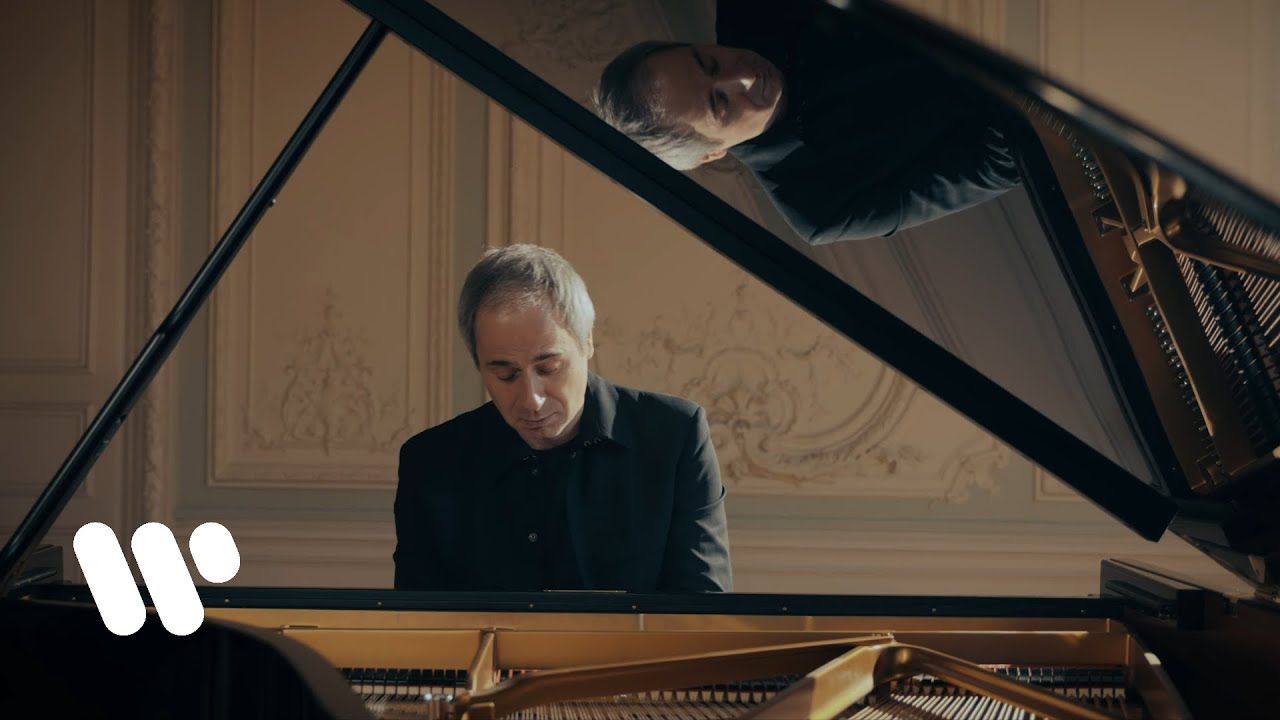
Piotr Anderszewski plays Szymanowski: 20 Mazurkas Op. 50, M56: No. 3, Moderato
Piotr Anderszewski Net Worth
As of 2026, reliable sources have not published an estimate of Piotr Anderszewski’s net worth. Anderszewski is a Polish classical pianist and composer who earns income from his international touring and recording career.
He has given recitals at major venues such as London’s Barbican Centre, the Royal Festival Hall, and New York’s Carnegie Hall, and he has released multiple prize-winning albums on leading classical labels. He has won prestigious awards, including the Gilmore Artist Award, and earned Grammy nominations for his recordings. These achievements reflect his success, but no public figure for his total wealth is available.
FAQs
1. Who Is Piotr Anderszewski?
Piotr Anderszewski is a Polish classical pianist internationally known for his interpretations of Bach, Beethoven, Schumann, and Szymanowski. He is widely respected for his analytical clarity and structural depth.
2. What Is Piotr Anderszewski Famous For?
Piotr Anderszewski is best known for his performances and recordings of Bach’s keyboard works and Beethoven’s Diabelli Variations. He gained international recognition after the 1990 Leeds International Piano Competition.
3. Has Piotr Anderszewski Won Any Major Awards?
Yes, Piotr Anderszewski has received major honors including the Gilmore Artist Award and multiple Gramophone Awards. His recordings have also earned Grammy nominations and BBC Music Magazine awards.
4. What Are Piotr Anderszewski’s Most Important Recordings?
His most notable recordings include Bach’s Partitas, Beethoven’s Diabelli Variations, Schumann’s late piano works, and solo piano music by Karol Szymanowski. These recordings are frequently cited for their clarity and interpretive insight.
5. Is Piotr Anderszewski Still Performing?
Yes, Piotr Anderszewski remains an active international performer. He continues to give solo recitals, concerto performances, and release new recordings through major classical labels.