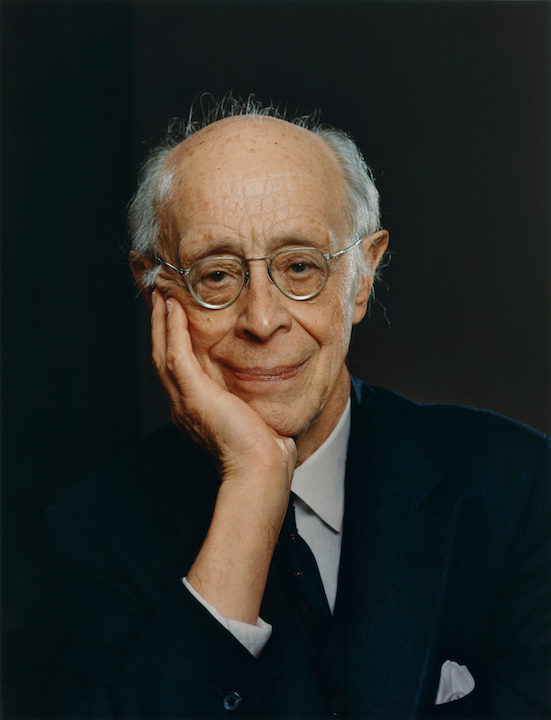
Birth And Family Background
Born and family:Rudolf Serkinwas born on March 28, 1903, in the town of Eger, Bohemia (then part of the Austro-Hungarian Empire; now Cheb, Czech Republic). He was one of eight children in a Russian-Jewish family.
His parents were Mordko Serkin (a Russian basso, cantor, and merchant) and Augusta (Schargel) Serkin (a homemaker). His father taught all his children music (piano and violin) from a young age, and Rudolf showed an early preference for the piano.
Early childhood environment:Serkin’s family moved in musical circles. He was raised in a home where music was important: his father, having been a performer himself, ensured his children learned instruments, and Rudolf grew up immersed in this musical upbringing. (This nurturing home environment helped lay the foundation for his later studies.)
Music Education
First studies (age 4–8):Serkin began formal piano study at about four years old. His first teacher was Camilla Taussig. Under her tutelage he made rapid progress; by age five or six he gave his first public piano recital in Franzensbad, near his hometown.
Advanced training in Vienna (age 9+):At age nine, after impressing the celebrated pianist Alfred Grünfeld, Serkin’s family sent him to Vienna for advanced musical training. In Vienna he studied piano with the teacher Richard Robert. During this period he also studied composition and theory: his teachers included Joseph Marx(composition) and Arnold Schoenberg(harmony and counterpoint). (He did not attend a standard academic school; all his education at this time was centered on music.)
Influences:Growing up in Vienna exposed Serkin to a rich cultural milieu. He was taken into the circle of patrons and intellectuals around Eugenia Schwarzwald, where he encountered many leading artists and thinkers of the era. These early experiences broadened his artistic outlook alongside his formal studies.
| Aspect | Details |
| Full Name | Rudolf Serkin |
| Date of Birth | March 28, 1903 |
| Place of Birth | Eger, Bohemia (now Cheb, Czech Republic) |
| Family Background | Born into a Russian-Jewish family; one of eight children |
| Father | Mordko Serkin, a Russian basso, cantor, and merchant |
| Mother | Augusta (Schargel) Serkin, homemaker |
| Early Musical Environment | Raised in a music-focused household where all children were taught instruments |
| First Instrument | Piano (showed early preference) |
| First Piano Teacher | Camilla Taussig |
| First Public Performance | Performed publicly by age five or six in Franzensbad |
| Advanced Training Location | Vienna |
| Piano Teacher in Vienna | Richard Robert |
| Composition & Theory Teachers | Joseph Marx and Arnold Schoenberg |
| Formal Schooling | Did not attend standard academic school; education focused entirely on music |

Rudolf Serkin plays Beethoven - Piano Sonatas No. 30, 31 & 32 (1987)
Career Beginnings
Rudolf Serkin’s musical career began extraordinarily early. He gave his orchestral debut in Vienna at age twelve, performing with one of the city’s leading ensembles.
Throughout the 1920s he built his reputation in Europe by touring widely as both a solo recitalist and as a chamber musician with the distinguished Busch ensemble.
During this period he was closely associated with violinist Adolf Busch’schamber group and the Busch Quartet.
By the early 1930s Serkin was based in Basel, Switzerland, having left Berlin in 1933 amid the political turmoil of the time.
International Breakthrough
Serkin’s international breakthrough came with his arrival in the United States. He first performed in America in 1933 at the Smithsonian’s Coolidge Festival in Washington, D.C., playing chamber music with Busch’s ensemble.
In 1936 he launched a full solo career in the U.S. by appearing with the New York Philharmonic under Arturo Toscanini, performing Beethoven’s Fourth Piano Concerto to glowing reviews.
The following year he gave his New York recital debut at Carnegie Hall, quickly gaining acclaim. He emigrated permanently to the U.S. in 1939 and soon joined the piano faculty of the Curtis Institute of Music in Philadelphia.
In 1951 he co-founded the Marlboro Music Festival in Vermont (with Busch and others), a summer chamber-music school and concert series that became a hallmark of American chamber music.
Major Performances & Concert Highlights
| Year / Period | Achievement |
| 1944 | Recorded Beethoven Piano Concerto No. 4 with Toscanini |
| 1951 | Co-founded the Marlboro Music Festival |
| 1967 | Marked 100th appearance with the New York Philharmonic |
| 1972 | Performed Brahms Piano Concerto No. 1 for NY Philharmonic milestone |
| 1986 | Celebrated 50-year association with the New York Philharmonic |
| 1987 | Final Carnegie Hall recital |
| 1989 | Final public performances before retirement |
Serkin maintained a remarkably active concert schedule through the mid-20th century. He became known for his annual New York recitals, famously programming a Beethoven piano sonata at every Carnegie Hall recital for more than fifty years.
His repertoire spanned Bach, Mozart, Schubert and Brahms, but he remained best known for his Beethoven interpretations.
A milestone came in March 1972 when he celebrated his 100th appearance with the New York Philharmonic by performing Brahms’s Piano Concerto No. 1. The orchestra honored him as an honorary member alongside composers like Copland and Stravinsky.
He continued performing around the world, appearing at the major concert halls of Europe, Asia and the Americas throughout the 1960s and ’70s. In 1986 he marked fifty years as a guest artist of the New York Philharmonic, underscoring his long-standing relationship with that orchestra.
Recordings & Discography
Serkin left behind an extensive discography spanning four decades. His first recordings date to the mid-1940s, including a 1944 performance of Beethoven’s Piano Concerto No. 4 with Arturo Toscanini conducting the NBC Symphony.
Most of his recordings were issued on Columbia Masterworks: these include numerous Beethoven works (sonatas, concertos and chamber pieces) as well as major Austro-German repertoire.
In the 1950s he became the first American pianist to record Max Reger’s Piano Concerto (with conductor Eugene Ormandy and the Philadelphia Orchestra).
Serkin also recorded chamber music with leading artists – for example, his celebrated Brahms cello sonata recordings with Pablo Casals in the 1950s and later with Mstislav Rostropovich. The Rostropovich/Serkin Brahms album won a Grammy Award for Best Chamber Music Performance (1984).
In the 1970s he completed a cycle of all five Beethoven piano concertos with Seiji Ozawa and the Boston Symphony Orchestra.
In the early 1980s he recorded for Deutsche Grammophon and Telarc, including what would be his final albums in the mid-1980s.
Awards & Professional Recognition
| Category | Details |
| Presidential Medal of Freedom | Awarded in 1963 |
| Ernst von Siemens Music Prize | Received in 1978 |
| Kennedy Center Honoree | Honored in 1981 |
| Grammy Award | 1984 (Brahms cello sonatas with Rostropovich) |
| National Medal of Arts | Awarded in 1988 |
| Academic Honors | Member of American Academy of Arts and Sciences |
| Orchestra Recognition | Named honorary member of the New York Philharmonic |
Serkin received many of the highest honors in classical music. He was awarded the Presidential Medal of Freedom (1963) and the National Medal of Arts (1988) in recognition of his lifetime achievement.
In 1981 he was named a Kennedy Center Honoree for his contributions to American performing arts. He earned a Grammy Award in 1984 (for the Brahms cello sonatas with Rostropovich) and was the recipient of the Ernst von Siemens Music Prize in 1978.
Scholarly and artistic institutions also honored him: he was elected to the American Academy of Arts and Sciences in 1960 and to the American Philosophical Society in 1983.
Symphony orchestras acknowledged his stature as well – for instance, the New York Philharmonic named him an honorary member in the 1970s. Through these accolades, Serkin’s authority as one of the 20th century’s leading pianistswas firmly established.
Collaborations With Orchestras & Conductors
Throughout his career Serkin appeared with virtually all the major orchestras of his era and worked with many of the greatest conductors.
He performed and recorded with Arturo Toscanini(including the renowned Beethoven concerto recording with the NBC Symphony), and collaborated frequently with conductor Eugene Ormandyand the Philadelphia Orchestra on works such as the Brahms Piano Concerto.
In the 1970s he recorded Beethoven’s concertos with the Boston Symphony under Seiji Ozawa. He also appeared with European orchestras; archival recordings document performances of Beethoven programs with the Chicago Symphony under Claudio Abbadoin the early 1980s.
Serkin was equally distinguished in chamber music: in his early years he partnered with his mentor Adolf Buschand later formed a celebrated duo with cellist Pablo Casals.
His founding role at the Marlboro Music Festival fostered collaboration with leading chamber musicians and contributed to the careers of numerous younger artists.
Recent Career Activity
Serkin remained an active performer well into the 1980s. He made his final studio recordings in the mid-1980s, and in 1987 he gave his last Carnegie Hall recital, a program centered on Beethoven’s final piano sonatas.
He continued to tour internationally until 1989, when illness forced him to retire from performing.
After nearly seventy years on the concert stage, Serkin’s playing career ended, and he spent his final years teaching and mentoring the next generation. He passed away in 1991, leaving a legacy of high musical standards and interpretive depth that continues to influence pianists today.

Rudolf Serkin Plays Excerpt from Beethoven's "Waldstein" Sonata
Rudolf Serkin Performance Highlights
- 1936:US solo debut with the New York Philharmonic under Arturo Toscanini, performing Beethoven’s Piano Concerto No. 4.
- 1937:First New York City recital at Carnegie Hall – the beginning of dozens of appearances on that prestigious stage.
- Marlboro Festival (Vermont):Co-founded the Marlboro Music Festival in 1951 and appeared regularly in its chamber music programs.
- Beethoven repertoire:Recorded major works (e.g. Piano Concerto No. 4 in 1944 with Toscanini/NBC Symphony) and later performed Beethoven’s Emperor Concerto (No. 5)with the Chicago Symphony under Sir Georg Solti(1988).
- NY Philharmonic milestones:Marked his 100th appearance with the New York Philharmonic in 1967 and celebrated a 50-year association with that orchestra in 1986.
- Max Reger premiere (1959):First pianist to record Max Reger’s Piano Concerto (Op. 114) in the United States, with Eugene Ormandy and the Philadelphia Orchestra.
- International tours & collaborations:Performed worldwide (Europe, Asia, Americas) – one of his final concerts was in Shanghai – and served as guest soloist at Pablo Casals’ festivals.
- Late-career performances:Even in his mid-80s he remained active – e.g. Beethoven’s Piano Concerto No. 5 (1988, Chicago Symphony/Solti) and the Beethoven Choral Fantasy finale at Marlboro (1989).
Rudolf Serkin's Piano Playing Style And Interpretation
Technical Approach And Piano Control
Serkin’s pianism was underpinned by rigorous technique applied with restraint. He demanded precise control of every gesture, using his command of the keyboard to clarify musical texture rather than to dazzle with showy display. Students and observers note that he drilled difficult passages until they were mastered in detail, emphasizing agility and coordination.
His attacks were clean and well-articulated: fast scales, trills, and chords are executed with clarity, each fingered line fully under control. In ensemble playing and dense textures (for example in Brahms or Beethoven), Serkin maintained independent voice-leading, so that inner melodies and harmonies remain distinct even at high speed or volume.
Tone, Touch, And Sound Color
Serkin’s tonal palette was notable for its clarity and directness. He typically favored a bright, singing tone rather than a warm or velvety one, and he resisted overly sweet or lyrical color. His touch was often described as firm and assured, producing an articulate, projected sound.
This did not mean monochrome playing: by nuanced use of wrist weight, finger pressure, and the pedals, Serkin could vary color and texture. In slow, introspective passages he might achieve a supple legato and gentle glow, while in forte passages his tone could become forceful and penetrating.
At the same time, he avoided excessive pedal blurring: he employed pedaling like a sculptor shaping form, using it to blend harmony only when needed and keeping lines transparent otherwise. Critics sometimes found his forte tone austere or “hard,” but they also acknowledged that this steely quality gave his interpretations a sense of purpose and honesty.
Overall, Serkin’s touch was unadorned but expressive, drawing sound directly from the keys with minimal affectation and an organic sense of color that always served the music’s texture.
Rhythm, Phrasing, And Structural Clarity
Rhythmically, Serkin was marked by a strong, consistent pulse and logical phrasing. He avoided arbitrary tempo fluctuations or mannered rubato, using any shifts of speed to highlight musical form rather than whimsy. In performance his pacing often feels steady and onward-driving: fast movements propel forward with clarity, and slow movements unfold without tension or hesitation.
Phrase shaping was likewise purposeful. Serkin seemed to delineate each musical line with intent, bringing out key structural points. For example, he might slightly emphasize the downbeat of a new theme or articulate a phrase ending as if finishing a sentence – not to show off, but to make the architecture clear.
Inner voices were never lost in his phrasing; even in complex contrapuntal music (such as Beethoven or Bach transcriptions), he kept each strand balanced so the harmonic structure was obvious. Observers often highlight how Serkin’s interpretations reveal the large-scale design of a piece: climaxes and transitions emerge naturally because of the way he maintains continuity of rhythm and line.
Interpretative Approach To Repertoire
Serkin approached repertoire with deference to the composer’s intent and a focus on musical architecture. He was most associated with Classical and Romantic composers – especially Beethoven, Brahms, Mozart, and Schubert – where his style of clarity and integrity found natural application.
In Beethoven, he played with heroic rigor: big opening motives are assertive, developments are delineated with strength, and slow movements often convey calm dignity. Reviewers note that he seldom indulged in florid or sentimental interpretation; instead, he let thematic material and harmonic progression speak for themselves.
In Brahms, Serkin combined power and breadth: his performances have been described as majestic yet agile, with firm control even in the densest textures. He articulated thick chordal passages so that inner melodies emerge, giving Brahms’s music an almost symphonic clarity.
By contrast, in Schumann and other late-Romantic works, Serkin could sound warmer and more songlike, though still within a controlled framework.
Though less celebrated for modern music, Serkin also performed 20th-century works, especially in the chamber-music context. He commissioned or played compositions by living composers at Marlboro, treating them with the same seriousness he showed older repertoire.
Even if he was not enthusiastic about atonal styles, he presented contemporary pieces straightforwardly and granted them full weight. In all cases, Serkin’s interpretative rule was fidelity to the score: he believed any deviations from the written text must have a clear musical reason.
As a result, whether he played Haydn or Schoenberg, listeners remarked that Serkin’s performances sounded coherent and rooted in the composer’s vision.

Rudolf Serkin - Beethoven Sonata No. 31, Op. 110 - 3rd Movement
Balance Between Precision And Expression
Serkin’s balance of precision and musical expression was deliberate and nuanced. He never sacrificed accuracy for passion, nor emotion for technique. Instead, his exacting approach was itself an expressive statement: by knowing every detail of the score intimately, he allowed the music’s inherent drama to emerge without theatricality.
In performance, one feels the build-up of tension or the unfolding of a lyrical line not through flamboyant gesture but through the accumulation of carefully controlled elements. For instance, a swelling in dynamics or a pause will always be justified by the phrase structure rather than an arbitrary affectation.
Though his playing could appear reserved, deep feeling lies beneath that reserve. Listeners often describe Serkin’s best renditions as intimate or even warm in the slow movements and concluding sections – qualities that develop organically as the piece progresses.
Expression in his music was earned through structure and nuance: a precise articulation, combined with slight rubato or accent changes at pivotal moments, generated emotional impact.
Critical Observations And Musical Identity
Critics and historians have long noted certain defining traits of Serkin’s musical personality. He earned a reputation as a stern, intellectually rigorous pianist with a profound sense of duty to the composer. Writers frequently emphasize his honesty and lack of vanity: Serkin’s performances “refused to ingratiate” or indulge, focusing instead on conveying the score as written.
This made him especially revered in Beethoven and Brahms, and many regarded him as one of the leading interpreters of those composers. Phrases like austere, disciplined, and authoritativeoften appear in commentary on his playing.
At the same time, commentators have noted criticisms, particularly regarding tone. Some observers found his sound lean or unyielding; early critics sometimes described his tone as dry or harsh, lacking the plush color of more romantic artists.
However, these very traits became linked to Serkin’s identity as an artist of utmost integrity. Over time his style was understood as deliberately unadorned and purposeful – a style in which every detail has meaning.
In fact, Serkin’s name is often brought up in discussions of “musical architecture” because listeners perceive in his performances a clear structural vision, as though the piano itself were laying bare the skeleton of the composition.
When Rudolf Serkin Died, What Was His Net Worth?
At the time of his death, reliable sources had not published any estimate of Rudolf Serkin’s net worth. Serkin was a Bohemia-born Austrian-American classical pianist widely regarded as one of the greatest interpreters of Beethoven’s music. He toured globally as a solo artist and made numerous recordings from the 1940s through the 1980s.
He also taught several generations of pianists at the Curtis Institute of Music, serving as its director from 1968 to 1976. In 1951 he co-founded the Marlboro Music School and Festival in Vermont.
FAQs
1. Who Was Rudolf Serkin?
Rudolf Serkin was an Austrian-born American classical pianist, widely regarded as one of the greatest interpreters of Beethoven and Brahms. He was also a respected teacher and musical leader in the United States.
2. What Is Rudolf Serkin Best Known For?
Rudolf Serkin is best known for his authoritative performances of Beethoven’s piano works and his long association with the New York Philharmonic. He was also a co-founder of the Marlboro Music Festival.
3. Where Did Rudolf Serkin Study Music?
Rudolf Serkin studied piano in Vienna under Richard Robert and received training in composition and theory from Joseph Marx and Arnold Schoenberg. His education was entirely focused on music from an early age.
4. Did Rudolf Serkin Teach Music Professionally?
Yes, Rudolf Serkin taught at the Curtis Institute of Music in Philadelphia for many years and served as its director from 1968 to 1976. He was known for mentoring generations of prominent pianists.
5. When Did Rudolf Serkin Die, And What Was The Cause Of His Death?
Rudolf Serkin died on May 8, 1991, in Philadelphia, United States, at the age of 88. Public sources report that he died of natural causes following a period of declining health.