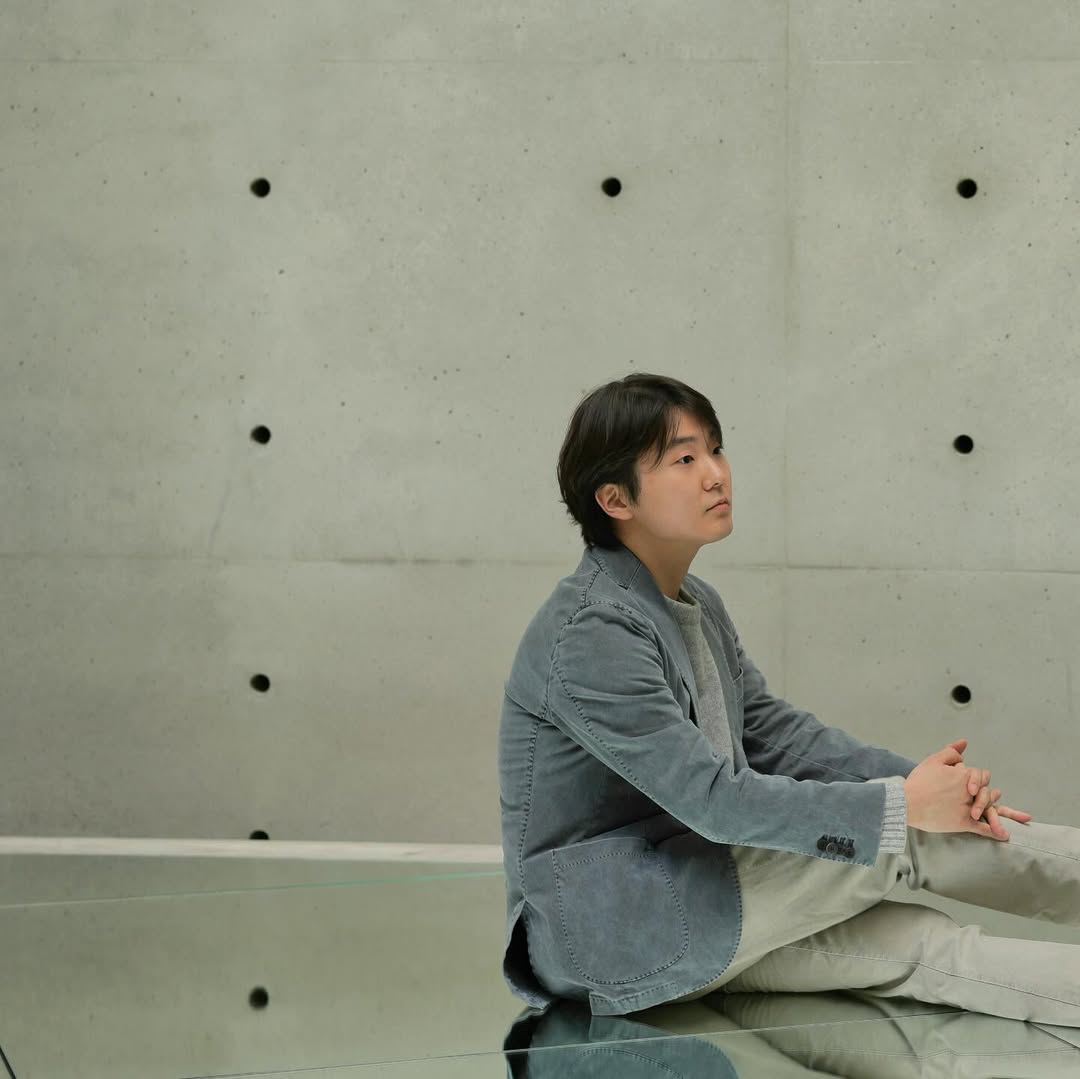
Seong-Jin Cho was born in Seoul, South Korea on 28 May 1994. He is the only child of his parents. His father worked in the construction division of a large conglomerate and his mother was a housewife. Neither parent was a musician, but both enjoyed classical music and filled their home with classical recordings.
Cho began music lessons at age six, studying both piano and violin at his parents’ behest. He later recalled that learning an instrument was “very normal” in Korea, and that although he also tried activities like sports and painting, “classical music was the only thing I enjoyed” as a child. His mother played piano as a hobby (often practicing pieces like Beethoven’s Für Elise), so the piano was a familiar presence in the home. He said that listening to many classical recordings at home made music feel “very natural” to him from an early age.
As a teenager, Cho attended Seoul Arts High Schoolin Seoul, a specialized secondary school for young musicians. He described the atmosphere there as highly competitive, with about fifty pianistsin his class each practicing three to four hours a day. He said this setting helped deepen his passion for music. Around this time he also gave his first public piano recital, at age eleven.
| Detail | Information |
| Full Name | Seong-Jin Cho |
| Date of Birth | May 28, 1994 |
| Nationality | South Korean |
| Profession | Classical Pianist |
| International Breakthrough | 1st Prize – International Chopin Piano Competition |
| Record Label | Deutsche Grammophon |
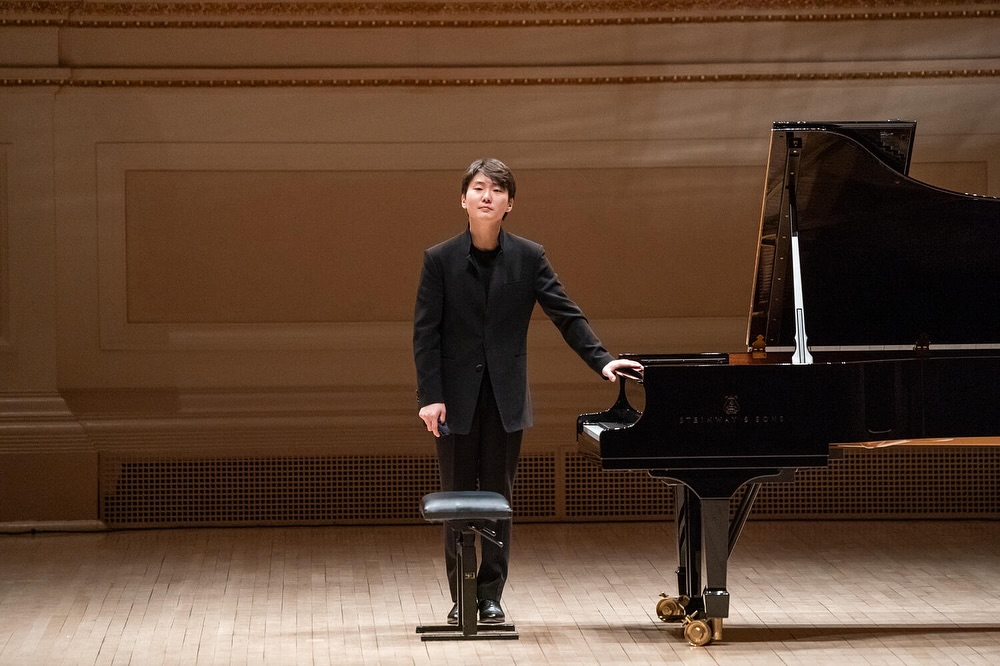
Career Beginnings
Seong-Jin Chofirst garnered international notice as a youth by winning top prizes at major piano competitions. In 2008 he took first prize at the International Chopin Competition for Young Pianists and in 2009 he won the Hamamatsu International Piano Competition. He continued his early success by earning the third prize at the 2011 International Tchaikovsky Competition and third prize at the 2014 Arthur RubinsteinPiano Competition.
These achievements helped launch his professional career. By the mid-2010s he was already in demand as a soloist, embarking on an extensive touring schedule and performing frequently with orchestras in Asia and Europe.
International Breakthrough
Cho’s international breakthrough came in October 2015 when he won first prize at the XVII International Chopin Piano Competition in Warsaw – the first Korean pianist to achieve that honor. The victory at this legendary competition brought him immediate worldwide attention.
His performance was recorded live and released soon after, and in early 2016 he signed an exclusive recording contract with the Deutsche Grammophon label. Following the Chopin Competition win, Cho’s career accelerated: he began touring globally and eventually built an annual concert schedule of well over 100 performances, appearing as both a recitalist and concerto soloist around the world.
Major Performances & Concert Highlights
Cho has given acclaimed solo recitals at many of the world’s leading concert halls. His appearances include New York’s Carnegie Hall, London’s Wigmore Hall, the Berlin Philharmonie, Vienna’s Musikverein, Amsterdam’s Concertgebouw and Tokyo’s Suntory Hall.
He is also a regular guest at major music festivals – such as Verbier, Salzburg and the BBC Proms – presenting programs that range from classical sonatas to Romantic character pieces. Critics have praised the elegance and color of his playing: The Wall Street Journaleven hailed Cho as “a master” with “an impressive variety of tonal colors and remarkable technique.”
In the concerto repertory Cho has had several notable debuts and special projects. In 2017 he made his debut with the Berlin Philharmonic under Sir Simon Rattle, performing Ravel’s Piano Concerto in G major.
In 2021 he gave the world premiere of a rediscovered Mozart piano piece (the Allegro in D major). In 2022 he stepped in on short notice to play Rachmaninoff’s Piano Concerto No.2 with the Vienna Philharmonic under Yannick Nézet-Séguin.
These performances, among others, have showcased Cho’s versatility and earned standing ovations from global audiences.
Recordings & Discography
| Album / Work | Composer |
| Chopin – Piano Concertos | Frédéric Chopin |
| Debussy – Piano Works | Claude Debussy |
| Mozart – Piano Works | Wolfgang A. Mozart |
Cho is an exclusive recording artist for Deutsche Grammophon, beginning in 2016. His first album was the live recording of his 2015 Chopin Competition performance. Subsequent studio albums have explored a wide range of repertoire.
For example, he has released an album of Chopin concertos (Chopin Piano Concerto No.1 and Ballades) recorded with the London Symphony Orchestra under Gianandrea Noseda, and a solo album of Debussy (Images, Children’s Corner, Suite Bergamasque).
He also recorded Mozart piano works – including Piano Concerto No.20 and two solo sonatas – with the Chamber Orchestra of Europe conducted by Yannick Nézet-Séguin. Other DG releases feature the album The Wanderer(a mix of Schubert, Liszt and Berg), Chopin’s Piano Concerto No.2 (again with the LSO), and a Handel Project(Handel Suites and Brahms Variations).
In 2025 he issued two Ravel albums: one presenting the composer’s complete solo piano works, and another featuring Ravel’s two piano concertos with the Boston Symphony under Andris Nelsons. Throughout his discography Cho has been noted for his insight into each composer’s style and the technical brilliance of his playing.
Awards & Professional Recognition
| Award / Recognition | Organization |
| First Prize / 2015 | International Chopin Piano Competition |
| International Chopin Piano Competition / After 2015 | Major orchestras & festivals |
| Exclusive Recording Artist / - | Deutsche Grammophon |
Cho’s career has been marked by numerous competition prizes and honors. Following his early wins, he has received some of the highest awards in classical music.
In 2023 Cho was awarded the prestigious Samsung Ho-Am Prize in the Arts, a Korean cultural honor. The award citation praised him as “a young, world-renowned performer who has brought a fresh and innovative spirit to classical music.”
In 2025 he was named Instrumentalist of the Year by Germany’s Opus Klassik awards. Earlier in his career he had already won first prizes at the Chopin Competition for Young Pianists (2008) and Hamamatsu (2009) as well as high prizes at the Tchaikovsky (2011) and Rubinstein (2014) competitions, culminating in the historic 2015 Chopin Competition victory.
These recognitions reflect his broad acclaim and influential status in the classical music world.
Collaborations With Orchestras & Conductors
Cho has collaborated with virtually all the world’s leading orchestras. His concerto partners include the Berlin and Vienna Philharmonic Orchestras, the Royal Concertgebouw Orchestra, Orchestre de Paris, London Symphony and London Philharmonic, Czech Philharmonic and many others, as well as major American orchestras (New York Philharmonic, Boston Symphony, Chicago Symphony, Philadelphia Orchestra, Cleveland Orchestra, etc.).
He has worked under an impressive roster of conductors – from Sir Simon Rattle (who described Cho as a “poet on the keyboard”) to Kirill Petrenko, Valery Gergiev, Vladimir Ashkenazy, Esa-Pekka Salonen, Gustavo Dudamel, Yannick Nézet-Séguin, Andris Nelsons and more.
These collaborations have resulted in celebrated concert tours and recordings, with Cho regularly featured as the soloist on programs of standard and contemporary repertoire alike.
Recent Career Activity
In recent seasons, Cho has continued to take on high-profile engagements and artist residencies. For 2024/25 he serves as Artist in Residence with the Berlin Philharmonic, performing major concertos (such as Shostakovich’s Piano Concerto No.1 and Beethoven’s Emperor Concerto) and appearing in chamber music programs with the orchestra.
He will spend 2025/26 as the London Symphony Orchestra’s “Artist Portrait,” a season-long title that includes multiple concerto performances (including Chopin’s Piano Concerto No.2 and Prokofiev’s Piano Concerto No.2), chamber music projects and solo recitals. In the 2025/26 season, his LSO collaborations will also involve tours in Europe and Asia, reflecting a broadening international presence.
In late 2025 Cho is slated for several notable performances. He will play Rachmaninoff’s Rhapsody on a Theme of Paganiniwith the Pittsburgh Symphony at Carnegie Hall (New York) and at Monaco’s Auditorium Rainier III.
He will also tour in recital across North America and Asia, presenting programs of Chopin waltzes and works by Liszt, Beethoven and Bartók in cities like Toronto, Paris and Bangkok. These recent and upcoming projects demonstrate Cho’s ongoing dynamism as both concerto soloist and recitalist, continually adding to his vast performance schedule and repertoire.
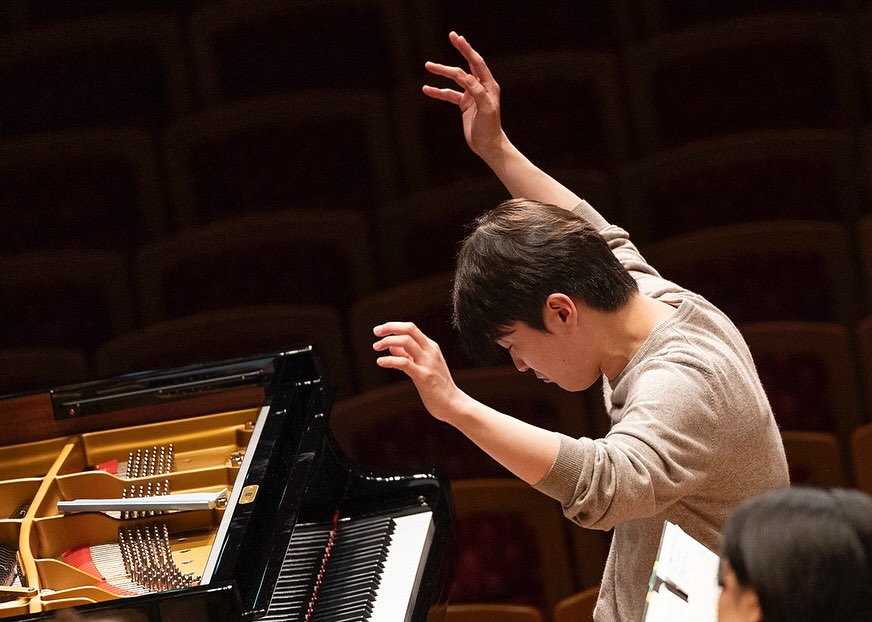
Seong-Jin Cho Performance (2025–2026) Highlights
- Carnegie Hall (New York, Feb 2025):Delivered a marathon recital of Ravel’s complete solo piano works in chronological order (150th anniversary tribute), a technically and artistically demanding program streamed on Deutsche Grammophon’s platform.
- Colburn Celebrity Recital – Walt Disney Concert Hall (Los Angeles, 27 Jan 2026):Presented a solo recital featuring Bach, Schoenberg, Schumann and Chopin (14 Waltzes), underlining his command of diverse repertoire on a major U.S. stage.
- Concertgebouw Amsterdam (Mar 8, 2026):Headlined the “Great Pianists” series with a solo recital of Bach, Schoenberg, Schumann and Chopin waltzes, further cementing his presence in world-renowned European concert halls.
- Esplanade Concert Hall (Singapore, Jun 9, 2025):Returned after six years for a solo recitalof Liszt, Beethoven, Bartók and Brahms, demonstrating global demand for his recitals in Asia’s top venues.
- Boston Symphony Hall (Jan 17, 2026):Soloist in Tchaikovsky’s Piano Concerto No. 1 with the Boston Symphony Orchestra under Andris Nelsons, highlighting his role in major orchestral performances.
- Carnegie Hall (New York, Dec 3, 2025):Soloist with the Pittsburgh Symphony (Manfred Honeck conducting), performing Rachmaninoff’s Rhapsody on a Theme of Paganini to a sold-out house. Critical reviews praised his virtuosic, sensitive playing in this high-profile collaboration.
- London Symphony Orchestra (2025–26 season):Appointed LSO’s Artist Portrait, including premiering a new piano concerto by Donghoon Shin written for him. This high-visibility role underlines Cho’s authoritative stature and contemporary relevance.
- Key Collaborations & Tours (2025–26):Scheduled returns with top orchestras and conductors: Pittsburgh Symphony Orchestra with Manfred Honeck, Boston Symphony Orchestra with Andris Nelsons, Los Angeles Philharmonic with Gustavo Dudamel, and European tours with Gewandhaus Leipzig under Andris Nelsons.
Technical Approach And Piano Control
Seong-Jin Cho’s technical command is consistently noted as exceptionally solid and reliable. Critics describe his technique as “impeccable” and “polished,” allowing him to navigate even marathon programs with ease. He demonstrates precision in complex passagework, displaying supple technical precision and an “airtight” execution of fast runs.
Cho also controls his instrument’s full dynamic range with mastery; he is praised for the way he can dial down to whisper-soft pianissimos without loss of clarity, forcing listeners to “lean in” to catch every nuance. Reviewers note his keyboard balance and refined tonal control even in challenging solo repertoire.
In sum, his playing is characterized by very accurate keystrokes, secure fingerwork, and firm command over articulation, all of which support an unwavering sense of structure and momentum.
Tone, Touch, And Sound Color
Cho’s touch and tone production are consistently commended for their clarity and beauty. He is said to draw luminous tone colors and opulent textures from the piano, especially in Impressionistic and Romantic repertoire.
For example, his account of Ravel’s Pavane pour une infante défuntewas noted for “luminous tone colors” and delicate balance, and his performances of Miroirswere praised for their “orchestral sonic prowess” and rich, organ-like sonority.
In Debussy and Ravel, Cho’s playing often emphasizes transparency and timbral nuance: one critic observed “ecstatic waves that became tempestuous without losing their shimmer” in Une barque sur l’océan, and noted his “dry-toned attacks” that nonetheless carried a limber energy in Alborada del gracioso.
Across different works, Cho varies his touch with sensitivity: pianissimo passages remain rounded and resonant rather than thinned, and forte passages retain definition. Overall, his tonal palette is wide and carefully managed, combining a shining, singing melody tone with a delicate, pointed articulation (at times giving even fast figures a pointillistic clarity).
Rhythm, Phrasing, And Structural Clarity
Reviewers emphasize Cho’s strong sense of musical architecture and phrasing. His performances are marked by well-defined shapes and a clear sense of line: he “teases out the contrasts” between inner voices and melodies, sustaining long melodic threads even through dense textures.
Cho tends to observe classical forms strictly, often forgoing excessive rubato in favor of forward momentum. One critic noted that in Chopin’s quick Preludes he “simply gets on with it” rather than leaning into too much ritardando, thus restoring “the stately lightness of a minuet” to the music.
Similarly, in Ravel’s Miroirshe balanced “structural integrity with an impressionistic atmosphere,” emphasizing clear rhythmic pulse and articulation even while conjuring vivid images. His phrasing tends to be smooth and cohesive: long lines are “fluid” and melodies are carefully voiced.
When tackling counterpoint (as in Baroque-inspired works like Le tombeau de Couperin), his entrances are “beautifully calibrated” and transparent. Cho’s rhythmic sense is precise; critics use terms like “immaculate rhythmic precision” and note that his articulation often lends even flowing figures a crisp, sculpted profile.
He frames sections carefully, aligning entries and cadences with the overall design so that formal boundaries and climaxes remain clear to the listener.
Interpretative Approach To Repertoire
Cho’s interpretative style adapts to each composer’s idiom while maintaining his hallmark clarity. In Classical-era works, he tends to emphasize lyricism and grace. For example, his reading of Haydn’s Sonata in E minor was praised for its supple precision and subtle passion.
His Mozart interpretations likewise have been described as spontaneous and improvisatory in spirit. With Beethoven, Cho often highlights smooth cantabile lines and structural balance; one reviewer noted his Adagioplaying as “lines beautifully refined and suspended with a sterling control of tonal weight,” even if his readings are generally more poised than fiery.
In Romantic repertoire, Cho applies his technical precision to lyric expression. Chopin, in particular, shows his ability to blend singing tone with disciplined structure: his Chopin Ballades were said to have “lovely balance and proportion” and maintain a poised line throughout.
He approaches Chopin preludes with restraint, avoiding excessive rubato and virtuoso affectation; for instance, his faster preludes are taken at brisk tempos with an “immaculately light, rapid fingerwork” that preserves clarity. At the same time, Cho does engage fully with Romantic expressivity when called for: critics note his use of rubato and dynamic sensitivity in the Chopin “Raindrop” Prelude, yielding “heroic climaxes” in the stormy sections.
Liszt’s music is similarly handled with cantabile elegance and controlled power; Cho was observed to let Liszt’s “graceful, cantabile melodies” sing out while showcasing a “highly polished yet formidable technique” in the virtuosic passages.
Cho has also won acclaim in 20th-century and Impressionist repertoire. He is drawn to composers like Debussy and Ravel, where his coloristic touch and precision come to the fore.
In Ravel’s works (which he performed in their entirety), critics praised his poetic approach and sensitivity to texture: for example, one review highlighted his Pavanefor its “fluid melodic direction” combined with exquisitely balanced tone colors. In Miroirshe was said to render vivid sonic imagery (flitting moths, distant bells) through clear articulation and well-judged voicing.
Across this repertoire, his readings remain faithful to score details but are infused with subtle imagery, reflecting both the music’s clarity and its atmospheric color. In contemporary or less-familiar pieces, reviewers similarly note Cho’s attentiveness to stylistic context, implying a careful study of each work’s background rather than imposing a singular personal manner.
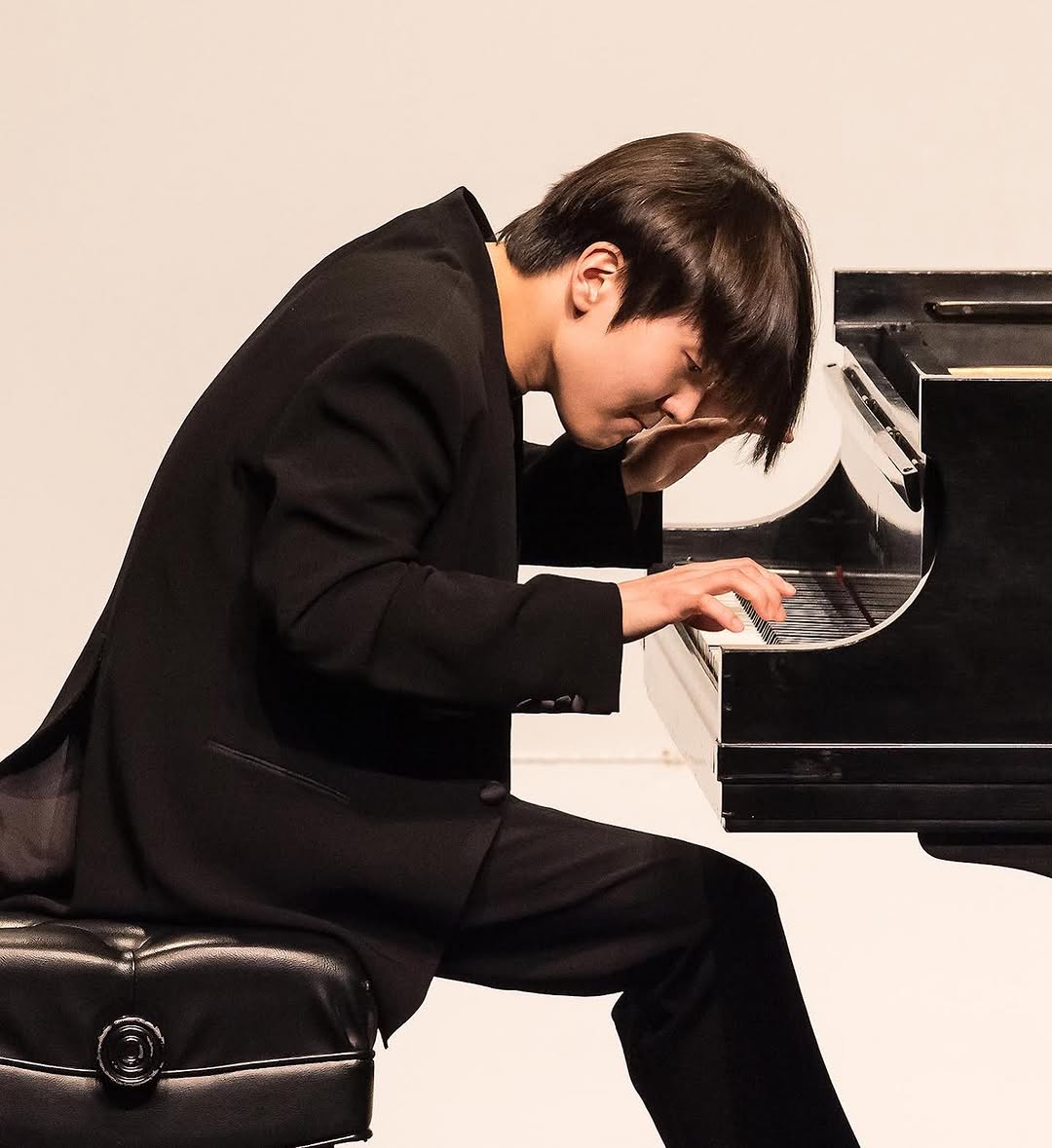
Balance Between Precision And Expression
Cho is frequently commended for his blend of analytic precision with expressive nuance. His performances are highly polished, but he usually resists playing them as mere technical showpieces.
Critics often observe that he exercises good taste and restraint: for instance, rather than indulging in ostentatious beats, he maintains the music’s forward momentum and proportion, “keeping everything within the context of the piece.” Even in climactic moments, his crescendos and ritardandos are substantial yet controlled, preserving the overall architecture.
That said, some reviews do note that this cerebral approach can yield an introspective quality. In Ravel’s more angular music, one critic found Cho’s interpretation “a bit tempered” or gentler than expected. Thus his balance tends toward emphasizing lyricism and inner detail over wild impetuosity.
In slower or more reflective passages he brings out lyric intensity and warm color, while in fast sections he maintains crispness and brightness. Overall, Cho’s style demonstrates a balance between precision and expression: his playing is exact in execution but avoids sterility by inserting just enough poetry and pathos to move the listener.
Critical Observations And Musical Identity
Critics generally agree that Seong-Jin Cho’s musical identity centers on clarity, refinement, and a thoughtful interpretive approach. He has been described as “a musician of the first rank,” indicating high regard for his artistry.
His playing is often characterized as analytical and tasteful rather than flashy; reviewers routinely highlight the poetic introspection and structured logic in his performances rather than any kind of overt ego or pyrotechnics.
Cho’s control over nuances of voicing and voicing (balance between voices) repeatedly draws praise: one notes that he brings “a strong feeling for matters pertaining to color, shape, phrasing, and voicing” to the piano.
In sum, his musical profile is one of a young virtuoso who favors elegant craftsmanship and expressive subtlety. Rather than a “showboat” style, his identity seems defined by a clear, cohesive sound, precise execution, and an inward musicality that aims to serve each composition faithfully.
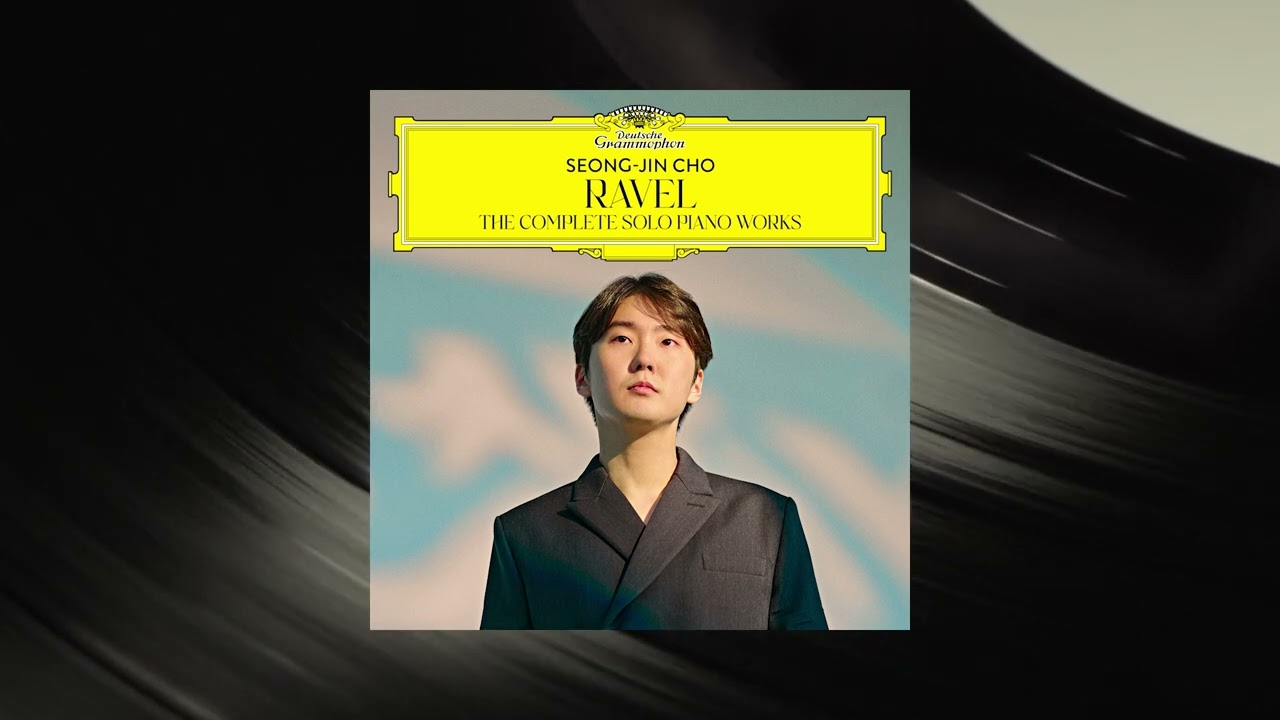
Seong-Jin Cho - Ravel: Pavane pour une infante défunte, M. 19
Seong-Jin Cho Net Worth
As of 2026, reliable sources have not published an estimate of Seong-Jin Cho’s net worth. Cho is a South Korean concert pianist who regularly tours internationally and performs with leading orchestras worldwide, typically giving more than 100 concerts per year.
He won first prize at the 2015 International Chopin Piano Competition, the first Korean to do so, which helped launch his international career. Cho is signed with classical label Deutsche Grammophon and has released several albums under that label. He earns income from concert performance fees, album recordings and similar musical engagements.
FAQs
Who Is Seong-Jin Cho And Why Is He Famous?
Seong-Jin Cho is a South Korean concert pianist (born 1994). He became internationally known after winning First Prize at the 2015 International Chopin Piano Competition in Warsaw, a major milestone that propelled his global concert career.
Which Competition Launched Seong-Jin Cho’s International Career?
The 2015 International Chopin Piano Competition in Warsaw, which he won, is widely cited as the breakthrough that brought him broad international attention.
What Recordings Has Seong-Jin Cho Released With Deutsche Grammophon?
He signed exclusively with Deutsche Grammophon in 2016 and has released albums including Chopin (Piano Concertos Nos. 1–2 and selected solo works), a Debussy recital, a Mozart album (with the Chamber Orchestra of Europe and Yannick Nézet-Séguin), The Wanderer(Schubert/Berg/Liszt), The Handel Project, and a Ravel project featuring the complete solo piano works and the two concertos (with the Boston Symphony Orchestra and Andris Nelsons).
What Composers And Repertoire Is Seong-Jin Cho Best Known For?
He is most closely associated with Chopin in the public record, given his 2015 Chopin Competition win and multiple Chopin releases. His recent major projects also spotlight French repertoire, especially Ravel (complete solo piano works and concertos) and Debussy (solo recital recording).
Which Major Orchestras And Conductors Has Seong-Jin Cho Performed With?
He has appeared with major orchestras such as the Berliner Philharmoniker, Vienna Philharmonic, London Symphony Orchestra, Royal Concertgebouw Orchestra, and Boston Symphony Orchestra. Conductors he is documented as collaborating with include Gustavo Dudamel, Andris Nelsons, Yannick Nézet-Séguin, Gianandrea Noseda, and Sir Simon Rattle, among others.