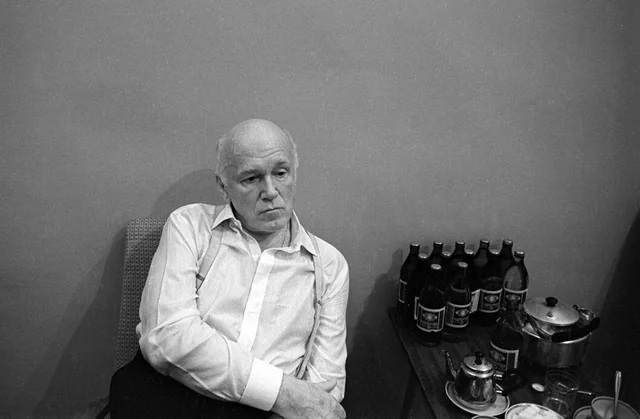
Sviatoslav Teofilovich Richter was born on 20 March 1915 in Zhitomir (now Zhytomyr, Ukraine). His father, Teofil Danilovich Richter (1872–1941), was an organist and pianist by training and a minor composer of German origin. Shortly after Sviatoslav’s birth, the Richter family moved to Odessa.
Odessa was a thriving cultural city in Ukraine, where Teofil Richter taught music (at the local conservatory and church) and gave his son basic lessons. Young Sviatoslav had very limited formal training at first apart from these rudimentary lessons he largely taught himself piano.
Growing up in Odessa, Richter showed an unusually strong aptitude for music. He learned to play complex works from full orchestral scores at sight and began composing by the age of eight.
Reports even note that he had written a short opera before his teenage years. By 1930 (age 15) he was working as a répétiteur (opera accompanist) at the Odessa Opera House, where his exceptional sight-reading skill became evident.
Throughout his youth Richter read widely and pursued other arts (painting, literature and theatre), but music remained his primary focus.
In 1937, at age 22, Richter left Odessa to enter the Moscow Conservatory. There he became a student of the renowned piano teacher Heinrich Neuhaus.
| Aspect | Details |
| Full Name | Sviatoslav Teofilovich Richter |
| Date of Birth | March 20, 1915 |
| Place of Birth | Zhitomir (now Zhytomyr, Ukraine) |
| Father | Teofil Danilovich Richter, musician |
| Family Background | German-origin musical family |
| Childhood City | Raised in Odessa |
| Early Music Lessons | Basic training from his father |
| Formal Training | Largely self-taught in early years |
| Early Musical Skills | Strong sight-reading ability |
| Early Composition | Began composing as a child |
| Early Employment | Opera répétiteur at age 15 |
| Conservatory Entry | Moscow Conservatory, 1937 |
| Primary Teacher | Heinrich Neuhaus |

FRANZ LISZT - THE ULTIMATE PERFORMANCE - SVIATOSLAV RICHTER
Career Beginnings
Sviatoslav Richter’s career began in the Soviet Union in the 1930s and 1940s. He gave his first Odessa recital in 1935 and later entered the Moscow Conservatory, studying under Heinrich Neuhaus.
During World War II Richter became known in Moscow by premiering contemporary works: he performed the first public rendition of Prokofiev’s Sixth Piano Sonata and gave the premiere of the Seventh Piano Sonata in 1943.
He won joint first prize at the USSR All-Union Piano Competition in 1945, establishing a national reputation. In the immediate postwar years he toured widely within the USSR, playing in major Soviet halls and concerts for troops.
These early achievements laid the foundation for Richter’s virtuosity and interpretive depth.
International Breakthrough
Richter’s breakthrough on the international stage began in the mid-1950s. In 1956 he made his debut outside the Soviet Union at the Prague Spring Festival, followed by tours to Bucharest, Budapest, Warsaw and a tour of China in 1957.
Western audiences eagerly awaited his arrival, and in 1960 Richter was finally allowed to travel to the West. That October he made a sensational debut in the United States with an unprecedented five sold-out recitals at Carnegie Hall in New York within twelve days.
New York critics praised him as “one of the world’s greatest masters of the piano” for these performances. The Carnegie Hall concerts made Richter famous in the West almost overnight and marked the beginning of extensive tours to Western Europe, the United States, Japan and elsewhere.
By early 1961 he had already given concerts in England and France, bringing Eastern European piano artistry to international prominence.
Major Performances & Concert Highlights
Throughout the 1960s–1980s Richter was in high demand as a recitalist. He embarked on decade-long tours of Europe and Japan, often giving marathon solo programs of Bach, Beethoven, Romantic and contemporary works.
In 1964 he founded an annual chamber-music festival at La Grange de Meslay (near Tours, France) where he performed and coached fellow musicians in an intimate barn-venue. Frequent collaborators at this festival included violinist Oleg Kaganand cellist Mstislav Rostropovich.
Richter was also a regular guest at the Aldeburgh Festival in England, where he joined Benjamin Brittenfor performances of Schubert and Mozart duets. His major concerto appearances during this period included high-profile collaborations such as the Boston Symphony under Erich Leinsdorfand the Chicago Symphony with Leinsdorf, and in London the London Symphony Orchestra under Kirill Kondrashin.
Despite his virtuosity, Richter often preferred small concert halls; in later years he famously performed by candlelight (using only a small lamp) and sometimes played from the score for comfort. These chamber-like settings emphasized his exceptional musical depth.
In concert he was known for his extraordinary range: critics noted that “when Richter plays different compositions it seems that different pianistsare playing,” reflecting his ability to inhabit each composer’s style.

Sviatoslav Richter Beethoven Recital Moscow 1976
Recordings & Discography
Richter’s recorded legacy is vast and eclectic, featuring both studio and live performances across a huge repertoire. He recorded hundreds of works from Bach and Handel through Schumann, Liszt, Rachmaninoff, Prokofiev and 20th-century composers.
Noteworthy studio recordings include Brahms’s Piano Concerto No.2 with the Boston Symphony under Erich Leinsdorf, a performance that won the 1961 Grammy Award for Best Classical Performance – Instrumental Soloist.
In the late 1950s he made landmark recordings in Europe: for example, his Rachmaninoff Piano Concerto No.2 with the Warsaw Philharmonic under Stanisław Wisłocki(1959) is often cited as one of the great recordings of that work.
Richter also made definitive live recordings of Mussorgsky’s Pictures at an Exhibitionand Prokofiev’s War Sonatas; his telephoned concern “studio is a torture chamber” describes his well-known discomfort with studio recording, which is why many of his acclaimed recordings were captured live.
In the 1990s Richter recorded a cycle of Mozart piano concertos in Japan (1994) that reflected his mature interpretive style.
Throughout his career he issued over 100 albums and appeared on numerous labels (Melodiya, Deutsche Grammophon, RCA, Philips, etc.), ensuring a broad discography that includes solo recitals, concerto performances, chamber music, and even rare orchestrated works.
Awards & Professional Recognition
| Award / Honor | Year |
| Stalin Prize | Circa 1949 |
| Lenin Prize | 1961 |
| People’s Artist of the USSR | Awarded during Soviet career |
| Hero of Socialist Labour | 1975 |
| Grammy Award | 1961 (Brahms Piano Concerto No.2) |
| Léonie Sonning Music Prize | 1986 |
| Honorary Doctorates | Oxford, Strasbourg |
| Orders of Lenin | Multiple awards |
Richter received numerous top honors in the Soviet Union and abroad. Soviet accolades included the Stalin Prize (circa 1949) and the Lenin Prize (1961) in recognition of his artistry.
He was named a People’s Artist of the USSR (the highest title for a performing artist) and in 1975 was decorated as a Hero of Socialist Labour.
In later years he earned international awards as well: the 1961 Grammy Award (Best Concerto Instrumental Soloist) for Brahms’s Second Piano Concerto with Leinsdorf, and the Léonie Sonning Music Prize (Denmark, 1986) for lifetime achievement.
His Sonning Prize citation praised his “intense artistry at the piano, which uniquely combines expression, characterization and articulation”.
Richter was also given honorary doctorates (e.g. from Oxford and Strasbourg) and recognition from the Soviet state such as the Glinka State Prize of the RSFSR (1987) and multiple Orders of Lenin.
These awards reflect his reputation as one of the 20th century’s preeminent pianists.
Collaborations With Orchestras & Conductors
Richter’s concerto performances spanned the world’s major symphony orchestras. He recorded and toured with ensembles such as the Warsaw Philharmonic (often under conductors Witold Rowickiand Stanisław Wisłocki) and the Boston Symphony (with Erich Leinsdorf).
He appeared with the Chicago Symphony and with the London Symphony Orchestra, and made notable recordings in Japan with Rudolf Barshaiconducting.
His partnerships in chamber music were equally illustrious: he was closely associated with the Borodin Quartet, and frequently played with soloists including violinists David Oistrakh, Oleg Kagan, and cellist Mstislav Rostropovich.
His daughter Nina Dorliak (a soprano) often performed Lieder recitals with him, and he occasionally played sonatas and chamber works with Benjamin Britten.
In sum, Richter collaborated with a who’s who of 20th-century classical musicians, lending his profound musical insight to symphonic, chamber, and solo repertoire alike.
Recent Career Activity
In his final decades Richter gradually scaled back public concerts, devoting himself to the chamber-music festivals he had founded.
He remained artistic director of the Fêtes Musicales de Touraine at La Grange de Meslay (France) and of the annual “December Nights” Festival at the Pushkin Museum in Moscow.
These festival appearances, often featuring young Russian and international players, became focal points of his late career.
Richter continued to perform into the 1990s: his last concerto recordings were made on tour in Japan in 1994, and he gave his final recital in Germany in 1995.
His output in the mid-1990s, though limited by health, showed the same technical command and interpretive power that had defined his career. By the end of 1995 Richter had effectively concluded his concert activities; he died in Moscow in 1997.
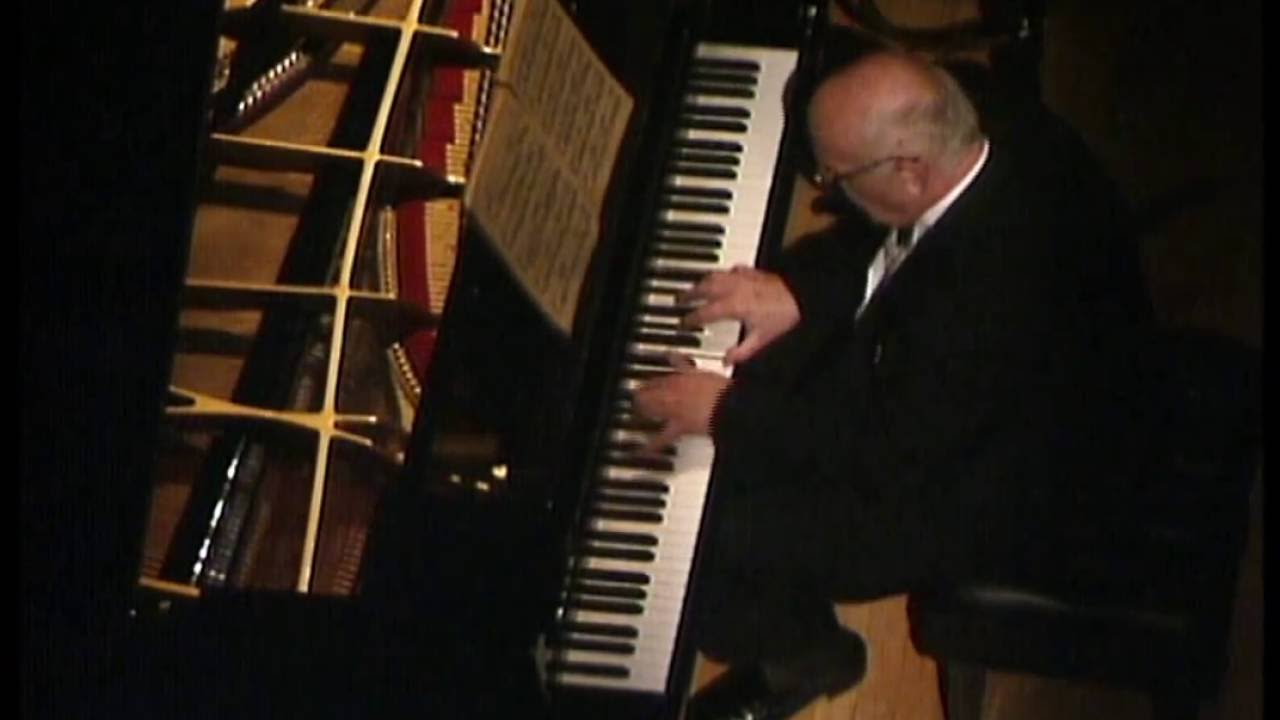
Chopin - Études, Op.10 & Op.25 - Sviatoslav Richter (London, 1989)
Sviatoslav Richter Performance
- Extensive recital career:Richter gave roughly 3,600 concerts worldwide, maintaining an intense performance schedule.
- Western debut (1960):In October 1960 he made a sensational North American debut, playing Brahms’s Piano Concerto No.2with the Chicago Symphony (Oct 15, 1960), followed by a run of concerts at New York’s Carnegie Hall.
- Major festivals:He initiated landmark music festivals, for example his “December Nights”festival at Moscow’s Pushkin Museum (an annual event since 1981), and the chamber-music festival at La Grange de Meslay (Tours, France).
- Key collaborations:Richter frequently performed chamber music with leading artists, notably cellist Mstislav Rostropovich, violinist David Oistrakh, pianists Zoltán Kocsisand Elisabeth Leonskaja, and he often accompanied famed singers like Dietrich Fischer-Dieskauand his partner Nina Dorliak.
- Repertoire and premieres:His repertoire spanned Bach and Beethoven through Shostakovich and Britten; he premieredmajor works including Prokofiev’s Piano Sonata No.7(learned in four days) and Sonata No.9 (written for Richter).
- Final recital (1995):Richter’s last public concert was a private recital in Lübeck on March 30, 1995 (just after turning 80). The program featured two Haydn sonatas (Hob. XVI/41 & 42) and Max Reger’s demanding Variations and Fugue on a Theme by Beethoven(for two pianos).
Sviatoslav Richter: Piano Style And Musical Interpretation
Technical Approach And Piano Control
Richter’s technique was renowned for its power and precision. Critics noted his “phenomenal technique and fearless self-confidence” and an “Olympian command and control of the keyboard”. He played with dazzling agility: even in blistering presto sections his fingers “push back the limits of the possible”, keeping articulation crisp and clear.
One reviewer of his Beethoven noted that his staccato was “outstanding” and that the clarity of his finger-work remained intact even at the most feverish speeds. Richter’s remarkable dexterity and hand strength described as an “enormous manual dexterity” with a “powerful grip” allowed him to execute wide dynamic jumps and dense textures without losing control.
Each chord and rapid passage was delivered with rock-solid precision, making even complex passages sound effortless.
Tone, Touch, And Sound Color
Richter commanded a vast tonal palette, ranging from the most whispered pianissimo to thunderous fortissimo. Observers consistently remark on the “wealth of color” in his sound.
In Liszt concertos, for instance, his pianissimo is described as “ravishing” and his rapid scales “crystal-clear,” with stormy crescendos delivered with impressive force. His touch could shift from percussive to singing at a moment’s notice; one writer describes his arpeggios in late Beethoven as a “necklace of pearls,” each note “shining purely” under a superbly graded legato.
Even under great tension his tone never became harsh; in Debussy and other impressionistic pieces his playing “shimmers with remarkable, multi-leveled… tonal variety”. In short, he could coax warm, bell-like sonorities and delicate overtones as readily as raw, metallic impact, giving his interpretations a vivid sonic richness.
Rhythm, Phrasing, And Structural Clarity
Richter treated rhythm and phrase structure with both freedom and awareness of form. He frequently altered tempos for expressive emphasis, stretching one motif then surging into the next. For example, in Beethoven he might pause with measured grandeur before suddenly “pouncing” on the following theme.
Such rubato and sectional tempo changes gave his performances a dramatic ebb and flow, but he always maintained the underlying architecture. Critics note that even amid such liberties his playing remained “measured to perfection”.
In Beethoven’s Sonata No.27 they describe a “smooth flowing line” in the lyrical sections, with Richter’s voice-leading so clear that it felt as if the piano were “singing” the melody. Despite his dynamic extremes, voices in the texture stayed balanced and the overall form never blurred, so that the music’s structure always sounded clear and purposeful.
Interpretative Approach To Repertoire
Richter approached each composer on their own terms and chose repertoire that showcased his strengths. He favored Romantic and early 20th-century works Chopin, Rachmaninoff, Liszt, Debussy, Prokofiev and the like and typically selected only a few key pieces rather than exhaustive cycles.
For Chopin and Liszt, he emphasized virtuosity and drive: one reviewer observed that Richter treated even Chopin’s waltzes and mazurkas with the percussive energy of études, aiming for “suppleness and muscular velocity” in every phrase.
In contrast, his Mozart and Bach performances were more transparent and objective, focusing on clarity of line and balance. He rarely attempted complete sets of works, preferring to mine individual pieces for depth of expression.
In chamber works or concertos, he was committed to fidelity to the score’s intentions: for example, he followed Schumann’s marking “as fast as possible” literally and shaped every tempo increase in the finale with precision. Overall, his interpretative goal was to reveal each piece’s inner character he sought out the essential qualities of every composer rather than imposing a single manner on all.

Sviatoslav Richter plays Rachmaninoff Etude & Prelude - video 1966 best quality
Balance Between Precision And Expression
Richter’s artistry lay in marrying technical precision to emotional intensity. Reviewers emphasize that even his wildest gestures were delivered with consummate control one wrote that his “volatile drive and dramatic extremes” are made thrilling rather than coarse by his technical finesse.
He could leap from a massive, thunderous climax to a filigree passage in an instant, maintaining clarity throughout. For example, in climactic passages his force and articulation were laser-sharp, yet he would immediately follow with the softest, most elegant pianissimo without missing a detail.
His phrasing often built to heroic heights, but always with internal balance: critics note that while he could sound like a cannon exploding, he tempered that aggression with an “almost audibly restrained” refinement.
In this way every wild gesture was underpinned by exactness crescendos and rapid scales were precise down to the last note which made the emotional impact all the more convincing. In short, Richter’s steely control ensured that his expression was never undisciplined: virtuosity served his musical aims rather than overshadowing them.
Critical Observations And Musical Identity
Observers consistently underline Richter’s dual nature as an interpreter: a towering physical presence at the keyboard who nonetheless conveyed deep musical thought. Colleagues noted his intelligence and “vocal” approach one famously quipped that Richter truly “sings with his piano”.
Critics often describe him in extremes: he was compared to a cannon or a plane, capable of switching “from the most delicate pianissimo to the most volcanic fortissimo with complete ease”. This polarity serene stillness alternating with raw power became his signature.
Over time his style did evolve: early recordings reveal a player marked by “the highest nervous tension,” while later he adopted a warmer, bel canto–like tone. Nevertheless, one constant was his search for musical depth.
He never played in a purely mannered way; each performance was treated as a fresh exploration. In sum, Richter’s musical identity was that of a fiercely individual artist who combined towering technical gifts with imaginative insight, always prioritizing the composer’s vision through his own unique lens.
Sviatoslav Richter Net Worth
At the time of his death in 1997, reliable sources had not published an estimate of Sviatoslav Richter’s net worth. He earned income from his career as a classical pianist, touring internationally and recording prolifically. He received major Soviet honors such as the 1949 Stalin Prize, which helped broaden his touring opportunities; however, these awards were symbols of prestige rather than sources of wealth. As a performer, his income came from concert fees and album sales, and no official fortune figure has ever been reported.
FAQs
1. Who Was Sviatoslav Richter?
Sviatoslav Richter was a Soviet pianist widely regarded as one of the greatest classical pianists of the 20th century. He was known for his exceptional technique, interpretive depth, and vast repertoire spanning Baroque to modern music.
2. Why Is Sviatoslav Richter Considered One Of The Greatest Pianists?
Sviatoslav Richter is admired for his extraordinary technical control, tonal range, and intellectual approach to interpretation. Critics and musicians consistently praised his ability to reveal the structural and emotional depth of a wide range of composers.
3. What Composers Did Sviatoslav Richter Specialize In?
Sviatoslav Richter performed a broad repertoire, including Bach, Beethoven, Schubert, Chopin, Liszt, Rachmaninoff, Prokofiev, and Shostakovich. He was especially associated with the works of Schubert and Prokofiev, including several important premieres.
4. Did Sviatoslav Richter Record Many Albums?
Yes, Sviatoslav Richter left an extensive recorded legacy consisting of both studio and live recordings. Many of his most respected performances were recorded live, as he was known to prefer concerts over studio sessions.
5. How Many Concerts Did Sviatoslav Richter Perform In His Lifetime?
Sviatoslav Richter is estimated to have given approximately 3,600 concerts worldwide during his career. These performances took place across the Soviet Union, Europe, the United States, and Asia over several decades.
6. When Did Sviatoslav Richter Die, And What Was The Cause Of His Death?
Sviatoslav Richter died on August 1, 1997, in Moscow, Russia, at the age of 82. The specific medical cause of his death was not publicly disclosed, and no official details beyond natural causes were released.