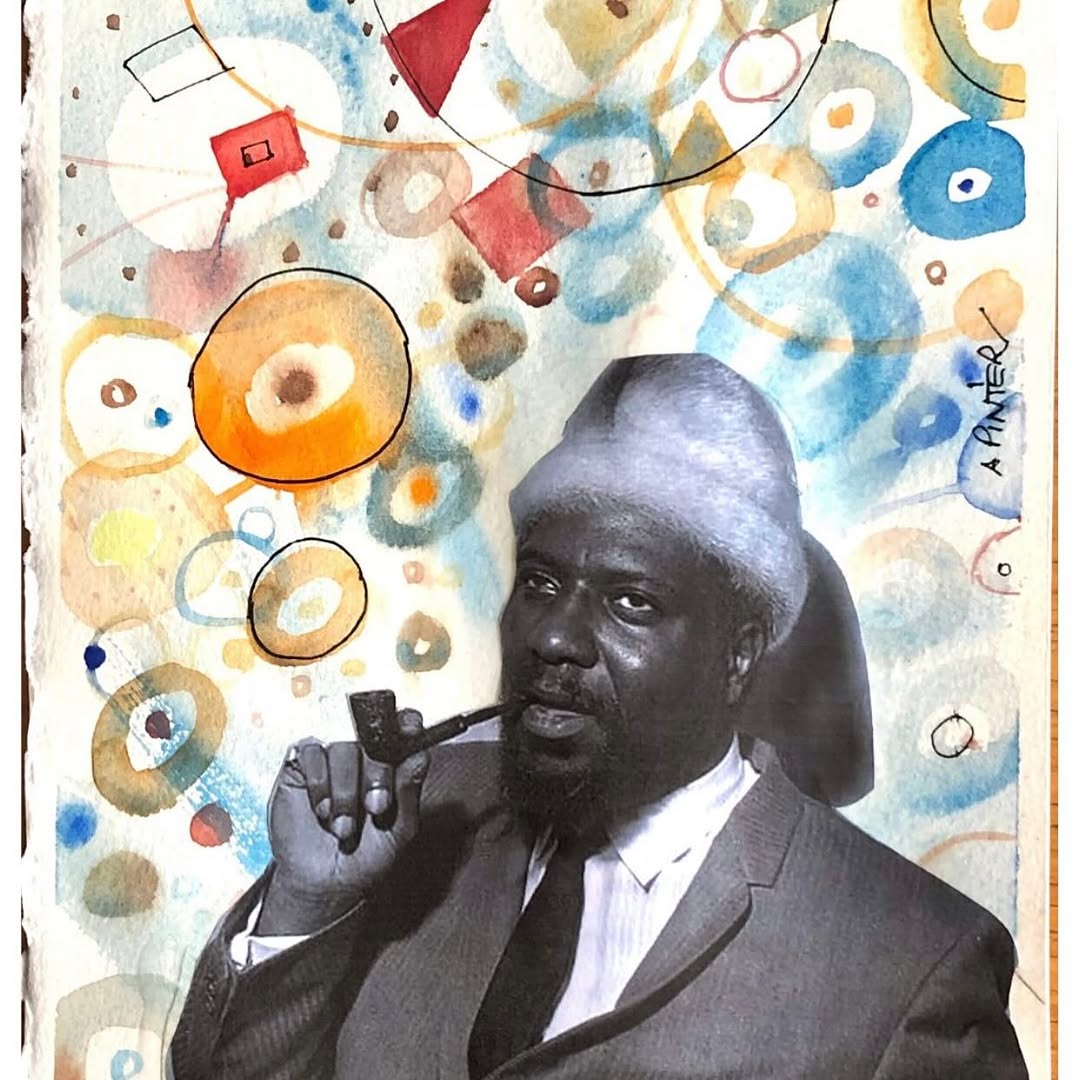
Thelonious Monkwas born on October 10, 1917, in Rocky Mount, North Carolina. He was the son of Thelonious Monk Sr. and Barbara Batts Monk. When he was four years old, Monk and his two younger siblings (Marion and Thomas) moved with their mother to New York City. The family settled on West 63rd Street in Manhattan’s San Juan Hill neighborhood. Monk’s father, who had joined them a few years later, returned to North Carolina due to health problems.
Monk attended Manhattan’s Stuyvesant High School, but he did not graduate. He was largely self-taught in music; he began playing piano by about age six and was practicing on his grandparents’ old piano by age ten. He briefly studied trumpet, but by age nine he focused on piano and even took lessons from his sister Marion’s piano teacher around that time.
He also sometimes accompanied his mother on piano when she sang at their local Baptist church. Early jazz musicians who influenced Monk included trumpeter Louis Armstrongand pianistssuch as Earl “Fatha” Hines, Art Tatum, Fats Waller, James P. Johnson, Willie “the Lion” Smith, Jimmy Yanceyand Duke Ellington.
| Aspect | Details |
| Full Name | Thelonious Sphere Monk |
| Date of Birth | October 10, 1917 |
| Place of Birth | Rocky Mount, North Carolina, United States |
| Parents | Thelonious Monk Sr. and Barbara Batts Monk |
| Childhood Move | Moved to New York City at age four with his mother and siblings |
| Neighborhood | San Juan Hill, West 63rd Street, Manhattan |
| Schooling | Attended Stuyvesant High School but did not graduate |
| Musical Training | Largely self-taught; began piano around age six |
| Early Lessons | Took piano lessons from his sister Marion’s piano teacher |
| Church Involvement | Accompanied his mother singing at a local Baptist church |
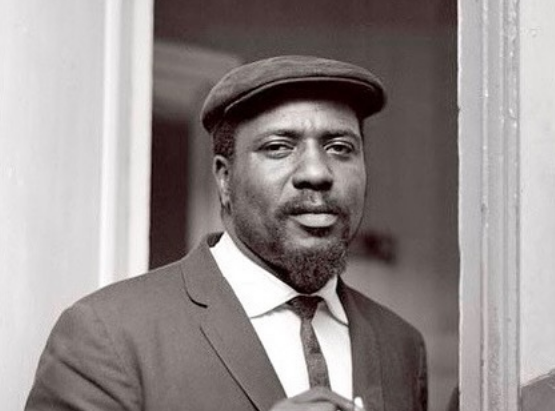
Career Beginnings
Thelonious Monk’s musical career began in the early 1940s in New York City. He became the house pianist at Minton’s Playhouse in Harlem, where late-night jam sessions with pioneers like Dizzy Gillespieand Charlie Parkerhelped launch the bebop era. Monk’s unique percussive style emerged during this period: as he later quipped, “The piano ain’t got no wrong notes!”
His first recorded appearance came in 1944 with tenor saxophonist Coleman Hawkins’squartet. In 1947 Monk made his leader debut at Blue Note Records and cut several sessions for Blue Note through the early 1950s. These sessions featured young players and included early originals such as “Criss Cross” and “Blue Monk.”
After his Blue Note tenure, Monk signed with Prestige Records in 1952. In this period he recorded compositions like “Bags’ Groove” with Miles Davisand developed his catalog of jazz standards.
During the 1950s he continued gigging in clubs and recording for different labels, steadily gaining a reputation as an innovative composer and bandleader.
International Breakthrough
Monk’s career took on an international dimension in the mid-1950s. In 1954 he toured Europe for the first time, performing and recording in Paris, which introduced his music to wider audiences abroad.
In 1955 he signed with Riverside Records, a turning point that enabled a series of landmark albums featuring his own compositions. On Riverside he recorded Brilliant Cornersin 1956 and Monk’s Musicin 1957, among others, often with an all-star cast including John Coltrane and Sonny Rollins that helped showcase his music.
In 1957 Monk’s New York fortunes improved when his cabaret card was reinstated. That year he opened a six-month engagement at the Five Spot Café with John Coltrane on saxophone.
This extended run, hailed by critics, cemented Monk’s reputation. By the late 1950s, he was recognized as a jazz star both in the United States and abroad.
In the early 1960s his quartet with Charlie Rouse on tenor sax toured Europe in 1961 and Japan in 1963. In February 1964, Monk became only the third jazz artist ever to appear on the cover of TIMEmagazine, reflecting his status as an international figure.
Major Performances & Concert Highlights
| Year | Performance Highlight |
| 1957 | Extended residency at the Five Spot Café with John Coltrane |
| 1958 | Appearance at the Newport Jazz Festival |
| 1959 | Town Hall concert with Thelonious Monk Orchestra |
| 1963 | Lincoln Center concert and Monterey Jazz Festival |
| 1964 | Featured on the cover of TIME magazine |
| 1976 | Final public appearance at the Newport Jazz Festival |
Monk gave many notable live performances that became part of his legacy. In October 1959 he led the Thelonious Monk Orchestra in a celebrated concert at New York’s Town Hall, featuring big-band renditions of his works arranged by Hall Overton.
This concert was recorded and released as The Thelonious Monk Orchestra at Town Hall. A few years later in 1963 he performed at Lincoln Center’s Philharmonic Hall, now Avery Fisher Hall, again combining a larger ensemble and his quartet, captured on Big Band and Quartet in Concert.
Monk also appeared at major jazz festivals. He played at the Newport Jazz Festival, famously filmed in 1958, and at the Monterey Jazz Festival in 1963.
These high-profile festival appearances brought Monk’s playing to wider audiences. Earlier, in November 1957 he had appeared at Carnegie Hall at a Thanksgiving Jazz benefit alongside John Coltrane; that concert’s recording was later issued decades afterward.
In the early 1970s he toured with the revivalist group Giants of Jazz alongside Dizzy Gillespie and Art Blakey, performing at jazz festivals and concerts.
Recordings & Discography
Monk’s discography spans studios and live albums on several labels. His Blue Note recordings from 1947 to 1952 include pioneering sessions such as Genius of Modern Music, Vol. 1 and 2.
On Prestige Records from 1952 to 1954 he recorded Bags’ Groovewith Miles Davis and other small-group sessions.
The Riverside period from 1955 to 1961 yielded many classics, including Brilliant Cornersin 1956, regarded as a masterpiece, Monk’s Musicin 1957, Thelonious Himselfas a solo piano album in 1957, and Thelonious Monk with John Coltranein 1961.
After signing with Columbia in 1962, Monk released a series of landmark albums. These include studio works like Monk’s Dreamin 1963, Criss Crossin 1963, and Undergroundin 1968.
He also released notable live recordings such as Miles & Monk at Newportin 1963, Live at the It Clubin 1964, and Live at the Jazz Workshopin 1964.
During this period he recorded Big Band and Quartet in Concertin 1964 capturing the Lincoln Center performance. In 1968 he recorded Monk’s Blueswith a large ensemble arranged by Oliver Nelson.
His final studio recordings were made in 1971 for Black Lion Records as two solo piano albums. Throughout his career Monk issued dozens of albums whose compositions such as “‘Round Midnight” and “Straight, No Chacer” became jazz standards.
Awards & Professional Recognition
Monk received numerous honors for his contributions. He made history as one of only a few jazz musicians on the cover of TIMEmagazine in 1964.
In 1993 he was posthumously awarded the Grammy Lifetime Achievement Award. In 2006 the Pulitzer Prize committee bestowed a special citation upon Monk for a body of distinguished and innovative musical composition that has had a significant and enduring impact on the evolution of jazz.
He was inducted into the North Carolina Music Hall of Fame in 2009. Over time Monk has also earned places in jazz halls of fame and educational tributes, reflecting his status as a foundational figure in American music.
Collaborations With Orchestras & Conductors
Though primarily known for small ensembles, Monk did undertake a few notable orchestral collaborations.
In 1959 and again in 1963 he enlisted arranger Hall Overton to adapt his music for a jazz orchestra. The resulting performances at Town Hall and at Philharmonic Hall featured expanded horn sections playing sophisticated charts alongside Monk’s quartet.
In 1968 Monk recorded Monk’s Blues, a session featuring a big band arranged and conducted by Oliver Nelson.
On these projects, orchestrators like Overton and Nelson interpreted Monk’s compositions, blending ensemble writing with his idiosyncratic piano style.
Monk did not typically work with classical symphony orchestras, but these big-band projects show how his music could be expanded for larger ensembles.
Recent Career Activity
In the 1970s Monk’s public career wound down. After Columbia dropped him in 1970, he performed and recorded sparingly.
In 1971 he made two solo piano albums for Black Lion Records. He also toured internationally in 1970 and 1971 as a member of the all-star Giants of Jazz sextet with Gillespie, Blakey, and others.
Monk’s final public appearance was at the Newport Jazz Festival in July 1976. His health declined soon after, and he essentially retired from performing.
Although he never recorded again, Monk’s influence continued to grow. His retirement marked the end of a career that had spanned three decades of jazz innovation.
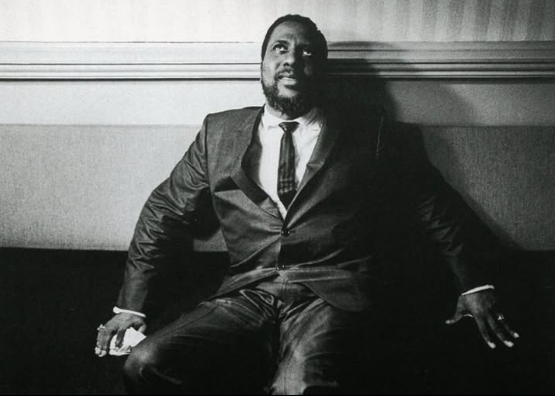
Thelonious Monk Performance Highlights
- July 1957Began an eight-week residency at New York City’s Five Spot Caféwith his quartet (featuring John Coltraneon tenor sax, Wilbur Ware on bass and Frankie Dunlop on drums). The engagement extended to six months with packed audiences, becoming a legendary jazz event “historic by every measure”.
- July 1963Performed at the Newport Jazz Festival; the Monk Quartet (with Charlie Rouse and guest clarinetist Pee Wee Russell) delivered a highly acclaimed set. This performance was recorded and released on the Miles & Monk at Newportalbum, cementing Monk’s reputation at a major jazz festival.
- October 1968Played a benefit concert at a Palo Alto, California high school (organised by a teenage fan). The tape of this rare appearance was long unreleased and finally issued in 2020 as Palo Alto, documenting the quartet’s final live performance.
- December 1969Headlined a concert at Salle Pleyel in Paris with the Monk Quartet; this sold-out show (filmed and released as Paris 1969) featured a surprise guest spot by drummer Philly Joe Jones. The concert capped a European tour and showcased Monk’s creativity late in his career.
- November 1971Appeared in London as part of the all-star “Giants of Jazz” tour (alongside Dizzy Gillespie, Art Blakey, Kai Winding, Sonny Stittand Al McKibbon). The evening’s performance at the Victoria Theatre was recorded and issued as the Giants of Jazzlive album, highlighting Monk’s role in this celebrated ensemble.
- July 1975Headlined the Newport Jazz Festival concert at Avery Fisher Hall (Lincoln Center, NYC). This was Monk’s first major concert in two years and ultimately his final public appearance. (The Newport show was broadcast on WBGO and has since been documented as his last concert.)
Thelonious Monk’s Piano Style And Musical Interpretation
Technical Approach And Piano Control
Monk’s keyboard technique was highly unconventional yet deliberate. He played with a flat hand position and even occasional elbow strikes, eschewing the curved-finger ideal of classical piano. His physical control produced a wide dynamic range: he could strike chords with thunderous power and then drop to barely audible “ghost” notes.
Left and right hands often took very different roles. The left hand usually maintained a stride-like bass-and-chord pattern (a basic pulse and timing), while the right hand delivered agile, dissonant motifs with abrupt, jerky gestures. This division allowed Monk to anchor the rhythm with one hand and improvise freely with the other.
He exploited limitations like a small hand span by favoring closely voiced chords and clusters, intentionally placing minor-second intervals in chords. Such “split” notes (two adjacent tones played together) became a purposeful element of his style. Rather than avoid what other pianists would call mistakes, Monk embraced them as expressive tools.
Observers noted that he often seemed to aim only for the final note of a line or arpeggio and would let intermediate tones drop away. In this way, he exhibited remarkable precision: every phrase had a clear target or resolution even if its path was fragmented.
Fellow musicians have emphasized that Monk’s emphasis on tonal attack and color is itself a form of pianistic mastery, underscoring that his unorthodox approach was under complete control.
Tone, Touch, And Sound Color
The color of Monk’s piano tone is as distinctive as his harmonies. He consciously exploited the percussive nature of the piano: his touch was frequently blunt and forceful, producing a harsh, metallic ring on impact. Critics have described his sound as “crude, acid, [and] biting,” reflecting the sharp overtones he coaxed from the instrument.
By contrast, he also deployed light touch and silence, letting notes linger or fade into space. One bandmate remarked that Monk claimed “all the notes are there already, but if you mean a note enough, it will sound different,” highlighting how Monk’s intent transformed each tone.
He used pedal and finger technique to bend pitches and generate “blue” timbral effects, making fixed piano notes seem curved or shaded. Another key aspect was Monk’s use of compressed, adjacent tones to mimic the microtonal inflections of vocal blues.
He often struck two or three adjacent keys simultaneously (a technique sometimes called “cluster” playing) to introduce controlled dissonance or a textured buzz. These clusters – with fingers “piled on,” knuckles, or even forearm – produced rich, complex sonorities that became characteristic of his sound.
Through such touch and color manipulations, Monk treated tone color as a primary expressive resource. His playing could range from a soft, quiet murmur to a sudden, jagged attack, with deliberate emphasis on the attack and decay of each note.
In effect, each tone carried an individual personality: under Monk’s fingers, notes could speak in many different voices, from gritty and growling to plaintive and bell-like, all within a single performance.
Rhythm, Phrasing, And Structural Clarity
Rhythm and timing were central to Monk’s musical identity. Though he was deeply grounded in swing and jazz time, his rhythms were often dislocated and unpredictable. He accentuated off-beats, inserted sudden pauses, and staggered phrases so that melodies felt jagged or broken.
His listeners often hear abrupt halts and lingering silences – what one critic called “chasms of mysterious silences” – interspersed with sharp rhythmic figures. These stops and starts were intentional: underneath the surface irregularity lay a clear internal pulse.
One pianist commented that Monk might not always play “on your time,” but he invariably “knows what time it is,” meaning he maintained a firm sense of tempo even while stretching or displacing it.
His phrasing tended to favor short, concise motifs rather than long, flowing lines. When he did stretch a phrase, it might unfold as a slow, almost dirge-like passage that hovers in space before resolving.
At other moments, his phrases could snap back with an unexpected rhythmic accent or reversal. Despite this surface unpredictability, Monk’s improvisations and compositions were formally coherent.
His tunes typically followed standard song forms (AABA, 12-bar blues, etc.), and Monk navigated them with a strong underlying sense of structure. He often wove motifs and chord shapes through a piece so that even wild-sounding choruses logically related to the head or main theme.
In practice, this meant that Monk’s solos had a clear internal roadmap: a concise idea might appear, repeat with variation, and then lead to a purposeful conclusion.
Critics note that he balanced this formality with conversational play – playing with the space between beats, emphasizing off-beats or syncopation, but always returning to the tune’s framework.
In sum, his phrasing can sound idiosyncratic, but it was anchored in a coherent sense of form and rhythm, giving the music an architectural clarity beneath its surface surprises.
Thelonious Monk- Thelonius
Interpretative Approach To Repertoire
Monk’s repertoire and repertoire choices reflected his singular lens. He rarely performed classical or Romantic pieces, and his style shows no direct lineage from European composers like Mozart or Chopin. Instead, his musical universe was built from jazz itself and its vernacular roots.
In the American songbook standards he did play (popular tunes, show tunes, hymns, blues, etc.), Monk made each melody unmistakably his own. He treated well-known melodies with the same personal logic as his originals.
When playing a ballad or a familiar standard, for example, he might preserve the basic melody but reharmonize it with his characteristic clusters and tritones, alter the meter with hesitation or acceleration, and emphasize dissonant passing tones.
A simple tune became angular and fresh under his hands. He was fond of adding “wrong” notes – minor seconds, flattened fifths, or other tensions – that a conventional arrangement would avoid.
Likewise, Monk’s sense of swing and rubato informed his interpretations: he might push a phrase behind the beat or hold it just ahead, making the listener feel the groove in a new way.
He also used silence dramatically, often leaving open spaces in the melody line or interjecting beats of rest that sharpened the effect of what came next.
Though his personal style was so strong that it sometimes seemed to overwhelm the original material, one consistent feature was respect for the piece’s core. Even amid reharmonization or rhythmic dislocation, Monk typically arrived at recognizable cadences and endings.
In short, his interpretive approach meant that any repertoire, whether blues or ballad, was filtered through his austere yet inventive vocabulary.
Monk did not engage with the European classical tradition in performance; one critic pointed out that nothing in his sound would suggest a childhood spent on Mozart sonatas. Instead, his playing often echoed older African-American piano traditions—ragtime rhythms, gospel harmonies, stride patterns—even when phrased in modern jazz terms.
When he sought out musical ideas from outside bebop, they came from the ragtime-inflected side of jazz history, not the concert-hall canon. Thus, Monk’s interpretative ethos remained squarely in the jazz/improvisatory camp: every note he played, whether melody or ornament, was imbued with his personal style.
Balance Between Precision And Expression
One remarkable feature of Monk’s artistry is how calculated it could be under its apparently spontaneous surface. He was known to rehearse and refine his ideas endlessly. Peers reported that he had an “internalized roadmap” for his solos: he might work on a single tune or passage for hours or even days until it met his vision.
This careful planning coexisted with a wild expressive flair. For example, Monk often omitted certain notes in a run or replaced them with rests, effectively creating “ghost” notes; yet the placement of the remaining notes was never random – the final note of a passage, in particular, was always given full weight and clarity.
In this way, he combined technical precision with expressive freedom. His rhythmic play – the pushes and pulls, the stop-start patterns – sounded spontaneous but were in fact very deliberate.
Observers have noted that when Monk played a tune repeatedly, each take was well-constructed in its own right, with consistent internal logic.
At the same time, Monk celebrated imperfection as expression: his oft-repeated maxim “the piano ain’t got no wrong notes” reflected a willingness to explore so-called mistakes as deliberate color.
Even aggressive dissonances and timing quirks were presented with conviction and intention. In performance, Monk could swing with exacting groove and razor-sharp timing, but at any moment he might suddenly alter the feel for dramatic effect.
The resulting balance is one of the hallmarks of his style: every expressive outburst sits on a foundation of exact control, so that his eccentricities feel both surprising and inevitable.
Critical Observations And Musical Identity
Critics and fellow musicians consistently emphasize Monk’s absolute originality. His style was instantly recognizable and entirely his own – one writer noted that hearing just two bars of a Monk performance is enough to identify him.
All elements of his playing – his staccato–legato mix, his use of space, his distinctive voicings, his rhythmic timing – coalesced into an unmistakable “Monkian” signature.
Many say that in Monk’s case the unconventional features (dissonance, jagged rhythms, pauses) formed a coherent system rather than a collection of oddities.
One critic metaphorically compared Monk’s approach to skewing pictures on a wall: he deliberately tilted the musical picture with minor-second clashes and time displacements until listeners adjusted and accepted this view as a new normal.
In other words, what once sounded “weird” became a fresh standard through his persistence.
Monk’s identity as a musician has often been described as “outsider” or idiosyncratic, but with a deep internal logic. His performances could seem austere or Spartan in theme, yet many have remarked on a hidden beauty in those themes – a stark, rugged beauty shaped by Monk’s economy and precision.
Though some contemporaries initially questioned his ability, later analysis and appreciation have made clear that his approach was considered, not accidental.
Even players who tried to emulate his style found it remarkably hard: the combination of Monk’s rhythmic looseness and harmonic density resisted imitation.
In summary, his musical identity is that of a self-contained visionary in jazz – one who drew entirely from African-American musical traditions and jazz itself, transformed them through his personal touch, and in doing so created a style that remains unique.
Every element of Monk’s style – from attack to harmony to phrasing – is both a technical choice and an expressive statement. Together they define him as an artist of unparalleled individuality, whose style has become a distinctive pillar of modern jazz.
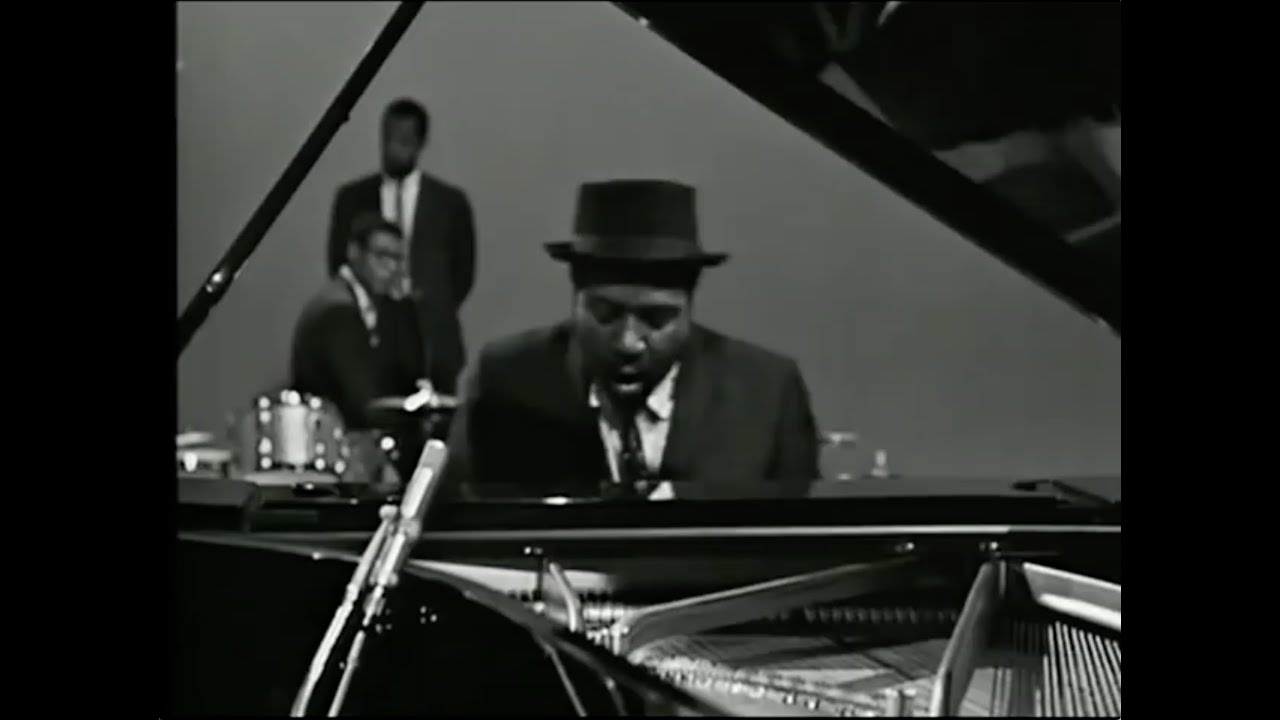
Thelonious Monk Don't Blame Me (Live in Denmark)
What Was Thelonious Monk’s Net Worth At The Time Of His Death?
At the time of death, Thelonious Monk’s net worth is estimated to have been between $1 million and $10 million. He earned his wealth through his career as a pioneering jazz pianist and composer. He recorded numerous albums and performed internationally. His popular compositions continue to generate royalties. He invested in real estate, purchasing a home in New Jersey, but otherwise relied entirely on his music career for income. He experienced financial instability in later life, but after his death his music catalog continued to generate revenue for his estate.
FAQs
1. Who Was Thelonious Monk And Why Is He Important In Jazz?
Thelonious Monk was an American jazz pianist and composer and one of the founders of bebop. He is known for his highly original piano style and for writing compositions that became modern jazz standards.
2. What Are Thelonious Monk’s Most Famous Compositions?
Some of Thelonious Monk’s best-known compositions include “’Round Midnight,” “Blue Monk,” “Straight, No Chaser,”and “Well, You Needn’t.”These works are widely performed and recorded by jazz musicians worldwide.
3. What Made Thelonious Monk’s Piano Style Unique?
Thelonious Monk’s piano style was marked by percussive attack, dissonant harmonies, unexpected pauses, and strong rhythmic control. His approach emphasized originality and structure rather than conventional technical polish.
4. Did Thelonious Monk Receive Major Awards Or Recognition?
Yes, Thelonious Monk appeared on the cover of TIMEmagazine in 1964, a rare honor for a jazz musician. He later received the Grammy Lifetime Achievement Award and a posthumous Pulitzer Prize special citation.
5. When Did Thelonious Monk Die And What Was The Cause Of His Death?
Thelonious Monk died on February 17, 1982, in Weehawken, New Jersey. The official cause of death was complications related to a stroke, following years of declining health.