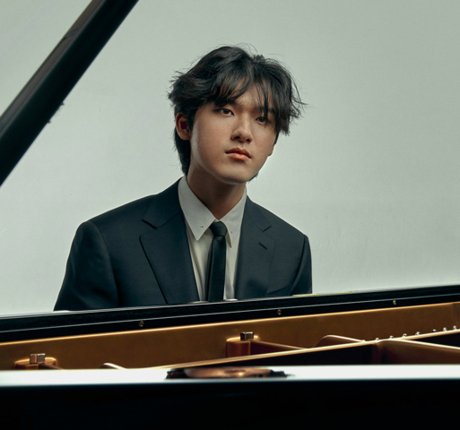
Yunchan Limwas born on 20 March 2004 in Siheung, a city of about half a million people in Gyeonggi Province, South Korea. He was raised in a non-musical family – none of his relatives were professional musicians, but his home was filled with music. His mother often played recordings of Chopin and Liszt on the piano, and his father enjoyed traditional Korean music. In fact, Lim later recalled that he was “surrounded by musical stimuli” even before he began formal lessons. When he was in the second grade of elementary school (about age 7), his mother suggested he learn an instrument.
Lim began piano lessons at age 7. He first studied at a local music academy for young children, where his teachers noted he initially lacked a strong musical foundation. At about age 8, he enrolled in the Seoul Arts Center’s Music Academy. When he was 13, he auditioned for and was admitted to Korea’s National Institute for the Gifted in Arts. There he met pianist Minsoo Sohn, who became his teacher and mentor during his teenage years.
After completing secondary school, Lim continued his music education at the tertiary level. He studied for two years at the Korea National University of Arts. He then moved to the United States to study under Minsoo Sohnat the New England Conservatory of Music in Boston. Throughout his youth, Lim’s early life and training combined a disciplined classical curriculum with the musical influences of his family, laying the foundation for his later development as a pianist.
Career Beginnings
Yunchan Lim’s early career was marked by success in international competitions. In 2018 he won second prize (with a Chopin special award) at the Cleveland International Piano Competition for Young Artistsand earned third prize (plus the audience award) at the Cooper International Piano Competition; these victories led to a performance with the Cleveland Orchestra.
In 2019, at age 15, he became the youngest winner of Korea’s IsangYun International Competition, also taking two special awards. He performed regularly in South Korea with ensembles such as the Busan Philharmonic and participated in national recordings of young musicians, laying the groundwork for his later breakthrough.
International Breakthrough
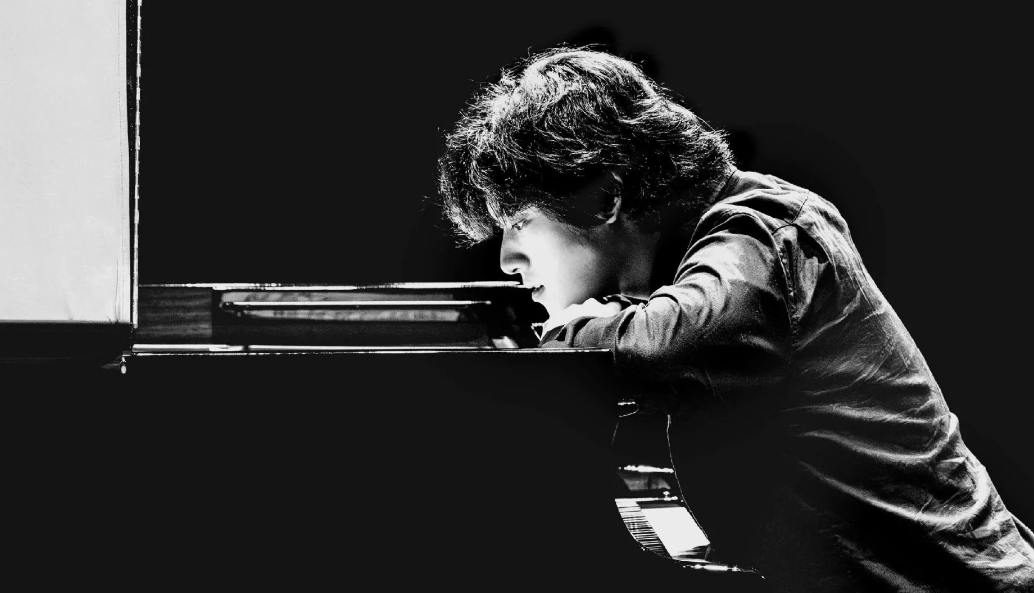
In June 2022 Yunchan Lim became the youngest pianist ever to win the Gold Medal at the prestigious Van Cliburn International Piano Competitionin Fort Worth, also receiving the Audience Award and Best New Work Prize. His performances of Liszt’s Transcendental Études and Rachmaninoff’s Piano Concerto No. 3 won widespread acclaim.
The video of his Rachmaninoff performance went viral online, garnering millions of views and was later named by The New York Times as one of the top classical music moments of 2022. Critics immediately hailed Lim as an extraordinary talent, with The New Yorker calling him “a once-in-a-generation pianist,” and this victory launched him into the global spotlight almost overnight.
Major Performances & Concert Highlights
In the years following the Cliburn win, Lim has appeared as soloist with leading orchestras and on major international stages. He made concerto debuts with the New York Philharmonic and Los Angeles Philharmonic, and has since played with the Chicago Symphony, Boston Symphony, Orchestre de Paris, BBC Symphony, Munich Philharmonic, and many others.
His recital appearances have included Carnegie Hall in New York, the BBC Proms at Royal Albert Hall in London, Wigmore Hall in London, Washington’s Kennedy Center, Tokyo’s Suntory Hall, and the Verbier Festival in Switzerland.
He made a notable debut with the Boston Symphony Orchestra in February 2024 under conductor Tugan Sokhiev, performing Rachmaninoff’s Third Concerto to multiple standing ovations. The Boston Globe described Lim after this concert as “the very definition of a rising star.”
A few days later he debuted at Carnegie Hall with a recital of Chopin’s Études; The New York Times praised the performance’s “virtuosity as life force,” noting that Lim drew a rare encore at the historic venue. These high-profile concerts helped cement his reputation in the American concert scene.
Recordings & Discography
Yunchan Lim is an exclusive artist on the Decca Classics label. His debut studio album, Chopin Études Op.10 & 25, released in April 2024, enjoyed massive success, selling multi-platinum in South Korea and topping classical charts worldwide.
It was followed by Tchaikovsky The Seasons, a 2025 release of live solo performances, which also reached number one on streaming charts. Decca has announced that Lim’s performance of Rachmaninoff’s Piano Concerto No. 3 from the 2022 Cliburn final will be released in May 2025.
Lim’s discography also includes solo and concerto recordings on other labels. He released Liszt’s Transcendental Études under the Steinway & Sons label and recorded Beethoven’s Emperor Piano Concerto for Universal Music Group.
Early in his career he appeared on the Korean Broadcasting System’s Young Musicians of Korea album in 2020. These releases, both live and in the studio, showcase Lim’s virtuosity and have reached audiences globally.
Awards & Professional Recognition
| Van Cliburn Gold Medal | Won in 2022, youngest winner in competition history |
| Gramophone Award | Named Young Artist of the Year in 2024 |
| BBC Music Magazine | Recording of the Year winner in 2025 |
| Decca Classics | Signed as an exclusive recording artist |
Lim’s performances and recordings have earned numerous major awards. In 2024 his Chopin Études album won the Gramophone Classical Music Award in the piano category, and he was named Gramophone’s Young Artist of the Year.
The recording also received France’s Diapason d’Or de l’année Young Talent. In April 2025 he made history at the BBC Music Magazine Awards, where his Chopin album won three prizes: Instrumental Award, Newcomer of the Year, and Recording of the Year, a first for a single recording.
Earlier, he achieved a clean sweep of prizes at the 2022 Van Cliburn Competition with the Gold Medal, Audience Award, and Best New Work Prize. Since January 2024 he has served as an Apple Music Classical Global Ambassador, a role honoring his impact on the classical music scene.
Collaborations With Orchestras & Conductors
Lim has collaborated with many of the world’s leading orchestras and conductors. As a concerto soloist he has been featured with ensembles such as the New York Philharmonic, Los Angeles Philharmonic, Chicago Symphony, Boston Symphony, London Symphony, Orchestre de Paris, Seoul Philharmonic, and Tokyo Philharmonic, among others.
He has worked under distinguished conductors including Marin Alsop, Chung Myung-whun, Gustavo Dudamel, Tugan Sokhiev, and Paavo Järvi. His repertoire with these collaborations has ranged from Romantic masterpieces by Chopin, Beethoven, and Rachmaninoff to virtuosic works by Liszt and Prokofiev, reflecting his versatility and the confidence placed in him by major orchestras and conductors worldwide.
Recent Career Activity
In the 2024–2025 season Lim continued an intensive international schedule. He returned to the BBC Proms and the Verbier Festival in summer 2024, and premiered with orchestras including the Washington National Symphony, Vienna Radio Symphony, Berlin Radio Symphony, WDR Cologne, and City of Birmingham Symphony.
He also appeared with the London Symphony, Cleveland Orchestra, and Minnesota Orchestra. In recital he presented acclaimed programs, notably performances of Bach’s Goldberg Variations at Carnegie Hall and at Wigmore Hall in London.
In 2025 he served as Artist in Residence at the Tongyeong International Music Festival in South Korea, giving concerts that highlighted both solo and chamber repertoire.
Looking ahead to the 2025 and 2026 season, Lim’s schedule includes debuts with the Philadelphia Orchestra, Staatskapelle Dresden, Santa Cecilia Orchestra in Rome, the Royal Concertgebouw Orchestra in Amsterdam, and the Leipzig Gewandhaus Orchestra.
He will also return to the New York Philharmonic, Los Angeles Philharmonic, Chicago Symphony, Boston Symphony, and Orchestre de Paris. His upcoming season includes major recital dates at Carnegie Hall and Wigmore Hall. Yunchan Lim’s career continues to expand internationally, marked by consistent critical acclaim and a growing global audience.
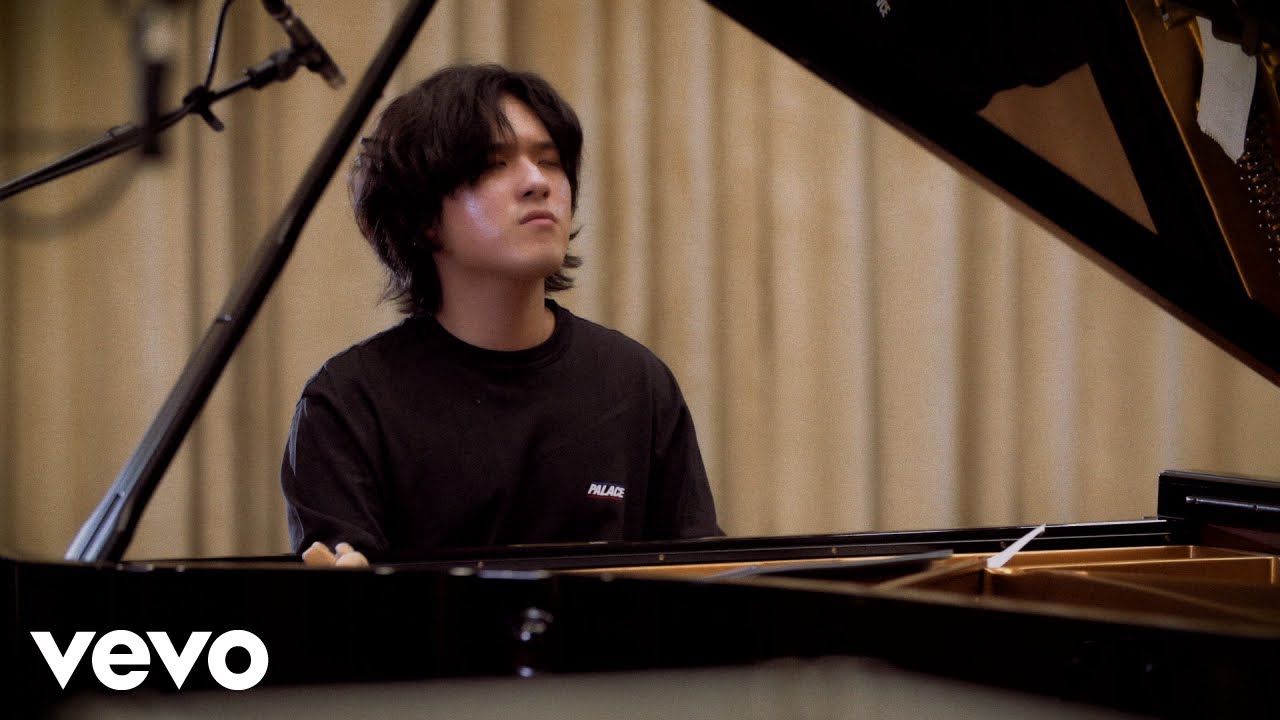
Yunchan Lim - Chopin: 12 Études, Op. 25 - No. 1 in A-Flat Major "Aeolian Harp"
Yunchan Lim Performance (2025-2026)
- BBC Proms (London, Aug 2025)- Soloist at the 2025 BBC Proms, performing Rachmaninoff’s Piano Concerto No. 4 with the City of Birmingham Symphony Orchestra under Kazuki Yamada.
- Walt Disney Concert Hall debut (Los Angeles, Oct 2025)- Made his Walt Disney Hall debut in a Colburn Celebrity Recital, presenting Bach’s Goldberg Variationsalongside a newly commissioned solo work (by Hanurij Lee).
- Philadelphia Orchestra (Oct 2025)- Featured soloist with Marin Alsop and the Philadelphia Orchestra for the ensemble’s 125th anniversary, performing Bartók’s Piano Concerto No. 3 in a program that also included a world premiere by John Adams.
- Royal Concertgebouw Orchestra (Amsterdam, Jan 2026)- European orchestral debut as soloist, performing Robert Schumann’s Piano Concerto under conductor Jakub Hrůša.
- Sächsische Staatskapelle Dresden (Dresden, Jan 2026)- Solo piano engagement with the Dresden Staatskapelle (conductor Myung-Whun Chung) in a concert featuring works by Weber, Schumann and Mendelssohn.
- Boston Symphony Orchestra (Boston, Mar 2026)- Returned to Symphony Hall as guest soloist (Schumann’s Piano Concerto in A minor) with the Boston Symphony Orchestra.
- Hong Kong Arts Festival (Hong Kong, Mar 2026)- Solo recital in the Hong Kong Cultural Centre Concert Hall, presenting a program of core repertoire that highlighted his “prodigious virtuosity” in an intimate setting.
- Major recital debuts (Spring 2026)- Solo recitals at Carnegie Hall in New York and London’s Wigmore Hall, each featuring Romantic masterworks (programs of Chopin, Schubert and R. Schumann).
- Gewandhausorchester Leipzig (Jun 2026)- Performed Schumann’s Piano Concerto in A minor under Andris Nelsons at the Leipzig Gewandhaus (closing the Bachfest Leipzig).
- Seasonal overview- The 2025-26 season featured Lim in high-profile debuts and returns across five continents, including major festivals and orchestras (NY Philharmonic, LA Philharmonic, Boston, Chicago, Paris, etc.) and sold-out halls, confirming his status as a leading young virtuoso.
Piano Playing Style And Musical Interpretation
Technical Approach And Piano Control
Yunchan Lim’s technique is both effortless and meticulously controlled. Critics note that even the densest passages seem effortlessly negotiated, with every note in hand. Runs, arpeggios and cadenzas are dispatched with confidence, yet never at the expense of clarity or musical direction.
His finger work is supple and independent, allowing for clear voice-leading in complex textures; even in highly virtuosic filigree Lim’s lines maintain a commanding shape and logical flow. Precision of articulation is consistently high: rapid passages sparkle without blurring, and even at fast, turbo-powered tempos he retains exactness.
Lim demonstrates extraordinary control over dynamics and projection. He reliably brings out the melody or solo line through full orchestral textures, and pianissimo passages are delivered with poise rather than disappearing in the hall.
Observers cite his astonishing control over projection, noting that bold climaxes ring richly and with pealing resonance even at distant concert-hall balconies. At the same time, very soft passages remain audible and balanced; inner voices are kept distinct, and delicate legato lines are maintained without sacrificing evenness or musical line.
His use of the pedals is equally refined. Carefully timed sustaining pedaling and finger legato enable him to produce seamless cantabile lines, while releasing pedal cleanly to preserve clarity in contrapuntal writing.
In sum, Lim’s technique is characterized by its maturity: despite his youth, reviewers agree that he approaches daunting technical challenges with total assurance, always ensuring that virtuosity serves the music rather than becoming an end in itself.
Tone, Touch, And Sound Color
Lim is praised for the beauty and versatility of his tone. His palette ranges from a silvery, pearly pianissimo to a full, vibrant fortissimo. In soft passages his tone is described as luminous and singing; even a quiet melody projects effortlessly with a clear, bell-like quality.
Conversely, in the grand gestures he produces a rich, resonant sound that fills the hall. Reviewers often mention the purity of his sound: one critic noted a pearly tone reminiscent of Chopin’s own lyricism being applied even in baroque repertoire.
Similarly, in Romantic works the piano’s voice can take on a warm, expansive lyricism. For example, in the Rachmaninoff concerto Lim balances his biting, percussive articulations against a deep, singing warmth, allowing lines to unfurl with soulfulness.
His touch is consistently refined. In fast passages he often employs a light, leggiero touch that gives rapid figures a weightless, wind-like character. Delicate harp-like effects and crisp staccatos alike are executed with clarity.
Chopin’s etudes that require precision are played with sharpness and precision, each note articulated cleanly even at breakneck speeds. At the same time, Lim can draw a rounded, singing tone in legato lines.
In his Chopin performances, reviewers noted a cantabile playing of the highest order, where each note is shaped into a sustained, voice-like quality. This combination of shimmering delicacy and robust depth allows him to create a wide range of color.
A low bass note can thunder with power, and a high register melody can ring with clarity. Overall, Lim’s tone and touch are remarkably expressive: he can make the piano sing, whisper, thunder, or shimmer as the music demands.
Rhythm, Phrasing, And Structural Clarity
Rhythm and phrasing in Lim’s playing are shaped by a strong sense of form and forward motion. He often favors a propulsive momentum, driving music ahead with steady pulse and clear beat.
In concerto performances critics noted how his pacing built excitement, charging through themes with forward impulse and energy. Even when tempos are brisk, the musical line retains coherence.
Lim’s phrasing emphasizes the structure of the piece: motifs and themes are clearly delineated, and he often highlights the architecture of the composition. In Bach’s Goldberg Variations the steady tempo of the opening Aria established a foundation of momentum, and Lim maintained that drive throughout the performance.
Each variation was distinct but connected, avoiding monotony through carefully shaped contours. His clear voice-leading in polyphonic textures helps listeners follow the form.
At the same time, Lim demonstrates rhythmic flexibility and expressive rubato where appropriate. Critics note his willingness to reshape phrases subtly for expressive effect.
In lyrical passages he may ease or press the tempo to heighten tension or release, with a flexible rubato that allows emotional drama to emerge organically. Yet even such rubato is balanced by an overall feeling of unity: lines remain logical and well-connected.
Lim listens carefully to the harmonic and motivic flow, ensuring that even the most intimate phrase ultimately fits into the larger musical architecture. In summary, Lim’s rhythmic style blends rhythmic exactitude in complex passages with a natural ebb and flow in melodic passages, always serving the composition’s overall structure.
Interpretative Approach To Repertoire
Lim’s interpretative style reflects deep engagement with different periods of piano literature. He has shown a particular affinity for Romantic repertoire, but equally brings imagination to Classical and Baroque works.
Reviewers emphasize that he approaches every piece with a fresh, personal conception. His performances of Bach exhibit a Romantic breadth of color, combining contrapuntal clarity with expressive sweep.
In Bach’s Goldberg Variations he chose rapid tempos and a light, airy touch, connecting the music’s contrasts into a narrative arc.
When interpreting Classical works such as Beethoven, Lim emphasizes clarity and architecture. His Beethoven is noted for its balance of dignity and lucidity: phrases are well-defined, with close attention to form and structure.
Although less frequently documented than his Romantic repertoire, it is consistent that Lim applies the same disciplined musical logic to Classical works as he does to large-scale concertos.
In Romantic works such as Chopin, Liszt, and Rachmaninoff, Lim often explores narrative and emotional depth. He has spoken of finding poetic and literary associations in Chopin’s music, and his interpretations are described as imaginative and colorful.
His Chopin performances are tender and expressive in lyric lines, yet forceful and fiery in virtuosic passages. In Rachmaninoff, Lim combines sweeping passion with technical control, emphasizing both the grandeur and introspection inherent in the music.
Lim’s approach to repertoire suggests a commitment to continual refinement. He has stated that his understanding of works changes over time, and critics observe that his interpretations often reveal new insights across repeated performances.
He treats each composer and era with sensitivity, honoring Classical balance, enriching Baroque clarity with expressive nuance, and approaching Romantic works with both emotional intensity and intellectual rigor.
Balance Between Precision And Expression
A defining feature of Lim’s playing is the integration of precision and expression. His technical command is consistently placed in service of musical meaning. Virtuosity is never presented as spectacle alone but functions as a structural and expressive tool.
In slow movements, Lim shapes simple melodic lines with the same care and intent as complex figurations in faster sections.
His articulation can be incisive and rhythmically pointed when required, providing drive and clarity, particularly in fast movements. At the same time, he allows lyrical passages to breathe through legato phrasing and subtle rubato.
This balance is especially evident in Romantic repertoire, where percussive brilliance and singing warmth coexist naturally. Critics frequently emphasize that even in moments of great power and speed, Lim maintains musical coherence and expressive depth, avoiding empty display.
Critical Observations And Musical Identity
Critical commentary consistently portrays Yunchan Lim as an unusually mature and thoughtful artist with a distinct musical voice. His interpretations are often described as daring and individual, marked by a willingness to reexamine familiar works through his own musical logic.
Comparisons with historic pianistsare common, yet reviewers emphasize that his interpretations remain personal rather than imitative.
Lim is frequently noted for his seriousness of purpose and devotion to the music. Observers describe him as focused on serving the score rather than projecting personal display.
This has shaped a musical identity grounded in sincerity, intellectual engagement, and disciplined imagination. His performances are often characterized by introspection, structural awareness, and expressive restraint.
Taken together, critical consensus presents Yunchan Lim as an artist whose technical mastery is matched by interpretative depth. His playing reflects a rare combination of fearless imagination and rigorous musicianship.
Even at an early stage, he is widely regarded as a pianist with a clearly defined artistic identity and a capacity for continued evolution grounded in musical substance rather than external effect.
Yunchan Lim Net Worth
As of 2025, reliable online estimate sites report Yunchan Lim’s net worth between about $2 million and $3 million, based on aggregated figures from public net worth tracking sites. He earns and maintains his wealth primarily through his rapidly rising career as a classical concert pianist, prize money from major competitions including the Van Cliburn International Piano Competition, performance fees from international concert appearances, and income from his exclusive recording contract with Decca. Major business outlets such as Forbes have profiled his career but do not confirm an official net worth, so estimates remain based on entertainment and finance compilations rather than direct reporting.
FAQs
Who Is Yunchan Lim And Why Is He Considered One Of The Most Important Young Pianists Today?
Yunchan Lim is a South Korean classical pianist who gained worldwide attention after winning the Gold Medal at the 2022 Van Cliburn International Piano Competition at age 18, becoming the youngest winner in the event’s history. That milestone, followed by high-profile engagements with major institutions, has positioned him as a leading artist of his generation.
How Did Yunchan Lim Achieve International Recognition In Classical Music?
He achieved international recognition by winning the 2022 Van Cliburn International Piano Competition, along with the Audience Award and Best Performance of a New Work prize. The Cliburn win rapidly expanded his global profile and led to major orchestral and recital invitations.
What Distinguishes Yunchan Lim’s Piano Technique And Musical Interpretation?
Critics frequently note a combination of technical command and structural clarity, with interpretations that emphasize musical architecture rather than display. Reviews of his recital repertoire, including Bach, have highlighted both technical brilliance and architectural focus in performance.
What Are Yunchan Lim’s Most Significant Awards And Professional Achievements?
His most significant achievement is winning the Gold Medal at the 2022 Van Cliburn International Piano Competition, plus the Audience Award and Best Performance of a New Work prize. Professionally, he released his debut Decca Classics studio album, “Chopin Études, Op.10 & Op.25,” with a listed release date of 19 April 2024.
Which Major Orchestras And International Concert Halls Has Yunchan Lim Performed With?
He has appeared with leading orchestras including the Boston Symphony Orchestra and has performed at major venues such as Carnegie Hall. His ongoing schedule also includes repeated engagements with major orchestras and international stages noted by organizations like the New York Philharmonic and Boston Symphony Orchestra.
Lim began piano lessons at age 7. He first studied at a local music academy for young children, where his teachers noted he initially lacked a strong musical foundation. At about age 8, he enrolled in the Seoul Arts Center’s Music Academy. When he was 13, he auditioned for and was admitted to Korea’s National Institute for the Gifted in Arts. There he met pianist Minsoo Sohn, who became his teacher and mentor during his teenage years.
After completing secondary school, Lim continued his music education at the tertiary level. He studied for two years at the Korea National University of Arts. He then moved to the United States to study under Minsoo Sohnat the New England Conservatory of Music in Boston. Throughout his youth, Lim’s early life and training combined a disciplined classical curriculum with the musical influences of his family, laying the foundation for his later development as a pianist.
Career Beginnings
Yunchan Lim’s early career was marked by success in international competitions. In 2018 he won second prize (with a Chopin special award) at the Cleveland International Piano Competition for Young Artistsand earned third prize (plus the audience award) at the Cooper International Piano Competition; these victories led to a performance with the Cleveland Orchestra.
In 2019, at age 15, he became the youngest winner of Korea’s IsangYun International Competition, also taking two special awards. He performed regularly in South Korea with ensembles such as the Busan Philharmonic and participated in national recordings of young musicians, laying the groundwork for his later breakthrough.
International Breakthrough
In June 2022 Yunchan Lim became the youngest pianist ever to win the Gold Medal at the prestigious Van Cliburn International Piano Competitionin Fort Worth, also receiving the Audience Award and Best New Work Prize. His performances of Liszt’s Transcendental Études and Rachmaninoff’s Piano Concerto No. 3 won widespread acclaim.
The video of his Rachmaninoff performance went viral online, garnering millions of views and was later named by The New York Times as one of the top classical music moments of 2022. Critics immediately hailed Lim as an extraordinary talent, with The New Yorker calling him “a once-in-a-generation pianist,” and this victory launched him into the global spotlight almost overnight.
Major Performances & Concert Highlights
In the years following the Cliburn win, Lim has appeared as soloist with leading orchestras and on major international stages. He made concerto debuts with the New York Philharmonic and Los Angeles Philharmonic, and has since played with the Chicago Symphony, Boston Symphony, Orchestre de Paris, BBC Symphony, Munich Philharmonic, and many others.
His recital appearances have included Carnegie Hall in New York, the BBC Proms at Royal Albert Hall in London, Wigmore Hall in London, Washington’s Kennedy Center, Tokyo’s Suntory Hall, and the Verbier Festival in Switzerland.
He made a notable debut with the Boston Symphony Orchestra in February 2024 under conductor Tugan Sokhiev, performing Rachmaninoff’s Third Concerto to multiple standing ovations. The Boston Globe described Lim after this concert as “the very definition of a rising star.”
A few days later he debuted at Carnegie Hall with a recital of Chopin’s Études; The New York Times praised the performance’s “virtuosity as life force,” noting that Lim drew a rare encore at the historic venue. These high-profile concerts helped cement his reputation in the American concert scene.
Recordings & Discography
Yunchan Lim is an exclusive artist on the Decca Classics label. His debut studio album, Chopin Études Op.10 & 25, released in April 2024, enjoyed massive success, selling multi-platinum in South Korea and topping classical charts worldwide.
It was followed by Tchaikovsky The Seasons, a 2025 release of live solo performances, which also reached number one on streaming charts. Decca has announced that Lim’s performance of Rachmaninoff’s Piano Concerto No. 3 from the 2022 Cliburn final will be released in May 2025.
Lim’s discography also includes solo and concerto recordings on other labels. He released Liszt’s Transcendental Études under the Steinway & Sons label and recorded Beethoven’s Emperor Piano Concerto for Universal Music Group.
Early in his career he appeared on the Korean Broadcasting System’s Young Musicians of Korea album in 2020. These releases, both live and in the studio, showcase Lim’s virtuosity and have reached audiences globally.
Awards & Professional Recognition
| Van Cliburn Gold Medal | Won in 2022, youngest winner in competition history |
| Gramophone Award | Named Young Artist of the Year in 2024 |
| BBC Music Magazine | Recording of the Year winner in 2025 |
| Decca Classics | Signed as an exclusive recording artist |
Lim’s performances and recordings have earned numerous major awards. In 2024 his Chopin Études album won the Gramophone Classical Music Award in the piano category, and he was named Gramophone’s Young Artist of the Year.
The recording also received France’s Diapason d’Or de l’année Young Talent. In April 2025 he made history at the BBC Music Magazine Awards, where his Chopin album won three prizes: Instrumental Award, Newcomer of the Year, and Recording of the Year, a first for a single recording.
Earlier, he achieved a clean sweep of prizes at the 2022 Van Cliburn Competition with the Gold Medal, Audience Award, and Best New Work Prize. Since January 2024 he has served as an Apple Music Classical Global Ambassador, a role honoring his impact on the classical music scene.
Collaborations With Orchestras & Conductors
Lim has collaborated with many of the world’s leading orchestras and conductors. As a concerto soloist he has been featured with ensembles such as the New York Philharmonic, Los Angeles Philharmonic, Chicago Symphony, Boston Symphony, London Symphony, Orchestre de Paris, Seoul Philharmonic, and Tokyo Philharmonic, among others.
He has worked under distinguished conductors including Marin Alsop, Chung Myung-whun, Gustavo Dudamel, Tugan Sokhiev, and Paavo Järvi. His repertoire with these collaborations has ranged from Romantic masterpieces by Chopin, Beethoven, and Rachmaninoff to virtuosic works by Liszt and Prokofiev, reflecting his versatility and the confidence placed in him by major orchestras and conductors worldwide.
Recent Career Activity
In the 2024–2025 season Lim continued an intensive international schedule. He returned to the BBC Proms and the Verbier Festival in summer 2024, and premiered with orchestras including the Washington National Symphony, Vienna Radio Symphony, Berlin Radio Symphony, WDR Cologne, and City of Birmingham Symphony.
He also appeared with the London Symphony, Cleveland Orchestra, and Minnesota Orchestra. In recital he presented acclaimed programs, notably performances of Bach’s Goldberg Variations at Carnegie Hall and at Wigmore Hall in London.
In 2025 he served as Artist in Residence at the Tongyeong International Music Festival in South Korea, giving concerts that highlighted both solo and chamber repertoire.
Looking ahead to the 2025 and 2026 season, Lim’s schedule includes debuts with the Philadelphia Orchestra, Staatskapelle Dresden, Santa Cecilia Orchestra in Rome, the Royal Concertgebouw Orchestra in Amsterdam, and the Leipzig Gewandhaus Orchestra.
He will also return to the New York Philharmonic, Los Angeles Philharmonic, Chicago Symphony, Boston Symphony, and Orchestre de Paris. His upcoming season includes major recital dates at Carnegie Hall and Wigmore Hall. Yunchan Lim’s career continues to expand internationally, marked by consistent critical acclaim and a growing global audience.
Yunchan Lim - Chopin: 12 Études, Op. 25 - No. 1 in A-Flat Major "Aeolian Harp"
Yunchan Lim Performance (2025-2026)
- BBC Proms (London, Aug 2025)- Soloist at the 2025 BBC Proms, performing Rachmaninoff’s Piano Concerto No. 4 with the City of Birmingham Symphony Orchestra under Kazuki Yamada.
- Walt Disney Concert Hall debut (Los Angeles, Oct 2025)- Made his Walt Disney Hall debut in a Colburn Celebrity Recital, presenting Bach’s Goldberg Variationsalongside a newly commissioned solo work (by Hanurij Lee).
- Philadelphia Orchestra (Oct 2025)- Featured soloist with Marin Alsop and the Philadelphia Orchestra for the ensemble’s 125th anniversary, performing Bartók’s Piano Concerto No. 3 in a program that also included a world premiere by John Adams.
- Royal Concertgebouw Orchestra (Amsterdam, Jan 2026)- European orchestral debut as soloist, performing Robert Schumann’s Piano Concerto under conductor Jakub Hrůša.
- Sächsische Staatskapelle Dresden (Dresden, Jan 2026)- Solo piano engagement with the Dresden Staatskapelle (conductor Myung-Whun Chung) in a concert featuring works by Weber, Schumann and Mendelssohn.
- Boston Symphony Orchestra (Boston, Mar 2026)- Returned to Symphony Hall as guest soloist (Schumann’s Piano Concerto in A minor) with the Boston Symphony Orchestra.
- Hong Kong Arts Festival (Hong Kong, Mar 2026)- Solo recital in the Hong Kong Cultural Centre Concert Hall, presenting a program of core repertoire that highlighted his “prodigious virtuosity” in an intimate setting.
- Major recital debuts (Spring 2026)- Solo recitals at Carnegie Hall in New York and London’s Wigmore Hall, each featuring Romantic masterworks (programs of Chopin, Schubert and R. Schumann).
- Gewandhausorchester Leipzig (Jun 2026)- Performed Schumann’s Piano Concerto in A minor under Andris Nelsons at the Leipzig Gewandhaus (closing the Bachfest Leipzig).
- Seasonal overview- The 2025-26 season featured Lim in high-profile debuts and returns across five continents, including major festivals and orchestras (NY Philharmonic, LA Philharmonic, Boston, Chicago, Paris, etc.) and sold-out halls, confirming his status as a leading young virtuoso.
Piano Playing Style And Musical Interpretation
Technical Approach And Piano Control
Yunchan Lim’s technique is both effortless and meticulously controlled. Critics note that even the densest passages seem effortlessly negotiated, with every note in hand. Runs, arpeggios and cadenzas are dispatched with confidence, yet never at the expense of clarity or musical direction.
His finger work is supple and independent, allowing for clear voice-leading in complex textures; even in highly virtuosic filigree Lim’s lines maintain a commanding shape and logical flow. Precision of articulation is consistently high: rapid passages sparkle without blurring, and even at fast, turbo-powered tempos he retains exactness.
Lim demonstrates extraordinary control over dynamics and projection. He reliably brings out the melody or solo line through full orchestral textures, and pianissimo passages are delivered with poise rather than disappearing in the hall.
Observers cite his astonishing control over projection, noting that bold climaxes ring richly and with pealing resonance even at distant concert-hall balconies. At the same time, very soft passages remain audible and balanced; inner voices are kept distinct, and delicate legato lines are maintained without sacrificing evenness or musical line.
His use of the pedals is equally refined. Carefully timed sustaining pedaling and finger legato enable him to produce seamless cantabile lines, while releasing pedal cleanly to preserve clarity in contrapuntal writing.
In sum, Lim’s technique is characterized by its maturity: despite his youth, reviewers agree that he approaches daunting technical challenges with total assurance, always ensuring that virtuosity serves the music rather than becoming an end in itself.
Tone, Touch, And Sound Color
Lim is praised for the beauty and versatility of his tone. His palette ranges from a silvery, pearly pianissimo to a full, vibrant fortissimo. In soft passages his tone is described as luminous and singing; even a quiet melody projects effortlessly with a clear, bell-like quality.
Conversely, in the grand gestures he produces a rich, resonant sound that fills the hall. Reviewers often mention the purity of his sound: one critic noted a pearly tone reminiscent of Chopin’s own lyricism being applied even in baroque repertoire.
Similarly, in Romantic works the piano’s voice can take on a warm, expansive lyricism. For example, in the Rachmaninoff concerto Lim balances his biting, percussive articulations against a deep, singing warmth, allowing lines to unfurl with soulfulness.
His touch is consistently refined. In fast passages he often employs a light, leggiero touch that gives rapid figures a weightless, wind-like character. Delicate harp-like effects and crisp staccatos alike are executed with clarity.
Chopin’s etudes that require precision are played with sharpness and precision, each note articulated cleanly even at breakneck speeds. At the same time, Lim can draw a rounded, singing tone in legato lines.
In his Chopin performances, reviewers noted a cantabile playing of the highest order, where each note is shaped into a sustained, voice-like quality. This combination of shimmering delicacy and robust depth allows him to create a wide range of color.
A low bass note can thunder with power, and a high register melody can ring with clarity. Overall, Lim’s tone and touch are remarkably expressive: he can make the piano sing, whisper, thunder, or shimmer as the music demands.
Rhythm, Phrasing, And Structural Clarity
Rhythm and phrasing in Lim’s playing are shaped by a strong sense of form and forward motion. He often favors a propulsive momentum, driving music ahead with steady pulse and clear beat.
In concerto performances critics noted how his pacing built excitement, charging through themes with forward impulse and energy. Even when tempos are brisk, the musical line retains coherence.
Lim’s phrasing emphasizes the structure of the piece: motifs and themes are clearly delineated, and he often highlights the architecture of the composition. In Bach’s Goldberg Variations the steady tempo of the opening Aria established a foundation of momentum, and Lim maintained that drive throughout the performance.
Each variation was distinct but connected, avoiding monotony through carefully shaped contours. His clear voice-leading in polyphonic textures helps listeners follow the form.
At the same time, Lim demonstrates rhythmic flexibility and expressive rubato where appropriate. Critics note his willingness to reshape phrases subtly for expressive effect.
In lyrical passages he may ease or press the tempo to heighten tension or release, with a flexible rubato that allows emotional drama to emerge organically. Yet even such rubato is balanced by an overall feeling of unity: lines remain logical and well-connected.
Lim listens carefully to the harmonic and motivic flow, ensuring that even the most intimate phrase ultimately fits into the larger musical architecture. In summary, Lim’s rhythmic style blends rhythmic exactitude in complex passages with a natural ebb and flow in melodic passages, always serving the composition’s overall structure.
Interpretative Approach To Repertoire
Lim’s interpretative style reflects deep engagement with different periods of piano literature. He has shown a particular affinity for Romantic repertoire, but equally brings imagination to Classical and Baroque works.
Reviewers emphasize that he approaches every piece with a fresh, personal conception. His performances of Bach exhibit a Romantic breadth of color, combining contrapuntal clarity with expressive sweep.
In Bach’s Goldberg Variations he chose rapid tempos and a light, airy touch, connecting the music’s contrasts into a narrative arc.
When interpreting Classical works such as Beethoven, Lim emphasizes clarity and architecture. His Beethoven is noted for its balance of dignity and lucidity: phrases are well-defined, with close attention to form and structure.
Although less frequently documented than his Romantic repertoire, it is consistent that Lim applies the same disciplined musical logic to Classical works as he does to large-scale concertos.
In Romantic works such as Chopin, Liszt, and Rachmaninoff, Lim often explores narrative and emotional depth. He has spoken of finding poetic and literary associations in Chopin’s music, and his interpretations are described as imaginative and colorful.
His Chopin performances are tender and expressive in lyric lines, yet forceful and fiery in virtuosic passages. In Rachmaninoff, Lim combines sweeping passion with technical control, emphasizing both the grandeur and introspection inherent in the music.
Lim’s approach to repertoire suggests a commitment to continual refinement. He has stated that his understanding of works changes over time, and critics observe that his interpretations often reveal new insights across repeated performances.
He treats each composer and era with sensitivity, honoring Classical balance, enriching Baroque clarity with expressive nuance, and approaching Romantic works with both emotional intensity and intellectual rigor.
Balance Between Precision And Expression
A defining feature of Lim’s playing is the integration of precision and expression. His technical command is consistently placed in service of musical meaning. Virtuosity is never presented as spectacle alone but functions as a structural and expressive tool.
In slow movements, Lim shapes simple melodic lines with the same care and intent as complex figurations in faster sections.
His articulation can be incisive and rhythmically pointed when required, providing drive and clarity, particularly in fast movements. At the same time, he allows lyrical passages to breathe through legato phrasing and subtle rubato.
This balance is especially evident in Romantic repertoire, where percussive brilliance and singing warmth coexist naturally. Critics frequently emphasize that even in moments of great power and speed, Lim maintains musical coherence and expressive depth, avoiding empty display.
Critical Observations And Musical Identity
Critical commentary consistently portrays Yunchan Lim as an unusually mature and thoughtful artist with a distinct musical voice. His interpretations are often described as daring and individual, marked by a willingness to reexamine familiar works through his own musical logic.
Comparisons with historic pianists are common, yet reviewers emphasize that his interpretations remain personal rather than imitative.
Lim is frequently noted for his seriousness of purpose and devotion to the music. Observers describe him as focused on serving the score rather than projecting personal display.
This has shaped a musical identity grounded in sincerity, intellectual engagement, and disciplined imagination. His performances are often characterized by introspection, structural awareness, and expressive restraint.
Taken together, critical consensus presents Yunchan Lim as an artist whose technical mastery is matched by interpretative depth. His playing reflects a rare combination of fearless imagination and rigorous musicianship.
Even at an early stage, he is widely regarded as a pianist with a clearly defined artistic identity and a capacity for continued evolution grounded in musical substance rather than external effect.
Yunchan Lim Net Worth
As of 2025, reliable online estimate sites report Yunchan Lim’s net worth between about $2 million and $3 million, based on aggregated figures from public net worth tracking sites. He earns and maintains his wealth primarily through his rapidly rising career as a classical concert pianist, prize money from major competitions including the Van Cliburn International Piano Competition, performance fees from international concert appearances, and income from his exclusive recording contract with Decca. Major business outlets such as Forbes have profiled his career but do not confirm an official net worth, so estimates remain based on entertainment and finance compilations rather than direct reporting.
FAQs
Who Is Yunchan Lim And Why Is He Considered One Of The Most Important Young Pianists Today?
Yunchan Lim is a South Korean classical pianist who gained worldwide attention after winning the Gold Medal at the 2022 Van Cliburn International Piano Competition at age 18, becoming the youngest winner in the event’s history. That milestone, followed by high-profile engagements with major institutions, has positioned him as a leading artist of his generation.
How Did Yunchan Lim Achieve International Recognition In Classical Music?
He achieved international recognition by winning the 2022 Van Cliburn International Piano Competition, along with the Audience Award and Best Performance of a New Work prize. The Cliburn win rapidly expanded his global profile and led to major orchestral and recital invitations.
What Distinguishes Yunchan Lim’s Piano Technique And Musical Interpretation?
Critics frequently note a combination of technical command and structural clarity, with interpretations that emphasize musical architecture rather than display. Reviews of his recital repertoire, including Bach, have highlighted both technical brilliance and architectural focus in performance.
What Are Yunchan Lim’s Most Significant Awards And Professional Achievements?
His most significant achievement is winning the Gold Medal at the 2022 Van Cliburn International Piano Competition, plus the Audience Award and Best Performance of a New Work prize. Professionally, he released his debut Decca Classics studio album, “Chopin Études, Op.10 & Op.25,” with a listed release date of 19 April 2024.
Which Major Orchestras And International Concert Halls Has Yunchan Lim Performed With?
He has appeared with leading orchestras including the Boston Symphony Orchestra and has performed at major venues such as Carnegie Hall. His ongoing schedule also includes repeated engagements with major orchestras and international stages noted by organizations like the New York Philharmonic and Boston Symphony Orchestra.