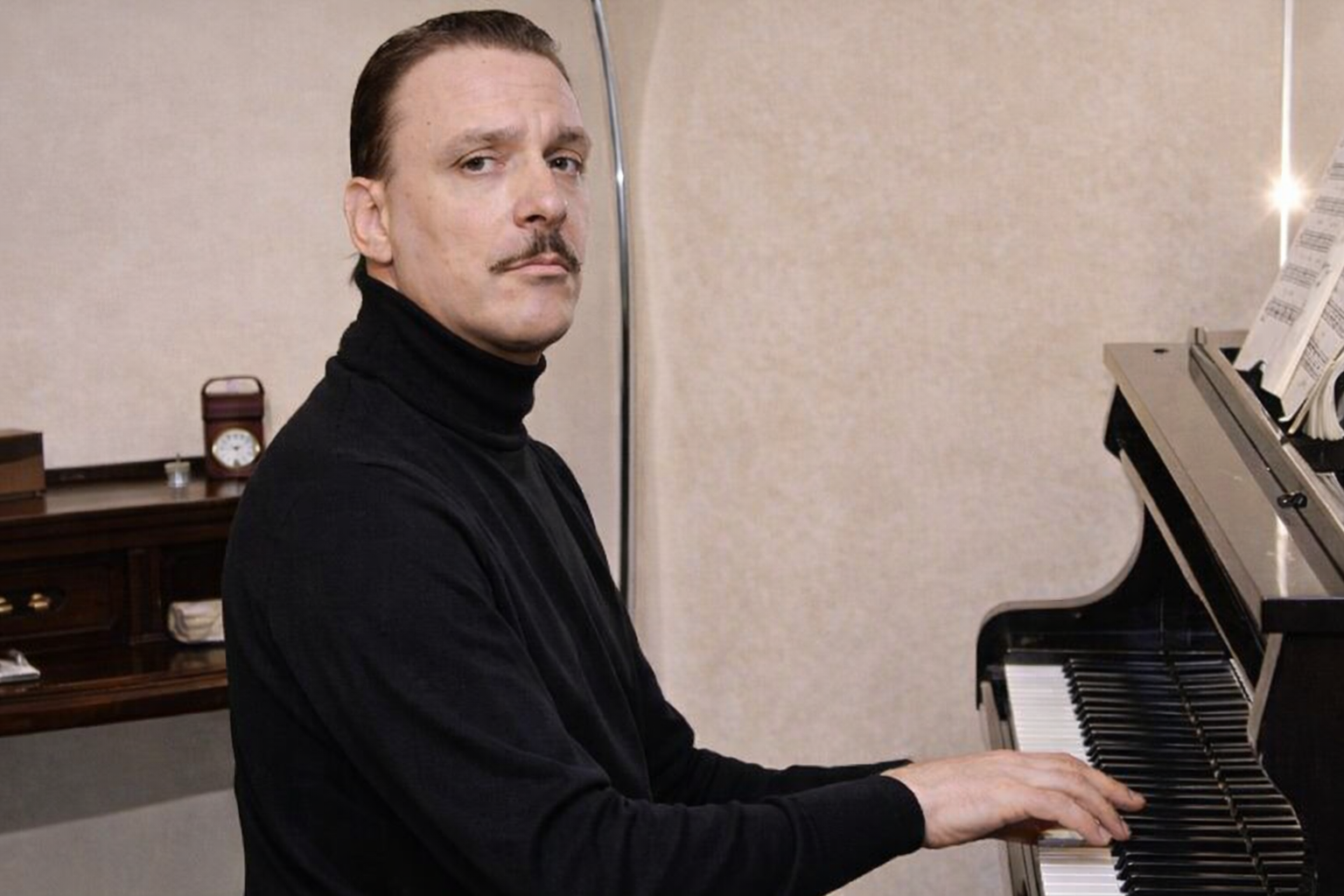
Arturo Benedetti Michelangeliwas born in Brescia, Italy, on January 5, 1920. His parents, Giuseppe Benedetti and Angela (Paparoni) Benedetti, were originally from the Umbrian region and had moved to Brescia just before his birth.
His father was a lawyer with strong musical training, and also taught music (history, theory, harmony and piano). His mother held a teacher’s diploma and later focused on raising her family, creating a household environment steeped in music.
From infancy Michelangeli was immersed in music. Under his father’s guidance he began formal music study at age three, playing the piano by that age.
In this musical home atmosphere he earned the childhood nickname “little Ciro” for his curly hair. His mother took charge of his early education, even teaching him at home rather than sending him to regular school, so that all his early studies revolved around music.
By age four, Michelangeli had won admission to Brescia’s “Venturi” Civic Institute of Music, where he studied piano under Maestro Paolo Chimeri. He remained at Venturi through his childhood, performing publicly for the first time at age seven during a year-end student concert.
In the late 1920s he moved to Milan for advanced studies. There he studied piano and composition with Giovanni Anfossi, and also took violin lessons with Renzo (Ferruccio) Francesconi. (His early violin training had begun in Brescia but he devoted increasing focus to the piano.)
Michelangeli completed his formal conservatory training unusually early. At 14 years oldhe earned the highest-level piano diploma (a soloist’s diploma) from the Giuseppe Verdi Conservatory in Milan.
| Aspect | Verified Details |
| Birth | Born January 5, 1920, in Brescia, Italy |
| Parents | Giuseppe Benedetti and Angela Paparoni Benedetti |
| Family Origin | Parents originally from the Umbrian region |
| Home Environment | Raised in a music-focused household |
| Early Training | Began music study at age three |
| Instruments | Piano and violin in early childhood |
| Early Education | Educated at home by his mother |
| Childhood Nickname | Known as “little Ciro” |
| Music Institute | Venturi Civic Institute of Music, Brescia |
| Piano Teacher | Studied with Paolo Chimeri |
| First Performance | Public performance at age seven |
| Advanced Studies | Continued studies in Milan |
| Conservatory | Giuseppe Verdi Conservatory of Milan |
| Diploma | Earned soloist piano diploma at age fourteen |

Michelangeli plays Chopin Berceuse Op. 57 D Flat Major
Career Beginnings
Michelangeli’s professional career took off in the late 1930s. In 1939, at age 19, he won the first prize in the Geneva International Piano Competition (Alfred Cortot famously likened his talent to a fusion of Liszt and Paderewski). This victory led to his first concerts and recordings.
By 1940 he had made a sensational recital debut in Rome, displaying extraordinary technique and musical insight. He also began making commercial recordings in Italy (for EMI/HMV) around this time.
Soon after, World War II interrupted his budding career, Michelangeli served in the Italian Air Force during the conflict, pausing most concert activity until the mid-1940s.
International Breakthrough
After the war Michelangeli resumed concertizing with immediate success. His 1946 debut in London with the London Symphony Orchestra at the Royal Albert Hall (performing Liszt and Franck) drew critical acclaim.
In 1948 he toured the United States: his orchestral debut came at Carnegie Hall in November with the New York Philharmonic under Dimitri Mitropoulos(playing Schumann’s Piano Concerto in A minor), followed by a solo recital at Carnegie in January 1949.
Over the next decade he gave recitals and concertos across Europe and the Americas (including tours of South America and the Soviet Union) and was hailed in the press as one of Italy’s distinguished young virtuosos.
By the 1950s he was regularly appearing at major international venues and festivals, cementing his reputation as a leading pianist of his generation.
Major Performances & Concert Highlights
Among Michelangeli’s notable appearances was a 1947 concert at La Scala in Milan (with the RAI Turin Orchestra under Mario Rossi) where he performed Beethoven’s Piano Concerto No. 5 in E-flat major, Op. 73 (“Emperor”).
He later performed at celebrated venues such as London’s Royal Festival Hall and participated in international festivals like the Prague Spring Festival (1960), where he played Chopin’s Sonata in B-flat minor and Ravel’s Gaspard de la nuitto great acclaim.
His repertoire on stage remained focused: he frequently gave concerts featuring Beethoven and Brahms concertos, Schumann, Chopin’s Ballades, Rachmaninoff’s Fourth Piano Concerto, and Impressionist works like Debussy’s Préludes.
Throughout his career he brought these masterpieces to life in concertos with major orchestras (for example, performing Beethoven concertos with Carlo Maria Giuliniand the Vienna Symphony) and in demanding solo recital programs.
Recordings & Discography
| Period | Recording Highlights |
| 1939–1940 | Early 78 rpm recordings for EMI/HMV |
| 1957 | Ravel Piano Concerto in G; Rachmaninoff Piano Concerto No. 4 |
| Late 1960s | Long-term collaboration with Deutsche Grammophon |
| 1971–1989 | Mozart, Beethoven, Chopin, Debussy solo and concerto recordings |
| Live Recordings | Numerous radio broadcasts released commercially |
| Final Release | Hamburg 1993 final recital issued on CD |
Michelangeli’s recorded legacy spans several decades. He began recording in Italy in 1939–40, issuing works by Grieg, Granados, Chopin and Mozart for EMI/HMV on 78 rpm records.
His postwar studio output included acclaimed EMI recordings of Ravel’s Piano Concerto in G (1957) and Rachmaninoff’s Piano Concerto No. 4 (1957), which established his reputation.
In the late 1960s he moved to Switzerland and began a long-term partnership with Deutsche Grammophon, yielding many of his most celebrated albums.
Between 1971 and 1989 he recorded a broad range of repertoire for DG: this includes four Mozart piano concertos (with conductor Cord Garben and the North German Radio Symphony), three Beethoven piano concertos (with Carlo Maria Giulini and the Vienna Symphony), solo Chopin recitals, and comprehensive French cycles (Debussy: Préludesand Images, among others).
A significant portion of his legacy also survives on live recordings; for example, many radio broadcast concerts and recitals (from the 1940s through the 1980s) have been issued commercially, and his final recital (Hamburg 1993) was released on CD.
Throughout the digital era, his EMI and DG albums have been frequently reissued, ensuring continued appreciation of his artistry.
Awards & Professional Recognition
Michelangeli received several professional honors and accolades. Notably, he served on the jury of the prestigious International Chopin Piano Competition in Warsaw in 1955, reflecting his standing among peers.
His recordings earned critical recognition as well: two of his solo recital albums (Debussy: Imagesand Schumann: Carnaval) were nominated for Grammy Awards in the early 1970s (for Best Instrumental Soloist Performance).
He was widely regarded by critics and colleagues as one of the finest pianistsof his time, and competitions named after him (such as the Bolzano Piano Competition) celebrate his enduring influence on the piano world.
Collaborations With Orchestras & Conductors
Michelangeli performed with virtually all the leading orchestras of his day. His concerto appearances included collaborations with the New York Philharmonic, the London Symphony Orchestra, the Vienna Symphony, Zurich’s Tonhalle Orchestra, the North German Radio Symphony (Hamburg), and Italy’s RAI orchestras, among others.
He worked under many distinguished conductors: he played Schumann and Beethoven under Dimitri Mitropoulos, Beethoven concertos with Carlo Maria Giulini, Grieg’s concerto under Rafael Frühbeck de Burgos, and Beethoven’s Emperorunder Mario Rossi.
In his later years he also performed under the baton of Sergiu Celibidache(notably in Munich/Monaco concerts) and Erich Leinsdorf(Zurich).
These partnerships with top orchestras and maestros brought a variety of the grand concerto repertoire to audiences around the world.
Recent Career Activity
Michelangeli remained active into the late 1980s despite a notoriously reclusive nature. In October 1988 he suffered a serious heart attack during a concert in Bordeaux, but after recovery he returned to the stage for several notable series.
He gave major concerts in Bremen (1989–1990) and in Monaco (the latter under Sergiu Celibidache), and in 1992 he undertook a concert tour of Japan.
The final public performance of his career was a solo recital in Hamburg on May 7, 1993.
After this recital, Michelangeli largely retired from the concert stage, concluding a career that had spanned more than five decades.

Beethoven Piano Concerto No 5 Emperor Arturo Benedetti Michelangeli Sergiu Celibidache (restored)
Performance Highlights
- Prestigious orchestral debuts:Michelangeli’s first major concerts came in 1948–49. He made his U.S. orchestral debut at Carnegie Hall in Nov. 1948 (Schumann Piano Concerto with the New York Philharmonic under Mitropoulos)and gave his solo debut there in Jan. 1949. Early in his career he also appeared with leading ensembles (e.g. Los Angeles Philharmonic in 1949 and the London Symphony Orchestra at Royal Albert Hall) and was chosen as the official soloist for the 1949 Chopin centenary.
- Global recital and concerto tours:Michelangeli performed widely in Europe, the Americas, and Asia. In the 1950s he toured South America and the Soviet Union, and by the mid-1960s he gave extensive U.S. recitals and two major tours of Japan (1965 and 1980). His rare, often sold-out recitals (in cities like London, Tokyo, New York, etc.) showcased him as a “prince of pianists” on the world stage.
- Signature repertoire:His concert programs centered on demanding Romantic and Impressionist works. He frequently performed Beethoven’s “Emperor” Concerto and other large-scale concertos, as well as solo works by Debussy, Ravel, Chopin and Liszt. His 1982 Royal Festival Hall recital (Beethoven sonatas and Debussy) was praised for its “astonishing effects”– reviewers noted his extraordinary clarity and color, especially in Debussy and Ravel pieces.
- Critical acclaim:Concert critics consistently highlighted Michelangeli’s technical precision and expressive depth. His 1982 London concert was lauded for its “forthrightness” in Beethoven and rich tonal colors in Debussy, reflecting the meticulous control that characterized all his performances. Press coverage often dubbed him an “aristocrat among virtuosi,” underscoring the high esteem of his live appearances.
- Late-career resilience:Even in his later years Michelangeli maintained a performing presence. After collapsing onstage during a Bordeaux concert in 1988, he remarkably returned to give four London recitals in 1990 (his last UK concerts). He continued concertizing until 1993 – for instance, he performed Mozart concertos with the NDR Orchestra under Cord Garben in 1989–90 – and his final public recital was on May 7, 1993 in Hamburg.
Arturo Benedetti Michelangeli: Piano Style And Interpretation
Technical Approach And Piano Control
Michelangeli’s playing was defined by an exceptional command of the keyboard. Steinway describes his technique as “immaculate” and notes that his hand motion was “supremely controlled”. In performance every note is precisely articulated critics repeatedly observe that “every note counts” in his playing.
He assigns just the right finger, wrist or arm weight to each tone, never allowing sloppiness or insecurity, even in the most difficult passages. Barfoot (reviewing archival recordings) stresses the clarity of his playing, noting that his articulation was clear and his control paramount.
Complex runs and fast scales emerge with crystal detail rather than blur, and his octave passages are rock solid. In sum, his approach prioritizes technical exactitude each phrase is thoroughly prepared and executed with mechanical precision, yielding a level of certainty and polish that few pianists achieve.
Tone, Touch, And Sound Color
Michelangeli cultivated an unusually varied tone palette through his touch. The Steinway biography credits him with “cool perfection” in tone production. Critics note that his sound ranges from transparent and delicate to resplendent and powerful.
In slow, quiet passages his touch is fine tuned he makes each piano forte resonance count. For example, reviewers remark on his bass notes in Debussy’s music even single low notes are struck so deliberately that “you don’t have to imagine that they are there. They are!”
This means his pianissimo playing carries full tone rather than disappearing into the background. Conversely, his fortes have a ringing, bell like clarity attacks are crisp and never muddy.
One Gramophone reviewer praises Michelangeli’s stewardship of Debussy’s sonorities, saying he had a “command of keyboard colour and articulation that has simply never been matched.” Barfoot similarly observes that in Baroque repertoire Michelangeli’s touch is delicately shaped and his sound is varied and refined.
Across the board, critics highlight the beauty of his tone in lyrical lines. A Classical Source review notes the “trademark beauty of tone” in the slow movements of works he played, suggesting a smooth, singing quality under even his disciplined technique.
Rhythm, Phrasing, And Structural Clarity
Rhythmically, Michelangeli maintained a steady, unwavering pulse. Critics note that he almost never indulged in dramatic rubato. Instead he gives each composition forward momentum, driving it with clear purpose.
For instance, in Debussy works he was “not interested in impressionistic dithering but the onward direction of the music”. In other words, he avoids holding back or slowing for effect the rhythmic flow is consistent and energetic.
His phrasing is similarly precise the shape of each musical line is carefully controlled. Barfoot comments that every performance is “scrupulously prepared and fluently delivered,” indicating a coherent grasp of large scale structure.
He does not let passages become flabby or repetitive another reviewer observes that Michelangeli’s impatience with any flabbiness “allows the work to hold together well”. Even in lengthy forms, his tempos feel well judged and never arbitrary.
The result is great structural clarity one hears the formal architecture clearly laid out. His transitions between sections are clean, and important motifs are highlighted rather than obscured by emotional indulgence.

Arturo Benedetti Michelangeli Concert in Lugano,1981 (complete)
Interpretative Approach To Repertoire
Michelangeli’s interpretations vary by composer but always reflect his core values of clarity and purity. In Classical and Baroque works (such as Bach, Scarlatti, Mozart, early Beethoven), he favors an objective style.
For example, Barfoot notes that in this repertoire “authenticity of style did not really enter the equation” he treated Bach and similar music through his own lens, emphasizing flow and articulation. His Bach performances are marked by clean articulation and a strong overview of the movement’s architecture.
In Beethoven, commentators describe a stern, almost detached tone. Clements (Guardian) writes of Michelangeli’s Beethoven sonatas as having “icy detachment,” suggesting that he underscored form over Romantic flourish.
In Romantic works (Chopin, Schumann, Brahms, Rachmaninoff), his touch remains disciplined. His Chopin interpretations, for instance, combine steel and lyricism.
The Guardian review highlights that the Finale of Chopin’s B flat minor Sonata was “ferociously difficult” yet “astoundingly well controlled,” and praises Michelangeli’s ability to “float melodic lines” with a delicate phrasing that nonetheless never loses tension.
He avoids overly sentimental speeds The Classical Source notes that in Brahms and Beethoven alike he “never [becomes] indulgent,” so pieces maintain their structure even if they sacrifice some poetic warmth. One critic observes that under Michelangeli, Brahms’s Ballades lose a bit of poetic dimension because of this rigor.
In Impressionist and early 20th century pieces (Debussy, Ravel, Bartók), his strengths often shine. Critics repeatedly commend his coloristic precision.
Classical Source says that Debussy’s music is ideally suited to Michelangeli’s “concern for sonority,” achieving “perfection of surface that conveys depth”. His Debussy performances are noted for revealing subtle textures the reviewer points to “endless ripples” in Reflets dans l’eau and an “imperceptible fragmentation” in Doctor Gradus that emerge clearly.
He similarly approaches Ravel’s music with crystalline clarity. Thus, across repertoire he applies the same fundamental approach every piece is served by highly calibrated tone production and punctual rhythm.
Whether Classical, Romantic or modern, Michelangeli’s interpretations consistently exhibit control and clear architectural logic, with emotional expression emerging as a byproduct of intense focus rather than as overt rubato or exaggerated phrasing.
Balance Between Precision And Expression
Michelangeli’s style is often described as a balance between extreme precision and a kind of restrained expressivity. On the precision side, critics emphasize his unwavering accuracy every phrase is measured and no texture is gratuitously blurred.
On the expressive side, there is careful nuance rather than abandon. The Guardian notes that while his Beethoven playing is very detached, his Chopin reveals a quiet drama it combines “fabulous technique” with a “ravishing ability to float melodic lines” and a “predatory sense of drama.”
In other words, he injects tension and color beneath the surface rigour. Likewise, the MusicWeb review of Debussy points out that Michelangeli’s tenderness in slow music is not sentimental or weak but has “purpose and strength.”
Barfoot remarks that even within Michelangeli’s exact approach the phrasing remains “sensitive and subtle,” showing that he shapes lines carefully.
At times his style can sound aloof, but this aloofness is itself expressive it gives the impression of lofty grandeur or mystery. Steinway notes that his face was famously impassive during performance, yet the careful listener hears depth in each note.
His restraint does not mean lack of feeling rather, he reveals emotion through the purity of tone and timing. In fast movements, the sheer brilliance of attack and rhythmic drive conveys excitement in slow movements, the focused control produces a refined pathos.
Thus Michelangeli’s balance is one of tension between head and heart, intellect and feeling. The precision serves the expression the meticulous control of every element allows even subtle passions to emerge through clear, deliberate means.
Critical Observations And Musical Identity
Critics have often remarked that Michelangeli’s musical persona is that of the consummate perfectionist and serious craftsman. His playing project was fundamentally one of discipline and purity.
Steinway sums this up by noting the “cool perfection” of his work and the “supremely controlled” mechanism at the keyboard. Reviewers describe his recordings as exhibiting an “aloof distance” and “metallic intellectuality,” suggesting a monk like focus rather than showmanship.
At the same time, many agree that this approach yields profound insight into the music one source praises the “clarity of logic” in his interpretations, and Barfoot emphasizes that each performance is “scrupulously prepared” with a deeply felt understanding of the work.
In essence, Michelangeli’s identity in music criticism is that of an artist who sacrifices outward warmth for inner truth. He is viewed as a link in a tradition of pianism that values precision and intellectual rigor a tradition that Mozart’s and Bach’s music reward and which inspired pupils like Maurizio Pollinito follow in his footsteps.
Ultimately, while some listeners find his manner stern, critics agree that Michelangeli’s legacy is a body of performances of unparalleled cleanliness and focus. These recordings stand as testament to his unwavering artistic vision a style marked by crystalline technique and restraint, yet capable of revealing the music’s essence with rare intensity.

Michelangeli - Debussy - La fille aux cheveux de lin
Arturo Benedetti Michelangeli Net Worth
At the time of death, reliable sources had not published an estimate of Arturo Benedetti Michelangeli’s net worth. Michelangeli earned his living through his career as a classical pianist, notably from concert performances and recording royalties. He was known for his obsessive attention to musical detail and a famously ascetic attitude toward money.
His wealth derived from performance fees, recordings and teaching rather than commercial ventures. Recordings of his performances continue to sell worldwide, adding to his estate’s value, but no verified net worth figure was ever documented.
FAQs
1. Who Was Arturo Benedetti Michelangeli?
Arturo Benedetti Michelangeli was an Italian classical pianist widely regarded as one of the greatest of the 20th century. He was known for exceptional technical control, refined tone, and a highly disciplined interpretive style.
2. Why Is Arturo Benedetti Michelangeli Considered A Legendary Pianist?
Arturo Benedetti Michelangeli earned his reputation through extraordinary precision, clarity, and consistency in both live performances and recordings. Critics and fellow musicians praised his ability to combine flawless technique with deep structural understanding.
3. What Composers Are Most Associated With Arturo Benedetti Michelangeli?
Arturo Benedetti Michelangeli is especially associated with Debussy, Ravel, Beethoven, Chopin, and Schumann. His interpretations of French Impressionist works are often considered reference recordings.
4. Did Arturo Benedetti Michelangeli Make Many Recordings?
Arturo Benedetti Michelangeli recorded selectively, resulting in a relatively small but highly influential discography. Many of his studio and live recordings have been repeatedly reissued due to their lasting artistic value.
5. What Defined Arturo Benedetti Michelangeli’s Piano Style?
Arturo Benedetti Michelangeli’s piano style was defined by immaculate technique, controlled rhythm, and a wide range of tonal color. He favored precision and structural clarity over expressive excess.
6. When Did Arturo Benedetti Michelangeli Die, And What Was The Cause Of His Death?
Arturo Benedetti Michelangeli died on June 12, 1995, in Lugano, Switzerland. He passed away following long-standing health issues, including heart problems, which had led him to retire from public performance in his final years.