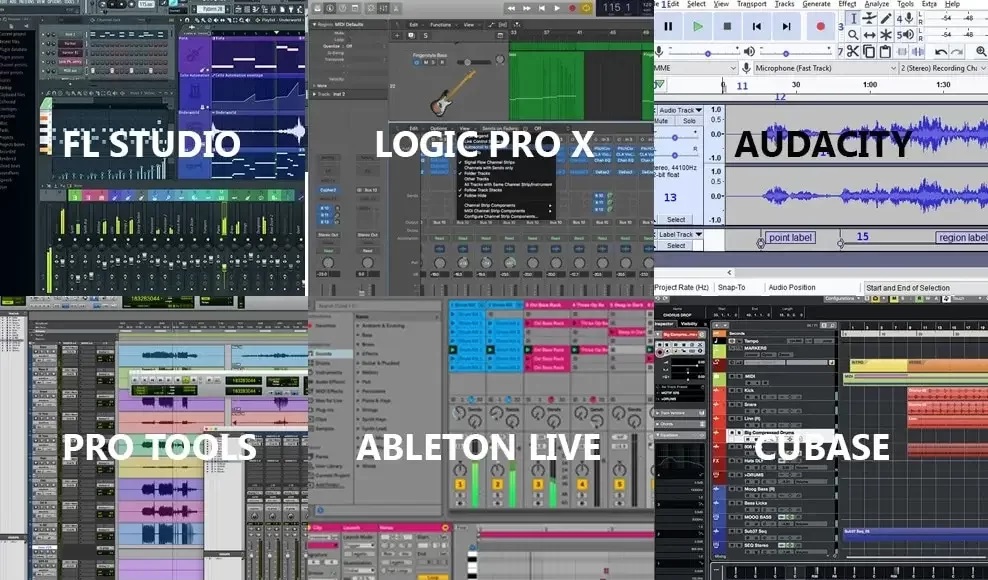
Choosing The Best Music Production Software For Your Workflow
The best music production softwareis the DAW that matches your device, your workflow (loop/clip vs timeline), and your goal (beats, vocals, piano composing) so you can finish songs faster.
In short (Key Takeaways)
- Pick your DAW by workflow first, not by “most features.”
- Best for loops/clips + live-style writing:Ableton Live
- Best for patterns + piano roll beatmaking:FL Studio
- Best “studio in a box” on Mac:Logic Pro
- Best for recording/editing audio:Pro Tools
- Best value + customization:REAPER
- Best for film/game composition + MIDI depth:Cubase
- Best free beginner start (Mac):GarageBand
- Best free “full DAW feel” cross-platform:Waveform Free
- Best browser-based collaboration:BandLab Studio
Below you’ll find a Top 16 DAWs, the best free options, hardware setup, common pitfalls, a first-hour checklist, and a final “install this today” verdict.
What Is Music Production Software (a DAW) And What Does It Actually Do?
You’re about to compare DAWs more intelligently than “which one is popular.”
A DAW (Digital Audio Workstation)is software that records, edits, and mixes audio and MIDI, hosts instruments/effects plugins, and exports finished files for streaming or sharing.
Scope guard (so you don’t get misled by “music-making software” lists)
This article focuses on true DAWs (song production: recording + MIDI + mixing + export). It does NOT rank: audio editors (e.g., wave editors), notation-only apps, DJ apps, or standalone synth apps-unless they function as a DAW replacement for finishing songs.
Audio Vs MIDI (and When Each Matters)
- Audio= recorded sound (voice, guitar, piano mic/line).
- MIDI= performance instructions (notes, velocity, timing) that trigger virtual instruments.
If the plan is “play piano → change chords later,” MIDI helps. If the plan is “capture a vocal performance,” audio is the core.
Plugins Explained (VST/AU/AAX) + Compatibility Gotchas
Plugins are add-ons: synths, samplers, EQs, compressors, reverbs.
- VSTis widely used across many DAWs.
- AU (Audio Units)is Apple’s plugin system on macOS/iOS.
- AAXis Pro Tools’ plugin format.
Gotcha:Plugin formats can determine what DAWs you can realistically use without re-buying tools.
If you’ve already bought a lot of plugins, choose a DAW that supports your formats first-then compare workflow. Switching DAWs is easy; rebuying a plugin ecosystem is not.
What “stock” Tools You Get In Most DAWs
Most modern DAWs include:
- Basic instruments (piano, drums, synth)
- Core effects (EQ, compression, reverb, delay)
- Editing tools (cut, fade, stretch, quantize)
- Export options (stereo mix + stems)
What Beginners Should Ignore At First
Ignore anything that delays finishing:
- Complex mastering chains
- Huge plugin shopping
- Advanced routing templates
- 200-track “industry” project files
Takeaway:A DAW is a song-finishing system. Keep the first month simple.
How We Chose These 16 Music Production Softwares
Most “best DAW” pages list tools. This article ranks them using consistent criteria:
- Workflow fit:clip/loop vs pattern vs linear recording vs composition-first
- Platform reality:Windows, Mac, Linux, mobile, or browser
- Core capability:recording + MIDI + mixing without forcing paid add-ons
- Upgrade path:can you grow without switching DAWs too soon?
- Ecosystem friction:plugin compatibility, exporting stems, collaboration handoff
Takeaway: you’re not buying “features,” you’re choosing a system you can finish songs in.
All 16 Music Production Softwares At A Glance
| Software | At-a-glance (best for • workflow • platforms • cost) |
| Ableton Live | electronic, loops → full tracks, performance • clip/scene + timeline • Win/Mac • paid tiers • Skill: Intermediate (fast once learned) |
| FL Studio | beatmaking, heavy MIDI, patterns • pattern + timeline • Win/Mac • paid editions • Skill: Beginner→Intermediate |
| Logic Pro | Mac songwriting + production • timeline + composing • Mac (also iPad app exists) • flat purchase (Mac) • Skill: Beginner→Advanced |
| Pro Tools | recording/editing, studio workflows • linear recording/editing • Win/Mac • free tier + paid tiers • Skill: Intermediate |
| Cubase | composition/scoring + pro studio editing • timeline + MIDI power tools • Win/Mac • paid tiers • Skill: Advanced |
| Fender Studio Pro (Studio One) | speed, drag-and-drop workflow • timeline + fast editing • Win/Mac • paid tiers • Skill: Beginner→Intermediate |
| REAPER | flexibility, routing, efficiency • highly customizable timeline • Win/Mac/Linux • low-cost license • Skill: Intermediate→Advanced |
| Bitwig Studio | sound design + modulation workflows • clip + modular design • Win/Mac/Linux • paid • Skill: Intermediate→Advanced |
| Reason | rack-based sound design • rack + timeline • Win/Mac • paid • Skill: Intermediate |
| GarageBand | easiest beginner start • simplified timeline + loops • Mac/iPad • free • Skill: Beginner |
| Cakewalk Sonar | Windows DAW value • timeline + console workflow • Windows • free tier + paid tier • Skill: Intermediate |
| Waveform Free | free “full DAW” feel • timeline + modern layout • Win/Mac/Linux • free • Skill: Beginner→Intermediate |
| LMMS | open-source beatmaking • pattern-based • Win/Mac/Linux • free • Skill: Beginner |
| Ardour | open-source recording/mixing • recording + mixing desk • Win/Mac/Linux • open-source • Skill: Intermediate |
| BandLab Studio | browser collaboration • browser-based timeline • Web/Chromebook • free tier • Skill: Beginner |
Best Music Production Software Platforms
Top-5 Music Production Software Platforms
1. Ableton Live: The King Of Workflow And Performance
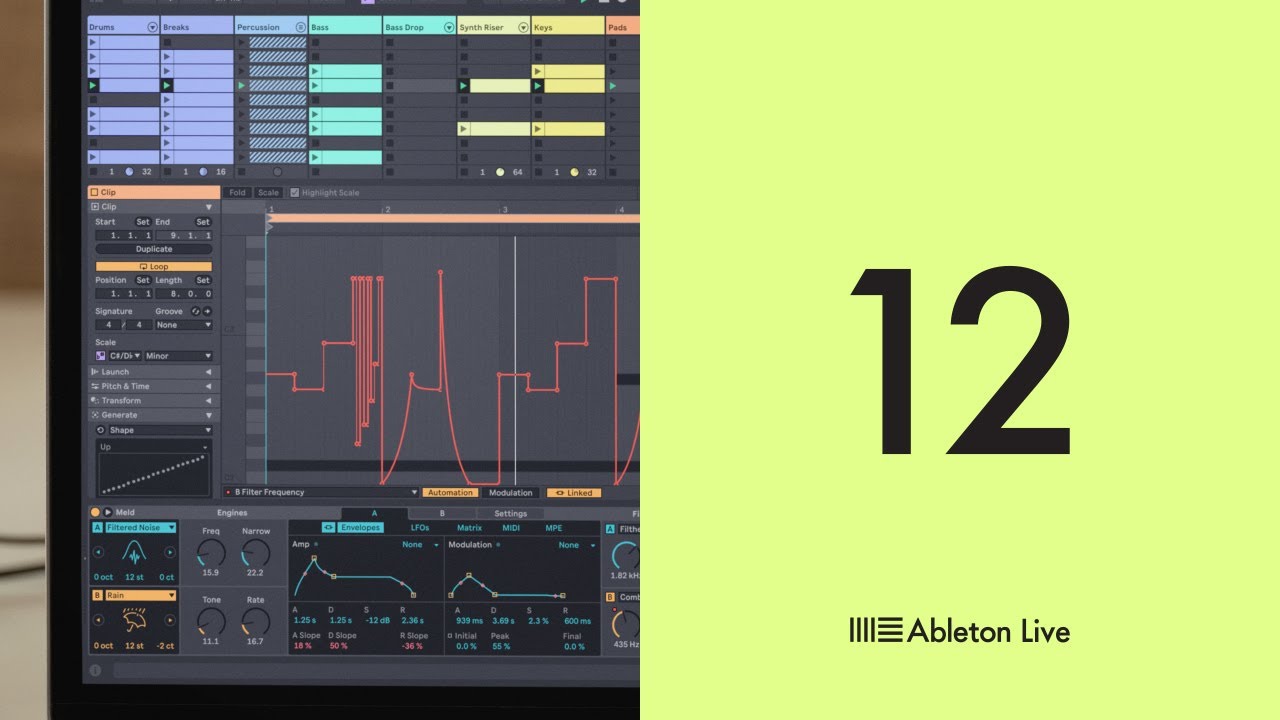
Ableton Live 12: Explore what’s new
If your best ideas start as loops and you want a fast path from “messing around” to “arrangement,” this is the clearest fit.
- Best for:Loop-building, live triggering, fast idea capture.
- Not ideal for:People who prefer a traditional, linear "tape machine" recording style.
- Strengths That Matter:The Session View lets you mix and match song parts without stopping audio-like playing your arrangement as an instrument.
- Tradeoffs:The two-view system can feel like learning two apps until you learn the bridge.
- Starter Path:Create 4 scenes (Intro/Verse/Hook/Outro) in Session View, then record your performance into the Timeline once the vibe feels right.
Which version should you buy?
| Edition (Price) | Best For |
| Live 12 Intro ($99) | Beginners who sketch loops and need essentials without a huge library (up to 16 audio/MIDI tracks). |
| Live 12 Standard ($439) | Producers who record and arrange full songs regularly with unlimited tracks and expanded features. |
| Live 12 Suite ($749) | Professionals seeking the complete studio-includes Max for Live, 71GB+ of sounds, and every stock plugin. |
Note:The full features of Live 12 Suite are free for 30 days.
Pro Tip:If you're a student or teacher, you can usually snag an Educational Discount of up to 50% off via the Ableton Shop. They also offer a Rent-to-Own plan for Suite ($31.21/mo) if you want the full version without the upfront sting.
2. FL Studio: The Ultimate Beatmaking Powerhouse
Learn FL Studio | Complete Beginner's Tutorial (All Episodes)
FL Studiois the fastest tool for high-speed drum programming and melodic MIDI patterns, with one of the most producer-friendly update policies.
- Best for:Trap, Hip-Hop, and Pop producers who prioritize the "Piano Roll."
- Not ideal for:Large-scale orchestral scoring or multi-track band sessions.
- Strengths That Matter:Lifetime updates mean you don’t keep paying to stay current (check the latest official terms). The Step Sequencer is excellent for fast drum programming.
- Tradeoffs:Window management can get “busy” as projects grow.
- Starter Path:Use the Step Sequencer to build an 8-bar drum loop, then “Send to Piano Roll” for melody writing.
Which version should you buy?
All paid editions include a Lifetime License and 3 months of FL Cloud (1 million+ sounds) for free.
| Edition (Price) | Best For & Key Features |
| Fruity Edition ($99) | Best For: Simple beat sketching. Key Features: 84 FX/Instruments. No audio recording. |
| Producer Edition ($179) | Best For: Complete song production. Key Features: 94 FX/Instruments. Most popular. Includes recording & stem separation. |
| Signature Bundle ($269) | Best For: Pro sound design & vocals. Key Features: 103 FX/Instruments. Adds NewTone (pitch correction) & Gross Beat. |
| All Plugins Edition ($449) | Best For: The "No Limits" studio. Key Features: 116 FX/Instruments. Every single native plugin FL makes. |
3. Logic Pro: The Professional’s All-In-One Toolkit (Mac)
Logic Pro Complete Beginner Basics Tutorial (2026)
The best value-for-money workstation for Mac users, offering a complete composing + recording + mixing environment.
- Best for:Songwriters, recording engineers, and professional mixing/mastering.
- Not ideal for:Windows users or those who want a modular, experimental sound-design-first environment.
- Strengths That Matter: It includes a massive library of instruments, loops, and a professional-grade "Session Player" AI that acts like your own personal studio band.
- Tradeoffs:Some advanced features can be hidden behind settings, making certain “pro” tasks less obvious on day one.
- Starter Path:Start with a Drummer-style groove, then build chords/melody, then arrange into sections.
Which version should you buy?
| Edition (Price) | Best For |
| Logic Pro for Mac ($199.99 (One-time)) | Serious producers who want to own their tools forever. |
| Logic Pro for iPad ($4.99/mo or $49/yr) | Mobile producers and iPad musicians. |
| Apple Creator Studio ($12.99/mo or $129/yr) | Creators who also need Final Cut Pro and Pixelmator. |
Note:Pricing is subject to change.
Pro Tip:Based on the latest updates for 2026, Apple has introduced a new subscription bundle called Apple Creator Studio, alongside the traditional one-time purchase.
If you’re a student, the Apple Creator Studio bundle is an absolute steal at $2.99/month. Also, if you’ve just bought a new Mac or iPad, you usually get 3 months of Creator Studio for free, which is the best way to test the full Logic Pro experience.
4. Pro Tools: The Recording & Editing Standard
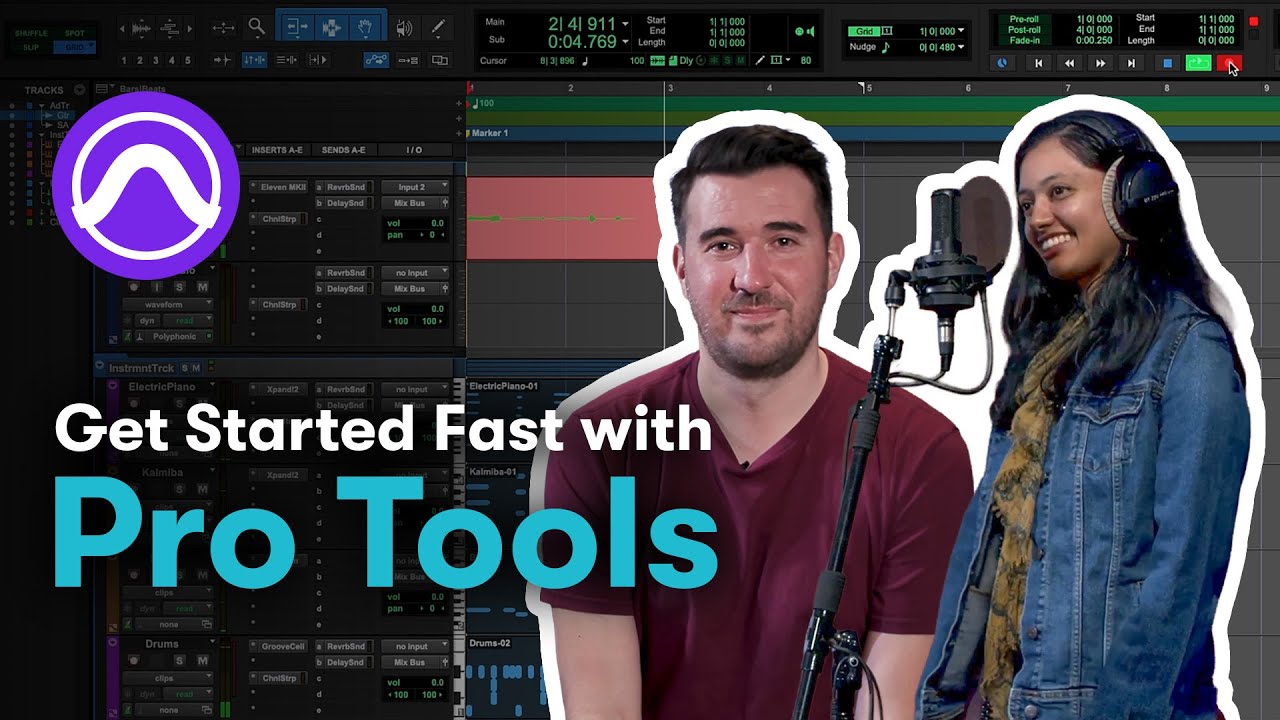
Learn Pro Tools in 1 Hour | Fast Start Complete Tutorial
Pro Toolsi a high-precision tool designed for capturing, editing, and mixing audio with studio conventions.
- Best for:Recording vocals/instruments, comping takes, tight audio editing, professional handoffs.
- Not ideal for:Producers who mainly sketch with patterns and want the fastest “idea jam” workflow.
- Strengths That Matter:Audio editing conventions are built for studio-style sessions.
- Tradeoffs:Can feel heavy if your work is mostly MIDI sketching.
- Starter Path:Record vocals → comp your best takes → basic EQ/compression → export.
Which version should you buy?
Pro Tools has moved to a subscription-first model, but it offers a range of entries from free to elite.
| Edition (Price) | Best For |
| Pro Tools Intro (Free) | Learning the ropes and essential editing. |
| Pro Tools Artist ($99/yr) | Independent creators and bedroom producers. Features: 32 audio tracks, 64 MIDI tracks, 110+ instruments and effects. |
| Pro Tools Studio ($299/yr) | Serious engineers. Features: 512 audio tracks, 1,024 MIDI tracks, 130+ instruments and effects, Inner Circle plugins and sounds (annual only), Immersive mixing, 1 video track |
| Pro Tools Ultimate ($599/yr) | High-end studios and film post-production. Features: 2,048 audio tracks, 1,024 MIDI tracks, 130+ instruments and effects, Inner Circle plugins and sounds (annual only), Immersive mixing, 64 video tracks and editing, Full audio post workflows |
Pro Tip:If you’re learning the workflow: Start with the Free tier (Intro) first. It uses the exact same engine as the $599 version, so your skills will translate perfectly when you're ready to upgrade.
If you record often and need higher track counts and tools: step up only when you hit limits.
5. Cubase: The Heavyweight Composition Standard
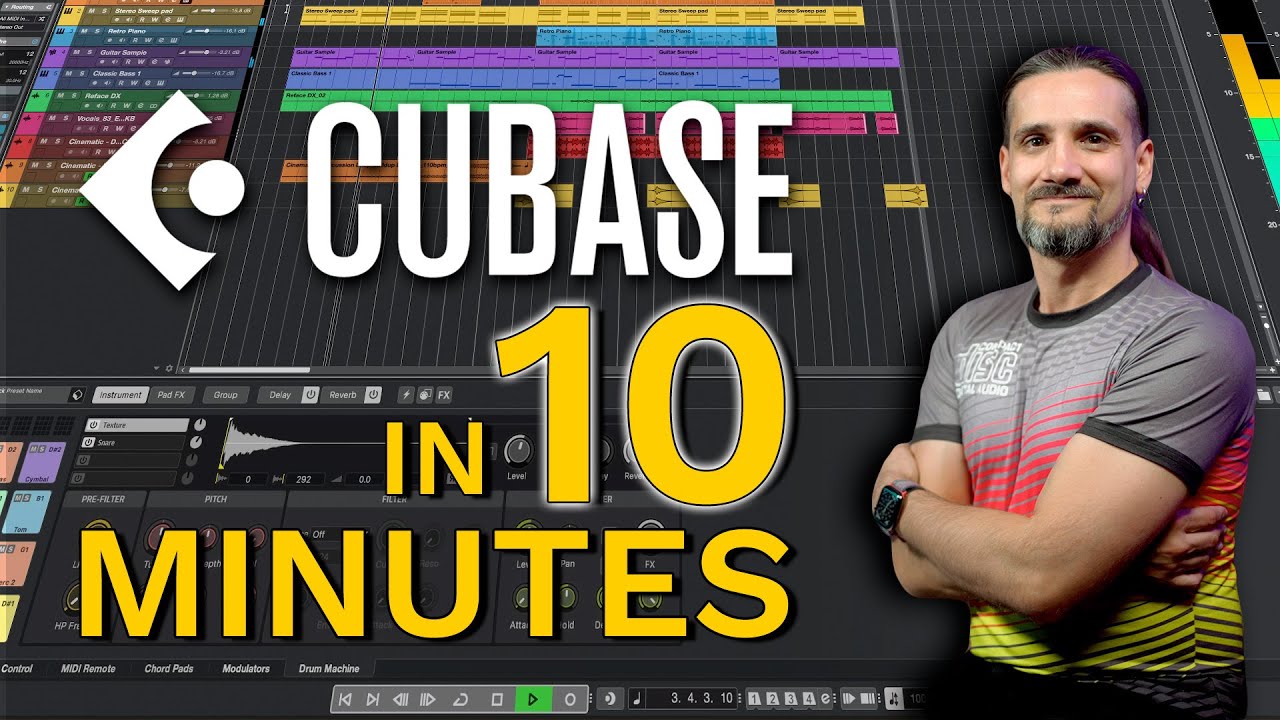
Start Producing in Cubase in Only 10 Minutes | Beginners Guide
Trusted by Hollywood composers and chart-topping producers alike, Cubaseis the industry benchmark for sophisticated MIDI orchestration and deep audio editing.
- Best for:Film composers, professional mixers, MIDI power users.
- Not ideal for:Beginners who want a minimalist interface and zero learning curve.
- Strengths That Matter:Strong MIDI editing and composition tools for complex arrangements.
- Tradeoffs:Lots of menus/settings = steepest learning curve.
- Starter Path:Use chord tools to map progressions first, then commit MIDI notes once the harmony works.
Which version should you buy?
You can explore all features of Cubase 15 free for 60 days before committing.
| Edition (Price) | Best For (Highlights) |
| Cubase Elements (€99.99) | Budget-friendly entry. (20GB+ sounds, Chord Pads, Scale Assistant.) |
| Cubase Artist (€329.00) | Creative musicians. (VariAudio pitch correction, Multi-track AudioWarp.) |
| Cubase Pro (€579.00) | Professional studios. (Dolby Atmos, Advanced MIDI, Spectral Comparison EQ.) |
Selection Guide
- If you score or compose with large MIDI templates:Don’t choose the entry edition. You’ll need the advanced MIDI editing and unlimited track counts found in Artist or Pro to manage complex orchestral libraries.
- If you’re producing smaller songs:Start with Elements. It has everything you need to get started, and you can upgrade only if you find yourself needing the professional-grade pitch correction (VariAudio) or advanced mixing tools.
The Other 11 Best DAWs
6. Fender Studio Pro (Studio One): The Speed Demon
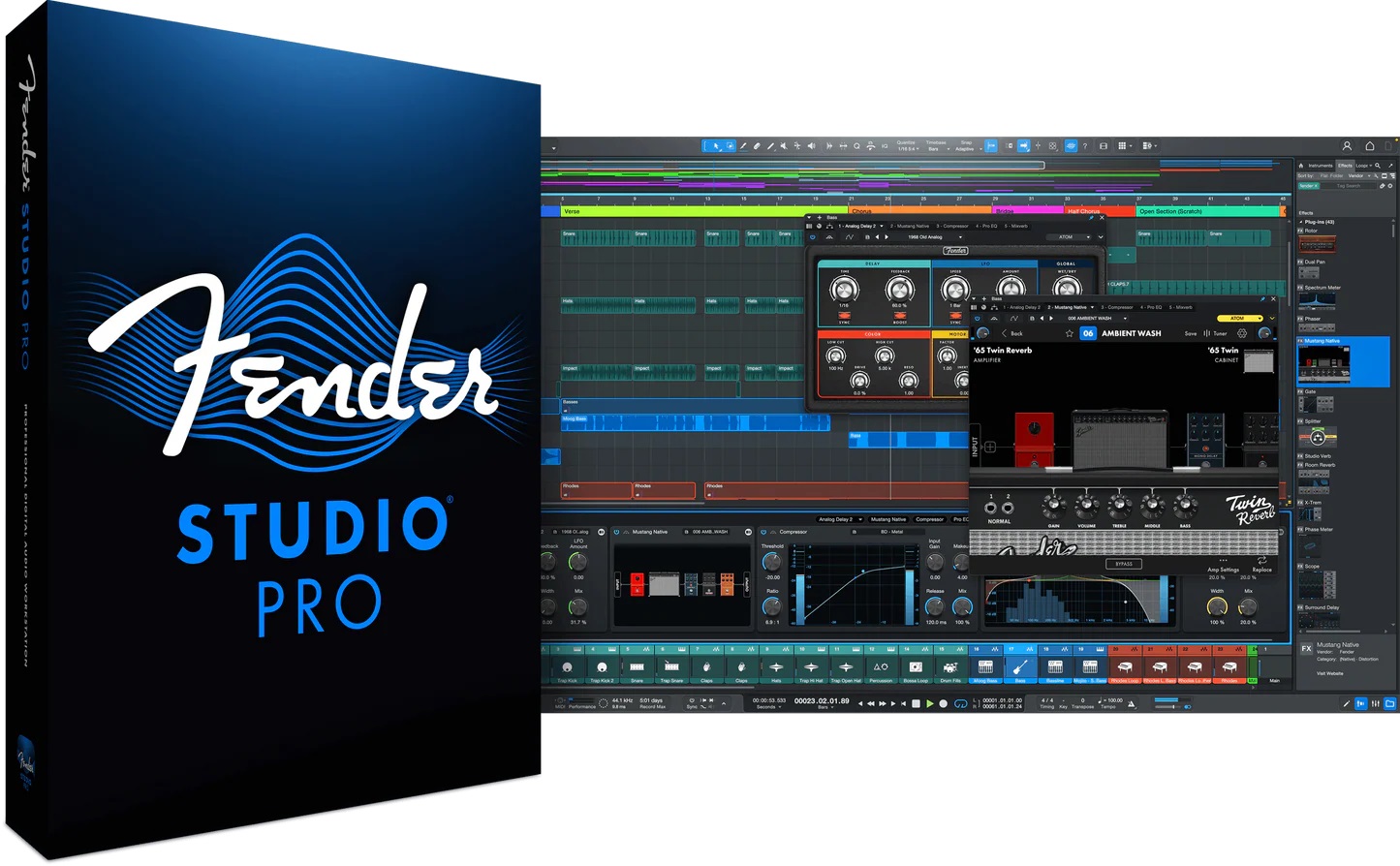
A drag-and-drop, single-window style DAW that prioritizes speed and clean workflow.
- Best for:Producers who want fast editing and minimal friction.
- Constraint:If you want a “signature” workflow (clips like Ableton or rack-cabling like Reason), it may feel more neutral.
- New in 2026:The software now features native Fender amp and effects modeling (Mustang/Rumble), AI-powered audio-to-note conversion, and deep integration with the mobile Fender Studio app.
Which Version Should You Buy?
Fender has simplified the lineup into one main version with flexible payment options. You can explore it free for 30 days.
| Option (Price) | Best For |
| Perpetual License ($199.99) | Those who want to own the current version forever. Includes 1 year of free updates. |
| Pro+ Annual Plan ($179.99/yr) | Best value-includes a perpetual license plus 1 year of Pro+ extras (cloud, extra plugins). |
| Pro+ Monthly ($19.99/mo) | Short-term projects or those who want to test the full ecosystem. |
Pro Tip:If you own any previous version of Studio One (even the old "Artist" edition), you can usually upgrade to Fender Studio Pro 8 for $99.99. This is one of the most affordable ways to get a flagship-tier DAW.
7. REAPER: The Customizable Workhorse
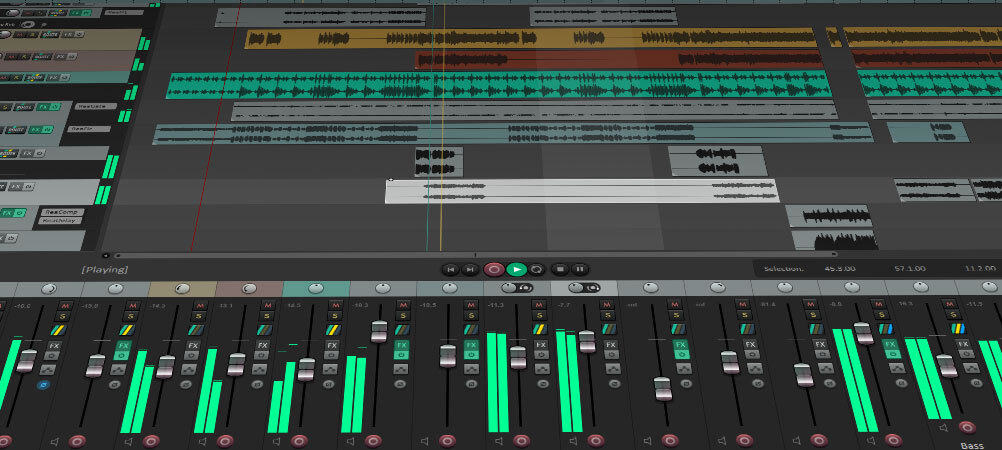
A lean, powerful DAW favored by users who want maximum routing, customization, and efficiency.
- Best for:Power users, templates, custom actions, low overhead setups.
- Constraint:Less “guided” out of the box-your templates matter.
Which version should you buy?
There is only one version of REAPER. Every feature is included in both license types. You get 60 days of evaluation free with full functionality.
| License Type (Price) | Who is it for? |
| Discounted License ($60) | Individuals (personal use), non-profits, or businesses earning less than $20,000/year. |
| Commercial License ($225) | Professional businesses or individuals earning over $20,000/year using REAPER. |
Tip: If you’re learning the workflow: Start with the 60-day free evaluation. Since the software is identical to the paid version, you can build your entire studio setup before spending a cent.
8. Bitwig Studio: The Modular Sound Lab
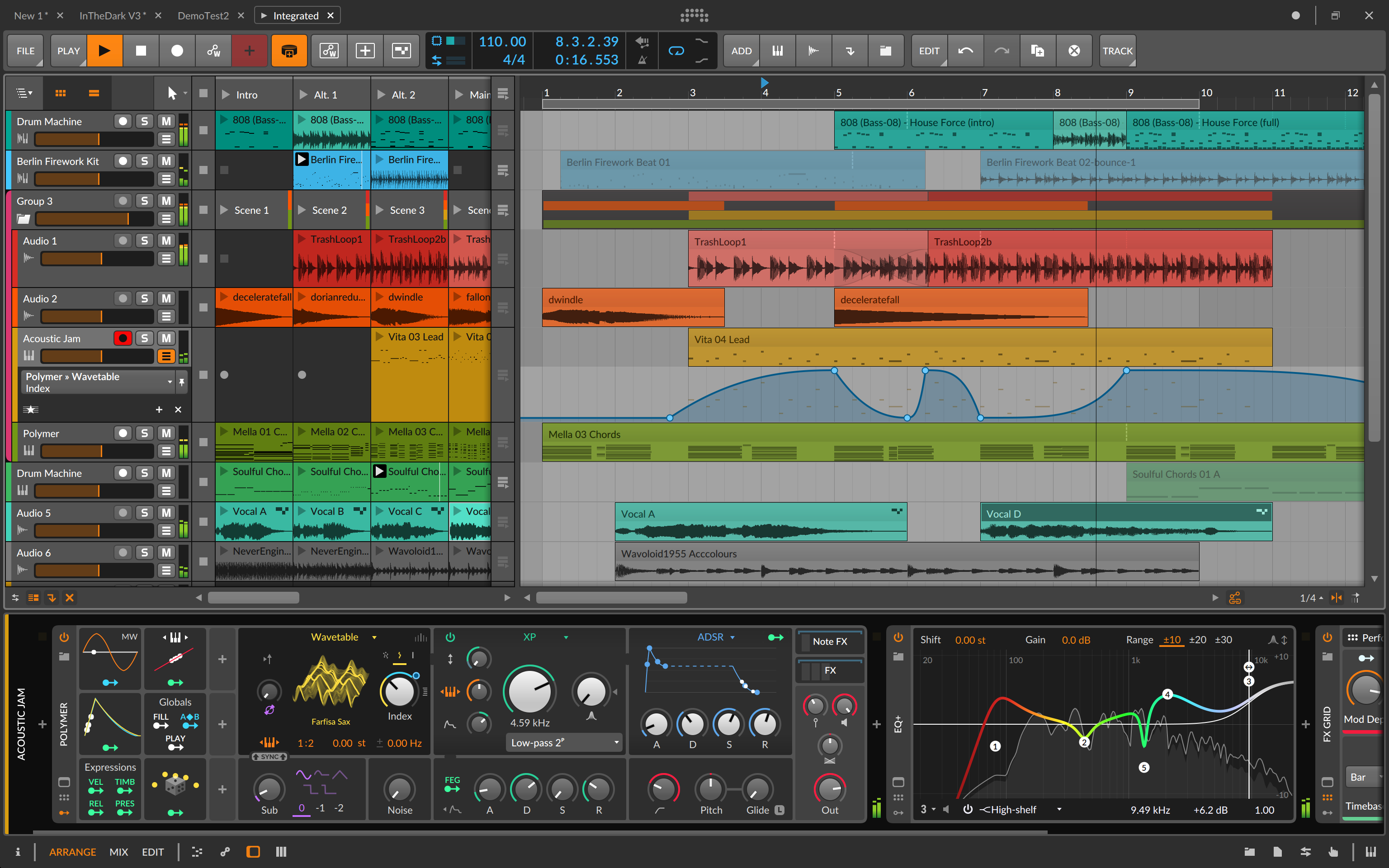
A sound-design-friendly DAW built for modulation and experimentation.
- Best for:Sound designers and electronic producers who want deep modulation systems.
- Constraint:Easy to get lost tweaking; you’ll need a “finish the song” discipline.
- Strengths That Matter:Every single parameter can be modulated by another. Its "The Grid" environment is a playground for building your own instruments from scratch.
Which version should you buy?
You can explore Bitwig Studio free for 30 days without limitations by signing up for a trial account.
| Edition (Price) | Best For (Key Features) |
| Bitwig Essentials ($99) | Entering the Bitwig world. (40 instruments/FX, 10 modulators, and core sound library.) |
| Bitwig Producer ($199) | Professional studio & stage. (92 instruments/FX, 18 modulators, and advanced sound library.) |
| Bitwig Studio ($399) | Music production without limits. (154 instruments/FX, 42 modulators, and The Grid.) |
Pro Tip:Bitwig uses a 12-month Upgrade Plan. When you buy a license, you get all new versions for a year.
9. Reason: The Virtual Hardware Rack
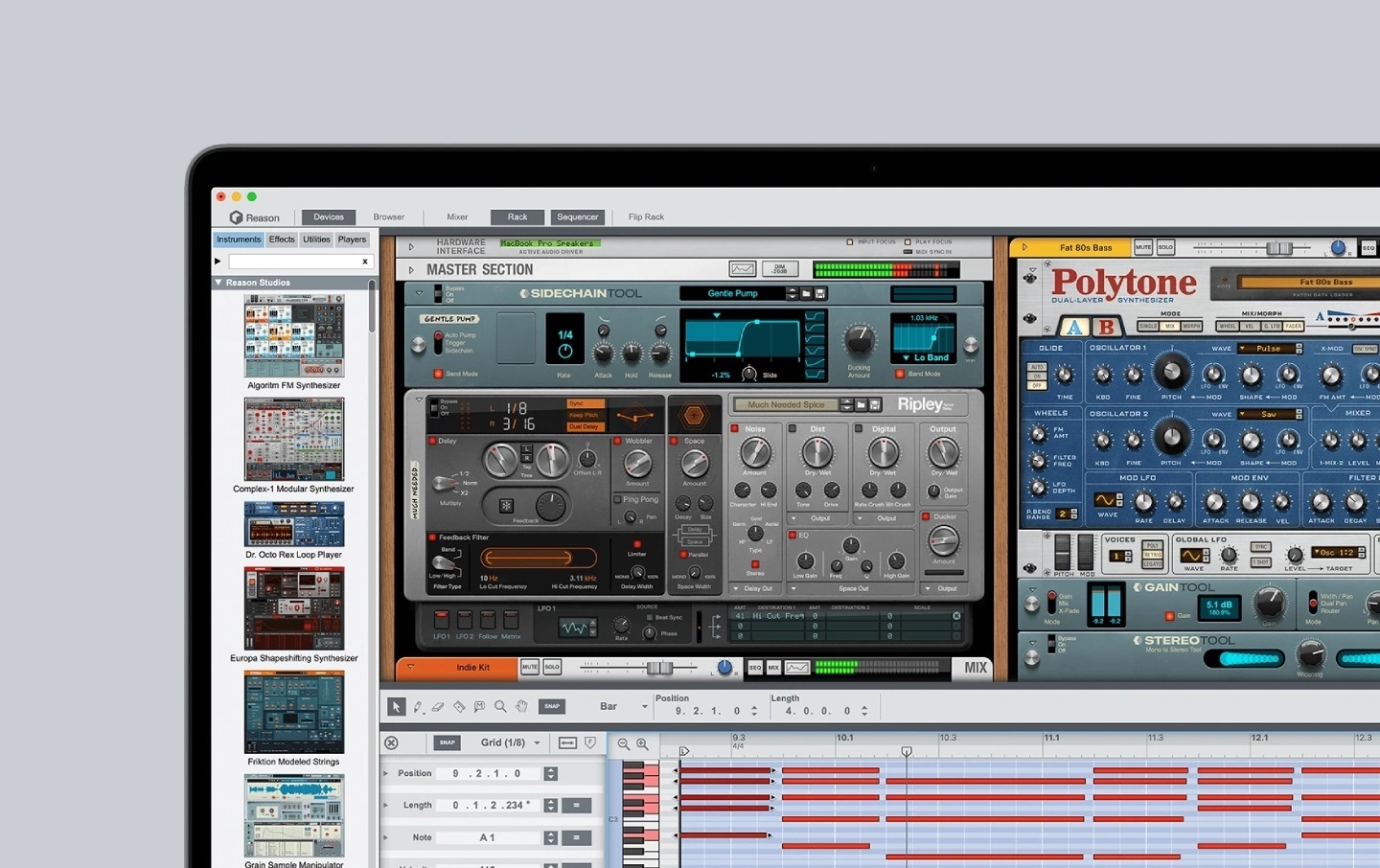
Rack-based instruments and effects with a tactile, cable-routing vibe.
- Best for:Producers who love modular routing and rack workflows.
- Constraint:Not everyone enjoys the “flip the rack / cable” approach.
- New in 2026:Now includes unlimited AI Stem Separation, AI Mastering, and Global Distribution via LANDR (included in Reason+).
Which version should you buy?
You can choose between a subscription for the full ecosystem or owning the software/plugin forever.
| Edition (Price) | Best For |
| Reason+ (Sub) ($169/yr (or $19.99/mo)) | Best Value. Includes the DAW, the Rack Plugin, all 92+ devices, AI Mastering, and Distribution. |
| Reason 13 (DAW) ($299 (Perpetual)) | Producers who want to own the DAW permanently with 1,000+ new patches. |
| Reason Rack Plugin ($199 (Perpetual)) | Users of other DAWs (like Ableton) who just want the Reason instruments/effects. |
Pro Tip:If you already have a favorite DAW but want Reason's famous synths (like Europa or Thor), the Reason Rack subscription ($99/yr) is a great middle ground. It gives you the full rack as a plugin without the cost of the standalone DAW.
10. Apple GarageBand: The Ultimate Free Entry Point
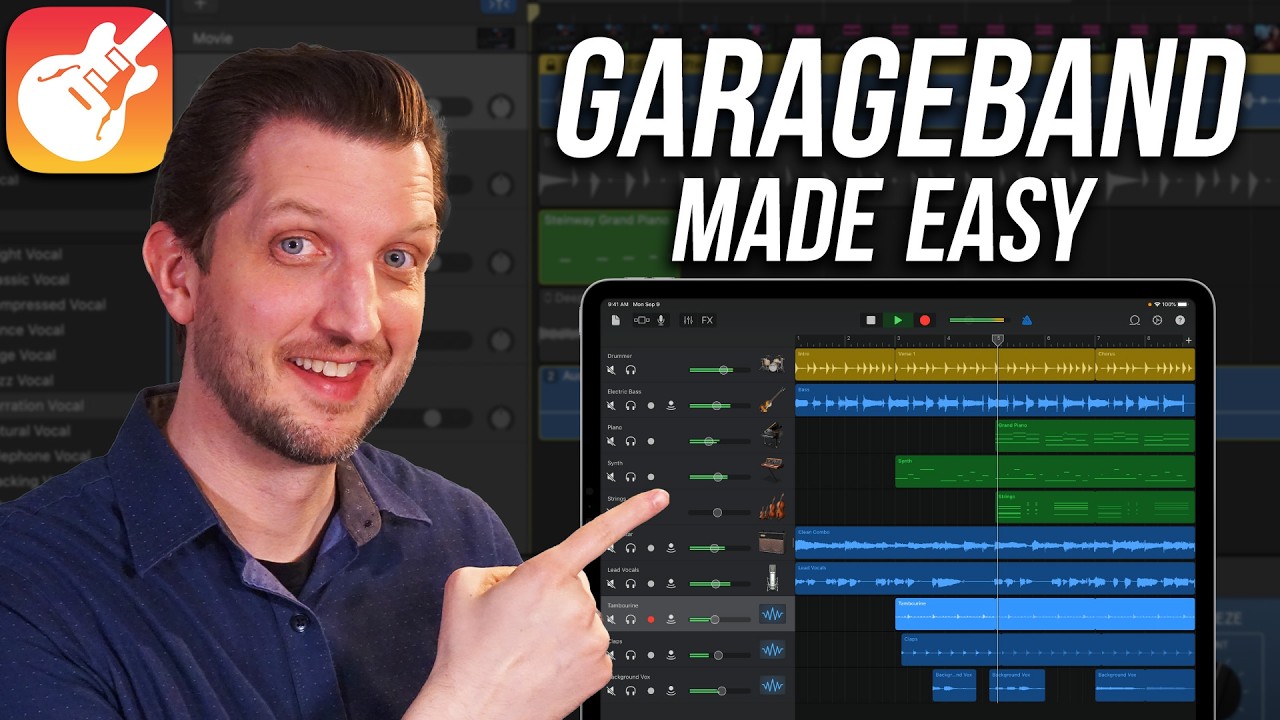
GarageBand Tutorial For Beginners iPad and iPhone
The simplest on-ramp on Mac/iPad with enough tools to finish real songs.
- Best for:Absolute beginners and mobile creators.
- Constraint:You’ll outgrow it when you need deeper mixing/routing and more advanced editing.
Apple GarageBand is free for all macOS and iOS users.
11. Cakewalk Sonar: The Windows Professional Choice
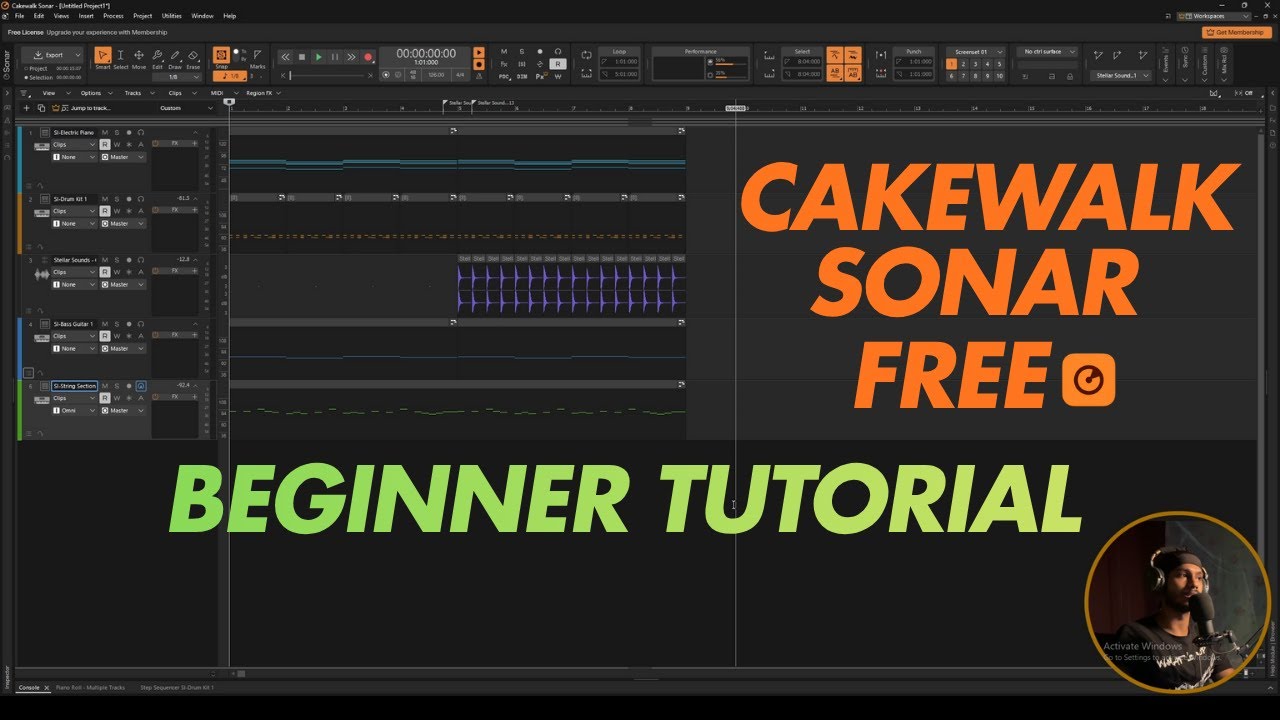
Get started with the Free Cakewalk Sonar DAW. Absolute beginner tutorial.
A capable Windows DAW with a console-style workflow and modern updates in the Cakewalk ecosystem.
- Best for:Windows users who want a “traditional” DAW feel at low cost.
- Constraint: Tiering/membership models can affect which features you get.
Which version should you buy?
Cakewalk Sonar is now available as a flagship DAW under BandLab. You can start with the free tier and upgrade via a membership for extra perks.
12. Tracktion Waveform Free: The No-Restriction Hero
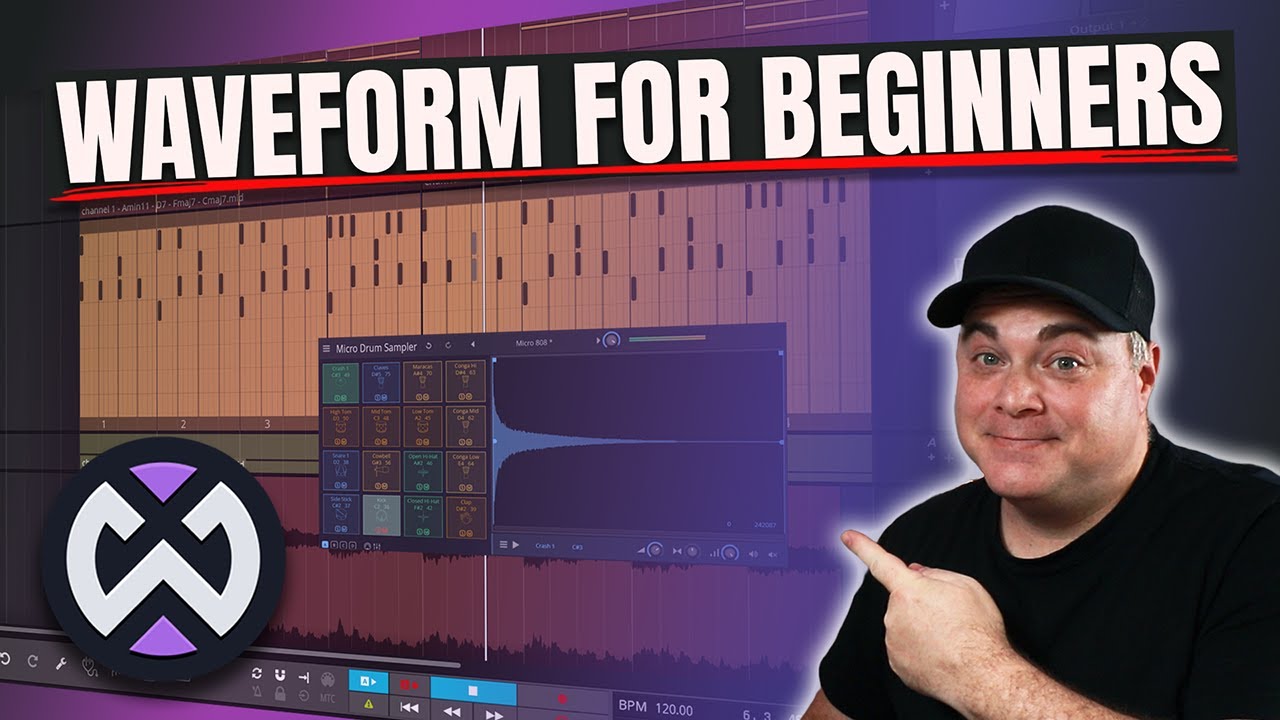
Get Started With Tracktion Waveform Free or Pro | Beginners Guide
A free DAW that aims to feel “complete” without crippling track limits.
- Best for:Budget-conscious producers who want a full studio feel without paying.
- Constraint:Layout is different from classic DAWs, so expect a learning phase.
Tracktion Waveform Free is completely unlimited free.
13. LMMS: The Open-Source Beatmaker
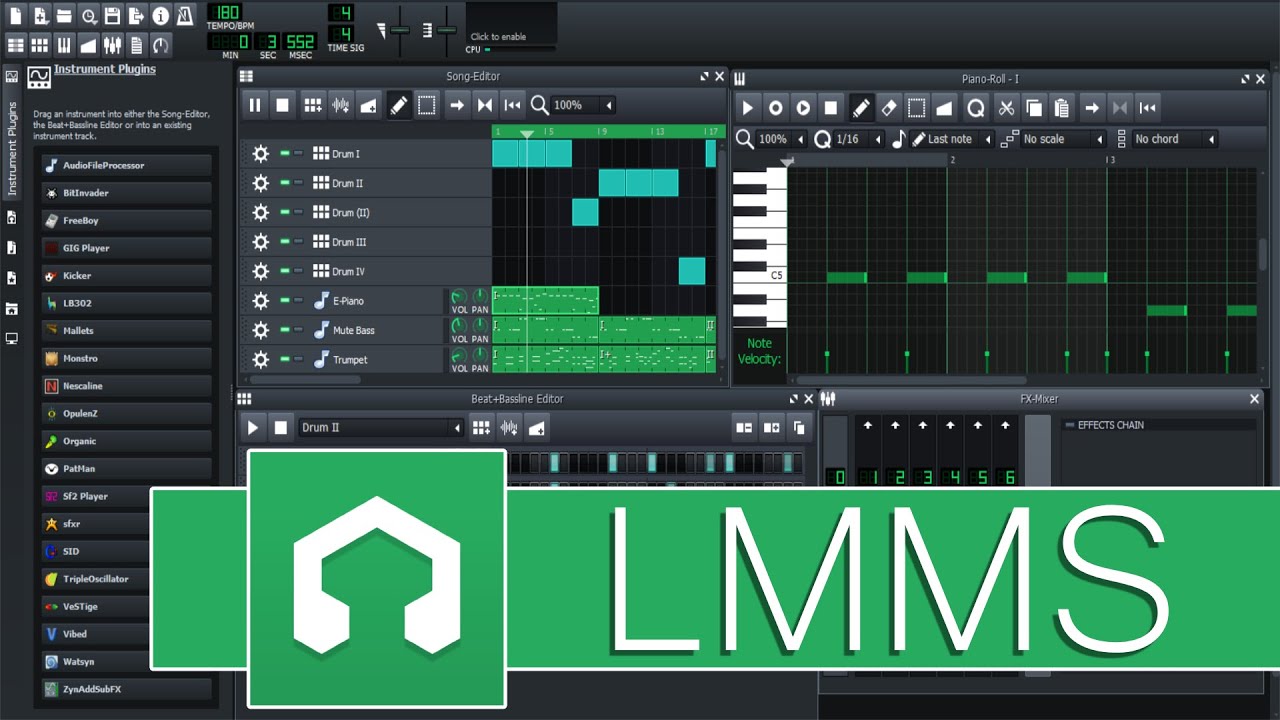
A free, open-source tool focused on electronic composition and patterns.
- Best for:Pattern-based producers on any OS (especially Linux-friendly workflows).
- Constraint:Not designed as a primary live-audio recording DAW.
LMMS is 100% free and open-source.
14. Ardour: The Open-Source Recording & Mixing Desk
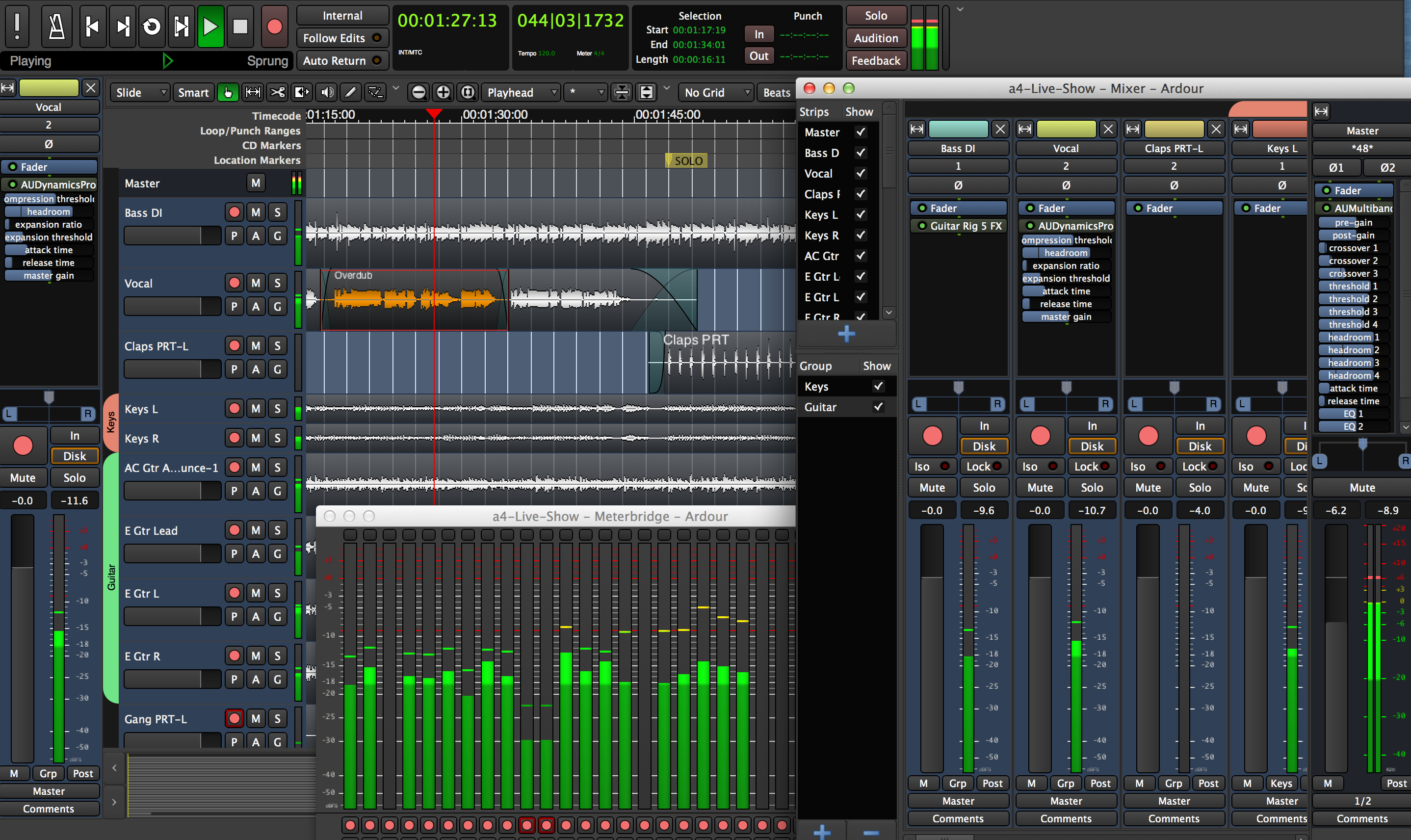
A powerful open-source DAW oriented toward recording and mixing.
- Best for:Recording/mixing workflows, especially where open-source matters.
- Constraint:Some users prefer other DAWs for ultra-fast MIDI composition.
Ardour is free and open-source digital audio workstation.
15. BandLab Studio: The Browser-Based Collaborator
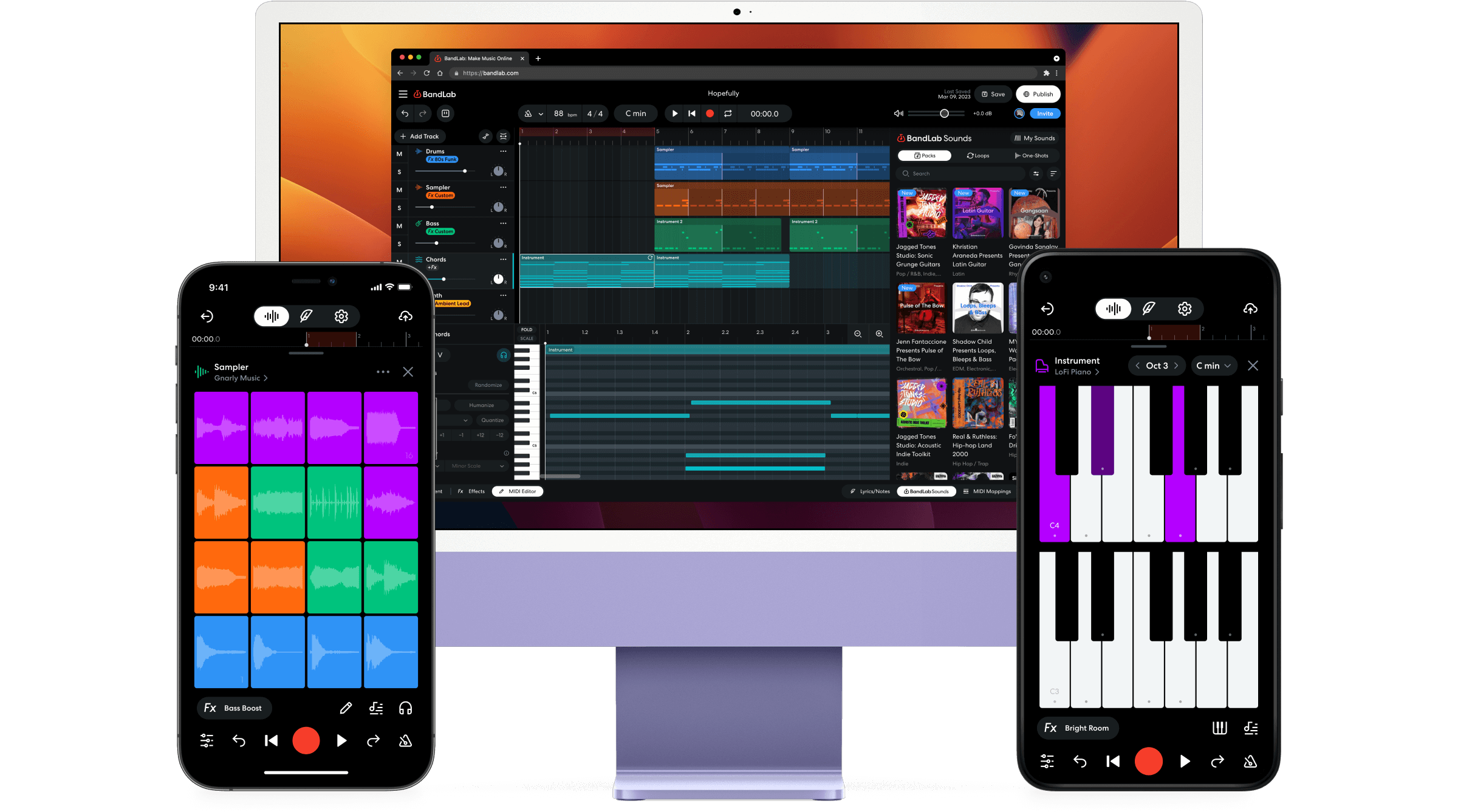
A cloud DAW you can run in a browser with easy collaboration.
- Best for:Songwriting collaboration, Chromebook users, quick sketches.
- Constraint:Browser workflows can be limited by connectivity and project constraints.
- Strengths That Matter:It is 100% free for the core DAW, offers unlimited cloud storage, and features a built-in community where you can find singers or rappers to join your projects instantly.
Which version should you buy?
BandLab is free to use, but they offer a membership for those who want to "level up" their career.
| Edition (Price) | Best For |
| BandLab Free (Free) | Everyone. Includes the 16-track Studio, loops, and unlimited cloud saves. |
| BandLab Membership ($14.95/mo) | Growing artists. Adds 32-track projects, AI Voice Changer, and global Distribution. |
Tip:If you’re on the go:Use the BandLab App. It’s the most powerful mobile DAW for quickly capturing vocal ideas or building beats with its built-in Looper and Sampler.
16. Audacity: The Swiss Army Knife Of Audio
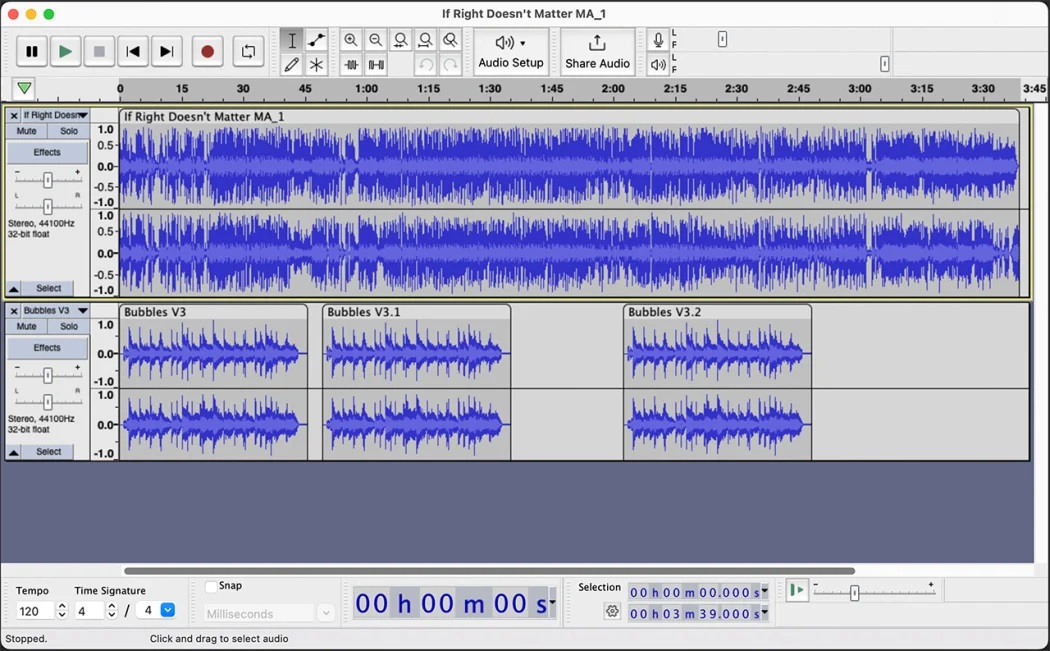
Audacity isn't a traditional "beat-making" DAW, but it is the world’s most popular free, open-source audio editor. It is the go-to tool for quick edits, podcasting, and cleaning up recordings.
- Best for:Podcasters, vocal recording, simple audio splicing, and noise reduction.
- Not ideal for:MIDI composition or modern electronic music production (it lacks a built-in piano roll and native MIDI instruments).
- Strengths That Matter:It is incredibly lightweight and "destructive" in its editing style, which is actually very fast for trimming files or converting formats (WAV to MP3, etc.).
- New in 2026:Now features AI-powered tools (via Intel OpenVINO) for music separation, noise suppression, and even transcription.
Best Free Music Production Software
Windows: The Professional Sandbox
- Cakewalk Sonar (Free Tier):A strong Windows option if you want a traditional DAW layout without paying up front.
- Pro Tools Intro:Great for learning the Pro Tools layout, but track limits make it unsuitable for larger productions.
- Waveform Free:A strong “no-strings” option for those who want third-party plugin use without immediate paywalls.
Mac: The Creative Standard
- GarageBand:The easiest start; ideal for learning arrangement and finishing basics.
- Waveform Free:A good alternative if you want a more “traditional DAW” feel than GarageBand.
- Logic Pro upgrade path:GarageBand → Logic is one of the smoothest “beginner to pro” transitions on Mac.
IPad & Mobile: The Sketching Studio
- GarageBand iOS:Strong for capturing ideas and building simple arrangements.
- Logic Pro for iPad:More desktop-style editing, but subscription models may not fit every budget.
Browser-Based: The Instant Access Entry
- BandLab Studio:Fastest start for collaboration and “no install” producing.
- FL Studio Web (Beta):Useful for sketching if you’re already in the FL ecosystem, but treat beta tools as optional-not your only workflow.
Free-to-paid Upgrade Paths
If the plan is to upgrade later:
- Choose a free option that teaches transferable skills (editing, arrangement, mixing basics)
- Avoid workflows that don’t translate to the DAW you’ll likely buy next
Free Starter Toolkit Checklist
- One usable drum source (built-in or plugin)
- One piano/keys instrument
- EQ + compressor + reverb
- A reliable export method (WAV/MP3)
- A backup routine (projects + audio files)
Common Limitations Checklist
- Track counts or plugin limits
- Export formats/resolutions
- Saving/re-opening projects
- Missing third-party plugin support
Takeaway:Free is great-if it still lets you finish tracks reliably.
Which DAW Fits Your Goal? Choose By Scenario
Beatmaking & Loop-based Production (drum Loop → Variations → Sections)
- Ableton Live(clip/scene building)
- FL Studio(pattern + piano roll)
- Bitwig Studio(sound-design-heavy beats)
Recording Vocals & Instruments (takes → Comp → Edit → Mix)
- Pro Tools(audio editing/comping)
- Logic Pro (Mac)(full production suite)
- Studio One / Fender Studio Pro(fast, clean recording workflow)
- REAPER(efficient + flexible routing)
Piano-first Composing
f your workflow is: play chords → edit MIDI → arrange, and you’re also learning piano, prioritize a DAW that makes MIDI editing, looping, and arranging feel effortless.
- Logic Pro (Mac)(songwriting + stock instruments)
- Cubase(deep MIDI/composition tools)
- GarageBand(quick start on Mac/iPad)
Film/game Scoring (tempo Maps → Markers → Big MIDI Templates)
- Cubase(composition-first)
- Logic Pro (Mac)(Apple ecosystem)
Live Performance & Looping (launch Clips/scenes)
- Ableton Live(Session View)
- Bitwig Studio(clip launching + modulation)
Zero-budget Shortlist
- Mac:GarageBand
- Windows:Cakewalk Sonar (free tier)
- Cross-platform:Waveform Free
- Browser:BandLab Studio
Takeaway:Pick the DAW that matches your main workflow, then confirm by finishing one short track and exporting a mix + stems.
Hardware Synergy: Keyboards And Interfaces
You’ll avoid two expensive mistakes: buying the wrong interface, and chasing gear before fixing latency.
MIDI Keyboards: What Matters (keys, Pads, Knobs, Aftertouch, Portability)
If you're ready to add hardware to your desk, check out our curated list of the best MIDI keyboardsto find a model that fits your space and budget.
For piano learners:
- Key count and feelmatter more than pads
- Knobs/faders help later, but they’re not required to start
A simple scenario: a learner with a digital pianocan often start by recording MIDI over USBfirst, then add an interface when vocals/instruments enter the picture.
Also Check Out: Best Pianos
Audio Interfaces: When You Need One (and When You Don’t)
You likely need an interface when:
- You record a mic (XLR)
- You record guitar/bass direct
- You need lower latency monitoring
- Your built-in input is noisy or unstable
On Windows, DAW stability/latency often depends on an ASIO driver path; ASIO is a Steinberg-specified driver protocol designed for low-latency audio. On Apple platforms, Core Audio is the system framework for interacting with audio hardware.
Headphones Vs Monitors (beginner-safe Guidance)
- Headphones are fine to start; learn balances and avoid clipping
- Monitors help later, but the room matters (untreated rooms can mislead)
Latency In Plain English (buffer Size, Drivers, Monitoring)
Latency is the delay between input and what you hear back.
- Lower buffer = less latency, more CPU strain
- Higher buffer = more stable mixing, more delay while recording
Windows driver choice (often ASIO) can be a major factor in achievable latency.
Common Pitfalls: Why Your Software Might Feel "Hard"
- You chose for features, not workflow (clip vs pattern vs linear).
- You judged it before building one reusable template.
- You tried to learn mixing, plugins, and songwriting simultaneously.
Takeaway: Pick a workflow you enjoy, then keep the first month simple.
Your First 60 Minutes In Any DAW (do This Before You Commit)
- Start a blank project + set tempo(e.g., 90–140 BPM) and create Drums + Keys + Basstracks.
- Build a 4–8 bar idea: program drums, then add a simple chord progression (MIDI).
- Turn the idea into a song: make 3 sections(Intro/Verse/Hook) by duplicating and changing one element each time.
- Do a 5-minute balance: set levels, then use onlyEQ/comp/reverb if something is clearly clashing.
- Export + test portability: export a stereo mix + stems, then save versions (Song_v01, v02).
Takeaway:If you can do these 5 steps without fighting the interface, that DAW fits your workflow.
AI-era Features To Consider (what Helps Vs What’s Hype)
- Stem Separation:Helpful for remixes or practicing mixing. (Available in Logic, Cubase, and FL Studio).
- Chord/Key Detection:Use it as a "first draft" for your piano arrangements.
- AI Assistants:Great for generating starting points, but never let AI make the final "taste" decisions for you.
FAQs About Music Production Software
Which Program Is Best For Producing Music?
The best program is the DAW that matches your workflow (clip vs timeline), your device, and your main task (beats, vocals, piano), so you finish songs faster.
Is DAW Software Free To Use?
Some DAWs are fully free or offer free tiers, but “free” can include limits like exports, features, or project re-opening-always verify the official terms first.
Is FL Studio Or Ableton Better?
Ableton is often chosen for clip-based writing/performance workflows, while FL Studio is often chosen for pattern-based beat building. The “better” choice is workflow fit.
Which Is The Most Used Music Production Software?
There isn’t a single authoritative global count. Commercial studios often standardize around specific workflows, while home producers vary widely-choose based on your needs, not popularity.
What DAW Does Billie Eilish Use?
Public info changes over time and isn’t reliably “official.” The practical takeaway: major releases have been made on many DAWs-pick what helps you complete tracks consistently.
What Music Production Software Does BTS Use?
There’s no single confirmed DAW for an entire group’s ecosystem. Large productions involve multiple producers/studios, each with their own tools-focus on what fits your workflow.
Do I Need An Audio Interface To Start?
Not always. If you’re only programming MIDI and using headphones, you can start without one. You typically need an interface for microphones, instruments, or lower-latency monitoring.
What’s The Difference Between VST, AU, And AAX?
VST is a common cross-DAW plugin format, AU is Apple’s plugin system on macOS/iOS, and AAX is the plugin format used in Pro Tools.
Can I Use My Plugins In Any DAW?
Only if the DAW supports your plugin format (VST/AU/AAX) and your operating system supports the plugin version.
What Is Latency And Why Does It Matter?
Latency is the delay between playing/singing and hearing it back. Lower buffers and proper drivers help while recording; higher buffers help stability while mixing.
Why Do I Hear Pops And Crackles?
It’s usually CPU overload or buffer settings. Increase buffer size, close heavy apps, and freeze/bounce tracks to reduce processing load.
Is GarageBand Enough For Real Songs?
Yes-GarageBand is designed as a full music creation studio on Mac and can produce finished songs, especially for beginners.
Can I Produce Music On My Phone Or IPad?
Yes. Mobile DAWs can sketch and sometimes finish tracks, but plugin options, routing, and editing depth can differ from desktop DAWs-confirm your needs first.
How Do I Choose A DAW For Piano Practice + Production?
Prioritize strong MIDI editing, good stock instruments, and a workflow that makes arranging simple. Piano-first creators often do best with DAWs built for composing and arranging.
Can I Switch DAWs Later Without Losing Work?
You can usually move via audio stems and MIDI exports, but DAW project files and plugin settings don’t transfer cleanly. Choose with a 6–12 month horizon.
What Should I Install If I Have Zero Budget?
On Windows, Cakewalk Sonar is a strong free start; on Mac, GarageBand is a reliable free starting point; cross-platform users can consider Waveform Free.
Final Thoughts
Choosing your music production software is the start of a long creative journey. Whether you choose the loop-based power of Ableton Live, the beat-making efficiency of FL Studio, or the polished value of Logic Pro, the most important step is to start creating.
Software is a tool, not a replacement for inspiration. My best advice is to download a trial version of two different DAWs, spend a weekend with each, and see which one makes you want to keep playing. The "right" software is the one that makes you forget you are using a computer at all.