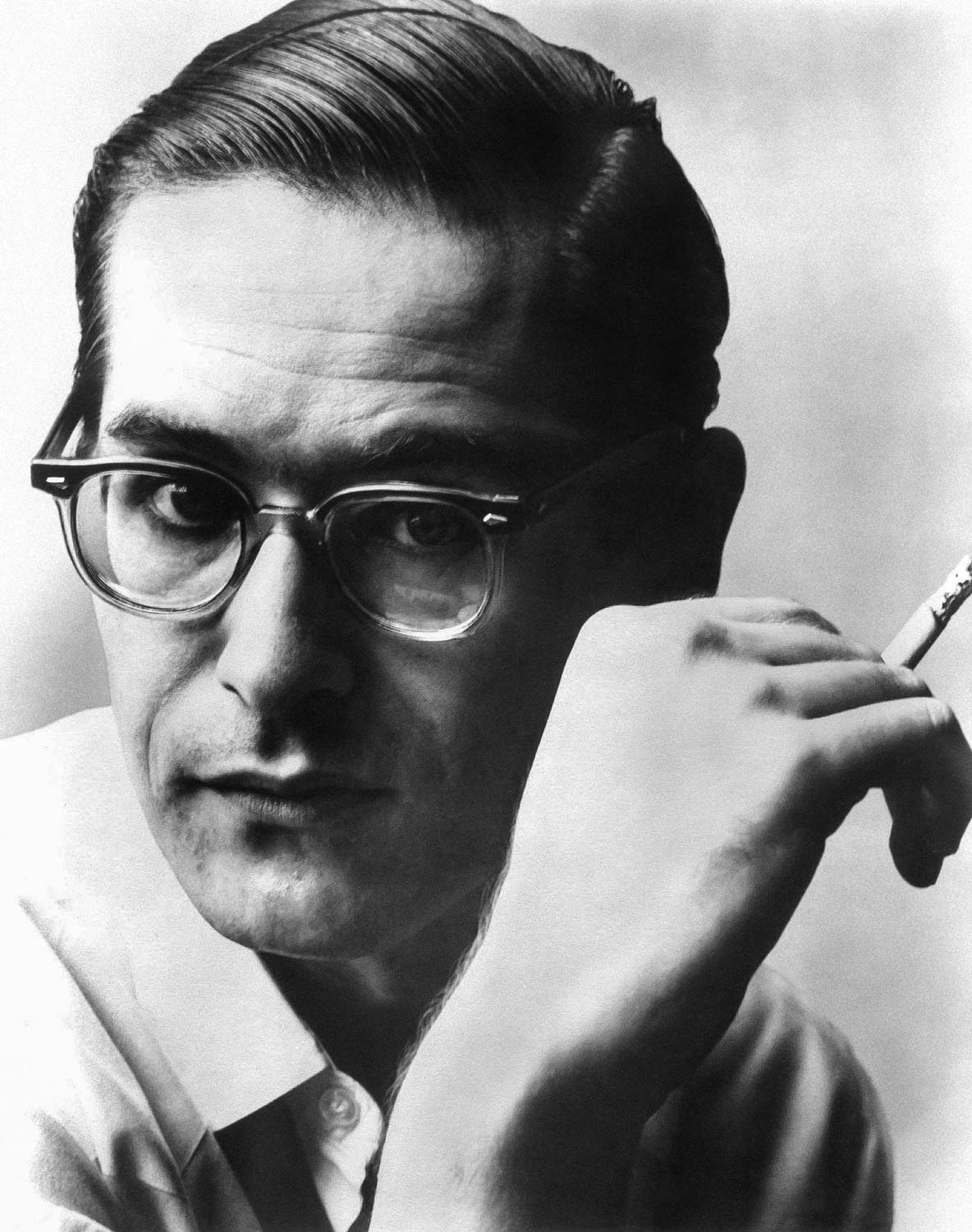
William John “Bill” Evans was born on August 16, 1929, in Plainfield, New Jersey. He grew up in nearby North Plainfield in a musical family: his mother Mary (née Soroka) was an amateur pianist active in her Eastern Orthodox church, and his father Harry Evans (of Welsh heritage) ran a local golf course. Evans’s older brother Harry (two years his senior) was his first musical influence Bill began playing piano by copying his brother’s lessons. The family environment combined church music and home practice, setting the stage for Bill’s early musical development.
Evans received his first formal musical training in his mother’s church, and she remained his earliest piano teacher. He began classical piano lessons at age six, studying diligently under a local instructor. In addition to piano, Evans studied other instruments: he became a proficient flautist by his early teens and could also play violin. These studies gave him a strong foundation in classical technique and repertoire.
By age twelve, Bill Evanswas performing in local bands. He often filled in on piano for his brother’s dance band (led by Buddy Valentino). In that setting he discovered improvisation one night he spontaneously played a small blues figure in a standard tune, later recalling that creating this “little blues phrase” “opened a whole new world” of musical possibility for him. Evans also absorbed popular jazz styles of the day; by the late 1940s he regarded himself as one of northern New Jersey’s best boogie-woogie pianists. These early experiences in band playing and jazz styles complemented his classical training.
For his formal education, Evans graduated from North Plainfield High School (Class of 1946) and then won a music scholarship to Southeastern Louisiana College (now University) in Hammond, Louisiana. He majored in piano performance and music education, and he continued to perform classical repertoire; for example, his 1950 senior recital featured Beethoven’s Third Piano Concerto. He completed the program in 1950, earning a bachelor’s degree in music. This strong combination of church, home, and formal training provided Evans with a broad musical foundation before he began his professional career.
| Aspect | Details |
| Birth | Born on August 16, 1929, in Plainfield, New Jersey. |
| Upbringing | Raised in nearby North Plainfield in a musical household. |
| Mother | His mother, Mary Evans, was an amateur pianist active in church music. |
| Father | His father, Harry Evans, managed a local golf course. |
| Early Influence | His older brother Harry introduced him to music and piano. |
| First Piano Lessons | Learned piano initially from his mother at church. |
| Classical Training | Began formal classical piano lessons at age six. |
| Other Instruments | Also studied flute and violin during his youth. |
| Early Performing | Played in local bands and dance groups by age twelve. |
| High School | Graduated from North Plainfield High School in 1946. |
| College Education | Studied piano performance and music education at Southeastern Louisiana College. |
| Degree Earned | Completed a bachelor’s degree in music in 1950. |
| Date of Death | Died on September 15, 1980, at the age of 51. |
| Cause of Death | Passed away due to health complications related to long-term substance abuse. |
| Net Worth | Bill Evans’s net worth was not publicly documented at the time of his death. |
Career Beginnings
Bill Evans returned to New York in 1955 and began working with clarinetist Tony Scott and composer George Russell. His delicate, impressionistic style quickly drew attention, and he soon recorded under his own name. Evans’s debut album New Jazz Conceptions(1956) featured his first recordings of signature compositions like “Waltz for Debby” and “Five”. He followed this with Everybody Digs Bill Evans(1958), further establishing himself as a leading pianist of the modern jazz scene.
International Breakthrough
In 1958 Evans joined Miles Davis’s sextet, playing alongside John Coltrane and Cannonball Adderley. He appeared on Davis’s seminal album Kind of Blue(1959), becoming a central figure in the group’s shift to modal jazz improvisation. By late 1959 Evans left Davis’s band to form his own “classic” trio with bassist Scott LaFaro and drummer Paul Motian. This trio gained international acclaim for its conversational, interactive approach to jazz performance.
Major Performances & Concert Highlights
Evans and his trio headlined major jazz clubs and festivals in the 1960s. In 1961 they recorded two landmark live albums at New York’s Village Vanguard, later released as Sunday at the Village Vanguardand Waltz for Debby. His lyrical playing and intimate interplay on those recordings became hugely influential. In 1968 Evans performed at the Montreux Jazz Festival; that concert was recorded and released as At the Montreux Jazz Festival, earning Evans a Grammy Award. Throughout his career he toured widely across Europe, North America and Japan, with notable concerts in cities from Paris to Los Angeles.
Recordings & Discography
- New Jazz Conceptions(Riverside, 1956) – Evans’s debut album, which introduced his early classics “Waltz for Debby” and “Five”.
- Portrait in Jazz(Riverside, 1960) and Explorations(Riverside, 1961) – studio albums by his classic trio with LaFaro and Motian that showcased their telepathic interplay.
- Conversations with Myself(Columbia, 1963) – an innovative solo piano album created by overdubbing multiple tracks of Evans’s own playing. This album won a Grammy Award.
- The Tony Bennett/Bill Evans Album(Fantasy, 1975) and Together Again(Fantasy, 1977) – critically acclaimed duet recordings with vocalist Tony Bennett.
Evans recorded prolifically over three decades. His catalog spans dozens of albums as leader, from trio records to solo projects. Many of his recordings including standards, originals and waltzes have become jazz classics in their own right.
Awards & Professional Recognition
| Award | Details |
| Grammy Awards | Bill Evans received multiple Grammy wins during his career from numerous nominations. |
| Grammy Lifetime Achievement Award | Awarded posthumously in 1994 by the Recording Academy. |
| DownBeat Jazz Hall of Fame | Inducted in 1981 in recognition of his lasting influence on jazz. |
| Critical Recognition | Frequently ranked among top jazz pianists in critics’ polls during the 1960s and 1970s. |
Bill Evans received widespread recognition from critics and peers. He was honored with 31 Grammy Award nominations and 7 wins during his lifetime. In 1994, fourteen years after his death, the Recording Academy awarded him a Grammy Lifetime Achievement Award. DownBeat magazine inducted Evans into its Jazz Hall of Fame in 1981. He was also repeatedly voted among the top jazz pianistsin critics’ polls during the 1960s and 1970s.
Collaborations With Orchestras & Conductors
Although best known for small-group playing, Evans occasionally ventured into orchestral jazz. Notably, he recorded Symbiosisin 1974, a multi-movement jazz concerto written and arranged by composer and conductor Claus Ogerman. This album features Evans’s piano set against a full orchestral backdrop. Apart from Symbiosisand a few similar projects, Evans remained focused on trio, duet and solo settings rather than large ensembles.
Recent Career Activity
Bill Evans’s musical legacy continues to be celebrated through new releases and reissues. In 2025 Craft Recordings issued Haunted Heart: The Legendary Riverside Studio Recordings, a comprehensive 5-LP and 3-CD collection of all studio sessions by the Evans–LaFaro–Motian trio. This set includes the albums Portrait in Jazzand Explorationsalong with 26 alternate takes, 17 of them previously unreleased, all newly remastered. In recent years enthusiasts have also seen anniversary reissues and archival recordings brought back into print. These projects introduce Evans’s music to new audiences and reaffirm his enduring influence on jazz.
Bill Evans Performance Highlights
- 1973:Extensive Japan tour captured on the live album The Tokyo Concert(recorded in Tokyo). Evans’s trio delivered complex, lyrical jazz in Asia, showcasing his improvisational mastery.
- 1974:European tour with saxophonist Stan Getz. Concerts in the Netherlands and Belgium were issued as the live album But Beautiful. This collaboration with a jazz legend earned critical praise for its inventive group interplay.
- 1975:Headlined the Montreux Jazz Festival (Switzerland) with his trio (piano, Eddie Gómezon bass). The performance was released as Montreux III. Playing one of Europe’s premier jazz stages underscored Evans’s stature as a leading pianist.
- Mid-1970s:Extensive U.S. concert partnership with vocalist Tony Bennett(following their 1975/77 duet albums). The two-year collaboration involved major jazz clubs and concert halls, highlighting Evans’s sophisticated accompaniment and extended solos.
- 1978:Return to Montreux Jazz Festival, Switzerland(July 1978) as the closing act with his new trio (Marc Johnson, bass; Philly Joe Jones, drums). This high-profile festival gig demonstrated Evans’s enduring artistry with up-and-coming sidemen.
- 1979:Paris concert residency recorded as The Paris ConcertEditions 1 & 2 (live in Paris, Nov. 1979). Evans showed renewed vitality and enthusiasm in these final European performances, reflecting a creative resurgence at age 50.
- 1980:Final Village Vanguard performances in New York City (June 4–8, 1980) documented on the six-CD Turn Out the Starsbox set. Evans sounded energized during his last year, with trio interplay at times bordering on the telepathic, marking a powerful closing chapter to his performing career.
Bill Evans: Piano Style And Interpretation
Technical Approach And Piano Control
Critics highlight that Evans emphasized clarity of voice-leading and harmonic structure over flashy technique. Rather than relying on overt virtuosity, he often reduced chords to essential guide tones and scale-related tones, treating scales as the building blocks for his improvisations.
He developed an unusually balanced touch – partly because he was left-handed, which gave an even weight between hands – allowing him to play delicate right-hand lines alongside full left-hand voicings with equal control. In practice, this meant he could execute complex chord voicings and inner-voice lines very precisely, yet the overall effect remained smooth and deliberate.
Observers note that Evans’s study of harmony and counterpoint influenced by Bach and other classical training gave him a deep understanding of structure, so each gesture felt carefully planned rather than haphazard.
Tone, Touch, And Sound Color
Evans’ piano tone is generally described as warm, transparent, and highly refined. He favored a gentle, legato touch that let notes ring clearly; on slow or sparse passages he sometimes sounded notes almost like a harp, allowing the decay and overtones to color the sound.
Pedaling was used subtly, blending tones to create a soft wash rather than a smothered sustain. Even in two-handed chords, his attack was measured; commentators observe that Evans seemed to make a sound rather than strike a chord, selectively accenting some notes and releasing others to shape the color of each chord.
Harmonically, he treated chords as sonic textures, drawing on impressionistic sonorities such as whole-tone and modal harmony so that harmonies often serve as coloristic backdrops instead of strict progressions. The result is an elastic tone palette; notes are clear and distinct, but blended in a way that emphasizes overtones and nuance.
He is often praised for unusually nuanced dynamic control and sensitivity to timbre, yielding a sound that is both intimate and richly colored.
Rhythm, Phrasing, And Structural Clarity
Rhythmically, Evans was known for a floating approach that often plays with the listener’s sense of pulse. He frequently constructed melodic lines that ignored strong downbeat accents, instead emphasizing upbeats or off-beats.
In effect, phrases often begin or end mid-bar and flow over barlines, creating a sense of continuous, evolving phrasing rather than rigid rhythmic punctuation. His tune Five exemplifies his interest in rhythmic displacement; its theme turns the beat around within a motif, so that the sense of meter feels shifted inside the phrase.
Throughout his playing, contours of melody connect seamlessly from one idea to the next, with motives flowing organically rather than segmented by clear cadences. He also occasionally used parallel motion between the hands in block-like chordal motion, further blurring the line between melody and accompaniment.
This approach gives his improvisations a structural coherence that emerges from the development of motifs, rather than from overt emphasis on the written form of the tune. Listeners often describe the resulting style as complex yet coherent; each phrase feels deliberate and crafted, with tension resolved gradually through melodic and harmonic reasoning rather than predictable rhythmic markers.
Interpretative Approach To Repertoire
Evans applied his classical-informed sensibility and lyrical emphasis to both jazz standards and his own compositions. He frequently chose ballads and medium-tempo tunes that allowed for expressive melody; critics note that his interpretations often had an almost vocal quality.
Evans himself said he wanted his music to have that wonderful feeling of singing. In practice, this means he played melodies very legato and phrased them as though they were sung, often adding rubato or elongating lines for expressive effect.
His treatment of familiar songs could transform them; for example, he might reharmonize or subtly re-time a melody to bring out a deeper sense of longing or introspection. Evans was also deeply influenced by classical composers such as Bach, Chopin, Debussy, and Ravel, and he often drew on their harmonic colors in his jazz interpretations.
This classical background gave his reharmonizations and modulations a distinct flavor; chords functioned more for color and mood than as strict functional progressions, so his versions of standards often take on an impressionistic character.
Through analysis of tunes, he sought to respect a song’s emotional core while expanding its palette; this is why his ballad renditions are often described as intimate, delicate, and richly colored.
Balance Between Precision And Expression
Throughout his career, Evans struck a careful balance between technical precision and expressive freedom. He maintained top-tier technique, but he never used it as mere showmanship.
Evans often spoke of technique as invisible, merely a means to convey emotion. In recordings, this shows up as lines played cleanly and accurately, paired with subtle timing or dynamic changes that heighten the musical impact.
He prepared by deeply understanding a piece’s harmony and melody, yet in performance he allowed himself to play with feel; dynamics and rubato were employed only to serve the mood, never gratuitously.
For example, he might execute a rapid passage with crystalline precision, but if the music called for intimacy he would soften and linger on notes with equal assurance.
Observers note that this disciplined approach lets the expressive elements such as wistful lyricism or gentle swing emerge naturally; Evans himself emphasized getting right to the heart of the matter so that feeling, rather than technique, leads the listener’s experience.
Critical Observations And Musical Identity
Bill Evans’ musical identity is widely seen as defined by introspection, lyricism, and harmonic sophistication. Critics often describe his style as quietly intense and romantic in spirit.
He is credited with reshaping modern jazz piano harmony, with educators noting that Evans has shaped the harmony of every jazz pianist of the past fifty years. His playing is consistently noted for a reflective, almost private quality, as he aimed to sound as if he were alone even in public performance.
Yet alongside this intimacy there is always a clear structural logic and swing. His early recorded work epitomized what some call a pensive romanticism, combining gentle, lyrical melodies with subtly swinging, conversational accompaniment.
Late in life he did explore a slightly more assertive touch, marked by more pronounced rhythmic chord strikes, but even then the change was more about dynamic color than abandoning his core style.
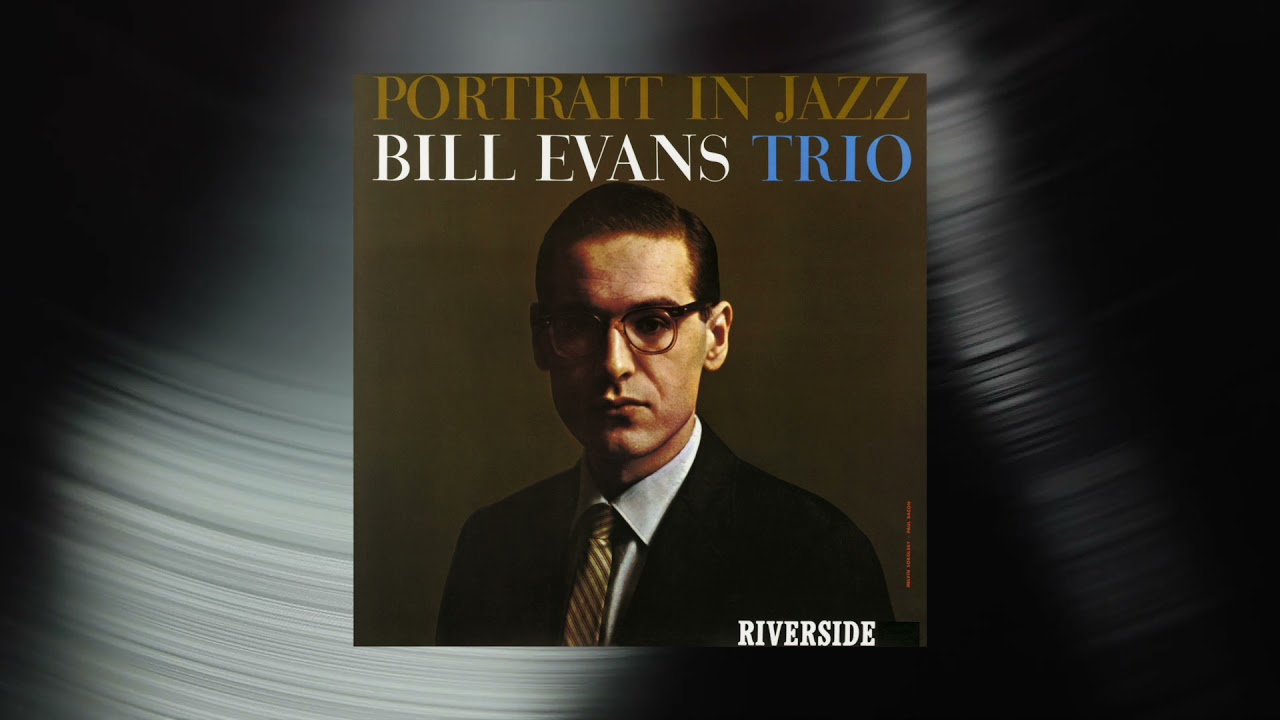
Bill Evans Trio - Blue In Green (Official Visualizer)
Bill Evans Net Worth
At the time of his death, Bill Evans’s net worth was not documented by reliable sources. He earned income through a long career spanning several decades as an American jazz pianist, composer and bandleader, touring internationally with his trio and releasing dozens of albums for major jazz labels. Some of his compositions, including the song “Waltz for Debby,” became jazz standards, generating ongoing royalty income. Because details of his estate were not made public, no authoritative net worth figure is available.
FAQs
1. Who Was Bill Evans In Jazz History?
Bill Evans was an American jazz pianist and composer best known for redefining modern jazz piano harmony. He played a major role in the development of modal jazz and influenced generations of pianists through his trio work and recordings.
2. Why Is Bill Evans Considered So Influential?
Bill Evans introduced advanced harmonic voicings, lyrical phrasing, and interactive trio playing. His approach reshaped jazz piano vocabulary and remains a foundation in jazz education worldwide.
3. What Are Bill Evans’s Most Famous Albums?
Bill Evans is widely known for Kind of Bluewith Miles Davis, Portrait in Jazz, Sunday at the Village Vanguard, and Waltz for Debby. These recordings are considered landmarks in modern jazz.
4. Did Bill Evans Write Any Jazz Standards?
Yes, Bill Evans composed several jazz standards, most notably “Waltz for Debby” and “Very Early.” These compositions are frequently performed and recorded by jazz musicians today.
5. Did Bill Evans Win Any Grammy Awards?
Bill Evans received multiple Grammy Awards during his career, including wins for Conversations with Myselfand At the Montreux Jazz Festival. He was also awarded a Grammy Lifetime Achievement Award posthumously.
6. When Did Bill Evans Die, And What Was The Cause Of His Death?
Bill Evans died on September 15, 1980, at the age of 51. His death was caused by complications related to long-term substance abuse, including cirrhosis of the liver and related health issues.