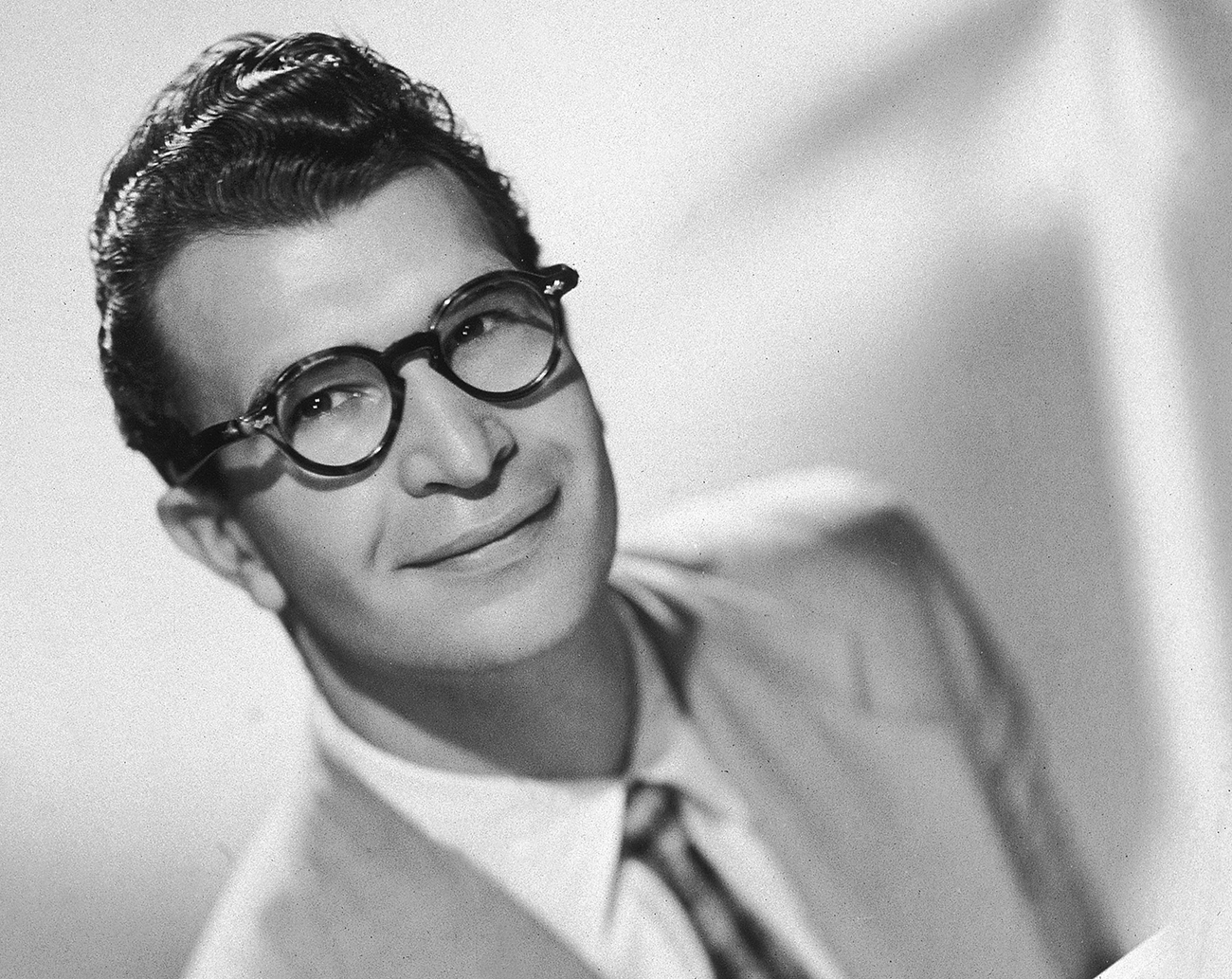
Dave Brubeckwas born December 6, 1920, in Concord, California. He was the only son (with two older brothers) of Elizabeth Ivey Brubeck (a classically trained pianist and local piano teacher) and Howard “Pete” Brubeck (a cattle rancher).
Brubeck spent his early childhood in Concord, where his mother gave him piano lessons beginning at age four while his father managed cattle ranches in the foothills of the Sierras. In 1933 (when Dave was about 12), his family moved to a 45,000 acre cattle ranch in Ione, California.
On the ranch he helped tend a small herd of cows and played Western guitar and sang cowboy songs, yet his mother insisted he protect his fingers (for piano) by only roping small yearlings. His two older brothers, Henry and Howard, were also musicians (Henry became a bandleader and music educator; Howard became a composer and teacher).
Brubeck’s environment combined rural life with rich musical influence. His mother Elizabeth (née Ivey) had studied piano in Europe (with Myra Hessand Tobias Matthay) and taught extensively in Concord, and she forbade the radio to encourage classical study.
From childhood he absorbed folk and dance music as well as classical piano: by age 13 he was already playing in local dance and jazz bands. He also performed with other local musicians and bands in Contra Costa County, reflecting Concord’s lively community music scene. At the same time he earned spending money as a Boy Scout and paperboy and helped on his father’s ranch, giving him a uniquely blended upbringing of music and ranch life.
After finishing high school in the late 1930s, Brubeck enrolled at the College of the Pacific in Stockton, California (now University of the Pacific). He initially planned to study veterinary science and follow his father into ranching, but his passion for music led the zoology chair, Dr. Arnold, to suggest a switch. In 1938 he changed his major to music and joined the conservatory at Pacific. He completed this education and graduated in 1942.
In subsequent years (after World War II) Brubeck continued formal music study, he studied composition under Darius Milhaudat Mills College in Oakland, but all sources confirm that his early life and schooling were grounded in Concord’s musical community and his family’s ranch heritage.
| Aspect | Details |
| Birth | Dave Brubeck was born on December 6, 1920, in Concord, California. |
| Parents | Son of Elizabeth Ivey Brubeck, a trained pianist, and Howard “Pete” Brubeck, a cattle rancher. |
| Childhood | Raised in Concord before moving to a large cattle ranch in Ione, California. |
| Early Training | Began piano lessons at age four under his mother’s guidance. |
| Musical Exposure | Grew up with classical study and local folk, dance, and jazz music. |
| Teen Performances | By age 13, he performed with local dance and jazz bands. |
| College Education | Enrolled at the College of the Pacific in Stockton, California. |
| Academic Shift | Switched from veterinary studies to music in 1938. |
| Graduation | Completed his music education and graduated in 1942. |

Dave Brubeck - Take Five
Career Beginnings
After World War II, Dave Brubeck emerged as a bandleader and innovator. He formed the Dave Brubeck Octet in 1947 and soon after led a trio (including vibraphonist Cal Tjaderand bassist Ron Crotty) that earned critical acclaim in jazz polls.
In 1951 Brubeck reorganized his group into the Dave Brubeck Quartet with alto saxophonist Paul Desmond, drummer Joe Morelloand bassist Wyatt Ruther. This Quartet built its early reputation with a long residency at San Francisco’s Black Hawk club and extensive college concert tours.
Live recordings from this period, such as Jazz at Oberlin (1953) and Jazz Goes to College (1954), captured the group’s energetic interplay and helped establish Brubeck’s name on major labels like Columbia Records.
International Breakthrough
By the mid-1950s Brubeck’s quartet had achieved mainstream recognition. In 1954 Time magazine ran a feature story on the group, making Brubeck only the second jazz artist to appear on its cover.
His quartet topped critics’ and readers’ polls in prominent jazz magazines and became especially popular on U.S. college campuses. The group’s global profile grew in 1958 when the U.S. State Department sponsored a world tour, taking Brubeck’s music to countries in Europe, the Middle East and South Asia.
These cultural-diplomacy tours enriched the Quartet’s repertoire with international influences. The culmination of this breakthrough came in 1959 with the recording of Time Out, an album of pieces in unconventional time signatures.
Time Out became the first jazz album to sell over a million copies, driven by the hit single “Take Five” (written by Desmond), which remains the highest-selling jazz single in history.
Major Performances & Concert Highlights
Brubeck headlined many prestigious concerts throughout his career. In 1959 he appeared at Carnegie Hall when his Quartet premiered Dialogues for Jazz Combo and Orchestra with the New York Philharmonic under conductor Leonard Bernstein.
The group also toured with modern dance companies (Murray Louis Dance Company) and headlined major jazz festivals around the world. Notable festival appearances include the Monterey Jazz Festival (where Brubeck debuted the stage show The Real Ambassadors in 1962) and later performances at the Montreal and Montreux Jazz Festivals.
Brubeck’s quartet was invited to play for U.S. presidents at White House events on multiple occasions. In 1988 the band even traveled with President Reagan to Moscow during a summit meeting, and in 1987 Brubeck composed a special piece for Pope John Paul II’s visit to San Francisco.
Concerts with integrated audiences and tours in places like apartheid-era South Africa showcased Brubeck’s commitment to inclusivity. All of these high-profile performances underscored Brubeck’s role as a cultural ambassador for American jazz.
Recordings & Discography
Brubeck’s discography spans six decades and reflects his broad musical interests. Early albums such as Jazz at Oberlin (1953) and Jazz Goes to College (1954) document the Quartet’s early successes.
The late 1950s and early 1960s saw a string of influential Time-series albums on Columbia Records: Time Out (1959), Time Further Out (1961), Time Changes (1964) and others, each featuring explorations of exotic meters.
On these albums Brubeck popularized classics like “Take Five,” “Blue Rondo à la Turk,” “Three to Get Ready” and his own compositions “The Duke” and “In Your Own Sweet Way,” the latter two of which entered the jazz standard repertoire. Live albums also marked Brubeck’s output, including Live at Carnegie Hall (1963) and Bravo! Brubeck! (recorded on tour in Mexico, 1967).
In later years Brubeck recorded for Fantasy and Telarc labels: notable releases include Two Generations of Brubeck (1972, with his sons), London Flat, London Sharp (2005, celebrating his 85th birthday), and Indian Summer (2007), a collection of standards and new compositions.
Throughout his career Brubeck’s records combined mainstream appeal with adventurous forms, and he continued to release albums into the 2000s, ensuring his music reached new audiences.
Awards & Professional Recognition
| Award Type | Recognition |
| National Honors | National Medal of Arts (1994). |
| Jazz Institutions | DownBeat Jazz Hall of Fame and NEA Jazz Master. |
| Grammy Recognition | Grammy Lifetime Achievement Award (1996). |
| Cultural Honors | Kennedy Center Honoree (2009). |
| International Recognition | BBC Jazz Lifetime Achievement Award and foreign arts medals. |
Brubeck received many of jazz’s highest honors. In 1994 he was awarded the National Medal of Arts by President Bill Clinton for his contributions to American music. He became a DownBeat Jazz Hall of Famer that same year, and in 1996 was given a Grammy Lifetime Achievement Award acknowledging his entire career. The National Endowment for the Arts named him a Jazz Master in 2000.
During the 2000s Brubeck accumulated further accolades: he was inducted into the California Hall of Fame (2008) and in 2009 he was one of the select honorees at the Kennedy Center.
Other international honors included the British BBC Jazz Lifetime Achievement Award and various arts medals from foreign governments. Throughout his life Brubeck held several honorary doctorates and had a star on the Hollywood Walk of Fame. Collectively, these awards reflect Brubeck’s authoritative status in both jazz and the broader arts community.
Collaborations With Orchestras & Conductors
A hallmark of Brubeck’s career was blending jazz with classical elements. He frequently composed for and performed with major symphony orchestras and conductors.
In 1959 the Dave Brubeck Quartet joined the New York Philharmonic under Leonard Bernsteinto perform Dialogues for Jazz Combo and Orchestra, a piece by Brubeck’s brother Howard.
In the 1960s American orchestras premiered several of Brubeck’s large-scale works: the Cincinnati Symphony (conducted by Erich Kunzel) debuted Brubeck’s oratorio The Light in the Wilderness (1968) and his cantata The Gates of Justice (1969).
He also wrote music for dance companies and ballet – notably composing Points on Jazz (1960) for the American Ballet Theatre and Elementals (1962) for a jazz group plus symphony, which was later choreographed by Lar Lubovitch.
Brubeck’s sacred and choral compositions found audiences in concert halls worldwide; the London Symphony Orchestra recorded his choral works in the 2000s, and his mass To Hope! A Celebration has been performed by cathedral choirs in Vienna, Moscow and other cities.
Collaborations with leading ensembles and conductors (from symphony orchestras in the US and Europe to modern dance troupes) highlight Brubeck’s role as a composer-performer who bridged jazz and classical traditions.
Recent Career Activity
Brubeck remained active well into his eighties. The University of the Pacific created the Brubeck Institute in 2000 to promote jazz education and preserve his legacy.
He recorded new albums for the Telarc label; London Flat, London Sharp (2005) celebrated his 85th birthday with the current Dave Brubeck Quartet, and Indian Summer (2007) featured Brubeck playing standards and new originals.
His quartet continued to tour internationally; as late as 2010 the group played major venues and festivals such as Carnegie Hall, the Newport Jazz Festival and the Ravinia Festival.
In December 2009 Brubeck received one of the highest honors of American culture by being named a Kennedy Center Honoree on his 89th birthday. Although he died in 2012 at age 91, Brubeck’s career truly spanned seven decades. His final concerts occurred in the late 2000s and his recorded legacy continues to be reissued.
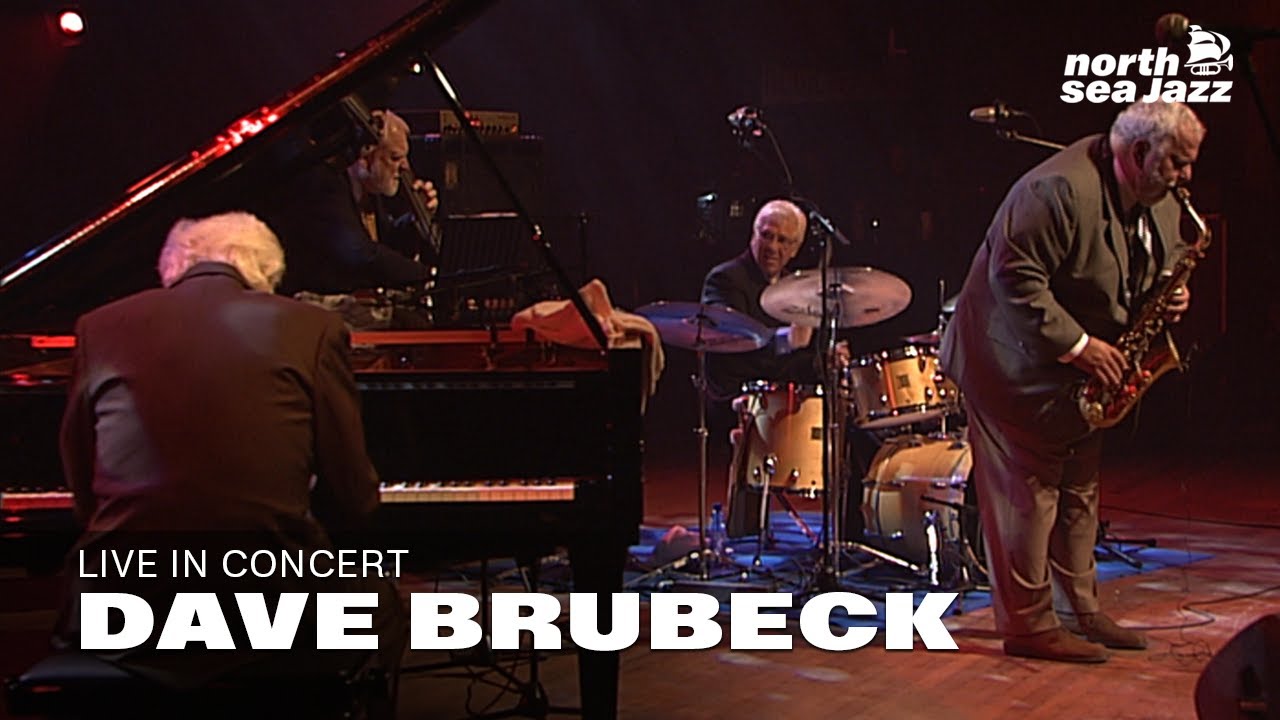
Dave Brubeck - Full Concert [HD] | Live at North Sea Jazz Festival 2004
Dave Brubeck Performance Highlights
- Lasting stage presence:Dave Brubeck continued active performance into his 80s and 90s. In November 2010 at age 90 he gave a sold out 90 minute concert at New York’s Blue Note jazz clubjust weeks after recovering from heart surgery mixing jazz standards with originals. These late life performances underscored his enduring stamina and artistic focus in live jazz.
- Global jazz ambassadorship:In 1958 and 1959 Brubeck led a State Department sponsored tour of his quartet across Europe the Middle East and Asiaincluding Poland Turkey India Ceylon Pakistan Afghanistan Iran and Iraq. These jazz ambassadors concerts introduced diverse audiences to American jazz.
- Prestigious collaborations:On December 10 1959 Brubeck’s quartet performed Dialogues for Jazz Combo and Orchestra at Carnegie Hallwith the New York Philharmonic conducted by Leonard Bernstein. In 1962 the group performed at the White House for President Lyndon Johnson.
- Innovative festival premieres:In 1962 Brubeck co wrote the jazz musical The Real Ambassadorswhich premiered at the Monterey Jazz Festival starring Louis Armstrongand Carmen McRaeshowcasing his experimental live performance approach.
- Family and reunion tours:In 1972 he formed the Two Generations of Brubeck ensemble with his sons Darius Chris and Danny. In 1975 he reunited the classic quartet for a 25th anniversary tourdemonstrating long term performance leadership.
- International outreach tours:In 1976 Brubeck’s quartet toured apartheid era South Africawith an integrated audience policy canceling performances that enforced segregation. In 1987 he led a quartet on a State Department backed tour of the Soviet Union.
- Later career performances:After age 80Brubeck remained a sought after live performer. Following his 2010 Blue Note concert he continued performing at theaters and festivals through 2011 and 2012 maintaining artistic consistency.
Dave Brubeck’s Piano Style And Interpretation
Technical Approach And Piano Control
Dave Brubeck’s pianism grew out of the swing and stride tradition rather than formal classical training. Early on he absorbed the styles of Art Tatumand Teddy Wilson, developing a strong rhythmic grounding and fluent left-hand patterns. His improvisations often unfold in rich block-chord textures and parallel harmonies for example, maintaining a tune’s overall progression while inserting new chord substitutions or shifting rhythms beneath it.
At the same time, he could deploy crisp single-note runs and stride-style figures, showing a firm command of both vertical (chordal) and linear (melodic) devices. Reviewers of the time noted that Brubeck frequently built climactic passages of pounding chords an effect of his percussive attack yet these were balanced by moments of nimble, intricate ornamentation in his solos.
In all, his piano control was flexible: he navigated bold harmonic shifts and rhythmic complexity without losing clarity, demonstrating technical facility alongside deliberate stylistic choices.
Tone, Touch, And Sound Color
Brubeck’s tone on the piano ranges broadly from warm and mellow to bright and incisive. Many of his chordal statements have a ringing, resonant quality, with a clear attack that emphasizes the harmony. He often used the sustain pedal and careful voicing to blend chords smoothly, yielding a lush, sustaining color.
In the upper register, he could evoke a bell-like effect for instance, jazz analysts have admired a delicate “bell” texture he creates on certain solo passages. Overall, his touch was controlled and articulate; even in powerful passages his playing remained relatively precise and incisive rather than overly blurred.
In slower pieces or ballads he could soften his touch, producing a singing, lyrical tone. Listeners have noted that Brubeck rarely resorted to overtly harsh or aggressive timbres his overall sound tends toward clear, cool clarity rather than an extreme, fiery brightness.
Rhythm, Phrasing, And Structural Clarity
Rhythmically, Brubeck is best known for embracing and popularizing unusual meters and cross-rhythms. He frequently improvised in 5/4, 9/8, and other irregular time signatures, and sometimes superimposed one rhythmic feel on top of another.
These complex rhythmic frameworks so prominent in pieces like Take Five (5/4) and Blue Rondo à la Turk (9/8) initially struck many traditional jazz critics as outside the norms of swing. In solo lines he often played phrases slightly behind or ahead of the beat, giving the music an elastic, off-kilter flow.
His rhythmic imagination extended to phrasing: instead of repeatedly cycling through identical 32-bar choruses, he would develop a solo continuously, introducing new motifs and even quoting other songs midstream. For example, in one live solo he segued unexpectedly into a ragtime-style passage on a different tune before returning to the main standard.
In this way his phrasing could seem free-form; there was often no clear reset or demarcation at chorus boundaries. Despite this fluid structure, however, Brubeck’s improvisations still maintained internal logic: his varied rhythmic patterns were grounded in the underlying form, and he usually returned to recognizable melodic or harmonic points so that the overall form remained coherent.
Interpretative Approach To Repertoire
Brubeck approached each piece with a sense of narrative and innovation. When interpreting jazz standards and his own compositions, he treated them as frameworks to be explored deeply. His solo albums, for instance, were conceived as very personal statements he often spoke directly to listeners about his intentions and chose material to reflect moods like introspection or nostalgia.
He was willing to transform melodies and harmonies rather than play them verbatim. In practice, this meant reharmonizing familiar tunes with fresh chords, stretching phrases, or even inserting quotes from entirely different songs during a solo.
At the same time, he respected the piece’s character: ballads became tender and reflective, while up-tempo numbers allowed him to play imaginatively with syncopation and blues inflections. Brubeck also drew on his classical influences in arranging material for example, he might introduce a phrase reminiscent of Baroque counterpoint as a coloristic touch but always through the lens of jazz improvisation.
In short, his repertoire interpretations combined formal understanding with personal expression: he didn’t simply perform the head, but reinvented each piece in performance, constantly balancing homage to the original tune with his own creative voice.

Dave Brubeck - Live In 1964 & 1966
Balance Between Precision And Expression
Throughout his career Brubeck insisted on both structural discipline and spontaneity. He famously quipped that “any jackass can swing,” emphasizing that innovation was more important than rote conformity.
In his playing, this philosophy manifested as a careful balance: he typically adhered to the form and tune of a piece, yet within that framework he introduced offbeat ideas and risk-taking gestures. He believed instrumental technique must serve feeling; for him, virtuosity meant having the skill to execute an idea in the moment rather than merely showcasing flashy runs.
Thus, even in well-rehearsed settings, he allowed room for unforeseen turns. Interviews and writings show that he viewed jazz forms (whether a 32-bar song or a blues, for example) as a “house” within which the artist could freely improvise.
In practice, some solos might lock into a brisk, precise swing feeling while others would stretch time or explore dissonance demonstrating a tension between tight precision (reflecting his compositional rigor) and looseness (reflecting expressive improvisation). In general, Brubeck’s performances maintained enough clarity of pulse and chord progression to keep the music grounded, even as he took liberties to make it uniquely expressive.
Critical Observations And Musical Identity
Brubeck’s musical identity is marked by the fusion of jazz and classical elements, and critics have long noted the resulting contrasts in his style. He became emblematic of the cool jazz approach: his playing is often described as relaxed, cerebral, and polished, in contrast to the more fiery swing pianistsof earlier decades.
Some observers in his time labeled his style cold or criticized it as overly academic, citing its occasional lack of traditional swing and its heavy chordal textures. Others, however, praised the originality and adventurousness of his approach.
For instance, one writer noted that when Brubeck’s approach worked, he became one of the most creatively adventurous individualists in all modern music. While opinions varied, common praise centers on his imagination: his willingness to use odd meters, polytonal harmonies, and shifting textures gave his music a distinctive, eclectic character.
He also earned a reputation as an ensemble-minded pianist who valued interplay; many longtime listeners point out that Brubeck’s true strength was in dialogue with his band and in tight arrangements as much as in dazzling solo pyrotechnics.
In sum, Brubeck’s piano style is identified with a unique blend of precision and originality a personal musical voice that combines the rigor of compositional structure with a willingness to push boundaries
Dave Brubeck Net Worth
At the time of his death in 2012, Dave Brubeck’s net worth was estimated to be between $10 million and $20 million. This figure comes from celebrity finance websites rather than official publications, so it should be viewed as approximate.
Brubeck earned his wealth through a decades-long career as a jazz pianist, composer, and bandleader. He recorded many albums and toured extensively around the world. His 1959 album Time Out, which featured the hit “Take Five,” became his highest-selling album; it sold over a million copies worldwide.
FAQs
1. Who Was Dave Brubeck?
Dave Brubeck was an American jazz pianist, composer, and bandleader best known for leading the Dave Brubeck Quartet. He was a major figure in cool jazz and helped bring jazz to mainstream audiences through innovative rhythm and composition.
2. Why Is Dave Brubeck Famous?
Dave Brubeck is famous for popularizing unusual time signatures in jazz, particularly through his 1959 album Time Out. The album featured “Take Five,” one of the best-selling and most recognizable jazz recordings of all time.
3. What Is Dave Brubeck’s Most Famous Song?
Dave Brubeck’s most famous piece is “Take Five,” written by his saxophonist Paul Desmond and performed by the Dave Brubeck Quartet. It is notable for its 5/4 time signature and remains the best-selling jazz single in history.
4. What Awards Did Dave Brubeck Receive?
Dave Brubeck received numerous major honors, including the National Medal of Arts, a Grammy Lifetime Achievement Award, and recognition as an NEA Jazz Master. In 2009, he was also named a Kennedy Center Honoree.
5. How Did Dave Brubeck Influence Jazz Music?
Dave Brubeck influenced jazz by integrating classical elements with jazz improvisation and by expanding the use of complex rhythms and meters. His work helped broaden jazz’s audience while encouraging innovation within the genre.
6. When Did Dave Brubeck Die And What Was The Cause Of His Death?
Dave Brubeck died on December 5, 2012, one day before his 92nd birthday. He died of heart failure, according to family statements and widely reported news sources.