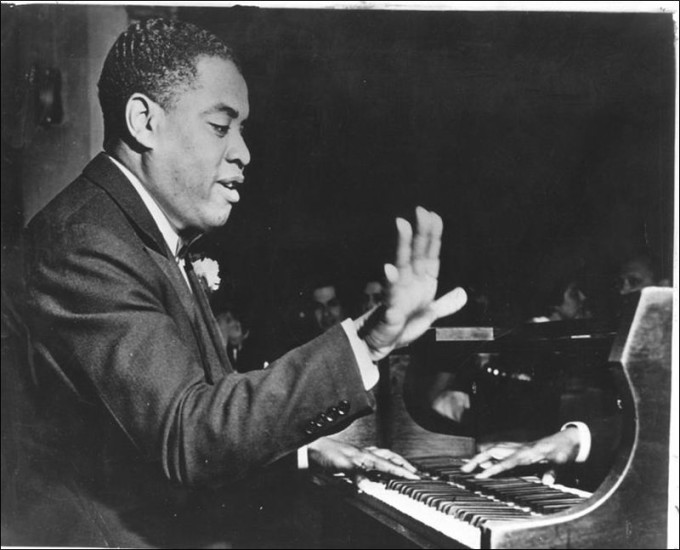
Arthur “Art” Tatum, Jr. was born on October 13, 1909, in Toledo, Ohio. He was the eldest child of Arthur Tatum Sr. and Mildred (née Hoskins) Tatum. His father worked as a mechanic and his mother as a domestic worker in Toledo. The Tatums were a solid, church going family, and both parents were musically inclined amateurs. From a very early age, young Art showed remarkable musical aptitude. He was born with congenital cataracts and was effectively blind from infancy. Despite his visual impairment, by age three he was already “picking out tunes” on his mother’s piano by ear.
Tatum’s formal schooling included special institutions for blind students. He first attended the Jefferson School for the Blind in Toledo and then (around 1924) the Ohio State School for the Blind in Columbus. He later returned to Toledo to study piano at the Toledo School of Music. There he took lessons from Overton G. Rainey, a blind piano instructor trained in the classical tradition. Rainey emphasized classical technique and discouraged improvisation. In spite of this classical training, Tatum remained largely self taught in jazz. As All About Jazz notes, he had “some formal training at the Toledo School of Music” but was “largely self taught,” learning tunes by ear.
From childhood Tatum developed perfect pitch and a prodigious musical memory. He often learned songs by listening for example, picking up hymns on piano roll recordings and radio broadcasts. He drew inspiration from the great stride and early jazz pianistsof his day. In particular, he cited Fats Waller as a major influence and also admired James P. Johnsonand Earl “Fatha” Hines. These early influences along with a wide range of ragtime, hymns, and popular songs heard at church or on the radio shaped Tatum’s musical education even before he reached adulthood.
| Aspect | Details |
| Full Name | Arthur “Art” Tatum, Jr. |
| Birth | October 13, 1909, Toledo, Ohio |
| Parents | Arthur Tatum Sr. and Mildred Hoskins Tatum |
| Family Background | Church-going family with musical interests |
| Vision | Born with congenital cataracts |
| Sight Condition | Effectively blind from infancy |
| Early Talent | Played melodies by ear at age three |
| First School | Jefferson School for the Blind, Toledo |
| Later School | Ohio State School for the Blind, Columbus |
| Music Studies | Toledo School of Music |
| Piano Teacher | Overton G. Rainey |
| Training Focus | Classical piano technique |
| Improvisation | Discouraged in formal lessons |
| Jazz Learning | Largely self-taught |
| Learning Method | Learned music by ear |
| Early Influences | Fats Waller, James P. Johnson, Earl Hines |
| Net Worth | No reliable public record of net worth |
| Death | Died November 5, 1956, from kidney-related illness |
Career Beginnings
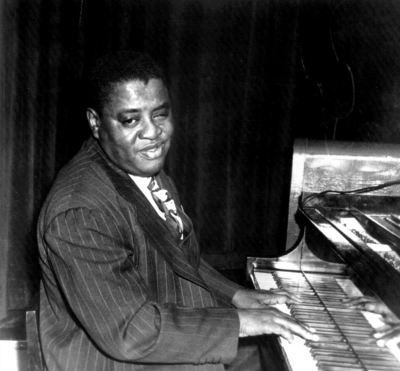
Art Tatumfirst gained attention in his hometown of Toledo, Ohio, in the late 1920s. After winning a local amateur competition in 1927, he began performing on Toledo radio (WSPD) and soon earned his own daily show by 1928. By the early 1930s he was touring the Midwest, impressing audiences with his virtuosic piano style.
A pivotal moment came in 1932 when singer Adelaide Hallheard Tatum play and invited him to New York. That year he made his first recordings with Hall’s band and also participated in a legendary Harlem cutting contest, where he outplayed veteran stride pianists.
In early 1933 Tatum cut his debut solo records (notably “Tiger Rag” and “St. Louis Blues”), solidifying his reputation on New York’s club scene. He became a fixture at prominent jazz clubs (such as the Onyx Club on 52nd Street), dazzling listeners with improvisations that astonished even established masters.
International Breakthrough
Tatum’s renown quickly spread beyond the United States. In 1938 he traveled to England for the first time, embarking on a three-month engagement in London clubs. British audiences – eager for jazz and noted for their enthusiastic listening – received him warmly as he played venues like Ciro’s and others on the West End.
During this London stay he also made several BBC radio broadcasts (“Starlight” and others) and recorded multiple piano pieces (eventually released years later). The European tour greatly boosted Tatum’s international profile: his performances overseas led to the publication of some of his compositions in Britain and increased demand for his artistry back home.
Upon returning to America he commanded higher fees and strict contract terms (for example, insisting on quiet, no-drinks conditions during performances), reflecting how his visits abroad had elevated his stature.
Major Performances & Concert Highlights
Though much of Tatum’s career was spent in clubs and recording studios, he also appeared in several landmark concert settings. In January 1944 he was featured in Esquiremagazine’s all-star jazz concert at New York’s Metropolitan Opera House, the first jazz concert in that venue.
There he shared the stage with other jazz luminaries (including Louis Armstrongand Coleman Hawkins) in a highly publicized wartime benefit show. In the 1950s Tatum joined large-scale jazz events as well.
Notably, in August 1956 producer Norman Granzpresented a Hollywood Bowl concert headlined by Tatum, drawing roughly 19,000 attendees to hear his solo piano. Earlier, in 1952 he took part in the multi-star “Piano Parade” tour (alongside fellow pianists Meade Lux Lewis, Pete Johnsonand Erroll Garner), which brought jazz piano to concert halls nationwide.
Throughout his career Tatum also performed on radio and film soundtracks (for example, he appeared briefly in the 1947 movie The Fabulous Dorseys), but it was these live concert events – from the Met to the Bowl – that underscored his prominence on the American jazz stage.
Recordings & Discography
Art Tatum was among the most-recorded jazz pianists of his era. Between 1933 and his death in 1956 he logged nearly 400 sessions, mostly solo piano performances. He began recording on the Brunswick label in 1933 and spent the mid-1930s through World War II with Decca Records (1934–41).
During the 1940s he appeared on Capitol Records (1949 and 1952) and in 1953 signed with Norman Granz’s Clef (later Verve) label for a prolific series of studio albums. Tatum’s discography includes both studio masters and many live club recordings.
His unaccompanied pieces – such as his celebrated rendition of “Tea for Two” – showcased complex reharmonizations of popular songs, while he also backed blues singers (for example, Big Joe Turner on 1941’s “Wee Baby Blues,” a hit selling over half a million copies).
In 1943–45 Tatum recorded extensively in a trio format (with guitarist Tiny Grimes and bassist Slam Stewart), yielding albums for labels like Comet and Asch. Several of these later turned into classic LPs, and after his death dozens of compilations and posthumous releases (notably the album God Is in the Housefrom 1941–42 recordings) continued to appear, preserving his complete output for new audiences.
Awards & Professional Recognition
| Year | Recognition |
| 1943 | Won Esquire magazine’s first jazz popularity poll |
| 1954 | DownBeat Critics Poll winner for piano |
| 1955 | DownBeat Critics Poll winner for piano |
| 1956 | DownBeat Critics Poll winner for piano |
| 1964 | Inducted into the DownBeat Jazz Hall of Fame |
| 1989 | Grammy Lifetime Achievement Award (posthumous) |
Tatum’s peers and later critics unanimously hailed him as a jazz piano master. Fellow musician Fats Waller reportedly exclaimed “I only play the piano, but tonight God is in the house” upon hearing Tatum perform, a testament to the reverence he inspired.
In 1943 he won Esquiremagazine’s inaugural jazz popularity poll for pianists, earning the magazine’s top pianist award and an invitation to the Met concert mentioned above. In the mid-1950s Tatum dominated jazz critics’ polls.
He was voted DownBeatmagazine’s Critics Poll winner for piano in 1954, 1955, and 1956 (he never won the magazine’s readers’ poll, but critics lauded him repeatedly). Posthumously he continued to receive honors.
Tatum was inducted into the DownBeatJazz Hall of Fame in 1964 and was awarded the Grammy Lifetime Achievement Award in 1989. In addition, several of his recordings have been designated Grammy Hall of Fame classics (for example, his solo album The Genius of Art Tatum).
These accolades reflect Tatum’s enduring authority as a pioneer of jazz piano technique.
Collaborations With Orchestras & Conductors
In large part Tatum’s artistry shone in small-group and solo settings rather than with full orchestras. He rarely performed with symphony orchestras or classical conductors.
Instead, his most notable collaborations were with other jazz ensembles and bandleaders. In the early 1940s he formed a celebrated trio with Tiny Grimes(guitar) and Slam Stewart(bass), which became his main performing unit for several years.
Later sessions under impresario Norman Granz often paired Tatum with other jazz stars (he recorded with Lionel Hampton, Roy Eldridge, Ben Webster, and Buddy Richon various Verve records in the mid-1950s).
In 1954 Tatum joined bandleader Stan Kenton’s “Festival of Modern American Jazz,” a 10-week multi-artist tour across the U.S., performing his solo jazz piano alongside Kenton’s big band.
However, even in these contexts Tatum remained the featured soloist rather than an orchestral sideman. His focus on intricate improvisation meant he devoted almost all recordings to either solo piano or small-group accompaniment, not full orchestral scores.
Recent Career Activity
As Tatum passed away in 1956, he has no new performances, but his legacy remains active through reissues and tributes. In recent years record labels and jazz institutions have continued to celebrate him.
For example, special editions of his work have been released on vinyl and CD – notably a 2024 limited-edition 3-LP set entitled Jewels in the Treasure Box, featuring previously unissued live trio recordings from a 1953 Chicago club session.
Similarly, reissue labels have issued expanded editions of classic albums (such as Blue Skies Extended). Jazz festivals and orchestras have also mounted tribute concerts (for instance, a 2023 “Art of Art” tribute in Toledo, Ohio, his birthplace).
Pianists worldwide still cite him as a central influence. In sum, while Tatum’s own career ended in the 1950s, his recordings continue to be remastered and rediscovered, ensuring that his groundbreaking impact on jazz piano endures.
Art Tatum Performance Highlights
- 1944:Tatum performed at New York’s Metropolitan Opera House in a high-profile jazz concert (alongside stars like Louis Armstrong). That year he also launched nationwide concert tours, playing in large theaters and college halls (venues up to ~3,000 seats).
- Mid-1940s:He was featured in Norman Granz’s Jazz at the Philharmonictouring concerts, bringing his virtuoso piano to large jazz audiences on the concert hall circuit.
- 1952:Tatum co-headlined a national “Piano Parade” concert tour with fellow pianists Erroll Garner, Pete Johnson and Meade Lux Lewis, further showcasing his soloist prowess in high-profile revue events.
- 1954:His trio joined bandleader Stan Kenton’s 10-week “Festival of Modern American Jazz”tour, performing alongside Kenton’s orchestra and other jazz luminaries.
- August 1956:He gave a landmark solo concert at the Hollywood Bowl in Los Angeles, playing to a record ~19,000-strong audience, the largest crowd of his career.
Art Tatum’s Piano Style And Interpretation
Technical Approach And Piano Control
Art Tatum’s piano technique was legendary for its sheer precision and independence of the hands. He executed extraordinarily rapid, complex runs with each hand, often playing completely different lines simultaneously without faltering.
His coordination was so advanced that his left hand could maintain a steady stride-based bass pattern or walking bass line while his right hand swept through dazzling arpeggios and embellishments. He had unusually large hands and a straight-finger approach, allowing him to reach wide intervals and execute intricate passages with apparent ease.
Tatum’s mastery of harmony was equally exceptional: he frequently substituted rich extended chords and bitonal voicings on nearly every beat at high tempos, yet never lost the underlying swing feel. In fact, his playing was so self-sufficient that he effectively replaced the entire rhythm section; he simultaneously delivered the bass line, chordal accompaniment, and rhythmic fills all by himself.
Notably, observers remarked that he played with remarkable calm and economy of motion; his hands remained almost horizontal at the keyboard and he made few theatrics, yet the music that emerged was breathtaking. This combination of effortless-looking technique and absolute control gave him uncanny command over every note.
Tone, Touch, And Sound Color
Tatum’s touch on the piano yielded a crystal-clear, resonant tone across the keyboard. He employed a percussive, precise attack in fast passages, imparting a bright, ringing quality to each note.
At the same time his touch could be remarkably sensitive: in slower or more lyrical moments he adjusted dynamics finely, shaping phrases with subtle crescendos, diminuendos, and rubato. Critics and fellow musicians often emphasize that Tatum had flawless timing and a perfectly even touch, integrating every nuance into his playing.
Even at top speeds, his articulation remained clean and distinct, without blurring. Because he insisted on well-tuned instruments and played with acute aural discrimination, his tone retained clarity and precision.
Taken together, these qualities allowed him to produce a wide palette of sounds: from thunderous, rapid cascades of notes to gentle, legato lines, all delivered with consistent control. Listeners noted that despite his dramatic runs, he never sounded harsh or sloppy; every note was purposefully shaped, giving his music both brilliance and polish.
Rhythm, Phrasing, And Structural Clarity
Rhythmically, Tatum built on the strong swing pulse of stride and blues, but infused it with inventive complexity. His left-hand stride pattern or walking bass kept a steady groove, providing a solid foundation even when the right hand unleashed rapid, syncopated figures.
He had a masterful sense of swing and could effortlessly handle intricate cross-rhythms and sudden tempo shifts, even within a single chorus. In performance he often applied rubato for expressive effect, stretching or compressing beats in ways that enhanced the music’s flow.
Tatum’s phrasing tended to be highly ornate and continuous: rather than stating melodies in simple, long lines, he frequently broke them into fragments and filled the gaps with runs, trills, and unexpected embellishments. In fact, he seldom let a single melodic line play out in an unadorned way; most themes were enveloped in his constant ornamentation.
Structurally, he treated each piece like a personal improvisation, weaving multiple layers of improvisatory ideas around the tune. He might introduce brief melodic quotes or countermelodies, creating a multi-layered texture that danced around the main theme.
Even when he took liberties with harmony and rhythm, the underlying form of the song remained clear, anchored by his unshakable pulse in the bass. The result was music that swung intensely and moved forward inexorably, yet always felt coherent and integrated.
Interpretative Approach To Repertoire
Tatum’s repertoire was rooted in jazz and popular song standards of his era – Broadway show tunes, Hollywood ballads, Tin Pan Alley hits – and he approached each with a deeply imaginative improvisatory style. He rarely repeated the same arrangement; instead, he reinvented every tune he played, effectively composing anew in each performance.
In interpreting these songs, he typically kept the original melody recognizable but surrounded it with lush new harmonies and intricate counter-lines. Rather than simplifying or paraphrasing the melody, he would elaborate on it extensively, using it as a springboard for elaborate harmonic exploration.
When he turned to more classical or Romantic-era material, his method was essentially to transform it into jazz. A famous example is Dvořák’s Humoresque, which Tatum reinterpreted as a swinging, fast-paced improvisation.
In that performance he accelerated the tempo, superimposed syncopations, and re-harmonized the piece at every turn, in his own words, turning the work into “a jazz musician’s improvisation on material borrowed from the realm of academic art”.
In general he did not shy away from borrowing from any tradition, but always filtered everything through his jazz sensibility. He seldom ventured into avant-garde or modern classical repertoire; his main focus remained on transforming familiar melodies and chord progressions with his own harmonic and rhythmic vocabulary.
In short, Tatum treated each piece as raw material for invention, applying his signature chord substitutions, bitonal textures, and paraphrased melodies to give even the most standard tunes a fresh, personal voice.

Art Tatum - Yesterdays (1954)
Balance Between Precision And Expression
Tatum’s music is marked by razor-sharp precision, and this meticulousness is evident at every speed and volume. He played fast passages with exactitude that left virtually no mistakes, and his timings were impeccable.
This level of detail meant that listeners often perceived his playing as highly articulate and “perfect” in execution. However, the relentless density of his style has also drawn commentary: some observers note that his arrangements rarely leave empty space or silence, giving a sense of constant forward motion.
In fact, one analysis remarked that it seems “no matter the tempo of the tune, it always seems to be passing at 300 beats per minute… all songs, no matter the tempo or lyrical intent, get a virtuosic treatment”.
In slower or ballad-like pieces, he was capable of considerable expressiveness, using gentle dynamics, tenderness, and rubato to convey emotion, but even these are often embellished with intricate fills. Consequently, a few critics have wondered whether this nonstop ornamentation might sometimes crowd out simpler emotional statements.
Nonetheless, it is clear that Tatum never sacrificed control for expressivity; if anything, his enormous command of the instrument allowed him to be expressive within a highly precise framework. When the music called for it, he could dial back and reveal warmth and lyricism, but he generally preferred to keep a high degree of clarity and momentum.
The balance he struck was a personal one: fidelity to swing and technical finesse took precedence, and any sentiment was conveyed through the intensity and creativity of his embellishments.
Critical Observations And Musical Identity
Art Tatum’s musical identity is virtually inseparable from his reputation as a superlative virtuoso. Jazz historians and fellow pianists consistently remark on his unique combination of technical brilliance and inventive harmonic language.
He is often described as a “musician’s musician,” a pianist’s pianist, someone whom other accomplished players deeply admired, even if popular audiences found his style demanding.
Known for elevating stride piano to new heights, he was credited with extending the harmonic vocabulary of jazz: contemporaries noted that many chordal ideas he used such as extended voicings and bitonal harmonies would only become common in jazz years later.
As a performer, Tatum carried himself without flamboyance, but his music could inspire awe. Legends tell of fellow greats like Fats Waller proclaiming “God is in the house” upon hearing Tatum play; classical virtuosos such as Vladimir Horowitzand Sergei Rachmaninoffare said to have sat in wonder at his concerts.
Crucially, Tatum maintained these exacting standards up to the very end of his life. In August 1956 he appeared at the Hollywood Bowl in Los Angeles before an audience of nearly 19,000, one of his final public concerts.
Even as his health declined, his playing remained true to his artistic identity. In sum, critics and musicians portray Tatum as a singular figure who consistently emphasized virtuosity and inventive harmonies.
His style evolved little in its core principles; he never followed the bebop revolution, for example, but he did push his own boundaries within that style, often venturing further from the written melody and experimenting with even more adventurous harmonies as he matured.
The enduring view is that Art Tatum stands as one of the most technically accomplished and harmonically daring jazz pianists of any era, a musician whose identity is defined by the dazzling fusion of precision and creative freedom in every phrase he played.

All The Things You Are
When Art Tatum Died, What Was His Net Worth?
At the time of his death, no reliable source had published an estimate of Art Tatum’s net worth. Tatum earned his income as a highly skilled jazz pianist and bandleader who played regularly on radio and at club residencies. In the 1940s he led a commercially successful trio and headlined major jazz concerts including Norman Granz’s Jazz at the Philharmonic series.
He continued touring and recording into the 1950s and often performed at Detroit’s Baker’s Keyboard Lounge; his final public performance was there in April 1956. His wealth would have come from these performances and recordings.
FAQs
1. Who Was Art Tatum?
Art Tatum was an American jazz pianist widely regarded as one of the most technically accomplished musicians in jazz history. He was active from the late 1920s until his death in 1956 and is especially known for his solo piano recordings.
2. Why Is Art Tatum Considered One Of The Greatest Jazz Pianists?
Art Tatum is considered great for his extraordinary technical control, advanced harmonic substitutions, and ability to play complex arrangements at high speed. Many leading musicians and critics cited his playing as unmatched in precision and creativity.
3. Was Art Tatum Blind?
Yes, Art Tatum was born with severe vision impairment due to congenital cataracts and was effectively blind from early childhood. Despite this, he developed exceptional musical skills by ear and had perfect pitch.
4. What Style Of Jazz Did Art Tatum Play?
Art Tatum’s style was rooted in stride piano and swing jazz, but he expanded these forms with sophisticated harmonies and rapid improvisation. His approach influenced later jazz pianists, even though he did not play bebop.
5. Did Art Tatum Compose Original Music?
Art Tatum wrote some original pieces, but he was best known for transforming popular songs and jazz standards through improvisation. His reputation rests primarily on interpretation rather than composition.
6. When Did Art Tatum Die, And What Was The Cause Of His Death?
Art Tatum died on November 5, 1956, at the age of 47. The cause of death was complications related to uremia, a condition caused by kidney failure.