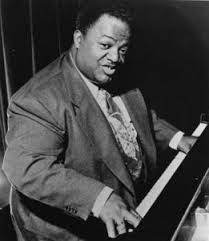
Anderson Meade “Lux” Lewis was born on September 4, 1905. His parents – George Anderson Lewis and Hattie (Johnson) Lewis, were Kentucky natives.
Lewis grew up on Chicago’s South Side in a large family (he was the oldest of five sons), where music was a part of everyday life. By about 1920, Lewis had left formal school; census records show him at age 15 listed as a shoe store porter and “no longer attending school.” His boyhood neighborhood in Chicago was a hotbed of blues and jazz piano.
As a youth he befriended next-door neighbor Albert Ammons, another future piano great, and the two spent hours practicing together. They listened to Chicago blues pianistson records – most notably Jimmy Yancey – and studied their styles. This early influence on Lewis is noted by contemporary accounts.
Lewis’s first instrument was the violin, as his father, himself a working guitarist, insisted he study the violin while still a child. However, after his father died in 1921 (when Lewis was about 15 or 16) he switched to piano.
Lewis then taught himself piano, practicing by ear to learn the blues and stride styles he loved. In this way his musical education remained largely informal and self-directed during his childhood years.
| Aspect | Information |
| Birth Name | Anderson Meade “Lux” Lewis |
| Date of Birth | September 4, 1905 |
| Parents | George Anderson Lewis and Hattie (Johnson) Lewis |
| Birthplace | Sources list Chicago, Illinois; some records cite Louisville, Kentucky |
| Childhood Environment | Raised on Chicago’s South Side in a large musical family |
| Siblings | Oldest of five sons |
| Early Schooling | Left formal school around age 15 |
| Early Employment | Worked as a shoe store porter while still a teenager |
| First Instrument | Violin, studied at his father’s insistence |
| Shift to Piano | Switched after his father’s death in 1921 |
| Musical Education | Largely self-taught, learning by ear |
| Early Influences | Jimmy Yancey and Chicago blues pianists |
| Key Childhood Association | Practiced extensively with neighbor Albert Ammons |
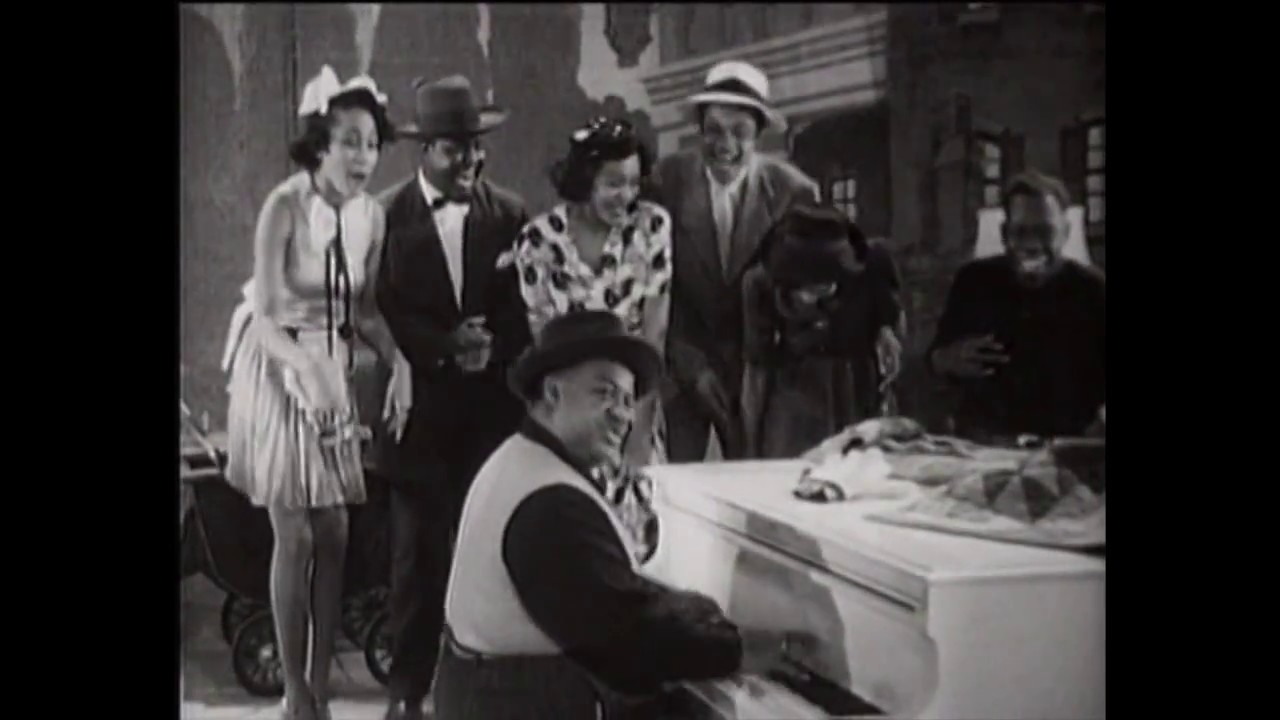
Boogie Woogie (1944) — Meade Lux Lewis
Career Beginnings
Meade Lux Lewisfirst made his mark as a pianist in Chicago’s jazz clubs during the late 1920s. In 1927 he recorded his signature tune “Honky Tonk Train Blues”for Paramount Records; this solo piano record later became a blues classic.
Despite the quality of these early sides, Lewis struggled to find steady work and even took odd jobs (legend has it John Hammondfound him washing cars in 1935) before Hammond helped relaunch his music career. After Hammond reintroduced him to the recording world, Lewis began working consistently again by the mid-1930s, laying the foundation for his boogie-woogie legacy.
Meade “Lux” Lewis at his piano in 1960 (photo by William Claxton). From his first Paramount recording in 1927 until the 1960s, Lewis developed the boogie-woogie style that would influence generations of pianists.
International Breakthrough
Lewis’s career breakthrough came with John Hammond’s landmark “From Spirituals to Swing”concert at Carnegie Hall in 1938. At that concert Lewis performed “Honky Tonk Train Blues”, and joined fellow pianists Albert Ammonsand Pete Johnsonin a thrilling three-piano boogie-woogie finale.
The national exposure from this show sparked a boogie-woogie craze and made Lewis and his colleagues into stars. Immediately after Carnegie Hall, Lewis toured extensively with Ammons and Johnson as a piano trio. This period cemented his reputation internationally, as he appeared on nationwide radio and live concert bills alongside the leading jazz musicians of the day.
Major Performances & Concert Highlights
Following his Carnegie Hall success, Lewis and his piano partners won a long-term engagement at Café Society, a famous New York nightclub. From 1939 into the early 1940s they played nightly at Café Society before packed audiences, helping bring boogie-woogie from the clubs to a wider public.
Lewis also performed in a variety of concert and media venues. He recorded for the NBC Camel Caravanradio show in 1939, and in 1947 he appeared on screen (playing “Honky Tonk Train Blues”) in the MGM film New Orleans.
He even had an uncredited role as a pianist in Frank Capra’s It’s a Wonderful Life(1946). In the 1940s Lewis regularly toured the West Coast and Midwest, including appearances at Norman Granz’sJazz at the Philharmonic concerts (Granz brought him on the first JATP tour in 1944). He continued performing in clubs and concerts through the early 1960s, maintaining a steady concert schedule up until his death.
Recordings & Discography
Lewis was a prolific recording artist. He re-recorded “Honky Tonk Train Blues” many timesover his career, initially cut in 1927, then remade for Parlophone (1935), Victor (1936), and later on Blue Note (1939) and other labels.
In addition to this classic piece, Lewis recorded a wide repertoire of boogie-woogie, jazz standards, and blues. He was notably adventurous in the studio: beginning in the mid-1930s he doubled on celesteand even on harpsichordfor certain sessions.
In 1939 Lewis made his first Blue Note Records sessions (playing piano and celeste alongside Edmond Hall and Charlie Christian). Later, in 1951 he cut an LP for Atlantic Records (Interprets the Great Boogie-Woogie Masters) that included songs like “Pinetop’s Boogie-Woogie” and “Cow Cow Blues”.
In the 1950s and 1960s Lewis recorded on labels such as Verve (the album Cat House Piano, 1955) and Riverside (1961), blending boogie-woogie with stride and standard tunes. His catalogue spans many labels (Blue Note, Atlantic, Verve, Riverside, etc.) and includes both 78 RPM singles and later LP albums.

Meade Lux Lewis plays the blues and band plays The Blue Room
Awards & Professional Recognition
| Area | Lasting Impact |
| Musical Role | Foundational figure in boogie-woogie piano |
| Influence | Inspired rhythm & blues and early rock ’n’ roll piano |
| Peer Recognition | Widely regarded as a leading exponent of boogie-woogie |
| Posthumous Honors | Inducted into jazz and blues halls of fame |
| Modern Relevance | Recordings reissued; style studied and performed today |
| Historical Identity | Representative of the classic Chicago barrelhouse sound |
Lewis became widely recognized as one of the foremost boogie-woogie pianistsof his era. Contemporary critics and historians agree that he was “one of the leading exponents of boogie-woogie”. During his lifetime he received no major formal awards, but he was often praised in the press and in liner notes for his powerful technique and inventive solos.
After his death Lewis’s achievements continued to be honored by jazz and blues organizations. For instance, he was posthumously inducted into halls of fame (including a Big Band & Jazz Hall of Fame) and celebrated in countless jazz histories. His role alongside Ammons and Johnson in launching the boogie-woogie movement has earned him a lasting place in jazz lore.
Collaborations With Orchestras & Conductors
Lewis is best known for his work in small-group settings, but his music also intersected with larger ensembles. In the late 1930s he formed a piano triowith Albert Ammonsand Pete Johnson; the three shared solo and ensemble duties on recordings and in concerts.
Beyond jazz combos, Lewis’s compositions were embraced by big bands. Leading swing bandleaders recorded boogie-woogie tunes inspired by his style, Tommy Dorsey’sorchestra and Will Bradley’sband featured orchestral arrangements of the boogie tunes made famous by Lewis and his peers.
His signature “Honky Tonk Train Blues” in particular has been arranged for symphony and jazz orchestras, and has appeared in Pops concerts. In his studio recordings Lewis occasionally worked with prominent session musicians (such as bassists and drummers on his 1950s LP dates), and was produced by notable industry figures like John Hammondand Norman Granz.
Recent Career Activity
Lewis continued recording and performing into the early 1960s. He cut his final albums around 1961 and remained a working musician until his death in 1964. Although boogie-woogie had faded from the pop charts by then, Lewis never stopped touring clubs across the country.
In recent decades his music has enjoyed a resurgence: his early recordings have been reissued on CD and streaming platforms, and modern pianists frequently pay tribute to his style. As one jazz chronicle notes, Lewis’s “infectious eight-to-the-bar style” “persisted” long after his death and “Honky Tonk Train Blues” continues to be performed today.
His playing is regularly cited as a foundational influence on rhythm & blues and rock ’n’ roll piano, ensuring that Lewis’s legacy remains authoritative in American music history.
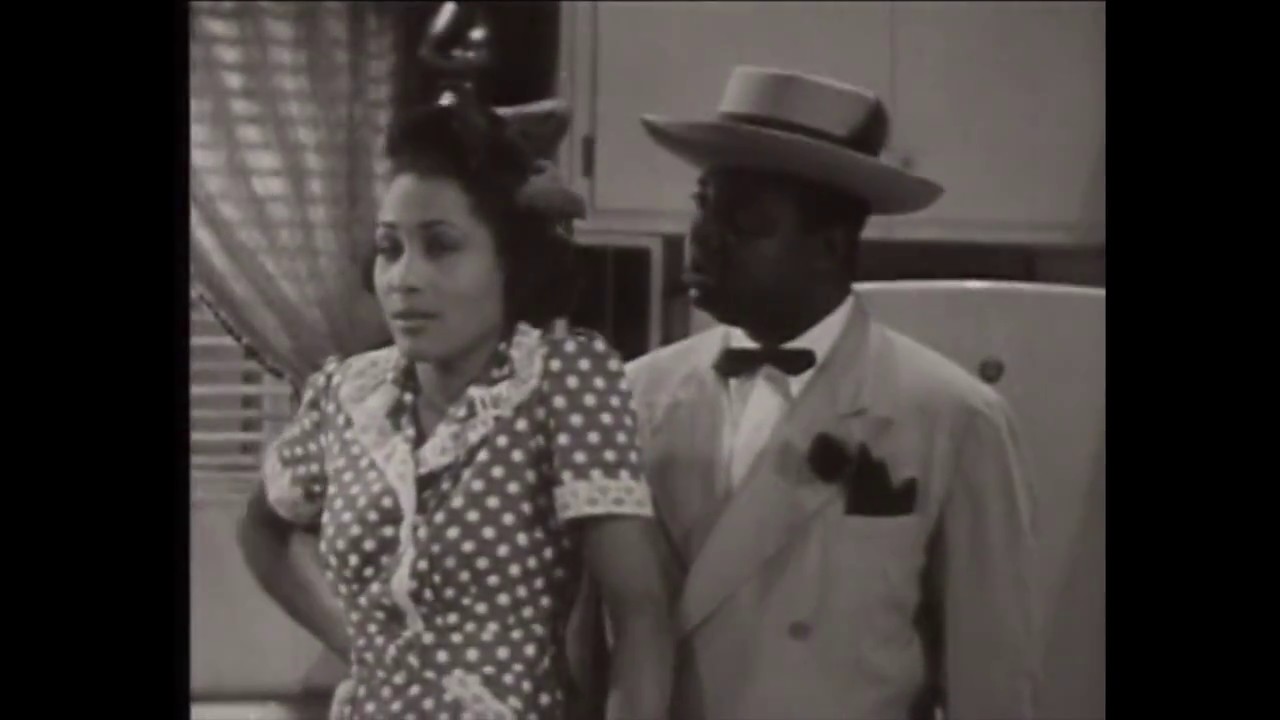
Low Down Dog (1944) — Meade Lux Lewis
Meade Lux Lewis Performance
- 1938 Carnegie Hall (“From Spirituals to Swing”):Lewis played “Honky Tonk Train Blues” at John Hammond’s landmark concert, earning national attention.
- Late 1930s NYC boogie woogie trio:He held extended residencies (e.g. at Café Society) and toured nationally with fellow pianists Albert Ammons and Pete Johnson, helping fuel a late 1930s boogie woogie dance craze.
- 1940s West Coast breakthrough:Lewis made his L.A. debut in 1941 (Swanee Inn) and joined Norman Granz’s Jazz at the Philharmonictours(from 1944). He appeared in films such as New Orleans(1947, performing with Louis Armstrong) and had a piano cameo in It’s a Wonderful Life(1946).
- 1950s “Piano Parade”tour and jazz clubs:He co headlined the 1952 Piano Paradetour with Erroll Garner, Art Tatum, and Pete Johnson, and led a year long engagement at San Francisco’s Club Hangover (mid 1950s), with performances broadcast on radio.
- Late 1950s 1960 Television and recordings:Lewis guested on national TV (e.g. The Steve Allen Showin 1960and NBC’s “Chicago and All That Jazz” special), and continued releasing albums on major labels (Riverside, Philips), showcasing his virtuosic piano style.
- 1957 1964 Minneapolis residencies:He regularly performed in the Twin Cities (Dyckman Hotel, Golden Valley’s White House Restaurant), beginning a final three week engagement in May 1964.
Technical Approach And Piano Control
Meade Lux Lewis’s piano technique epitomized the classic boogie woogie formula of equal independence and strength in both hands. His left hand laid down a relentless, repeating bass pattern often eight steady beats per measure that functioned as a foundation, while his right hand played independent, syncopated riffs and arpeggios.
Critics note that boogie woogie is distinctly two part, two handed contrapuntal music, and Lewis exemplified this by varying his left hand ostinato from chorus to chorus shifting between walking, rolling, or dotted note grooves while the right hand offered embellished melodic figures.
This demanded formidable coordination: Lewis maintained a metronomic pulse in the bass with remarkable consistency, even as his right hand danced above it. Technically, his playing combined firm finger control with occasional gliding legato runs.
He could punctuate the music with sharp, detached chords or execute rapid single note lines with precision. In short, his technical command was geared toward sustaining the boogie woogie engine a steady, driving left hand while permitting a freer, ornamental right hand.
Tone, Touch, And Sound Color
Lewis’s touch on the piano favored clarity and attack over sustained lyricism. His bass notes were often struck with a crisp, staccato emphasis, giving a punchy, percussive foundation to each measure. The right hand was similarly articulate: short bursts of chords and fast runs were clearly enunciated rather than blurred.
Although boogie woogie is not a style known for subtle pedal tones, Lewis occasionally employed slight dynamic shading. He might contrast a forceful chord with a sudden diminuendo in the following bar or accent notes to create tension.
Overall, his tone production was bright and rhythmically incisive: the sound palette focused on the interplay of heavy low notes and sparkling high register flourishes. When he shifted into faster tempos, the result was a glittering, almost mechanical cascade of sound each note cut through clearly.
In slower blues pieces he recorded such as his Blues, Part 3, he introduced more dynamic contrast, with whispery treble runs preceding thunderous bass attacks, but even then the primary colors remained the earthy thump of the left hand and the lively tinkling of the right.
Rhythm, Phrasing, And Structural Clarity
Rhythm was the heart of Lewis’s playing. He almost invariably used strict tempo and clear phrase shapes to propel the music forward. Most of his repertoire followed standard blues forms usually twelve bar blues structures, and he emphasized the backbeat and forward momentum at every turn.
His phrasing tended to rely on repeated motifs and riffs: for instance, in Honky Tonk Train Blues he alternated fixed bass patterns with cycles of right hand figures that built in intensity with each chorus. Cross rhythms were a common feature: a given bar might layer a dotted rhythm or triplet feel in the right hand against the steady duple pulse of the left, creating a lively syncopation.
Yet despite these polyrhythms, Lewis’s playing always remained clear. Observers note that his left hand functioned as a reliable rhythmic anchor sophisticated time, which in turn gave the improvised right hand phrases room to shift rhythms or ornament the beat.
Structurally, Lewis’s solos were straightforward: they unfolded as cohesive cycles of boogie woogie driving patterns rather than long developmental passages. Only at the ends of pieces did he allow slight rubato for example, gradually slowing down the tempo to evoke a train easing into a station but for the most part he maintained unmistakable forward motion and symmetry in his phrasing.

Honky Tonk Train - Maede Lux Lewis.
Interpretative Approach To Repertoire
Lewis’s repertoire was almost entirely drawn from the blues and boogie woogie idiom, and his interpretation was accordingly unified and focused. He didn’t tend to rework classical or Romantic compositions, nor did he dramatically alter a song’s harmony; rather, he presented each number in a direct, unembellished manner.
When he arranged or revisited a tune often his own compositions, he stuck close to the core theme and intensified its character through rhythmic variation. For example, in pieces like Honky Tonk Train Blues or his boogie variations on gospel tunes, Lewis built a vivid narrative by varying dynamics and articulations within a consistent groove.
He treated each composition as a platform for rhythmic exploration rather than personal storytelling. This meant that, except for occasional novelty recordings he once even played a four part Variations on a Theme on harpsichord, revealing his classical influences in texture, his interpretive lens stayed within the boogie woogie tradition.
In sum, Lewis approached his repertoire as dance and party music: the emphasis was on keeping a groove and flavor intact rather than on individual improvisational flights into other genres.
Balance Between Precision And Expression
Precision was paramount in Lewis’s playing, reflecting boogie woogie’s need for tight ensemble coordination even as a soloist. Every repeat of a bass figure was executed with machine like accuracy, and his rhythmic lockstep was often described as that of a piano machine.
In fast tempos, he gave the impression of one continuous, powerful drive, rarely pausing for rubato or subtle fluctuation. However, Lewis was not entirely devoid of expressive nuance. He used accents, crescendos, and occasional short breaks to punctuate phrases.
For instance, he might insert a light staccato chord or a brief trill to highlight the end of a phrase, adding colour to the otherwise relentless pulse. And in slower or mid tempo blues numbers, he exploited dynamics more fully drawing a whisper from the upper register or stomping heavier low notes to create a sense of tension and release.
Still, overall the balance tipped toward technical exactitude: most commentary on his style notes that he consistently prioritized rhythmic continuity and clarity over individualistic expressivity. Any emotional content in his playing was conveyed through the inherent energy of the boogie groove rather than through extreme tempo fluctuations or sentimental phrasing.
Critical Observations And Musical Identity
Critics and historians agree that Meade Lux Lewis’s musical identity was inseparable from the boogie woogie blues tradition. Contemporary write ups of his work emphasized the sheer power of his left hand and the density of his right hand figures.
For example, commentators highlight how his performances feature a perpetual ostinato bass often compared to a steam engine rhythm overlaid with rapidly repeating riffs, arpeggios, or chord clusters in the treble. This created a rich polyphonic texture and an inexorable forward drive.
Observers have also pointed out that Lewis seldom strayed into softer, more romantic interpretations; instead, his brand of expression was rooted in intensity. As one analysis notes, even when playing in slower tempos he never lost the bluesy grit or disciplined pulse that marked boogie woogie.
Over time, critics recognized that Lewis remained true to this signature sound through his career: he did not, for instance, adopt the more modern jazz or avant garde trends that came later.
In summary, Lewis’s legacy as a musician rests on his role as a foundational boogie woogie pianist one whose style was defined by unwavering rhythmic control, fiery bass patterns, and spirited right hand licks. His playing is often cited as a primary example of the classic Chicago barrelhouse sound, marking him as a pivotal figure in the history of piano blues and jazz.
Meade Lux Lewis Net Worth
At the time of death, Meade Lux Lewis’s net worth was estimated to be roughly in the range of $1 million to $5 million. These figures come from celebrity net worth websites and are unverified by major financial publications.
Lewis was an American boogie woogie pianist and composer. He earned his income through his music career performing live and recording boogie woogie piano music, including his signature piece “Honky Tonk Train Blues,” which has been recorded by many artists.
FAQs
Who Was Meade Lux Lewis?
Meade Lux Lewis was an American boogie-woogie pianist and composer active from the 1920s through the early 1960s. He is best known for helping popularize boogie-woogie piano in jazz and blues.
When And Where Was Meade Lux Lewis Born?
Meade Lux Lewis was born on September 4, 1905, in Chicago, Illinois. His parents were Kentucky natives, and he grew up on Chicago’s South Side.
Why Is Meade Lux Lewis Important In Music History?
Meade Lux Lewis played a central role in bringing boogie-woogie piano to national and international audiences. His recordings and concert appearances helped establish the style as a major jazz form.
What Is Meade Lux Lewis’s Most Famous Song?
Meade Lux Lewis is best known for “Honky Tonk Train Blues.” The piece became a defining example of boogie-woogie piano and was recorded multiple times throughout his career.
When Did Meade Lux Lewis Die?
Meade Lux Lewis died on June 7, 1964. He remained active as a performing musician until shortly before his death.