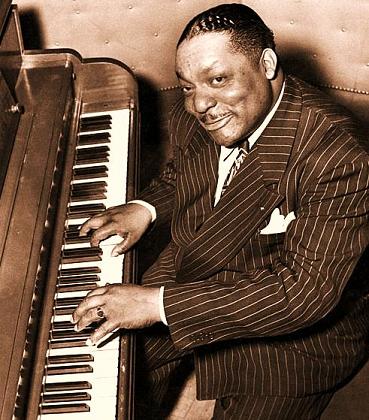
Albert Ammonswas born in Chicago, Illinois, on March 1, 1907. Both of his parents were pianists, so he grew up in a musical household. By about age ten he had taught himself to play piano by ear. The family owned a player piano, and young Ammons learned chords and harmony by slowly running its music rolls and marking the keys that sounded.
Ammons’s teenage years continued to be steeped in music. He played percussion in a Chicago drum and bugle corps as a teen, although piano – especially blues piano – remained his primary interest.
A childhood friend, pianist Meade “Lux” Lewis, often practised with him at home, and the two young musicians exchanged ideas that shaped their styles. Ammons also absorbed the influence of older local blues pianists such as Hersal Thomasand Jimmy Yancey.
Ammons received no formal music schooling; he developed his technique entirely through home practice and listening to other musicians.
| Aspect | Verified Information |
| Birth | Albert Ammons was born on March 1, 1907, in Chicago, Illinois. |
| Family Background | Both of his parents were pianists, and he grew up in a musical household. |
| Early Piano Learning | By around age ten, he taught himself piano by ear. |
| Learning Tools | He learned chords and harmony using a player piano and music rolls. |
| Musical Influences | He exchanged ideas with Meade “Lux” Lewis and learned from Chicago blues pianists like Hersal Thomas and Jimmy Yancey. |
| Formal Education | He received no formal music training and developed his skills through self-practice and listening. |
Career Beginnings
Albert Ammons began his musical career in Chicago, where he emerged as a leading exponent of the boogie-woogie piano style. In the early 1930s he formed his own band (Albert Ammons’s Rhythm Kings) and performed in local clubs such as the famous Club DeLisa on Chicago’s South Side.
He made his recording debut in 1934, playing piano with Louis Banks’ orchestra, but his first big hits came in 1936. That year his Rhythm Kings recorded two defining boogie tunes for Decca Records: “Boogie Woogie Stomp” and “Swanee River Boogie.”
These energetic recordings showcased Ammons’s driving left hand and rhythmic flair. In fact, “Swanee River Boogie” became a rare million-selling record of its era, cementing Ammons’s reputation as a boogie pioneer. These early successes established his career and positioned him as one of Chicago’s premier blues pianists.
International Breakthrough
Ammons’s career reached a new level of fame in 1938 when he was featured in the landmark “From Spirituals to Swing” concert at Carnegie Hall in New York. Organized by producer John Hammond, this integrated concert introduced African American blues and jazz artists to a wider audience On the bill were Ammons alongside fellow boogie pianists Meade “Lux” Lewis and Pete Johnson (with blues shouter Big Joe Turner).
The performance caused a sensation: the trio’s powerful boogie-woogie numbers electrified the crowd and even prompted swing bandleader Benny Goodmanto join Ammons onstage in an impromptu jam. The concert’s success made Ammons and his colleagues instant national celebrities and helped spark a boogie-woogie craze that swept the country.
Riding this momentum, Ammons moved to New York and on January 6, 1939 recorded the very first tracks for the newly founded Blue Note label (with Lux Lewis). These inaugural Blue Note sessions including famous duets like “The First Day” further solidified his international reputation as a leading boogie-woogie artist.
Major Performances & Concert Highlights
| Event | Verified Performance Information |
| Carnegie Hall (1938) | Appeared in John Hammond’s “From Spirituals to Swing” concert alongside Meade Lux Lewis and Pete Johnson. |
| Audience Reception | The boogie-woogie performances electrified the crowd and sparked national attention. |
| Café Society | Became a regular performer at Café Society nightclubs in New York, both downtown and uptown venues. |
| Film Appearance | Appeared in the short musical Boogie Woogie Dream in the mid-1940s with Pete Johnson and Lena Horne. |
| White House Performance | Played at President Harry S. Truman’s second inauguration ceremony in January 1949. |
| Final Performances | Made his final concert appearances in 1949 due to declining health. |
Throughout the late 1930s and 1940s, Ammons was a sought-after performer on club and concert stages. In New York he was a mainstay at the Café Society nightclubs (both downtown and uptown venues), often appearing there in boogie recitals with Lux Lewisand Pete Johnson.
Audiences across the country came to recognize Ammons’s flair for exciting piano showcases. He even appeared on film: in the mid-1940s Ammons and Pete Johnson were featured in the short musical “Boogie Woogie Dream,” which starred Lena Horne and brought their boogie style to the silver screen.
In 1946 Ammons recorded several sides with rising tenor saxophonist Gene Ammons, showcasing a rare father-son (though Ammons’s kinship was not publicized) musical collaboration.
One of the capstones of his performance career came in January 1949, when he was invited to play at President Harry S. Truman’s second inauguration ceremony at the White House. (This high-profile gala, attended by the President and First Lady, reflected the wide acclaim that boogie-woogie enjoyed.) Unfortunately, Ammons’s health failed shortly after, and he made his final concert appearances in 1949.
Recordings & Discography
Ammons left behind a rich legacy of recordings made for a variety of major labels. His early output included hits on the Decca label (mid-1930s) such as “Boogie Woogie Stomp” and “Swanee River Boogie.”
In January 1939 he cut the first Blue Note tracks of the label’s history (duets and solos with Lux Lewis), and later that year recorded for Brunswick with trumpet star Harry James(producing the stomping number “Woo-Woo” with Big Joe Turner on vocals).
Also in 1939 he participated in the Port of Harlem Jazzmen sessions (playing piano for an ensemble led by trumpeter Frankie Newtonand trombonist J. C. Higginbotham). In 1941 Ammons and Pete Johnson recorded a series of duet sides for Victor Records, but soon after Ammons injured a finger and stopped recording for a time.
After World War II, from 1944 onward he resumed studio work: he recorded solo piano and small-group tracks for Commodore Records (in sessions that included Hot Lips Page on trumpet and Vic Dickenson on trombone).
In the late 1940s (1946 1949), Ammons recorded extensively for Mercury Records, both as a bandleader of his Rhythm Kings and as an accompanist on blues tracks. For example, he backed blues singer Sippie Wallace on Mercury and recorded with guitarist Lonnie Johnson.
His final recording dates came in early 1949 for Decca, accompanying Lionel Hampton’s orchestra on several big-band tracks. These sessions capture the last of Ammons’s distinctive bluesy piano style on record.
Awards & Professional Recognition
Ammons’s contributions earned him widespread acclaim, even if formal awards were scarce at the time. His recordings enjoyed notable commercial success “Swanee River Boogie” remained a well-known hit and critics dubbed him one of the “kings of boogie-woogie.”
He was consistently identified as one of the three great boogie-woogie pianistsof the late 1930s (alongside Lux Lewis and Pete Johnson). Jazz historians credit Ammons with raising boogie-woogie to a high art form and influencing later musicians.
Indeed, many subsequent jazz and blues pianists from Erroll Garner to Ray Bryant cited Ammons as a key inspiration. His legacy has been honored in anniversary celebrations: for example, Chicago held an “Albert Ammons Centennial Concert” in 2007 to mark what would have been his 100th birthday.
Over time, Ammons’s recordings have appeared on classic blues and jazz anthologies, ensuring that his name and music remain prominent in the history of American blues piano.
Collaborations With Orchestras & Conductors
Although Ammons primarily led his own bands, he often recorded with other prominent jazz musicians and ensembles of his day. In small-group sessions he teamed with swing stars; for instance, in February 1939 he recorded the song “Woo-Woo” with trumpeter Harry Jamesand blues singer Big Joe Turner(this was released as the “Boogie Woogie Trio” recording).
That same year he played in the Port of Harlem Jazzmen, a sextet featuring horns by Frankie Newtonand J.C. Higginbotham. Later he accompanied well-known vocalists: he backed legendary blues singer Sippie Wallaceon recordings in the mid-1940s. Ammons also engaged with big-band contexts: for example, in January 1949 he cut tracks with Lionel Hampton’soctet and big band.
Swing bandleaders of the era took notice of boogie through Ammons’s influence Benny Goodmanfamously jammed with him onstage in 1938, and Tommy Dorseyincorporated boogie numbers into his repertoire after witnessing Ammons’s performance.
While he did not tour with symphony orchestras, Ammons’s collaborations with jazz orchestras and bands (and his invitation to perform at the White House) underscored his stature as a bridge between blues piano and larger ensemble jazz.
Recent Career Activity
As a historical figure who died in 1949, Ammons’s own career had no activities after that date; however, interest in his work continues in the jazz and blues communities. His recordings are regularly reissued on jazz compilations and classic-album box sets, and modern pianists still study his solos.
In the 2010s his legacy was spotlighted in anniversary events: for example, in 2014 pianists Jason Moranand Robert Glasperperformed tribute duets honoring Ammons’s pioneering Blue Note sessions as part of Blue Note Records’ 75th anniversary celebrations.
Academic and festival programs occasionally feature tributes to Ammons, reflecting his role in the birth of boogie-woogie. Overall, while he never witnessed the modern jazz scene, Ammons’s name remains well-known among aficionados, and his recordings continue to be celebrated for their rhythmic drive and historical importance.
Albert Ammons Performance
- Chicago club residencies (1934–36)Led a boogie-woogie band at Chicago’s Club DeLisa. His 1936 Decca recording of “Swanee River Boogie” (with the Rhythm Kings) sold over one million copies.
- New York cafés and duetsAfter moving to NYC, Ammons teamed with pianist Pete Johnson. The duo became a fixture at Café Society (New York’s pioneering integrated jazz club) in the late 1930s.
- Carnegie Hall (Dec 1938)Joined Johnson and Meade Lux Lewisat John Hammond’s “From Spirituals to Swing” concert. Critics noted the newly formed “Boogie Woogie Trio” “stole the show,” immediately boosting their national fame.
- Blue Note sessions (Jan 1939)Recorded solo and duo piano tracks for Alfred Lion’snew Blue Note label. These yielded enduring boogie-woogie tunes; for example, “Boogie Woogie Stomp” became Ammons’s signature theme.
- Film appearance (1944)Appeared as himself in the movie Boogie-Woogie Dream, performing a dynamic dual-piano boogie number with Pete Johnson alongside singer Lena Horne.
- Commodore swing session (1944)Led a high-profile studio date for Commodore Records featuring jazz greats Hot Lips Page (trumpet), Vic Dickenson(trombone) and Don Byas(tenor sax).
- Postwar recordings (1946–49)Continued touring solo and with his Chicago-based Rhythm Kings, recording for Mercury Records. These late-1940s albums featured upbeat boogie-woogie arrangements of pop standards, which found an audience on the emerging R&B charts.
- Presidential inauguration (Jan 1949)Performed at President Harry S. Truman’s inaugural galain Washington, D.C., a nationally broadcast event attended by top musicians.
- Final performances (late 1949)Maintained regular gigs in Chicago clubs (Beehive, Tailspin). In late November 1949 he even sat in at boogie-woogie pianist Jimmy Yancey’s home session, managing to play one tune despite recent paralysis.
Albert Ammons: Piano Style And Interpretation
Technical Approach And Piano Control
Albert Ammons’s playing was built on a solid, powerful technique. He brought a strong stride-piano background to his boogie-woogie style, and critics have called him a powerhouse stride pianist. His left hand was especially formidable, laying down continuous eighth-note bass patterns with unerring strength. Jazz critics have noted that Ammons had a rock-steady, unfaltering rhythmic drive in his left hand, suggesting exceptional control and endurance.
Despite this forcefulness, he maintained clean articulation. Solo performances reveal sharp attacks and clear passagework even at very fast tempos. At the same time, Ammons’s technique showed finesse. Reviewers describe his playing as having notable clarity and precision. In solo passages one can hear his finesse and sense of timing, meaning that each figure is articulated with accuracy and exact placement.
Commentators have observed that Ammons’s technique was comparatively conventional for a blues pianist, implying it was tidy and reliable rather than idiosyncratic. His ability to execute fast runs and chordal punches cleanly has been widely noted. In sum, Ammons combined raw power in his left hand with refined control overall, allowing him to play dense textures without blurring.
Tone, Touch, And Sound Color
Ammons’s sound was straightforward and assertive, befitting the boogie-woogie tradition. His touch on the keys was firm and even, yielding a clear, percussive tone rather than a mellow or delicate one. He did not rely on extensive pedal use or dramatic timbral variation. Instead, he focused on consistent articulation, ensuring that each note in fast boogie patterns rang out distinctly.
The emphasis in his tone was on rhythmic attack and clarity, with notes generally released cleanly to reinforce the driving pulse of the music. His sound palette remained grounded in a strong acoustic piano tone, with dynamic accents providing contrast rather than tonal shading.
Rhythm, Phrasing, And Structural Clarity
Rhythm formed the foundation of Ammons’s style. He maintained strict time and a steady pulse throughout his playing. His left hand delivered the classic eight-to-the-bar boogie bass line with mechanical consistency, anchoring the rhythm at all times.
Critics consistently emphasized his rock-steady rhythmic drive and unfaltering sense of time. His beat has been described as irresistible, reflecting the direct physical impact of his groove. Ammons’s phrasing was clear and even, closely aligned with standard blues structures. He phrased his solos within well-defined twelve-bar patterns and rarely employed rubato.
Instead, he emphasized structural markers such as chorus openings and turnarounds, giving his performances strong organizational clarity. Subtle rhythmic accents and brief breaks added variation without disrupting form. His playing made musical structure immediately audible, allowing listeners to follow the progression of each piece with ease.
Interpretative Approach To Repertoire
Ammons’s interpretative approach remained firmly rooted in jazz and blues traditions. He worked primarily within blues forms and popular song structures, adapting material through a consistent boogie-woogie framework.
When performing well-known songs, he typically preserved the melodic outline while applying his characteristic left-hand patterns and rhythmic drive. These melodies served as frameworks for rhythmic elaboration rather than vehicles for harmonic experimentation.
In ensemble contexts, Ammons adapted his playing without abandoning his musical identity. Observers noted that he was equally at home in swing settings, bringing blues inflections and boogie rhythms into broader jazz contexts.
Regardless of source material, his interpretations emphasized continuity of groove, rhythmic clarity, and directness of expression. He favored consistency and momentum over dramatic tempo changes or reharmonization.
Balance Between Precision And Expression
A defining characteristic of Ammons’s playing was the balance between technical precision and expressive depth. Critics frequently observed that his disciplined execution was paired with a strong feeling for the blues.
His performances combined exact timing and clean articulation with expressive accents and dynamic emphasis that conveyed emotional intensity. This balance was evident in his control of attack and emphasis. Repeated rhythmic figures were shaped through subtle changes in volume and accent rather than through timing distortion.
His swing feel emerged from precise placement rather than looseness. As a result, his playing retained clarity while remaining deeply expressive. His rhythmic exactness served as a foundation for conveying blues feeling rather than limiting it.
Critical Observations And Musical Identity
Critical commentary consistently identifies rhythmic solidity and reliability as Ammons’s defining traits. Among leading boogie-woogie pianists, he has often been described as the most consistent, with exceptional rhythmic stability.
His playing was less reliant on theatrical effects and more focused on sustaining an unbroken rhythmic flow. At the same time, his style reflected a strong connection to earlier stride piano traditions, combining technical power with blues-based expression.
Observers have noted his ability to merge disciplined piano technique with an authentic blues sensibility. His musical identity was shaped by this synthesis of structure and energy. Ammons established himself as a central figure in boogie-woogie through clarity, rhythmic strength, and unwavering stylistic focus rather than through embellishment or excess.
Albert Ammons Net Worth
At the time of death, reliable sources have not published an estimate of Albert Ammons’s net worth. Ammons earned his income through his career as an American pianist and player of boogie-woogie, a blues style popular from the late 1930s to the mid-1940s.
His earnings came primarily from live performances, commercial recordings, radio appearances, and touring during the height of the boogie-woogie movement. He also generated income through collaborations with other musicians and participation in major concerts of his era. No verified financial records or entertainment finance outlets have released a monetary valuation of his estate.
FAQs
Who Was Albert Ammons?
Albert Ammons was an American blues and jazz pianist best known as a leading figure in the development of boogie-woogie piano. He was active primarily from the 1930s until his death in 1949.
Why Is Albert Ammons Important In Jazz History?
Albert Ammons helped bring boogie-woogie piano from regional blues settings to national and international audiences. His recordings and concert appearances played a key role in popularizing the style within mainstream jazz.
What Style Of Music Did Albert Ammons Play?
Albert Ammons specialized in boogie-woogie piano, a blues-based style characterized by a steady, repeating left-hand bass pattern. His playing also showed influences from stride piano and swing-era jazz.
Did Albert Ammons Have Formal Musical Training?
Albert Ammons did not receive formal music education. He was largely self-taught, developing his technique through listening, practice, and collaboration with other musicians.
What Are Albert Ammons’s Most Famous Recordings?
Albert Ammons is best known for recordings such as “Boogie Woogie Stomp” and “Swanee River Boogie.” These tracks are widely cited as foundational works in the boogie-woogie piano repertoire.
When Did Albert Ammons Die?
Albert Ammons died on December 2, 1949. His career ended shortly after a period of declining health.