
Hélène Grimaudwas born on 7 November 1969 in Aix-en-Provence, France. She grew up in an academic family: both of her parents were language teachers (her father taught Italian and Latin, her mother Italian literature). Grimaud later described herself as a “contrary” child highly intelligent but restless. She has recalled often finishing her schoolwork quickly and then amusing herself, feeling little connection with other children her age.
To keep her engaged, Grimaud’s parents tried many activities (such as sports and dance) before turning to music. When she was seven years old, they enrolled her in a children’s music class. There the teacher immediately recognized her talent: at the end of the class she told Grimaud’s parents that the child was “gifted for music” and should start piano lessons. Soon after, Grimaud’s father rented a small upright piano so she could practice at home. Grimaud later called this moment pivotal in her life, the point at which music became her passion.
Grimaud’s formal piano training began in her hometown. She studied with Jacqueline Courtin at the Aix-en-Provence Conservatorybefore continuing her studies under Pierre Barbizetin Marseille. In 1982, at age 13, she was admitted to the prestigious Paris Conservatoire (Conservatoire de Paris) to pursue advanced musical training. (By her early teens, Grimaud had already won first prize in piano at the conservatoire.)
Throughout her childhood in Aix-en-Provence, music became Grimaud’s outlet and defining focus. (She once quipped that without music she “could easily have been a delinquent,” noting that music gave her direction.) However, all facts above concern her youth; Grimaud’s later career accomplishments lie beyond the scope of her early life.
| Fact | Verified Information |
| Full Name | Hélène Grimaud |
| Date of Birth | 7 November 1969 |
| Place of Birth | Aix-en-Provence, France |
| Family Background | Parents were language teachers |
| Childhood Traits | Intelligent, restless, independent |
| Start of Music | Began music classes at age seven |
| First Instrument | Piano |
| Early Training | Studied in Aix-en-Provence |
| Advanced Training | Continued studies in Marseille |
| Paris Conservatoire | Entered at age 13 (1982) |
Career Beginnings
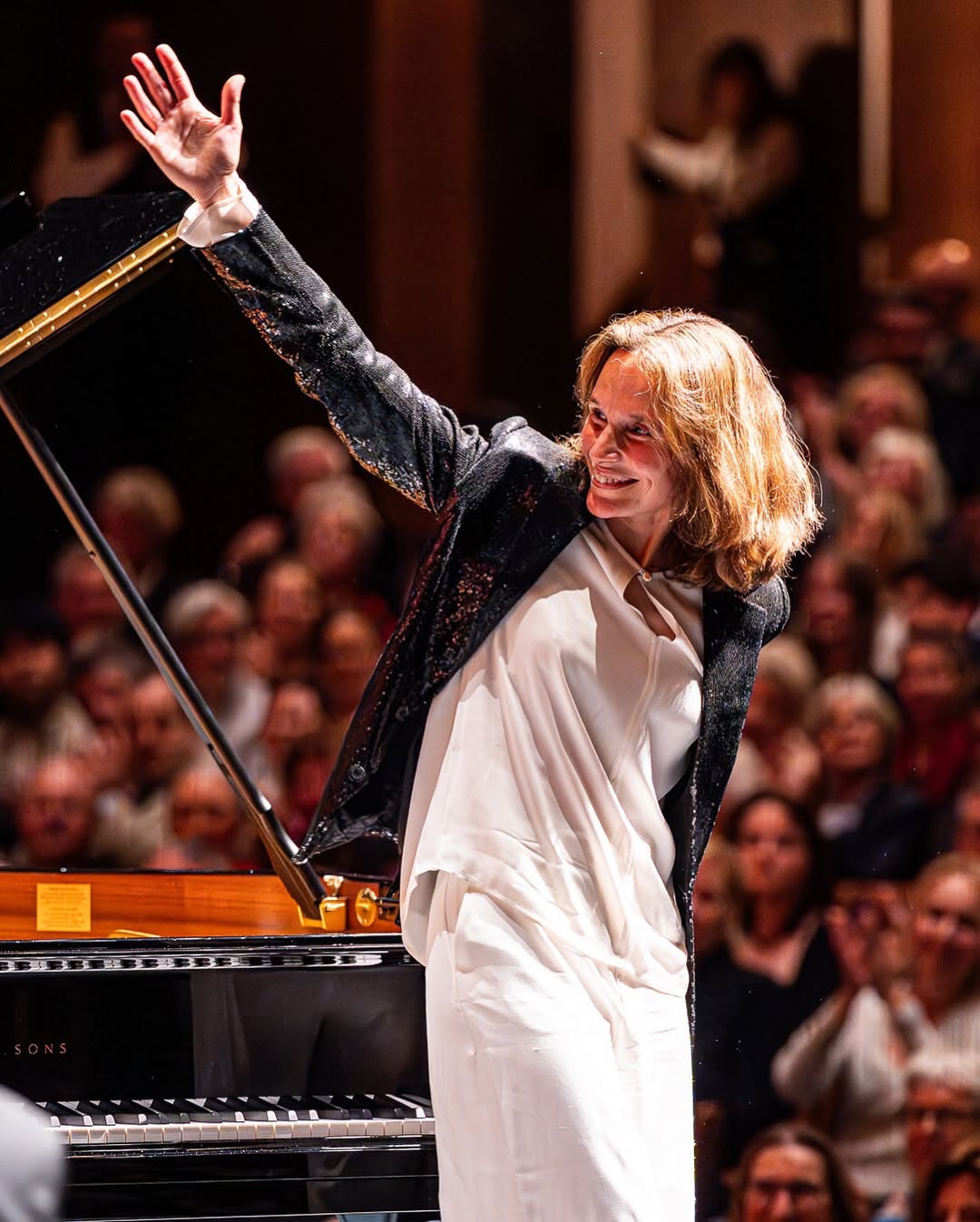
Hélène Grimaud’s career took off in her mid-teens. By 1985 (age 16) she had already won the top piano prize at the Paris Conservatoire, and in 1987 she gave her first major recital in Tokyo.
That same year conductor Daniel Barenboiminvited her to appear as soloist with the Orchestre de Paris, effectively launching her international career.
These early successes quickly led to extensive touring and recording projects in the late 1980s, establishing Grimaud’s reputation as a formidable young pianist on the world stage.
International Breakthrough
Grimaud’s international breakthrough came in the 1990s with debut performances at the highest level. In 1995 she made her debut with the Berlin Philharmonic under Claudio Abbado, and in 1999 she first appeared with the New York Philharmonic under Kurt Masur. These landmark engagements cemented her status on the global scene.
By the turn of the millennium she was regularly invited to play with leading orchestras and in major concert series across Europe, North America and beyond.
During this period she also began an extended writing and recording career, but it was her orchestral debuts in Berlin and New York that truly signified her arrival as a major international artist.
Major Performances & Concert Highlights
Grimaud has since performed widely as a soloist and recitalist in the world’s great concert halls. Solo piano recitals form a major part of her career.
In May 2024 she gave a highly anticipated recital in Amsterdam’s Concertgebouw (“Great Pianists” series) featuring works of Brahms, Chopin and Bach (arranged by Busoni).
Likewise, her late-2024 recital at Carnegie Hall in New York included music of Beethoven and Brahms (among others), receiving praise for its sonorous resonance.
She has also appeared at prominent venues such as London’s Royal Festival Hall and Wigmore Hall, often in programs that juxtapose Romantic masters with 20th-century and contemporary works.
Festival appearances and series engagements round out her concert calendar: notable highlights include appearances at piano festivals like La Roque-d’Anthéron and international tours (for example, an Evian festival program of modern works in 2024).
In all her performances, Grimaud is known for exploring a wide span of repertoire from Bach and Beethoven through Romantic Liszt and Schumann to modern composers such as Valentin Silvestrov often earning critical acclaim for the breadth and passion of her interpretations.
Recordings & Discography
Grimaud has an extensive discography of solo and collaborative recordings. An exclusive Deutsche Grammophon artist since 2002, she has recorded major repertoire from Beethoven, Schumann and Brahms to Rachmaninoff, Liszt and Bartók.
Her albums often highlight the German Romantic repertoire: for example, her 2023 album For Clarapairs Schumann’s Kreislerianawith Brahms intermezzi and songs, reflecting her “special relationship with the German Romantics.”
In her own words, Grimaud says, “I’ve always had a special relationship with the German Romantics… these are worlds in which I feel I can express what the composer intended.”
Other notable recordings include her live albums of the Brahms First and Second Piano Concertos (with conductor Andris Nelsons, the Bavarian Radio Symphony and the Vienna Philharmonic) and her Resonancesdisc of Mozart, Berg, Liszt and Bartók (2010).
She has also recorded chamber repertoire: for instance, her album Duo(2012) with cellist Sol Gabetta featuring works by Schumann, Brahms, Debussy and Shostakovich was nominated for a Grammy and won the 2013 ECHO Klassik award.
Throughout her recording career, Grimaud’s releases have won critical acclaim and numerous prizes, reflecting both her technical mastery and interpretive depth.
Awards & Professional Recognition
| Category | Verified Information |
| Career Start | Mid-teens |
| Early Achievement | Top piano prize by 1985 |
| First Major Recital | Tokyo, 1987 |
| Key Early Support | Invited by Daniel Barenboim |
| International Debut | Berlin Philharmonic, 1995 |
| U.S. Debut | New York Philharmonic, 1999 |
| Recording Label | Deutsche Grammophon (since 2002) |
| Notable Album | For Clara (2023) |
| Major Honor | Légion d’Honneur (2016) |
| Current Status | Active internationally (2024–2026) |
Grimaud’s artistry has been recognized by both the music industry and public institutions. She has received many recording honors (such as France’s Diapason d’Or, the Grand Prix du Disque and Cannes Classical Awards) and competition prizes.
In chamber music she earned major accolades: her Duoalbum won the 2013 ECHO Klassik for Chamber Music and also received a Grammy Award nomination (for Best Chamber Music Performance) the same year.
In 2004 she was given an honorary “Victoires de la Musique Classique” award in France. The French government has also honored her: in 2016 she was made a Chevalier (Knight) of the Légion d’Honneur for her contributions to music.
She has been named a Chevalier of France’s Ordre des Arts et des Lettres (2002) and later promoted to Officier, and is a member of the Ordre National du Mérite (France). These distinctions underscore Grimaud’s standing as one of the leading pianists of her generation.
Collaborations With Orchestras & Conductors
Grimaud has performed with many of the world’s leading orchestras and conductors. She has appeared with the Berlin Philharmonic and Vienna Philharmonic; the London Symphony and Philharmonic Orchestras; the Staatskapelle Dresden; as well as top American ensembles like the San Francisco Symphony, Philadelphia Orchestra and Dallas Symphony.
Her collaborators have included conductors Claudio Abbado, Kurt Masur, Edward Gardner, Fabio Luisi, Kazuki Yamadaand Yannick Nézet-Séguin, among others.
For instance, in November 2023 she returned to Paris’s Théâtre des Champs-Élysées with the London Philharmonicunder Edward Gardnerin a program of Brahms.
She has also led recordings from the piano (for example, directing the Deutsche Kammerphilharmonie Bremen in Bach concertos) and engaged in chamber collaborations notably her duo recordings with cellist Sol Gabetta and performances with ensembles such as Camerata Salzburg.
In all cases her partnerships with conductors and orchestras span a wide repertory, from Classical concertos to large Romantic works, highlighting her versatility as a concerto soloist.
Recent Career Activity
In the past two years Grimaud has remained very active on the concert and recording fronts. In 2023 she released ForClara: Works by Schumann & Brahms, continuing her exploration of German Romantic repertoire.
In interviews she discussed her long-standing affinity for these composers.
In the 2024–25 season she has concert engagements around the world: for example, she performed with the San Francisco Symphonyunder Kazuki Yamada, the Philadelphia Orchestra under Yannick Nézet-Séguinand the Dallas Symphony under Fabio Luisi.
She has also presented recitals at major venues including Carnegie Hall (New York) and Stanford’s Bing Concert Hall, and toured with Camerata Salzburg across Europe and Asia.
In spring 2024, the Concertgebouw featured her in its Great Pianists series; in autumn 2023, she appeared in London with the London Philharmonic (Beethoven and Brahms concertos).
Grimaud’s continuing activity from new album releases to high-profile concerts underscores her sustained presence on the world’s classical music stages.
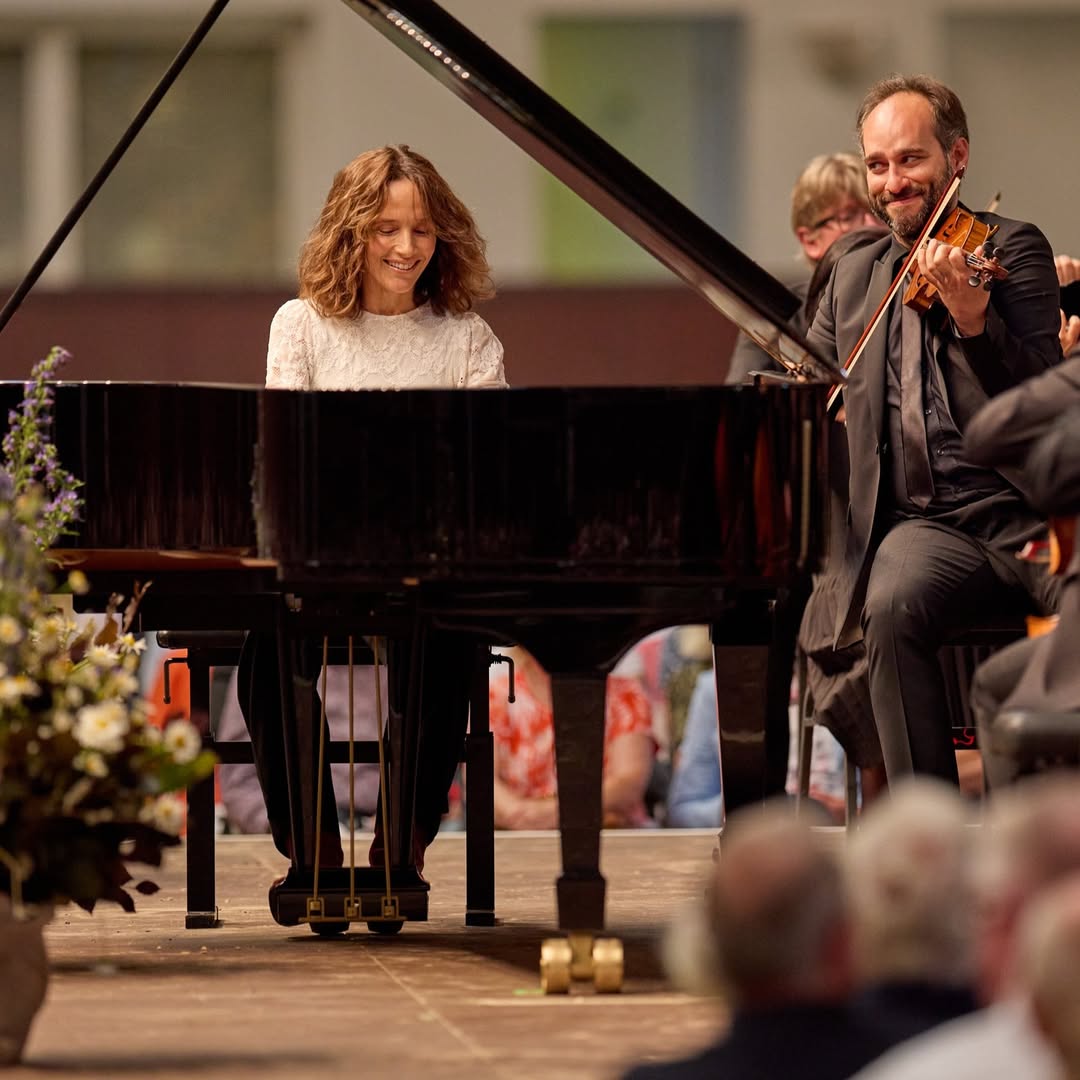
Hélène Grimaud Performance (2025–2026)
- Oct 2025:Gershwin’s Piano Concerto in F as soloist with major U.S. orchestras including the Detroit Symphony Orchestra, Houston Symphony, and the National Symphony Orchestra at the Kennedy Center in Washington, DC.
- Jan–Feb 2026:Soloist in Gershwin’s Piano Concerto in F with the Tonhalle Orchester Zurichand the Orchestre Philharmonique du Luxembourg in major European concert halls.
- Jan 2026:Soloist in Ravel’s Concerto in G major with theLucerne Symphony Orchestra, performing at the KKL Lucerne and Victoria Hall in Geneva.
- Jan 2026:Performances of Ravel’s Concerto in G major with the Bavarian State Orchestrain Antwerp and Paris under leading international conductors.
- Spring 2026:West Coast tour with the Dallas Symphony Orchestra, featuring Schumann’s Piano Concerto as the centerpiece of the program.
- Feb 2026:Chamber music recital at the Philharmonie de Pariswith violinist Renaud Capuçon, presenting a program spanning works by Arvo Pärt, Robert Schumann, Claude Debussy, and Maurice Ravel.
Hélène Grimaud Piano Technique And Interpretative Style
Technical Approach And Piano Control
Hélène Grimaud is widely recognized for her formidable technical command of the piano. Critics note her playing is unapologetically assertive on the keyboard, with a focus and control that make even demanding repertoire sound secure.
Reviewers describe her as having a steely, incisive attack and the power to shape big passages without losing clarity. She executes fast scales and complex figuration with precision.
One critic observed that in a virtuosic Bach arrangement her playing was astonishingly focused and cleanly voiced, with evenness and precision in motoric passages.
Grimaud’s articulation ranges from crisp staccati to broad legato as the music demands, reflecting a technical versatility that underpins her interpretations.
Tone, Touch, And Sound Color
Grimaud’s sound is marked by a wide palette of tone colors and careful use of pedal. She is praised for producing a rich, resonant sonority.
One review noted she had uncommonly sonorous playing by placing the piano so that the hall’s acoustics could amplify its sound. In lyrical works she often draws a warm, singing tone.
For example, a recent critic described her voicing in Brahms’s Intermezzi as gorgeous, with the ring of octaves creating a rich resonance without muddiness.
Grimaud also cultivates an expressive touch. Another account highlights her signature use of touch and pedaling to produce an almost liquid sound in delicate passages.
In more dramatic music she is willing to add edge or brilliance. One reviewer remarked that in virtuosic sections she revels in bold plays of color, texture, and dynamics.
When interpreting Impressionist repertoire, she brought pieces heat and passion and spun figures with luminosity. For example, Claude Debussy’s Clair de lunewas played delicately and radiantly without being sentimental.
In sum, her tonal approach ranges from warm lyricism to crisp intensity, and she uses the pedal freely to shape the overall color and resonance of the piano sound.
Rhythm, Phrasing, And Structural Clarity
Grimaud’s rhythmic sense is flexible and bold, yet she retains a clear grasp of musical structure. Critics describe her as a re-inventor of phrasing, a taker of chances, willing to stretch time for expressive effect.
In practice, this means she often allows melodies to breathe with a vocal quality, shaping lines and pauses in a very personal way.
Reviewers noted that in exposed solo passages she drew out phrases with great freedom and rhythmic flexibility, liberties that might seem indulgent in less confident hands, but which she carries off successfully.
Even when using substantial rubato, Grimaud maintains coherence. One concert critique praised her for preserving the emotional push-pull through tempo changes in a Beethoven sonata, keeping the overall flow intact.
At the same time, she avoids mannered mannerisms. A critic observed that her style is sensibly down-to-earth and non-flashy, letting the music’s phrasing speak for itself without artificial warping of tempo.
Structurally, her performances tend to draw the listener along continuously. Reviews mention that she often sustains moods across sections so thoroughly that the audience feels pulled into a narrative spanning a whole work or even an entire program.
In polyphonic or contrapuntal music her clarity of voicing also stands out. Critics have called her articulation biting and remarked on her ability to voice inner lines clearly so that the counterpoint comes through crisply.
Interpretative Approach To Repertoire
Grimaud’s interpretative style is characterized by intellectual depth and personal conviction. She is often described as bringing a poetic or philosophical outlook to the music.
For example, in late Brahms piano pieces one commentator noted that she plays them as deeply philosophical explorations of loneliness and memory, highlighting their dual nature of lyricism and tension.
In her programming and performances she tends to sustain thematic connections across works. A critic observed that she played a sequence of water-themed pieces like an unbroken stream, creating a continuous atmosphere.
Grimaud shows a wide stylistic reach. She has excelled in French impressionist and modern repertoire as well as Romantic music.
In French miniatures she will often emphasize color and poetry, and her readings of Debussy and Satie were praised as glowing and luminous.
In German Romantic music she might underline the music’s dramatic brawn. One review noted that Grimaud relished the brawn of the music in Brahms and used its gruff gestures to heighten the tension and honest emotion.
Even within a single composer, she adapts her approach to each piece. At a recent recital she gave Beethoven’s Op.109 playful contrasts between lively and lyrical sections while preserving the sonata’s unity, then turned to Brahms intermezzi with lush voicing and flowing rhythms.
For modern and virtuosic works, Grimaud is described as fully embracing their character. In Busoni’s piano-transcription of Bach, she reveled in the lightning scales, sweeping arpeggios, letting the piece flow naturally and building massive resonances without losing momentum.
Overall, her interpretations balance respect for each composer’s style with her own bold, imaginative touch.
Balance Between Precision And Expression
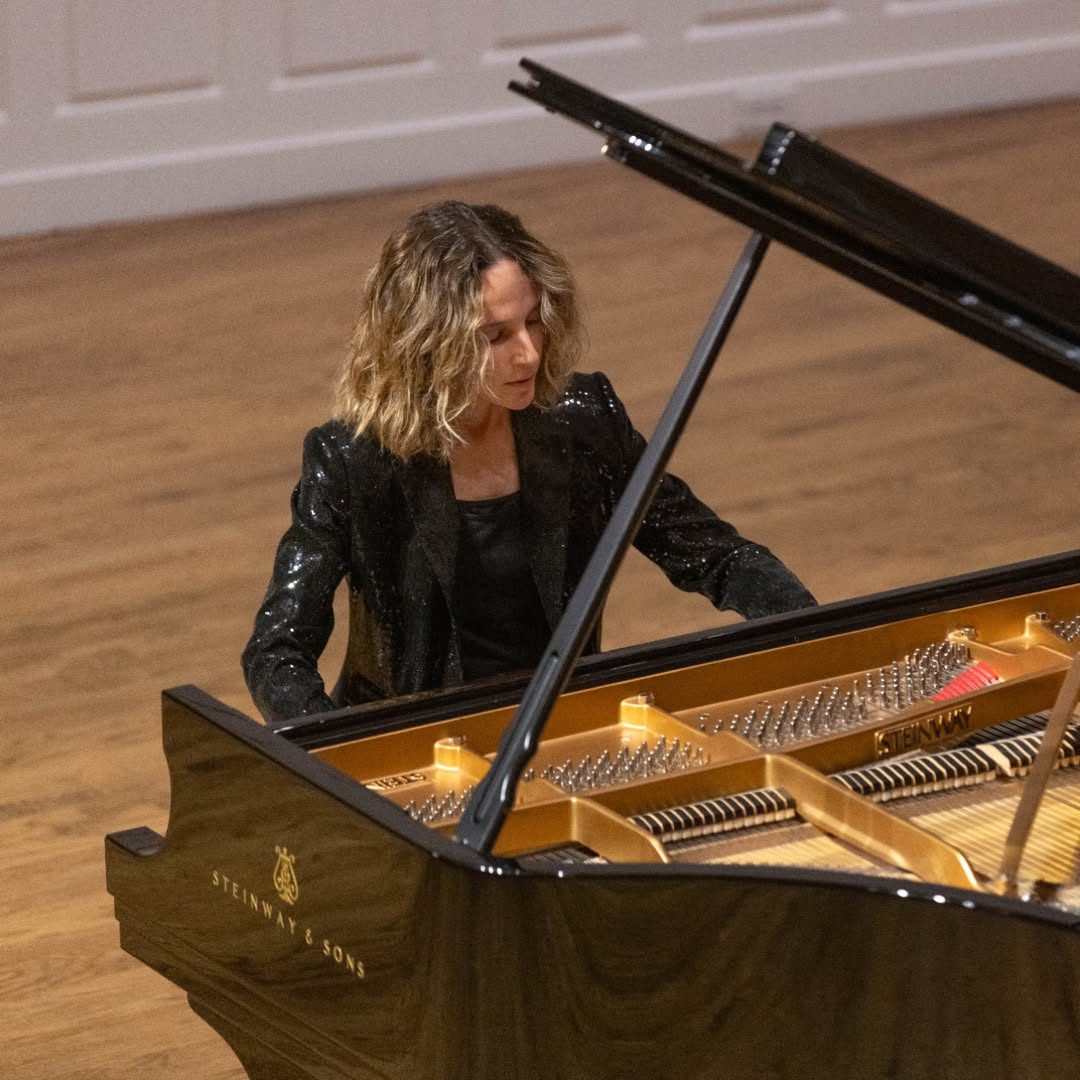
Commentators often point out the duality in Grimaud’s playing between exactness and intensity. Her performances are typically precise and well-controlled.
One critic remarked on her astonishingly focused reading and evenness of texture, which keep the complex rhythms driving forward cleanly.
At the same time, she infuses the music with strong expression and dynamic contrast. Many reviews note moments of powerful intensity.
For instance, in Brahms intermezzi her playing was commended for its warm resonance and noble sweep.
This expressive ambition can sometimes create a dry edge. One writer felt that in a Beethoven sonata Grimaud’s tone and balance became dry and clinical, resulting in a delivery that seemed detached despite its technical virtues.
Such remarks underline that she is not always a naturally lyrical player in the traditional sense, but rather one who aims for a dramatic, sometimes severe emotional trajectory.
Listeners have observed that her forte and rhythmic outbursts can overshadow softer shades on occasion, so that the music’s poetry emerges only through deliberate contrast rather than spontaneous warmth.
In sum, Grimaud consciously negotiates the line between control and feeling. She can project music with bold architecture and intensity, but she may sacrifice a bit of ease or caress in the process.
Critical Observations And Musical Identity
Critics consistently describe Grimaud’s musical identity as highly individual and vivid. Her playing is often termed deeply personal and instinctive.
She is not regarded as a showy extrovert. One observer noted that she is down-to-earth in style, allowing the music itself to carry the expression. Instead, Grimaud cultivates a sense of intimacy and continuity in her performances.
Reviewers say that she presents her programs with intense commitment, sustaining mood across pieces so that listeners feel transported into a unified experience.
The result is a performer who seems to follow her own vision at every turn. Critics compare her to pianists like Glenn Gouldfor her willingness to dissect a score and reinvent standard phrasing. This fearless originality earns both admiration and critique.
Some applaud her focus and the profound logic of her interpretations, while others are wary of the moments when her playing feels dry or rigid. Grimaud has herself described playing metaphorically, and this obsessive attention to sonic detail, even an almost synesthetic sense of tone, has become part of her trademark.
Hélène Grimaud, Konstantin Krimmel - Silvestrov: Silent Songs
Hélène Grimaud Net Worth
As of 2026, reliable sources have not published an estimate of Hélène Grimaud’s net worth. Grimaud earns her income primarily through her career as a classical pianist. She performs internationally in solo recitals and with major orchestras and also records albums. One source indicates she charges about €16,000 per solo concert, reflecting the scale of her fees. She has also written books and co-founded the Wolf Conservation Center, though these projects reflect personal interests more than profit. Overall, her earnings come mainly from her music career.
FAQs
1: Who Is Hélène Grimaud And Why Is She Internationally Recognized?
Hélène Grimaud is a French classical pianist internationally recognized for her interpretations of German Romantic repertoire, particularly works by Brahms, Schumann, and Beethoven. She performs regularly with leading orchestras and in major concert halls worldwide.
2: Where Did Hélène Grimaud Receive Her Musical Education?
She began her piano studies in Aix-en-Provence and Marseille before entering the Conservatoire de Paris at the age of 13. She graduated with top piano prizes, marking her early emergence as an exceptional talent.
3: When Did Hélène Grimaud Achieve Her International Breakthrough?
Grimaud’s international breakthrough occurred in the 1990s following debut performances with the Berlin Philharmonic in 1995 and the New York Philharmonic in 1999. These appearances established her as a major figure on the global classical music stage.
4: How Would Critics Describe Hélène Grimaud’s Piano Style?
Critics describe her piano style as technically authoritative, structurally clear, and emotionally intense. She is known for bold phrasing, precise articulation, and a wide tonal palette, particularly in Romantic and modern repertoire.
5: What Major Honors And Awards Has Hélène Grimaud Received?
Hélène Grimaud has received several prestigious honors, including being named Chevalier of the Légion d’Honneur in 2016 and Officier of the Ordre des Arts et des Lettres. Her recordings have also earned major international awards and Grammy nominations.