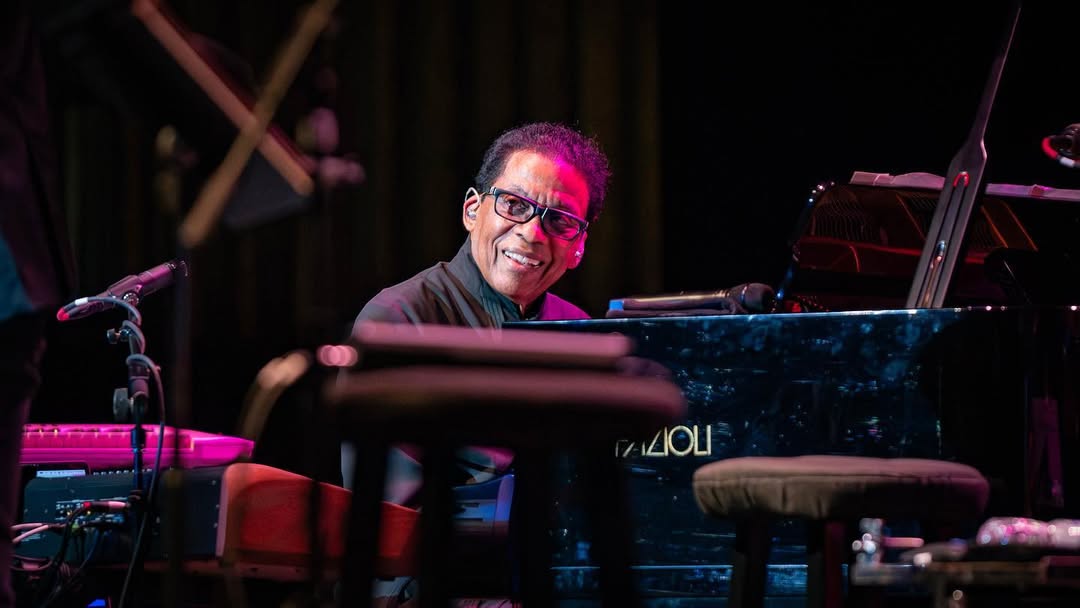
Herbert Jeffrey “Herbie” Hancock was born on April 12, 1940, in Chicago, Illinois. He grew up on Chicago’s South Side with his parents Winnie and Wayman Hancock, both of whom were music enthusiasts who had taken piano lessons in their youth. His parents were migrants from Georgia and made a point of exposing him to classical “culture”: his mother later recalled insisting that the family listen to Bach, Beethoven, Mozart and opera. In this musical household, young Hancock began piano lessons very early. By age six he was eager to play any piano he found, and for his seventh birthday his mother bought him a piano of his own.
Hancock’s talent developed rapidly. Still only eleven years old, he performed the first movement of Mozart’s D Major Piano Concerto with the Chicago Symphony Orchestra. This early concert performance earned him recognition as a child prodigy. As he entered his teens, Hancock’s interests shifted toward jazz. In high school he was inspired by jazz pianistssuch as Oscar Petersonand Bill Evans. A pivotal moment came around age fourteen at his Hyde Park High School: after hearing a classmate’s jazz piano improvisation at a school variety show, Hancock decided he wanted to learn jazz improvisation himself. He soon formed his own jazz band while still a high school student.
After graduating from Chicago’s Hyde Park High School, Hancock pursued higher education. In the late 1950s he enrolled at Grinnell College in Iowa, where he studied music and electrical engineering. He completed his college degree in 1960. This combination of music and science reflected his childhood passions and would later inform his innovative musical explorations, but in his college years it simply marked him as an exceptionally well-rounded student.
| Aspect | Details |
| Full Name | Herbert Jeffrey “Herbie” Hancock |
| Date of Birth | April 12, 1940 |
| Birthplace | Chicago, Illinois, USA |
| Childhood Area | Raised on Chicago’s South Side |
| Parents | Winnie and Wayman Hancock |
| Family Background | Parents were music enthusiasts |
| Early Music Exposure | Classical music at home |
| Piano Start | Began piano lessons very young |
| First Piano | Received his own piano at age seven |
| Early Recognition | Performed with Chicago Symphony at eleven |
| High School | Hyde Park High School, Chicago |
| Jazz Influence | Inspired by Oscar Peterson and Bill Evans |
| College | Grinnell College, Iowa |
| Graduation Year | 1960 |
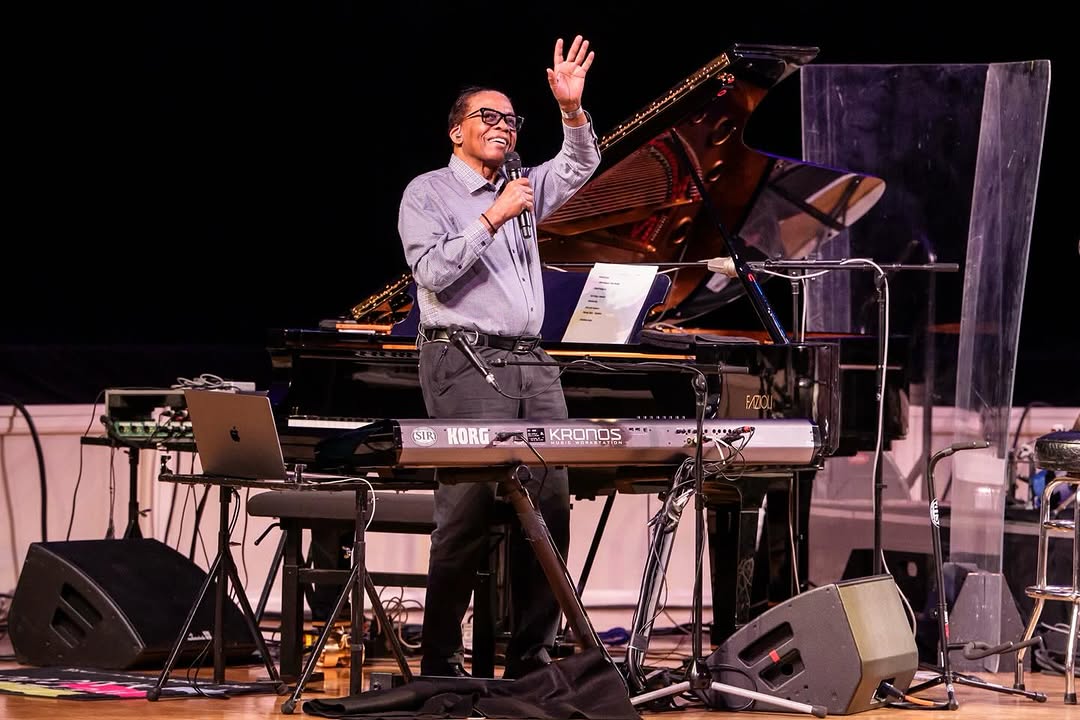
Career Beginnings
Herbie Hancocklaunched his professional career in the early 1960s as a jazz pianist in trumpeter Donald Byrd’sband. Byrd’s invitation brought the young pianist to New York City, where Hancock quickly impressed the scene.
He signed with Blue Note Records and in 1962 released his debut album Takin’ Off, which featured the composition “Watermelon Man.” That tune became an immediate hit and remains one of Hancock’s most famous early works.
These recordings showcased Hancock’s distinctive melodic improvisation and compositional gift, establishing him as a rising star in the hard-bop jazz world.
In the years that followed, Hancock recorded several influential albums for Blue Note. Albums like My Point of View(1963) and Empyrean Isles(1964) contained jazz classics – for example, “Cantaloupe Island” on Empyrean Isles– that highlighted his growing range.
He composed at a young age, even scoring a film (Blow-Up, 1966). By the mid-1960s Hancock had built a strong reputation as a bandleader and composer.
His time with Blue Note honed his style and led directly into his next big opportunity with Miles Davis.
International Breakthrough
Hancock’s international breakthrough came in 1963 when trumpeter Miles Davisinvited him to join Davis’s Second Great Quintet. This group – featuring tenor saxophonist Wayne Shorter, bassist Ron Carterand drummer Tony Williamsalongside Hancock – became legendary.
Hancock contributed original compositions and adventurous solos on landmark albums such as ESP(1965), Nefertiti(1967) and Sorcerer(1967).
On these records his playing and writing helped redefine the role of the jazz rhythm section, allowing for freer tempo shifts and interactive improvisation.
Extensive tours with Davis’s quintet took Hancock around the world, and the albums they recorded became jazz standards that brought him widespread acclaim.
In the late 1960s Hancock began experimenting with electric keyboards even before leaving Davis’s band. He played electric piano on Sorcererand on Miles Davis’s fusion album In a Silent Way(recorded in 1969). This foreshadowed Hancock’s own future direction in jazz fusion.
By the time he departed Davis’s group in 1968, Hancock was known internationally as an innovative pianist and composer, not only for his work with Miles Davis but also for his expanding solo career.
Major Performances & Concert Highlights
As a leader, Hancock has headlined major jazz festivals and concert tours worldwide. Throughout the 1970s and beyond he brought his blend of jazz, funk and fusion to large audiences.
He played at European jazz festivals such as the Montreux Jazz Festival (Switzerland), North Sea Jazz Festival (Netherlands) and Umbria Jazz (Italy), and at domestic festivals like Bonnaroo (Tennessee) – where he became the first Artist-in-Residence. In each decade he has filled concert halls and outdoor arenas.
For example, by the mid-1970s he was performing for stadium-sized crowds on tour with his fusion group. Even into the 2000s and 2010s he has continued to tour internationally, often with a quartet including long-time collaborators like trumpeter Terence Blanchard and guitarist Lionel Loueke. Hancock has also appeared at numerous prestigious venues and special events.
He has given concerts at New York’s Village Vanguard and Carnegie Hall, and at major orchestral halls such as Chicago’s Orchestra Hall and Walt Disney Concert Hall in Los Angeles. Notably, he has joined televised tribute shows and global broadcasts.
In February 2024 he performed alongside singer H.E.R. and the Los Angeles Philharmonic for a PBS Great Performancesspecial, and in early 2025 he took part in the Grammy Awards ceremony performing a Quincy Jones tribute.
Hancock has also been featured in UNESCO’s International Jazz Day concerts – for example, in April 2025 he led the all-star global concert in Abu Dhabi – bringing his music to millions worldwide. These highlights reflect Hancock’s ongoing prominence as a live performer.
Recordings & Discography
Herbie Hancock’s discography spans over six decades with dozens of influential albums. In the 1960s he recorded definitive acoustic jazz albums for Blue Note Records.
Classics include Maiden Voyage(1965) – which contains the title track “Maiden Voyage” – and Speak Like a Child(1968). These albums blended post-bop innovation with memorable compositions and are regarded as jazz milestones.
As he moved into the 1970s, Hancock embraced electric instruments. He led the sextet known as Mwandishi and released albums like Mwandishi(1971) and Crossings(1972) that explored modal jazz and early fusion. In 1973 Hancock formed the jazz-funk group The Headhunters and recorded Head Hunters.
This album was a major crossover success – it was the first jazz album to go platinum – thanks to grooves like “Chameleon” that appealed to rock and funk audiences.
Head Huntershelped cement Hancock’s reputation as a leading fusion artist. In 1983 he launched his electro-funk phase with Future Shock, featuring the single “Rockit,” which became a hit and won a Grammy. The follow-up album Sound-System(1984) continued in the funk vein and also won a Grammy award.
During the 1990s Hancock recorded a variety of projects. He released Dis Is Da Drum(1994) and The New Standard(1996), which won a Grammy for Best Instrumental Composition.
In 1998 he paid homage to George Gershwin with Gershwin’s World, recorded with the Orpheus Chamber Orchestra and featuring guests like Joni Mitchell and Stevie Wonder.
This album blended jazz, pop and classical influences. In the 21st century Hancock has often collaborated with contemporary artists. In 2001 he made Future 2 Future.
He co-led the live album Directions in Music(2002), and in 2007 released River: The Joni Letters, which won three Grammy Awards, including Album of the Year. He followed in 2010 with The Imagine Project, which earned two more Grammys.
Throughout his career Hancock has also composed for film, most famously scoring Round Midnight(1986).
Awards & Professional Recognition
| Award / Honor | Year / Notes |
| Grammy Awards | 14 total wins |
| Album of the Year | River: The Joni Letters |
| Academy Award | Best Original Score for Round Midnight |
| NEA Jazz Master | 2004 |
| Kennedy Center Honors | 2013 |
| Lifetime Achievement Grammy | 2016 |
| Polar Music Prize | 2025 |
| Grammy Hall of Fame | Maiden Voyage inducted |
| French Cultural Honor | Commandeur of the Order of Arts and Letters |
Hancock’s work has been widely honored by his peers and the music industry. He is a 14-time Grammy Award winner, including Album of the Year for River: The Joni Lettersand awards for The Imagine Project.
He earned an Academy Award in 1987 for Best Original Score (Round Midnight). In 2016 he received the Recording Academy’s Lifetime Achievement Grammy.
In the United States he was designated a National Endowment for the Arts Jazz Master (2004) and received the Kennedy Center Honors in 2013. Internationally, Hancock has also received top honors.
In 2025 he was awarded the Polar Music Prize. His album Maiden Voyagewas inducted into the Grammy Hall of Fame in 1999. French cultural authorities named him a Commandeur of the Order of Arts and Letters.
He was voted into DownBeat magazine’s Jazz Hall of Fame in 2005. These honors underscore Hancock’s influence and stature in jazz and music history.
Collaborations With Orchestras & Conductors
Hancock’s career includes notable collaborations with symphony orchestras and conductors. He serves as Creative Chair for Jazz at the Los Angeles Philharmonic, working closely with Gustavo Dudamel.
In 2011 Hancock appeared as piano soloist with Dudameland the LA Phil, performing George Gershwin’sorchestral works. The LA Phil has featured Hancock in special concerts blending jazz and classical repertoire.
He has also performed in Chicago and Detroit orchestral venues. Hancock has played at Chicago’s Symphony Center many times and was featured in jazz series concerts there.
In 2024 he presented a concert at Detroit’s Orchestra Hall accompanied by a jazz quintet. His album Gershwin’s Worldinvolved the Orpheus Chamber Orchestra. Through these collaborations, Hancock has helped bridge jazz and classical worlds.
Recent Career Activity
Well into the 2020s, Hancock remains an active performer, recording artist and musical ambassador. He continues to tour globally with his core quartet.
In mid-2022 he played summer jazz festivals across Europe, and in March 2024 he performed a headline concert in Detroit. He continues to engage in educational and global cultural events.
In February 2025 he joined a tribute performance at the Grammy Awards ceremony. Later in 2025 he is scheduled to appear at Walt Disney Concert Hall with the LA Philharmonic. According to recent reports, he is currently recording new music and plans further releases.
These activities show that Hancock remains at the forefront of jazz performance and composition. Even more than sixty years after his debut, his work continues to draw public attention and critical acclaim.
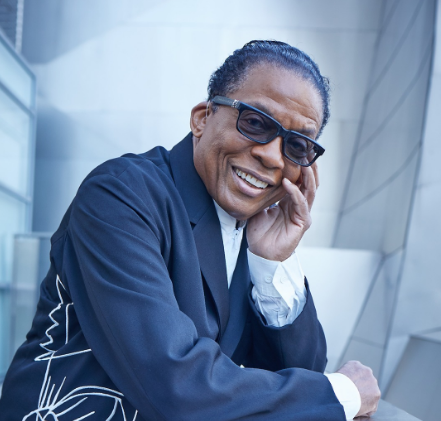
Herbie Hancock Performance Highlights
- April 2023 UNESCO International Jazz Day(Global Concert): Served as host and featured artist in the All-Star Global Concert (UNESCO), a live-streamed event across 13 cities featuring top jazz artists.
- April 2, 2023 Walt Disney Concert Hall (Los Angeles): Headlined the LA Philharmonic’s Jazz Series as Creative Chair for Jazz.
- May 2023 New Orleans Jazz & Heritage Festival: Performed with his quartet at the WWOZ Jazz Tent (New Orleans) during Jazz Fest 2023.
- July 2023 Montreal International Jazz Festival: Headlined the festival at Salle Wilfrid-Pelletier with a band including trumpeter Terence Blanchard, bassist James Genus, and others.
- March 2024 U.S. Spring Tour: Led his ensemble on tour dates including Knoxville’s avant-garde Big Ears Festivaland a concert at New York’s Lincoln Center (Geffen Hall).
- August 2024 West Coast Jazz Festivals: Played major California venues San Jose Jazz Festival(Aug 10, 2024) and Stern Grove Festival in San Francisco (Aug 11, 2024).
- August 14, 2024 Hollywood Bowl (Los Angeles): Celebrated the 50th anniversary of Head Hunters with an all-star concert, reuniting original Headhunters members (with Marcus Miller on bass) at the Hollywood Bowl.
- Fall 2024 North American Tour: Announced and conducted a multi-city US tour (Sept 2024) with performances in Fort Lauderdale, Orlando, Nashville and Norfolk.
- Mid-2025 (Scheduled) Europe Tour: Slated to headline major European jazz festivals (Paris La Défense, North Sea Jazz in Rotterdam, Umbria Jazz in Italy, London’s Barbican, etc.), reflecting his ongoing international touring.
Herbie Hancock: Piano Style And Interpretation
Technical Approach And Piano Control
Critics consistently note Hancock’s refined technical command of the piano. He often favors a clear, controlled touch that balances precision with economy. For example, reviewers described one solo recording of jazz standards as performed in a “truly elegant and restrained fashion”, indicating a poised, uncluttered approach.
In ensemble settings he maintains “continued mastery” of complex passages, allowing his lines to emerge cleanly even amid dense accompaniment. His fingers can move swiftly through rapid passages, yet he often punctuates space effectively, treating each note deliberately.
This combination of dexterity and deliberation gives him secure control: complex voicings and rhythms are rendered with clarity and confidence, without excess flourish.
Tone, Touch, And Sound Color
Hancock’s tonal palette is both warm and precise. His touch produces a bell-like clarity: one analyst notes his playing yields “glassy shards of tone” a sound that is at once rich and pointed.
This implies a coloristic approach reminiscent of jazz pianists like Bill Evans, whom Hancock himself cites along with Maurice Ravel as key influences on his sound. In practice, Hancock’s acoustic piano tone is consistently clean and transparent.
Even on ballads and slower pieces his chords and melodies shimmer rather than blur, reflecting careful pedal use and dynamic control. He draws on classical subtleties (à la Ravel and Webern as observers point out) combined with blues and jazz sensibilities.
In effect, his playing often balances a sustained, singing legato in one hand against percussive clarity in the other, yielding a multi-hued sound that never feels muddy.
Rhythm, Phrasing, And Structural Clarity
Rhythmic drive and clear motives are central to Hancock’s style. Many critics emphasize that his music “puts pulsing, grooving rhythms at the center”, meaning that even in straight-ahead tunes he locks tightly into swing or funk feels.
He frequently incorporates Afro-Latin elements or bluesy grooves under his lines. For instance, on a modern take of “Fascinating Rhythm” he layers piano “dancing on top of a churning African undercurrent”, showing how he threads melodies over complex beats.
Hancock’s phrasing tends to explore small ideas fully. A reviewer of a 1963 session noted that he would take a brief melodic fragment and “dwell on it,” essentially developing extended improvisations from a spare cell.
Live, he keeps the music clear by using the piano both harmonically and percussively: in concert he has been heard sustaining a “complex rhythmic dialogue” with the drummer, deploying the instrument simultaneously “as both an orchestral harmonic instrument and a drum”.
This sense of structure means each solo has identifiable thematic contours, and even in free moments the pulse remains steady.
Interpretative Approach To Repertoire
Hancock adapts his touch to suit each genre, but always with a personal stamp. In jazz standards his readings often feel like extended suites of variation: one critic noted that on a solo standards album Hancock wove pieces together in an “elegant and restrained” suite rather than playing them as disconnected tunes.
When tackling classical or romantic repertoire, he brings improvisational freedom without ignoring the original style. On his Gershwin tribute album he even included two orchestral works: George Gershwin’s “Lullaby” and Maurice Ravel’s Piano Concerto in G (2nd movement), played with a chamber orchestra.
His approach to those pieces was reverent yet inventive. For example, his solo rendition of Rachmaninoff’s Prelude in C sharp minor was described as “reflective, harmonically probing”, retaining the dark character while subtly reharmonizing it in a jazz context.
Similarly, when revisiting jazz standards from his Miles Davis days, he often reharmonizes or re-rhythms them; one review highlighted his Afro-centric groove under Gershwin’s “Fascinating Rhythm” as a creative reimagining.
Overall, Hancock’s interpretative style tends to emphasize lyricism and harmonic color, even with classical pieces, rather than strict literalism.
Balance Between Precision And Expression
Hancock’s playing exemplifies a balance of exactitude and spontaneity. In performance his tone remains remarkably clear and “bright” even when the rest of the band is loud, evidence of precise articulation.
At the same time, he shapes dynamic narratives: reviewers note how he builds “unpredictable patterns of tension and release” during solos. In other words, he plays with control but also with dramatic flair.
An analyst of his sound commented that it is “rich but pointed”, a vivid way of saying every note is carefully chosen (pointed) within a lush texture (rich). Thus each phrase has both clarity and emotion.
Solo lines will often start simply and then erupt into cluster chords or cascading runs at climactic moments, achieving what one critic calls a “funky crescendo” after many quiet measures.
This constant interplay of crystalline tone against expressive depth, of metronomic precision against swinging freedom, is a hallmark of his style.
Critical Observations And Musical Identity
Reviewers consistently characterize Hancock as an innovative, boundary-crossing pianist whose style has remained distinct over decades. He is often described as “genre-crossing, forward-thinking”, since he effortlessly moves between straight-ahead jazz, funk, electronica and world music influences.
Yet commentators also emphasize consistency: even as he explores new sounds, he stays true to core principles. The Guardian notes his “fidelity to his ideas” over time, meaning he follows his own vision rather than trends. Critics frequently praise the breadth and depth of his artistry, that is, the wide range of material he tackles and the skill he brings to each.
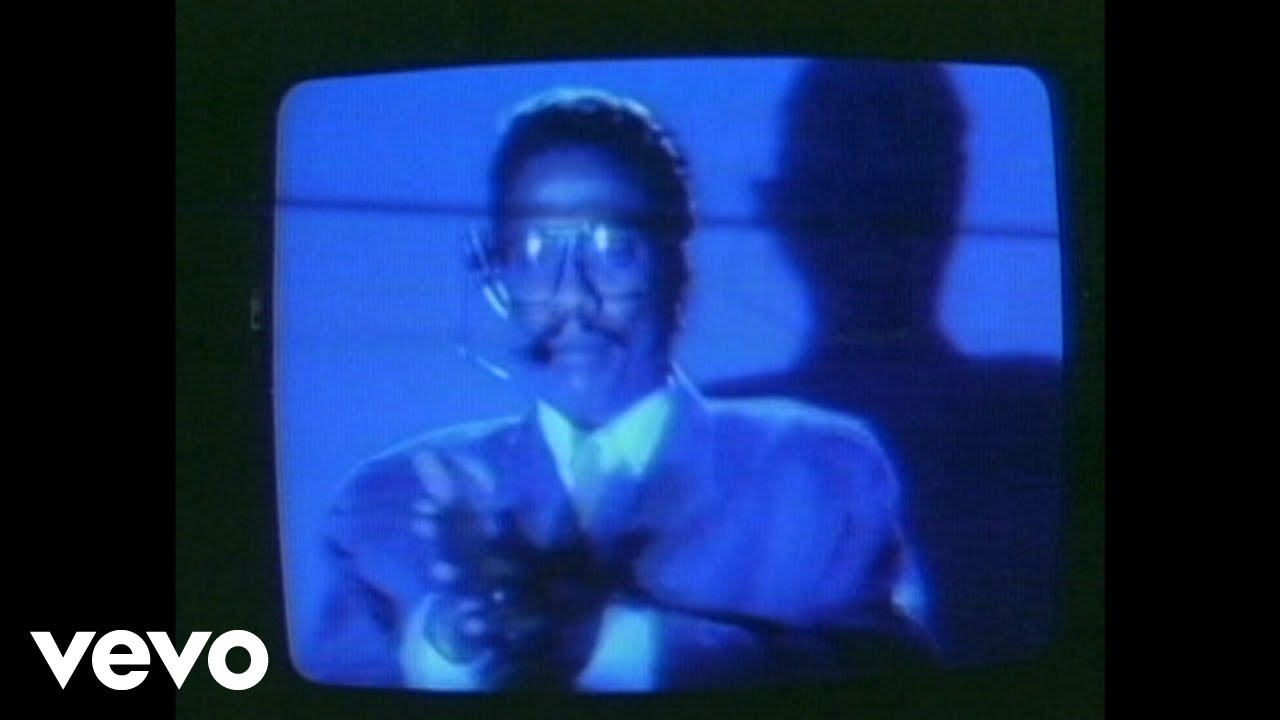
Herbie Hancock - Rockit (Official Video)
Herbie Hancock Net Worth
As of 2026, Herbie Hancock’s net worth is estimated at roughly $10–$15 million. This range comes from entertainment sources since major financial media do not publish a figure. Hancock earned his wealth through a career spanning decades as a jazz pianist, composer and bandleader, making money from album sales, touring and song royalties. He also teaches music as a UCLA professor and chairs the Herbie Hancock Institute of Jazz, which adds to his income. Hancock remains musically active with ongoing projects and collaborations, helping to sustain his earnings.
FAQs
1. Who Is Herbie Hancock And Why Is He Important In Jazz History?
Herbie Hancock is an American jazz pianist, composer, and bandleader known for his work in post-bop, fusion, funk, and electronic jazz. He played a key role in modern jazz through his solo career and as a member of Miles Davis’s Second Great Quintet.
2. What Are Herbie Hancock’s Most Famous Songs And Albums?
Herbie Hancock is best known for compositions such as “Watermelon Man,” “Cantaloupe Island,” and “Chameleon.” His most influential albums include Maiden Voyage, Head Hunters, and River: The Joni Letters.
3. Is Herbie Hancock Still Active As A Musician?
Yes, Herbie Hancock remains active as a performer and recording artist in the 2020s. He continues to tour internationally, collaborate with contemporary musicians, and participate in major cultural events.
4. How Many Grammy Awards Has Herbie Hancock Won?
Herbie Hancock has won 14 Grammy Awards across his career. These include Album of the Year for River: The Joni Lettersand multiple awards for jazz, fusion, and collaborative projects.
5. What Instruments Does Herbie Hancock Play?
Herbie Hancock is primarily known as a pianist and keyboardist. He has played acoustic piano, electric piano, and synthesizers, contributing significantly to the development of jazz fusion and electronic jazz sounds.