A Guide To Mastering Piano Sight-reading
You sit at the piano, open a new piece… and your mind goes blank. Your eyes jump between notes, your fingers hesitate, and what should feel like music turns into slow, painful decoding.
I see this all the time. And if you’ve experienced it, let me reassure you: you’re not bad at piano sight-reading; you’ve just been trained to approach it the wrong way.
Most pianiststhink the problem is speed. They try to read sheet musicfaster, hoping everything will click. But speed isn’t the issue. The real difference comes down to how your brain processes what you see.
Strong players rely on pattern recognition in piano, seeing intervals, chord shapes, and rhythmic patterns as complete units. Struggling players are still decoding one note at a time, and the brain simply can’t keep up at tempo.
This isn’t a talent problem. It’s a skill problem, and that’s good news.
If you want to understand how to master piano sight-reading, you need a better system, not more effort.
I’ll show you exactly how to do that, with 15 expert sight-reading tips and a simple daily routine to improve your music notation fluency and sight-reading speed.
The Fastest Way To Master Piano Sight-Reading
If you remember nothing else, remember this:
- Start with music below your playing level
- Keep a steady tempo never stop for mistakes
- Train your eyes to look ahead of your hands
- Read patterns (intervals/chords), not individual notes
- Practice daily for 5-10 minutes consistently
What Is Sight Reading?
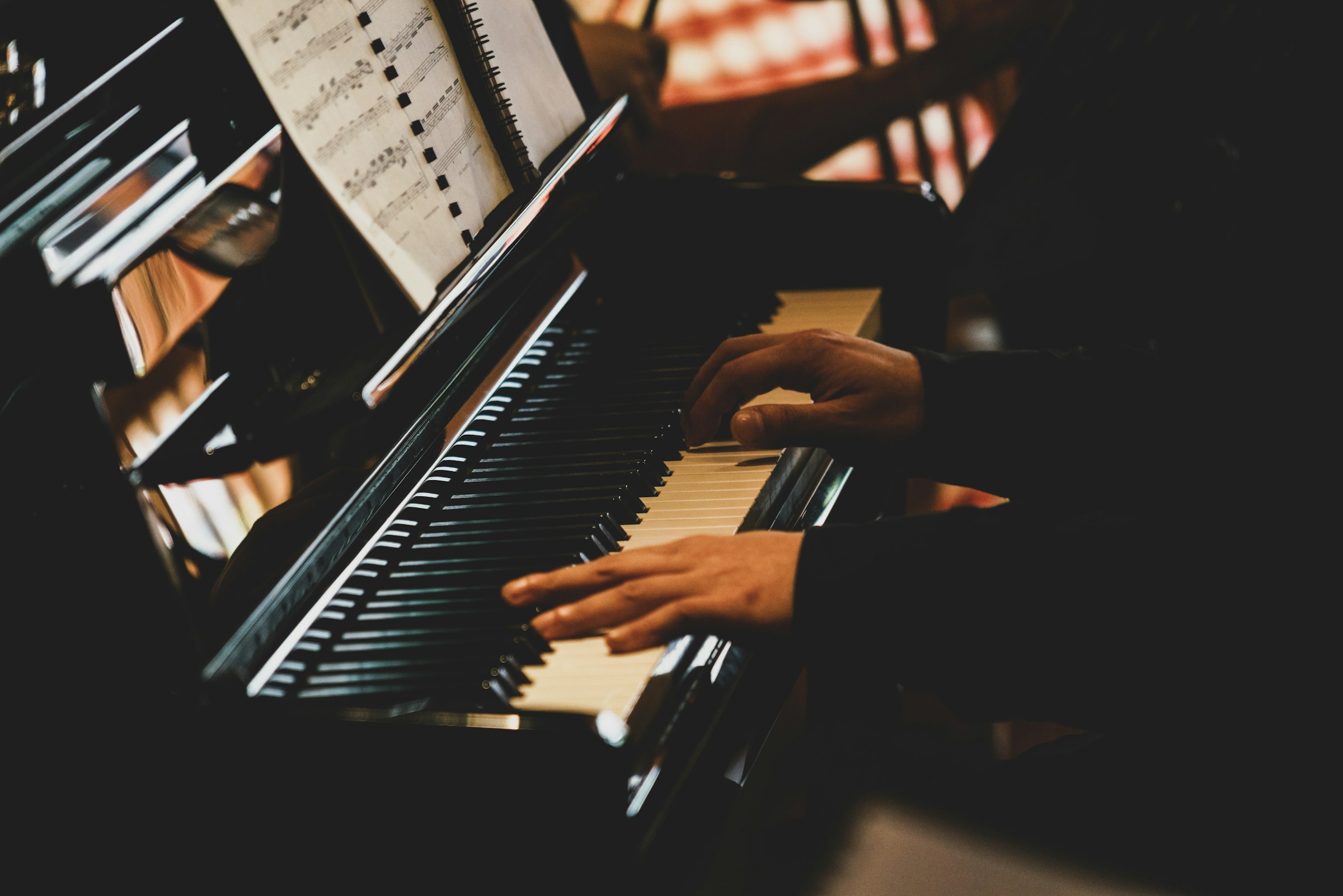
Sight-reading piano means playing a piece of music you’ve never seen before, in real time, without stopping or hesitating. The goal is to keep the music flowing from start to finish, even if you make small mistakes.
In simple terms, piano sight-reading is about turning written notes into sound instantly, what musicians call playing “at first sight.”
This skill is important in two main areas:
- Professional use:Many roles (like accompanists or session musicians) require strong sight-reading skills to perform new music on the spot.
- Learning and training:For students, sight-reading practice helps build overall musicianship, including rhythm, coordination, and music notation fluency.
In both cases, the goal is the same: to play unfamiliar music smoothly without stopping. The difference is that beginners are still developing the skill, while professionals are expected to do it confidently.
What Sight Reading Is Not (Common Misconceptions)
One of the biggest mistakes I see is treating sight-reading piano like regular practice.
When you practice a piece, you:
- Stop and fix mistakes
- Repeat difficult sections
- Aim for perfection
But sight-readingis the opposite. You don’t stop. You don’t go back. And you don’t aim for perfect notes. Instead, the goal is to keep a steady flow and capture the overall sound of the music. In fact, good sight-reading is not about playing every note correctly, it’s about understanding the music quickly and playing a simplified but accurate version of it.
The Four T’s Of Sight Reading
To do this well, you need to focus on what really matters in the score. I like to break it down into four key elements:
- Tune- the main melody
- Time- the rhythm, tempo, and meter
- Tonality- the key, chords, and harmonic structure
- Texture- how full or complex the music feels
If you can recognize these quickly and keep going, you’re already doing effective piano sight-reading, even if some notes aren’t perfect.
Choosing The Right Level (A Critical Rule)
Your sight-reading level should be much easier than your performance level, ideally about half as difficult.
If you find yourself:
- Slowing down too much
- Stopping often
- Feeling overwhelmed
Then the piece is too hard for sight-reading practice. Working with easier music helps you:
- Build reading speed
- Improve pattern recognition in piano
- Gain confidence
- Develop better musical instincts
Framework For Sight-Reading Mastery
Suck at Sightreading? THIS trick changed everything for me.
If you truly want to understand how to master piano sight-reading, you need a system, not random tips.
This is the system I teach because it matches how your brain actually works when reading music. Every strong sight-reader follows these three steps, whether they realize it or not:
See → Process → Play
When you train these steps correctly, your piano sight-reading becomes faster, smoother, and more accurate without forcing it.
Step 1 - See (Visual Decoding)
This is where everything begins. Before your fingers move, your eyes must understand what’s on the page. But here’s the key: You are not reading music like text. You are scanning for meaning, not decoding note-by-note.
When you first look at a piece, your job is to quickly identify:
- Key signature→ tells you which notes are sharp or flat
- Time signature→ tells you how the rhythm is organized
- Overall patterns→ scales, chords, repeated shapes
For example, instead of thinking: C… E… G…
You should start seeing: That’s a C major chord
This shift is critical for improving music notation fluency. A student once told me, “I feel like I’m reading one letter at a time.” That’s exactly what slows you down. Your brain gets overloaded because it’s processing too much detail.
What to train here:
- Scan the page before playing (10-15 seconds)
- Look for repeated patterns
- Notice hand positions and movement direction
Goal of this step:Quickly understand the structure of the music before you play a single note.
Step 2 - Process (Pattern Recognition)
Once your eyes see the information, your brain needs to organize it. This is where pattern recognition in piano becomes your biggest advantage. Instead of reading every note separately, your brain should group information into chunks:
- Intervals→ distance between notes (step, skip, leap)
- Chords→ groups of notes played together
- Rhythmic patterns→ repeated timing shapes
For example:
- Instead of reading 5 separate notes, you recognize a scale
- Instead of counting every beat, you recognize a rhythm pattern
This process is called chunking, and it’s one of the most important skills in sight-reading piano. Thismatters because:
- It reduces mental effort
- It increases reading speed
- It improves accuracy under pressure
Without chunking, your brain gets overwhelmed, and you fall behind.
What to train here:
- Practice interval reading instead of naming notes
- Learn common chord shapes (triads, inversions)
- Clap or tap rhythm patterns before playing
Goal of this step:Turn complex music into simple, recognizable patterns your brain can process instantly.
Step 3 - Play (Execution Without Hesitation)
Now comes the hardest part for most people: actually playing without stopping. Here’s the rule you must follow: Once you start, you do not stop. Even if youmiss notes, play the wrong chord, or feel unsure, you keep going. Why? Because flow matters more than perfection in piano sight-reading.
Think of it like reading out loud:
- If you stop every time you make a mistake, the sentence falls apart
- If you keep going, the meaning stays clear
The same applies to music. What To Focus On While Playing:
- Keep a steady tempo
- Stay in time, no matter what
- Prioritize rhythm over notes
What To Avoid:
- Stopping to fix mistakes
- Going back to repeat
- Slowing down suddenly
Goal of this step:Maintain continuous flow so the music makes sense from beginning to end.
Here are 15 expert tips that will help you improve your sight-reading ability.
1. Start Below Your Level
If you want to improve piano sight-reading, the fastest way is to make things easier, not harder. I always recommend choosing music that feels almost too simple. Sight-reading isn’t about pushing your limits; it’s about building fluency.
When the music is too difficult, your brain gets overloaded, your hands hesitate, and your reading speed drops. Working with simpler music makes piano learning easierbecause it helps you focus on patterns instead of individual notes.
When the music is easier:
- You recognize patterns faster
- You keep a steady rhythm
- You finish without stopping
I usually tell students to choose music about half as difficult as their performance level. That’s how you build real pattern recognition in piano.
2. Focus On Rhythm First
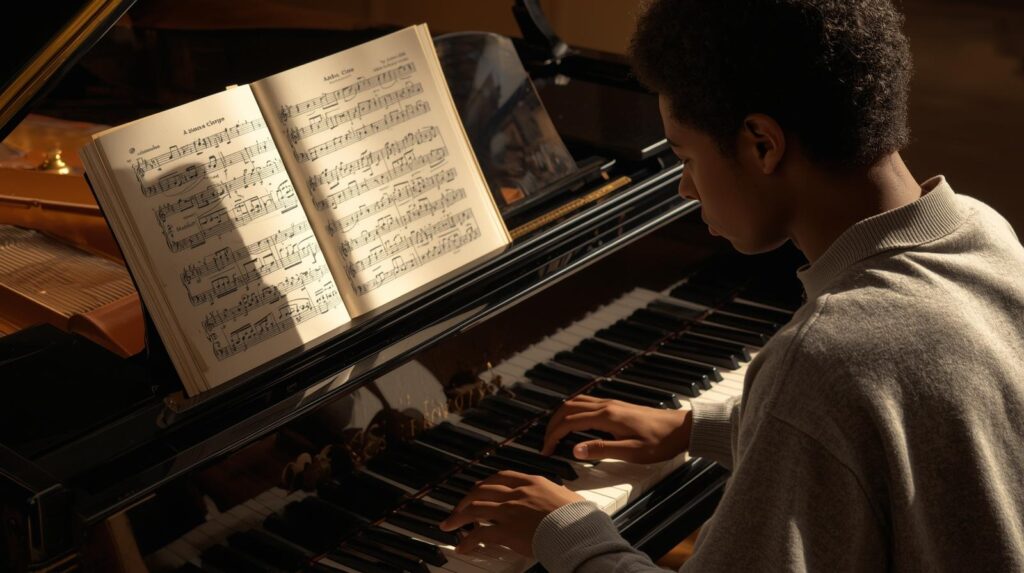
If there’s one thing I never compromise on in sight-reading piano, it’s rhythm. You can play wrong notes and still sound musical, but if your rhythm breaks, everything falls apart.
Many learners focus too much on notes and lose flow. Instead, I recommend practicing rhythm first, especially with simple material like easy piano songs, where you can focus fully on timing.
Before you play, clap or tap the rhythm and count it out loud. This trains your brain to understand timing without pressure.
When you add the notes back in, your playing feels more stable and controlled.
3. Keep A Steady Tempo
One of the most important habits in how to master piano sight-reading is learning to keep a steady tempo no matter what happens.
I always tell students: choose a tempo that feels slow and comfortable, then stick to it.
Most people make the mistake of:
- Speeding up when it’s easy
- Slowing down when it gets hard
This creates an uneven performance and breaks the structure of the music. In sight-reading practice, consistency matters more than speed. A slow, steady tempo allows your brain to:
- Process patterns clearly
- Maintain coordination
- Improve eye-hand synchronization
If you rush, your brain falls behind. If you slow down suddenly, you lose flow.
Using a metronome can help, but even without one, your goal is simple: keep the pulse steady from beginning to end.
Over time, as your music-reading skills improve, your natural speed will increase. But that speed must come from control not pressure. A steady tempo trains your brain to stay calm and consistent under pressure.
4. Don’t Stop For Mistakes
This is one of the hardest habits to build, but it’s essential. When you’re practicing a piece, stopping makes sense. But in sight-reading piano, stopping is the worst thing you can do.
Every time you stop:
- You break the rhythm
- You lose your place
- You train hesitation into your playing
I’ve seen many students who are technically capable but struggle with sight-reading speed simply because they stop too often.
Instead, I recommend this mindset: Keep going, no matter what.
Even if you:
- Miss notes
- Play the wrong chord
- Feel unsure
You continue forward. This is exactly how real musical situations work. If you’re accompanying someone or playing in an ensemble, you cannot stop. You have to keep the music moving.
5. Scan Before Playing
Before you start playing, take a moment to look at the music. This simple habit can dramatically improve your sight-reading accuracy and confidence.
I recommend spending about 10-15 seconds scanning the page. During this time, you’re not trying to memorize everything you’re just getting a quick overview.
Here’s what I personally look for:
First, I check the key signature so I know which notes are sharp or flat. This immediately reduces mistakes.
Next, I look at the time signature and rhythm patterns. This helps me prepare for the timing before I start.
Then, I scan for:
- Repeating patterns
- Chord shapes
- Large jumps or tricky sections
This quick preview allows your brain to prepare in advance. Instead of reacting to every note in real time, you already have a mental map of the piece.
This is a key part of improving music notation fluency and developing faster pattern recognition in piano.
Students who skip this step often feel lost as soon as they start playing. But when you take a few seconds to scan, everything feels more predictable and controlled.
6. Read Intervals, Not Notes
One of the biggest changes I recommend when learning pianosight-reading is to stop focusing on individual note names.
If you read music by naming every note like C, then E, then G, your brain has to process too much information, and this slows you down. This is one of the main reasons people struggle with reading sheet music quickly.
Instead, I train myself to see the distance between notes. This is called interval reading.
For example, instead of thinking “C to E,” I think “skip up.” Instead of thinking “G to A,” I think “step up.” This may seem like a small change, but it makes a huge difference in sight-reading speed.
The reason this works is simple: your brain processes movement much faster than it processes symbols. When you recognize direction and spacing, your hands can respond almost automatically without needing to calculate every note.
Over time, this builds strong pattern recognition in piano. You begin to see shapes instead of individual notes, and your reading becomes smoother and more natural.
7. Recognize Chord Shapes
As you improve your sight-reading piano skills, you need to move from seeing single notes to seeing groups of notes.
Most music is not made up of random notes. It is built from patterns, especially chords. When I look at a score, I don’t want to read each note separately. I want to instantly recognize chord shapes.
For example, when I see C-E-G together, I don’t think about each note. I immediately recognize it as a C major chord. This kind of recognition saves time and reduces mental effort.
This is essential for improving music notation fluency because it allows your brain to process multiple notes as one idea instead of many separate pieces of information.
When you train your eyes to recognize common chords, such as triads and their inversions, you begin to read music much faster. You also make fewer mistakes because you understand the structure of the music instead of guessing.
In my experience, many students who struggle with piano sight-reading are still reading one note at a time. Once they learn to recognize chord patterns, their confidence improves quickly.
8. Train The Look-Ahead Technique

If you want to take your sight-reading skills to the next level, you need to develop the ability to read ahead.
This is called the look-ahead technique, and it is one of the most important skills in how to master piano sight-reading.
When you are playing, your eyes should not be focused only on the notes you are currently playing. Instead, they should already be looking at what comes next.
I like to compare this to driving. When you drive, you don’t stare at the front of your car. You look ahead on the road so you can prepare for what is coming. The same idea applies to reading sheet music.
If you only look at the notes you are playing, you are always reacting too late. This leads to hesitation, mistakes, and loss of rhythm.
But when you train your eyes to move ahead, your brain has time to process the information before your hands need to play it. This creates smoother movement and improves your overall sight-reading speed.
At first, this feels difficult because your brain wants to focus on the present moment. However, with practice, it becomes more natural.
I usually recommend practicing slowly and forcing your eyes to stay one beat or one measure ahead. This builds stronger eye-hand coordination in piano and helps you stay in control.
9. Practice Hands Separately First
When a piece feels too difficult, the problem is often not your ability, it is the amount of information your brain is trying to handle at once.
Playing with both hands requires you to process rhythm, pitch, and coordination at the same time. For many learners, this creates overload and leads to mistakes.
That is why I often recommend practicing hands separately, especially during sight-reading practice.
When you focus on one hand at a time, your brain can process the music more clearly. You begin to understand the melody in the right hand and the harmony or chord shapes in the left hand without confusion.
From my experience, this simple adjustment can make a big difference for students who feel stuck. It builds confidence and reduces frustration.
10. Use A Slow, Consistent Tempo
Many students try to play too fast because they think speed equals skill. But in reality, playing too fast often leads to mistakes, hesitation, and loss of rhythm.
I always recommend starting with a slow and steady tempo. This gives your brain enough time to process what you see and respond accurately.
A consistent tempo also helps improve your reading accuracy and keeps your playing stable. If you speed up in easy sections and slow down in difficult ones, the music loses its structure.
As your music notation fluency improves, your speed will naturally increase. You won’t need to force it.
I have seen many students improve simply by slowing down and focusing on control. Over time, this builds stronger sight-reading skills and better overall performance.
11. Expand Your Pattern Vocabulary
Just like language, music has patterns that appear again and again. These include scales, arpeggios, chord progressions, and common melodic shapes. The more familiar you are with these patterns, the faster your brain can recognize them when you are reading sheet music.
When I look at a piece, I don’t want to figure things out note by note. I want to immediately recognize familiar shapes. For example, if I see a run of notes moving upward, I want to instantly recognize it as a scale. If I see broken chords, I want to identify the harmonic pattern without thinking too much.
This is what improves pattern recognition in piano, and it is one of the biggest factors in increasing your sight-reading speed.
To build this skill, I recommend regularly practicing:
- Scales in different keys
- Arpeggios and chord inversions
- Common chord progressions
Over time, these patterns become automatic. When they appear in real music, your brain recognizes them instantly, which reduces effort and improves flow.
The more patterns you know, the less you have to think. That is the key to mastering music notation fluency.
12. Improve Eye-Hand Coordination
Strong eye-hand coordination in piano is essential for smooth sight-reading.
In simple terms, your eyes and hands need to work together without constant checking. Your eyes should stay on the music, while your hands move confidently on the keyboard.
However, many learners depend too much on looking at their hands. This slows down piano sight-reading because every time you look down, you lose your place in the music.
I always encourage practicing without looking at your hands whenever possible. At first, this feels uncomfortable. You may miss notes or feel unsure about your position. That is normal.
As this improves, your eyes can stay focused on the score, which increases your reading accuracy and sight-reading speed.
13. Practice Daily With Variety
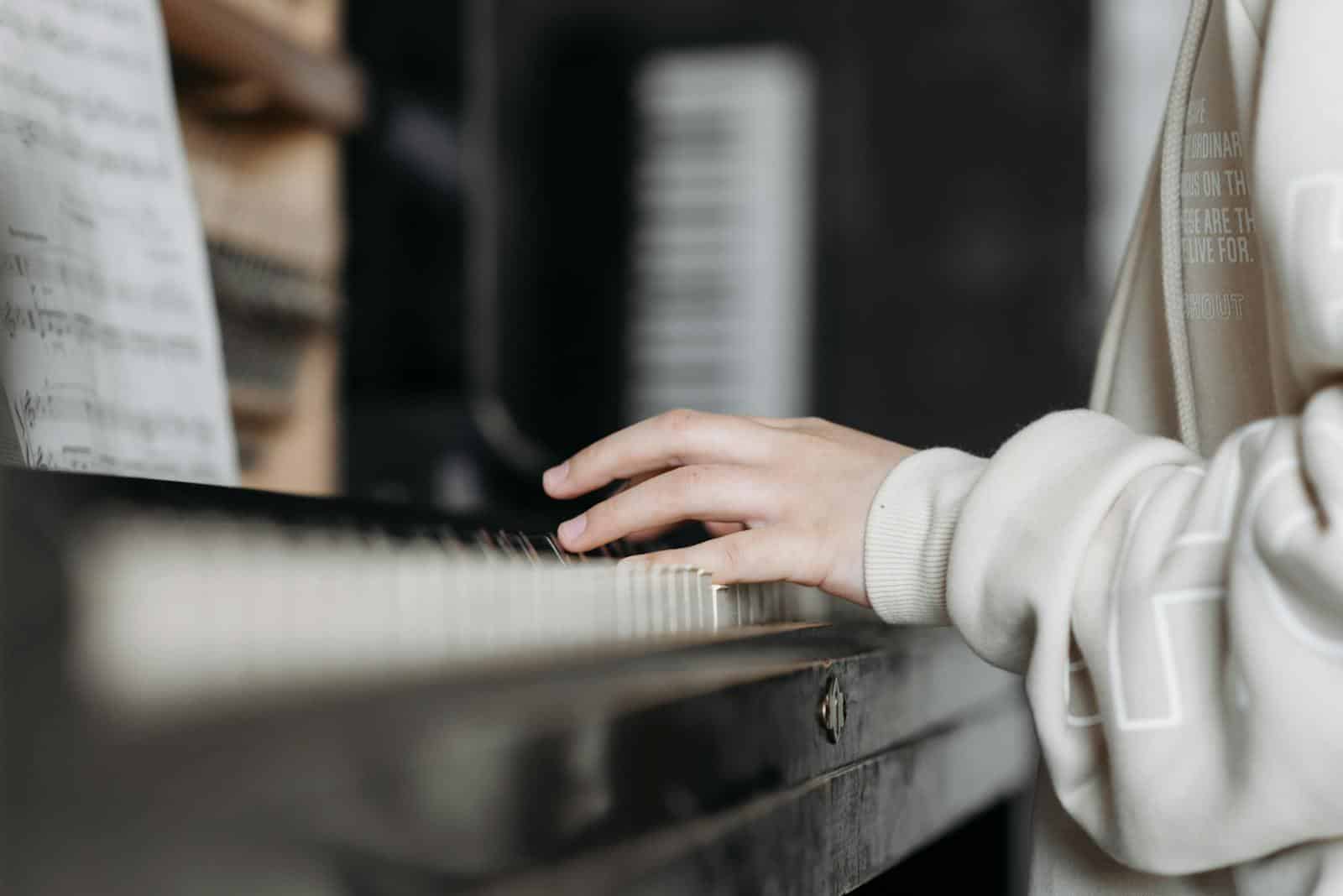
Consistency is important, but variety matters just as much when building strong sight-reading skills. If you only practice one style, your brain struggles to adapt to new patterns.
That’s why I recommend using different types of music classical, pop, jazz, or hymns. Each style helps develop key skills like structure, chord recognition, and rhythm.
Over time, this expands your pattern vocabulary and improves your ability to read unfamiliar music quickly.
If you feel unsure what to practice, working with a teacher through professional private piano lessons in Brooklyncan help you stay structured and improve faster. Even 10 minutes of focused daily sight-reading practice can make a big difference.
14. Reduce Reliance On Looking At Hands
One of the habits I work on with almost every student is reducing how often they look at their hands.
While it may feel helpful in the moment, constantly looking down interrupts your reading flow and weakens your music notation fluency.
Every time you take your eyes off the score, you:
- Lose your place
- Break your concentration
- Slow down your sight-reading speed
Instead, I encourage developing a strong sense of the keyboard without relying on vision. This means learning how distances feel under your fingers and trusting your hand position.
At first, you may need to glance occasionally, especially for large jumps. That is completely normal. The goal is not to eliminate looking entirely, but to reduce it as much as possible.
As your experience grows, your hands begin to move more automatically. You start to rely on touch instead of sight.
This improvement in eye-hand coordination in piano allows you to stay focused on the music and maintain a steady flow.
15. Simulate Real Performance Conditions
If you want to see real progress in piano sight-reading, you need to practice under realistic conditions.
In many real situations, such as accompanying, playing in a group, or taking an exam, you don’t get a second chance. You have to play the music once, from start to finish, without stopping.
That is why I recommend regularly simulating this kind of environment during your sight-reading practice.
Sit down with a new piece of music and treat it like a live performance. Give yourself a short moment to scan the score, then begin playing. Once you start, you do not stop, no matter what happens.
Even if you:
- Miss notes
- Lose accuracy
- Feel unsure
you keep going.
This builds confidence and trains your brain to stay focused under pressure. It also reinforces the most important rule of sight-reading piano: maintaining flow is more important than perfection.
Steps For Daily Practice
- Scan the music first:Quickly check the key signature, time signature, and the highest/lowest notes to understand the structure before playing.
- Locate your hand position:Find your starting notes on the keyboard with minimal looking down to build eye-hand coordination in piano.
- Play at a slow, steady tempo:Choose a comfortable speed and keep it consistent to improve reading accuracy and music notation fluency.
- Keep the flow going:Do not stop for mistakes. Stay in time and continue playing to develop strong piano sight-reading skills and confidence.
Common Sight-Reading Mistakes (And How I Fix Them)
7 Sight Reading Mistakes That Are Holding You Back
If your piano sight-reading is not improving, it is usually because of a few common habits. I see these mistakes often, and once you fix them, your sight-reading skills can improve much faster.
Playing Music That Is Too Difficult
When the piece is too hard, your brain gets overloaded and your reading speed drops. I always choose easier music so I can focus on flow and build music notation fluency.
Stopping To Fix Mistakes
This is one of the biggest problems. Every time you stop, you break rhythm and lose confidence. I train myself to keep going no matter what to improve my sight-reading speed and consistency.
Reading Note-by-Note
This slows everything down. Instead, I focus on interval reading, chord shapes, and pattern recognition in piano so I can process music faster and more efficiently.
Looking At Hands Too Often
This causes you to lose your place in the music. I try to keep my eyes on the score to strengthen my eye-hand coordination in piano and improve reading accuracy.
Ignoring Rhythm
Many people focus only on notes, but rhythm is more important. I always prioritize steady timing because strong rhythm is the foundation of piano sight-reading.
How To Measure Your Sight-Reading Progress
If you don’t measure your progress, it’s hard to know if your sight-reading practice is working.
I use a few simple ways to track improvement in piano sight-reading.
- Can you play without stopping?This is the most important test. Even with small mistakes, finishing a piece smoothly shows real progress.
- Is your tempo steady?If you can maintain a consistent tempo from start to end, your control is improving.
- Are you hesitating less?Faster recognition of patterns, intervals, and chords means your brain is processing music more efficiently.
- Are you reading ahead naturally?If your eyes start moving ahead of your hands, your sight-reading speed is improving.
- Do easier pieces feel effortless?When simple music feels automatic, it means your music-reading skills are getting stronger.
People Also Ask
How Long Does It Take To Get Good At Sight-reading Piano?
With consistent daily sight-reading practice, most learners see noticeable improvement in a few months, but strong fluency can take longer depending on experience and consistency.
Why Am I Slow At Reading Sheet Music?
Most people are slow because they read individual notes instead of patterns. Improving music notation fluency and interval reading helps increase speed.
What Level Should I Use For Sight-reading Practice?
Your sight-reading level should be much easier than your performance level, usually about half as difficult, so you can maintain rhythm and accuracy.
What Is More Important In Sight-reading: Rhythm Or Notes?
Rhythm is more important. In piano sight-reading, maintaining a steady tempo is more valuable than playing every note correctly.
How Often Should I Practice Sight-reading Piano?
I recommend practicing sight-reading piano daily, even for 5-10 minutes. Short, consistent sessions are more effective than long, irregular practice.
What Are The Best Exercises For Sight-reading Piano?
The best exercises include reading simple pieces daily, practicing interval recognition, clapping rhythms, and playing through music without stopping.
Does Using A Metronome Help With Sight-reading?
Yes, a metronome helps you maintain a steady tempo, which is essential for improving sight-reading accuracy and rhythm control.
Final Thoughts
If you struggle with piano sight-reading, the issue is not talent; it’s approach.
Real progress comes from building the right skills: pattern recognition in piano, steady rhythm, and consistent sight-reading practice. When you focus on intervals, chord shapes, and flow instead of perfection, your music notation fluency improves naturally.
Keep it simple. Practice daily, choose easier music, and stay consistent.
That’s how you build strong, reliable sight-reading skills that carry over into everything you play.