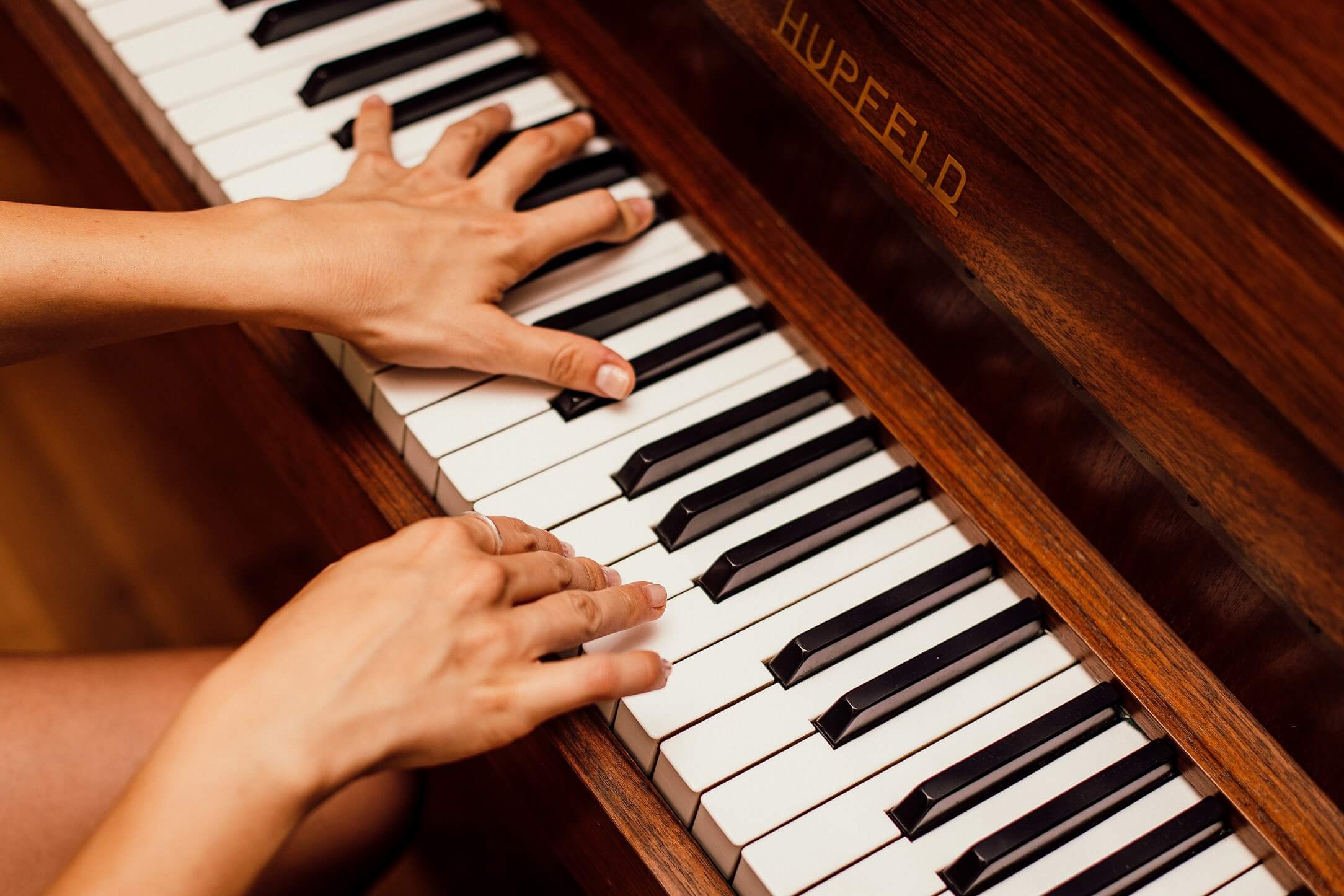
Piano Learning: How To Make Practice Easier And Enjoyable
Piano learning becomes easier and more enjoyable when you practice in short, consistent sessions with tiny goals, focused problem-solving, and one “fun block” that keeps you coming back.
In short (Key Takeaways)
- Practice 10–30 minutes most days; consistency beats occasional marathons (the spacing effect is well-supported in learning research).
- Start every session with one micro-goal (one bar, one chord change, one rhythm).
- Fix hard spots with chunking + slow practice + clean reps, then speed up gradually.
- Use hands-separate → tiny-chunk hands-together (don’t force full run-throughs too early).
- Add 2–5 minutes of fun on purpose (play-along, improv, favorite-song snippet).
- Use weekly confidence tests (start anywhere / reliability score) so your piece holds up under pressure.
- Choose a learning mix (teacher/online/app/YouTube/jam) that matches your goal.
- Write in fingering early (and stick to it) so your hands stop “re-deciding” every time.
- Use a tiny “technique starter pack” so warmups actually build skill (not just kill time).
- Count/subdivide first-then bring in the metronome (the click can’t fix rhythm you don’t understand yet).
If you’re brand new to learning piano, don’t worry-everything below is designed to work even if you can only practice a few minutes a day.
Below you’ll find 10/20/30-minute practice plans, the 3 mindset switches (perfection → casual → commit), fast “stuck” fixes, a hands-together breakthrough method, fun practice ideas (adults + kids), confidence tests, how to pick the best learning mix, plus FAQs.
If you’ve ever sat down ready to learn… and stood up ten minutes later feeling worse, you’re not broken. Your practice just needs a better design.
Tips To Make Piano Learning Easier And More Enjoyable
If you’re overwhelmed, I want you to leave this section with one clear win you can do today-no pep talk required.
The 60-second Reset: Pick ONE Goal + Start Tiny
When I feel scattered at the piano, I write one sentence: “Today I’m improving ____.” Not “the whole piece.” One thing. A bar. A jump. A chord change.
Then I set a timer for 8 minutesand begin. You don’t need motivation first-you need a start that’s small enough to happen.
The Fastest Win: One Hard Bar First + Slow, Clean Reps
Here’s the move that saves the most time: start with the part you avoid. Play it slow enough to be correct. Then get three clean repeatsand stop.
Not because you’re “done,” but because your brain learns what you repeat-and I’d rather repeat “correct” three times than “almost” fifteen times.
What “good Practice” Looks Like In 10 Minutes
A solid 10-minute session has three parts:
- Warm hands + brain (1 minute):touch the keys, name a few notes, breathe.
- Fix one thing (6 minutes):one bar / one transition / one rhythm pattern.
- End with music (3 minutes):play something easy and enjoyable.
Takeaway:Start with one tiny target and one tiny timer-then we’ll build a repeatable system you can rely on.
The Practice Menu + Joy Loop (the Simple System)
Here’s the idea I come back to again and again: practice shouldn’t rely on willpower.It should be built so you wantto return tomorrow-because it felt doable today.
The Joy Loop: Friction → Wins → Play → Feedback → Repeat
When a student tells me, “I know I shouldpractice, I just don’t,” it’s almost never laziness. It’s usually that practice feels heavy. So I use this loop:
- Friction:make starting stupid-easy (music open, timer ready, one tiny goal).
- Wins:finish something small on purpose (one bar, one chord change, one rhythm).
- Play:give yourself a short “just enjoy it” moment (song snippet, play-along, tiny improv).
- Feedback:do one quick check (record 20 seconds or run a mini-test) so you know what to fix next.
- Repeat:keep sessions short and frequent so the habit survives real life.
If you want a simple picture: I’m not trying to “practice a lot.” I’m trying to “practice again tomorrow.”That’s the whole trick.
Why “fun” Matters More Than People Admit
Fun isn’t fluff-it’s the glue. When you feel choice(you picked the music) and competence(you got a win), you naturally stick with it longer. In my experience, the fastest learners aren’t the toughest-they’re the ones who can keep the loop alive.
The Rule I Follow: End Every Session Feeling Capable
Even if my practice was messy, I always finish with something I can play comfortably-an easy phrase, a simple chord pattern, a familiar snippet. That last minute matters. It teaches your brain: piano = doable.
Takeaway:Now that you understand the loop, I’m going to give you the exact 10/20/30-minute menus so you never have to wonder what to do when you sit down.
Mindset Switches That Make Piano Easier Right Away
These aren’t “positive thinking” tips. They’re practical behaviors disguised as mindset.
1. Stop Forcing Perfection (use “good-enough Reps”)
Perfectionism usually shows up as: restart from the beginning, chase speed, get frustrated.
My alternative is boring-but it works: pick a small target, slow down, earn a few clean reps, move on. Research on deliberate practice consistently emphasizes focused work on weaknesses rather than mindless repetition.
2. Be Casual (play Like Music, Not A Video Game)
When I “game” a piece-just trying to survive the notes-my hands tighten and my ears switch off.
So I ask one question: “Can I hear the next phrase in my head?” If yes, I usually play calmer. If no, I slow down until I can.
3. Respect The Metronome (prioritize Timing Over Speed)
I still use the metronome a lot-but I use it the right way: I count first, then click. My rule: if I can’t clap/tap and count the rhythm correctly, the metronome won’t fix it-it’ll just stress me out.
When I do use it, I start slow, count out loud (or at least clearly in my head), and only speed up when I can keep the beat without holding my breath.
4. Sample Every Genre (avoid "musical Burnout")
I refuse to get stuck in a single style; I mix classical with jazz, pop, or whatever catches my ear. This isn't just for fun-it’s practical. Exploring different genres forces my hands to learn new patterns and keeps my brain engaged so I don't get bored with the instrument.
5. Commit (but Keep It Small)
Commitment works best when it’s specific and realistic. I like a “minimum-viable promise,” such as 10 minutes, 5 days/weekor 20 minutes, 4 days/week.
Short and frequent is easier to protect in a real schedule-and it aligns with spacing research.
Perfection Trap Checklist (quick Self-check)
If you’re doing any of these, you’re probably forcing it:
- restarting from the beginning after every slip
- practicing until you’re angry
- unable to say what you’re improving today
One-sentence Practice Plan (instant Clarity)
Use: “Today I’m improving ___ by doing ___ for ___ minutes.”
Takeaway:When your mindset is practical, practice gets calmer-next we’ll make starting easier by reducing friction.
Make Practice Easy To Start (reduce Friction)
This section is about removing the tiny obstacles that quietly kill consistency.
Your “ready-to-play” Setup
I keep my space simple: bench in place, music open, timer ready, pencil nearby. If I have to set up five things before I begin, I won’t begin.
If you feel discomfort, fix the setup early. Performing arts medicine guidance emphasizes prevention basics like ergonomics, warmups, and breaks.
If you’re still choosing an instrument (or upgrading), check your options in our guide to the best pianos-getting the right fit makes consistency way easier.
Minimize Distractions (decide Once)
Pick a rule you don’t have to renegotiate:
- phone across the room
- one sticky note goal on the stand
- timer on
The 2-minute “warm Start”
I start with something easy: a five-finger pattern, a couple of chords, or a slow scale fragment. The goal is to feel “I’m playing” within two minutes.
Technique Starter Pack (pick ONE-don’t Overthink It)
This is what I actually use so “warmup” turns into progress:
- Option A:Five-finger pattern for even tone (same fingers, perfect control).
- Option B:One simple scale hands-separate (slow and relaxed).
- Option C: One chord progression (three chords you repeat smoothly).
Keep it short. The goal is “awake hands,” not exhaustion.
Takeaway:When starting is easy, consistency becomes normal-now you need a clear menu for what to do each session.
The Practice Menu (10/20/30 Minutes)
You don’t need a perfect routine. You need something you can follow on your most normal day-busy, imperfect, distracted-and still feel progress.
Pick one menu, set a timer, and do the steps in order. No negotiating.
The 10-minute Menu (busy-day Survival Plan)
This is my “I’m tired but I don’t want to lose momentum” plan.
- Minute 0–1:Warm hands and attention (five-finger pattern, a couple of easy chords, or a slow scale fragment).
- Minute 1–7:Fix one micro-goal (one bar, one jump, one chord change). Slow enough that you can do it correctly.
- Minute 7–10:End with music (play something easy you enjoy, even if it’s just a few lines).
If you do only this consistently, you’ll be surprised how far it takes you.
The 20-minute Menu (steady Progress Plan)
This is the one I recommend most often.
- Minutes 0–3:Warm up (same idea as above-light and relaxed).
- Minutes 3–11:Hardest spot first (small chunks, slow tempo, a few clean reps).
- Minutes 11–17:Connect or “musicalize” (join two sections, add dynamics, smooth the transition).
- Minutes 17–20:Fun block (play-along, tiny improv, or favorite-song snippet).
The 30-minute Menu (balanced Growth Plan)
Use this when you have time and want to grow a little in every direction.
- Minutes 0–5:Technique that feels musical (patterns, scales/arpeggios, chord shapes-never forced).
- Minutes 5–15:Targeted work (micro-goal + slow-to-steady reps).
- Minutes 15–25:Repertoire (hands together in small chunks, then gentle tempo work).
- Minutes 25–30:Joy + creativity (improv, play-along, ear work, or just playing).
Playing Vs Practicing (quick And Useful)
I keep this distinction simple:
- Practicingis fixing one specific thing.
- Playingis enjoying the music and keeping your motivation alive.
You need both. Practicing builds; playing keeps you coming back.
Tiny Practice Journal (one Line)
After I finish, I write one sentence: “Next time, I start with ____.” That’s it. That single line prevents the “Where do I begin?” feeling tomorrow.
If you need a quick “music win” for the final 3 minutes, pull from a list of easy piano songs.
Takeaway:With a menu, you always know what to do-next we use the same simplicity to solve the common “stuck” problems fast.
Quick “stuck” Fixes (when Progress Feels Slow)
If piano feels hard, it’s usually because you’re using the wrong tool for the problem.
| If you feel | Do this next |
| I keep making the same mistake | Circle 1–2 beats → slow down → 3 clean reps → rejoin |
| Rhythm feels shaky | Clap/tap + count → play slowly with counting → then metronome |
| Hands together falls apart | Hands separate → 2-beat chunks together → connect chunks |
| Tempo won’t increase | Tempo ladder: up a little → if it breaks, back down and stabilize |
| I don’t know where to start | 2-minute scan: repeats, rhythms, “danger bar,” start there |
If You Keep Repeating Mistakes
My rule: never repeat a mistake at full speed. Circle the smallest possible chunk (even two beats). Slow down until it’s easy. Then do a few clean reps.
That “small target” approach is a hallmark of effective deliberate practice.
Consistent Fingering Rule (this Is A Huge Missing Piece In Most Beginner Practice)
If you trip in the same place more than 2–3 times, check fingering before you grind more reps. Pick a fingering, pencil it in, and stick to it for a full week.
Most “I can’t get this” moments are actually “my hand is re-deciding every time.” I’d rather you use a “good” fingering consistently than a “perfect” fingering randomly.
If Rhythm Collapses
Rhythm gets fixed away from the keys first: clap it, tap it, count it. Then play it slowly with counting. A metronome helps once you can count the rhythm correctly.
If Tempo Won’t Increase
I use a tempo ladder: play comfortably → nudge up a little → if it breaks, drop back and stabilize. Speed is a side effect of clarity.
If You Don’t Know Where To Start
Do a 2-minute “scan” before playing: find repeats, mark tricky rhythms, circle the most annoying bar. Your brain relaxes when it has a map.
A Simple “battle Plan” For The Week
Write down what you’ll learn each day (even if it’s tiny). When you pre-decide, practice stops becoming a daily negotiation.
One Rule That Helps Transitions: Overlap By One Bar
When you practice sections, overlap them slightly so your brain learns the connection, not isolated islands.
Takeaway:When you treat problems like problems (not personal failures), progress becomes predictable-next is the big one: hands together.
Hands Together (without The Usual Frustration)
Hands together isn’t a talent test. It’s a coordination skill, and it responds to a method.
What “ready” Means (hands Separate First)
Each hand should be able to play the chunk slowly without stopping and with steady rhythm. If one hand is shaky, together will feel impossible.
Tiny Chunks Are The Secret
I combine hands in tiny chunks-sometimes two beats. Then I earn a few clean reps, slide forward, and connect chunks.
Make It Musical, Not Mechanical
If it feels robotic, I add one musical cue: sing the melody, shape one phrase, or choose a dynamic. That often relaxes the body instantly.
When To Simplify The Left Hand
If a left-hand pattern is blocking you, simplify it (single bass notes or chord shells). You can upgrade later. Momentum first.
Takeaway:Hands together works when the chunk is small-next we’ll make practice feel like music so it stays enjoyable.
Make Practice Feel Like Music (so It Stays Enjoyable)
This is where piano becomes the thing you wantto do, not the thing you “should” do.
“Sound First” Habits
I pick one:
- sing the next phrase in my head
- add a gentle dynamic shape
- listen for even tone
These tiny musical decisions make practice feel like playing.
The 2–5 Minute Fun Block
I treat fun like a scheduled ingredient:
- play along with a backing track
- improvise with two chords
- learn one favorite-song hook
This is also where your ear and timing quietly improve.
Favorite-song Rule
I don’t “wait until I’m good” to play music I love. I learn it in small bites. That keeps the loop alive.
Takeaway:Enjoyment is designed-next, let’s make your progress obvious with simple confidence tests.
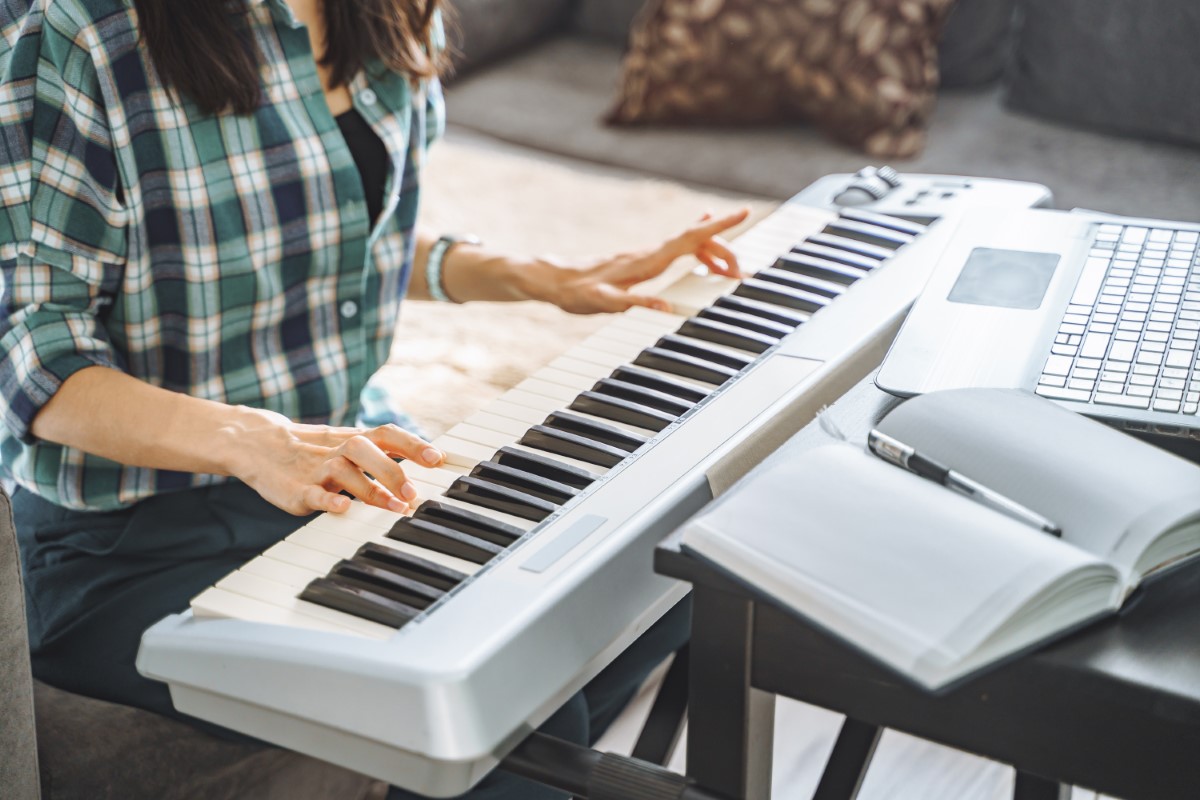
Confidence & Performance Tests
These are friendly “truth tests.” They stop the common frustration of “I can play it at home… until someone listens.”
The Lap Test (start Anywhere)
Pick a random spot (not the beginning). Play to the end, then from the beginning back to that spot. If you can start anywhere, you’re building real security.
The Ledger Test (your Reliability Score)
Try a tricky chunk 10 times and track how many are clean. Your “score” tells you what to practice next-no guessing.
The Race (points Reveal Weak Spots Fast)
Clean rep = you get a point. Mistake = your “opponent” gets a point. First to 20 wins. When your opponent wins quickly, you just found the real weak spot.
Seven Stages (gamified Clean Reps)
Clean reps move you up; mistakes move you down. Reach the top once, and you pass.
Weekly Use (simple)
Once a week: record 30 seconds + run one test + choose next week’s micro-goal.
Takeaway:Tests turn progress into facts-next we’ll choose the learning mix that fits your goal and personality.
Choose Your Learning Mix (teacher + Online + Apps + YouTube + Jamming)
No single method wins for everyone. What wins is choosing a mix that matches your goal, then sticking with it long enough to work.
Having a teacher or mentor can be incredibly helpful when learning the piano. You can join LVL Music Academyand can get good training. A good teacher can provide guidance, feedback, and support, and can help you stay motivated and focused.
Self-assessment: What Do You Want From Piano (songs, Relaxation, Theory, Improv)?
Answer these in one minute:
- Do you want to play songs fast, read music well, play by ear, or improvise?
- Do you prefer structureor exploration?
- Can you practice most daysor only a few?
Your answers choose the method, not the other way around.
Teacher
A teacher can save time by catching technique issues early and giving you a plan that matches your life. If you’re prone to overwhelm, this can be a big shortcut.
First-lesson Questions I’d Ask
- What should I focus on first for my goals?
- What’s a realistic practice plan for my schedule?
- What should I do when I get stuck midweek?
Online Lessons
Online lessons are great if you choose one path and follow it. The main danger is hopping between ten “perfect” courses and finishing none.
Apps (MIDI/Bluetooth)
Apps can boost consistency and rhythm, but they can’t fully judge tone, tension, or musical shape. I like them as a practice buddy-not as the whole plan.
YouTube
YouTube is a motivation superpower if you pair it with one foundational skill each time (rhythm counting, hands-separate work, or chord practice).
Jamming
Jamming teaches timing, listening, and recovery-skills that solo practice doesn’t force. Start with easy songs and low pressure.
Decision Table: Your Goal → Best Method Mix → Common Mistakes To Avoid
| Your Goal | Best learning mix + what to watch for |
| Play favorite songs quickly | YouTube + chords-first practice; avoid skipping rhythm basics. |
| Read music confidently | Teacher or structured course; avoid jumping pieces too fast. |
| Play by ear / improvise | Teacher (ear focus) + jam sessions; avoid only memorizing finger patterns. |
| Stay consistent as a busy adult | App for habit + 10-minute menu; avoid “all-or-nothing” practice. |
| Help a kid enjoy piano | Short lessons + games + choice; avoid long sessions and constant correction. |
If you want more strategies (beyond this article) for staying consistent, tracking progress, and breaking plateaus, see how to improve your piano learning.
Takeaway:Pick a mix that matches your goal-then we’ll focus on what matters most for adults learning at home.
Adults Learning At Home (late Starters Welcome)
Adult learning isn’t harder-it’s different. You’re balancing attention, time, and energy.
The Real Challenges (and The Fix)
You’ve got responsibilities and distractions, and nobody “makes” you practice. The fix isn’t guilt. It’s systems: minimum-viable sessions, clear goals, and weekly feedback.
The Hidden Advantages
Adults often have strong taste in music and clear reasons for learning. That autonomy is a motivation advantage, supported by motivation research.
30-day / 90-day Roadmap
Here’s what I consider a realistic “good path,” assuming consistent practice:
- 30 days:habit + basic coordination + a few song snippets you enjoy + simple chords
- 90 days:more stable hands-together, smoother rhythm, easier learning of new pieces, and a clearer sense of what to practice next
If you practice less, it still works-you just move slower. The system stays the same.
Takeaway:Adults win by making practice realistic-next, let’s make this approach kid-friendly too.
Kids: How To Make Piano Practice Fun Without Battles
Kids practice best when they feel capable and in control.
Short Sessions, Clear Finish Line
For many kids, 5–15 minutes is plenty. The trick is ending on a win so piano feels like success, not struggle.
Games That Teach Real Skills
I like games that secretly train musicianship: rhythm copycat, note treasure hunts, “three clean reps to level up.”
Let Them Choose (you Choose The Skill)
Offer two song choices. You quietly choose the skill target (rhythm, hand shape, chord).
Kids 10-minute Checklist (printable-style, Super Practical)
Minute 0–1:“Ready hands” (sit tall, relaxed shoulders, wiggle fingers)
Minute 1–4:New thing (one tiny goal only)
Minute 4–7:Review thing (something they can already do well)
Minute 7–9:Game (rhythm copycat or note hunt)
Minute 9–10:Performance minute (play for you, end on a win)
Simple Practice Chart That Isn’t Bribery
Track: Days practiced + “What I improved today.”
Reward: choice (song/game), not candy.
The goal is identity: “I’m a kid who practices,” not “I do it for a prize.”
For More Details: Piano For Kids
Takeaway:When kids feel capable, practice fights shrink-next, the big question: can you learn without reading notes?
Can You Play Without Learning Notes?
Yes, you can start without reading-and you can make real music. But it helps to know what you gain and what you trade off.
Chords-first (lead Sheets, Patterns)
Chords-first can get you playing enjoyable songs quickly. You learn shapes, progressions, and accompaniment patterns.
Ear-first (listen → Find → Play)
Ear training is learnable. You listen to a short phrase, find it, repeat it. Musical imagery (hearing internally) is a real part of musicianship and is discussed in research on music performance and cognition.
When Reading Becomes The Easier Path
Reading becomes the easier path when you want to learn more songs faster and rely less on tutorials. If reading feels scary, keep it tiny: a few easy bars a day.
If you decides you dowant to read, check guide on how to read piano notes.
Takeaway:You can start chords/ear first-but balanced skills make piano feel easier long-term-next, let’s use off-bench practice to stay consistent.
Practice Without The Piano
You’ll get ways to improve even when you can’t sit at the keys. This is a secret weapon for consistency.
Mental Practice (hear It, Finger It, “air-play” It)
Mental practice isn’t mystical; it’s structured imagination:
- Hear the phrase
- Imagine finger movements
- Visualize the keyboard
Meta-analytic work suggests mental practice can improve performance, especially when combined with physical practice.
Score Scan In 2 Minutes (patterns, Repeats, Landmarks)
Do this with your music (or a screenshot):
- Circle repeats
- Mark tricky rhythms
- Label chord shapes or intervals
- Choose one “anchor point” where you can restart
The Commute Drill: Rhythm + Counting + Visualization
On a walk or commute:
- Tap the rhythm on your leg
- Count out loud in your head
- Visualize the jump (where the hand lands)
Takeaway:Off-bench practice keeps momentum alive-now let’s make sure your body stays comfortable so you can keep playing long-term.
Stay Comfortable (posture, Breaks, And Tension Control)
If piano hurts, it stops being fun-and it can become an injury risk. Comfort is part of the skill.
Setup Basics
Aim for relaxed shoulders, neutral wrists, and a sitting position where you’re not cramped. Small adjustments matter.
Breaks + Warmups
Evidence-informed musician health guidance emphasizes warmups and breaks, especially during longer sessions.
Red Flags
Sharp pain, numbness/tingling, or pain that persists is a reason to stop and seek qualified guidance. Performing arts medicine exists for exactly this.
Takeaway:Comfortable playing supports consistent playing-next you’ll put everything into a simple 7-day plan.
Your Next 7 Days (a Simple Plan You Can Actually Follow)
You’ll leave with a week-long plan that turns intention into reps. Keep it easy enough that you actually do it.
Day 1–2: Setup + First Micro-piece
- Choose your minimum-viable commitment (10/20/30).
- Pick an easy piece or song snippet.
- Do the 10-minute menuboth days.
Day 3–5: Sectioning + Tempo Ladder
- Create sections with one-bar overlaps.
- Practice the hardest chunk first.
- Use the tempo ladder: up a step, down a step, earn clean reps.
Day 6: Fun Day (play-along + Improv)
- Spend 10 minutes on a favorite song snippet.
- Add 5 minutes of play-along or improv with 2 chords.
Day 7: Record & Run One Confidence Test → Set Next Week’s Micro-goal
- Record 30 seconds.
- Run Ledger teston one tricky spot (10 tries).
- Set next week’s first micro-goal based on what failed first.
Worked Example (so You Can Copy The Method On Any Song)
Let’s say you’re learning a simple 16-bar piece:
- Day 1:Bars 1–4 hands separate, pencil fingering, slow + steady
- Day 2:Bars 5–8 hands separate, same approach
- Day 3:Bars 9–12, then connect 1–8 with a 1-bar overlap
- Day 4:Bars 13–16, connect 9–16
- Day 5:Hands together in 2-beat chunks on the hardest 4 bars
- Day 6:Tempo ladder on your hardest transition + fun block
- Day 7:Ledger test on the hardest 2 bars + record a full run
This is exactly how I keep pieces moving without feeling stuck.
Takeaway:A week of tiny, consistent wins changes how practice feels-now let’s answer the key questions people ask when they’re deciding how to keep going.
FAQs
How Long Does It Take To Learn Piano?
It depends on your goal and your practice time. Many people can play simple patterns or short song snippets within weeks, and build broader proficiency over months and years.
Can I Learn Piano By Myself?
Yes-if you follow a structured path and use feedback (recording yourself, checklists, occasional lessons).
How Do I Make Piano Practice Fun?
The best way to make practice fun is to mix "work" with "play." Spend half your time on technical goals and the other half playing songs you actually enjoy listening to.
Is 30 Minutes Of Practice Enough?
Yes-30 minutes is plenty when you’re focused. Short, clear sessions often beat long, unfocused sessions. Use a timer, start with the hardest spot, and finish with a small fun block so you keep coming back.
Do I Need To Learn To Read Music?
While you can play by ear or using chords, learning to read music unlocks a vast library of repertoire. Think of it as a tool that makes learning new songs faster in the long run.
What Is The Best Age To Start Piano?
There is no "best" age. While children have high neuroplasticity, adults often have better discipline and a deeper emotional connection to the music, which aids in expressive playing.
Is A Digital Piano As Good As An Acoustic One?
For beginners, high-quality digital pianosare often better. They offer headphone jacks for private practice, never need tuning, and can connect to helpful learning apps via MIDI.
How Do I Stop My Hands From Tensing Up?
Focus on dropping the weight of your arm into the keys rather than "pushing" with your fingers. Periodically shake out your hands during practice to reset your physical tension.
How Often Should I Practice?
Aim for short, frequent sessions-even 10–30 minutes most days-because distributed practice is strongly supported in learning research. If you can only do 3 days a week, keep sessions consistent and start each one with a clear micro-goal.
Do I Need A Teacher?
No, but a good teacher can speed up progress by fixing technique early, managing expectations, and giving you feedback when you’re stuck. If you’re self-taught, use the Practice Menu, record yourself weekly, and consider occasional lessons as “course corrections.”
Quick Recap
If you want piano to feel easier and more enjoyable this week, I’d do three things: choose a 10/20/30-minute menu, start with one micro-goal each session, and add a small fun block so practice stays human. Then I’d run one confidence test on Day 7 and let that decide next week’s goal.
If you want a next step, grab one song you genuinely love and learn it in tiny chunks-because joy is the habit glue.