
Igor Levitwas born on 10 March 1987 in Nizhny Novgorod (formerly Gorky), Russia. He grew up in a Jewish family. His father, Simon Levit, is a construction engineer, and his mother, Elena Levit, is a pianist and music educator. In 1995, when Levit was eight, his parents and older sister moved the family to Germany; they settled in the city of Hanover in the state of Lower Saxony. Reports indicate that Levit learned German within a few months of this move.
Musical Beginnings And Education
- Early piano training:Levit began piano lessons at age three under his mother’s instruction. His mother Elena taught piano and headed the keyboard department at the local music conservatory. He gave his first solo piano performance at age four.
- Relocation to Germany:In 1995, at age eight, Levit moved with his family to Hanover, Germany. (The move was part of a post-Soviet resettlement program for Jewish families.) In Hanover he attended local schools and reportedly became fluent in German within a few months.
- Formal music education:After relocating, Levit pursued advanced music studies in Germany. He spent one year studying piano at the Mozarteumin Salzburg, and at age 13 he entered the Hanover University of Music, Drama and Media (HMTMH) for conservatory study. He continued his music studies in Hanover for several years.
| Fact Category | Verified & Important Fact |
| Full Name | Igor Levit |
| Date of Birth | 10 March 1987 |
| Birthplace | Nizhny Novgorod, Russia |
| Nationality | German (Russian-born) |
| Profession | Concert pianist and professor |
| Musical Training | Began piano at age 3 |
| Education | Hanover University of Music |
| Known For | Beethoven and Shostakovich cycles |
| Major Honor | Gilmore Artist Award (2018) |
| Net Worth | Not publicly disclosed |
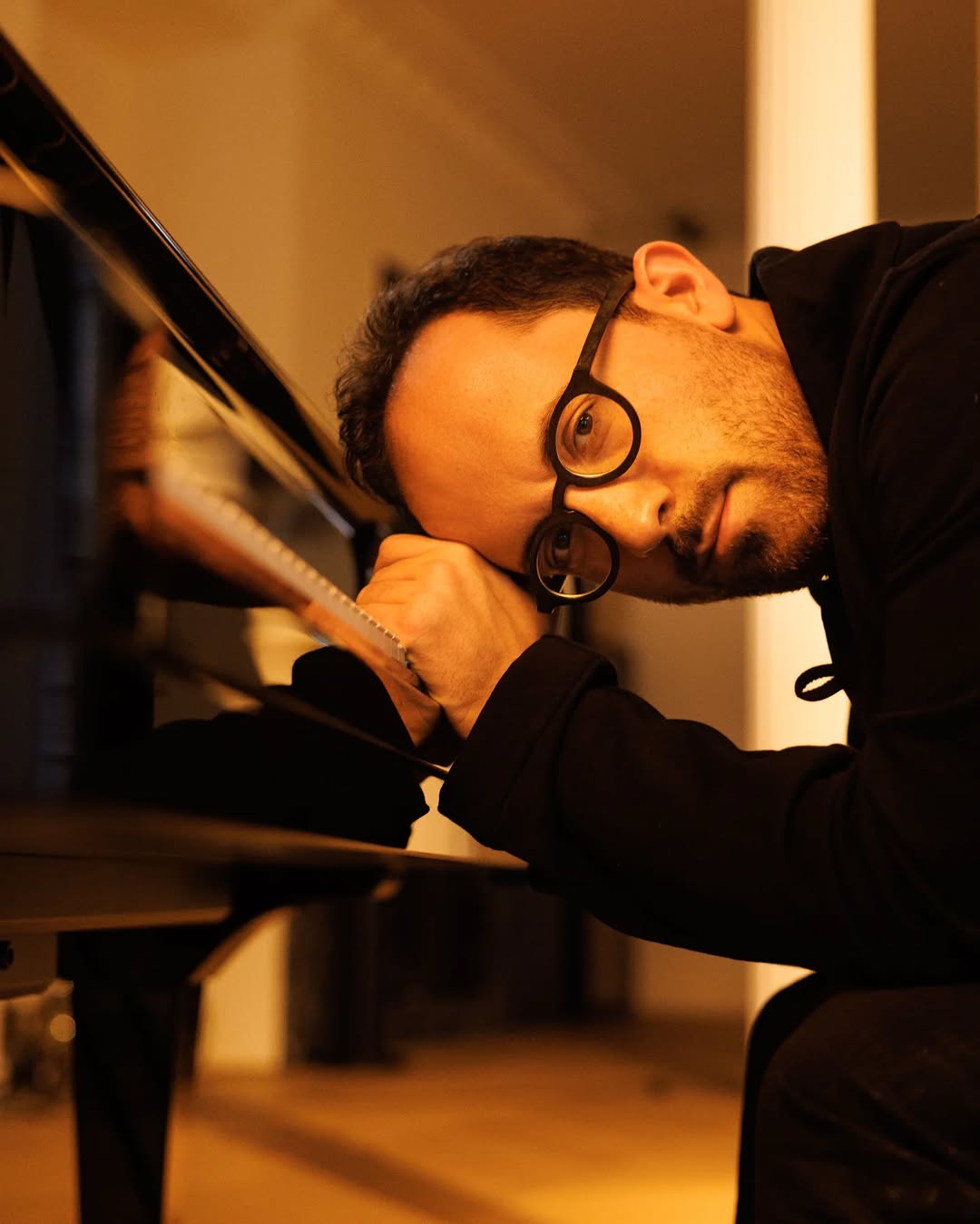
Career Beginnings
Igor Levit first attracted notice through success in international piano competitions. As a teenager he won top prizes abroad for example, he earned first prize at the Hamamatsu Piano Competition (Japan, 2004) and other German contests in 2004 and in 2005 he became the youngest finalist at the Arthur RubinsteinInternational Piano Master Competition in Tel Aviv, where he took the silver medal plus several special prizes.
He launched his recording career with a 2007 debut album of Beethoven piano concertos on the Naxos label.
By the early 2010s Levit was appearing in major concert halls around the world and was selected as a BBC Radio 3 New Generation Artist (2011–2013), helping to establish his reputation beyond Germany.
International Breakthrough
Levit’s profile grew dramatically in the 2010s as he signed with Sony Classicaland released highly acclaimed albums. His 2013 debut Sony release a two CD set of Beethoven’s late sonatas won critical praise and helped introduce him to international audiences.
Subsequent recordings of Bach’s keyboard partitas and a three disc album of works by Bach, Beethoven and Frederic Rzewskigarnered major awards (the latter earned Gramophone magazine’s Recording of the Year in 2016).
During this period Levit also made his U.S. debut (in New York) and toured across North America, Europe and Asia.
By the end of the decade he was regularly headlining concert series and festivals, and his stature was confirmed by top honors such as being named a Gilmore Artist in 2018 an honor bestowed only every four years on an outstanding pianist.
Major Performances & Concert Highlights
Igor Levit has since given many celebrated performances with leading orchestras and in famous halls. He has appeared with ensembles such as the Vienna Philharmonic, the Los Angeles Philharmonic, London’s Philharmonia and Royal Philharmonic orchestras, as well as the Budapest Festival Orchestra, Bavarian Radio Symphony, Tonhalle Orchestra Zürich, Leipzig Gewandhaus and Staatskapelle Berlin.
He has performed concertos under conductors like Christian Thielemann, Iván Fischer, Daniel Harding, Paavo Järviand Esa Pekka Salonen.
As a recitalist, he has played in major venues worldwide including London’s Wigmore Hall (where he participated in anniversary celebrations), New York’s Carnegie Hall, Hamburg’s Elbphilharmonie and Paris’s Théâtre des Champs Élysées often in marathon programs (for example, complete Beethoven sonata cycles).
Noteworthy highlights include performing a complete cycle of Prokofiev piano concertos with the Budapest Festival Orchestra under Iván Fischer, playing Busoni’s piano concerto with Esa Pekka Salonen and the Los Angeles Philharmonic, and touring Europe with Italy’s Orchestra Nazionale di Santa Cecilia under Daniel Harding.
In contemporary and experimental projects he has also drawn attention for instance, in April 2025 he gave a marathon 16 hour performance of Erik Satie’s Vexations (840 repetitions) in London, directed by Marina Abramović.
Recordings & Discography
Levit’s discography (primarily on Sony Classical) spans a broad range of repertoire. Early recordings include the complete Beethoven piano concertos (2007, Naxos) and albums of Beethoven and Bach.
Landmark releases feature the complete Beethoven sonatas (a nine disc cycle issued in 2019), which was followed by annual high profile projects: in 2021 he released On DSCH (a three disc set pairing Shostakovich’s 24 Preludes and Fugues with Ronald Stevenson’s Passacaglia on DSCH), and in 2024 he recorded all of Brahms’s piano works (including the two concertos with Christian Thielemann and the Vienna Philharmonic).
Other albums include solo discourses on Bach (such as the Partitas) and thematic recitals like Life (2018, featuring works by Busoni, Liszt, Wagner, Rzewski and others).
His recordings have repeatedly earned top awards in the classical field. In particular, his album of Bach Beethoven Rzewski (2015) won Gramophone’s Recording of the Year (2016), and his complete Beethoven sonatas set was named Artist of the Year by Gramophone (2020).
A 2024 recording of Brahms’s two piano concertos (with the Vienna Philharmonic under Thielemann) was honored as a Concert Recording of the Year at Germany’s Opus Klassik awards.
Awards & Professional Recognition
| Award / Honor | Details |
| Gilmore Artist Award | Received in 2018; one of the world’s top piano honors |
| Gramophone Recording of the Year | Won in 2016 for Bach–Beethoven–Rzewski album |
| Gramophone Artist of the Year | Awarded in 2020 for recording excellence |
| International Beethoven Prize | Received in 2019 for musical achievement |
| Order of Merit of Germany | National cultural honor awarded in 2020 |
| Royal Philharmonic Society Award | Instrumentalist of the Year (2018) |
| BBC Music Magazine Award | Instrumental Award recipient (2022) |
| Carl von Ossietzky Prize | Honored in 2022 for cultural contribution |
| Buber–Rosenzweig Medal | Awarded in 2024 for cultural impact |
| Kaiser Otto Prize | Received in 2025 for cultural leadership |
Levit’s artistry has been acknowledged by many prestigious honors. Notably, he received the 2018 Gilmore Artist Award (a $300,000 international piano prize given quadrennially), and the Royal Philharmonic Society’s Instrumentalist of the Year award (2018).
His early triumphs include the silver medal and special prizes at the 2005 Rubinstein Competition.
He has also won numerous recording accolades for example, Gramophone magazine named him Recording Artist of the Year (2020) and Instrumental Musician of the Year (2020), and he received the BBC Music Magazine’s Instrumental Award (2022).
National and civic awards followed: in 2019 he won the International Beethoven Prize (Bochum) for his musical achievements, and in 2020 Germany awarded him the Order of Merit.
Levit has also been recognized for cultural contributions and leadership honors include the Carl von Ossietzky Prize (2022), the Buber Rosenzweig Medal (2024), the German National Prize (2024), and the Kaiser Otto Prize (2025).
In competition circles he earlier won the Beethoven Ring (Bonn, 2017) and Germany’s Luitpold Prize (Bad Kissingen, 2009), among others.
Collaborations With Orchestras & Conductors
Throughout his career Levit has played concertos and chamber works with many of the world’s leading orchestras and conductors. He has performed with the Berliner Philharmoniker, Staatskapelle Berlin, London Philharmonic, Los Angeles Philharmonic, Chicago Symphony, Vienna Philharmonic, Gewandhaus Leipzig, Budapest Festival Orchestra, Santa Cecilia Academy Orchestra (Rome), Tonhalle Zürich, and others.
His frequent partners on the podium include Gustavo Dudamel (Los Angeles), Ivan Fischer (Budapest), Christian Thielemann (Vienna, Berlin), Daniel Harding (Santa Cecilia), Paavo Järvi (Zurich), Adam Fischer (Vienna), and Lahav Shani (Rotterdam).
In chamber music contexts he has collaborated with prominent soloists and ensembles as well for example, violinist Renaud Capuçon and cellist Julia Hagen.
As a sought after guest artist, he has also appeared with cultural institutions such as the BBC Symphony and the Gewandhaus and Vienna orchestras under chief conductors, showcasing his versatility across both classical and contemporary repertoire.
Recent Career Activity
Levit remains vigorously active on the concert stage and in musical leadership. From 2020 onward he made international headlines by hosting 53 live streamed Hauskonzerte (house concerts) from his Berlin home during the COVID 19 lockdown, reaching global audiences.
This initiative was followed by publication of a memoir (Hauskonzert, 2021) and a feature film (Igor Levit No Fear, 2022).
In 2022 he was appointed co artistic director of the Heidelberger Frühling festival, and he has curated a multi year Piano Fest at the Lucerne Festival through 2025.
In performance, his recent schedule has included Beethoven anniversaries and premieres: in 2025 he completed performance cycles of Shostakovich and Beethoven on major concert platforms, and in late 2025 he presented an all Beethoven program for the 125th anniversary season at Wigmore Hall.
Looking ahead, he is slated to perform Beethoven’s Diabelli Variations and Frederic Rzewski’s The People United Will Never Be Defeated! in New York (Carnegie Hall) and Washington D.C. in early 2026.
Simultaneously, Levit maintains an academic role since 2019 he has held a professorship at the Hanover University of Music and continues to influence the musical world as a recording artist, performer and thought leader. His career remains marked by ambitious programming and a commitment to both classical tradition and contemporary relevance.
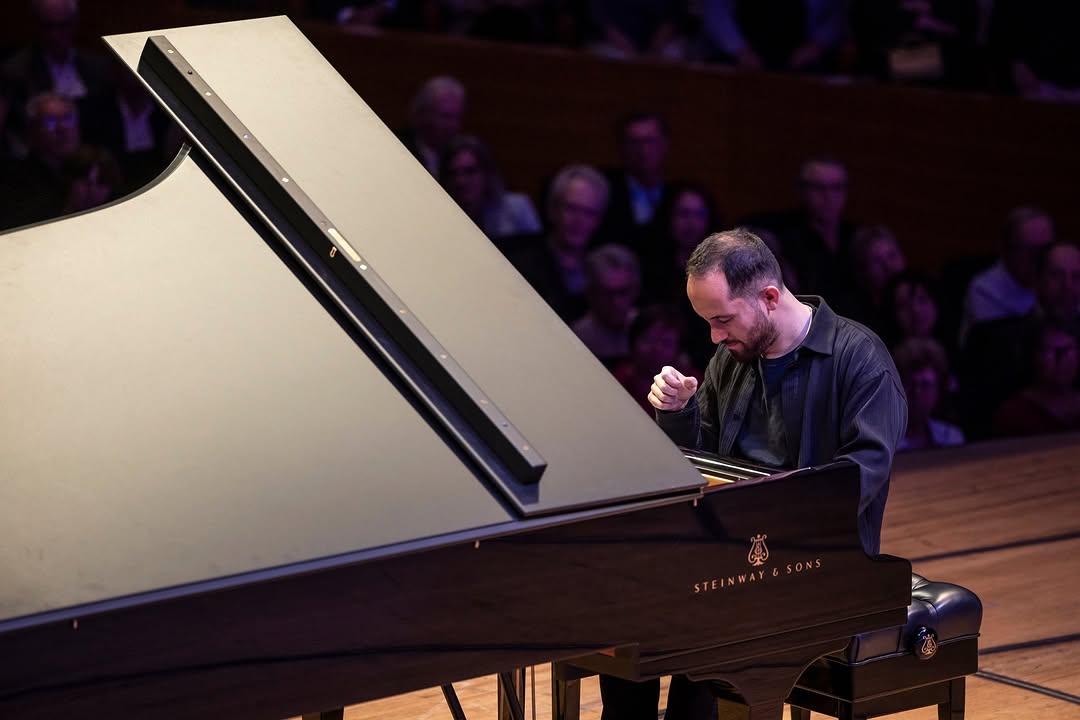
Igor Levit Performance (2025–2026)
- Vienna (Musikverein, 2025):Levit curated a Shostakovich-themed recital series, giving five concerts at the Musikverein to mark the composer’s 50th memorial year.
- London (Southbank Centre, Apr 2025):Performed a marathon 13-hour rendition of Erik Satie’s Vexations(840 repeats) at Queen Elizabeth Hall, in collaboration with artist Marina Abramović.
- USA (Jan 2026):Featured in major recitals at Carnegie Hall(New York) and Sixth & I (Washington, D.C.), presenting Beethoven’s Diabelli Variationsand Frederic Rzewski’s The People United Will Never Be Defeated!as part of the 250th Independence celebrations.
- Wigmore Hall, London (May–June 2026):Gave a solo recital for the hall’s 125th-anniversary festival, performing Liszt’s challenging Dante Sonata.
- International recitals (2025/26 season):Solo concerts at top venues worldwide, including Hamburg’s Elbphilharmonie, Venice’s Teatro La Fenice, Paris’s Théâtre des Champs-Élysées, Barcelona’s Palau de la Música and halls in Luxembourg, Milan and Tokyo.
- Major orchestral engagements (2025/26 season):Performed Brahms’s Piano Concerto No.1 with the Orchestra dell’Accademia Nazionale di Santa Cecilia under Daniel Harding (touring Europe, e.g. at Paris’s Philharmonie); and appeared as soloist in Ferruccio Busoni’s monumental Piano Concerto with Esa-Pekka Salonen and the Los Angeles Philharmonic.
Technical Approach And Piano Control
Levit’s technical command is often described as formidable and precise. Critics note his remarkably even touch and precise rhythmic control, which allows him to articulate complex passages with clarity. He brings a firm sense of musical line to even the most difficult repertoire, balancing crystalline articulation with subtle dynamic shading.
For example, fast runs and chordal blocks emerge sharply defined yet never strident, and every voice in a dense texture remains distinguishable. In reviews of his playing, observers highlight that each phrase is carefully shaped and each dynamic contrast executed cleanly, underscoring an overall mastery of finger control and pianistic poise.
Tone, Touch, And Sound Color
Levit’s tone is noted for its wide palette, from brilliant to warm and lyrical. He produces a bright, ringing sound in crisp passages, and a smooth, creamy lyricism in gentler music. His touch is consistently even and controlled: he avoids any harshness or undue weight, so that even in fortissimo sections the tone remains clear and focused.
Reviewers often emphasize the warmth and intimate quality of his pianism, mentioning personal expressiveness in the sound. At the same time, he can voice parts dynamically, bringing out inner lines or resonant bass as needed.
In transcriptions of Wagner and Liszt, critics have praised his calm and transparent delivery, noting that his playing can suspend time with a quietly luminous touch and extraordinary control.
Rhythm, Phrasing, And Structural Clarity
Rhythm and phrasing in Levit’s playing are carefully shaped to clarify musical form. He often uses flexible timing – slight pauses, rubato or subtle accent shifts – precisely to highlight structural landmarks, such as the slow motion of a fugue entry or the arch of a lyrical line.
When needed, he delivers pointed, sharp-edged articulations to inject energy into faster movements, giving the music a driving pulse without sacrificing lucidity. In complex contrapuntal textures, each voice is made distinct: reviewers describe his fugues and polyphony as lucid, structurally sound performances.
His phrasing often creates a sense of suspension in lyrical lines – a gentle songfulness that sustains long melodies naturally without breaking them. Overall, Levit’s rhythmic precision and attention to detail make large-scale architecture clear, as if the structure of each piece is laid out for the listener.
Interpretative Approach To Repertoire
Levit approaches different eras with stylistically attentive interpretations. He is known to honor composers’ intentions rigorously – for instance, he famously follows Beethoven’s published metronome markings literally, even at blazing tempos. Reviewers emphasize that he puts the composer first, shaping performances around the written score rather than personal display.
In Baroque works like Bach’s, he brings rhythmic vitality and transparency, often using pedal sparingly to preserve contrapuntal clarity. In Classical and Romantic repertoire, he may favor a leaner, more disciplined approach; one critic notes he gave Liszt a kind of Classical discipline, using unusually light pedaling and precise counterpoint even in virtuosic passages.
In Romantic lyric pieces, his playing becomes more songlike and warm, but always structured. In modern music, Levit embraces the challenges head-on: his performances of composers like Frederic Rzewski and Morton Feldman are played with calm focus and exactitude.
For example, in Feldman’s slow, ethereal pieces his interpretation was described as beautiful and lyrical, with thoughtful use of pedal and poetic nuance in each phrase. Overall, Levit’s repertoire choices reflect both a deep respect for tradition and a willingness to incorporate contemporary works, applying the same intellectual rigor to each.
Balance Between Precision And Expression
Levit consistently balances analytical precision with expressive depth. He does not sacrifice emotion for control; instead, his polished technique underpins the music’s expressive qualities. Critics note that he uses precision and restraint to reveal musical subtleties, resulting in performances with a purity of expression and certain reserve.
At the same time, his playing retains a clearly articulated lyricism. In lyrical movements he is said to bring a gentle songfulness to the melodies, making even formal architecture sound beautifully heartfelt.
In fiery passages he may seem more controlled than wild, but the intensity is still present in the crispness and energy of his attack. This combination means Levit’s performances are often described as both intellectually coherent and emotionally engaging: every phrase is exact, yet the overall effect feels uncluttered and lyrical rather than mechanical.
In short, his precision serves musical meaning rather than mere display.
Critical Observations And Musical Identity
Observers commonly emphasize Levit’s introspective, thoughtful identity as an artist. He is often seen as a quiet and analytical pianist – one review calls him an artist of rare sensitivity, command and intellectual strength. In performance he tends to convey that every note is considered, projecting an air of concentrated purpose.
Some critics note that this intensity can at times come across as cool or cerebral, especially in very dramatic works. Yet these qualities are also viewed positively: his focus and sincerity give a sense of authenticity to his interpretations.
He rarely indulges in unnecessary flashiness; instead, his playing consistently reflects a deep engagement with the score. Over time, reviewers have pointed out a clear musical personality behind the technique – one defined by clarity, depth and an uncompromising respect for the music.
In sum, Igor Levit’s musical identity emerges as that of a disciplined, intellectually driven pianist whose subtle expressiveness and devotion to the composer create a distinctive artistic voice.
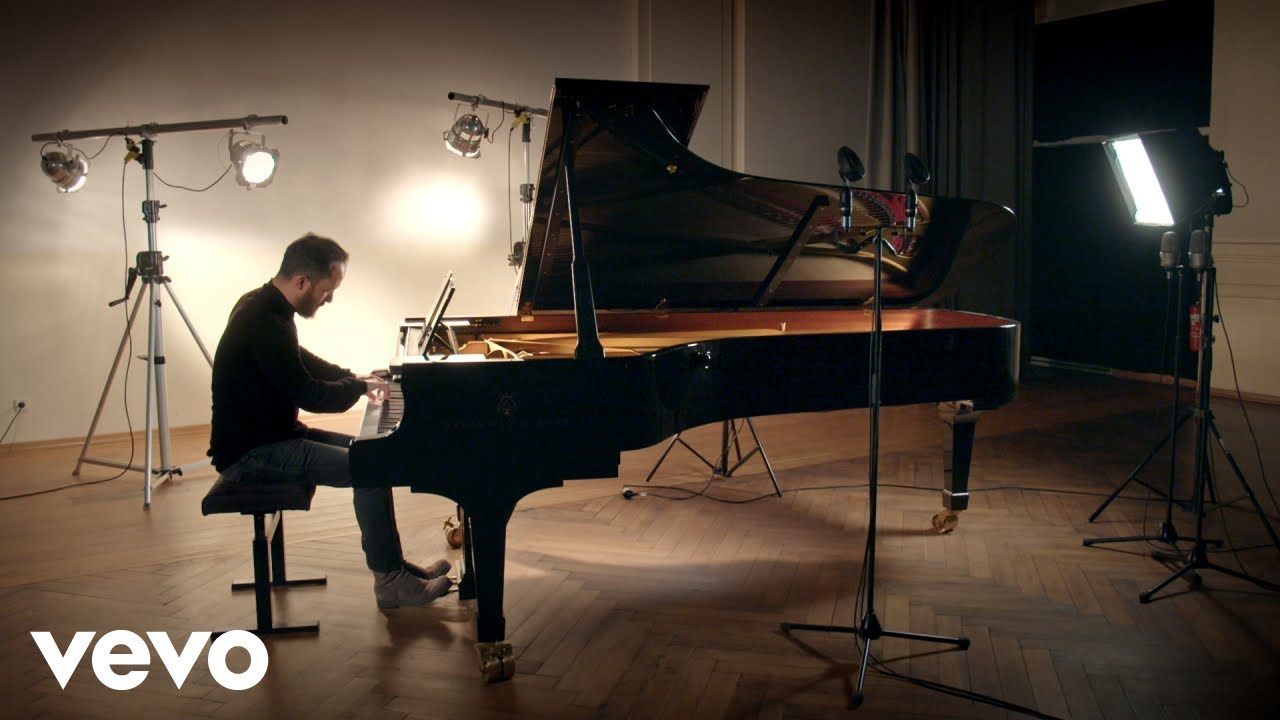
Igor Levit - Ode to Joy (from Beethoven's Symphony No. 9, Op.125)
Igor Levit Net Worth
As of 2026, no reliable source or major financial outlet has published an estimate of Igor Levit’s net worth. Levit is a Russian-born German concert pianist who also holds a professorship at the Hannover University of Music.
He performs regularly in major concert halls around the world and releases recordings of core classical repertoire, including large-scale projects devoted to Beethoven. He has also received major international awards that included significant monetary prizes. His income is derived from concert performances, recording projects, academic teaching, and prize-related earnings.
FAQs
Q1: Who Is Igor Levit?
Igor Levit is a Russian-born German concert pianist widely regarded as one of the leading classical musicians of his generation, known for his interpretations of Beethoven, Bach, and Shostakovich.
Q2: What Makes Igor Levit An Important Pianist Today?
He is recognized for combining exceptional technical precision with intellectual depth, ambitious programming, and a strong commitment to both classical tradition and contemporary music.
Q3: Where Did Igor Levit Receive His Musical Education?
Levit studied piano in Germany, including at the Hanover University of Music, Drama and Media, where he later became a professor.
Q4: What Are Igor Levit’s Most Notable Achievements?
His achievements include winning the Gilmore Artist Award in 2018, receiving multiple Gramophone awards, and performing complete cycles of major composers’ works in leading concert halls worldwide.
Q5: Is Igor Levit Still Actively Performing And Recording?
Yes. Igor Levit remains highly active as a performer, recording artist, and educator, with regular international concert tours, major recording projects, and academic responsibilities.