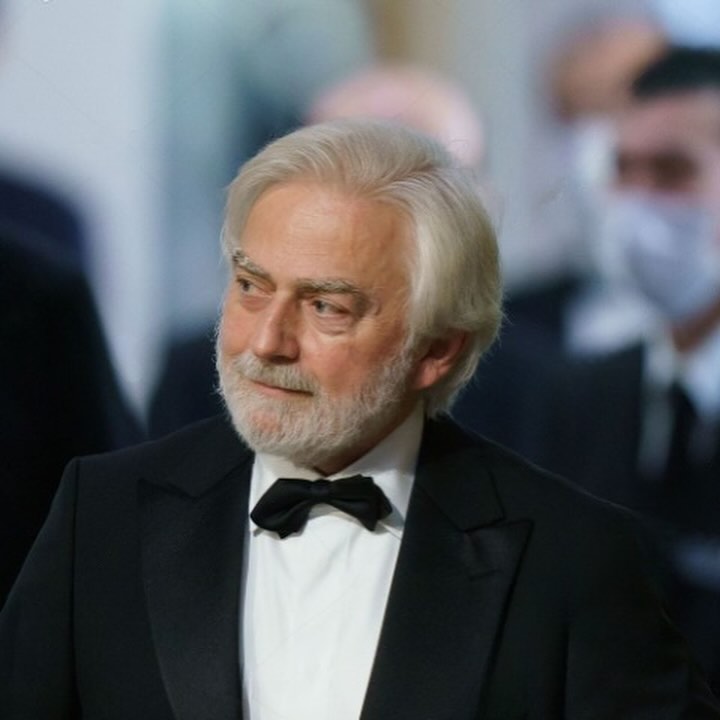
Krystian Zimermanwas born on 5 December 1956 in Zabrze, a mining town in Upper Silesia, Poland. He was the only child of Marian Zimerman, a mechanical engineer who also played piano, accordion and trumpet. From infancy, Zimerman grew up in a home filled with music.
His father regularly hosted informal chamber-music sessions at which visiting musicians joined to play together. Zimerman began formal piano lessons with his father at age five, and by about age seven he became a student of the noted piano teacher Andrzej Jasiński. He remained Jasiński’s pupil through his youth and formal music education. Around 1963 (when he was seven), Zimerman enrolled at the Karol Szymanowski Academy of Musicin Katowice under Jasinski’s tutelage.
| Fact | Details |
| Full Name | Krystian Zimerman |
| Date of Birth | 5 December 1956 |
| Place of Birth | Zabrze, Upper Silesia, Poland |
| Nationality | Polish |
| Profession | Concert pianist and conductor |
| Early Training | Began piano lessons with his father |
| Primary Teacher | Andrzej Jasiński |
| Music Education | Karol Szymanowski Academy of Music, Katowice |
| Career Start | International competitions in early 1970s |
| Main Record Label | Deutsche Grammophon |
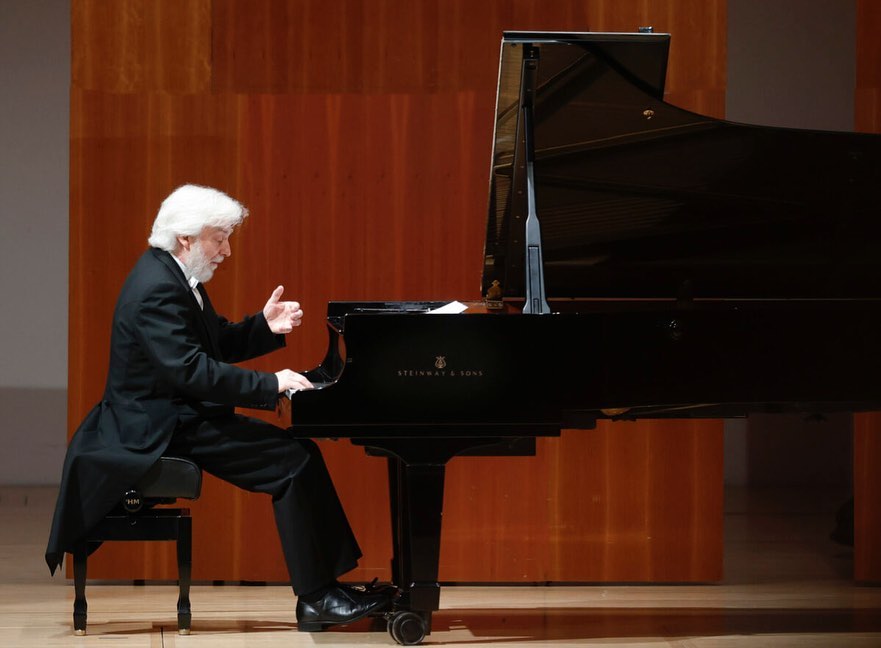
Career Beginnings
Krystian Zimerman showed musical promise early, studying piano with his father and then under Professor Andrzej Jasiński. By the early 1970s he began winning major competitions in Europe.
In 1973 he took first prize at the Ludwig van Beethoven International Piano Competitionin Hradec Králové, and in 1975 he won the prestigious International Chopin Piano Competition in Warsaw.
These victories launched his international career, leading to high-profile invitations (for example Arthur Rubinsteinbrought him to Paris in 1976) and the start of a global performing schedule.
International Breakthrough
Zimerman’s 1975 Chopin Competition triumph at age 19 made him widely known, and he was immediately in demand on concert stages. That same period saw him win first prize in the 1974 Szymanowski (Prokofiev) Piano Competition in Warsaw as well.
These awards opened doors abroad. In the late 1970s he gave debut performances with major orchestras for instance the Berlin Philharmonic under Herbert von Karajan in 1976 and made his American debut with the New York Philharmonic in 1979.
From then on, each competition success translated into new international tours and recording projects, cementing his reputation outside Poland.
Major Performances & Concert Highlights
Over his career Zimerman has given more than 2,200 concerts featuring nearly 50 different piano concertos and dozens of solo recital programs. He is known for performing a wide-ranging repertoire of Romantic and modern works.
Highlights include complete cycles of major piano works for example he recorded Beethoven’s five piano concertos with conductor Sir Simon Rattleand the London Symphony Orchestra for the composer’s 250th anniversary, and he has given acclaimed series of Beethoven’s late sonatas and Chopin recitals in Europe and Japan.
He even formed and conducted the Polish Festival Orchestra in 1999 to celebrate Chopin’s 150th death anniversary; with that ensemble he conducted and recorded Chopin’s two piano concertos from the keyboard, giving sold-out concerts across Europe and at Carnegie Hall.
In short, Zimerman’s performance schedule has included concerto engagements with top orchestras as well as solo and chamber recitals in the world’s foremost halls.
Recordings & Discography
Zimerman has an extensive and distinguished recording catalogue, almost entirely on the Deutsche Grammophon label (he has been an exclusive DG artist since 1976).
His discography comprising over twenty solo albums spans core piano literature.
He has recorded Chopin (multiple albums of his solo works and both piano concertos), Franz Lisztand Franz Schubert masterpieces, Johannes Brahms solo works, Edvard Grieg and Béla Bartók concertos, and significant 20th-century pieces.
In 2022 he released an album of Karol Szymanowski piano works, which earned him Gramophone magazine’s Award for Best Instrumental (Piano) Recording.
Other notable recordings include Beethoven’s piano concertos with Simon Rattle and the LSO, as well as concertos by Rachmaninoff (with Bernstein and Ozawa) and the Lutosławski Piano Concerto (a work composed for Zimerman in 1988). Across these recordings critics have praised his “quick-wittedness and nimbleness” and “utterly exceptional” virtuosity.
Awards & Professional Recognition
| Award / Honor | Details |
| International Chopin Piano Competition | First Prize, Warsaw (1975) |
| Szymanowski (Prokofiev) Competition | First Prize, Warsaw (1974) |
| Accademia Chigiana Award | Best Young Musician (1985) |
| Leonie Sonning Music Prize | Awarded in 1994 (youngest recipient) |
| Gramophone Awards | Seven awards across career |
| Gramophone Piano Award | Won in 2023 for Szymanowski album |
| Praemium Imperiale (Music) | Awarded in 2022 |
| National Honors (Poland) | Highest civilian cultural distinctions |
| Legion of Honour (France) | Awarded for cultural contribution |
Zimerman’s career has been marked by prestigious awards and honors. He won the 1st Prize at the 1975 International Chopin Piano Competition (Warsaw) and at the 1974 Szymanowski (Prokofiev) Competition.
In 1985 he received the Accademia Chigiana award (Italy) as best young musician, and in 1994 he was awarded Denmark’s Leonie Sonning Music Prize (notably the youngest recipient at age 40). He has earned Poland’s highest civilian honors and France’s Legion of Honour for his cultural contributions.
In recent years he has won major international prizes in September 2022 he was a recipient of Japan’s Praemium Imperiale (Music) Award, and in October 2023 he won the UK Gramophone Award (Piano category) for his Szymanowski album.
To date he has accumulated seven Gramophone Awards and numerous “Recording of the Year” accolades, reflecting his enduring impact on the classical music world.
Collaborations With Orchestras & Conductors
Zimerman has appeared with virtually all the leading orchestras worldwide and under many of the greatest conductors. Orchestras he has performed with include (for example) the Berlin Philharmonic, Vienna Philharmonic, London Symphony, Chicago Symphony, Boston Symphony, and New York Philharmonic, among others.
Conductors he has worked with include Herbert von Karajan, Leonard Bernstein, Pierre Boulez, Carlo Maria Giulini, Bernard Haitink, Seiji Ozawa, Claudio Abbado, Zubin Mehta, Lorin Maazeland Simon Rattle.
(In fact he has collaborated with over 140 different conductors across his career.)
He has also performed chamber music frequently notable partners include violinists Gidon Kremerand Kyung-Wha Chung, cellist Yo-Yo Ma, and as a conductor he has led his own ensemble (the Polish Festival Orchestra) as well as standard orchestras in concerto performances. Together, these collaborations have yielded a legacy of acclaimed concerts and recordings across the orchestral and chamber repertoire.
Recent Career Activity
In the past few years Zimerman has continued to perform selectively, maintaining his policy of rare but high-profile engagements.
In 2022–2023 he toured parts of Asia with solo recitals (notably a Japan tour of Chopin programmes) and in late 2023 returned to Europe for further concerts.
News outlets noted that in 2023 he won Gramophone magazine’s Piano Award for the Szymanowski album, and in 2022 he won the 33rd Praemium Imperiale Award.
He has also launched new recording projects for example, a chamber music album featuring Beethoven piano trios was announced for release in 2025.
By late 2025 Zimerman remains active and in demand each planned appearance or recording attracts attention, reflecting his unique status and carefully managed career in the classical music world.
Krystian Zimerman Performance (2025–2026)
- June 22, 2025:Recital at Amsterdam’s Concertgebouw Main Hall, featuring works by Chopin, Brahms, Debussy and Szymanowski.
- June 20, 2025:Featured solo recital at the Lucerne “Le Piano Symphonique” piano festivalwith the Luzerner Sinfonieorchester.
- June 26, 2025:Soloist with the New York Philharmonicunder Esa-Pekka Salonen in Incheon, South Korea, performing Beethoven’s Fourth Piano Concerto as part of the orchestra’s Asia tour.
- December 2025:Japan tour of solo recitalsin Sendai, Mito and Tokyo, including performances at Suntory Hall and Tokyo Opera City, presenting the “Preludes & Co” program combining Schubert Impromptus and works by Debussy.
- January 2026:South Korea tour of solo concerts, including two recitals at Seoul’s Lotte Concert Hall and one performance at Daegu Concert House.
Technical Approach And Piano Control
Krystian Zimerman’s technique is widely regarded as exceptional. He is consistently described by critics as possessing an extraordinary level of technical mastery. Even the most demanding passages are executed with apparent ease, supported by exceptional finger agility, strength, and control.
Rapid figurations are delivered with clarity and uniformity, with each note remaining clearly articulated and controlled. His command of tempo and dynamics remains stable even under extreme technical pressure.
Zimerman demonstrates complete authority over the keyboard, producing both powerful climaxes and refined soft passages without loss of precision. Technical control functions not as display but as a foundation for structural and expressive coherence.
Tone, Touch, And Sound Color
A defining characteristic of Zimerman’s playing is the refinement of his tonal production. His sound is frequently described as rich, clear, and carefully shaped. He is known for producing a wide range of tonal colors, adjusting touch and weight to suit musical context.
Lower registers are often solid and resonant without becoming harsh, while upper registers can sound luminous or restrained depending on expressive need. Inner voices are consistently projected with clarity, even within dense textures.
Pedaling is applied with restraint, allowing transparency of texture and precision of articulation. Tone is treated as a structural element rather than a purely decorative one, contributing directly to musical meaning.
Rhythm, Phrasing, And Structural Clarity
Zimerman’s rhythmic approach is characterized by flexibility combined with architectural discipline. He employs rubato as a structural tool, shaping phrases through controlled expansions and contractions of tempo.
These adjustments are integrated into the broader formal framework, preserving clarity of musical direction. Phrasing is deliberate and carefully proportioned, with clear attention to melodic continuity and harmonic movement.
Silences, cadences, and transitions are handled with particular care, reinforcing structural balance. Even in complex contrapuntal writing, individual lines remain distinct, and large scale forms are rendered intelligible through consistent rhythmic control.
Interpretative Approach To Repertoire
Zimerman’s interpretative approach is marked by rigorous preparation and analytical depth. His readings emphasize internal coherence, with close attention to compositional detail and structural logic.
Interpretations are shaped by a strong sense of long range trajectory rather than by isolated moments of effect. In Classical repertoire, clarity of articulation and formal balance are prioritized.
Romantic works are approached with controlled lyricism and carefully calibrated expressive range. In later repertoire, rhythmic precision and textural clarity remain central, with emphasis placed on color and structural contrast.
Across stylistic periods, interpretative decisions reflect sustained engagement with the score rather than reliance on convention.
Balance Between Precision And Expression
A central feature of Zimerman’s playing is the integration of technical precision with expressive intent. Accuracy and control serve expressive goals rather than limiting them.
Dynamic shaping is finely graded, allowing gradual accumulation of intensity without loss of focus. Quiet passages retain structural tension through careful voicing and timing.
Climactic moments are powerful but remain proportionate within the overall form. Expressive intensity emerges from disciplined execution, ensuring that emotional impact is grounded in clarity and balance rather than excess.
Critical Observations And Musical Identity
Zimerman is widely regarded as a highly disciplined and exacting musician. His performances reflect a strong personal vision shaped by deep respect for musical structure and detail.
He is often described as demanding both of himself and of listeners, requiring close attention to the unfolding of musical argument. While his interpretative choices can be individual and occasionally unconventional, they remain internally consistent and structurally justified.
His musical identity is defined by a synthesis of control, clarity, and expressive seriousness, resulting in performances that emphasize depth, coherence, and long term structural understanding.
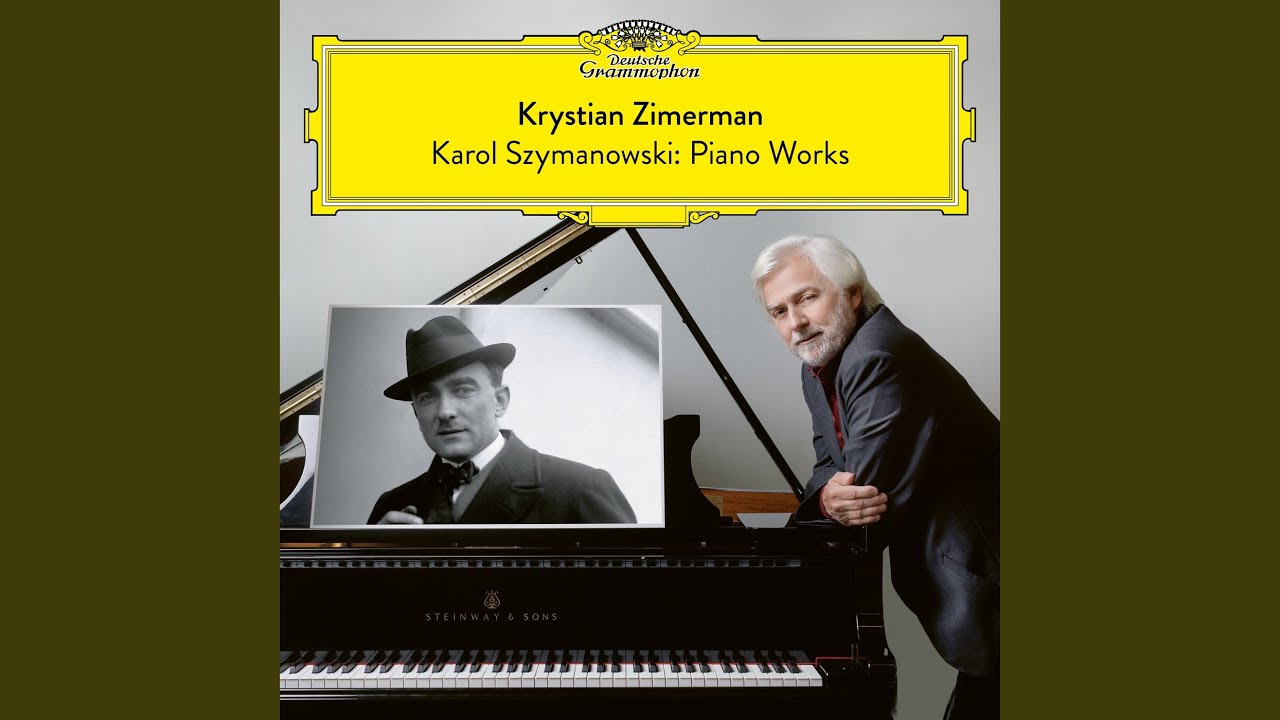
Szymanowski: 9 Preludes, Op. 1 - No. 1 in B Minor. Andante ma non troppo
Krystian Zimerman Net Worth
As of 2026, some online entertainment and finance sites estimate Krystian Zimerman’s net worth to be between $3 million and $11 million. However, these figures come from non-specialist websites and have not been confirmed by major financial media.
Zimerman earned this wealth through decades as a world-class concert pianist and conductor, including winning the 1975 Chopin Piano Competition. He has toured internationally and recorded extensively throughout his career. He has taught piano at the Basel Music Academy since 1996. Most of his income comes from concert performances, recordings, and teaching.
FAQs
Q1: Who Is Krystian Zimerman?
Krystian Zimerman is a Polish concert pianist internationally recognized for his interpretations of Chopin, Beethoven, and Brahms. He is regarded as one of the most exacting and selective pianistsof his generation.
Q2: Why Is Krystian Zimerman Considered An Important Pianist?
He gained international prominence after winning the 1975 International Chopin Piano Competition. His career is marked by meticulous preparation, rare performances, and a highly influential recording legacy.
Q3: What Recording Label Is Krystian Zimerman Associated With?
Krystian Zimerman has been an exclusive artist with Deutsche Grammophon since the late 1970s. Most of his major recordings have been released under this label.
Q4: Does Krystian Zimerman Still Perform Publicly?
Yes, he continues to perform selectively at major concert halls worldwide. His appearances are infrequent but attract significant attention due to his reputation and artistic standards.
Q5: What Is Known About Krystian Zimerman’s Net Worth?
No verified financial authority has published an official estimate of Krystian Zimerman’s net worth. Any figures found online are unofficial and not confirmed by major financial publications.