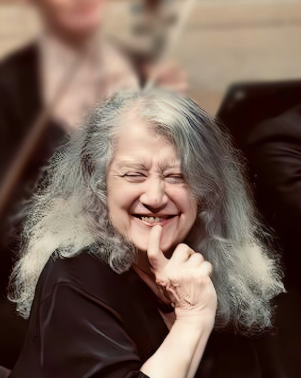
Martha Argerichwas born on June 5, 1941 in Buenos Aires, Argentina. She grew up in a family with Catalan and Jewish heritage, and her father worked as a mathematics professor while her mother came from a Jewish family with roots in the former Russian Empire. Argerich showed exceptional musical ability in early childhood and was able to play melodies on the piano by ear at the age of three.
Her parents arranged formal lessons for her, and at five years old she began studying with the Argentine teacher Vincenzo Scaramuzza. She continued her early education in Buenos Aires before her family moved to Vienna in 1955 so she could pursue further musical studies with Austrian pianist Friedrich Gulda.
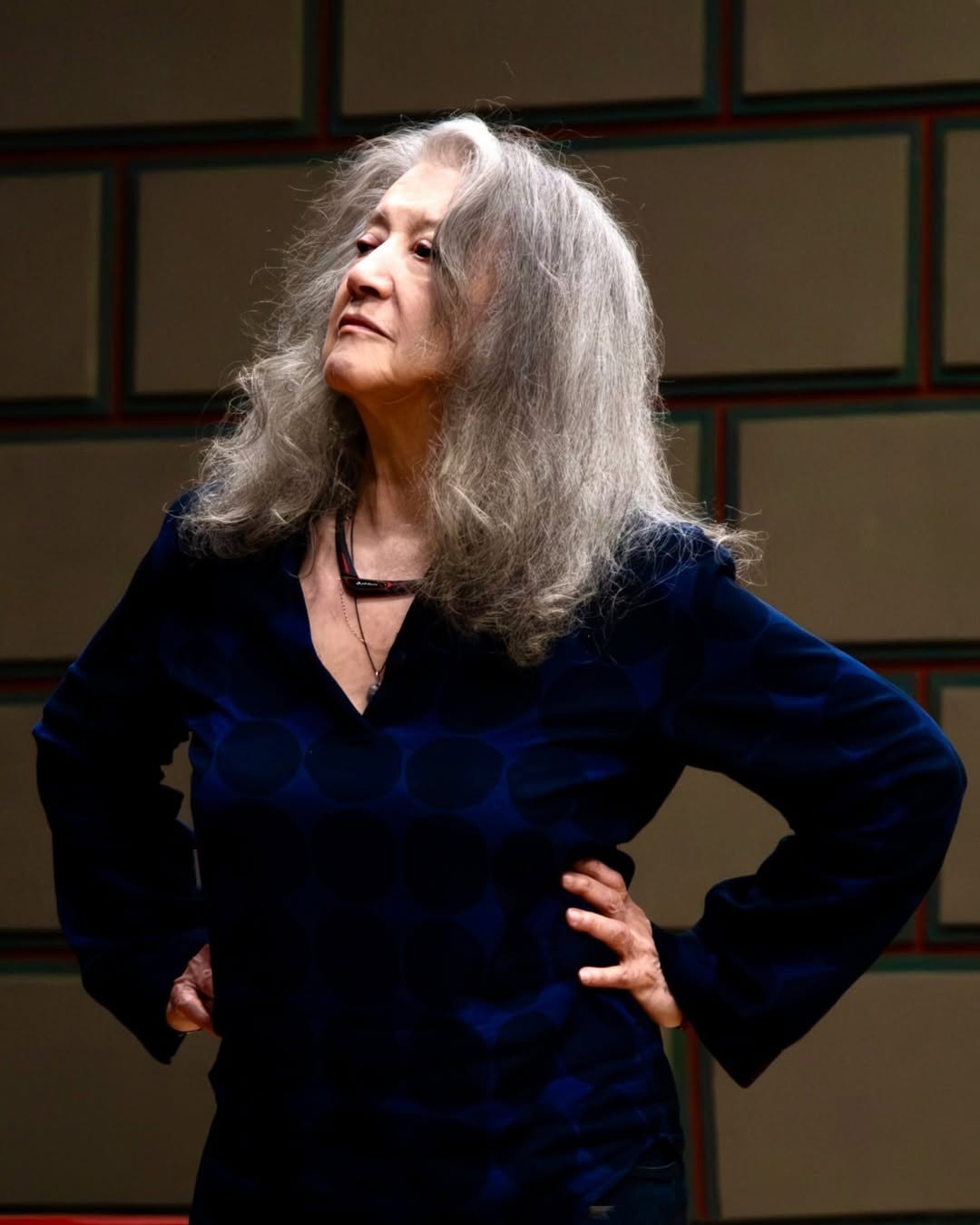
| Birth & Early Life | Born 1941, Argentina. |
| Early Talent | Playing piano by age 3. |
| Training | Studied in Buenos Aires & Europe. |
| Major Wins | Won Chopin 1965. |
| Breakthrough | Big debut in 1968. |
| Recordings | Works with Deutsche Grammophon. |
| Honors | Multiple Grammy & global awards. |
| Festival Roles | Leads Beppu & Hamburg festivals. |
| Current Work | Performs, mentors, selects prize winners. |
| Net Worth (2025) | $1–$8 million. |
Early Career
Martha Argerich (born 1941 in Buenos Aires) showed prodigious talent from a young age. She gave her first public recital at eight, performing Mozart, Beethoven and Bach from memory. In 1955 her family moved to Europe so that she could study with master teachers such as Friedrich Gulda in Switzerland and Arturo Benedetti Michelangeliin Italy.
Argerich quickly made her mark by winning major competitions as a teenager: at 16 she claimed top prizes in both the Geneva International Piano Competition and the Ferruccio Busoni Competition. In 1965 she won the prestigious International Chopin Piano Competition in Warsaw, and the following year (1966) she made her U.S. debut with New York’s Lincoln Center Great Performers series. These early successes established her on the international concert stage.
Career Growth & Key Roles
After her early triumphs Argerich embarked on a full international concert career. She made her European and American concerto debuts in the late 196s, often playing standard Romantic works and modern concertos. In 1968 she gave a celebrated debut with the Berliner Philharmoniker under Claudio Abbado, performing Bartók’s Third Piano Concerto to wide acclaim.
Over the years she has added a broad repertoire of concertos to her programs including works by Tchaikovsky, Ravel, Chopin, Prokofiev, Beethoven and Schumann appearing with leading orchestras and conductors worldwide. She has also enjoyed a longstanding recording partnership with the Deutsche Grammophon label, producing many highly regarded albums of solo and chamber music (Steinway notes her “lengthy and fruitful association” with DG).
Argerich is especially renowned as a collaborative pianist. After the early 1980s she largely abandoned the solo recital, preferring to play concertos and chamber works. This shift reflected her own performance philosophy: as she noted, “Some people play according to plan, but I don’t. Instinct and intuition are extremely important”. She has also said that solo performance can feel lonely, noting that she “doesn’t like to be observed very precisely”.
In practice this led Argerich to partner with many of the world’s great musicians. She has performed and recorded frequently with violinists Gidon Kremer and Gil Shaham, cellists Mstislav Rostropovich and Mischa Maisky, and pianistsNelson Freire and Stephen Bishop-Kovacevich, among others. Each of these partnerships showcased her fiery intensity and technical brilliance in duo and chamber settings.
Alongside performing, Argerich has taken on key leadership and mentorship roles. She serves as President of Honor of the International Piano Academy at Lake Como in Italy (an institution dedicated to advanced piano training). In 1996 she founded the Argerich Music Festival and Academy in Beppu, Japan, and has been its artistic director ever since. This annual festival brings together top and emerging artists for concerts and masterclasses in Beppu.
In 2018 she became curator of the Martha Argerich Festival in Hamburg, Germany, presented by the Symphoniker Hamburg. As curator and headliner, Argerich oversees programming that blends classical, jazz and other genres, often inviting her favorite colleagues to join the stage. She is also frequently invited to serve as juror on major international piano competitions, reflecting her standing as an influential mentor of younger pianists.
Major Achievements
Argerich’s artistry has been recognized with many of the highest honors in classical music. Key achievements include:
- Grammy Awards:She has won three Grammy Awards for Best Instrumental Soloist (with orchestra or chamber ensemble) in 1999, 2004 and 2005 for her acclaimed recordings.
- Praemium Imperiale (2005):The Japan Art Association awarded her this prestigious international prize for music, honoring her lifetime contributions to the arts.
- Order of the Rising Sun (2005):The Japanese government conferred this decoration for her outstanding cultural achievements.
- Kennedy Center Honors (2016):The United States honored Argerich with a Kennedy Center Award, recognizing her distinguished career in American and global arts.
- Competitions and Festivals in Her Name:Buenos Aires established the Martha Argerich International Piano Competition in 1999. Since 2001 she has directed an annual music festival in Buenos Aires bearing her name. These events are part of her legacy of promoting piano artistry in her home country.
Each of these milestones reflects Argerich’s impact and stature. Critics and colleagues alike often cite her as one of the defining pianists of her era.
Recent Developments
In her eighties, Martha Argerich remains active and influential in the music world. She continues to perform as a soloist and chamber musician on major stages: in recent years she has toured Europe and Asia playing concerto repertoire (including Beethoven, Ravel and Schumann concertos) with leading orchestras. She also remains deeply involved with the festivals she founded.
The Hamburg festival under her name (now in its sixth season) recently expanded into multiple venues across the city. Argerich described the 2024 festival as a “festive journey through the city,” saying “I’m really looking forward to meeting my Hamburg audience again and hope they will share my excitement on this journey… This is something quite rare and very important to me!”.
Argerich’s commitment to young musicians is also a hallmark of her recent work. In 2024 Steinway & Sons established the “Martha Argerich Steinway Prize” to honor exceptional young pianists. The €4,000 award is presented at the Hamburg festival, and Argerich personally selects the winner. In its first two years the prize has highlighted rising stars for example, the 2025 awardee was chosen by Argerich for his “profound sensitivity…great stylistic flexibility, and dazzling virtuosity”.
Overall, Argerich’s recent career developments combine continued touring and recording with innovative festival curatorship and education. She remains a driving force both on the piano bench and behind the scenes, inspiring audiences and young pianists around the world.
Martha Argerich Net Worth
As of 2026, Martha Argerich’s net worth is estimated to be between $1 million and $8 million based on figures published by online celebrity finance outlets. These estimates are not confirmed by major business publications, so they should be treated as general public approximations.
Her income comes from her long career as a classical concert pianist, including international performances, teaching work, and recording activity. She continues to maintain her financial standing through ongoing musical projects and decades of worldwide concert appearances.