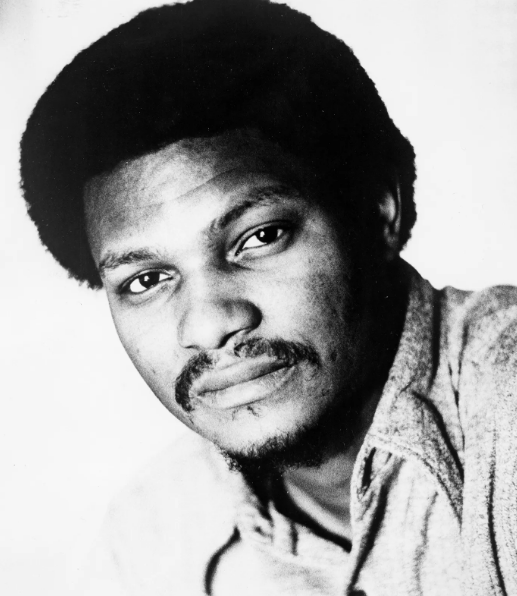
McCoy Tynerwas born on December 11, 1938 in Philadelphia, Pennsylvania. He was the eldest of three children. His family had roots in North Carolina, and his father sang in the church choir while his mother ran a beauty salon. Tyner grew up at the corner of May Street and Fairmount Avenue in North Philadelphia. He later described this neighborhood as mostly working-class and “kind of... integrated” during his youth.
Tyner attended Martha Washington Elementary School, Sulzberger Junior High School, and West Philadelphia High School. Alongside general schooling, he pursued formal music study. He took piano lessons at the West Philadelphia Music School and later at the Granoff School of Music. Encouraged by his family and teachers, he began studying piano around age 13.
By his mid-teens music had become his main focus. His mother, Beatrice Tyner, even saved money to buy him a piano when he was about 14, which she placed in the family home (above her beauty salon) so he could practice. Tyner recalled often practicing and even performing in his mother’s salon, where customers would listen to his band playing among the hair dryers and chairs.
Philadelphia’s lively jazz scene also shaped Tyner’s early development. He grew up listening to local jam sessions and surrounded by talented neighbors. In particular, bebop pianistsBud Powelland his brother Richie lived in the neighborhood, and their playing influenced Tyner’s style. By age 15, he had formed his first band – a seven-member rhythm-and-blues group.
Tyner later noted that “before I had a jazz band I had an R&B band” as a teenager. This combination of home training, formal lessons, and active participation in Philadelphia’s jazz community gave him a strong foundation in music during his youth.
| Aspect | Details |
| Full Name | Alfred McCoy Tyner |
| Date of Birth | December 11, 1938 |
| Birthplace | Philadelphia, Pennsylvania |
| Family Position | Eldest of three children |
| Family Roots | North Carolina |
| Father’s Role | Church choir singer |
| Mother’s Profession | Beauty salon owner |
| Childhood Area | North Philadelphia |
| Neighborhood Character | Working-class, integrated |
| Elementary School | Martha Washington Elementary |
| Junior High School | Sulzberger Junior High |
| High School | West Philadelphia High School |
| Music Education | Local music schools |
| Piano Studies Began | Around age 13 |
| Date of Death | 81 years old |
Career Beginnings
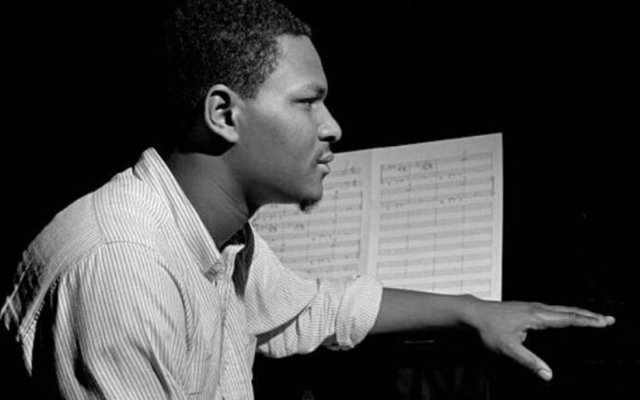
McCoy Tyner got his start in jazz playing Philadelphia clubs as a teenager and soon joined a professional group. In 1959 he became the pianist for Art Farmerand Benny Golson’sJazztet, making his recording debut on the album Meet the Jazztet. Shortly thereafter he was invited to join saxophonist John Coltrane’s new quartet.
In 1960 Tyner left the Jazztet and replaced Steve Kuhnin the John Coltrane Quartet. This proved a turning point: Tyner spent the next five years as Coltrane’s pianist, alongside Elvin Jonesand Jimmy Garrison, establishing himself on the international jazz scene. During this period he honed his trademark modal and percussive piano style while touring widely and recording landmark albums.
International Breakthrough
Tyner’s years with the Coltrane Quartet (1960–1965) brought him global recognition. He played on the group’s landmark Impulse! label recordings, including My Favorite Thingsand A Love Supreme. These classic albums, and extensive international touring, made Tyner known worldwide. By 1965 he had helped define a new sound in modern jazz with Coltrane’s “sheets of sound” style.
After leaving the quartet, Tyner launched his career as a bandleader. He debuted as a leader on the 1963 album Inceptionand quickly recorded other early leader albums (such as Nights of Ballads & Bluesand Reaching Fourth) on the Impulse! label. In 1967 he signed to Blue Note Records and released The Real McCoy, an album often regarded as a hard bop classic. These recordings cemented his reputation as a major jazz composer and pianist in his own right.
Major Performances & Concert Highlights
Over his career Tyner appeared at premier jazz venues and festivals around the world. He headlined at notable jazz clubs such as New York’s Village Vanguard and Blue Note, and performed at major festivals including Montreux and North Sea. In 1978 he toured extensively as part of the “Milestone Jazz Stars” quartet with saxophonist Sonny Rollins, bassist Ron Carter, and drummer Al Foster, which brought his music to audiences across the U.S. and Europe.
Decades later he continued to draw large audiences: for example, in 2019 he made a special appearance at Jazz at Lincoln Center (New York) with saxophonist Charles McPherson and the Jazz at Lincoln Center Orchestra. In that concert Tyner played big-band arrangements of his own compositions before a live audience. Throughout his career he also led his own ensemble in prestigious live recordings — for instance, the 1989 album Uptown/Downtowncaptured Tyner’s big band in concert at the Blue Note jazz club in New York.
Recordings & Discography
Tyner’s discography as a leader is extensive and varied, reflecting his evolving artistry. His early solo work was released on Impulse! (1962–64), and later on Blue Note in the late 1960s. Landmark albums include Inception(1962, Impulse!), Reaching Fourth(1963, Impulse!), and the highly acclaimed The Real McCoy(1967, Blue Note), which features Joe Henderson, Ron Carter, and Elvin Jones. In the 1970s Tyner moved to Milestone Records, where he explored wider sounds: albums like Sahara(1972) and Song for My Lady(1973) introduced African and world-music influences into his jazz.
Also in the 1970s he expanded to larger formats with works such as Song of the New World(1973) and Fly with the Wind(1976), the latter blending orchestral strings with his jazz ensemble. Tyner continued recording prolifically through the 1980s and 1990s. His releases during this time included quartet, trio, and big-band projects – for example, Quartet(recorded 2006, released 2007 on his McCoy Tyner Music label) featured Joe Lovano, Christian McBride, and Jeff “Tain” Watts, while Guitars(2008) teamed him with several guest guitarists.
Altogether Tyner made dozens of albums under his own name (as well as countless guest appearances), ranging from solo piano and small-group sets to large ensemble works.
Awards & Professional Recognition
| Recognition | Details |
| Grammy Awards | Five Grammy Awards across small group and large ensemble categories |
| Notable Grammy Wins | Blues for Coltrane (1987), The Turning Point (1992), Journey (1993) |
| DownBeat Magazine | Pianist of the Year, Critics Poll (1974–1977) |
| Lifetime Achievement | Jazz Journalists Association Lifetime Achievement Award (2018) |
| Academic Honors | Honorary doctorates from Berklee College of Music and Duke University |
| Industry Recognition | Steinway Gold Medallion for 50 years as a Steinway Artist |
Tyner’s contributions were widely honored throughout his career. He won five Grammy Awards, including Best Jazz Instrumental Album for Blues for Coltrane: A Tribute to John Coltrane(1987), Infinity(1995) and Illuminations(2004), as well as Best Large Jazz Ensemble Album for The Turning Point(1992) and Journey(1993).
ts, jazz’s highest honor in the United States. Critics and peers likewise recognized his influence: he was voted Pianist of the Yearin DownBeatmagazine’s critics poll four years running (1974–77) and in 2018 he received a Lifetime Achievement Award from the Jazz Journalists Association.
He also received honorary doctorates (for example from Berklee College of Music and Duke University) and a Steinway Gold Medallion, marking 50 years as a Steinway Artist.
Collaborations With Orchestras & Conductors
Though best known for his jazz bands, Tyner occasionally worked with larger ensembles. In the early 1970s he wrote ambitious arrangements for brass and strings. His Milestone album Song of the New World(1973) featured a full brass section and a string ensemble (on two tracks) conducted by William Fischer. The 1976 album Fly with the Windlikewise included a chamber orchestra of woodwinds and strings behind his trio.
Tyner also led a big band of jazz soloists at times (as on the live album Uptown/Downtown, 1989). Late in life he collaborated with symphonic-style ensembles: notably, in 2019 he appeared with the Jazz at Lincoln Center Orchestra (under bandleader Wynton Marsalis) in New York, performing newly arranged big-band versions of his compositions. These projects show how he integrated classical instrumentation and orchestration into his jazz vision when the occasion called for it.
Recent Career Activity
In the 2000s Tyner’s recording activity wound down, but he remained an active performer. His final studio recordings were made in 2006–2007, including the live quartet album Quartet(2007). After that he largely stopped issuing new albums, though he continued to tour and play live into the 2010s. He maintained a regular trio (often with bassist Avery Sharpe) and performed at jazz festivals and clubs worldwide.
He was featured at the Blue Note Jazz Festival (New York) and at European festivals like North Sea and Gent in the late 2010s. One of his last major performances was the 2019 concert in New York with Charles McPherson and the Jazz at Lincoln Center Orchestra. After those engagements Tyner gradually retired from performing.
McCoy Tyner Performance Highlights
- Late-career tours and collaborations:Tyner continued to perform and tour through his 70s. He co-led a touring quartet with alto saxophonist Gary Bartz(a longtime colleague) well into the 2010s. In his final years he led a core quartet with saxophonist Sherman Irby, bassist Gerald Cannonand drummer Francisco Mela, and still delivered highly energetic sets at the piano.
- Blue Note Jazz Festival (NYC 2018):In June 2018 Tyner’s quartet headlined two back-to-back shows at New York’s famed Blue Note Jazz Club as part of the annual Blue Note Jazz Festival. These appearances were major events on the city’s jazz calendar, drawing enthusiastic audiences.
- Jazz at Lincoln Center tribute (April 2019):Tyner co-headlined a two-night “80th birthday” concert at Jazz at Lincoln Center’s Rose Theaterin New York City, performing new big-band arrangements of his tunes with saxophonist Charles McPhersonand the Jazz at Lincoln Center Orchestra. This high-profile event showcased his music in a prestigious setting.
- SFJAZZ Center tribute (June 2016):He was a featured guest in an all-star “McCoy Tyner & Friends” concert at SFJAZZ (San Francisco), sharing the bill with Chick Corea, Joe Lovano, Geri Allenand others. This multi-generation tribute highlighted Tyner’s influence by having leading jazz musicians perform his repertoire.
- Notable venues and residencies:Throughout his later career Tyner regularly performed at elite jazz venues and festivals worldwide. In addition to New York clubs and festivals, he appeared at major events such as North Sea Jazz and Dizzy’s Club and led performances that were frequently sold out, reflecting his stature among jazz audiences (e.g., multiple engagements at Blue Note and Dizzy’s Club in the 2010s).
McCoy Tyner’s Piano Style And Musical Interpretation
Technical Approach And Piano Control
Tyner’s technique centered on a powerful, highly controlled left hand. He often planted low octaves and fifths with a firm, sustained attack, using the sustain pedal to hold resonant bass tones under his comping. From there he would leap into midrange passages of open-voiced chord clusters (frequently built on stacked fourths), creating a broad harmonic foundation.
In contrast, his right hand remained highly agile and precise. It delivered fast runs and modal lines with crisp articulation, often punctuated and detached. Analysts note that Tyner frequently played his right-hand figures without heavy use of the thumb, a constraint that lent those lines a bright, percussive clarity (similar to early harpsichord technique).
This extreme hand independence meant Tyner could lock the left hand into one rhythmic pattern while the right hand spun an independent counter-rhythm or melody. His overall control was meticulous: even in blistering passages his attacks were clean and every note clearly articulated.
In performance he displayed a wide dynamic range, from whispering pianissimos to thunderous fortes, all executed with exceptional touch and evenness.
Tone, Touch, And Sound Color
Tyner’s tonal palette was remarkably broad and rich. He favored big, open chord voicingsthat produced a ringing, bell-like sonority rather than the tightly closed chords of earlier jazz pianists. This use of quartal harmonies and open spacingsgave his chords a luminous shimmer, and when struck with force they could linger in the air like tolling bells.
In aggressive passages his touch was extremely percussive – he could slam the keyboard with full weight, causing the piano to growl with resonant overtones. Yet Tyner was equally capable of restraint. On ballads or lyrical numbers, he could coax a warm, singing tone, using gentle legato and subtle dynamics to sing out a melody.
His playing often carried a bluesy, gospel-tinged warmtheven amid complex harmonies, giving the music emotional depth. Critics have noted this balance in his sound: one moment the piano might sound massive and orchestral, the next moment tender and intimate.
Tyner’s use of pedal and spacing also contributed to color – by leaving space in his chords and keeping many voicings open, he allowed sympathetic resonance and overtones to enrich the sound. In sum, his touch combined dramatic force and sensitivity, enabling everything from aggressive cluster strikes to delicate, lyrical shading.
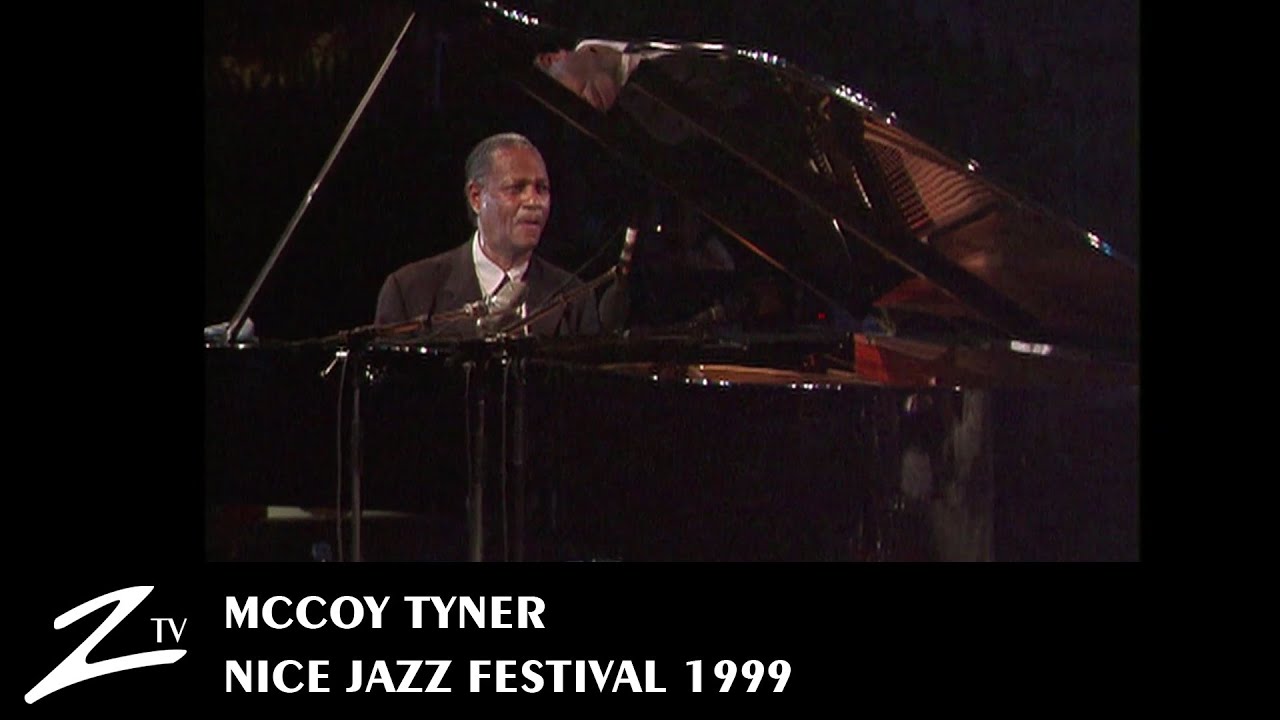
McCoy Tyner - Nice Jazz Festival 1999 - LIVE HD
Rhythm, Phrasing, And Structural Clarity
Rhythm was at the heart of Tyner’s playing. His left-hand patterns often acted like an additional drummer, laying down a steady, insistent grooveunder the music. With a drum-like attackon the low end, he could lock tightly with the drummer’s pulse.
Simultaneously, the right hand spun off syncopated figures or melodic phrases. This resulted in a layered, polyrhythmic effect: the left hand might maintain a simple ostinato of bass notes and chord hits, while the right hand played across or against that pulse in intricate ways.
Tyner also frequently used double-time passages and cross-rhythms, giving his solos a sense of forward momentum and rhythmic excitement even as the underlying tempo remained constant.
Structurally, Tyner’s phrasing was logical and well-defined. He was praised for his clarity of musical ideasand an innate sense of form. Rather than aimlessly darting through the changes, he often introduced clear motifs or sequences of notes and developed them coherently over the course of a solo.
When improvising on a tune, he would in effect rebuildits structure from the inside: establishing a theme or pattern and then elaborating it. John Coltrane himself noted Tyner’s “exceptionally well developed sense of form.”
In practice this meant that a Tyner solo felt like a complete musical statement with a beginning, middle, and end. Phrasings were often balanced, with deliberate breathing points and returns to earlier material, so that even his most exuberant solos had an underlying order.
This combination of rhythmic drive and formal clarity allowed the listener to feel both the raw energy and the architectural coherence of his playing.
Interpretative Approach To Repertoire
Tyner approached any repertoire as a framework for personal reinterpretation. In jazz standards and show tunes, he rarely simply recited the original changes; instead he reharmonized and reimaginedthem according to his own style.
For instance, when tackling a familiar ballad or Broadway number, he might lay out the opening melody straight but then accompany it with lush, modal voicings and unexpected chord shifts. He often infused standard material with Latin and African rhythmic elements, giving familiar songs a new groove.
Tyner had a deep respect for melody, so he typically preserved the song’s core theme, but he layered it with his modal and quartal sensibilities. On up-tempo tunes he would drive the tempo firmly with his bass and accentuate the head in a straightforward manner.
He then launched into complex, cascading runs in the solo. On slower pieces he often took time to breathe, using softer touch and rich harmony to bring out the tune’s emotion.
Notably, in interviews Tyner described his improvisational style as an “adventure” that takes the listener on a journey: he experimented freely within a piece, but always “brought them back” to familiar ground by the end of a phrase.
In his later career he even applied this approach to non-jazz material – for example, on a project of Burt Bacharach songs he treated those pop melodies with jazz harmonization and swing.
Although Tyner seldom performed European classical works in concert, he openly cited Impressionist and modern composers (like Debussy, Stravinsky, Ravel) as influences on his harmonic thinking. This classical sensibility helped him color jazz and popular tunes in new ways, using intervals and sonorities that were fresh in a jazz context.
In all cases, Tyner’s interpretations were unmistakably his own: he had a knack for taking any material, no matter how ordinary, and filtering it through his unique voice.
Balance Between Precision And Expression
Even at his most fiery, Tyner’s playing never lost precision. His strong left hand provided a metronomic foundation– he himself noted that this steady pulse allowed Coltrane and others to rely on the time even when the music got intense.
This exactness meant that fast runs and big chords always landed crisply in time. At the same time, Tyner was a deeply expressive player. He balanced technique and feeling so that neither overshadowed the other.
For example, he would build a solo to a powerful climax, but each build-up was carefully shaped; the resulting outburst was thus both thrilling and perfectly controlled. Conversely, when he needed tenderness or nuance, he had the command to pare back completely.
One moment might have him pounding out chords at full volume, the next moment he could play a simple five-note figure with pianissimo delicacy. His dynamics were highly intentional.
Many observers note that his music always “breathed” – even in dense chordal passages he left space and silence at opportune moments, which heightened the expressive effect. In effect, Tyner’s discipline of techniquewas what gave depth to his expression: his emotional gestures were grounded by the certainty that every note would speak clearly.
Critical Observations And Musical Identity
Across decades, critics have consistently emphasized Tyner’s singular identity. He did not fit into any existing piano school; rather, he helped forge a new one.
Reviewers often pointed out that his sound and approach “dropped a bomb”on jazz piano, creating a clear dividing line between what came before and after Tyner. One noted that he made the piano “sound like an orchestra,” reflecting how his dense chords and rich textures filled the music as if many instruments were playing.
His style was frequently described as a blend of inherited traditions and radical innovation: he could draw on the flowing virtuosity of Art Tatumor the bebop shell-chords of Bud Powell, yet he fractured and expanded those influences into something new (much as Monk had done).
What set Tyner apart was that in the end no one else sounded like him. Even pianists who studied his methods often struggled to replicate his exact sound and energy.
Over time, most analyses of Tyner have highlighted the consistency of his signature elements – the fierce left-hand drive, the quartal chords, the blues-tinged melodies – as well as the unmistakable passion behind them.
In short, Tyner’s musical identity came to be seen as both highly original and tremendously influential: he stands among the most authoritative voices in jazz piano history, and his innovations continue to resonate in the playing of generations of musicians.
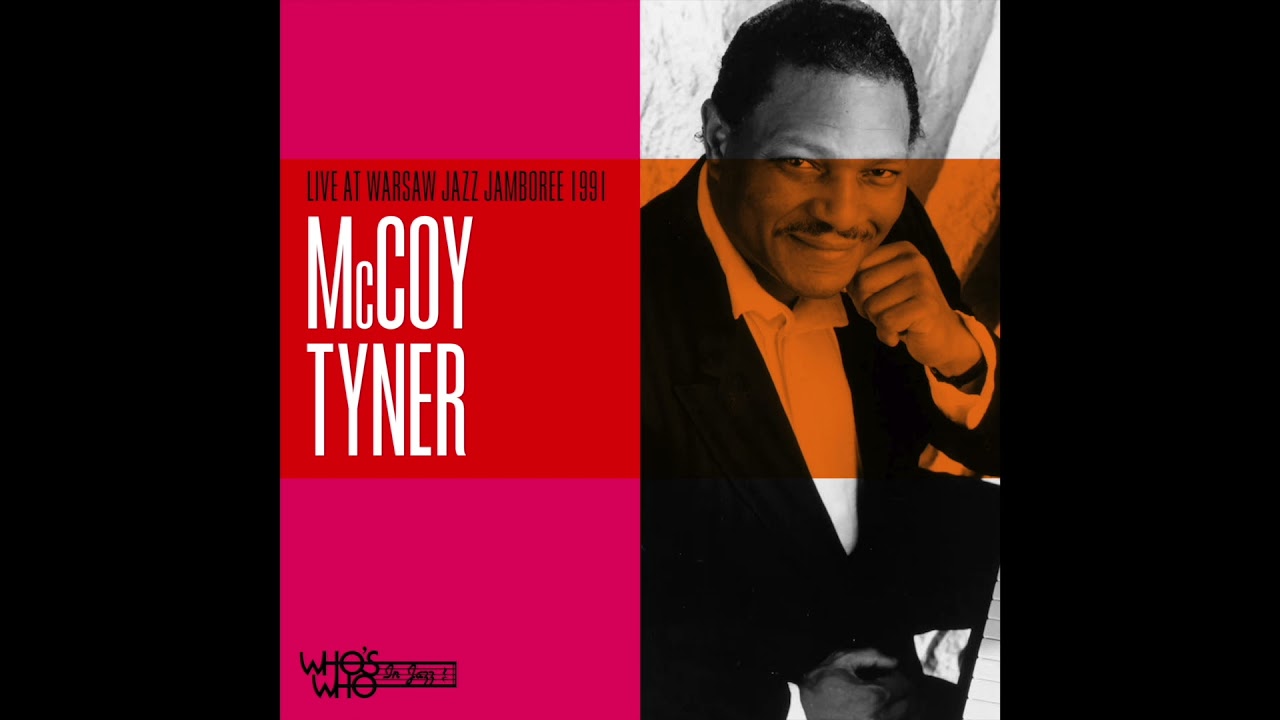
McCoy Tyner - You Taught My Heart to Sing: Live at Warsaw Jazz Jamboree 1991, Monk's Dream
McCoy Tyner Net Worth
At the time of his death, reliable sources had not published an estimate of McCoy Tyner’s net worth. He earned his wealth through decades of work as an American jazz pianist and composer. He recorded dozens of albums and toured internationally, expanding his audience and generating income from performances.
Tyner was widely known for his work with the John Coltrane Quartet in the early 1960s, as well as for his long and influential solo career afterward. Over the course of his career, he received numerous honors, including five Grammy Awards, reflecting his lasting success in the music industry.
FAQs
1. Who Was McCoy Tyner And Why Is He Important In Jazz History?
McCoy Tyner was an American jazz pianist and composer best known for his work with the John Coltrane Quartet. He played a major role in shaping modern jazz piano through his powerful modal style and innovative harmony.
2. What Piano Style Is McCoy Tyner Known For?
McCoy Tyner is known for his strong left-hand technique, quartal (fourth-based) harmonies, and percussive attack. His style helped redefine jazz piano during the 1960s and influenced many later musicians.
3. Which Albums By McCoy Tyner Are Considered Essential?
Widely regarded essential albums include The Real McCoy, Inception, Reaching Fourth, and Sahara. These recordings showcase his development as a composer, bandleader, and innovator.
4. Did McCoy Tyner Win Any Major Awards?
Yes, McCoy Tyner won five Grammy Awards during his career. He also received multiple lifetime achievement honors recognizing his long-term influence on jazz.
5. When Did McCoy Tyner Stop Performing And Recording?
McCoy Tyner’s final studio recordings were made in the mid-2000s, and he gradually reduced live performances in the late 2010s. His last major public appearances took place in 2019.
6. When Did McCoy Tyner Die And What Was The Cause Of His Death?
McCoy Tyner died on March 6, 2020, at the age of 81. His family did not publicly disclose a specific cause of death.