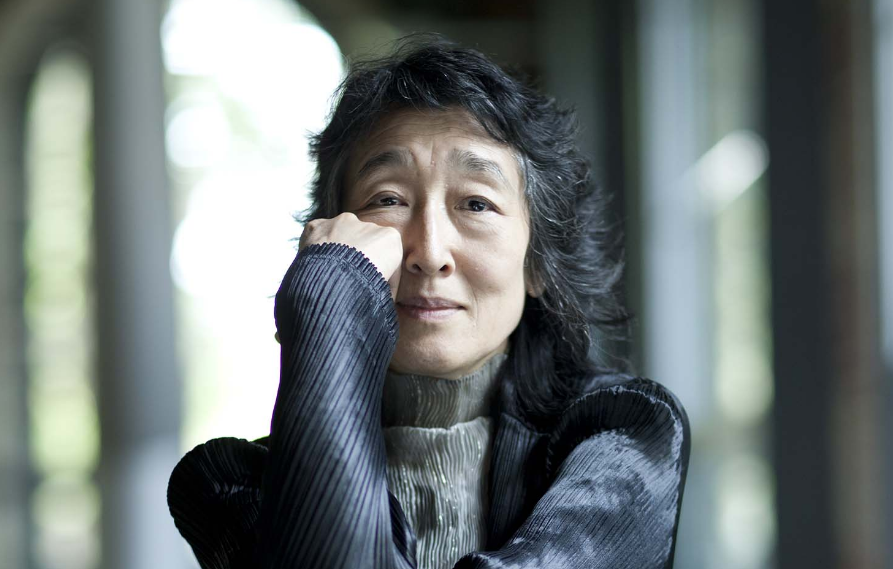
Mitsuko Uchidawas born on 20 December 1948 in Atami, a coastal town in Japan’s Shizuoka Prefecture. She was the youngest of three children in a family that was not musical by tradition.
Her father served as a Japanese diplomat (with postings in wartime Europe and later as ambassador to Austria). According to Uchida, when her father returned from overseas service he immediately asked why his children were not taking piano lessons.
In keeping with his wishes, her older siblings began piano study first, and Mitsuko joined them at age three. Her mother encouraged this early training; Uchida later recalled her mother playing records of European masters (such as piano sonatas by Schnabel) at home during her childhood.
Early Education And Musical Training
Uchida received her first formal music education in Japan. She attended the Toho Music Schoolin Tokyo, one of Japan’s leading conservatories, during her childhood.
In 1960 (just before her 12th birthday) Uchida’s father was appointed ambassador to Austria, and the family moved to Vienna. In Vienna, Uchida enrolled at the Vienna Academy of Music, where she studied piano under Richard Hauser.
Two years later, when her parents returned to Japan, she chose to remain in Vienna to continue her studies. There she was also advised by the celebrated pianist Wilhelm Kempff.
Her upbringing, a mixture of disciplined Japanese upbringing and immersion in Vienna’s rich musical culture, provided the foundation of her early musical development.
| Category | Details |
| Full Name | Mitsuko Uchida |
| Date of Birth | 20 December 1948 |
| Place of Birth | Atami, Shizuoka Prefecture, Japan |
| Nationality | Japanese-born, British citizen |
| Profession | Classical Pianist |
| Primary Residence | United Kingdom |
| Musical Training | Toho Music School (Tokyo); Vienna Academy of Music |
| Teachers | Richard Hauser |
| Primary Repertoire | Mozart, Schubert, Beethoven, Schumann |
Career Beginnings
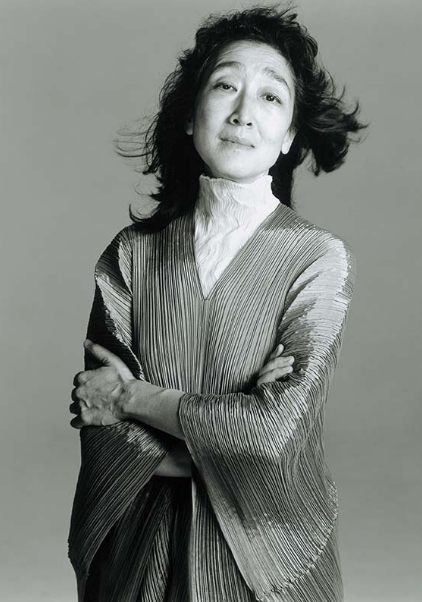
Mitsuko Uchida first gained international attention as a young pianist through major competition wins. In 1969 she won first prize at the International Beethoven Piano Competition in Vienna, and the following year she took second prize at the International Chopin Piano Competition in Warsaw. She continued to build her reputation by placing second in the Leeds International Pianoforte Competition in 1975. During this period Uchida also gave concert recitals across Europe, laying the foundation for her professional performing career.
International Breakthrough
Uchida’s career reached new heights in the early 1980s. In 1982 she presented a complete cycle of Mozart’s piano sonatas in London and Tokyo, a series of recitals that earned critical acclaim and established her as a leading Mozart interpreter. Two years later she made a landmark orchestral debut in 1984 with the Berlin Philharmonic under Sir Seiji Ozawa. These successes in European musical centers propelled Uchida onto the global stage, leading to an internationally acclaimed concert schedule.
Major Performances & Concert Highlights
- Cleveland Orchestra Artist-in-Residence (2002–2007):Uchida served as Artist-in-Residence with the Cleveland Orchestra for several seasons. In this role she not only performed but also directed all of Mozart’s solo piano concertos from the keyboard, creating a deep and influential partnership with the ensemble.
- Berlin Philharmonic Residency:In 2009 Uchida was featured as Artist-in-Residence with the Berlin Philharmonic, performing major works such as Schumann’s Piano Concerto under Sir Simon Rattle. This residency included both solo and chamber music concerts, highlighting her versatility.
- Carnegie Hall Perspectives (2022–2025):Uchida was honored with a three-season Perspectives residency at New York’s Carnegie Hall (2022/23 through 2024/25), focusing on Viennese composers and modern works. The series featured programs of Mozart, Schubert, Schoenberg, Beethoven and others, underscoring her breadth of repertoire.
- Ojai Music Festival (2024):In 2024 Uchida served as Music Director of the Ojai Music Festivalin California, curating the program and performing there. She has been praised for bringing her interpretive insight to festival programming.
- European Festival Engagements:Uchida is a frequent guest at major European festivals. She has been Artist-in-Residence at Vienna’s Konzerthausand Salzburg’s Mozartwoche (Mozart Week) and regularly appears at the Salzburg Festival. She has also performed at the Lucerne Festival and other international festivals, often featuring Mozart and Schubert programs.
Recordings & Discography
Mitsuko Uchida’s discography is extensive and acclaimed. She records exclusively for Decca Classics and has undertaken complete cycles of core repertoire. For example, she recorded all of Mozart’s piano sonatas (a project that won the Gramophone Award) and the complete Mozart piano concertos with the Cleveland Orchestra. Similarly, Uchida released all 21 of Schubert’s piano sonatas.
Her Beethoven output includes recordings of all five piano concertos (with conductor Kurt Sanderling) and the composer’s late piano sonatas. Uchida brings thoughtful interpretation to these works, reflecting her deep study of the scores. As she herself has noted, Mozart’s piano concertos “are infinitely deeper and varied, and each is an instrumental opera” – an insight echoed in her performances and recordings.
Her recordings have earned numerous awards. Uchida won Grammy Awards for her album of Mozart concertos with the Cleveland Orchestra and for a Schubert lieder recital with soprano Dorothea Röschmann. She also earned Gramophone Awards for several releases: for example, her recording of Schoenberg’s Piano Concerto (with Pierre Boulezand the Cleveland Orchestra) and her award-winning album of Debussy’s Études.
In 2022 she released a solo recording of Beethoven’s Diabelli Variations, which won the Gramophone Award for Best Piano recording and received a 2023 Grammy nomination. Across her discography, Uchida’s interpretations of Mozart, Beethoven, Schubert and modern composers have been celebrated for their clarity and insight.
Awards & Professional Recognition
Uchida’s achievements have been recognized with many top honors. She has won two Grammy Awards: Best Instrumental Soloist Performance (with orchestra) in 2011 for her Mozart concerto recording, and Best Classical Solo Vocal Album (as piano accompanist) in 2017 with Dorothea Röschmann. Her recordings have also earned multiple Gramophone Awards, including Best Concerto (Schoenberg Piano Concerto) and the 2022 Piano Award (Beethoven Diabelli Variations).
Uchida has received major distinctions from musical institutions and governments. She was made a Dame Commander of the Order of the British Empire in 2009, and in 2012 she was awarded the Gold Medal of the Royal Philharmonic Society. She has also been honored by Japan’s cultural awards, including the Praemium Imperiale (Japan Arts Association) and Salzburg’s Golden Mozart Medal in 2015. Other honors include the Wigmore Hall Medal (London), the Suntory Music Award (Japan), and honorary doctorates from Oxford, Cambridge and the Juilliard School. These recognitions reflect Uchida’s stature as one of the leading pianistsof her generation.
Collaborations With Orchestras & Conductors
Uchida has performed with virtually all the world’s major orchestras. Notable ensembles she has worked with include the Berlin Philharmonic, Royal Concertgebouw Orchestra, Bavarian Radio Symphony, London Symphony Orchestra, London Philharmonic Orchestra, and the Chicago Symphony. In recent years she has also toured extensively as Artistic Partner of the Mahler Chamber Orchestra (from 2016 onward) on projects such as a cycle of Mozart piano concertos in Europe, Japan, and North America.
She has collaborated with many of today’s leading conductors. Among them are Sir Simon Rattle, Bernard Haitink, Riccardo Muti, Esa-Pekka Salonen, Andris Nelsons, Vladimir Jurowski, Gustavo Dudamel, and Mariss Jansons. These partnerships have often involved symphonic and concerto performances as well as chamber concerts, highlighting Uchida’s role not only as a soloist but also as a musical leader at the piano (often conducting from the keyboard in Mozart concertos).
Recent Career Activity
Uchida remains very active in concert life. In recent seasons she has undertaken major projects and received new honors. She was named Musical America’s Artist of the Year in 2022 and served as Music Director of the Ojai Music Festival in California in 2024. Her Carnegie Hall Perspectives series (2022–2025), titled “Vienna Revisited,” showcased her interpretations of Mozart, Schoenberg, Schubert, and Brahms across three seasons. In 2022 she released her critically acclaimed recording of Beethoven’s Diabelli Variations, earning the Gramophone Piano Award for 2022 and a Grammy nomination in 2023.
In performance, Uchida continues to tour worldwide. She remains engaged as Artistic Partner of the Mahler Chamber Orchestra, performing Mozart concertos and chamber music in 2024–2025. She also appears regularly in solo recitals in major concert halls in Vienna, London, Paris, New York and Tokyo, and is a frequent guest at festivals such as Salzburg. Uchida’s career shows no sign of slowing: new concert projects and recordings are ongoing as she advances into 2025, maintaining her reputation for musical integrity and depth.
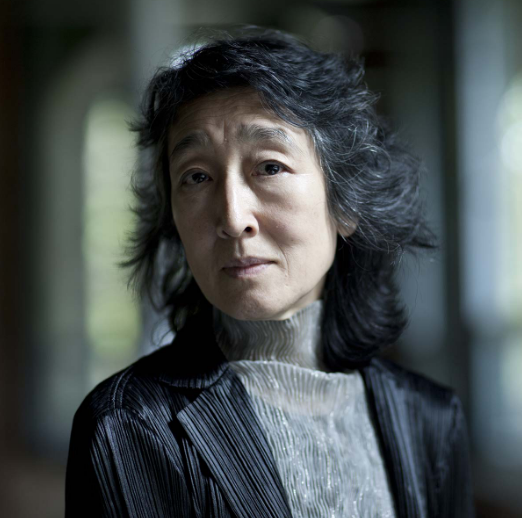
Mitsuko Uchida Performance (2025–2026)
- Jan–Feb 2025– Mahler Chamber OrchestraEuropean tour: Uchida served as pianist and director in a six-concert Mozart cycle, performing Mozart’s Piano Concertos Nos. 18 (K.456) and 21 (K.467) with Leoš Janáček’s wind sextet Mládí, at major venues from the Luxembourg Philharmonie through Dortmund, Hamburg, Vienna, Salzburg to London’s Southbank Centre.
- Feb 13, 2025 (UK)– Cedars Hall, Wells: Gave a solo recital featuring Beethoven’s Piano Sonata Op.90 in E minor and Schubert’s Piano Sonata in B flat major, D.960, focusing on late-period repertoire.
- Mar 2025 (USA)– Mahler Chamber Orchestra United States tour: Appeared as piano soloist and director in performances at Zellerbach Hall, Berkeley and Carnegie Hall, New York, presenting Mozart’s Piano Concertos in B flat major (K.456) and C major (K.467) alongside Janáček’s Mládí.
- Oct 28 and 30, 2025 (Tokyo)– Suntory Hall recitals: Presented a two-evening recital series devoted to Beethoven’s final three piano sonatas, continuing her role as Associate Artist at Suntory Hall.
- May 4 and 10, 2026 (Europe)– Cambridge and Lisbon: Performed solo recitals at West Road Concert Hall and the Gulbenkian Foundation, with Schubert’s Piano Sonata in G major, D.894 as a central work.
- May 13 and 16, 2026 (Europe)– Berlin and Vienna: Continued her European recital tour at the Pierre Boulez Saal and the Musikverein, again centering programs on Schubert’s Piano Sonata in G major, D.894.
Mitsuko Uchida’s Piano Technique And Interpretative Style
Technical Approach And Piano Control
Uchida’s piano technique is frequently described as highly refined and controlled. Critics note her deliciously controlled pitter-patter of fast passages and nimble fingerwork, reflecting precise digital articulation even in complex textures. Reviews often praise her clarity of attack, described as diamond-bright articulation coupled with keen tonal sensitivity in her playing.
Her execution of delicate, rapid figures is likewise highlighted, for example the Chopinesque scherzo in a Schubert sonata, played with vital fingerwork, showing smooth coordination and agility. Across repertoire, Uchida’s control extends to dynamic nuance. Observers note that she handles even Webern’s Variations with flawless control. In sum, her touch is executed with exactness, each note clearly defined, and technical passages conveyed with both confidence and finesse.
Tone, Touch, And Sound Color
Uchida’s tone production is often characterized as pure and crystalline. Observers frequently describe her sound as subtly radiant, with a famously pearly tone, and note that her tone is impeccably fine throughout entire performances. She is especially noted for her ability to produce extremely soft, singing tones, creating a sustained, whispered tone in pianissimo passages. Such delicate sound is balanced by adequate power when needed, bringing presence to fortissimo moments without harshness.
Her touch is often described as crystalline or luminous, particularly in Mozart, where her crystalline touch balances clarity and warmth. Observers also emphasize her nuanced color palette, even within quiet music, where she layers subtle shades. In Schubert’s late works, her playing has been praised for a finely detailed palette of subtle hues. Overall, Uchida’s touch yields a versatile sound that retains definition and clarity across the full dynamic range.
Rhythm, Phrasing, And Structural Clarity
Clarity in rhythm and phrasing is a hallmark of Uchida’s style. Reviewers note that her rhythms are precise and even, shaping every phrase impeccably with a sense of forward motion. Fast runs are articulated with driving energy and defined accents. Her phrasing in Classical repertoire is often described as alert and responsive to musical architecture.
In Mozart performances she displays constantly alert phrasing, giving each melodic line a graceful arc without lingering unnecessarily. This attentiveness extends to her handling of counterpoint, where critics note great clarity of line that makes interweaving voices transparent and coherent.
Uchida’s sense of large-scale structure is similarly commended. In Schubert’s Sonata in B flat, critics observed that she charted the vast span of the slow movement with a firm architectural grasp. Her interpretations often emphasize continuity between sections, maintaining momentum through dramatic contrasts so that the overall form remains clear. Despite rubato or textural contrasts, the music’s structure is consistently apparent. Her phrasing is precisely measured and thoughtfully organized, ensuring coherence across entire movements.
Interpretative Approach To Repertoire
In Classical works, Uchida brings a blend of elegance and intellectual depth. She is widely regarded as a leading Mozart interpreter. Critics often note that she adopts a modern rather than romantic style in Mozart, focusing on transparency and balance.
Her Mozart performances are described as gentle yet assured, drawing out lyrical writing without forcing tempi or dynamics. Each phrase emerges naturally, shaped clearly without undue ornamentation. In Beethoven, whose style bridges Classical and Romantic idioms, Uchida applies similar clarity. Reviews of her Beethoven sonatas emphasize her ability to bring Mozartean finesse to small details while sustaining long-term structure, with no sense of bombast even at climactic moments.
Uchida’s approach to Romantic repertoire is often introspective. In Schubert, her playing highlights lyricism and inner nuance. Critics praise her elegant touch and poetic phrasing in slow movements, though some note that she underplays the most dramatic extremes. With Schumann, commentators have observed eloquent expressivity and rhythmic vitality, describing her interpretations as gracious, elegant, and exuberant, while maintaining clear lines amid emotional intensity. She favors repertoire where clarity and lyricism are central, rather than works that emphasize sheer physical power.
She also approaches modern repertoire with the same clarity and discipline. In twentieth-century works, critics observe that she presents complex textures logically, making atonal passages sound coherent and almost melodic through flawless control. Across stylistic periods, Uchida interprets works on their own terms, applying consistent principles of balance, clarity, and structural awareness.
Balance Between Precision And Expression
Uchida’s playing exemplifies a careful balance between technical precision and expressive depth. She avoids gratuitous showmanship, using precision to serve musical meaning. In Beethoven, reviewers note the absence of bombast alongside full commitment to climactic moments. Dynamic gradation is carefully managed, with hushed pianissimos and controlled fortissimos. In virtuosic passages, clarity and rhythmic drive take precedence over speed alone, resulting in poised and articulate execution.
At the same time, Uchida brings sincerity and emotional depth to her interpretations. Critics often point to the seriousness beneath her refined surface, describing a seam of solemnity and devotion underlying her interpretations. In slow movements, her playing is deeply meditative yet never static. Every expressive gesture is carefully placed, avoiding exaggeration. Some commentators suggest that this restraint can feel overly controlled, but it reflects a deliberate aesthetic in which expression arises through nuance rather than excess. Her balance consistently favors musical coherence and thoughtful expression.
Critical Observations And Musical Identity
Critical consensus frames Uchida as an intelligent and consistent artist. She is frequently praised for subtlety and clarity, with critics remarking that rarely does a single note seem superfluous in her playing. Her tone and phrasing are described as impeccably fine and nuanced, lending refinement and continuity to her interpretations. Even dramatic works are shaped as cohesive narratives, guided by a strong sense of inner structure.
Some critics have noted that her disciplined approach can occasionally feel studied rather than spontaneous, with rhetorical pauses that articulate structure clearly but may interrupt flow. Others have observed that her dynamic contrasts can appear deliberately controlled rather than expansive.
These perspectives reflect an interpretative stance grounded in restraint and analysis rather than impulsiveness. Overall, Mitsuko Uchida’s musical identity is defined by transparency, intellectual rigor, and structural insight. Her interpretations of Mozart, Beethoven, Schubert, and selected modern works consistently reflect a balance between precision and expression, forming a distinctive and carefully considered artistic voice.
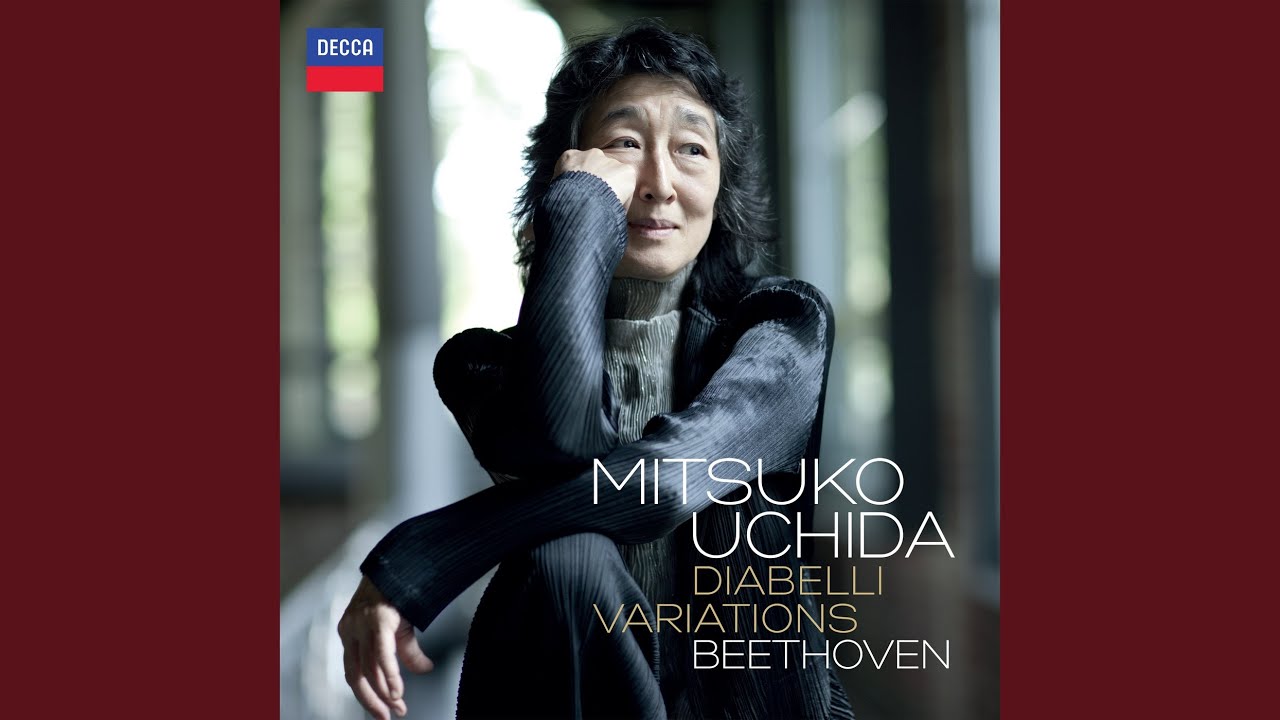
Beethoven: Diabelli Variations, Op. 120: Theme. Vivace – Var. 1. Alla marcia maestoso
Mitsuko Uchida Net Worth
As of 2026, Mitsuko Uchida’s net worth is estimated to be between $1 million and $3 million, though this figure comes from entertainment industry estimates and is not confirmed by major financial outlets. Her career as a classical pianist and conductor has generated her income through performances and recordings. She has appeared with many notable orchestras worldwide and recorded an extensive catalog of classical albums. Uchida also serves as co-artistic director of the Marlboro Music Festival and has conducted several orchestras. Her earnings mainly come from concert fees and recording royalties.
FAQs
Who Is Mitsuko Uchida?
Mitsuko Uchida is a world-renowned classical pianist of Japanese birth, internationally respected for her interpretations of Mozart, Schubert, and Beethoven. She is regarded as one of the leading pianists of her generation.
What Is Mitsuko Uchida Best Known For?
She is best known for her authoritative interpretations of Mozart’s piano works, particularly the piano sonatas and concertos. Her performances are admired for their clarity, balance, and structural insight.
Where Did Mitsuko Uchida Study Music?
She received her early musical education at the Toho Music School in Tokyo. After moving to Austria, she studied piano at the Vienna Academy of Music under Richard Hauser.
What Is Mitsuko Uchida’s Playing Style?
Her playing style is often described as refined, precise, and intellectually focused. She emphasizes tonal clarity, rhythmic control, and musical structure over virtuosic display.
What Is Mitsuko Uchida’s Estimated Net Worth?
Her net worth is publicly estimated to be between $1 million and $3 million. These figures are based on industry estimates and are not officially confirmed.
Is Mitsuko Uchida Still Performing?
Yes, she remains an active international performer. She continues to give solo recitals, perform with orchestras, and appear at major festivals in Europe, North America, and Japan.