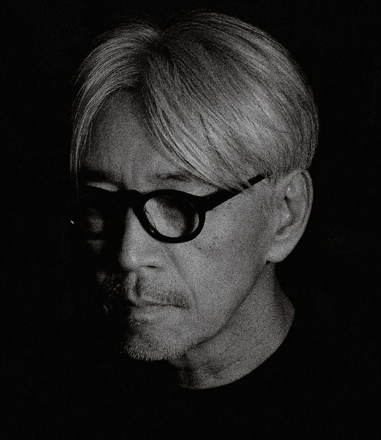
Ryuichi Sakamotowas born on 17 January 1952 in Tokyo’s Nakano ward. He grew up in a culturally rich household: his mother, Keiko (née Shimomura), was a hat designer and his father, Kazuki Sakamoto, was a literary editor. Sakamoto was an only child and from an early age was encouraged in the arts.
As a toddler he began playing the piano (around age 3), and by age ten he was formally studying music composition. He attended a progressive primary school in Tokyo (the same one Yoko Ono had attended) and was composing piano pieces by his early school years.
Early Musical Influences
Sakamoto’s youthful exposure to Western music was broad. He became captivated by popular rock bands such as The Beatles and The Rolling Stones. At the same time he developed a strong affinity for Western classical composers like Claude Debussy. Over his childhood and teenage years his tastes expanded to include avant-garde composers and jazz, notably John Cage, Pierre Boulez, György Ligeti, Karlheinz Stockhausen, and jazz musicians John Coltraneand Ornette Coleman. These diverse influences were noted by contemporary accounts of his youth.
Education And Musical Training
Sakamoto pursued formal music education in Tokyo. He enrolled at the Tokyo University of the Arts (also known as Tokyo National University of Fine Arts and Music) to study composition. He studied both composition and ethnomusicology during his time at Tokyo Geidai (circa 1970 onward). He completed undergraduate and graduate degrees in music there, earning a master’s degree in composition in 1976.
His academic training covered Western classical music and various world/ethnic music traditions, and it was also during this period that he first worked with electronic instruments (learning to use Moog and ARP synthesisers) as part of his compositional studies.
| Aspect | Details |
| Birth | Born on 17 January 1952 in Nakano, Tokyo |
| Family | Grew up in an artistic household |
| Parents | Mother was a hat designer; father a literary editor |
| Childhood | Only child, encouraged in the arts |
| Early Piano | Began playing piano around age three |
| Music Study | Studied composition by age ten |
| Schooling | Attended a progressive Tokyo primary school |
| University | Tokyo University of the Arts |
| Fields Studied | Composition and ethnomusicology |
| Degree | Master’s degree in composition (1976) |
Career Beginnings
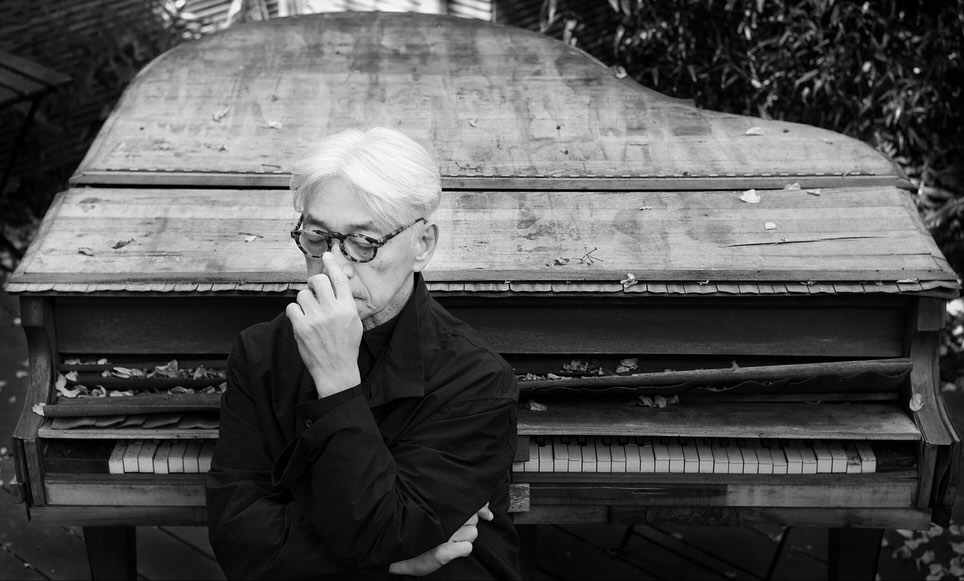
Ryuichi Sakamoto first rose to prominence in the late 1970s. While still a music student in Tokyo, he worked as a session musician and arranger, honing his production skills.
In 1978 he released his first solo album Thousand Knivesand co-founded the pioneering electronic trio Yellow Magic Orchestra (YMO) with Haruomi Hosono and Yukihiro Takahashi.
YMO’s innovative blend of synthesizers with pop and world-music elements made the band an early leader of synth-pop. As a solo artist, Sakamoto pursued experimental soundscapes, later remarking that “Anything can be music,” reflecting his belief in finding inspiration in everyday sounds.
International Breakthrough
In the early 1980s Sakamoto’s reputation spread beyond Japan. Yellow Magic Orchestra achieved international success, with its albums and tours introducing electronic pop to audiences in Asia, Europe and the Americas.
At the same time, Sakamoto branched into film scoring, which brought him global attention. He debuted as a composer (and actor) with Merry Christmas, Mr. Lawrence(1983), whose haunting theme, released as the song “Forbidden Colours” — became an international hit.
His breakthrough in cinema reached its peak with the score for Bernardo Bertolucci’s The Last Emperor(1987). That soundtrack earned him the Academy Award for Best Original Score (making him the first Japanese composer to win an Oscar) as well as a Golden Globe and a Grammy. These successes in pop music and film solidified Sakamoto’s status as a leading international composer.
Major Performances & Concert Highlights
Throughout his career Sakamoto was an active live performer with a diverse range of concerts. He gave solo piano and electronic music concerts around the world, often blending classical, pop and experimental styles.
In the 2010s he collaborated frequently with electronic artist Alva Noto(Carsten Nicolai), performing minimalist duo sets that were showcased at festivals such as London’s Meltdown (2013) and venues including the Sydney Opera House (2018).
He also presented works with full ensembles; the “Playing the Orchestra” project (2012–2014) featured Sakamoto performing alongside the Tokyo Philharmonic and other orchestras.
In 2017 he toured Latin America, including a high-profile performance at the Japan House opening in São Paulo, Brazil.
These and other concerts, from major concert halls in Tokyo and Europe to international music festivals, highlight the breadth of Sakamoto’s performance career.
Recordings & Discography
Sakamoto’s recorded output was prolific and varied. He released over two dozen solo albums, spanning multiple genres.
His early records include Thousand Knives(1978) and the experimental electronic B-2 Unit(1980). In the 1980s he mixed synth-pop with ambient and world influences on albums such as Left-Handed Dream(1981), Ongaku Zukan(1984) and Beauty(1989).
He also released numerous film soundtracks; notable soundtrack albums include Merry Christmas Mr. Lawrence(1983), The Last Emperor(1987), The Sheltering Sky(1990), Little Buddha(1993) and The Revenant(2015).
Sakamoto’s solo piano piece “Energy Flow” (1999) became a hit single in Japan, notably reaching number one on the charts.
After a long hiatus, he returned in 2017 with async, his first solo album in eight years, which featured abstract ambient textures and field recordings created after his recovery from illness.
His 15th solo studio album, 12, was released in January 2023; it consists of sparse piano and electronic compositions that he completed in his final months.
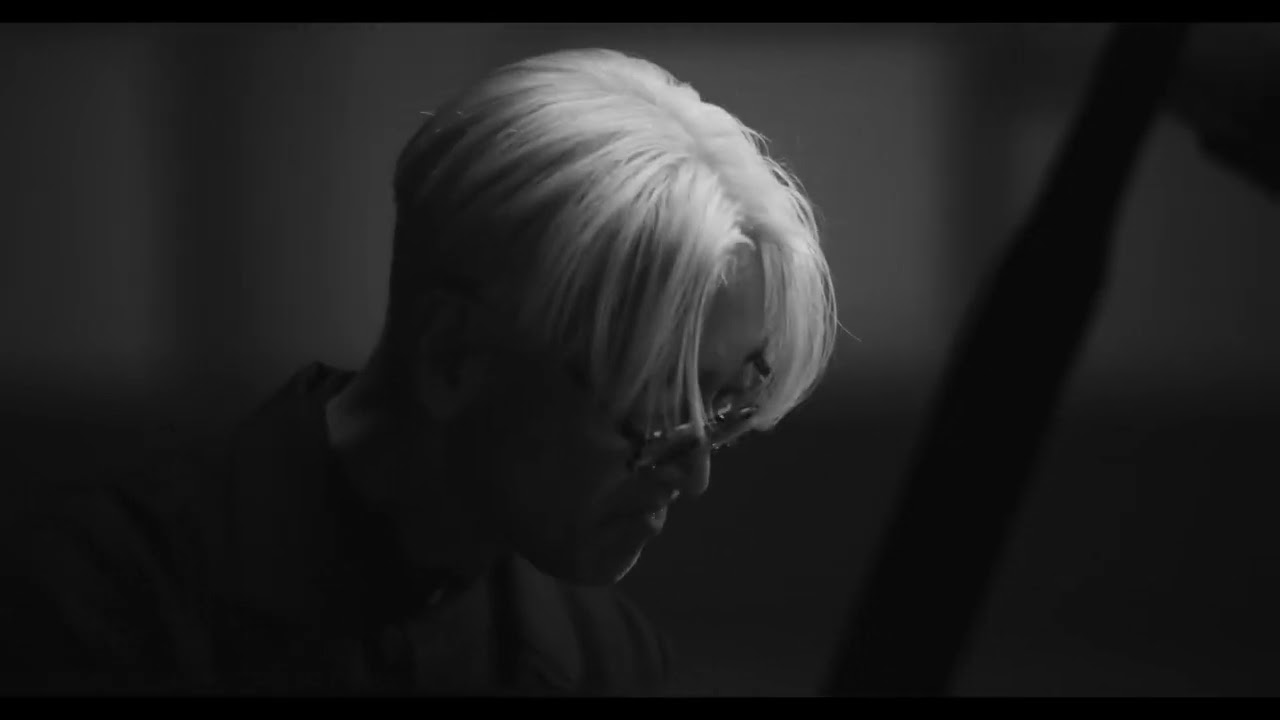
Merry Christmas Mr. Lawrence - From Ryuichi Sakamoto: Playing the Piano 2022
Awards & Professional Recognition
| Award | Work / Reason |
| Academy Award | Best Original Score – The Last Emperor |
| Grammy Award | The Last Emperor soundtrack |
| Golden Globe Awards | The Last Emperor, The Sheltering Sky |
| BAFTA Award | Merry Christmas, Mr. Lawrence |
| Japanese Honors | Medal with Purple Ribbon; Order of the Rising Sun |
| International Honor | Ordre des Arts et des Lettres (France) |
| Lifetime Award | World Soundtrack Awards (2016) |
Sakamoto’s work earned many prestigious awards. His score for The Last Emperorwon the Academy Award for Best Original Score (1987) and a Grammy Award.
He won two Golden Globe Awards (for The Last Emperorand The Sheltering Sky) and a BAFTA Award for Best Film Music (Merry Christmas Mr. Lawrence, 1983).
In Japan he was honored with top distinctions, including the Medal with Purple Ribbon and the Order of the Rising Sun (Gold Rays with Rosette) for his cultural contributions.
Internationally, he received France’s Ordre des Arts et des Lettres in 2009. In 2016 he was presented with a Lifetime Achievement Award at the World Soundtrack Awards, underscoring his influence on film music. These accolades reflect Sakamoto’s broad impact on both popular and classical music.
Collaborations With Orchestras & Conductors
Sakamoto frequently worked with leading orchestras and conductors to present his music in orchestral form.
From 2012 onward he performed in the Playing the Orchestraconcerts with the Tokyo Philharmonic Orchestra (conducted by Hirofumi Kurita), where his solo pieces and Yellow Magic Orchestra themes were arranged for full orchestra.
In 2016 the Brussels Philharmonic, under conductor Dirk Brossé, recorded a compilation of Sakamoto’s film themes, including selections from Merry Christmas Mr. Lawrenceand The Revenant,bringing his compositions into the symphonic repertoire.
At major public events he took on conducting roles: he composed and personally conducted El mar Mediterrani, the orchestral piece for the 1992 Barcelona Olympic Games opening ceremony.
He also devoted effort to music education and youth ensembles. After the 2011 Tohoku earthquake, he co-founded and directed the Tohoku Youth Orchestra (TYO) to support young musicians.
This orchestra has regularly performed his works, including a 2024 memorial tour featuring only Sakamoto’s compositions. Through these collaborations with symphonic musicians and conductors, Sakamoto’s music found new arrangements and reached wider audiences.
Recent Career Activity
In the late 2010s and early 2020s Sakamoto remained creatively active until illness intervened. He previewed a new solo album, 12, with a livestreamed concert in late 2022, and released the album on January 17, 2023.
This final studio album features minimalist piano and electronic compositions completed in his last months.
In late 2022 he also gave a series of solo piano concerts in Tokyo’s NHK 509 Studio, which were filmed by his son Neo Sora.
These performances were released in 2024 as the concert film and album Opus, featuring both classic pieces and new compositions (some previously unrecorded) arranged for solo piano.
Concurrently, Sakamoto’s legacy continued through tributes: for example, in March 2024 the Tohoku Youth Orchestra toured Japan performing concerts devoted entirely to his music. Through these final recordings and memorial events, Ryuichi Sakamoto’s influence on the music world endures.
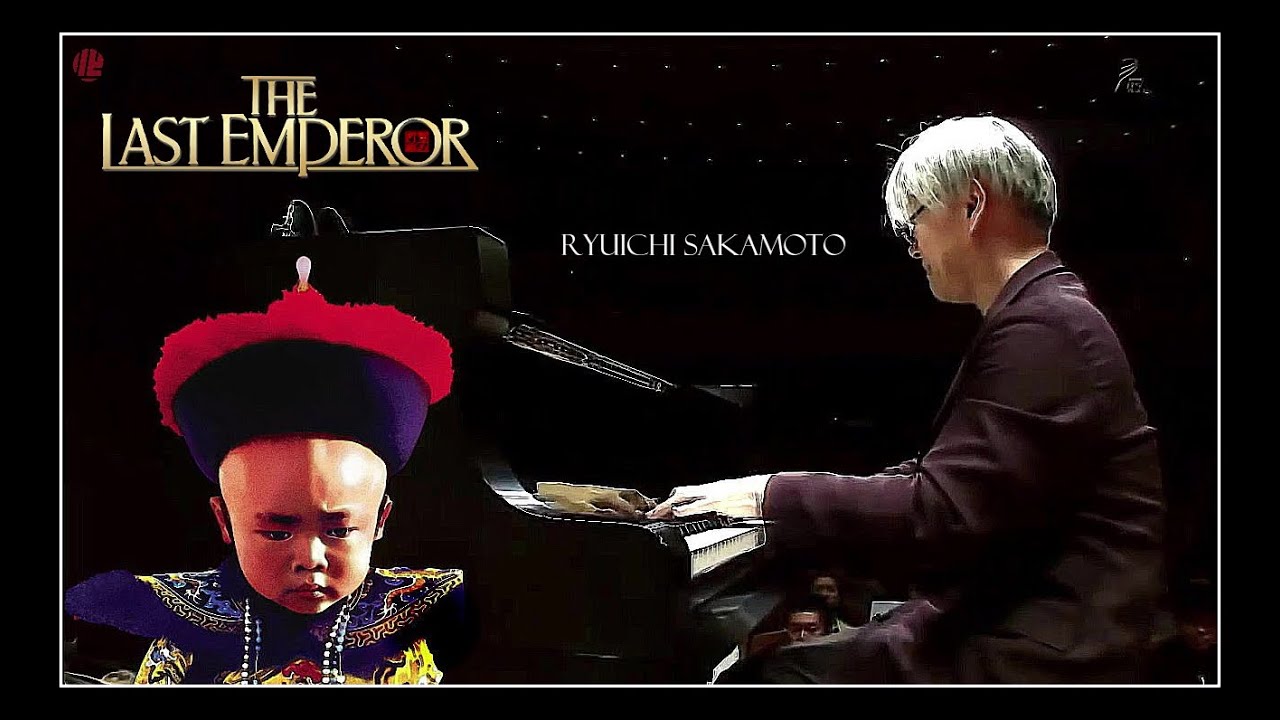
RYUICHI SAKAMOTO: The Last Emperor (Where Is Armo?) | in Concert /Concierto |Soundtrack (REMASTERED)
Ryuichi Sakamoto Performance Highlights
- Barcelona Olympics Opening (1992):Sakamoto composed and conducted the music for the opening ceremony of the 1992 Barcelona Olympic Games. This high-profile global event featured his work on the world stage.
- Yellow Magic Orchestra Reunions:Sakamoto re-formed with YMO for major benefit concerts, including the Kyoto Live Earth climate concert (July 7, 2007). The group’s electrifying Fuji Rock Festival appearance in Japan (July 31, 2011) was later shown in full, reflecting its impact on audiences.
- Japan House São Paulo Opening (2017):To inaugurate Japan House (São Paulo) in May 2017, Sakamoto co-headlined a concert at Ibirapuera Auditorium with Jun Miyake and Brazilian musicians, playing before ~15,000 people. This celebrated cultural opening drew one of his largest live audiences.
- “Two” Tour with Alva Noto (2018):In 2018 Sakamoto toured internationally with electronic artist Carsten “Alva Noto” Nicolai under their Twoproject. They debuted at London’s Barbican Centre and performed new improvised piano/electronic works. The tour culminated in a live album filmed at the Sydney Opera House.
- Final Solo Piano Concert (2022):On Dec 11, 2022, Sakamoto delivered his last public performance – a solo piano concert (“Playing the Piano 2022”) recorded in Tokyo and streamed worldwide. He noted this might be “the last time” fans would see him perform in that way, making it a landmark final appearance.
Technical Approach And Piano Control
Sakamoto’s piano technique is marked by precision and poise. He plays with an exceedingly even, delicate touch, taking care that every finger stroke is clean and intentional. Reviewers note that on solo albums “articulation is foremost from start to finish, Sakamoto’s fingertips [are] delicate and conscious of every note, every tone, every emotion”.
In faster passages he can produce crisp, “sparkling” runs when needed, while in slower music he glides seamlessly between chords, allowing motifs to unfold smoothly. He is known to employ subtle extended techniques: for example, in some pieces he uses a prepared-piano method (placing rubber erasers or similar objects on the strings) to muffle overtones and add percussive color.
Overall, his playing shows rigorous control; dynamics are carefully calibrated, and finger work is steady, reflecting the command of a seasoned concert pianist who favors clarity and restraint over flamboyance.
Tone, Touch, And Sound Color
The overall tone of Sakamoto’s piano playing is characteristically light, clear, and ethereal. Critics often compare his touch to that of impressionist composers. In one analysis, “Sakamoto’s light touch on the piano may remind the listener of Eric Satie”, highlighting the soft, shimmering quality of his sound.
His voicings tend to yield gentle, bell-like sonorities rather than harsh accents, and he frequently uses the sustaining pedal sparingly to let notes decay organically. In describing one performance, a writer observes Sakamoto “drops brief, pendant chords that fall into opaque depths like pebbles into a blue ocean”, evoking a sense of delicate resonance and airy space.
Even when he explores alternative textures, for instance through prepared piano or subtle electronic overlays, the piano’s acoustic color remains transparent and intimate. In sum, Sakamoto’s touch yields tones that are dreamy and nuanced, often warm and enveloping in quiet passages, with only occasional sharpness reserved for times of heightened intensity.
Rhythm, Phrasing, And Structural Clarity
Sakamoto’s rhythmic approach is generally flexible and rubato-driven. He often treats time as part of the expressive palette, letting phrases ebb and flow naturally rather than adhering to a strict pulse. Observers note that even his own breath becomes part of the music: on recent recordings one can hear Sakamoto’s breathing “lending a delicate, human rhythm to the pieces”.
This indicates that he approaches tempo organically, allowing subtle accelerandos or pauses as needed. In lyrical slow pieces (such as “Energy Flow”), he tends to let the chord progressions unfold with gentle momentum; as one review puts it, he “glides smoothly from one chord to another, letting the momentum of the piece build naturally”.
His phrasing often feels conversational, with each musical idea articulated clearly before the next one begins. Structurally, his compositions (and improvisations) are usually lucid: themes enter and resolve in plain view, so even though he stretches time, the overall form remains transparent.
Listeners can follow the contours of each piece because he leaves space between motifs and emphasizes the beginnings and endings of phrases, ensuring that the music’s architecture stays intact even within his expansive pacing.
Interpretative Approach To Repertoire
Sakamoto’s interpretative focus lies almost exclusively on his own compositions and arrangements of film themes rather than standard concert repertoire. He has explained that his solo piano albums simply document “the style [he] play[s] on stage”, suggesting that he treats every recording as a true reflection of his live approach.
In performance he does not merely play notes mechanically; critics emphasize that he “never [does] anything by rote, [often] improvising, aware of his audience and in playful conversation with them”. In practice, this means his readings of a piece can vary from one performance to another.
He reimagines familiar themes by infusing them with different moods or embellishments, treating each rendition as unique. Stylistically, he draws from a broad palette: for example, on his collection Playing the Piano he explicitly blends the airy stillness of Satie, the jazz harmonies of Bill Evansor Michel Legrand, Debussy’s modal colors, and even the Brazilian bossa nova feel of Jobim.
This fusionist outlook also affects his interpretations: an old pop or film melody under Sakamoto’s fingers might emerge with impressionistic harmony, subtle syncopations, or unexpected chromatic twists. In sum, his interpretative method is idiosyncratic and flexible; he selects repertoire that fits his aesthetic and then molds it in a way that highlights different facets of his varied musical influences.
Balance Between Precision And Expression
Critics consistently observe that Sakamoto strikes a careful balance between technical precision and expressive nuance. His playing conveys warmth and feeling without sacrificing accuracy. As one reviewer notes, he “conveys tremendous warmth and soul in each track, bringing feeling to his technique while compromising neither”.
In other words, emotional depth and technical control coexist in his approach. Another commentator points out that he is known for “stoic [and] restrained” keyboard touch, implying that even his most expressive phrases are delivered with composure and focus.
In concrete terms, Sakamoto tends to avoid exaggerated rubato or overtly sentimental gestures; instead he lets the inherent melody and harmony speak for themselves, adding subtle inflections only where musically justified.
The result is music that feels genuinely heartfelt but also carefully measured. Every dynamic nuance and color change feels intentional, as if sculpted rather than improvised, so that his performances resonate with both feeling and clarity.
Critical Observations And Musical Identity
In sum, music critics characterize Ryuichi Sakamoto’s piano style as a unique blend of classic and modern tendencies, marked by quiet intensity and genre-fluid sensitivity. Analysts often highlight his debt to earlier piano traditions: one writes that his work contains “echoes of Bach’s [counterpoint] and Debussy’s blending of Asian and Western musical languages,” all underpinned by a “stripped-down minimalism”.
On his solo albums this impressionistic minimalism is evident, reflecting qualities like those of Debussy or Satie rather than, say, Liszt or Rachmaninoff. Sakamoto himself cites Chopin and Debussy as major influences, and listeners can hear these affinities in his harmonic choices and melodic phrasing.
Yet he never sounds like a mere imitator: his identity is consistently his own, subtle, introspective, and exploratory. Over the years critics have noted that his style has actually grown more centered and sparse.
His late-career works, including his final performances, are often described as the culmination of “a journey from effusive maximalism to gentle simplicity”. This evolution highlights the continuity in his artistry: even as he stripped his music to its essentials, he retained the distinctive timbral shades and rhythmic flexibility that define him.
Altogether, commentators agree that Sakamoto’s musical voice is disciplined and thoughtful, distinguished by an almost meditative stillness and an acute attentiveness to tone and texture, a modern pianism grounded in tradition but always looking beyond the conventional keyboard sound.
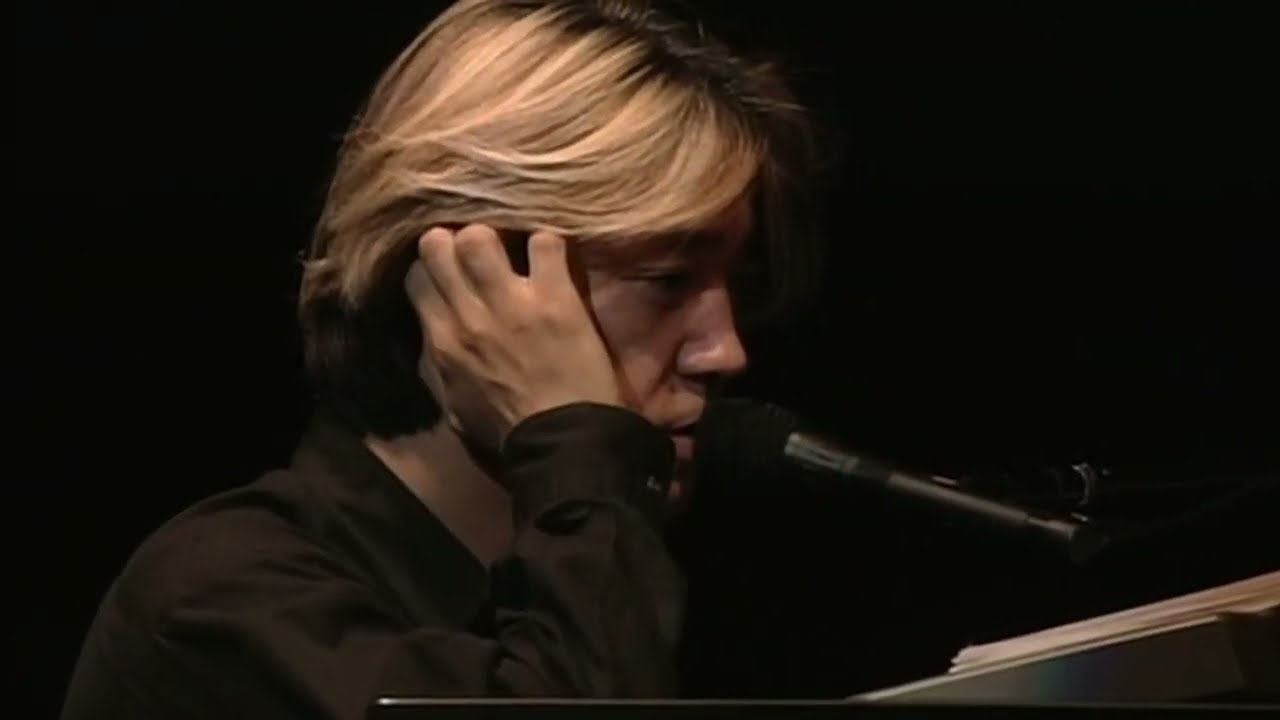
Ryuichi Sakamoto - Trio World Tour (Full DVD)
Ryuichi Sakamoto Net Worth
At the time of death, Ryuichi Sakamoto’s net worth was estimated by various online sources to be between $1 million and $20 million. He was a renowned Japanese musician, composer, and record producer who co-founded the pioneering electronic band Yellow Magic Orchestra. His career included releasing several solo albums and collaborating with international artists.
He also composed film scores, winning an Academy Award and other honors for the score of the film The Last Emperor(1987), which added to his earnings. These decades of musical work through albums, performances, and awards were the primary source of his wealth.
FAQs
1. Who Was Ryuichi Sakamoto?
Ryuichi Sakamoto was a Japanese composer, pianist, and record producer known for his work in electronic music, film scores, and contemporary classical music. He co-founded Yellow Magic Orchestra and later gained global recognition as an Oscar-winning film composer.
2. What Was Ryuichi Sakamoto Famous For?
Ryuichi Sakamoto was famous for pioneering electronic pop with Yellow Magic Orchestra and for composing influential film scores such as The Last Emperor. His work bridged classical, ambient, electronic, and world music traditions.
3. Did Ryuichi Sakamoto Win An Academy Award?
Yes, Ryuichi Sakamoto won the Academy Award for Best Original Score for The Last Emperor(1987). He was the first Japanese composer to receive this honor, along with a Golden Globe and a Grammy for the same work.
4. What Role Did Ryuichi Sakamoto Play In Yellow Magic Orchestra?
Ryuichi Sakamoto was a founding member of Yellow Magic Orchestra, serving as keyboardist, composer, and arranger. The group played a major role in shaping early synth-pop and electronic music worldwide.
5. When And How Did Ryuichi Sakamoto Die?
Ryuichi Sakamoto died on March 28, 2023, at the age of 71. His death followed a long and publicly documented battle with cancer, during which he continued composing and performing when possible.