
Tori Amoswas born Myra Ellen Amos on August 22, 1963, in Newton, North Carolina. Her father, Edison Amos, was a Methodist minister, and her mother was Mary Ellen (née Copeland). Amos’s maternal grandfather, Calvin Copeland, was a member of the Eastern Cherokee Nation, giving her part-Cherokee heritage.
The family lived largely in Baltimore, Maryland, for most of her childhood. Her upbringing was deeply religious: she began singing in her father’s church choir at about age four, and later recalled that attending church was “mandatory… four times a week” during her youth.
Early Music Education
By age two Amos was already making music: she began playing piano by ear at about two years old. At age five she won a scholarship to the Peabody Institute’s preparatory music program in Baltimore. There she studied classical repertoire (works by Mozart, Beethoven and Bartók), although she was increasingly drawn to contemporary artists such as The Beatles, Led Zeppelin, Joni Mitchelland Stevie Wonder. Amos has said she struggled with reading musical notation and preferred to play by ear. Her formal conservatory training ended in 1974 (around age eleven), when she lost her scholarship at Peabody.
| Aspect | Verified Details |
| Birth Name | Myra Ellen Amos |
| Birth Date | August 22, 1963 |
| Birthplace | Newton, North Carolina |
| Father | Edison Amos, Methodist minister |
| Mother | Mary Ellen Copeland |
| Ancestry | Partial Cherokee heritage |
| Childhood City | Largely raised in Baltimore |
| Religious Background | Regular church attendance |
| Choir Experience | Sang in church choir |
| Sang in church choir | Began around age two |
| Music Scholarship | Peabody Institute, age five |
| Classical Focus | Mozart, Beethoven, Bartók |
| Training End | Scholarship ended in 1974 |
Career Beginnings
Tori Amos began her career in the 1980s as the lead singer and pianist of the synth-pop band Y Kant Tori Read. In 1987 she signed with Atlantic Recordsand released the band’s sole album in 1988, which was not commercially successful.
After the group disbanded, Amos refined her style toward solo piano-based songwriting. This led to her solo debut album Little Earthquakes in 1992, an intimate collection of piano-driven songs that became her breakthrough release.
International Breakthrough
Little Earthquakes introduced Amos to a wide audience and established her reputation as a singer-songwriter. The album’s emotional ballads and alternative rock arrangements resonated internationally, propelling her into the spotlight.
She quickly followed with Under the Pink (1994), which continued her success. From this period, singles like “Cornflake Girl” became international hits, “Cornflake Girl” reached No. 4 on the UK Singles Chart, and cemented her status as an alternative-rock star on both sides of the Atlantic.
This era of 1992–1994 marked Amos’s emergence as an artist with a strong global following.
Major Performances & Concert Highlights
Amos has headlined major venues and festivals throughout her career. In January 1997 she performed a benefit concert titled Live from New York at the Theater at Madison Square Garden (New York City), raising funds and awareness for RAINN (the Rape, Abuse & Incest National Network).
In June 1998 she played the Pyramid Stage at England’s Glastonbury Festival, one of the world’s largest music festivals. Over the years she has embarked on numerous tours; most recently, the 2022–2023 Ocean to Ocean Tour spanned 93 shows worldwide.
Amos is known for her dynamic live shows and eclectic setlists, meaning she often performs rare or rearranged versions of her songs and rarely repeats identical concert programs.
Recordings & Discography
| Album | Year & Notable Context |
| Little Earthquakes | 1992 – Solo breakthrough album |
| Under the Pink | 1994 – Included international hit “Cornflake Girl” |
| Boys for Pele | 1996 – Darker, experimental direction |
| From the Choirgirl Hotel | 1998 – Expanded sonic textures |
| Scarlet’s Walk | 2002 – Conceptual narrative album |
| Night of Hunters | 2011 – Classical song cycle |
| Gold Dust | 2012 – Orchestral reworkings with Metropole Orkest |
| Ocean to Ocean | 2021 – Written during COVID-19 lockdown |
Amos’s discography spans more than three decades and includes a variety of styles and themes. After her debut, albums like Boys for Pele (1996) and From the Choirgirl Hotel (1998) expanded her sound into darker, more experimental territory.
Later works include Scarlet’s Walk (2002) and American Doll Posse (2007). In 2011 she explored classical crossover with Night of Hunters, a song cycle recorded for the Deutsche Grammophon label.
The following year she released Gold Dust (2012), which features orchestral reworkings of her earlier songs recorded with the Metropole Orkest under conductor Jules Buckley.
She continued releasing new material in the 2010s, including Unrepentant Geraldines (2014) and Native Invader (2017), each blending her signature piano-driven style with personal and thematic lyrics.
Her most recent studio album, Ocean to Ocean (2021), was written and recorded across the English Channel during the COVID-19 lockdown. This vast catalogue of recordings has solidified her career as one of the most prolific piano-based singer-songwriters in modern rock.
Awards & Professional Recognition
Throughout her career Amos has received numerous industry honors and nominations. She has been nominated for multiple Grammy Awards (nine nominations to date), reflecting recognition by her peers for albums and performances across genres.
In 2012 her album Night of Hunters was honored with an ECHO Klassik award (Germany’s classical music awards). In addition to formal accolades, her impact is noted by peers and critics; for example, she was cited in 2023 by younger artists as an influence on their songwriting.
Most recently, in October 2024 Amos was presented with the Inspirational Artist Award at Music Week’s Women in Music event, highlighting her role as a trailblazing female artist in the industry.
Collaborations With Orchestras & Conductors
Amos has worked with classical musicians and ensembles to create unique recordings. The 2011 album Night of Hunters involved the Apollon Musagète String Quartet and clarinetist Andreas Ottensamer, with arrangements by longtime collaborator John Philip Shenale.
Her 2012 album Gold Dust was recorded with the Metropole Orkest(a renowned Dutch orchestra) under the direction of conductor Jules Buckley, featuring new orchestral versions of her songs.
These projects bridge her songwriting with classical instrumentation, showcasing her as an artist comfortable in both pop/rock and orchestral settings.
Recent Career Activity
In the past few years Amos has remained active both in recording and touring. In late 2024 she announced Diving Deep Live, a new concert album recorded during the global Ocean to Ocean tour (93 performances during 2022–2023).
This live album, released December 2024, captures performances of songs spanning her career. Looking ahead, she has announced a new studio album, In Times of Dragons, due in spring 2026 on Universal’s relaunched Fontana label.
To support that release, she has scheduled a European tour for spring 2026, including a headline show at London’s Royal Albert Hall. These activities demonstrate that Amos continues to create and perform at a high level well into the fourth decade of her career, consistently engaging her audience with new music and live shows.
Tori Amos Performance (2025–2026)
- Children’s album release (Feb 2025):Amos issued The Music of Tori and the Muses, a 9-song companion album to her new children’s book, on Feb 28, 2025. This project showcases her piano-driven songwriting applied to a youth-oriented narrative.
- U.S. book-tour events (Mar 2025):In March 2025 Amos conducted a multi-city U.S. tour of readings and performances tied to Tori and the Muses. Key dates included a storytime at Barnes & Noble Union Square (NYC, Mar 2, 2025)and appearances at major bookstores (The Ivy Bookshop in Baltimore, Anderson’s in Illinois, etc.). These sold-out events combined narrative readings with live piano sets, engaging both literary and music audiences.
- New album announcement (Oct 2025):In October 2025 Amos announced her next studio album In Times of Dragons, slated for spring 2026 on Universal’s relaunched Fontana label. The announcement underscored her continued expertise and high-profile backing, as Fontana/Universal is a respected major label imprint.
- Major European tour (Apr–May 2026):Amos launched a large European concert tour (17 countries, 30+ dates) in April–May 2026 to support In Times of Dragons. The tour hit prestigious venues such as London’s Royal Albert Hall and Paris’s Olympia, demonstrating her broad appeal and commanding performance skills across an international stage.
Tori Amos’s Piano Style And Musical Interpretation
Technical Approach And Piano Control
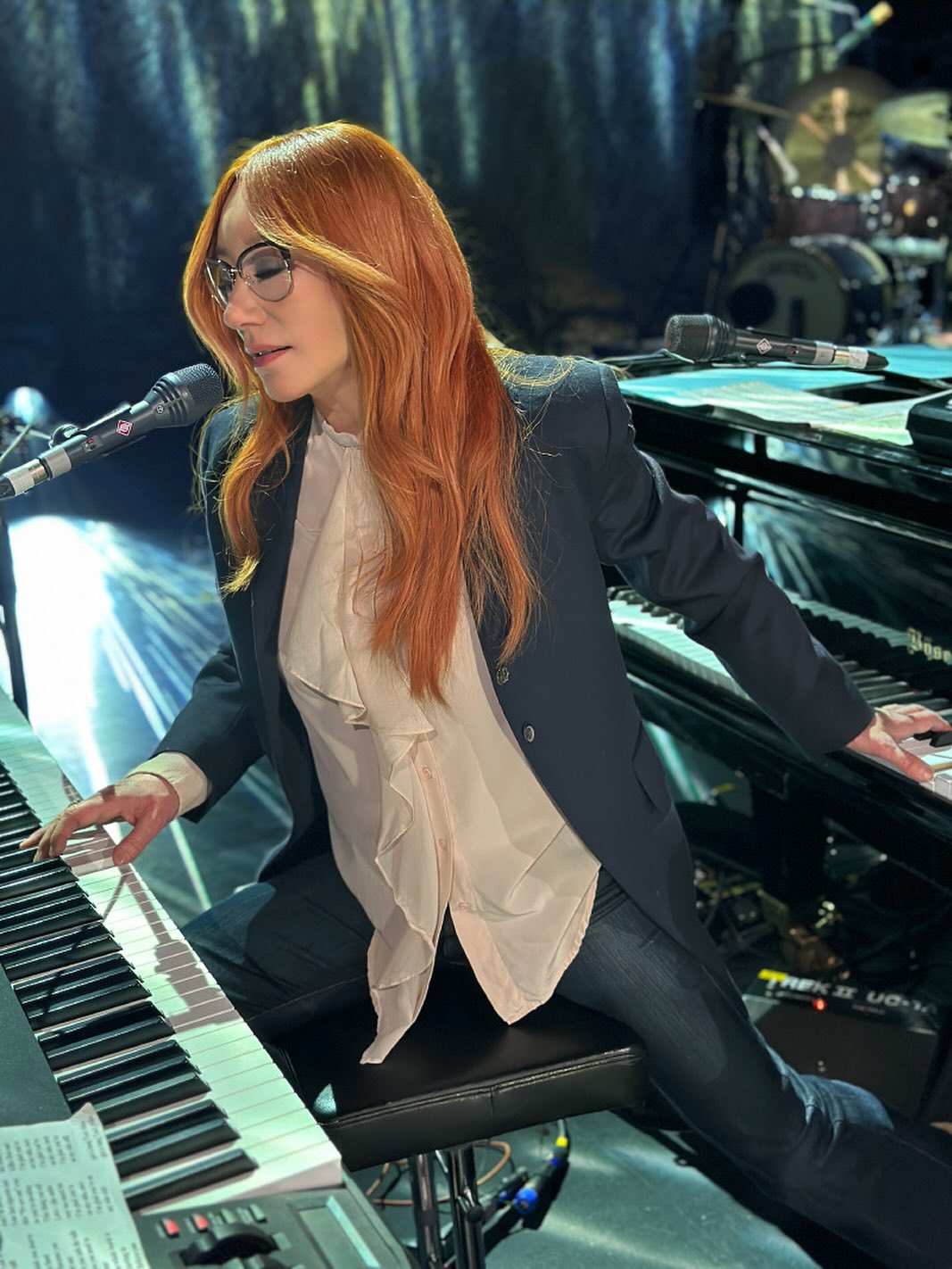
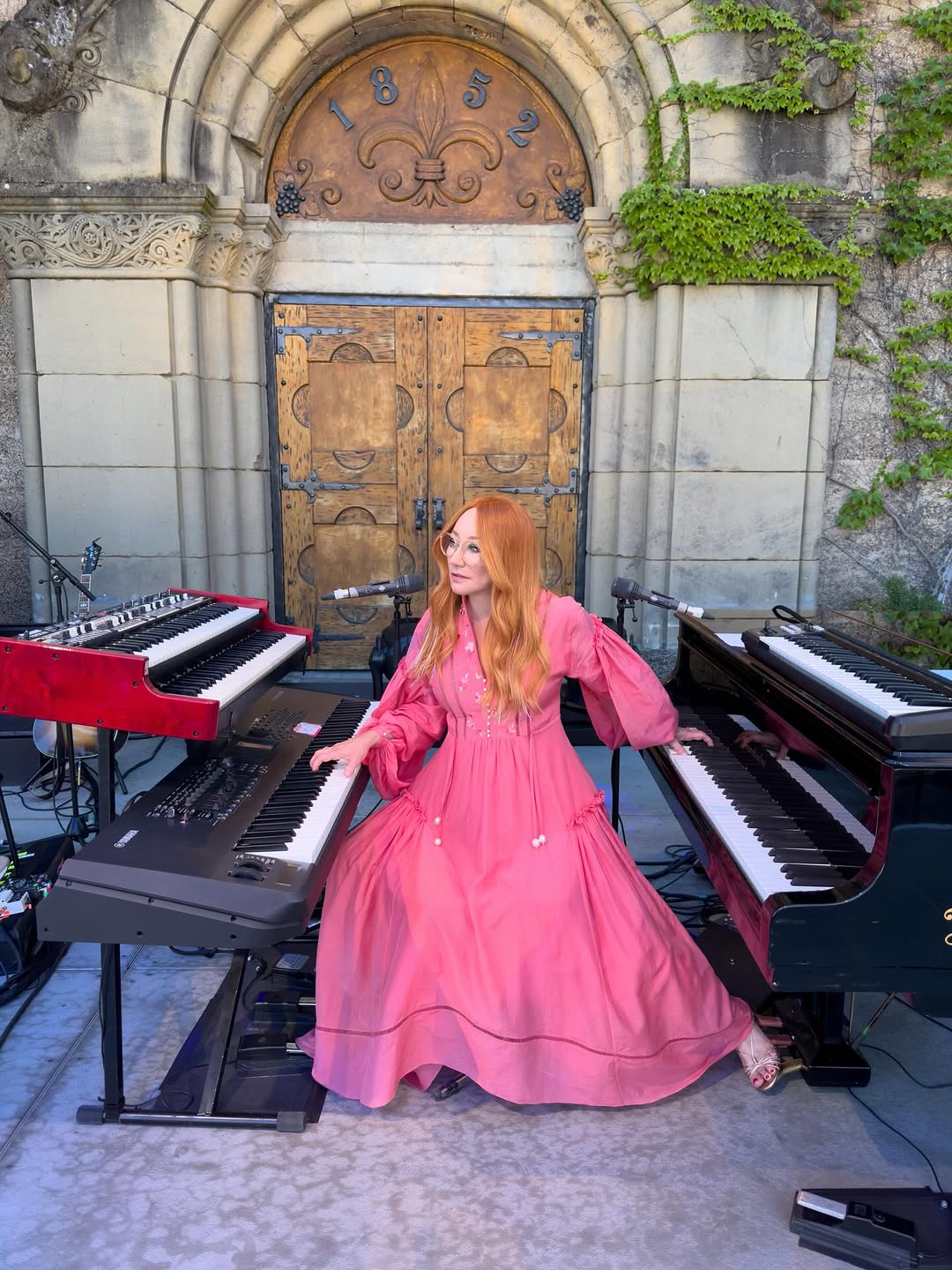
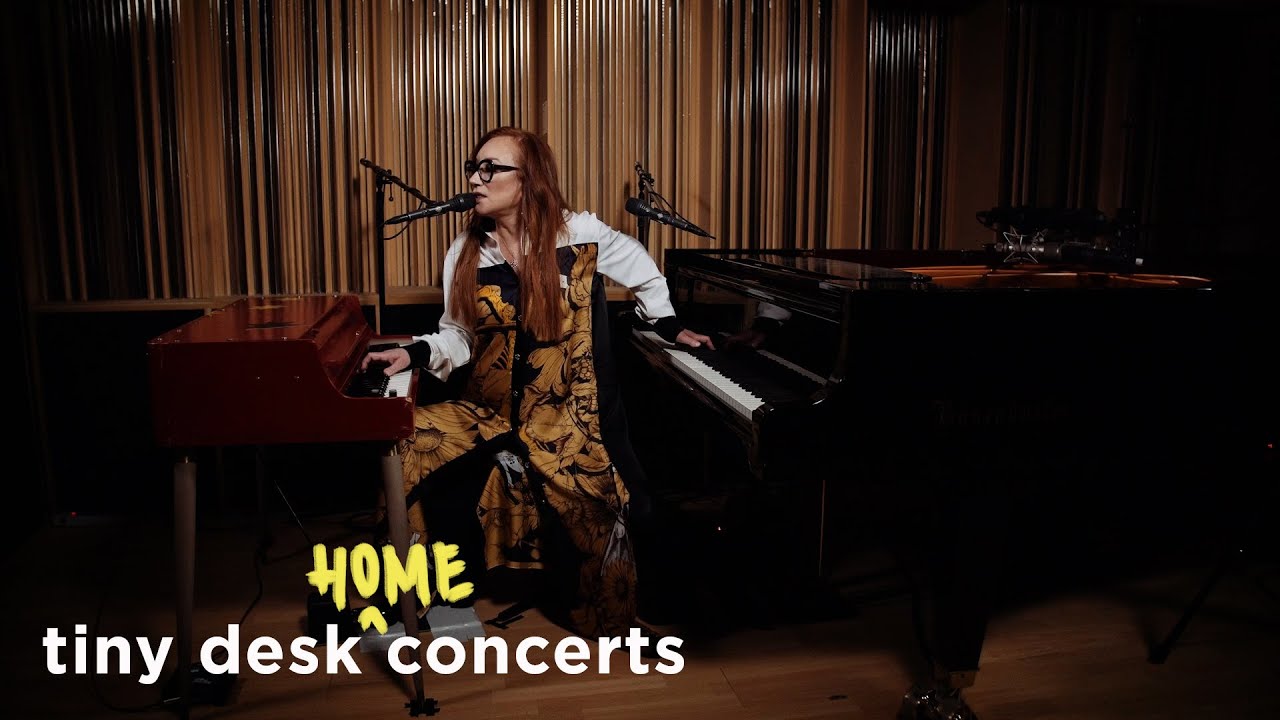
Tori Amos’s playing combines rigorous technique with a distinctive physical approach. She often straddles the piano bench and frequently uses multiple keyboards (acoustic piano alongside harpsichord, electric piano or synthesizers) in a single performance, enabling her hands to cover a wide range of the sound spectrum. This unconventional posture is a practical choice to facilitate quick shifts between registers and instruments, and also reflects her theatrical stage presence.
Observers note that she maintains clear control of each keyboard; her fingers execute rapid arpeggios and complex chords with precision, then can leap into wide reaches or quick ornamentations without audible strain. At the same time, she does not sacrifice power for poise: her technique allows for thunderous bass notes and aggressive staccato attacks when called for, yet she can also play delicate high-register lines smoothly.
In ensemble settings (such as when accompanied by strings or brass), she commands the piano part with authoritative clarity, balancing the ensemble without being overwhelmed. Overall, Amos’s control over the instrument reflects her classical training she handles technically demanding passages cleanly while her vigorous engagement (twisting her torso, sweeping her arms) shows that she views the piano as an extension of her expressiveness, not just a neutral tool.
Tori Amos: Tiny Desk (Home) Concert
Tone, Touch, And Sound Color
Amos is known for coaxing a very broad palette of sounds from the piano, ranging from bold, ringing chords to whispery, intimate tones. Critics have remarked on the extremes in her touch: on some songs her piano chords are “thundering” and aggressive, driving the music forward with almost percussive force, whereas on others she adopts a gentle, tender touch that highlights the instrument’s lyrical side.
For example, critics have described her reworked arrangements of older songs as employing pounding, ominous piano strikes under heavy orchestration, yet on introspective pieces her playing is noted for a soft, patient touch and tasteful restraint. She varies her attack and pedal use to shape tone: heavily pedaled passages give a lush, resonant wash of sound, while dry, staccato passages emphasize rhythmic sharpness.
In recordings like Night of Hunters and Gold Dust, the piano tone sits within richer textures woodwinds, strings, and brass augment the piano’s color but even there her acoustic piano sound cuts through crisply. Listeners also note that she sometimes retunes or uses prepared effects (e.g. adjusting the Bösendorfer’s tuning or adding slight distortion via electronics) to add unique timbres.
In sum, Amos exploits the piano’s dynamic range and tonal variety fully, modulating her touch for dramatic effect and complementing the piano tone with orchestral and electronic colors in her arrangements.
Rhythm, Phrasing, And Structural Clarity
Rhythmically, Amos plays with a fluid sense of timing and phrasing. Rather than strict metronomic consistency, her playing often follows the ebb and flow of emotion in the music. She is known to insert sudden pauses, lingering hesitations, or rubato stretches at key lyrical moments, which can make phrases feel unpredictable and intensely expressive.
In live and recorded performances alike, one can hear abrupt tempo shifts: verses might drift into free time or slow down, then burst into sped-up, cascading figures during choruses. These rhythmic fluctuations are deliberate interpretative choices that heighten drama. Observers have pointed out that her phrasing sometimes features long-held notes or whispered lines that build tension, followed by sharp, almost breathless passages that break into full voice.
Despite such spontaneity, she maintains the overall structure of her songs clearly. In fact, part of her rhythmic approach is to outline form: she might use a repeated rhythmic motif or a clear accent to signal a chorus, or employ a drumlike rhythmic pattern on piano to anchor an otherwise floating melody.
When performing older material, she often changes intros or bridges on the spot, effectively extending the structure without losing the listener. Thus, her phrasing blends impromptu ornamentation with an underlying sense of the song’s form, ensuring the basic sections remain identifiable even as she improvises around them.
Interpretative Approach To Repertoire
Amos treats every piece in her repertoire whether her own song or a classical work as malleable material. She considers her songs living works, open to reinterpretation. Over the years she has frequently rearranged her compositions, adding new intros, altering chords, or varying accompaniments; this restlessly creative attitude extends to cover songs and classical sources as well.
Notably on the album Night of Hunters, she took compositions from classical composers (ranging from Chopin and Debussy to Bach and Satie) and wove her own lyrics and melodies around them. Critics have praised how deftly she integrates the original motifs into her songs, essentially creating variations on the classical themes.
In these arrangements, she usually respects the harmonic essence of the source material but superimposes her distinctive melodic lines and modern rhythms. For instance, a Debussy piano prelude might become the basis for a song intro, which then blossoms into her personal song cycle narrative.
Similarly, in live settings she has performed reimagined versions of her rock and pop songs accompanied by chamber ensembles; her string and woodwind arrangements often reflect a classical sensibility, yet the core interpretation remains hers. When tackling modern or popular repertoire (such as covering other songwriters), she likewise tends to personalize the accompaniment dramatically, sometimes stripping a song down to solo piano or conversely building up an epic arrangement.
In all cases, Amos’s interpretative approach emphasizes empathy with the music: she inhabits each piece emotionally while applying her piano-centered style, whether she’s delivering a Baroque-influenced fanfare or an intimate ballad.
Balance Between Precision And Expression
A hallmark of Amos’s style is the interplay between disciplined technique and passionate expression. Because of her conservatory training, she has the precision to execute even complex passages with clarity, as listeners can hear each note cleanly. This precision shows in her ability to articulate fast passages or intricate left - and right-hand interplay without blur.
Yet she never plays mechanically for its own sake; her technique is always in service of feeling. Analysts note that if she were to play with purely classical restraint, much of her raw energy would vanish. Indeed, while some sections of her music feature almost mechanical, Baroque-like accompaniment, she frequently breaks into freer, more emotive playing making the piano practically sing or scream.
In practice, this means she will lean into the keys harder and let chords ring out in emotional peaks, or conversely play with feather-light touch in more introspective moments, but always with control. Her performances often strike a strong equilibrium: the underlying precision keeps the music coherent, while dynamic swells, accented attacks and rhythmic liberties convey a visceral intensity.
In short, critics have observed that her artistry lies in balancing these extremes the accuracy of her fingerwork and timing with the physical abandon of her delivery creating a synergy where technical mastery amplifies rather than constrains expressiveness.
Critical Observations And Musical Identity
In the critical view, Amos stands out as a pianist-first singer in a genre where guitarists or full bands usually lead. Early profiles described her as an “anomaly in the rock realm” because her albums and concerts are fundamentally piano-centric. Reviewers and scholars often liken her performing style to historic piano virtuosos: some comparisons have been drawn to Liszt or Paganini in terms of intensity and stage charisma, and to modern piano-rock figures like Elton Johnor Billy Joelin terms of her instrument’s prominence.
Indeed, her onstage persona straddling the piano, arms raised, often singing with eyes closed evokes the image of a virtuoso-channeling intense emotion. However, commentators also emphasize that Amos’s music retains a strong literary and poetic sensitivity. In writing about her piano work, critics use terms like “dynamic contrasts,” “improvisatory instincts,” and “expressive boldness” rather than simply lauding technical fireworks.
They note that she defies the stereotype of the demure pianist: her body language and piano attack suggest a kind of masculine or aggressive approach, while her lyrics remain personal and nuanced. Overall, the consensus is that Amos’s musical identity is defined by this blend: a classically-informed piano proficiency delivered through the lens of singer-songwriter intimacy.
Her style is perceived as authentic and self-driven; she is regarded as an artist who uses the piano not merely as accompaniment but as a central expressive voice in her music.
Tori Amos - Winter (Live)
Tori Amos Net Worth
As of 2026, American singer-songwriter and pianist Tori Amos’s net worth is estimated to be between $60 million and $70 million by various online entertainment media sources. She has earned this wealth through her decades-long career in the music industry, generating income from album sales, concert tours, and songwriting royalties. Her discography includes 15 studio albums, which have sold over 12 million copies worldwide. These estimates come from entertainment and celebrity finance outlets and have not been officially confirmed by any major financial or business publications.
FAQs
1. Who Is Tori Amos?
Tori Amos is an American singer-songwriter and pianist known for piano-driven alternative rock music. She gained international recognition in the early 1990s with her debut solo album Little Earthquakes.
2. What Is Tori Amos Best Known For?
Tori Amos is best known for her expressive piano style, confessional songwriting, and albums such as Little Earthquakes, Under the Pink, and Boys for Pele. Her work often blends classical influence with alternative rock.
3. How Did Tori Amos Start Her Music Career?
Tori Amos began playing piano at a very young age and studied classical music at the Peabody Institute. Her professional career started in the 1980s before she achieved solo success in the 1990s.
4. How Many Albums Has Tori Amos Released?
Tori Amos has released 15 studio albums as of 2021, along with live albums and special projects. Her recordings span more than three decades and multiple musical styles.
5. Is Tori Amos Still Active In Music?
Yes, Tori Amos remains active as a recording and performing artist. She continues to release new music and tour internationally, including recent and upcoming projects through 2026.