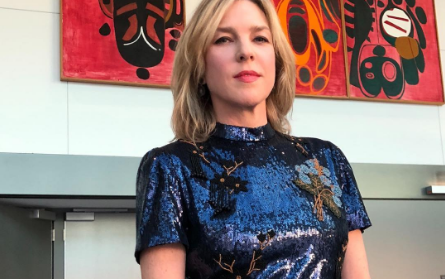
Diana Krallwas born on November 16, 1964, in Nanaimo on Vancouver Island, British Columbia. Her father worked as a chartered accountant and her mother was a schoolteacher; both parents were avid music lovers who collected early jazz recordings. Krall grew up attending church choir and began learning pianoas a child.
She started formal piano lessons at age four and studied through the Royal Conservatory of Music system. From an early age she learned classic jazz tunes from her father’s record collection (she taught herself many Fats Waller songs). As a youth she and her older sister enjoyed outdoor activities like swimming and skiing on Vancouver Island, and her family often sang together for entertainment.
By her early teens Krall’s music studies intensified. In middle school she participated in jazz workshops, for example, her parents sent her to the Bud Shank jazz camp in Port Townsend, Washington, during the summers when she was in her mid-teens.
Around age 15 she began playing jazz publicly in local restaurants, reflecting her growing skills. Her training and talent earned her a scholarship to Boston’s Berklee College of Music in 1981; she studied at Berklee from 1981 to 1983. These years of music education from early lessons and choir singing to advanced jazz study laid the foundation for Krall’s later career.
| Aspect | Details |
| Details | Born on November 16, 1964, in Nanaimo, British Columbia. |
| Family Background | Raised in a music-loving family with strong jazz influences. |
| Early Music Exposure | Sang in church choir and listened to jazz from childhood. |
| Piano Training | Started formal piano lessons at age four. |
| Music Education | Studied piano through the Royal Conservatory of Music system. |
| Jazz Influence | Learned classic jazz songs from her father’s record collection. |
| Teenage Training | Attended jazz workshops and summer music camps as a teen. |
| Higher Education | Studied at Berklee College of Music from 1981 to 1983. |
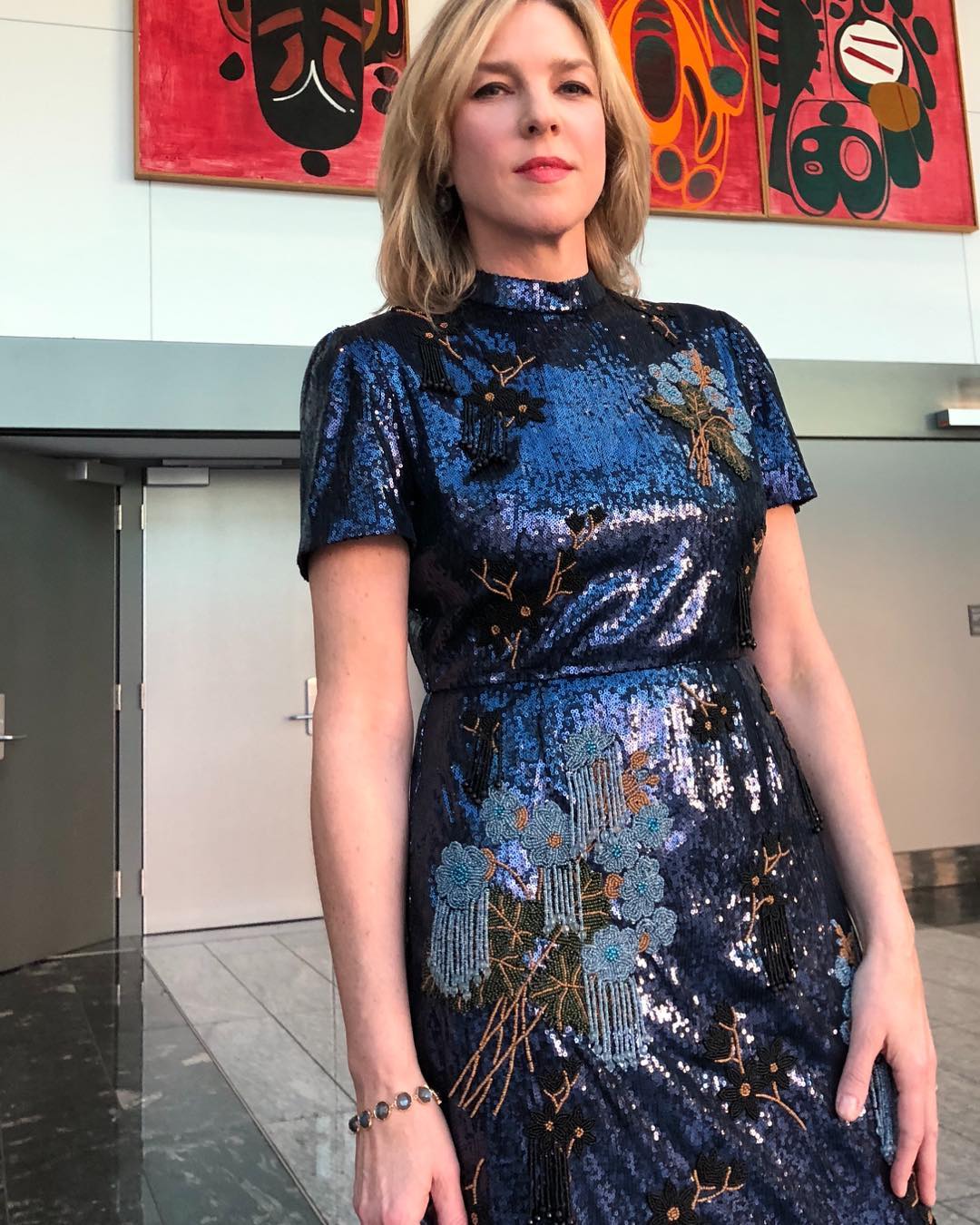
Career Beginnings
Diana Krall began her professional career in the early 1990s after intensive music studies and mentorship from jazz veterans. In 1993 she released her debut album Stepping Out(Justin Time Records), showcasing her skill as a jazz pianist and singer.
Her early albums Only Trust Your Heart(1995) and All for You: A Dedication to the Nat King Cole Trio(1996) earned wide notice. The Nat King Cole tribute spent more than a year on the jazz bestseller charts and brought Krall her first Grammy nomination.
By the late 1990s Krall had established a distinctive style of intimate jazz vocals and elegant piano. She performed regularly in clubs and festivals across North America and cultivated a reputation that set the stage for her international breakthrough.
International Breakthrough
Krall’s major international breakthrough came with her signing to Verve Records and the release of When I Look in Your Eyes(1999). This album, featuring lush orchestral arrangements and Krall’s sultry contralto, spent an unprecedented 52 weeks at No. 1 on Billboard’s Jazz chart.
It won two Grammy Awards (including Best Jazz Vocal) and achieved Platinum sales in North America. Her follow-up, The Look of Love(2001), continued this success; its blend of bossa nova and pop standards reached the Billboard 200’s Top 10 and earned Platinum certification.
These albums made Krall a crossover star. She embarked on world tours and collaborations, including a 2000 North American tour with Tony Bennett, and began appearing on global stages.
Live recordings like Live in Paris(2002) captured her sold-out shows. That album also won a Grammy, cementing Krall’s status as a leading jazz artist of her generation.
Major Performances & Concert Highlights
Krall has headlined prestigious jazz festivals and concert halls around the world. She has toured extensively in North America, Europe, Asia and Australia, frequently performing at events such as the Montreux Jazz Festival and the Montreal International Jazz Festival.
Her concerts often feature an intimate trio or quartet, sometimes augmented by string or horn arrangements. Highlights include a celebrated sold-out run at Paris’s Olympia in 2001, which was recorded for Live in Paris.
She has also presented annual holiday concerts in Vancouver and made numerous televised appearances. Krall has guested on others’ programs and recordings, including Ray Charles’s Genius Loves Company(2004).
She has performed duets on television specials with artists such as Elvis Costello and Elton John. In ceremonial settings, she has delivered iconic performances, including singing “Fly Me to the Moon” at astronaut Neil Armstrong’s 2012 memorial service.
Recordings & Discography
Over three decades Krall has built a rich discography of studio and live albums. Her early records were trio-based jazz tributes, including Nat King Cole on All for Youand Nat Adderley on Stepping Out.
With Verve Records she expanded into orchestral pop-jazz. When I Look in Your Eyes(1999) and The Look of Love(2001) featured lush arrangements by Johnny Mandel and Claus Ogerman.
In 2004 she explored songwriting on The Girl in the Other Room, her first album with original compositions co-written with producer and musician Elvis Costello.
Krall’s later albums ranged widely in style. Christmas Songs(2005) featured a swinging big-band approach with the Clayton–Hamilton Jazz Orchestra, while Quiet Nights(2009) explored Brazilian bossa nova.
Glad Rag Doll(2012) revived obscure 1920s–30s jazz tunes, and Wallflower(2015) presented subtle covers of soft-rock classics.
Returning to standards, Turn Up the Quiet(2017) revisited the Great American Songbook. Her 2018 duo album with Tony Bennett focused on Gershwin repertoire.
In 2020 Krall released This Dream of You, drawn from final sessions with producer Tommy LiPuma and featuring her acclaimed rendition of “Autumn in New York.” Throughout her career, Krall has maintained a steady output of recordings that achieved strong sales and critical praise.
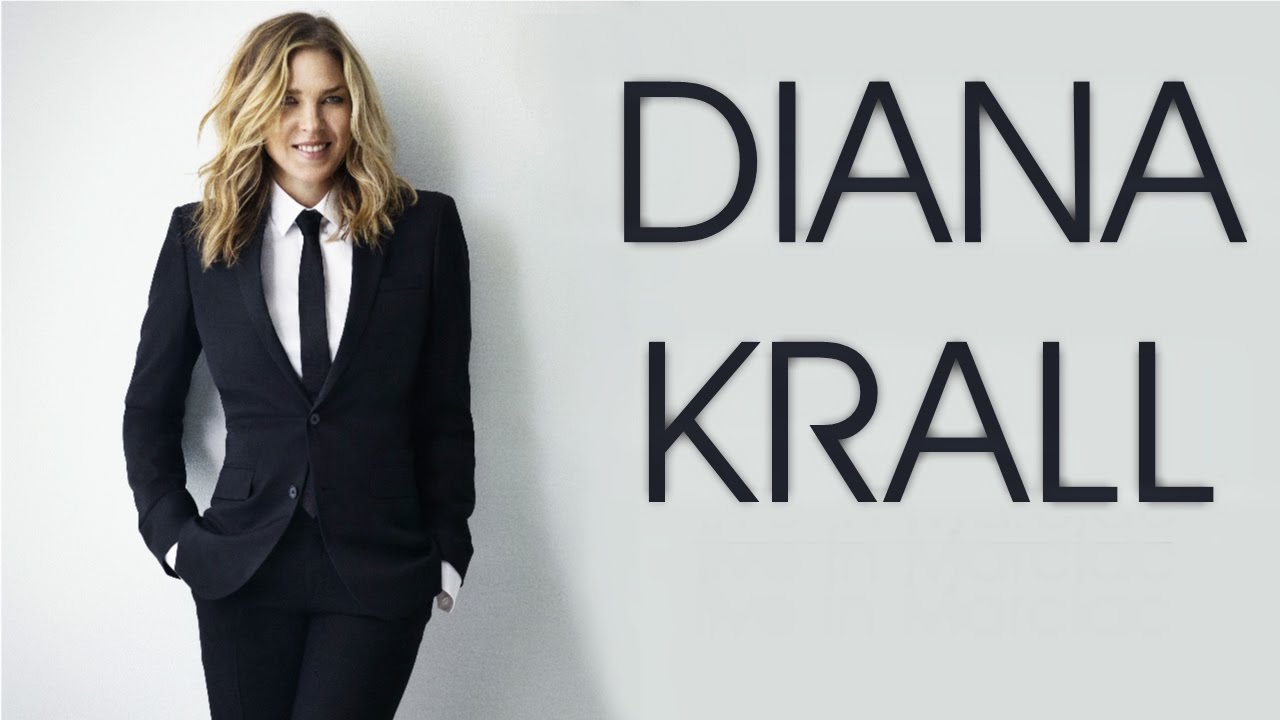
Diana Krall - Live in Concert 2002
Awards & Professional Recognition
| Category | Achievements |
| Grammy Awards | Won Grammy Awards for When I Look in Your Eyes and Live in Paris. |
| Juno Awards | Received multiple Juno Awards, including Artist of the Year and Vocal Jazz Album honors. |
| Chart Success | She is the only jazz singer with eight albums debuting at No. 1 on Billboard’s Jazz Albums chart. |
| Industry Reputation | Widely praised by critics and recognized as one of the leading jazz artists of her generation. |
Krall’s work has earned major industry honors. She has won two Grammy Awards: Best Jazz Vocal Performance for When I Look in Your Eyesin 2000 and Best Jazz Vocal Album for Live in Parisin 2003.
In Canada she has received numerous Juno Awards, with ten wins including Artist of the Year and multiple Vocal Jazz Album of the Year honors.
Her albums have been certified Gold or Platinum in the United States and Canada. She is the only jazz singer to have eight albums debut at No. 1 on Billboard’s Jazz Albums chart.
Critics and peers widely praise her artistry. JazzTimes has described her as “a remarkable artist…one of the greatest interpreters of classic jazz and pop songs,” while NPR has called her “one of the finest jazz vocalists and pianistsof her generation.”
Collaborations With Orchestras & Conductors
In addition to trio concerts, Krall frequently performs with larger ensembles. She has recorded and toured with big bands and jazz orchestras, including work with the Clayton–Hamilton Jazz Orchestra on Christmas Songs(2005).
She has also collaborated with symphony orchestras on special projects. In recent years she performed selections from Turn Up the Quietwith the Nashville Symphony under the direction of Alan Broadbent.
Broadbent has been a longtime pianist and arranger in Krall’s career. She has also produced and arranged for other artists, including co-producing Barbra Streisand’salbum Love Is the Answer(2009).
Krall has worked with prominent conductors and arrangers such as Claus Ogermanand Johnny Mandel. Through recordings and live performances, she continues to bridge jazz with orchestral music.
Recent Career Activity
Diana Krall remains an active performer and recording artist. Her most recent studio album, This Dream of You(2020), received strong reviews and included jazz standards alongside a Bob Dylancover.
She has toured internationally throughout the 2020s, appearing at jazz festivals and concert series. Her touring band has featured longtime collaborator Alan Broadbent, bassist Sebastian Steinberg, and drummer Matt Chamberlain.
Special reissues of her earlier albums, including anniversary vinyl editions, have also been released.
Into 2025 and beyond, Krall continues to announce tours across North America and Europe, with concerts scheduled in major venues, including early 2026 performances in Florida. Through these ongoing activities, she maintains her position as a leading voice in contemporary jazz.
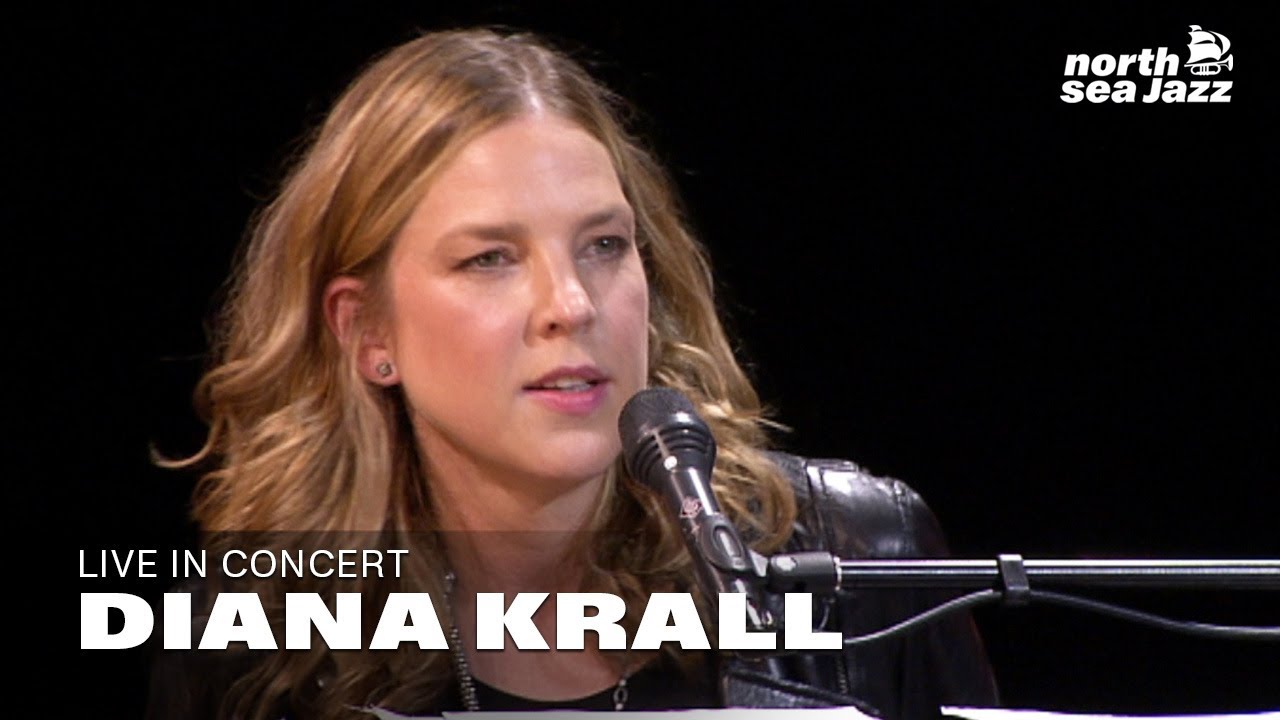
Diana Krall - Full Concert [HD] | North Sea Jazz (2013)
Diana Krall Performance (2025–2026)
- Major U.S. tour (Jan–Apr 2026)Krall announced a 29-city nationwide tourbeginning January 18, 2026 in Jacksonville, FL, with stops in Miami, Memphis, Durham, Baltimore, Port Chester and others, concluding April 7 in Buffalo, NY.
- Canadian tour (Apr 2026)She launched a headlining Canadian tourApril 8–22, 2026, playing FirstOntario Concert Hall (Hamilton), National Arts Centre Southam Hall (Ottawa), Massey Hall (Toronto), Caesars Windsor (Windsor), Jubilee Auditorium (Edmonton), Jack Singer Hall(Calgary) and ending at Vancouver’s Orpheum Theatre.
- International festival appearancesScheduled for summer 2026 festival dates, e.g. Montreux Jazz Festival (Lake Stage, July 2026) where she will perform an “exceptional evening” alongside Jamie Cullum. She also headlined the Jazz Tent at New Orleans Jazz & Heritage Festival on April 26, 2025.
- Prestigious venues and sold-out crowdsKrall’s 2025–26 concerts filled top venues: Detroit’s Fisher Theatresold out on June 14, 2025, and Wolf Trap’s Filene Center (7,028 seats) was “filled nearly to capacity” on July 3, 2025. (She also performed at iconic halls like Massey Hall and the Orpheum Theatre, reflecting her wide appeal.)
- Collaborations and repertoireHer live shows feature high-caliber collaborators (e.g. long-time bassist Sebastian Steinbergand drummer Brian Blade) and a repertoire of jazz standards and originals, showcasing her technical skill and sophistication. (A Detroit reviewpraised her “mesmerizing vocals” and piano interplay.)
- Professional impactConsecutive sold-out tours and festival engagementsdemonstrate Krall’s sustained commercial success and influence. Concert promoters note her ability to draw large audiences nationwide, reinforcing her status as a top-tier jazz performer.
Diana Krall: Piano Technique And Interpretation
Technical Approach And Piano Control
Krall’s piano technique is refined and controlled rather than flashy. She typically favors moderate tempos and seldom pushes the music into very fast territory, relying on calm precision.
Her solos often unfold gradually, starting with simple, single-note lines that build into richer chordal passages. In concert settings she has been noted to occasionally channel the spirit of classic jazz pianists, for example executing brief cascades of fast runs reminiscent of Oscar Petersonor laying down a steady walking bass line under her own melody in the manner of Nat King Cole.
Overall, her playing emphasizes clean articulation and even touch, demonstrating strong control over dynamics and rhythm without resorting to overt showmanship.
Tone, Touch, And Sound Color
Krall’s piano tone is consistently described as warm, rich, and full. She employs a gentle, deliberate touch, especially in ballads, carefully shaping each note.
Critics often praise her “lush, rounded” sound and note the meticulous delicacy of her softest passages. Even in large concert halls, her piano can sound intimate and close: reviewers have remarked on the “velvet” quality of her chords that can make a big theater feel like a small jazz club.
In practice this means she uses pedal and hand motion judiciously to blend notes smoothly, creating a nuanced color palette without losing clarity. The result is a natural, polished tone color that supports the song and adds a smoky warmth to her performances.
Rhythm, Phrasing, And Structural Clarity
Krall demonstrates a strong sense of swing and tasteful rhythmic nuance. Observers note her “hip timing” and light groove in jazz numbers, often playing slightly behind or ahead of the beat to enhance expressiveness.
In up-tempo tunes her pulse remains steady but relaxed, while in slower pieces she may use subtle rubato – stretching phrases gently around key lyrical moments.
Her phrasing tends to highlight the melody and lyrics: one reviewer described her approach as being “as much about emotional shading as melody,” meaning she carefully times notes and silences to underscore the song’s feeling.
Importantly, she keeps song structure clear and logical. Intros, melodies (the “head”), and solos unfold without confusion, so that listeners can easily follow each tune’s form.
This structural clarity ensures that even her improvisations feel coherent within the arrangement.
Interpretative Approach To Repertoire
Krall’s interpretations are song-centered and reverent. She mainly works with jazz standards, romantic ballads, and sophisticated pop tunes, and she arranges them to suit her lyrical, lounge-jazz persona.
Critics note that she treats each song with respect and deliberately fits it to her style, often keeping close to the original harmony while adding subtle twists.
For example, she often slows a ballad or adds a gentle bossa nova rhythm behind it to create a different mood, but rarely alters the fundamental melody.
Many commentators have highlighted how clearly she conveys the lyrics: in one case, her careful diction and focus on the meaning of the words in a ballad were singled out for praise.
In short, Krall’s interpretive mode is low-key and emotive – she brings a personal mood or story to each piece, but always within the framework of the tune.
Her playing and singing work together, so her piano arrangements directly support the song’s narrative and emotional content.
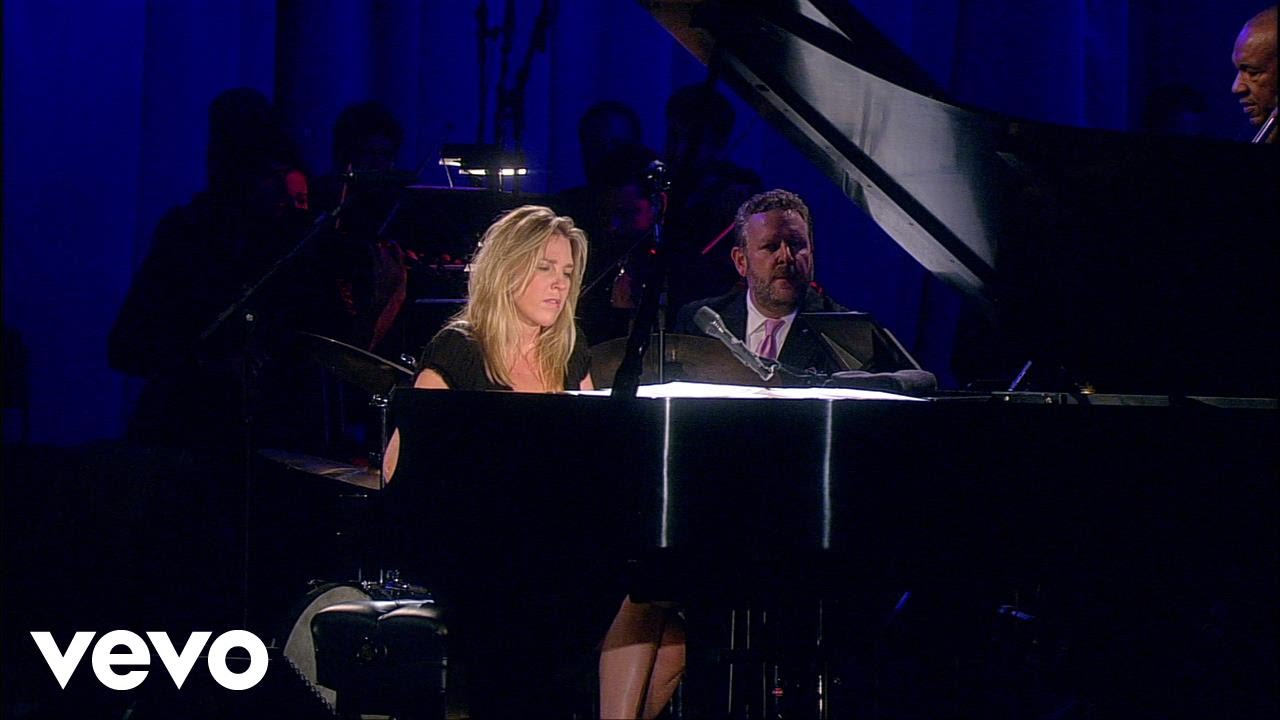
Diana Krall - Walk On By (Live)
Balance Between Precision And Expression
Krall strikes a balance between technical precision and subtle expression. Her playing is highly polished and exact – chords are placed crisply and lines cleanly – but she uses these tools in service of feeling.
Some jazz critics have described her approach as somewhat conservative or “cautious,” noting that she rarely takes extreme artistic risks. However, others appreciate her nuanced restraint.
Reviews often praise her “art of understatement,” observing that she can make music “smolder” with feeling even in quiet moments.
In practice, this means Krall maintains perfect tempo and accuracy in the right-hand melody while adding gentle dynamic swells, slight timing shifts, or soft pedal touches for color.
The overall effect is that her performances feel heartfelt without ever sounding sloppy or uncontrolled. Rather than an overt, loud virtuosity, her expression comes through measured shading – precise control yields an intimate emotional impact.
Critical Observations And Musical Identity
Krall’s artistic identity is defined by elegant understatement and warmth. Critics consistently emphasize that her strength lies in restraint, subtlety, and style.
She projects a sophisticated jazz sensibility with a sultry charm: polished, even at her most intimate. Her timing and groove are often described as impeccable, and her sound carries a signature smokiness.
This blend of clear technique with mellow expression has set her apart in jazz.
Some purists have wished she were more adventurous, but many commentators recognize that her careful balance is intentional, giving the Great American Songbook and other standards an accessible freshness.
In essence, Diana Krall is seen as a jazz pianist who prioritizes musicality over flash; her identity rests on making each note count, achieving both clarity and feeling in every performance.
Diana Krall Net Worth
As of 2026, entertainment-media sources estimate Diana Krall’s net worth to be between $18 million and $22 million. Krall is a Canadian jazz pianist and singer whose decades-long career has built her fortune through album recordings and live performances.
She has sold more than 15 million albums worldwide and won two Grammy Awards and eight Juno Awards, making her one of the best-selling jazz artists. Her income comes primarily from album sales, live concerts, and endorsements. She continues releasing albums and touring internationally, which sustains her earnings.
FAQs
1. Who Is Diana Krall And Why Is She Famous?
Diana Krall is a Canadian jazz pianist and singer known for her distinctive contralto voice and elegant piano style. She is widely recognized for bringing jazz standards to a global audience through critically acclaimed albums and international tours.
2. What Are Diana Krall’s Most Successful Albums?
Diana Krall’s most successful albums include When I Look in Your Eyes(1999) and The Look of Love(2001), both of which reached No. 1 on Billboard’s Jazz chart. These albums earned Grammy Awards and Platinum certifications in North America.
3. Has Diana Krall Won Any Grammy Awards?
Yes, Diana Krall has won multiple Grammy Awards, including Best Jazz Vocal Album for When I Look in Your Eyesand Live in Paris. She has also received numerous Grammy nominations throughout her career.
4. Is Diana Krall Still Touring And Performing?
Diana Krall remains an active performer and continues to tour internationally. Her recent concert schedules include performances across North America and Europe through 2025 and early 2026.
5. What Style Of Music Does Diana Krall Perform?
Diana Krall primarily performs jazz, focusing on classic standards, ballads, and select pop interpretations. Her music blends traditional swing, vocal jazz, and occasional bossa nova influences.