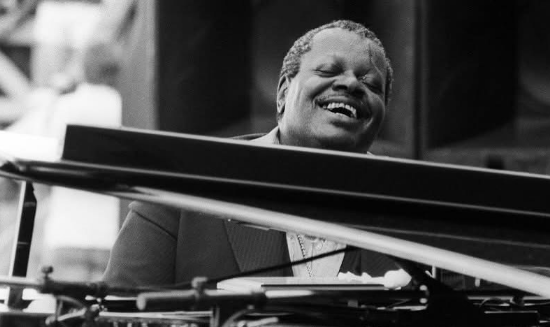
Oscar Petersonwas born on August 15, 1925, in Montreal, Quebec. He was the fourth of five children in a working-class family. His father, Daniel Peterson, worked as a porter for the Canadian Pacific Railway and his mother, Olive (née John) Peterson, worked as a housekeeper.
The family lived in a modest walk-up on rue Delisle in Montreal’s Little Burgundy district (also known as Saint-Henri). This neighborhood was a diverse, largely Black and immigrant community centered around the Windsor CPR station.
In childhood Peterson showed an early aptitude for music. He played both the piano and the trumpet as a young boy, but after contracting tuberculosis at age seven he resolved to focus on the piano. He spent over a year in hospital recovering from tuberculosis; fortunately he survived, while tragically his younger brother Fred later died of the same illness in 1934.
Even as a child, Peterson practised for hours each day. He often learned music by ear: for example, he would listen to his older sister Daisy play the piano and then reproduce her pieces by listening.
His sister Daisy became his first teacher and introduced him to foundational piano and theory; she guided him through the Royal Conservatory of Music (RCM) curriculum when he began formal lessons.
As a youth, Peterson’s musical education expanded through study with respected local pianists. Around age eleven he took lessons from jazz pianist Louis Hooper, who recognized the young boy’s talent.
A few years later, at about age fourteen, he studied with Paul de Marky, a Hungarian-born classical pianist. De Marky had been trained in the Liszt tradition, and his teaching helped Peterson develop confidence and strong classical technique.
| Aspect | Details |
| Birth | Born August 15, 1925, in Montreal, Quebec. |
| Family Background | Fourth of five children. |
| Parents’ Occupations | Father was a railway porter; mother was a housekeeper. |
| Childhood Neighborhood | Grew up in Little Burgundy, Montreal. |
| Early Musical Interest | Showed musical talent early in life. |
| Early Instruments | Played piano and trumpet. |
| Health Impact | Tuberculosis at age seven. |
| Musical Focus | Switched fully to piano afterward. |
| Practice Habits | Practiced for several hours daily. |
| Learning Style | Learned many pieces by ear. |
| First Teacher | Taught initially by his sister Daisy. |
| Formal Education | Followed RCM piano studies. |
| Jazz Training | Studied with Louis Hooper. |
| Classical Training | Later trained under Paul de Marky. |
| Death | Died December 23, 2007. |
| Age at Death | Passed away at age 82. |
| Cause of Death | Declining health after a 1993 stroke. |
Career
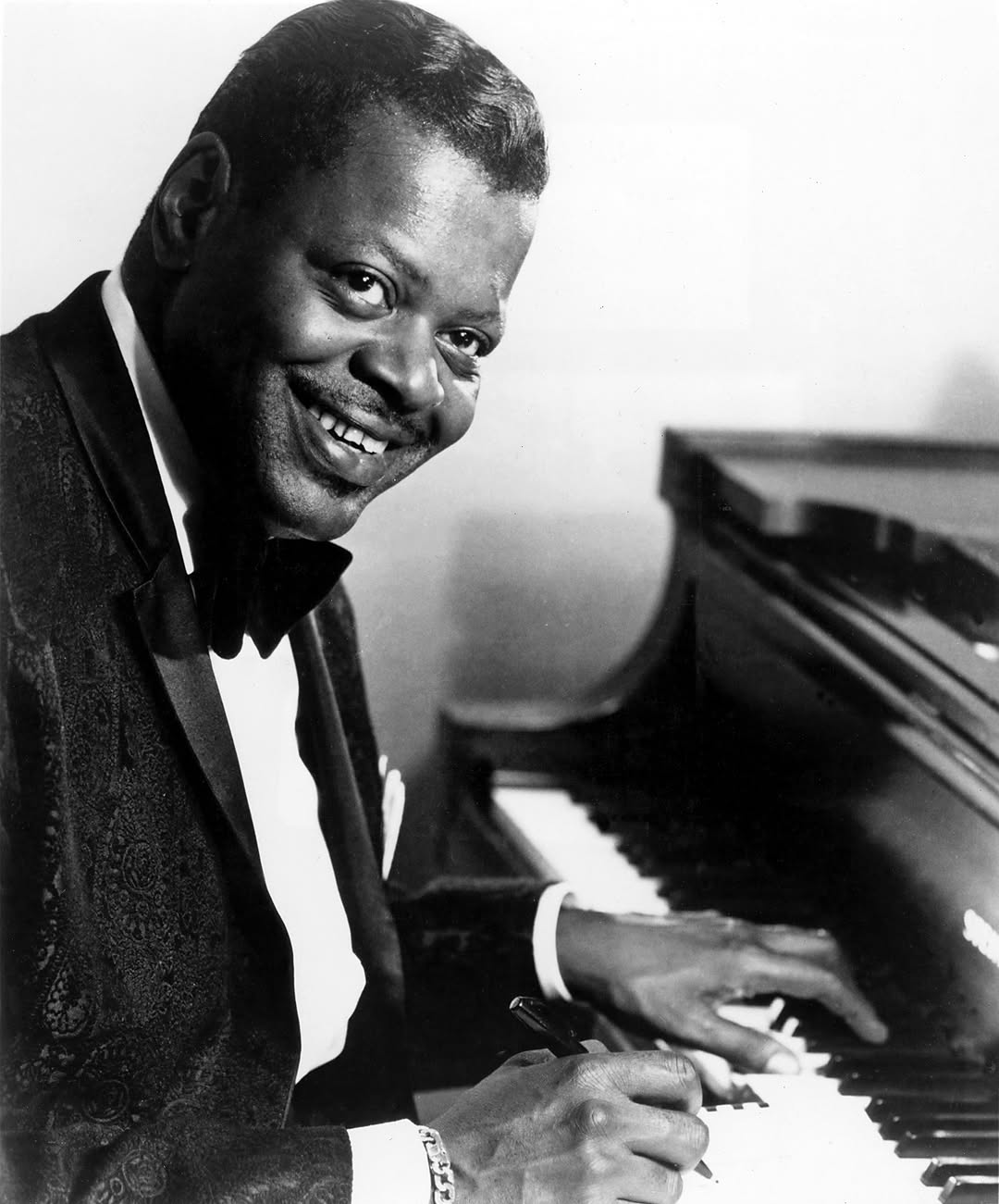
Oscar Peterson was born and raised in Montreal, where his prodigious piano talent became evident early. At age 14 he won the Canadian Broadcasting Corporation’s national music competition, a victory that brought him a regular radio spot and the confidence to pursue music professionally. Still a teenager, he joined trumpeter Johnny Holmes’s orchestra as a pianist, and in 1945 he formed his own jazz trio (piano, bass, guitar) for the first time.
This trio format became his signature ensemble throughout his career. Peterson’s early trio recordings many in a boogie-woogie style showcased his dazzling technique and creativity. By the late 1940s he was attracting notice from visiting American jazz greats.
Duke Ellingtonfamously called him the “Maharaja of the Keyboard,” reflecting the high esteem in which fellow musicians held his playing. These years in Montreal laid the groundwork for his musical style and set the stage for wider recognition.
International Breakthrough
Peterson’s international breakthrough came in 1949 when legendary impresario Norman Granzdiscovered him. Granz happened to hear Peterson on a live radio broadcast and immediately arranged for the 24-year-old to appear as a “surprise guest” at a Jazz at the Philharmonic concert in New York’s Carnegie Hall.
Sharing the stage with Ella Fitzgerald, Charlie Parkerand Coleman Hawkinsat Carnegie Hall, Peterson stunned the audience with his virtuosity. This triumph opened doors: in 1950 he joined Granz’s Jazz at the Philharmonic touring company full-time.
Under Granz’s management Peterson soon signed to Clef Records (later Verve) and began recording prolifically. He quickly became a fixture on the international jazz circuit, living up to Granz’s promise that Peterson would become a “giant” of jazz.
Early on he formed a celebrated partnership with bassist Ray Browneven recording as a piano-bass duo and added guitarists like Barney Kesselto his trio in these years. His meteoric rise was underscored by critical acclaim: he was voted DownBeat magazine’s Jazz Pianist of the Year in 1950 and held that title for 13 consecutive years, signaling his reputation as a leading pianist worldwide.
Major Performances & Concert Highlights
| Performance Area | Highlights |
| Jazz at the Philharmonic | Peterson performed regularly with Norman Granz’s touring concerts alongside leading jazz musicians. |
| Major Venues | He headlined Carnegie Hall multiple times and performed at major international concert halls. |
| Live Recordings | His live album On the Town (1958) was recorded at Toronto’s Town Tavern. |
| Festivals | He performed frequently at major jazz festivals, including multiple appearances at Montreux. |
| Late Career Performances | After a 1993 stroke, he returned to live performance and continued appearing on stage into his later years. |
Throughout his career, Peterson was a tireless live performer who played thousands of concerts around the world. In the 1950s and 1960s he led extensive tours in North America, Europe, Asia and Africa, often packing concert halls with eager jazz audiences.
He headlined major venues such as Carnegie Hall (returning there many times after his debut) and recorded live albums at significant events; for example, the 1958 live trio recording On the Town with the Oscar Peterson Triowas captured at Toronto’s Town Tavern.
Peterson was also a frequent guest at international jazz festivals for instance, he performed multiple times at the Montreux Jazz Festival during the 1970s and made television appearances showcasing extended solo and trio performances.
Even during his busiest years he rarely failed to amaze listeners: his performances were known for both spectacular speed and deep feeling. (Notably, after suffering a stroke in 1993 he defied expectations by rehabilitating himself and gradually returning to the stage, continuing to perform and record well into his later life.)
Recordings & Discography
Oscar Peterson’s recorded legacy is enormous. He recorded on the order of two hundred albums (and countless singles and sessions) for major jazz labels including Verve, Clef, Mercury, MPS, Pablo and Telarc.
His discography spans classic small-group trio albums as well as collaborations with big bands and orchestras. Among his most famous trio recordings are the Verve albums Night Train(1958), We Get Requests(1964) and The Trio(recorded live in 1961), which showcase his brilliant swing and ballad playing alongside bassist Ray Brown and drummer Ed Thigpen.
He also recorded themed “songbook” albums in the 1950s covering the works of Gershwin, Kern, Porter and others, often with lush orchestral arrangements. Over the years Peterson appeared as a sideman or featured soloist on hundreds of other recordings.
He worked with jazz legends on record for example, he recorded duet albums with vocalist Ella Fitzgerald (Ella and Oscar, 1975) and collaborated on LPs with Louis Armstrong, Roy Eldridge and others. His versatility allowed him to record anything from straight-ahead swing to bossa novas and pop tunes.
Awards & Professional Recognition
Throughout his career, Peterson received numerous honors reflecting his stature in jazz. He won eight Grammy Awards (and later a Grammy Lifetime Achievement Award).
Internationally he was awarded Japan’s Praemium Imperiale (often called a global arts “Nobel Prize”) and the UNESCO International Music Prize. In 1993 he became only the third-ever recipient of Canada’s Glenn GouldPrize, chosen unanimously for the first time in the award’s history.
In his native Canada, Peterson received the nation’s highest civilian honors: he was first made an Officer of the Order of Canada and later (1984) promoted to Companion of the Order of Canada. He was also named a Chevalier of the Ordre national du Québec and received the Order of Ontario for his contributions to Canadian culture.
Jazz fans and critics bestowed poll-voter accolades as well as noted, he topped DownBeat’s annual jazz piano poll throughout the 1950s. He earned multiple Juno Awards in Canada during the 1970s and 1980s for his recordings, and in 1978 he was inducted into the Canadian Music Hall of Fame (later the Canadian Songwriters Hall of Fame).
Collaborations With Orchestras & Conductors
Peterson’s career also included notable projects with orchestras and conductors. In 1980 he was invited to perform with the Boston Pops Orchestraunder the baton of John Williamsin a televised “Evening at the Pops” special.
In that concert he played jazz standards like “Sweet Georgia Brown” with full orchestral accompaniment, demonstrating his ability to bridge jazz and more classical-pop formats. He later joined symphonic arrangements of his music ( the posthumous Africa Suitewas arranged by John Clayton for a jazz orchestra).
Peterson also engaged with classical figures: he recorded a jazz/classical crossover album with world-renowned violinist Itzhak Perlmantitled Side by Side(Telarc, 1994). He worked with acclaimed arrangers such as Nelson Riddle and film composer Michel Legrand on jazz projects as well.
Recent Career Activity
In the 21st century, Peterson’s legacy has remained active through posthumous releases and tribute events. His playing career continued nearly until the end of his life (he was still recording and touring into the early 2000s), but after his 2007 passing it is mainly others who have carried forward his music.
In 2015, Peterson’s estate assembled a tribute album called Oscar, With Love, on which a star-studded lineup of modern pianists (including Hiromi Uehara, Chick Coreaand Monty Alexander, among others) performed Peterson compositions on his own Bösendorfer piano.
In 2022 a new recording of his civil-rights-era anthem “Hymn to Freedom” was released to mark the composition’s 60th anniversary, performed by a trio led by pianist Benny Green and bassist John Clayton.
A major recent development has been the completion of Peterson’s unfinished Africa Suite, a large-scale work inspired by Nelson Mandela: John Clayton arranged and conducted the suite for a jazz orchestra, and it received its world premiere at Toronto’s Koerner Hall in February 2020.
The suite had its U.S. premiere in June 2024 at San Francisco’s SFJAZZ Center, and performances (including one by the Chicago Jazz Orchestra in June 2025) continue to bring this work to audiences.
Finally, 2025 marks Peterson’s 100th birthday, which has been honored by Canadian institutions: for example, Massey Hall in Toronto staged a star-studded “Oscar Peterson at 100” concert in June 2025 featuring over 20 Canadian jazz musicians celebrating his music.
Oscar Peterson Performance Highlights
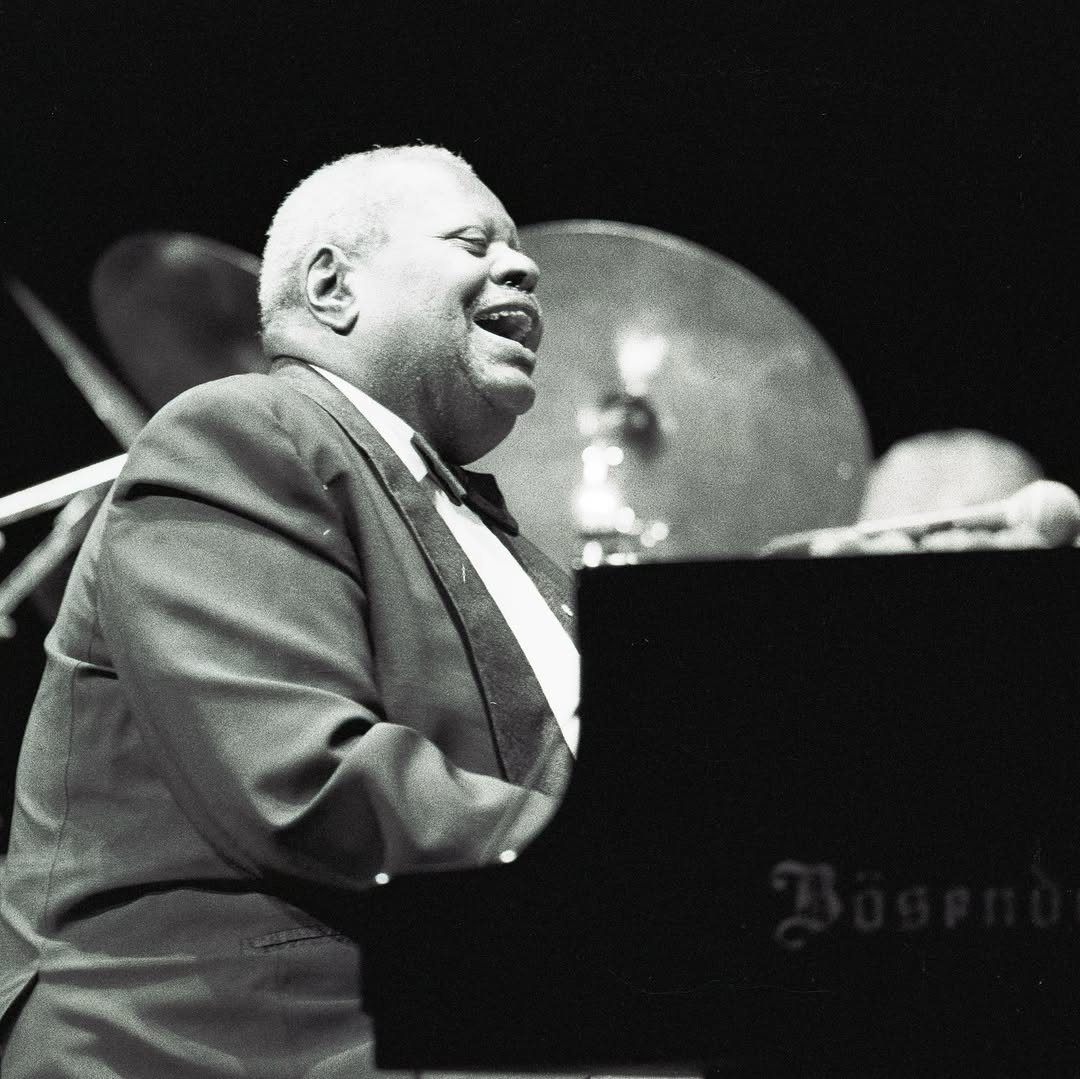
- Norman Granz’s Jazz at the Philharmonic:Peterson made his U.S. debutas a 24-year-old guest with Granz’s all-star tour at Carnegie Hall and continued touring with JATP, sharing bills with Ella Fitzgerald, Roy Eldridge, Lester Young, Lionel Hamptonand others.
- Extensive global touring:Over a six-decade career he played thousands of concerts worldwide”, performing continuously on major tours across North America, Europe and Asia. His schedule remained active into his 80s.
- Prestigious venues and festivals:He headlined top jazz venues and events (e.g. Montreux Jazz Festival in 1979) and concert halls (Royal Albert Hall, London in 2005; Hollywood Bowl, Los Angeles in 2003; Roy Thomson Hall, Toronto in 2002, etc.), drawing large audiences worldwide.
- Collaborations with jazz legends:He performed in celebrated groups, notably his classic 1950s trio with guitarist Herb Ellis and bassist Ray Brown, and recorded duo albums with Joe Pass. Peterson also regularly shared the stage or studio with giants like Ella Fitzgerald, Count Basie, Dizzy Gillespie and others.
- Late-career performances:Peterson remained a drawing card until the end. His final public concert was December 10, 2007 at Kodak Hall (Eastman Theatre) in Rochester, NY, just two weeks before his death, demonstrating that his virtuosity stayed intact into his last year.
- Peer acclaim:Fellow musicians recognized his showmanship: Duke Ellington famously dubbed Peterson the “Maharaja of the keyboard”, reflecting his reputation for dazzling technique and swing in live performance.
Oscar Peterson’s Piano Style And Musical Interpretation
Technical Approach And Piano Control
Oscar Peterson’s pianism is defined by extraordinary technical command. Writers describe his touch as meticulous precision and dexterity, enabling him to execute lightning fast runs and intricate chordal textures. His left hand is almost as agile as his right, which allows for dense, two handed lines and independent bass patterns.
Peterson could vary his articulation and timing deliberately. He explained that on a given night he might elongate the time or drop back on the time on a tune to change its character. This flexibility reflects his deep control over rhythm and touch.
Fellow musicians noted that his enormous technique was always in service of the music, not mere showboating. For example, critical commentary emphasizes his dazzling, fluid technique executed with a powerfully swinging style.
In practice, Peterson combined Classical training with jazz practice. He reportedly worked extensively on exercises, scales, and two hand independence, building the endurance and coordination that let him turn on the steam at will without losing clarity.
Tone, Touch, And Sound Color
Peterson’s tone was consistently clear and richly colored across all dynamics. Critics and analysts note his precisely calibrated piano touch, which produced a clean, singing sound even at high speed.
He deliberately voiced lines legato when he wanted a horn like warmth. In interviews he described running one note into another and bending pitches as if played by a saxophone, to create a fluid, lyrical effect.
This approach let him shape phrases smoothly. He even hummed along with lines to refine his articulation and to place the sustain pedal exactly.
When needed, Peterson could unleash a powerful, percussive attack, but he always maintained tonal balance so that every note rang clearly.
In essence, his touch allowed both brilliant clarity and warm sonority: a light, bell like quality on delicate passages and a full bodied resonance on big chords.
Rhythm, Phrasing, And Structural Clarity
Swing and momentum are central to Peterson’s phrasing. Observers agree that he had an impeccable sense of time and an innate swing feel. Jazz commentators have written that Peterson’s time feel and deep rooted blues influence made even high speed performances always compelling.
His left hand often plays strong, stride like bass figures or walking patterns that propel the rhythm forward, while his right hand weaves clear, inventive melodies. Analytical descriptions characterize his approach as buoyant and propulsive, noting that his left hand supplies robust stride and walking bass lines beneath melodic improvisations.
Peterson’s sense of form and phrase structure is also scrupulous. In interviews he described starting a solo chorus by closely outlining the tune’s head.
He explained that during the first chorus he would not stray far from the melody, instead hinting at it continuously so that listeners have the song’s framework in mind. Only after establishing the theme does he expand his improvisation.
This ensures structural clarity: each solo builds logically, with melodies and motifs recalled for coherence. His overall phrasing is relentless and energetic.
Analytical commentary notes that Peterson’s improvisations are breathless, with very little space between ideas. In practice, Peterson could stretch or compress phrases subtly to enhance swing and drive, but he never obscured the form.
Interpretative Approach To Repertoire
Peterson’s interpretations always showed respect for a tune’s melody and mood. He often played standards and songbook material, and critics observe that he framed them with the song’s essential character foremost.
For example, commentary on his interpretations of Gershwin material praised the way Peterson would cut out everything but the straight flowing melody, then illuminate the underlying harmony.
Similarly, Peterson himself said that in a ballad setting he reduced everything down to the essentials of the tune so as to give the tune its full worth and pay respects to the melody.
He also took the song’s content and lyric into account. Peterson remarked that for songs with words, he imagines the lyrics and strives not to stray from what the composer intended.
This sensibility kept his renditions expressive. A tune with a romantic lyric might be played tenderly, whereas a blues or upbeat standard could be rendered with more drive.
Across genres, his arrangements always balanced fidelity to the original material with his own swing style. Even in more unusual choices, Peterson’s core approach was the same: honor the melody, emphasize rhythmic vitality, and then improvise with his characteristic harmony and blues vocabulary.
Balance Between Precision And Expression
Observers consistently note Peterson’s unique balance of extreme precision with expressive vitality. His technique was exact, yet he never sounded mechanical.
Analytical commentary describes Peterson’s style as a synthesis of technical virtuosity, emotional depth, and rhythmic vitality. He wove soulful blues feeling into his playing at all times, giving even complex bebop lines a warm, swinging pulse.
Critics and musicians alike have emphasized his deep rooted blues influence that underlies his crisp articulation.
In practice, this meant Peterson could shift from thunderous runs to caressing legato instantly, without losing stylistic coherence. When playing up tempo, he drives the rhythm relentlessly yet infuses it with gospel tinged or blues based figures.
On ballads he could mellow into a lyrical, singing approach. Critics have noted that he plays nearly everything with consistent force and energy, leaving no gaps in the swing, but that force is guided by musical nuance.
Analytical descriptions observe that his solos escalate in complexity without sacrificing melodic coherence. In sum, Peterson exemplified a balance between emotional communication and structural control.
Critical Observations And Musical Identity
Across his career, Oscar Peterson’s playing style became widely recognized as a defining model of jazz piano. He is frequently cited as a leading exemplar of the swing and bebop traditions.
Critical profiles highlight his dazzling, fluid technique and his powerfully swinging style. Writers and fellow musicians have often pointed out how he inherited Art Tatum’s virtuosity while adapting it to a modern rhythm section context.
Analytical discussions frequently mention his powerful tone, preference for full chord voicings, and persistent blues inflection as defining traits.
In retrospectives, his name is often used to signify technical brilliance combined with rhythmic vitality. Analytical tributes describe his playing as marked by lightning fast runs, intricate chord voicings, and seamless improvisations.
His musical identity is described as remarkably consistent, even as jazz styles evolved around him. Peterson maintained a core approach defined by clean execution, rhythmic drive, and melodic clarity.
The prevailing critical consensus characterizes Oscar Peterson as a pianist whose technique, tonal control, and rhythmic authority formed a unified and unmistakable musical voice.
The Lamp Is Low (Live)
Oscar Peterson Net Worth
At the time of his death in 2007, Oscar Peterson’s net worth was not reported by any major financial outlet. Unofficial online mentions vary widely for example one forum post estimated roughly $18 million but these figures are unconfirmed and should be treated cautiously.
Peterson earned his income through a long jazz career he released over 200 albums and won eight Grammy Awards. He also performed worldwide thousands of times over a career spanning more than sixty years and earned money from album sales concert appearances and music royalties. No authoritative source published an official net worth estimate.
FAQs
1. Who Was Oscar Peterson?
Oscar Peterson was a Canadian jazz pianist born in Montreal in 1925. He is widely regarded as one of the greatest jazz pianists of all time due to his technical mastery, swing feel, and extensive recording career.
2. Why Is Oscar Peterson Considered One Of The Greatest Jazz Pianists?
Oscar Peterson was known for exceptional technical control, rhythmic precision, and a deep blues influence. His playing combined classical discipline with jazz improvisation, earning admiration from peers such as Duke Ellington.
3. What Are Oscar Peterson’s Most Famous Albums?
Some of Oscar Peterson’s most well-known albums include Night Train(1958), We Get Requests(1964), and The Trio(1961). These recordings highlight his signature trio sound and remain jazz standards.
4. Did Oscar Peterson Win Any Major Awards?
Oscar Peterson won eight Grammy Awards and received a Grammy Lifetime Achievement Award. He was also a Companion of the Order of Canada and a recipient of the Glenn Gould Prize.
5. Where Was Oscar Peterson Born And Trained?
Oscar Peterson was born and raised in Montreal, Quebec, specifically in the Little Burgundy neighborhood. He received early musical training from his sister and later studied with respected jazz and classical pianists in Montreal.
6. When Did Oscar Peterson Die And What Was The Cause Of His Death?
Oscar Peterson died on December 23, 2007, at the age of 82. His death followed several years of declining health after a stroke in 1993; no single acute cause was publicly specified by his family.