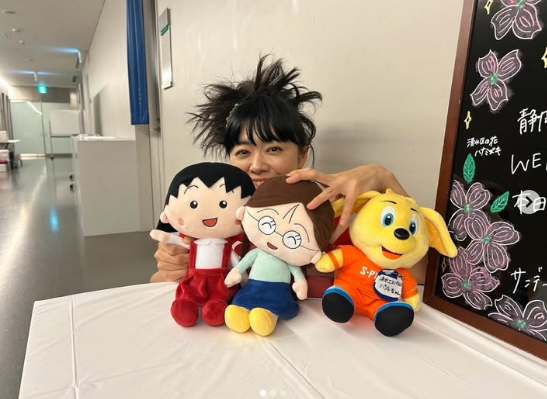
Hiromi Ueharawas born on March 26, 1979, in Hamamatsu, Shizuoka Prefecture, Japan. Hamamatsu is known for its musical culture (it is home to the Yamaha piano factory). In her family, an upright piano was originally purchased for her older brother; when he lost interest, Hiromi began lessons on that instrument at age six. Her mother accompanied her to the first piano lesson, and Hiromi immediately fell in love with the piano and music. These early family experiences in Hamamatsu helped nurture her passion for music from a young age.
Early Musical Training And Influences
Hiromi’s first piano teacher was Noriko Hikida, who emphasized expressive, intuitive playing over strict technical instruction. Hikida studied with Hiromi for many years and encouraged her to feel the music; Hikida used color coding on sheet musicto teach dynamics and expression (saying “play red” for passionate passages, “play blue” for mellow ones).
Hikida also introduced Hiromi to jazz music early on. When Hiromi was eight years old, Hikida sent her home with classic jazz recordings notably Erroll Garner’s Concert by the Sea and Oscar Peterson’sWe Get Requests which became Hiromi’s first exposure to jazz improvisation. Hiromi later credited her teacher with showing her how to improvise and “play what she feels”, laying a foundation for her own musical style.
Alongside private lessons, Hiromi enrolled in the Yamaha School of Music at age six. At Yamaha’s music program, she received structured training while still in elementary school. By that time she had already begun composing her own pieces. In sum, Hiromi’s childhood education combined formal study (Yamaha School) with her teacher’s creative approach. These experiences gave her a grounding in classical technique and early compositional practice even before her teenage years.
Further Education
After her formative years in Japan, Hiromi pursued advanced music studies abroad. In 1999 (at age 20) she moved to the United States to attend the Berklee College of Musicin Boston. Her time at Berklee continued her musical education.
| Aspect | Details |
| Birth | Born on March 26, 1979, in Hamamatsu, Shizuoka, Japan. |
| Cultural Background | Hamamatsu is known for its strong musical culture. |
| First Piano | The family upright piano was originally bought for her brother. |
| Start of Lessons | Hiromi began piano lessons at age six. |
| Early Influence | She fell in love with music at her first piano lesson. |
| First Teacher | Her first teacher was Noriko Hikida. |
| Teaching Style | Hikida focused on expressive and intuitive playing. |
| Jazz Introduction | She was introduced to jazz at age eight. |
| Early Training | She studied at the Yamaha School of Music. |
| Higher Education | She attended Berklee College of Music in the United States. |
Career Beginnings
Hiromi Uehara’s professional career took off while she was still a student at the Berklee College of Music. In 2003, she released her debut album Another Mind on Telarc (now Concord Jazz), a recording coproduced by jazz legend Ahmad Jamal.
Another Mind blended jazz with rock and classical elements and was a breakthrough in her native Japan it sold over 100,000 copies and was named the Recording Industry Association of Japan’s Jazz Album of the Year.
Early on she led a small trio (with bassist Mitch Cohn and drummer Dave DiCenso) and quickly gained acclaim for her virtuosic piano style.
She followed her debut with a string of acclaimed albums in Japan, including Brain (2004) and Spiral (2006), which further established her reputation as a creative composer and bandleader.
International Breakthrough
By the mid 2000s Hiromi was building an international profile. In 2006 she formed her electrified fusion band Hiromi’s Sonicbloom (adding guitarist David Fiuczynski, bassist Tony Greyand drummer Martin Valihora).
With Sonicbloom she recorded Time Control (2007) and Beyond Standard (2008), albums that showcased rockinfluenced grooves alongside her jazz virtuosity.
During this period Hiromi began collaborating with major American jazz figures: notably, she met Chick Coreain Tokyo as a teenager and later performed and recorded the live duo album Duet (recorded 2007, released 2008) with him.
She also joined bassist Stanley Clarke’s band, appearing on Clarke’s 2009 Jazz In the Garden, which won the 2011 Grammy Award for Best Contemporary Jazz Album.
These highprofile partnerships coupled with intense touring in the U.S., Europe and Asia solidified Hiromi’s international breakthrough as a boundary pushing jazz pianist and composer.
Major Performances & Concert Highlights
Hiromi has headlined stages around the world, earning a reputation for dynamic live shows. In Japan she regularly performs at premier venues (including the Blue Note Tokyo, where her 2007 concert with Chick Coreawas recorded).
Abroad, she has played major jazz festivals and concert halls. For example, she was featured on Japan Day at the Montreux Jazz Festival in Switzerland in July 2014, representing top Japanese jazz artists.
She made her debut at Hamburg’s Elbphilharmonie concert hall in 2019 (as a solo act) and returned with her full band in 2024 for a much anticipated performance.
One of her most notable appearances was performing piano at the Tokyo 2020 Olympic Games opening ceremony in 2021, bringing her artistry to a global audience.
Hiromi also frequently tours the United States (including clubs like New York’s Blue Note) and Europe, often selling out shows with her trio or quartet.
Recordings & Discography
| Period | Key Releases |
| Early Career | Another Mind (2003), Brain (2004), Spiral (2006) |
| Sonicbloom Era | Time Control (2007), Beyond Standard (2008) |
| Solo & Trio Projects | Place to Be (2009), Voice (2011), Move (2012), Alive (2014), Spark (2016) |
| Recent Projects | Spectrum (2019), Silver Lining Suite (2021), Sonicwonderland (2023), Out There (2025) |
Hiromi has released thirteen studio albums to date, exploring solo and group formats. After Another Mind (2003) she put out Brain (2004) and Spiral (2006), all on Telarc/Concord Jazz.
In 2007 she led Sonicbloom on Time Control, and continued with that band on Beyond Standard (2008).
She issued her first solo piano album, Place to Be, in 2009. In 2011 she formed The Trio Project with bassist Anthony Jackson and drummer Simon Phillips, releasing Voice (2011), Move (2012) and Alive (2014), and later Spark (2016) the latter becoming her first U.S. Billboard Jazz #1 album.
Hiromi then experimented with new formats: the solo album Spectrum (2019) showcased imaginative solo jazz, and Silver Lining Suite (2021) was a concept album written for piano and string quartet.
In 2017 she also recorded a live duet album with Colombian harpist Edmar Castañeda (Live in Montreal).
Recently she debuted her new band Hiromi’s Sonicwonder, releasing Sonicwonderland in 2023.
Her latest studio album is Out There (April 2025), a high energy fusion recording featuring her Sonicwonder band (trumpet, bass, drums and keys).
Awards & Professional Recognition
Hiromi’s work has earned wide recognition. Her debut album Another Mind won Japan’s Jazz Album of the Year award (RIAJ) and went gold.
In Japan she has won numerous industry honors: for example, her second album Brain received Swing Journal’s New Star Award and Best Japanese Jazz Album from major retailers.
She has been voted pianist and album of the year in Japan’s Swing Journal and Jazz Life critics’ polls multiple times during the 2000s.
Internationally, Hiromi earned a Grammy in 2011 as part of Stanley Clarke’s band for Jazz in the Garden.
Critics and fellow musicians frequently praise her; jazz legend Ahmad Jamalhas remarked that Hiromi “continues to change the musical landscape everywhere she performs,” adding that her music and “overwhelming charm and spirit … soar to unimaginable musical heights.”
Outlets like NPR, The New York Times and major jazz publications have lauded her creativity and energetic performances.
Collaborations With Orchestras & Conductors
Hiromi’s musical vision extends into classical and orchestral realms as well as jazz. In her teens she appeared as soloist with the Czech Philharmonic Orchestra, demonstrating early her facility in a classical context. In her recorded music she often integrates string ensembles and orchestral textures.
Most notably, Silver Lining Suite (2021) is composed for Hiromi on piano accompanied by two violins, a viola and cello effectively a piano quintet blending jazz improvisation with string chamber writing.
She has performed these compositions with string quartet and chamber orchestras in concert halls, bridging the roles of jazz bandleader and classical soloist.
(Hiromi has also arranged pieces like Gershwin standards for larger ensembles and composed music for film and multimedia for example scoring the anime film Blue Giant in 2023 reflecting a broad collaborative range beyond the traditional trio setting.)
Recent Career Activity
In the past few years Hiromi has remained highly active. After the string quintet project Silver Lining Suite, she introduced her Sonicwonder band in 2023, featuring Adam O’Farrill (trumpet), Hadrien Feraud (bass) and Gene Coye (drums).
Their debut album Sonicwonderland earned acclaim for its fusion jazz energy. In April 2025 she released Out There, her 13th studio album, again with Sonicwonder.
Hiromi continues to tour extensively with this ensemble, performing new material live around the world.
In addition to concerts, she has taken on composition commissions and media projects (such as the Blue Giant film score).
Across all these activities, Hiromi’s work remains at the forefront of contemporary jazz, consistently introducing inventive concepts and thrilling audiences worldwide.

Hiromi Uehara - The Trio Project - Dancando no Paraiso - Jazz à Vienne 2011 - LIVE HD
Hiromi Uehara Performance (2025–2026)
- April 2025 – North America tour:Hiromi’s Sonicwonder quartet supported her new album with concerts in major US cities, playing venues like Chicago Symphony Center and New York’s famous Blue Note jazz club.
- October 2025 – Australia tour:The group headed Down Under, headlining Sydney’s City Recital Hall, Perth’s Octagon Theatre, Melbourne’s Hamer Hall and Adelaide Town Hall.
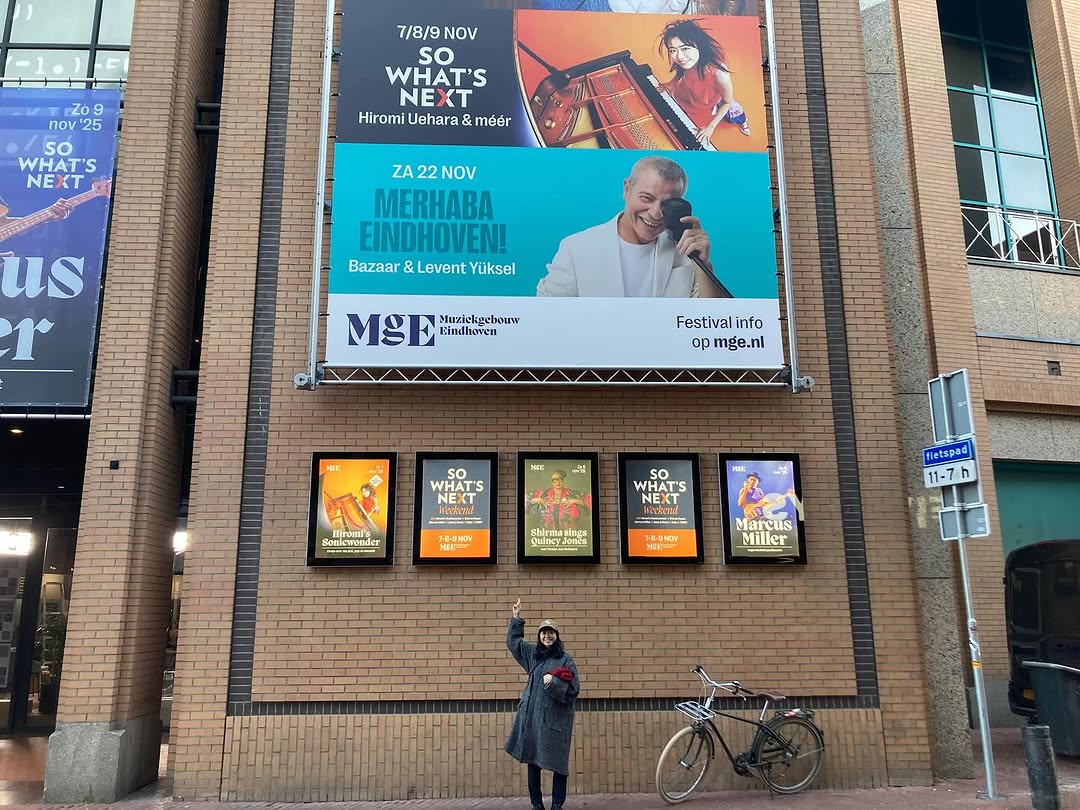
- November 2025 – Europe tour:Sonicwonder returned to Europe for a high-profile tour, with performances at Muziekgebouw Frits Philips (Eindhoven), Rockit Festival (Groningen), Amare (The Hague), Madrid’s Teatro Fernán Gómez, Italy’s Gran Teatro Geox (Padua), Luxembourg Philharmonie, Halle aux Grains (Toulouse) and London’s Barbican Centre.
- Late 2025 – Asia concerts:The band also played in Asia, including a November 24, 2025 show at Hong Kong’s Tsuen Wan Town Hall. (A Beijing date was scheduled but later cancelled.)
- May 2026 – North America tour:In spring 2026 Hiromi’s Sonicwonder toured the U.S. West Coast and Texas, with concerts at Los Angeles’s Orpheum Theatre (May 1) and Seattle’s Moore Theatre (May 5).
- Fall 2026 – Trio Project revival:Hiromi announced the return of her long-running “Trio Project” for late 2026, reuniting with acclaimed drummer Simon Phillips and bassist James Genus for upcoming performances.
Hiromi Uehara: Piano Style And Interpretation
Technical Approach And Piano Control
Hiromi Uehara’s pianism combines classical discipline with jazz ingenuity. Reviewers describe her piano technique as an impressive demonstration of speed and dexterity. She has powerful technique and amazing stamina, enabling her to execute rapid runs and complex passages with clarity.
Even off-the-beaten-path sounds are at her command, as one critic notes that she can play fast and coax sounds out of those 88 keys others either have not or cannot. Hiromi herself emphasizes using her entire body in performance, stating that she plays the piano with her whole body and finally got the whole sound.
This full-body approach translates into precise control across dynamics, as she can shift instantly from pianissimo filigree to thunderous fortissimo without losing articulation. In live shows she often loves to show off, leaving audiences spent and breathless as her fingers tackle technically demanding passages.
Importantly, her virtuosic chops are always in service of the music, and even seemingly relentless cascades of notes are carefully shaped to fit the groove or theme.
Tone, Touch, And Sound Color
Hiromi’s tonal palette is remarkably wide-ranging. She consciously cultivates different colors at the keyboard, explaining that her first piano teacher advised her to play deep blue, light blue and other hues, a lesson she applies throughout her career.
Critics note that her tone can be both bright and clear as well as warm and singing. On her solo recordings, her acoustic piano is praised as clear and natural with moments of great beauty. Observers describe her ability to strike a balance of playing that is powerful, aggressive and delicate, highlighting her capacity to vary attack and touch.
In practice, this means she might articulate a crisp, staccato melodic line one moment and then shape a smooth, legato phrase the next. Her use of pedal and voicing brings out complex harmonies without becoming muddled, allowing individual lines to remain distinct.
In ballads, her touch can be light and singing, while in faster pieces it can be percussive and sharply defined.
Rhythm, Phrasing, And Structural Clarity
Rhythm plays a central role in Hiromi’s style and often reflects influences from funk, rock and fusion alongside jazz swing. Many of her compositions and improvisations feature driving, syncopated grooves or layered rhythmic patterns.
Critics describe her music as fast-paced and expansive, unfolding as extended explorations that balance open space with dense improvisation. Even in highly complex passages, her phrasing remains coherent and directed.
Hiromi typically builds improvisations around clear motifs or repeated rhythmic figures, reinforcing a sense of forward motion. Although she frequently employs shifting meters or changes in time feel, she maintains a strong internal pulse that anchors the music.
Reviewers consistently note that despite her musical daring, her pieces flow together naturally and retain a clear structural logic. Her rhythmic precision supports, rather than constrains, expressive flexibility.
Interpretative Approach To Repertoire
Hiromi approaches repertoire with a combination of deep respect and creative independence. Her interpretations draw from a wide range of material, including jazz standards, classical works, and music rooted in rock and fusion traditions.
She has explored compositions by Gershwin, Rodgers and Hammerstein, Jeff Beck, and Debussy, reshaping them through reharmonization, rhythmic transformation, and extended improvisation while preserving their essential character.
Hiromi has explained that interpreting existing works requires a genuine understanding of the original composition before it can be broken down and rebuilt. This philosophy is evident in her performances, where original melodies remain recognizable even as they are reframed within new stylistic contexts.
Her interpretative choices emphasize continuity between tradition and innovation rather than radical departure.
Balance Between Precision And Expression
Hiromi’s playing is frequently noted for its equilibrium between technical precision and expressive intent. Critics observe that she combines beauty with great technical facility, ensuring that accuracy never comes at the expense of musicality.
Her performances balance powerful, assertive gestures with moments of delicacy and restraint. Even in passages that demand extreme speed or force, individual notes remain controlled and intentional.
Commentators highlight her ability to exploit the full expressive range of the piano while maintaining clarity and emotional focus. Climactic sections are often offset by quieter, reflective moments, creating contrast and dynamic shape.
This balance allows her music to communicate directly while remaining structurally disciplined.
Critical Observations And Musical Identity
Critical consensus characterizes Hiromi as a pianist whose musical identity is defined by synthesis rather than stylistic allegiance to a single tradition. Reviewers consistently point to her fusion of jazz language with classical technique and rock-derived energy.
Her approach has been described as modern and globally informed, appealing to listeners across stylistic boundaries. Critics also emphasize her charismatic musical presence, noting that her technical command is matched by emotional immediacy.
Rather than using virtuosity as an end in itself, Hiromi integrates it into a broader expressive framework. Her musical identity emerges as that of a highly disciplined yet exploratory artist, one whose piano playing combines analytical control with spontaneous creativity.
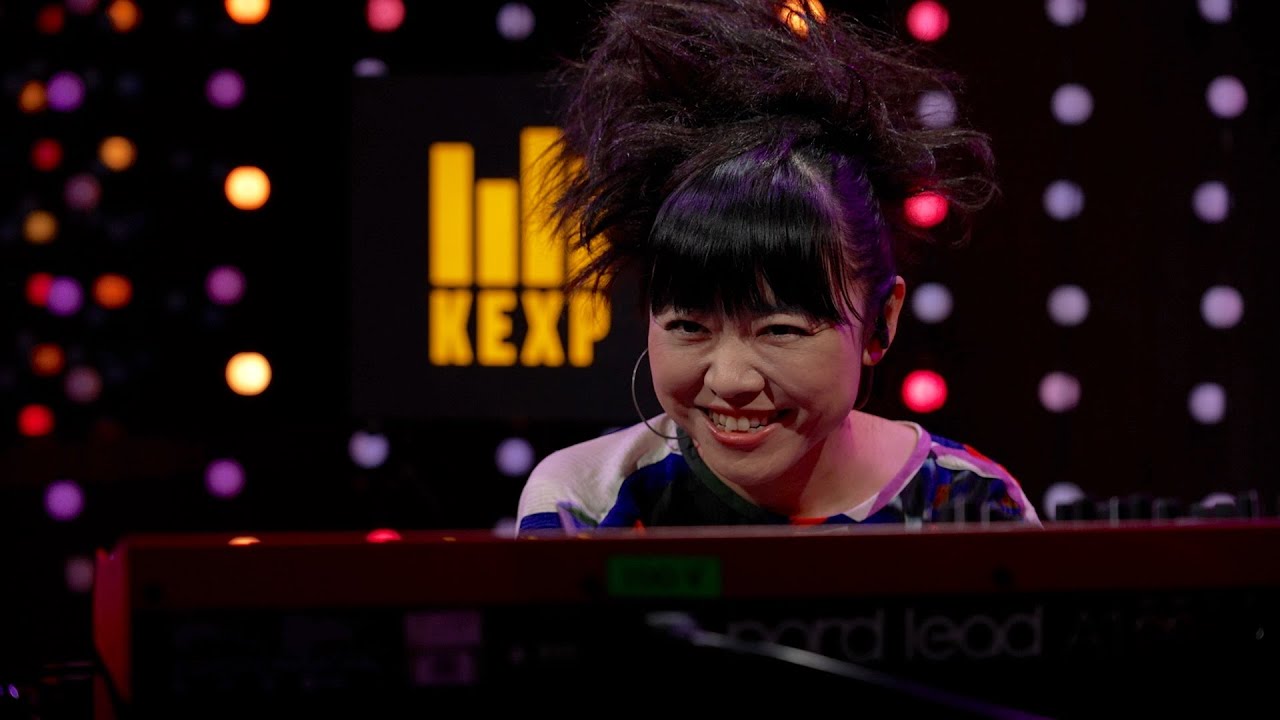
Hiromi’s Sonicwonder - Full Performance (Live on KEXP)
Hiromi Uehara Net Worth
As of 2026, reliable sources have not published an estimate of Hiromi Uehara’s net worth. She earns her income through her music career as a jazz composer and pianist, notably from album sales and global tours. Hiromi has released about ten albums and performed at festivals worldwide, winning awards such as a Grammy for Best Contemporary Jazz Album. These recordings and concerts are her main revenue streams. Because no major financial outlet has confirmed a figure, any net worth estimate would be unverified.
FAQs
1. Who Is Hiromi Uehara?
Hiromi Uehara is a Japanese jazz pianist and composer known for blending jazz, classical, rock, and fusion styles. She is internationally recognized for her technical skill, original compositions, and energetic live performances.
2. What Is Hiromi Uehara Best Known For?
Hiromi Uehara is best known for her virtuosic piano technique, genre-crossing compositions, and albums such as Another Mind, Time Control, and Spark. She is also known for leading innovative bands like Sonicbloom and Sonicwonder.
3. Did Hiromi Uehara Study At Berklee College Of Music?
Yes, Hiromi Uehara studied at the Berklee College of Music in Boston after moving to the United States in 1999. During her time at Berklee, she gained international attention and began her professional recording career.
4. Has Hiromi Uehara Won Any Major Awards?
Hiromi Uehara won a Grammy Award in 2011 as a member of bassist Stanley Clarke’s band for the album Jazz in the Garden. She has also received multiple major Japanese jazz awards and critical honors.
5. Is Hiromi Uehara’s Net Worth Publicly Known?
There is no verified or publicly confirmed estimate of Hiromi Uehara’s net worth. Her income primarily comes from album sales, international touring, collaborations, and commissioned music projects.