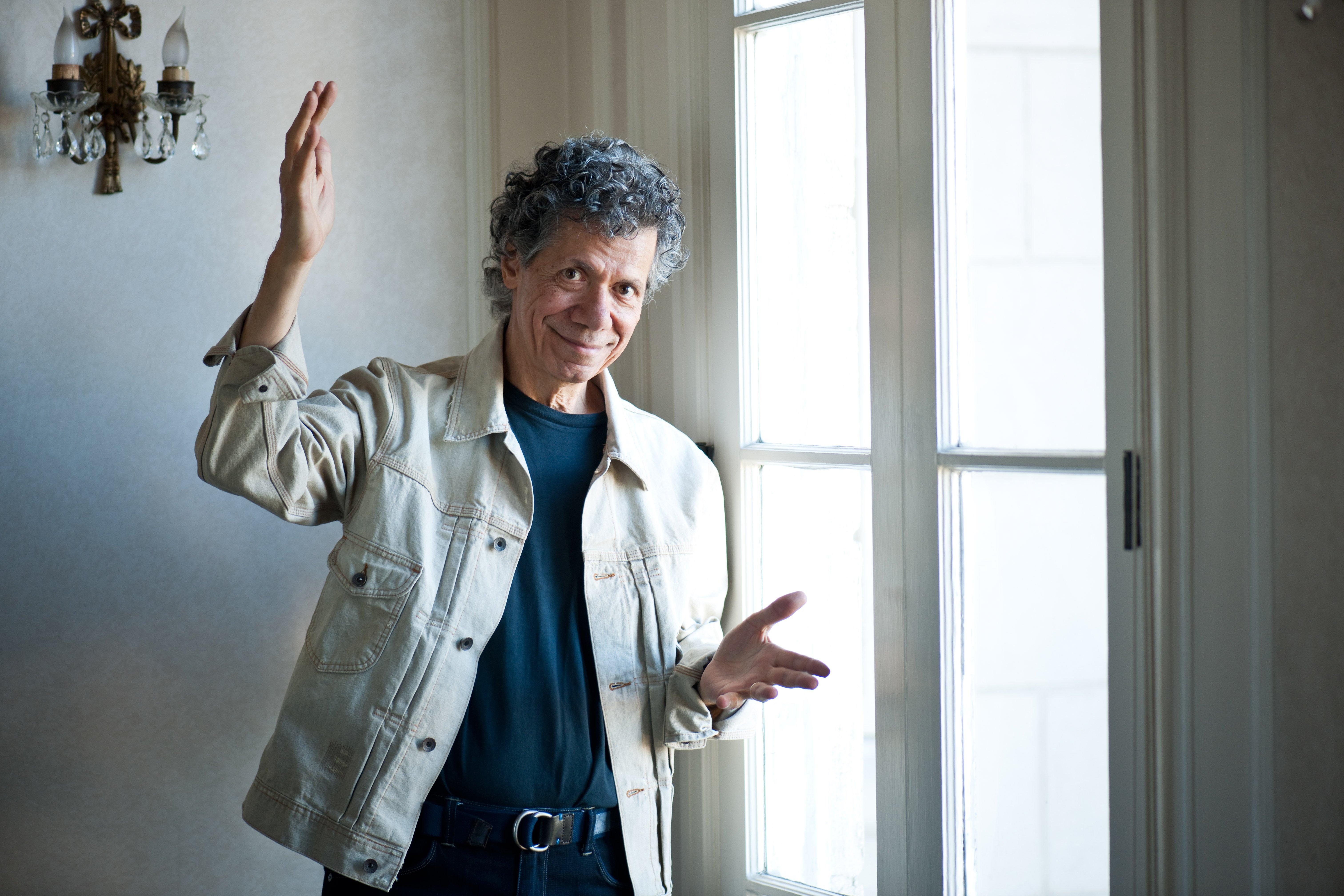
Chick Coreawas born Armando Anthony Corea on June 12 1941 in Chelsea Massachusetts. He was named after his father Armando Corea Sr. who was a professional jazz trumpeter and bandleader in the Boston area. Corea grew up in a musical household his father’s band often rehearsed at home and he listened to jazz recordings by artists like Charlie Parkerand Dizzy Gillespiefrom a young age. His father introduced him to piano at age four and Corea began learning basic piano under his father’s guidance at that time.
Corea’s formal music training began in early childhood. At about age eight he started taking drum lessons and occasionally sat in on his father’s gigs as a drummer or pianist. He also began formal piano studies at eight with Italian concert pianist Salvatore Sullo. Under Sullo’s teaching Corea studied classical piano repertoire and he later cited composers such as Bach Beethoven and Chopin as key influences. This classical training coexisted with Corea’s exposure to jazz he learned to read music and played both piano and percussion during these years.
From these early experiences Corea absorbed a mix of jazz and classical influences. He later said his early influences included jazz pianistsHorace Silverand Bud Powellas well as the classical composers Ludwig van Beethoven and Wolfgang Amadeus Mozart. These inspirations came from what he heard at home and in lessons for example Sullo taught him classical works while he listened to bebop records on his family’s turntable.
After finishing high school in 1959 Corea moved to New York City to continue his studies. He enrolled at Columbia University and later at the Juilliard School of Music to study music theory and composition. He did not complete either program leaving each after only a few months.
| Aspect | Details |
| Birth Name | Armando Anthony Corea |
| Date of Birth | June 12, 1941 |
| Birthplace | Chelsea, Massachusetts |
| Father | Armando Corea Sr., jazz trumpeter |
| Home Environment | Father’s band rehearsed at home |
| Early Jazz Exposure | Heard Charlie Parker and Dizzy Gillespie |
| Piano Introduction | Started piano at age four |
| Early Teacher | Taught initially by his father |
| Formal Piano Study | Began at age eight |
| Piano Instructor | Studied with Salvatore Sullo |
| Classical Focus | Bach, Beethoven, Chopin |
| Instruments Played | Piano and percussion |
| Higher Education | Attended Columbia University |
How to Practice Improvisation
Career Beginnings
Chick Corea launched his professional career in the early 1960s, initially playing piano and percussion in Latin-jazz and soul-jazz ensembles. He spent 1962–66 in the bands of Mongo Santamaríaand Willie Bobo(Latin percussionists), trumpeter Blue Mitchell, flutist Herbie Mannand saxophonist Stan Getz.
During this period he recorded his debut as a leader, the album Tones for Joan’s Bones(1966), followed by the acclaimed trio record Now He Sings, Now He Sobs(1968) with bassist Miroslav Vitousand drummer Roy Haynes.
These early sessions established Corea’s reputation as a virtuoso pianist and improviser, and his own compositions from this era began to enter the jazz repertoire.
International Breakthrough
Corea’s international profile rose rapidly when he joined Miles Davis’s group in 1968, succeeding Herbie Hancockon electric piano. He played on Davis’s landmark fusion albums Filles de Kilimanjaro, In a Silent Wayand Bitches Brew, helping to shape the emerging jazz-rock sound.
In 1971 he formed the band Return to Forever, blending jazz with Latin and rock elements. Within a year that ensemble featuring Flora Purim, Airto Moreiraand Joe Farrellevolved into a high-powered fusion quartet with Lenny Whiteand Al Di Meola.
Return to Forever’s albums Where Have I Known You Before, Romantic Warriorand No Mysteryled the mid-1970s jazz-rock movement and earned Corea international acclaim. This breakthrough period solidified his status as a pioneering bandleader and composer.
Major Performances & Concert Highlights
Corea toured and headlined major jazz festivals and concert halls around the world. In 2001 and 2016 he celebrated milestone birthdays with extended residencies at New York’s Blue Note jazz club, recording the acclaimed Rendezvous in New Yorklive albums.
He also led several world concert tours featuring both acoustic and electric ensembles. In 2010 Corea conducted an acclaimed two-week sold-out engagement at the Blue Note in New York, along with world tours and a big-band tour of Europe.
He appeared frequently at major festivals (such as Montreux and Newport), and his 1981 solo piano performance at Montreux was issued as the album Live in Montreux.
Recordings & Discography
Corea’s discography spans dozens of influential albums across jazz and fusion styles. His 1960s Blue Note sessions Tones for Joan’s Bonesand Now He Sings, Now He Sobsremain classics.
In the 1970s, his Return to Forever period yielded seminal fusion records such as Where Have I Known You Before, Light as a Featherand Romantic Warrior.
He also recorded celebrated duo and trio albums: for example, Crystal Silence(1972) and The New Crystal Silence(2008) with vibraphonist Gary Burton, and several duet albums (including a 1979 keyboard duo An Evening with Herbie Hancock& Chick Corea).
Corea embraced Latin and flamenco influences on recordings like My Spanish Heart(1976). His compositions from these albums including “Spain,” “La Fiesta,” “Armando’s Rhumba,” “500 Miles High” and “Windows” became jazz standards.
In later decades he released trio and solo recordings (e.g. 2000’s Solo Piano: Originalsand Standards, and the three-volume Trilogylive set), as well as albums with his Elektric Band (The Chick Corea Elektric Band, 1986) and Akoustic Band.
Late in his career he continued to innovate: his 2019 release Antidote(with the Spanish Heart Band) revisited his Latin-jazz roots, and the live trio albums Trilogyand Trilogy 2with Christian McBride and Brian Blade earned critical acclaim.
How much do you need to know before you play?
Awards & Professional Recognition
| Honor | Details |
| Grammy Awards | 27 wins from 71 nominations |
| Latin Grammys | Five-time Latin Grammy winner |
| NEA Jazz Master | Awarded in 2006 |
| DownBeat Hall of Fame | Inducted in 2010 |
| Inducted in 2010 | Voted by DownBeat readers in 2014, 2016, and 2018 |
| Reputation | Widely regarded as one of jazz’s most influential pianists |
Corea received top honors throughout his career. He won a total of 27 Grammy Awards (with 71 nominations) across multiple genres, and was also a five-time Latin Grammy winner.
In 2006 he was named an NEA Jazz Master by the U.S. National Endowment for the Arts. In 2010 he was elected to the DownBeat Hall of Fame; that year’s DownBeat Readers Poll also named him Artist of the Year and Electric Keyboardist of the Year.
He remained a DownBeat readers’ poll favorite into the 2010s, being voted Artist of the Year three times between 2014 and 2018.
These honors along with lifetime awards such as a Chamber Music America Lifetime Achievement Award reflected his reputation as “a pianist virtually without peer” (DownBeat) and one of jazz’s most influential figures.
As Corea himself summarized, “My mission has always been to bring the joy of creating anywhere I could”, underscoring his lifelong dedication to musical artistry.

Chick Corea Performs the National Anthem
Collaborations With Orchestras & Conductors
Corea increasingly bridged jazz and classical genres by collaborating with symphony orchestras. His Corea.Concertoalbum (1999) featured the London Philharmonic Orchestra playing Corea’s Piano Concerto No. 1 alongside his Origin sextet.
In 2009 he composed a second piano concerto, premiered with the Bavarian Chamber Philharmonic (Bayerische Kammerphilharmonie) and his jazz quartet in a concert in Vienna.
That same year he also wrote The Continents, a suite for jazz quintet and chamber orchestra; it was recorded in 2012 with a hand-picked chamber ensemble, fully merging his jazz and orchestral voices.
Corea’s arrangements and performances with ensembles such as the London Philharmonic, Bayerische Kammerphilharmonie, and others demonstrated his ability to craft ambitious, genre-crossing works for jazz improvisers and classical musicians alike.
Recent Career Activity
In his final decade Corea remained highly active as a recording artist and performer. He reunited periodically with earlier collaborators for instance, a new lineup of Return to Forever toured in 2008–12 while also forming new ensembles.
His trio with McBride and Blade (often called “Trilogy”) recorded live albums; Trilogywon a Grammy Award, and its successor Trilogy 2(2020) earned a Grammy nomination.
In 2019 he toured extensively with the Spanish Heart Band, a multinational ensemble showcasing Spanish and Latin repertoire; their studio album Antidotethat year won Corea another Grammy.
Late in life he continued to be recognized as a leading pianist: he was voted Artist of the Year by DownBeatreaders in 2014, 2016 and 2018.
Throughout these recent projects Corea maintained the adventurous spirit of his earlier work, exploring new musical territory right up until his death.
Chick Corea Piano Style And Musical Interpretation
Technical Approach And Piano Control
Chick Corea’s pianism combined remarkable dexterity with flexible control. He developed a highly fluid technique that allowed him to traverse the keyboard with ease, delivering lightning-fast runs as cleanly as sustained lyrical lines. Critics have noted his precision in execution – his right - and left-hand lines are sharply articulated even at breakneck speed.
He often employed extended techniques on the instrument, not shying away from plucking or strumming the piano strings with fingers or soft mallets to create unusual percussive textures. At the same time, Corea had fine dynamic control and independent finger work.
He could strike chords forcefully yet release them with a gentle taper, or hold a delicate melody with legato warmth and expressive nuance. His use of quartal harmony (chords built on fourths) and wide-open voicings also reflected a command of modern jazz harmony, which required exact hand positioning and coordination.
In ensemble settings, he blended these technical strengths with attentive listening, modulating his touch to balance precisely with fellow musicians.
Tone, Touch, And Sound Color
Corea was deeply attentive to tonal color and touch. He could make an acoustic piano sing with a warm, ringing bell tone, or play the same keys with a dry, percussive attack, depending on musical need. Reviewers describe his ballad playing as “lush” and romantic.
He often used the sustain pedal and a gentle touch to create resonant chords with rich overtones, as if drawing orchestral colors from the piano. In faster pieces, his touch could become more staccato and crisp, ensuring that individual notes cut through clearly.
He was also known for blending acoustic and electric keyboards for contrast. On records and live dates he frequently shifted to a Fender Rhodes electric piano or synthesizer to add a shimmering or glassy timbre to the music.
In live concerts, that swapping of instruments let him explore a broad palette – from the Rhodes’s mellow, bell-like plucks to the acoustic piano’s vast dynamic range.
Some reviewers have pointed out Corea’s use of prepared-piano effects, such as tapping the piano’s wooden frame or muting strings by hand, to introduce gritty, “sandpapery” textures in certain passages. This demonstrated that he treated the piano as an open sound source.
Overall, his sound was both meticulously controlled and imaginatively varied, ranging from crystal-clear tones to smoky, impressionistic washes of sound when the musical moment called for it.
Rhythm, Phrasing, And Structural Clarity
Rhythm and phrasing were integral to Corea’s style. He had an innate sense of swing and groove, often drawing on Latin and world-music rhythms alongside straight-ahead jazz time.
His phrasing could alternate between tightly syncopated, off-kilter accents and more flowing, rubato passages in ballad settings. In ensemble contexts, Corea listened constantly and responded.
He would comp with sharp, confident chords when supporting a soloist, then launch into his own intricate lines. Even in very free or exploratory improvisations, his musical ideas tended to emerge from clear, concise motifs.
Analysts of his improvisation note that Corea often built solos out of small cells of melody or rhythm, developing these motivic fragments into larger structures. This gave surprising coherence to passages that on the surface might sound spontaneously improvised.
In pieces with shifting meters or extended forms, he maintained a sense of direction. Recurring themes and turnarounds were clearly signposted, so that even the most adventurous trio interplay felt grounded by a recognizable framework.
Throughout his playing, Corea balanced complexity with clarity. As his improvisations unfolded, listeners could discern a musical architecture, whether through returning rhythmic patterns or the gradual unfolding of a melodic idea.
Interpretative Approach To Repertoire
Corea’s interpretative approach was ecumenical and bridge-building. He treated jazz standards, Latin tunes, and classical works as part of one interconnected musical tradition. In performance and recording he showed reverence for each genre’s heritage while also making it his own.
For example, when playing jazz standards or Great American Songbook material, he honored the original melodies but often reharmonized or reshaped them with modern chord voicings and rhythmic twists.
His solo rendition of Gershwin’s “Someone to Watch Over Me” exemplifies this. The familiar melody is presented tenderly, almost caressed, yet Corea decorates it with subtle, Art Tatum–inspired runs and unexpected chord changes that give the song a fresh harmonic color.
Conversely, when he tackled classical and Romantic repertoire, he brought a jazz sensibility to the interpretations. Corea recorded works of Domenico Scarlatti, Frédéric Chopin, Wolfgang Amadeus Mozart, Jean-Philippe Rameau, and others.
He once noted that he saw no rigid boundary between genres – to him, “Bartók to Gershwin to Monk” were part of a continuous line of musical inheritance. Accordingly, his performances of Mozart concertos or Chopin preludes were never mere replicating of the score.
He would organically weave in rhythmic syncopations or reharmonizations as if in a jazz rendition, while still respecting the work’s form. Reviewers have observed that his classical interpretations remained structurally faithful.
Tempos and cadences followed the original compositions, but the interpretation was reimagined through Corea’s rhythmic drive and harmonic resourcefulness.
This blend of respect and personal expression made his approach to repertoire distinctive. A Chopin nocturne under Corea’s hands might glow with impressionistic color one moment and swing with a subtle jazz pulse the next.
By drawing on his extensive knowledge, he consistently approached pieces as evolving dialogues, linking composers like Mozart, Scriabin, or Gershwin with modern jazz language.
Balance Between Precision And Expression
Throughout his career, Corea maintained a fine balance between technical precision and emotional expressiveness. His playing could be dazzlingly virtuosic yet never felt mechanical.
For instance, he could execute very rapid bebop or modal lines with metronomic accuracy, but he always left space in the music for feeling. A slight behind-the-beat cadence or a softened tone at the phrase’s end could convey warmth or suspense.
On ballads, his touch was often relaxed and nuanced, deploying rubato and subtle dynamic shading to heighten feeling. On up-tempo numbers he might lean forward into the beat, pushing the energy with crisp rhythms and a bright attack.
Critics have noted that even at high speed his notes remain distinct and articulate, which suggests a disciplined technical foundation. At the same time, he used that precision in service of expression.
He might deliberately stretch a melody or use lingering silence to let an idea “breathe.” In live trio settings, Corea was known for opening space and listening, allowing delicate passages to emerge.
He then punctuated them with sudden accents or chords, giving his performances a dramatic shape. The contrast between calm and intensity became a form of expression in itself.
In effect, he trusted his command of piano technique so completely that he could play within the breaks of the music. This imbued even technically complex passages with a sense of personal voice.
Whether in composed sections or free improvisation, there was a confidence in his tone. Each note or chord was delivered with intentionality, ensuring that the precision of execution never overshadowed the communication of the music’s mood or narrative.
Critical Observations And Musical Identity
Observers of Corea’s career remark on his vast versatility and distinctive musical personality. He was widely considered a pioneering spirit who comfortably spanned bebop jazz, fusion rock-jazz, Latin jazz, and classical crossover.
Yet a thread of lyricism and rhythmic sophistication runs through everything he played. Critics often highlight his melodic sparkle and rhythmic vitality.
Regardless of context he consistently crafted memorable melodies and engaging grooves. Reviews of his piano trios emphasize how he combined the velocity of Bud Powell–inspired runs with a gentle lyricism reminiscent of Bill Evans.
He seamlessly mixed high energy with refined subtleties. In fusion and Latin projects he retained a light touch and clear articulation, even as the musical language became more eclectic.
Many commentators have pointed out that Corea’s long career never sounded stagnant, yet certain hallmarks never left it. He famously refused to be confined by any one style.
Instead he absorbed new influences and integrated them into a single voice. His improvisations are often described as conversational.
He treated ideas like statements that invite response. On stage with fellow soloists like Herbie Hancock or Gary Burton, Corea could tune in instantaneously.
He mirrored or countered a phrase in real time, responding as if equipped with antennae. This responsiveness became part of his identity.
Listening back to live recordings, one hears Corea pushing harmonic or rhythmic boundaries when provoked by others. He then gently brought the music back to focus.
Musical analysts also note that Corea took complexity and made it accessible. Even when using intricate harmonies or odd meters, the music felt natural to listeners.
In this respect he has been called an educator’s musician. His art stretched out to audiences of varying backgrounds.
His commitment to communication was often cited in reviews. He aimed to make each other sound good in a band and to draw the listener into the musical conversation.
Over decades, this approach shaped his identity as not just a keyboard virtuoso but as a musical communicator. Critics say he embodied an attitude that genres are tools rather than walls.
Whether he was tackling a 19th-century étude or a funk groove, Corea’s playing was recognizable for its clarity, its creative touch, and a unifying sense of joy in exploration.

Improvisation Piano Exercises from Chick Corea
What Was Chick Corea’s Net Worth At The Time Of His Death?
At the time of his death, Chick Corea’s net worth was estimated to be between $3 million and $5 million. These estimates come from celebrity-finance websites and have not been confirmed by major financial outlets. Corea built his wealth through his decades-long career as a celebrated American jazz pianist, composer and bandleader. He released dozens of albums and continued touring extensively around the world into his later years, earning income from album sales, concert tours and songwriting royalties. In addition, Corea wrote famous jazz standards like “Spain”, adding publishing royalties to his earnings.
FAQs
1. Who Was Chick Corea And Why Is He Important In Jazz?
Chick Corea was an American jazz pianist, composer, and bandleader widely regarded as one of the most influential keyboardists in jazz history. He played a key role in the development of jazz fusion and helped shape modern jazz through both acoustic and electric projects.
2. What Are Chick Corea’s Most Famous Compositions?
Chick Corea composed several jazz standards, including “Spain,” “La Fiesta,” “Armando’s Rhumba,” “500 Miles High,” and “Windows.” These works are frequently performed and recorded by jazz musicians worldwide.
3. Which Bands And Artists Did Chick Corea Collaborate With?
Corea collaborated with major figures such as Miles Davis, Herbie Hancock, Gary Burton, and Stanley Clarke. He also founded influential groups including Return to Forever, the Elektric Band, and the Akoustic Band.
4. How Many Grammy Awards Did Chick Corea Win?
Chick Corea won 27 Grammy Awardsfrom 71 nominations, making him one of the most awarded artists in Grammy history. His awards span jazz, fusion, Latin jazz, and instrumental performance categories.
5. When Did Chick Corea Die And What Was The Cause Of Death?
Chick Corea died on February 9, 2021, at the age of 79. The cause of death was a rare form of cancer, which was publicly disclosed by his family after his passing.