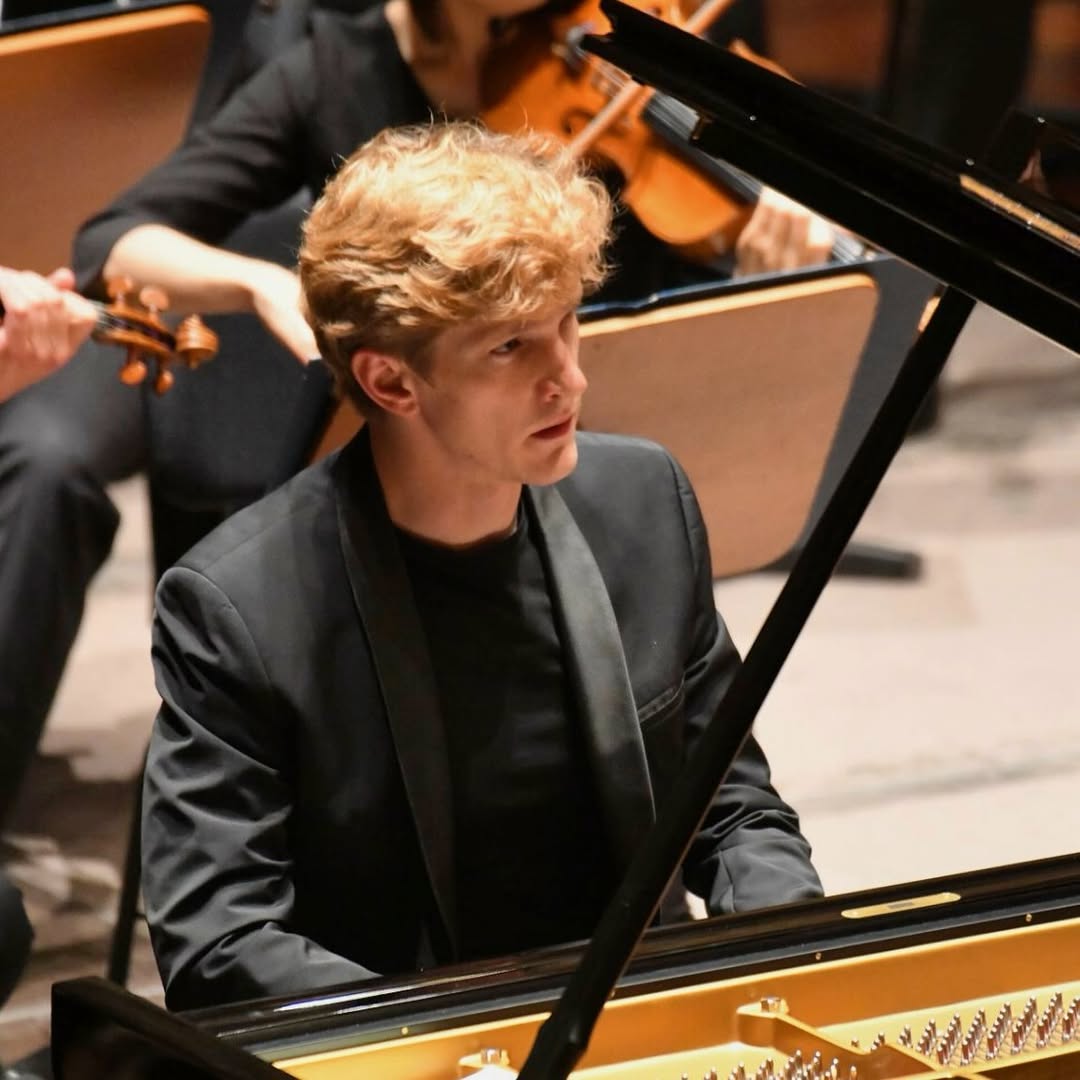
Jan Lisieckiwas born on March 23, 1995, in Calgary, Alberta. He grew up in a Canadian household of Polish heritage and learned Polish in his childhood. Both of his parents are of Polish origin and worked as horticulturists. Lisiecki has noted that he “doesn’t come from a musical family”, so he was raised in a non-musical family environment.
He enjoyed skiing and excelled in mathematics as a child, and he also pursued other activities like swimming. Lisiecki began piano lessons at age five, first with a local teacher and later with that teacher’s own instructor. His tutors at Calgary’s Mount Royal University Conservatoryquickly recognized his exceptional aptitude for music.
Lisiecki was also advanced in his general education. He skipped four grade levels and graduated from high school at an unusually young age. As a teenager he entered higher education, enrolling at the University of Toronto and later studying piano with Marc Durand at the University of Montreal.
| Detail | Information |
| Full Name | Jan Lisiecki |
| Date of Birth | March 23, 1995 |
| Nationality | Canadian (Polish heritage) |
| Profession | Classical Pianist |
| Known For | International concert performances & recordings |
| Record Label | Sony Classical |

Career Beginnings
Jan Lisiecki demonstrated prodigious talent as a child. He began piano lessons at age five and made his concerto debut at nine. At 14 he won the Grand Prize of the Montreal Symphony Orchestra’s Standard Life Competition, performing nine Chopin Études and a Chopin concerto.
In 2008–09 he was invited to the “Chopin and His Europe” festival in Warsaw to play Chopin’s Piano Concertos Nos. 2 and 1; these performances were released by the Fryderyk Chopin Institute and earned Lisiecki a Diapason d’Or Découverte award and rave reviews for his “mature musicality” and insight.
His artistry combined natural gift with dedication and hard work. In 2010, at just 15, Lisiecki signed an exclusive recording contract with Deutsche Grammophon, marking the official launch of his international career.
International Breakthrough
Soon after signing with Deutsche Grammophon, Lisiecki’s career accelerated. His first DG album (2012) featured Mozart’s Piano Concertos No. 20 and 21 with the Bavarian Radio Symphony Orchestra under Christian Zacharias, earning a Juno Award nomination.
He followed this with a 2013 album of Chopin Études, praised as “played as pure music, given as naturally as breathing.” In March 2013 he stepped in at short notice for Martha Argerichin Bologna, performing Beethoven’s Fourth Piano Concerto with Claudio Abbado conducting.
Later that year he closed the season at the BBC Proms in London with Schumann’s Piano Concerto under Antonio Pappano. By 2014–15 Lisiecki had made notable debuts on the world stage: he performed three Mozart concertos in a week with the Philadelphia Orchestra and debuted with Milan’s La Scala Philharmonic, the Tonhalle Orchestra Zurich, Tokyo’s NHK Symphony, and the Deutsches Symphonie-Orchester Berlin.
He also gave debut recitals at Wigmore Hall in London, the Accademia Nazionale di Santa Cecilia in Rome, and in San Francisco. These engagements established Lisiecki as a rising international pianist, sought after for both concerto and recital appearances.
Major Performances & Concert Highlights
Lisiecki has appeared on the world’s great stages as a soloist. He made his New York debut in January 2016 at Carnegie Hall’s Stern Auditorium with the Philadelphia Orchestra under Yannick Nézet-Séguin, a performance the New York Times hailed as “uncommonly sensitive.”
He has since returned to Carnegie and has also played at Lincoln Center’s Avery Fisher Hall, the Kennedy Center in Washington, D.C., the Elbphilharmonie in Hamburg, Royal Albert Hall (BBC Proms), Konzerthaus Berlin, Vienna’s Konzerthaus, and Teatro alla Scala in Milan.
Festival appearances include the Salzburg Festival, Verbier Festival, and multiple BBC Proms. In 2018 Lisiecki played Mendelssohn’s piano concertos with the Orpheus Chamber Orchestra, leading from the keyboard in concerts at Warsaw’s Teatr Wielki, New York’s Carnegie Hall, and Hamburg’s Elbphilharmonie.
Throughout his career Lisiecki has combined concerto appearances with high-profile recital programs. In Asia he has toured Japan and Korea, and he notably performed a Beethoven concerto on Canada Day 2010 for Queen Elizabeth II in Ottawa.
Recordings & Discography
| Album / Work | Composer |
| Chopin – Etudes | Frédéric Chopin |
| Mozart – Piano Concertos | Wolfgang A. Mozart |
| Beethoven – Piano Works | Ludwig van Beethoven |
Lisiecki’s discography is anchored by Deutsche Grammophon recordings and spans a wide range of repertoire. His very first recordings (released by the Chopin Institute in 2009) captured him as a teenager playing Chopin’s Piano Concertos Nos. 2 and 1 with Sinfonia Varsovia and Howard Shelley.
His DG debut album (2012) of Mozart Piano Concertos No. 20 and 21 was followed by a 2013 disc of Chopin Études. In 2016 he released Schumann’s Piano Concerto and Konzertstucke Op. 92/134 with Antonio Pappano and the Orchestra dell’Accademia Nazionale di Santa Cecilia.
He continued with Chopin: Works for Piano and Orchestra (2017) with the NDR Elbphilharmonie Orchestra under Krzysztof Urbański. His 2019 Deutsche Grammophon album Beethoven: Complete Piano Concertos features Lisiecki both as soloist and conductor leading the Academy of St Martin in the Fields.
He also recorded a CD of Beethoven Lieder with baritone Matthias Goerne, and a 2021 album of Frédéric Chopin’s complete Nocturnes. In 2022 he issued Night Music, a recital album exploring nighttime-themed works by Mozart, Schumann and others.
Lisiecki’s most recent recording project is Preludes, featuring Chopin’s Préludes and his own spoken comments on them.
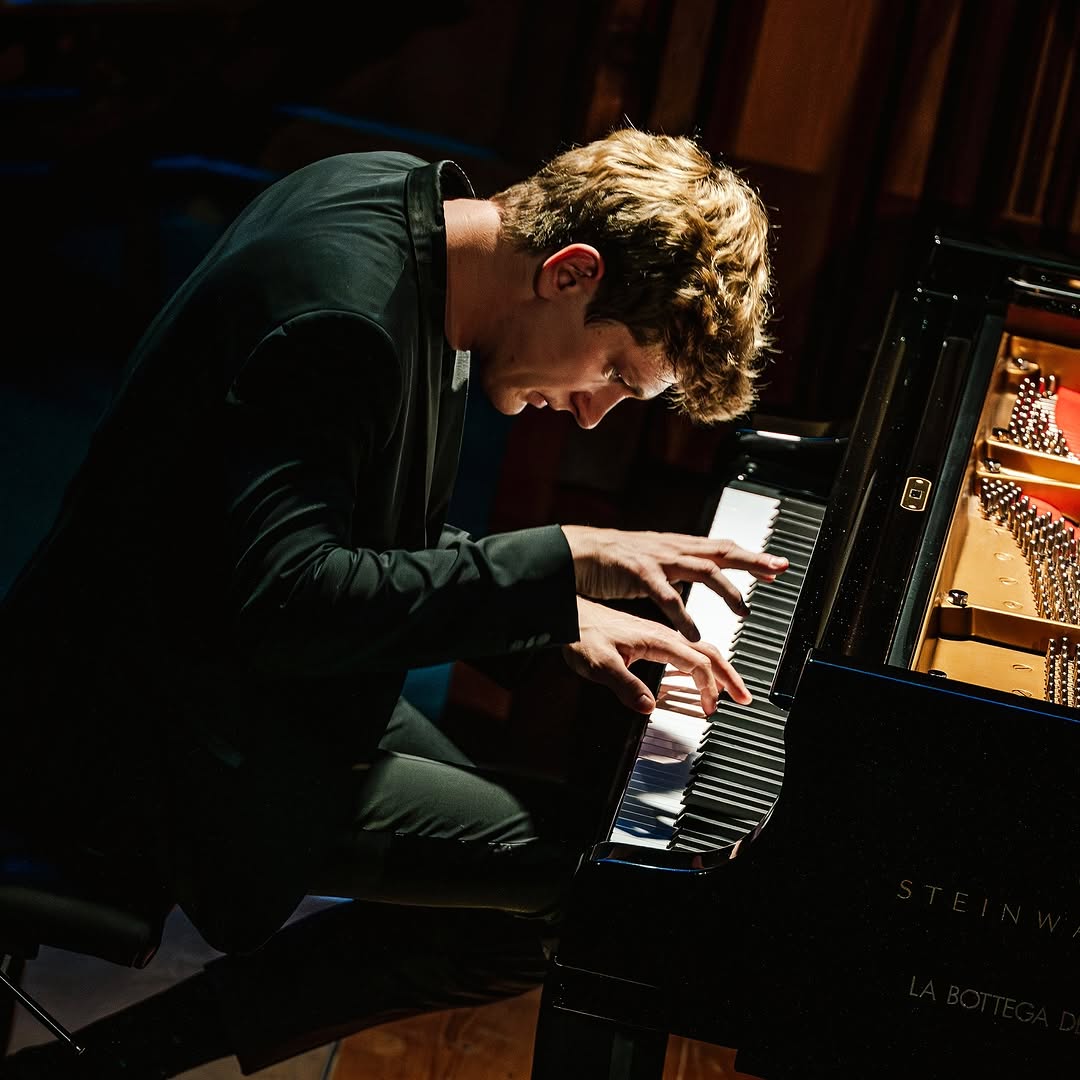
Awards & Professional Recognition
| Award / Recognition | Organization |
| JUNO Award | Canadian Academy of Recording Arts |
| Young Artist Recognition | International classical music institutions |
| International Performances | Major orchestras & festivals |
Lisiecki’s talent has been recognized by major awards and prizes throughout his career. He won the Grand Prize of the Montreal Standard Life Competition in 2009.
His debut Chopin concerto recordings earned the Diapason d’Or Découverte award in 2010. In 2013, at age 18, he became both the youngest ever recipient of Gramophone magazine’s Young Artist Award and a winner of the Leonard Bernstein Award.
He received Germany’s Echo Klassik award and Canada’s Juno Award for his recordings. His albums have also been honored by Gramophone magazine and other critics’ awards.
Collaborations With Orchestras & Conductors
Lisiecki has performed as a soloist with virtually all of the world’s top orchestras and has collaborated with leading conductors. His partners have included the New York Philharmonic and Philadelphia Orchestra under Yannick Nézet-Séguin; the London Symphony and Munich Philharmonic; the Chicago and San Francisco Symphonies; Cleveland Orchestra; Orchestre de Paris; Tonhalle-Orchester Zürich; Toronto Symphony; and the Staatskapelle Dresden.
He has also appeared with numerous European radio orchestras. Prominent conductors he has played under include Antonio Pappano, Daniel Harding, Michael Tilson Thomas, and Andris Nelsons.
Lisiecki often leads orchestras from the keyboard and has also collaborated in chamber music settings.
Recent Career Activity
In recent seasons Lisiecki has continued to expand his repertoire and presence worldwide. In 2024 he made his debut with the Berlin Philharmonic Orchestra and continued as Artist-in-Residence with the Toronto Symphony, where he opened the season by leading all five Beethoven piano concertos from the keyboard.
That season also included concerts with the New York Philharmonic, Chicago Symphony, Orchestre de Paris, Tonhalle-Orchester Zürich and Staatskapelle Dresden, plus invitations to major festivals.
Lisiecki presented his Preludes solo recital program at major venues including Carnegie Hall’s Stern Auditorium. He continues to tour internationally in 2025, with solo and concerto engagements across Europe and North America, alongside the release of his Preludes album on Deutsche Grammophon.
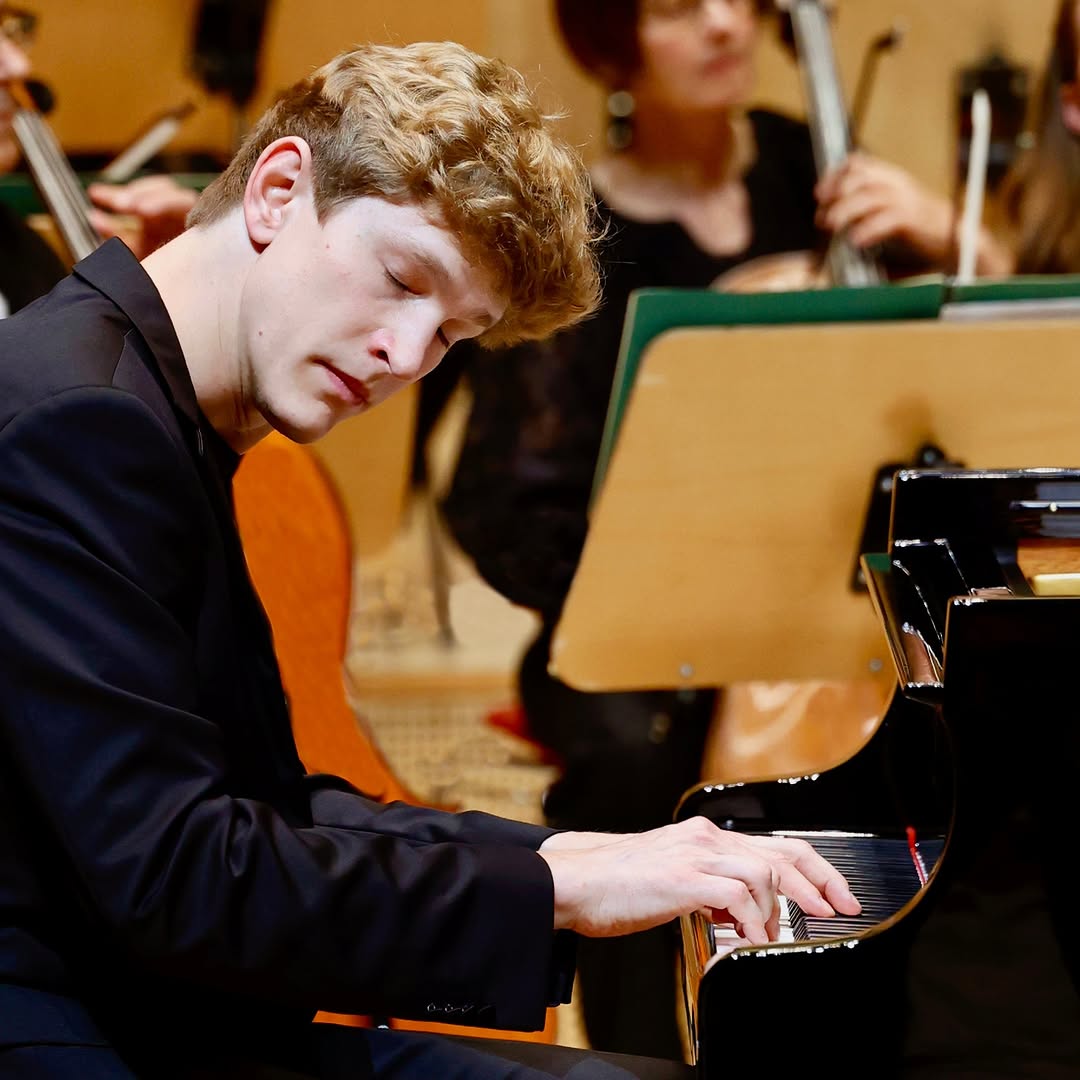
Performance (2025–2026)
- January 2025:Lisiecki teamed with the Academy of St Martin in the Fields for a 19-concert tour in Germany (plus Innsbruck), performing all five Beethoven piano concertos (as soloist and conductor) and Beethoven’s Triple Concerto (with cellist Daniel Müller-Schott).
- February 2025:As Toronto Symphony’s Spotlight Artist, he led and played the complete cycle of Beethoven’s five piano concertos at Roy Thomson Hall over two nights.
- March 2025:He returned to Heinz Hall (Pittsburgh) to perform Mozart’s Piano Concerto No. 22 with the Pittsburgh Symphony under conductor Elim Chan.
- March 2025:Lisiecki released a new album Preludes(Deutsche Grammophon), centering on Chopin’s 24 Preludes Op. 28 and featuring preludes by Bach, Messiaen, Rachmaninoff and Górecki.
- November 2025:He presented an “all-preludes” solo recital at Atlanta’s Spivey Hall, performing 41 piano preludes by Chopin, Messiaen, Szymanowski, Bach, Rachmaninoff, Górecki and others (culminating in the full Chopin Op. 28 cycle).
- January 2026:Lisiecki performed Mendelssohn’s Piano Concerto No. 1 with the Wiener Symphoniker (Vienna Konzerthaus) under conductor Philippe Jordan.
- March 2026:He gave a solo recital at Berlin’s Philharmonie Kammermusiksaal with a varied program of piano dances and character pieces (from Falla and Ginastera to Chopin and Brahms).
- April 2026:Lisiecki made his St. Louis Symphony Orchestra debut in a program titled “Mysticism and Wonder” (at Powell Hall), featuring Respighi’s Church Windows.
Jan Lisiecki’s Piano Playing Style And Interpretation
Technical Approach And Piano Control
Lisiecki’s pianism is grounded in exceptional technical precision and control. He is consistently praised for the evenness and clarity of his articulation – even the most rapid passages are rendered “delicate and always clean.” His formidable technique makes difficult virtuosic writing sound effortless, and critics note that complex Chopin or Beethoven runs often seem almost natural under his fingers.
Lisiecki maintains a solid posture and economy of motion at the piano, which supports his control over tempo and clarity. This technical assurance underpins his playing: every note is struck with intention, and his nimble fingers enable both commanding passages and precise ornamental figures without strain.
Tone, Touch, And Sound Color
Lisiecki commands a broad tonal palette and a nuanced touch. He can produce a warm, singing tone in lyrical passages, and his touch in pianissimo is exceptionally controlled – reviewers have observed that even his softest playing is never tentative. Critics often highlight his ability to tease out inner voices and subtle color changes.
For example, performances of impressionistic or modern works have been described as “glowing with delicacy,” revealing inner harmonies rather than loud declarations. At the other end of the spectrum, his fortissimos and accents have weight and impact, used as structural climaxes.
Overall, Lisiecki balances transparency with warmth: in Classical and Baroque pieces he often achieves a “pearl-toned” purity and clarity, while in Romantic and contemporary works he can bring out rich, orchestral sonorities, only rarely overpowering the piece’s texture.
Rhythm, Phrasing, And Structural Clarity
Clarity of rhythm and form is central to Lisiecki’s approach. He maintains a strong sense of pulse without rigidity, often described as “leaning into the beat” to create momentum. His phrasing is direct and purposeful: lines and phrases feel coherent and well-shaped, avoiding aimlessness.
In concerts and recorded cycles, critics note that he plans the pacing so that transitions between sections or pieces flow organically, giving the listener a sense of inevitability. This structural awareness extends to taking tempos that serve the music’s architecture; for example, his Bach performances are “clean, luminous, and rhythmically supple,” never dragging or speeding unnecessarily.
Lisiecki’s rubato is controlled – he allows some flexibility for expressivity, but always within a clear framework that preserves forward motion. In sum, listeners often find that every gesture in his playing supports a larger narrative, with each phrase’s cadence and acceleration carefully judged.
Interpretative Approach To Repertoire
Lisiecki adapts his interpretation to each style period with both fidelity and insight. In Classical and early Romantic works, he emphasizes balance and clarity: his Mozart and Haydn performances are noted for elegance and finesse, with phrasing that highlights the music’s symmetry. In Bach, he applies intellectual rigor to counterpoint, shaping voicing and ornamentation so that lines are transparent.
By contrast, Lisiecki’s Romantic repertoire (Chopin, Schumann, Rachmaninoff, etc.) is given a broader emotional sweep. He brings out contrasts in Chopin preludes and nocturnes – from delicate lyricism to bold drama – while maintaining an underlying structure. For example, his Chopin cycle is praised for having a strong architectural vision, with sensitive, singing tone and an avoidance of clichéd gestures.
In modern and 20th-century works (Messiaen, Szymanowski, Górecki), he foregrounds timbre and tension: delicate textures are rendered with clarity and restraint, and dissonances are articulated sharply to highlight emotional intensity. Throughout, Lisiecki’s interpretations reflect both respect for each composer’s style and his personal perspective, blending analytic insight with expressive nuance.
Balance Between Precision And Expression
A hallmark of Lisiecki’s style is the balance he strikes between meticulous precision and expressive depth. He never relies on gratuitous showmanship; instead, his authority at the keyboard comes from refinement and discipline. Every phrase and dynamic choice in his playing feels carefully considered, so that climaxes have earned inevitability rather than appearing flashy.
At the same time, he does not suppress passion. Large Romantic gestures in his performances can reach a “titanic” grandeur when called for, but always within the music’s structural logic. Critics observe that his strength lies in using exactness to serve the music’s emotional content – technique is consistently in the background, ensuring expression is always clear and sincere. In effect, Lisiecki’s high level of polish enhances his musical messages: his precise touch and balanced articulations give weight to expression, whether building intense tension or unfolding a tender melody.
Critical Observations And Musical Identity
Critics generally characterize Lisiecki as a thoughtful and mature artist. From a young age he displayed a combination of solid fundamentals and musical insight beyond his years. Reviews frequently note his intellectual approach to programming and performance: he is known for treating even collections of short pieces as cohesive narratives.
Many commentators remark on his “poised aplomb” and conviction, noting that every detail in his playing seems intentional and integral to the whole. Lisiecki’s identity on stage comes across as earnest and attentive – he avoids theatrics but engages the music deeply. A few reviewers have mentioned areas for growth, such as occasionally wanting even more tonal contrast in very soft passages or a bit more rhythmic snap in certain climaxes.
However, the consensus is that he is steadily evolving into an artist with a distinctive voice. His combination of technical security with genuine musicality gives him a reputation as an interpreter who makes each performance feel both well-crafted and personally meaningful.
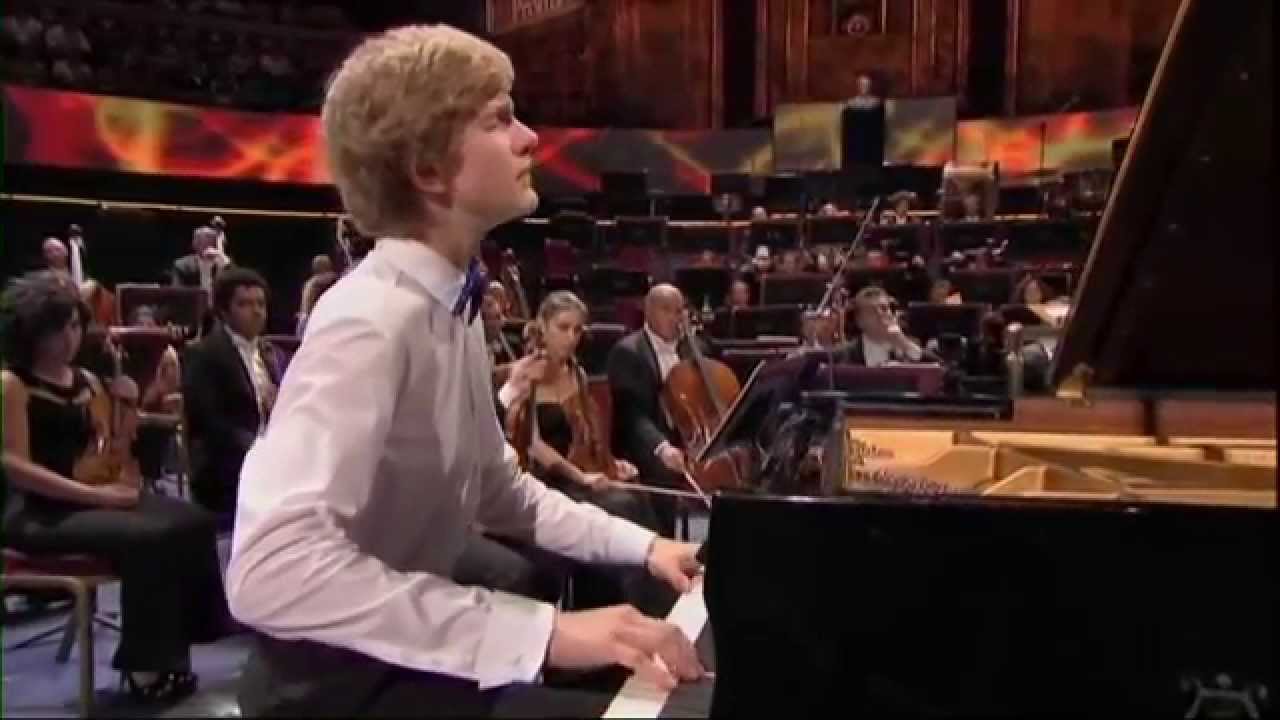
Jan Lisiecki - Chopin, Nocturne in C-sharp minor, Op. Posthumous
Jan Lisiecki Net Worth
As of 2025, Jan Lisiecki’s net worth is estimated to be between $3 million and $4 million. Lisiecki is a Canadian classical pianist who earns income through international concert performances and recordings. He has been a recording artist for Deutsche Grammophon since age 15, and his album releases and global tours are major sources of his earnings. His career accolades, including Gramophone’s Young Artist Award and the Leonard Bernstein Award, have increased his international profile, although major financial publications have not issued an official confirmation of his net worth.
FAQs
Who Is Jan Lisiecki And Why Is He Famous?
Jan Lisiecki is a Canadian classical pianist born in 1995 in Calgary, Alberta, known internationally for his performances and recordings of core classical repertoire. He first gained global attention with early recordings of Chopin concertos and an exclusive contract with Deutsche Grammophon at age 15.
What Makes Jan Lisiecki One Of The Best Classical Pianists Of His Generation?
Lisiecki is recognized for his mature musical interpretations, technical precision, and prolific international concert career, performing over 100 concerts per year with leading orchestras. His recordings have earned major awards and critical acclaim.
Which Orchestras And Conductors Has Jan Lisiecki Performed With?
He has appeared with major ensembles including the New York Philharmonic, Cleveland Orchestra, Chicago Symphony, Filarmonica della Scala and Staatskapelle Dresden, and has worked with conductors such as Antonio Pappano, Yannick Nézet-Séguin, Daniel Harding, Manfred Honeck, and Claudio Abbado.
What Recordings And Albums Has Jan Lisiecki Released With Sony Classical?
Jan Lisiecki has not released recordings with Sony Classical; his commercial discography has been issued under the Deutsche Grammophon label since age 15, including Chopin, Beethoven, Mendelssohn, Schumann, and his most recent album Preludes.
What Awards And International Competitions Has Jan Lisiecki Won?
Lisiecki has received major honours such as the Gramophone Young Artist Award and Leonard Bernstein Award at age 18, and his recordings have earned Juno, Echo Klassik, Diapason d’Or, Gramophone Critics’ Choice, and Edison Klassiek awards.