
Jonathan Michael “Jon” Batiste was born on November 11, 1986, in Metairie, Louisiana. He was raised in nearby Kenner, Louisiana, in a devout Catholic household. Batiste’s family is part of the celebrated Batiste musical lineage of New Orleans. As a child he was immersed in music: by age eight he was performing on drums with his family’s band, and around age eleven he shifted his focus to playing piano.
For formal training, Batiste studied music in New Orleans and New York. In high school he attended the New Orleans Center for Creative Arts (NOCCA) in New Orleans. In his late teens (at age 17) he moved to New York City to enroll at the Juilliard School. These early years growing up in a musical family, performing from a young age, and studying at NOCCA and Juilliard formed the foundation of his musical education.
| Aspect | Details |
| Full Name | Jonathan Michael “Jon” Batiste |
| Date of Birth | November 11, 1986 |
| Birthplace | Metairie, Louisiana |
| Raised In | Kenner, Louisiana |
| Kenner, Louisiana | Member of the Batiste musical family |
| Religious Upbringing | Raised in a Catholic household |
| Early Music Exposure | Performed with family band as a child |
| First Instrument | Played drums from age eight |
| Primary Instrument | Shifted to piano around age eleven |
| Arts Education | Studied music in New Orleans |
| High School | Attended NOCCA in New Orleans |
| Higher Studies | Enrolled at Juilliard School at 17 |
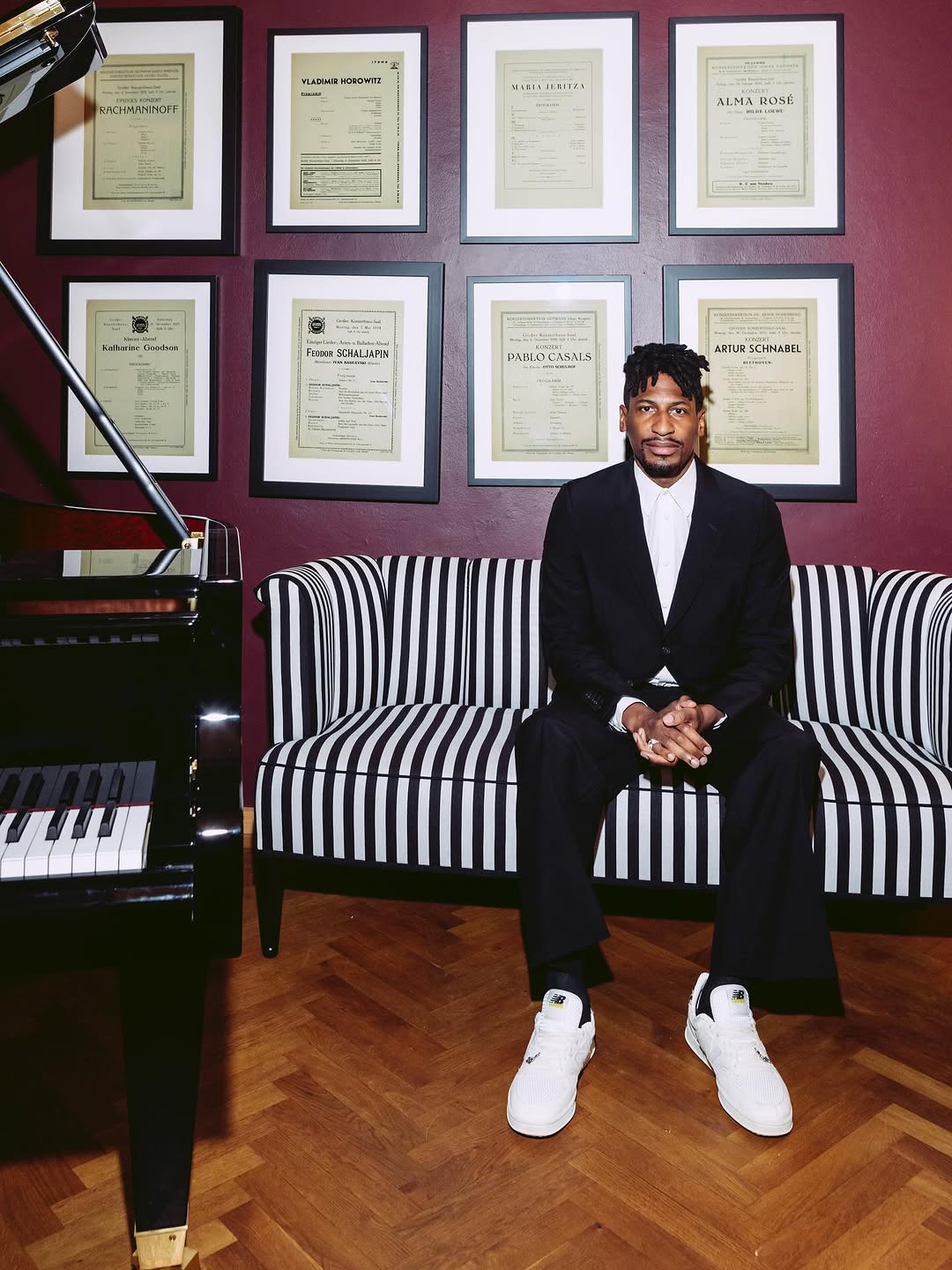
Career Beginnings
Jon Batisteshowed early promise as a jazz pianist and bandleader. He released his debut album Times in New Orleansin 2005 at age 17, and by his late teens he had already recorded two albums.
After formal music training, he formed the band Jon Batiste & Stay Human, which became known for its energetic, interactive concerts. The group’s 2013 album Social Musicintroduced their “love riot” style bringing audiences onstage and emphasizing communal “social music” in performance.
International Breakthrough
Batiste’s profile rose sharply after 2015 when he became bandleader and musical director for The Late Show with Stephen Colbert. This nightly television role introduced him to a large audience and underscored his reputation as a versatile performer.
His international breakthrough accelerated in 2020–21 with major award-winning projects. He co-composed the score for Pixar’s Soul(2020), earning the Academy Award for Best Original Score as well as a Golden Globe and BAFTA.
In 2022 his album We Arewon Album of the Year at the Grammy Awards, confirming his arrival as a major global artist. By this time his music a blend of New Orleans jazz, funk, R&B and soul had reached audiences on multiple continents.
Major Performances & Concert Highlights
Batiste has headlined numerous high-profile concerts and festivals. In 2024 he opened the Montreux Jazz Festival’s main stage, bringing a “bayou feel” to the Swiss event.
He also premiered his large-scale orchestral work American Symphonyin September 2022 at Carnegie Hall’s Stern Auditorium, leading a 64-piece ensemble of classical and folk musicians.
On television he has delivered dynamic live performances, for example playing piano at the 66th Grammy Awards ceremony in 2024. In early 2025 he performed a stirring rendition of the U.S. national anthem on the Super Bowl stage.
Throughout his career Batiste has also appeared at festivals like Coachella and Newport Jazz, often closing shows in spontaneous street-parade style and earning acclaim for his vibrant stage presence.
Recordings & Discography
Batiste’s discography spans traditional jazz albums, pop-inflected records, soundtracks and classical projects. His early albums include Times in New Orleans(2005) and the live Live in New York: At the Rubin Museum of Art(2006).
After forming Stay Human he released Jazz Is Now(2013) and Social Music(2013). Later albums include the Christmas-themed Christmas with Jon Batiste(2016) and Hollywood Africans(2018).
His 2021 studio album We Aremixed soul, pop and jazz and won the Grammy for Album of the Year. In 2023 he released World Music Radio, featuring collaborations with global artists.
His 2024 album Beethoven Bluesreimagined Beethoven compositions on solo piano, topping the Billboard Classical Albums chart. In 2025 Batiste announced Big Money(released August 22), a genre-blending record exploring themes of humanity and capitalism.
Each album has showcased different facets of his style, from New Orleans jazz roots to classical and global influences.
Awards & Professional Recognition
| Award / Honor | Details |
| Academy Award | Best Original Score for Soul (2020) |
| Grammy Awards (2022) | Five wins including Album of the Year (We Are) |
| Grammy Awards (2025) | Best Music Film (American Symphony) and Best Song Written for Visual Media |
| Golden Globe | Best Original Score for Soul |
| BAFTA Award | Best Original Score for Soul |
| Industry Recognition | One of the most nominated artists in a single Grammy year |
Jon Batiste’s work has earned the music industry’s top honors. Notably, he won the Academy Award for Best Original Score for Soul(2020), making him only the second Black composer (after Herbie Hancock) to win an Oscar for music.
The Soulscore also garnered a Golden Globe, BAFTA and other awards. At the Grammy Awards he has accumulated multiple wins: five in 2022 (including Album of the Year for We Are) and two more in 2025 (Best Music Film for American Symphonyand Best Song Written for Visual Media for “It Never Went Away” from Soul).
Overall he is a multi–Grammy Award winner and has been nominated in a record number of categories for a single year. In 2022 he was also named the Recording Academy’s top Grammy winner, and earlier received nominations for American Roots Album and other genres. His honors reflect a wide-ranging career in jazz, pop, R&B and film music.
Collaborations With Orchestras & Conductors
Batiste has frequently bridged jazz with classical music through collaborations with symphony orchestras and conductors. He performed Louis Armstrong’s “What a Wonderful World” accompanied by the National Symphony Orchestra at Washington’s Kennedy Center, showcasing how his jazz arrangements integrate into orchestral settings.
His own symphonic suite American Symphonyfor Carnegie Hall (2022) assembled a hybrid ensemble of traditional orchestral players plus gospel singers, Afro-Latin percussionists, banjo and steel drums.
In recent years he has been invited to perform with major orchestras such as the San Francisco Symphony (the ensemble he was set to join in 2025) and others. These engagements underscore his role as a conductor and soloist who draws from diverse musical traditions: blending jazz, gospel, world, and classical elements in concert with symphonic musicians.
Recent Career Activity
In the past two years Batiste has maintained a prolific output and touring schedule. His 2024 album Beethoven Blues(Vol. 1 of a piano series) became his first No. 1 on Billboard’s Classical Albums chart.
In mid-2025 he announced Big Money(August 22, 2025), described as a “bold, groove-driven statement” mixing R&B, Americana, soul, jazz and gospel. He promoted Big Moneywith a national tour and appearances at venues like Red Rocks and the Grand Ole Opry.
A recent documentary, American Symphony(Netflix, 2023), chronicled his composing of a symphony for Carnegie Hall and the release of his album We Are. At the 2025 Grammys he won two awards related to that project.
Across 2023–25 Batiste has continued to headline global festivals and collaborate on new music, solidifying his reputation as one of the most innovative and decorated musicians working today.
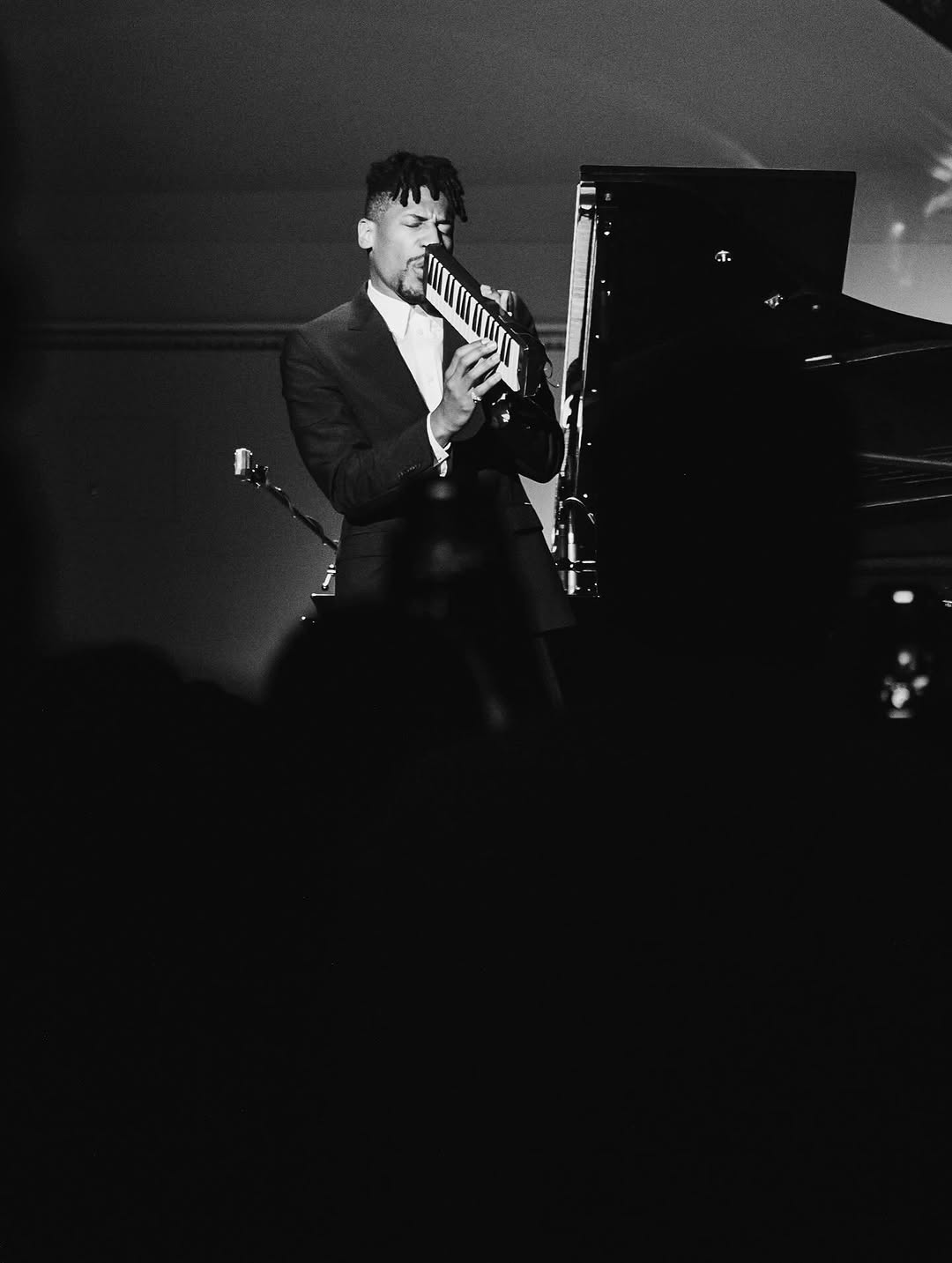
Jon Batiste Performance (2025–2026)
- Big Money Tour (Aug–Oct 2025):Headlined a 30+ date U.S. concert tour featuring major venues (e.g. Red Rocks Amphitheatre, Nashville’s Grand Ole Opry). The multi-act tour drew on Batiste’s jazz, blues, soul and country roots and included two Las Vegas concerts co-billed with music icon Diana Ross.
- Festival Napa Valley Gala (July 13, 2025):Headlined the Arts for All Gala in Napa Valley, a premier charity concert that opens the festival’s summer season. Batiste’s dynamic set in front of a philanthropic audience supported music education and community arts programs.
- Montreux Jazz Festival Miami (Feb 27, 2026):Co-hosted the opening night of the Montreux Jazz Festival Miami with Trombone Shorty. Their set, billed as “The New Orleans Jam,” featured Trombone Shorty & Orleans Avenue and highlighted the raw soul, rhythm and joy of Louisiana jazz in a high-profile Miami performance.
- Tyler Childers “Snipe Hunt” Tour (2026):Appeared as a special guest on country artist Tyler Childers’s tour. Notably, on July 12, 2026 Batiste performed at Chicago’s Wrigley Field alongside Childers and alt-country band Wednesday, one of the tour’s largest outdoor shows.
- Super Bowl LIX (Feb 2025):Performed the U.S. National Anthem at the Super Bowl, a widely viewed live television event that further raised his national profile.
- NMAAM “Front Row” Concert (Dec 17, 2025):Headlined a sold-out “Front Row at NMAAM” event in Nashville. In this intimate 400-seat museum setting, Batiste performed live piano and discussed tracks from his then-new album Big Money for an audience of music professionals and fans.
- Jon Batiste’s Jazz Club Baha Mar (Dec 2025):Launched and performed at his namesake Jazz Club in Nassau, The Bahamas. Billed as his first permanent jazz venue, the club provides a custom stage for Batiste’s live performances blending jazz, blues and soul, reflecting his New Orleans heritage.
- Austin City Limits TV Special (Oct 3, 2025):Taped a live Austin City Limits concert (aired Nov 22, 2025). This PBS broadcast from the ACL stage featured highlights of his Big Money tour and album, bringing his genre-spanning live show to a global streaming audience.
Jon Batistes Piano Style And Interpretation
Technical Approach And Piano Control
Batiste’s playing is built on strong hand independence and rhythmic drive. He often treats the left hand as a self-contained rhythm section, laying down bass and drum-like patterns, while the right hand plays the melody or improvises over it.
Critics note his “incredible two-handed dexterity” in solo settings, especially when driving a New Orleans–style boogie. In a typical boogie-woogie or stride passage, his left hand may alternate low bass notes and percussional chords to create a groove, freeing the right hand to produce swirling runs and riffs.
Interview excerpts highlight that he consciously coordinates each hand: he described his left-hand chords as providing the “rhythm section effect of having a bass and a drum,” propelling the momentum of a piece.
He is also fluent in fast jazz vocabulary: for example, he regularly explores bebop lines and complex melodic patterns, treating rapid triplet figures and counterpoint with ease.
Overall, observers find his touch secure and articulate; he manages big, percussive chords and crisp, high-register runs with equal facility, reflecting classical training blended with improvisational flair.
Tone, Touch, And Sound Color
Batiste’s tone is rich and varied, from warm and mellow to bright and gritty. He listens for subtle color shifts: for instance, he has described the sound of E-flat major as warm, “like a tree… roots that are dug into the soil,” whereas D-flat feels like a homey, “womb space.”
This attention to key color informs his voicings and pedal use. On upbeat numbers his left hand often sounds deep and resonant, even “rumbly,” using thick chords to produce a bluesy, growling quality.
He himself likened some of his low chords to a “growl of a lion,” achieved by releasing the keys slowly and using the sustain pedal. By contrast, his right hand can sing out with a pure, singing tone or bite with bent, blues-inflected notes.
Batiste generally favors clear attacks and releases over a smooth, legato approach: he noted early in his career that his touch was naturally more forceful than the “smoother articulation” then in vogue, and he ultimately embraced that robust quality.
He also freely uses rubato and silence for expression; a critic observed that his phrasing often includes the kind of space and angular dissonance reminiscent of Thelonious Monk, adding a distinctive sharpness and color to his improvisations.
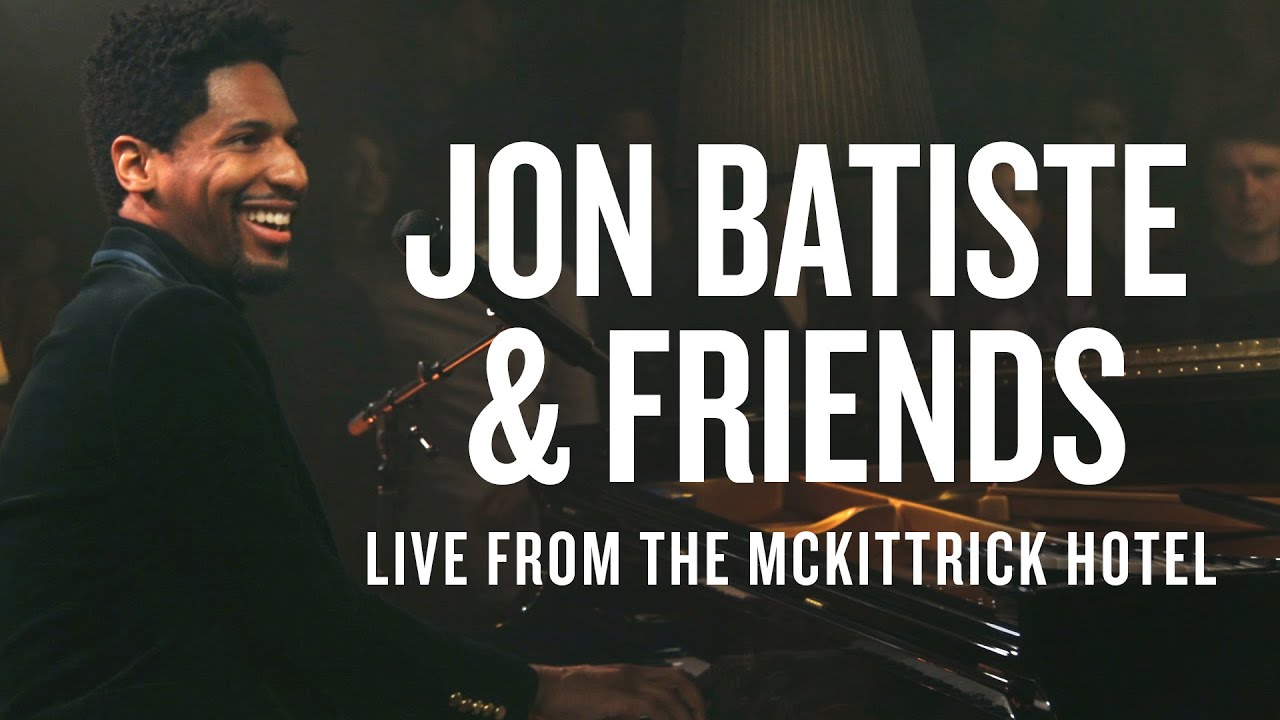
Jon Batiste & Friends (Live) | JAZZ NIGHT IN AMERICA
Rhythm, Phrasing, And Structural Clarity
Rhythm is central to Batiste’s style. He emphasizes clear, driving grooves and syncopation. In swing or jazz contexts he highlights the off-beats (“the two and the three”) with triplet figures and rhythmic accents.
In New Orleans–inflected pieces he’ll employ second-line patterns and parade-like cadences (as heard in his lively takes on Mardi Gras rhythms).
His phrasing often unfolds as a conversation: he has described structuring his improvisations like “a question… and then I’ll answer.” In practice, he frequently states a motif or theme (the “question”) and then returns to or develops it later (the “answer”), giving listeners a clear thread through otherwise spontaneous music.
This call-and-response logic helps maintain coherence even in extended improvisations. Critics note that despite frequent detours and embellishments, Batiste typically resolves his ideas and reaffirms the main theme at the end of a solo or piece.
In sum, his rhythmic approach balances looseness with discipline: he allows himself to “fly” in the moment, yet underpins that freedom with solid, danceable pulse and a return to structural anchors.
Interpretative Approach To Repertoire
Batiste’s repertoire spans jazz standards, classical pieces, and popular tunes, all filtered through his unique lens. When approaching Romantic or Classical works, he does not simply play them straight.
For example, his track “Chopinesque” uses the melody of Chopin’s Nocturne as a base but reimagines it with blues riffs and jazz harmonies; a reviewer described it as a “haunting, bluesy rendition” packed with inventive scales and ornamental figures.
Likewise, in his Beethoven Blues album he takes familiar Beethoven themes (such as Für Elise or the Fifth Symphony) and infuses them with gospel, swing and boogie-woogie elements.
Critics note that these transformations are not mere gimmicks: Batiste tends to preserve the emotional core of the originals (for example, maintaining Beethoven’s sense of melancholy) even while radically changing their style.
In jazz and pop realms he applies a similar mindset: standards and songs are treated as raw material for improvisation. On one album he recasts “Saint James Infirmary Blues” into a New Orleans funeral procession, playing it at a slow, stately tempo with sparse voicings.
He also draws from contemporary and even unconventional sources (e.g. video game themes or folk songs) and adapts them to his idiom. Across all his interpretations, the guiding principle is to blend tradition and innovation, making each piece sound like him while acknowledging its origins.
Balance Between Precision And Expression
Batiste achieves a marked balance between disciplined precision and soulful expression. He often stresses that a deep sense of groove (“feel”) comes only after solid technique is in place.
In interviews he advises young players to first refine their rhythm and execution, noting that clear pulse and articulation allow emotional playing to emerge organically.
In practice, this means that even his most exuberant solos rest on a steady foundation: the timing remains consistent, and even impromptu runs resolve in time with the band.
At the same time, his improvisations are full of nuance; he will use slight tempo shifts, accents, and dynamic contrasts to convey emotion.
Reviewers remark on how he can unleash fervent, “whooping” exclamations or delicate melodies within a single piece without losing coherence.
In essence, his stylistic hallmark is to blend meticulous timing and note accuracy with genuine expressiveness. As one critic summarized, nothing in his playing feels careless; every bluesy bend or punchy chord is delivered with intention and control, embodying the idea that high expression depends on precise execution.
Critical Observations And Musical Identity
Critics consistently identify Batiste as a versatile, genre-blurring pianist with deep roots in New Orleans tradition. They highlight his technical prowess alongside his creative boldness.
For example, a reviewer praised the “incredible two-handed dexterity” on display in one of Batiste’s solo tracks. Others have noted how he “blends then braids” diverse musical influences, jazz, blues, gospel, classical, into a unified voice.
Interviews and profiles emphasize that his style is informed by a broad lineage; he cites mentors like Thelonious Monk (noting Monk’s use of dissonance and space) and even classical masters like Bach when discussing his approach.
Observers point out that his playing feels both authentic and playful: it honors tradition without reverence for its own sake, instead reassembling old elements in fresh ways.
Jon Batiste Net Worth
As of 2026, Jon Batiste’s net worth is estimated to be between $4 million and $6 million. He has earned this wealth largely through his music career: for years he was the bandleader on The Late Show with Stephen Colbert, earning a television salary, and he makes money from album releases, concerts, and touring with his jazz band Stay Human. Batiste has also composed film scores, notably the Pixar movie Soul, for which he won an Academy Award and multiple Grammys, reflecting his success as a musician. His income comes from these ongoing music and TV projects rather than any confirmed outside business ventures.
FAQs
1. Who Is Jon Batiste?
Jon Batiste is an American musician, composer, and bandleader known for blending jazz, R&B, soul, and classical music. He rose to global prominence through his Grammy-winning albums and film scoring work.
2. What Is Jon Batiste Best Known For?
Jon Batiste is best known for his album We Are, which won Album of the Year at the Grammy Awards, and for co-composing the Oscar-winning score for Pixar’s Soul. He is also recognized for his dynamic live performances.
3. What Awards Has Jon Batiste Won?
Jon Batiste has won multiple Grammy Awards, including Album of the Year, as well as an Academy Award, Golden Globe, and BAFTA for his work on Soul. His awards span jazz, popular music, and film scoring categories.
4. Who Is Jon Batiste Married To?
Jon Batiste is married to writer and advocate Suleika Jaouad. The couple married in 2022 and have publicly shared aspects of their personal and creative partnership.
5. What Is Jon Batiste’s Latest Music Project?
Jon Batiste’s recent projects include new studio albums and extensive touring through 2025–2026. His recent work continues to explore genre-blending themes rooted in jazz, soul, and American musical traditions.