Online MIDI Piano: Get Your Keyboard Working In The Browser
An online midi pianois a browser-based piano that can receive MIDI notes from your keyboard/controllerand play sounds or visualize what you play-no install required (as long as your browser supports Web MIDI and the site runs on HTTPS).
If you’ve ever plugged in a MIDI keyboard and watched a web piano act like it can’t see it, you’re not alone. The good news: most failures come down to browser support, permissions, or one small connection step.
I build and audit MIDI keyboard experiences for the web, so I’m going to keep this practical: you’ll pick the right type of online tool, connect reliably, and then eliminate the “sticky” issues (latency, missing devices, velocity weirdness).
In short (Key Takeaways)
- Use a Web MIDI–capable browser(Chrome/Edge are the safest defaults).
- Plug in USB-MIDI (wired)first, then reload the page if the device list doesn’t update.
- When prompted, only allow MIDI access on sites you trust(MIDI permission can allow full message access, including SysEx/firmware-type messages).
- If it feels “laggy,” start by removing Bluetooth audio + background audio appsand prefer wired output.
- Decide which tool you actually need: live player vs MIDI-file trainer vs visualizer(they solve different problems).
- If your keys “work” visually but you hear no sound, click the page’s “Start/Play/Enable Audio” button (or click anywhere once). Many browsers require a user gesture to start audio.
If you want the fastest path, start with best ways to play midi piano online.
Quick Picks By Goal
| Your goal | Start with this type of online MIDI piano |
| Play live in-browser with a MIDI keyboard | A live Web MIDI piano (instant sound) |
| Learn songs from a .mid file with feedback | A MIDI-file trainer (falling notes + correctness) |
| Make content / watch notes as animation | A MIDI visualizer (piano roll / note animation) |
| Play with other people online | A multiplayer room (chat + shared performance) |
| Route toward production workflows | A tool that supports record/export (or capture in your DAW) |
Piano Midi Online Explained
You’ll get more value (and less frustration) if you match the tool to the job. Here’s how to tell what you’re really searching for.
Choosing the right hardware matters too-if you’re unsure what to buy or what you already own, see midi controllers vs midi keyboardsand the practical roundup of midi keyboards.
MIDI Vs Audio (what “MIDI Piano” Really Means)
MIDI is performance/control data(note on/off, velocity, sustain, etc.), not recorded sound. The sound you hear comes from a synth/sampler-your browser, a plugin, a keyboard, or your DAW.
Takeaway:If you need an audio file, you’re recording audio output; if you need editable notes, you’re recording MIDI events.
Live MIDI Input Vs MIDI-file Players Vs Visualizers (3 Different Intents)
You’ll quickly identify which “online midi piano” category fits your intent.
- Live Web MIDI piano:you play; the site produces sound/visuals in real time.
- MIDI-file trainer:you load a .mid; it shows falling notes and often checks your accuracy.
- Visualizer:you load/stream MIDI and render piano roll visuals (often for learning or videos).
Takeaway:Many “virtual pianos” don’t truly support MIDI input-confirm the tool explicitly mentions MIDI connection.
Browser + OS Compatibility (Chrome/Edge Vs Safari/iOS Reality Check)
You’ll stop troubleshooting a setup that can’t work on your current browser. Web MIDI requires secure context (HTTPS)and explicit user permissionin supporting browsers.
Browser support shifts over time, but as a snapshot, Can I useshows broad support in Chromium browsers and limited/variable support elsewhere-always check current support before you blame your keyboard.
Takeaway:If MIDI never appears, verify browser support first-then troubleshoot cables.
Note: Web MIDI access is now permission-gated in modern Chrome/Chromium browsers, and rollout changes began around Chrome 124-so if you never see a prompt, the site can behave like “no device exists.” (Data as of Apr 2024; verify current behavior.)
Compatibility Snapshot
- Windows/macOS + Chrome/Edge:Best default for Web MIDI reliability
- Windows/macOS + other browsers:Varies-test quickly before deep troubleshooting
- Android:Can work, but hardware/USB adapters and device support can vary
- iPhone/iPad:Often inconsistent/limited for Web MIDI-if MIDI is critical, use desktop first
Safety & Permissions
Chrome’s help docs warn that allowing a site to “control and reprogram” MIDI devices can include sending/receiving all message types, including messages that could be used for device reprogramming/firmware-style actions. Only grant access to sites you trust.
Takeaway:Treat MIDI permission like mic/camera permission-approve deliberately.
Clarifier (why this matters): “Allow” isn’t just “let it hear my notes”-it can permit sending/receiving all MIDI message types, including messages that could support device changes. Approve deliberately, and revoke if you’re unsure.
Actionable Permission Controls (so You’re Not “stuck” If You Clicked Block/Allow Once):
- To change a decision fast:click the lock (🔒) / site icon in the address bar → Site settings → find “MIDI devices” → set to Allow or Block → reload the page.
- To audit what you’ve allowed globally:Chrome Settings → Privacy & security → Site settings → search “MIDI” → review allowed/blocked sites.
- If you don’t fully trust a site:don’t click Allow-use a tool that works with MIDI files (trainer/visualizer) without device access, or record MIDI directly in your DAW instead.
If access is blocked by a site’s Permissions Policy, you can’t “force allow” it from your browser-your workaround is choosing a different site/tool.
Best Online MIDI Piano Platforms
Below are tools that explicitly support MIDI connection, MIDI-file learning, multiplayer, or MIDI visualization(some overlap).
Privacy check for MIDI-file tools(important if you use unreleased music): some sites upload your .mid to a server; others run entirely in your browser. Prefer tools that explicitly state “local processing” when confidentiality matters.
Best For Instant Play + Practice (live MIDI Input)
1. Recursive Arts Virtual Piano
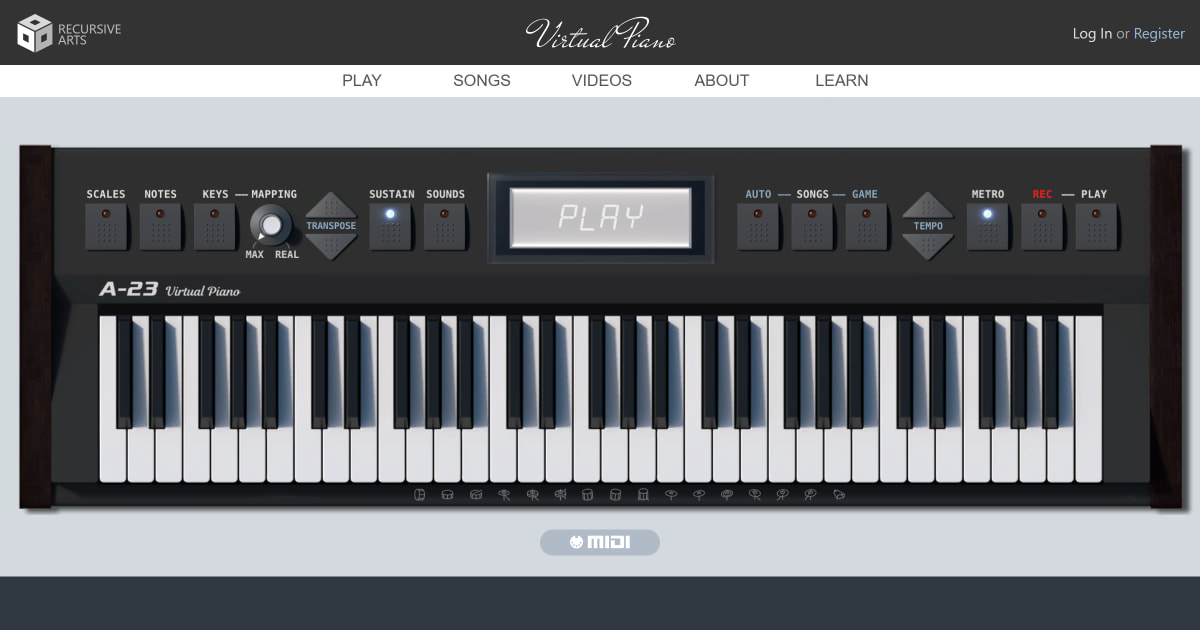
- Best for:A “most people can get this working” online piano + unusually helpful MIDI troubleshooting
- MIDI input:Yes
- Standout features:Realistic feel, common-learning features, dedicated MIDI troubleshooting steps
- Limits to know:If you connect a new MIDI device after opening the site, you may need a reload for it to appear reliably
- Quick start:Open → click MIDI → Allow → select device → play
Tip:if your keyboard shows multiple entries, pick the correct device + port in the MIDI menu (multi-port devices can appear as duplicates).
2. Multiplayer Piano
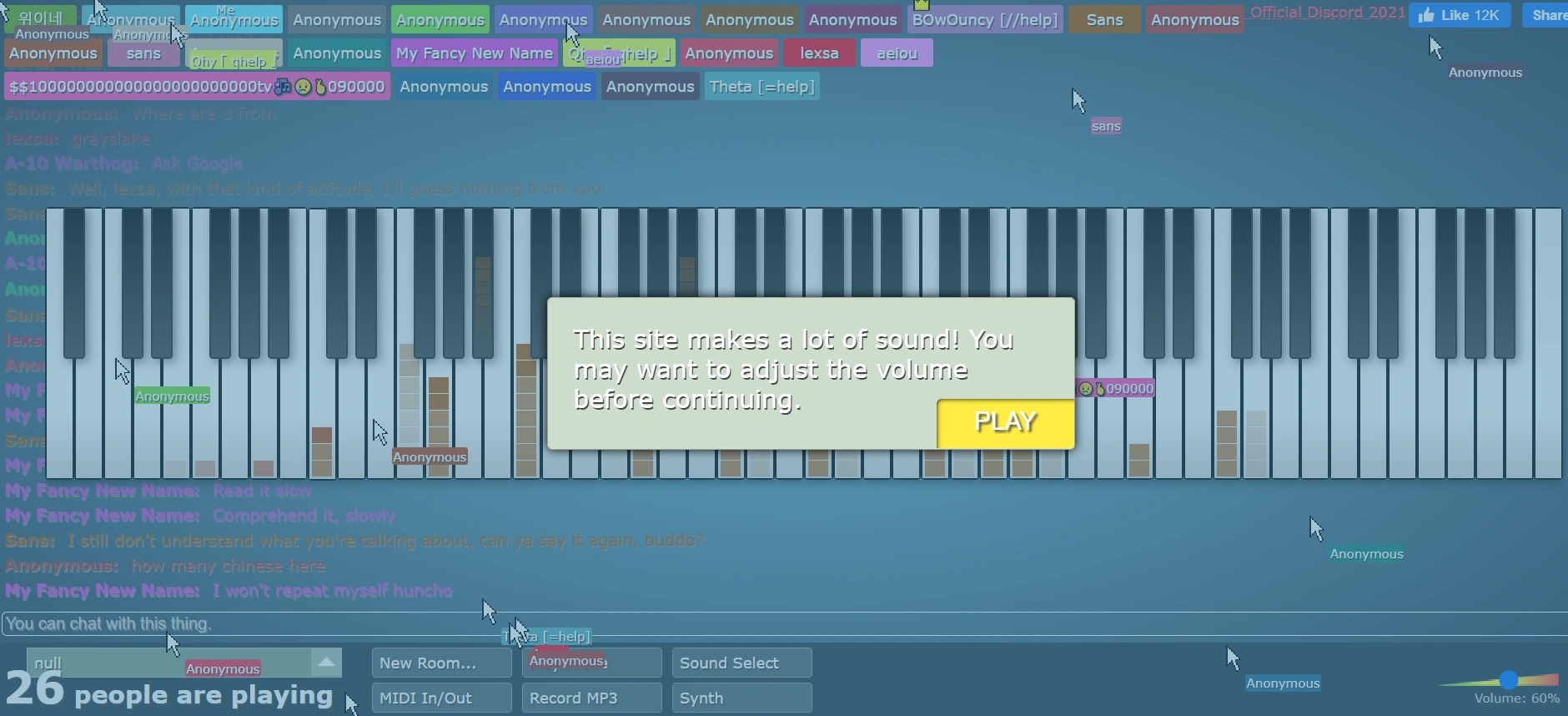
- Best for:Real-time jamming + fast setup
- MIDI input:Yes
- Standout features:Rooms, chat/community feel, quick start
- Limits to know:Timing varies online; treat it as shared performance, not perfect ensemble sync
- Quick start:Open → MIDI/Connect → Allow → select device → play
Website:Multiplayer Piano
3. Muted.io Virtual Piano
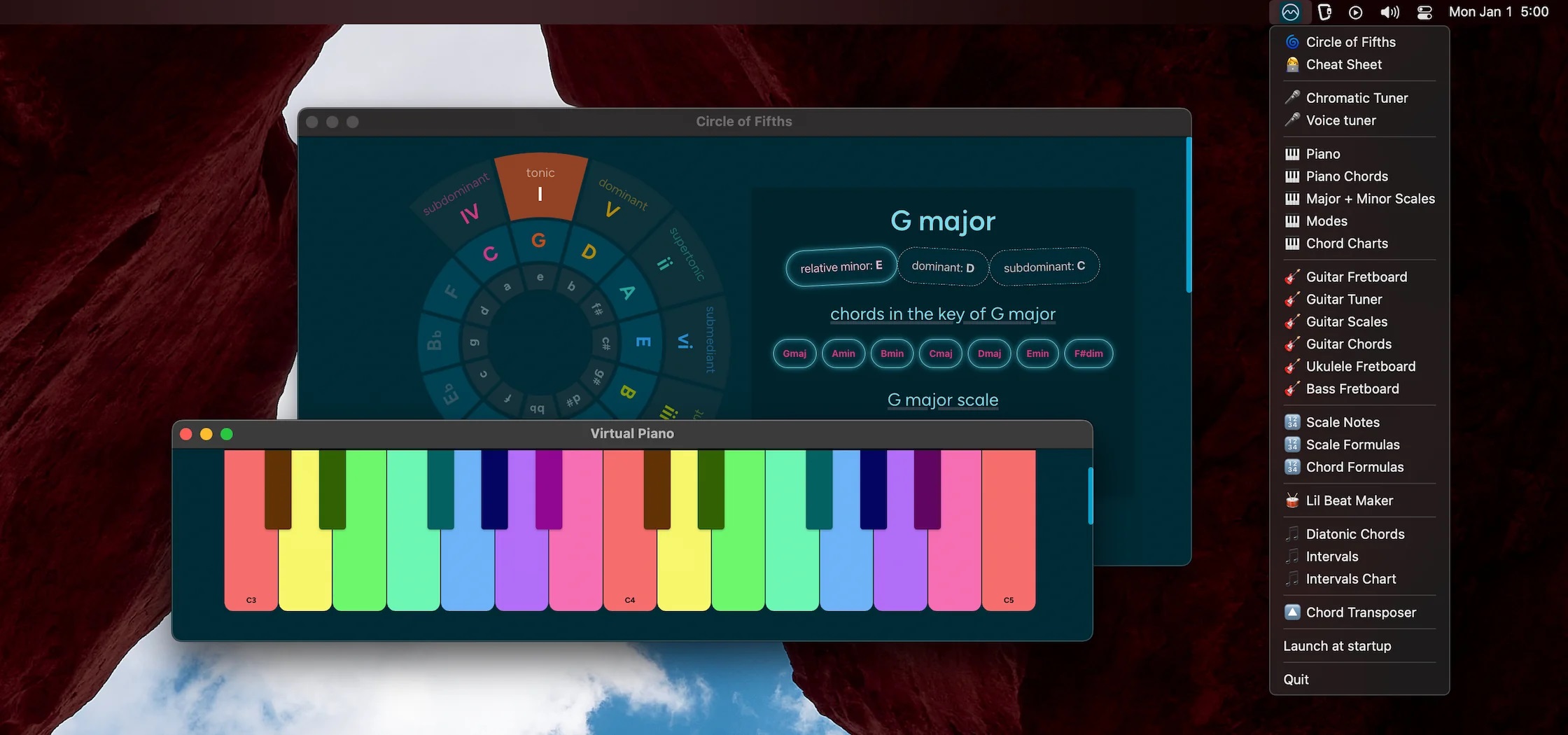
- Best for:Simple practice with minimal friction
- MIDI input:Yes
- Standout features:Lightweight interface, fast “just play” workflow
- Limits to know:Feature depth can be lighter than dedicated trainers (feedback/lesson structure varies)
- Quick start:Open → Connect MIDI → Allow → select device → test sustain + velocity
If the device list is empty:connect the keyboard first → reload the page → open MIDI menu again (this resolves many “it can’t see my device” cases).
4. EPiano
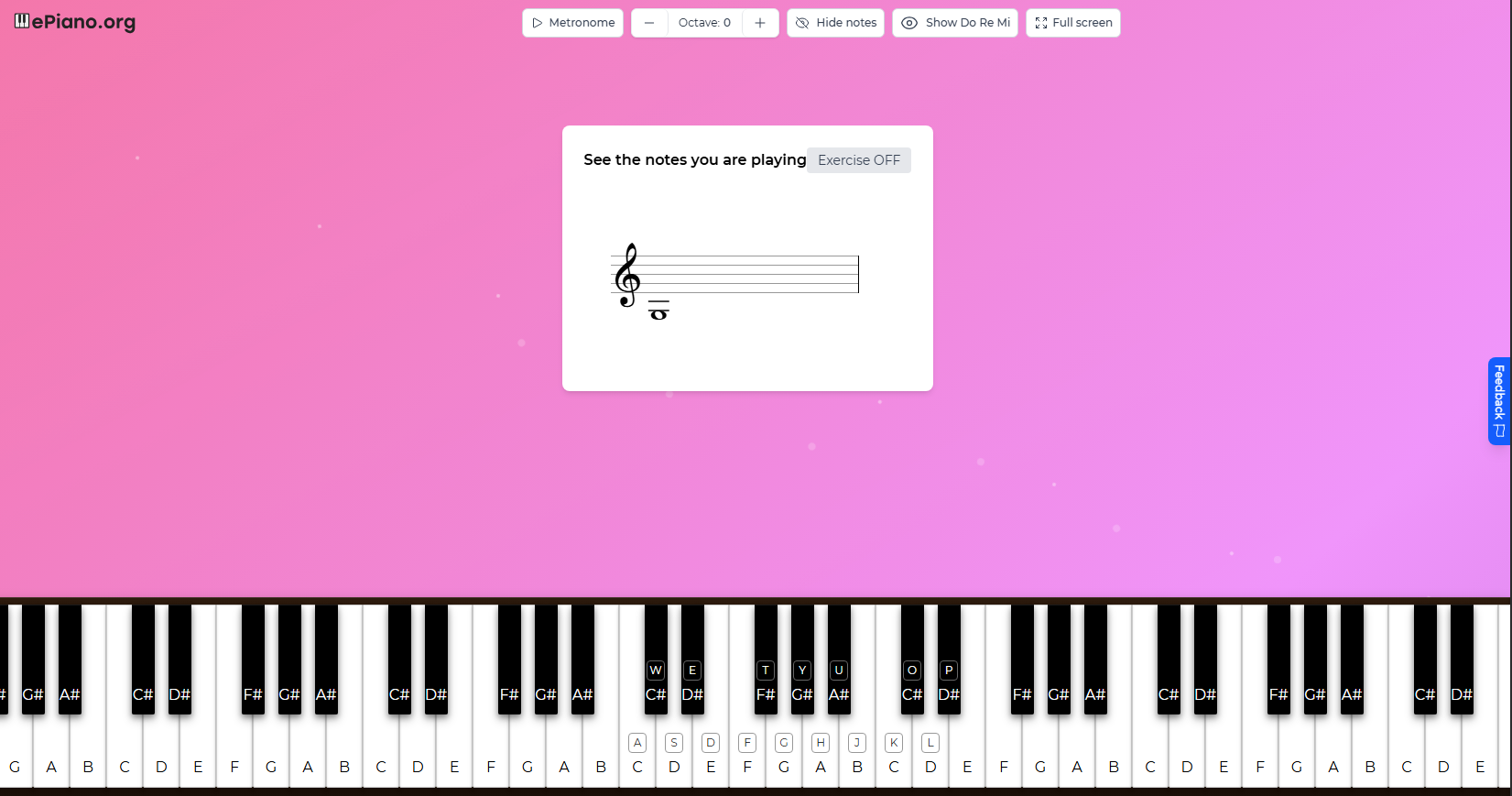
- Best for:Beginners who want note labels and quick orientation
- MIDI input:Yes
- Standout features:Note labels, straightforward layout
- Limits to know:Not a full lesson/trainer system; treat it as a practice keyboard first
- Quick start:Open → Connect MIDI → Allow → choose device → confirm notes trigger sound
Website:EPiano
5. KeyPiano
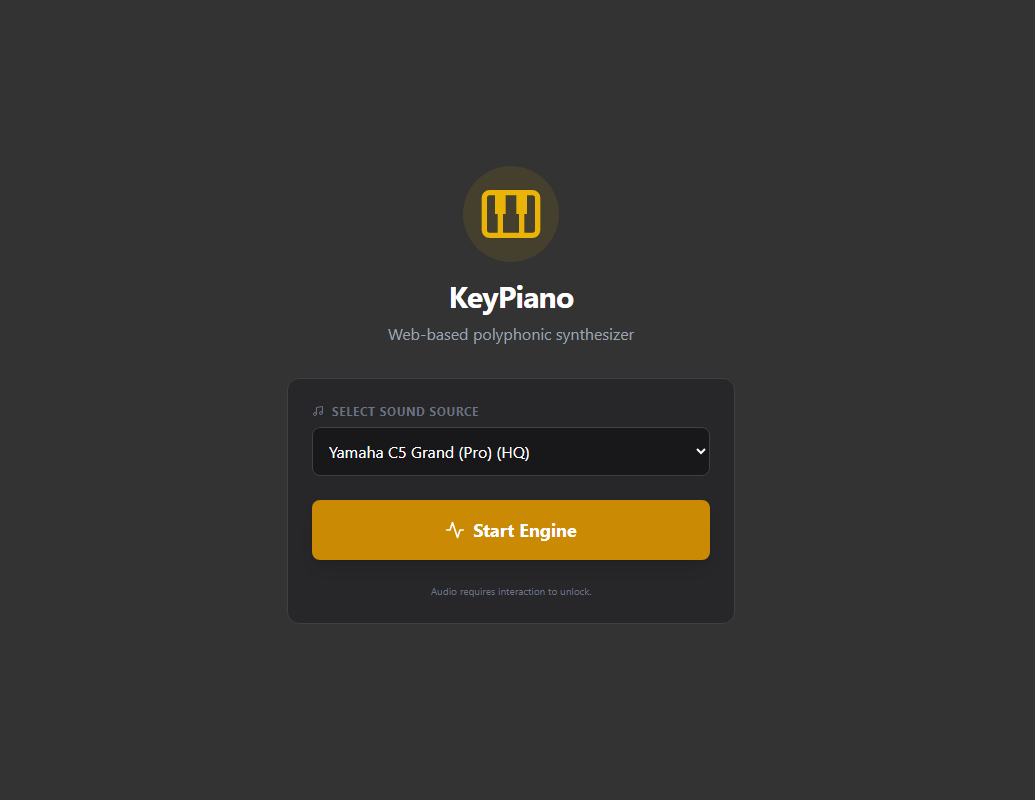
- Best for:More “instrument/synth” control in a browser piano
- MIDI input:Yes
- Standout features:Sound/synth-style controls, broader play options
- Limits to know:“Recording” may mean audio capture or in-app session save-verify export type inside the tool
- Quick start:Open → MIDI → Allow → select device → choose sound → play
Website:KeyPiano
6. VirtualPiano.eu
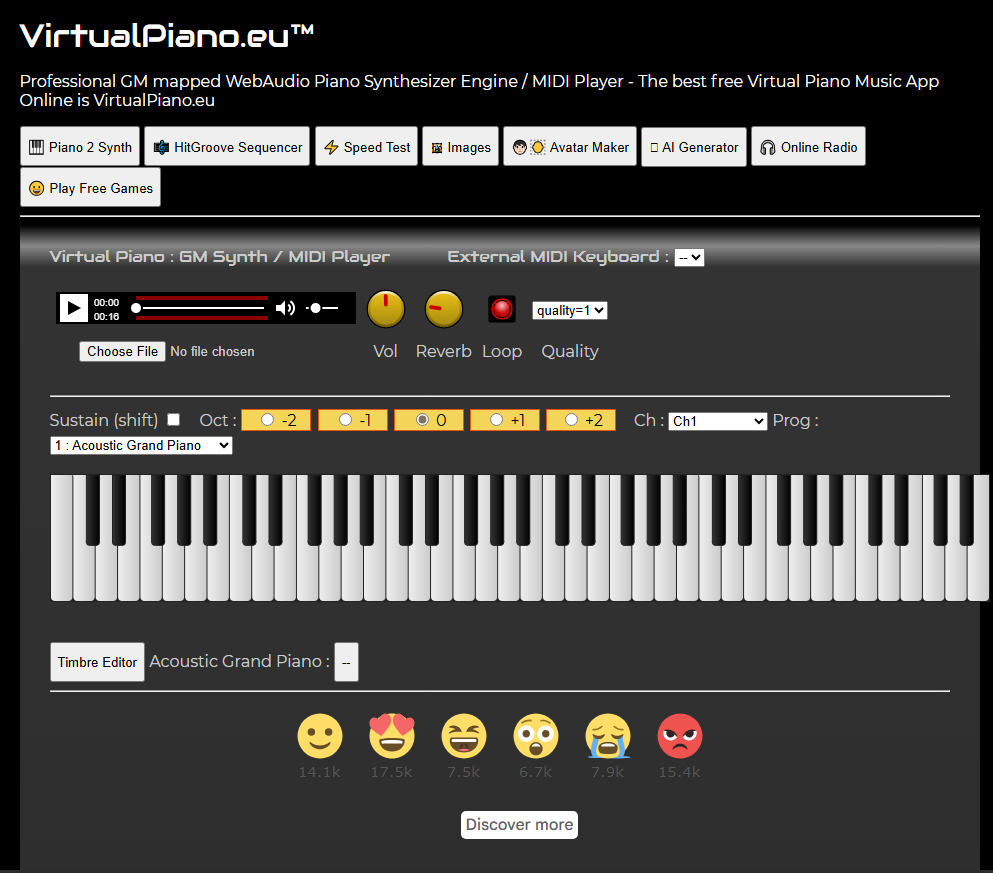
- Best for:Web piano/synth with external MIDI keyboard support
- MIDI input:Yes (as stated by the tool)
- Standout features:Browser-based instrument experience, quick play
- Limits to know:Browser/device compatibility can vary; if MIDI doesn’t appear, retry on Chrome/Edge
- Quick start:Open → Connect MIDI → Allow → select input → play
7. Songtive Web Piano
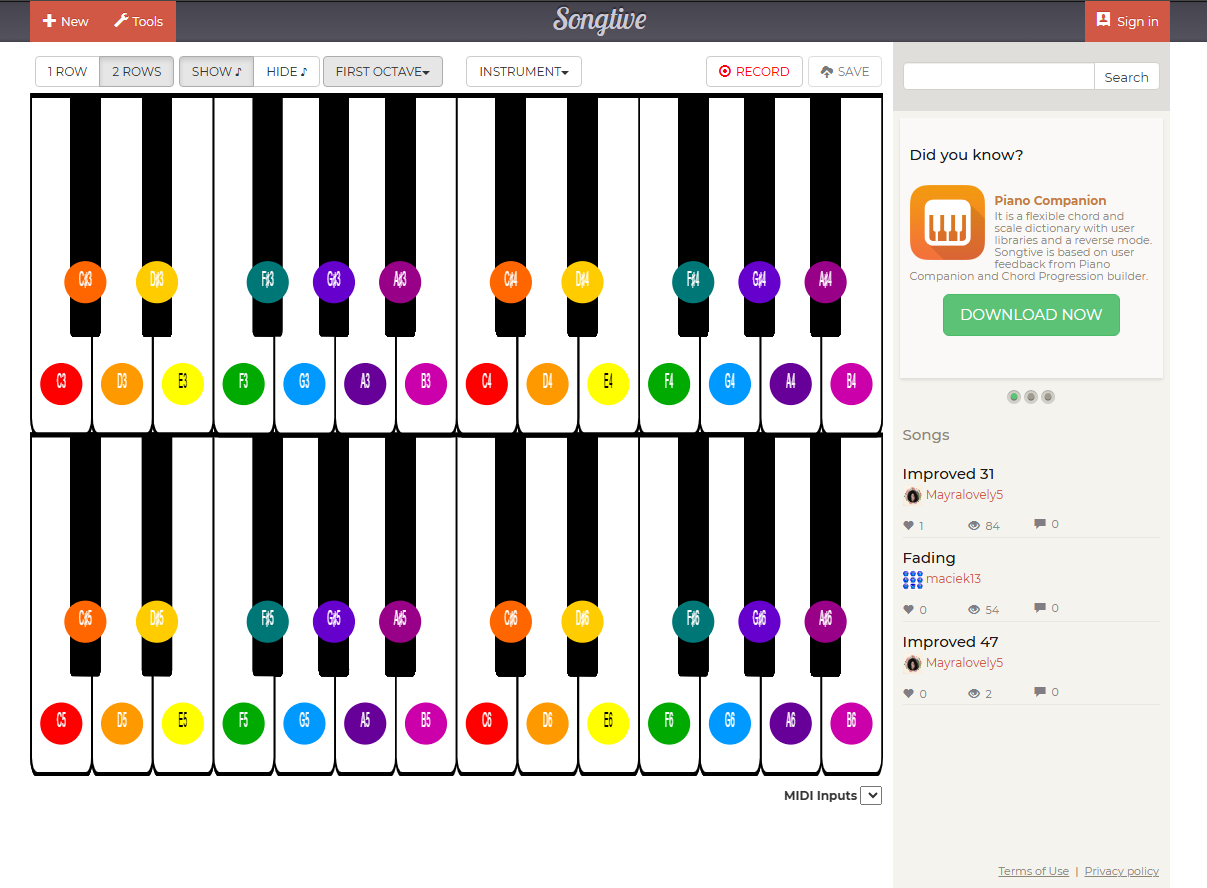
- Best for:Practice with a simple interface and stated MIDI support
- MIDI input:Yes (as stated by the tool)
- Standout features:Clean UI, fast to start
- Limits to know:Not all “piano apps” implement deep MIDI controls (mapping/export)-check settings first
- Quick start:Open → MIDI/Connect → Allow → pick device → play
Website:Songtive Web Piano
8. MIDI Piano (FreeWebTools)
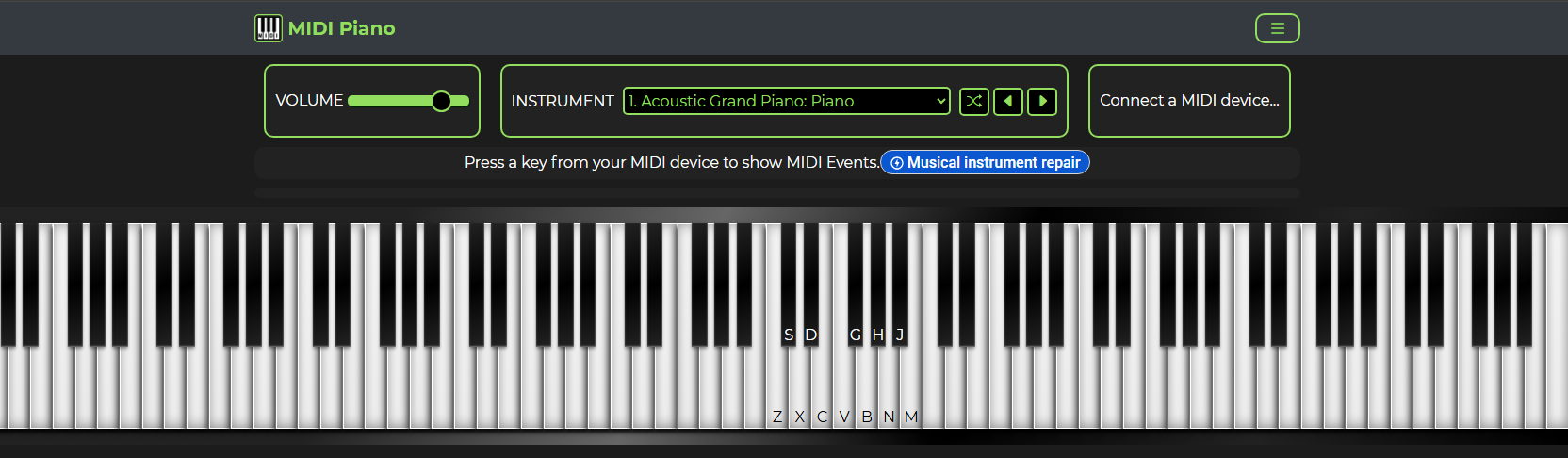
- Best for:A no-frills “does my controller work?” web piano
- MIDI input:Yes
- Standout features:Quick validation of MIDI input, straightforward play
- Limits to know:Usually fewer advanced features (mapping, lesson feedback, export)
- Quick start:Open → Allow MIDI → select device → play a scale to confirm input
Website:MIDI Piano (FreeWebTools)
9. Michael Markowski’s Virtual Keys
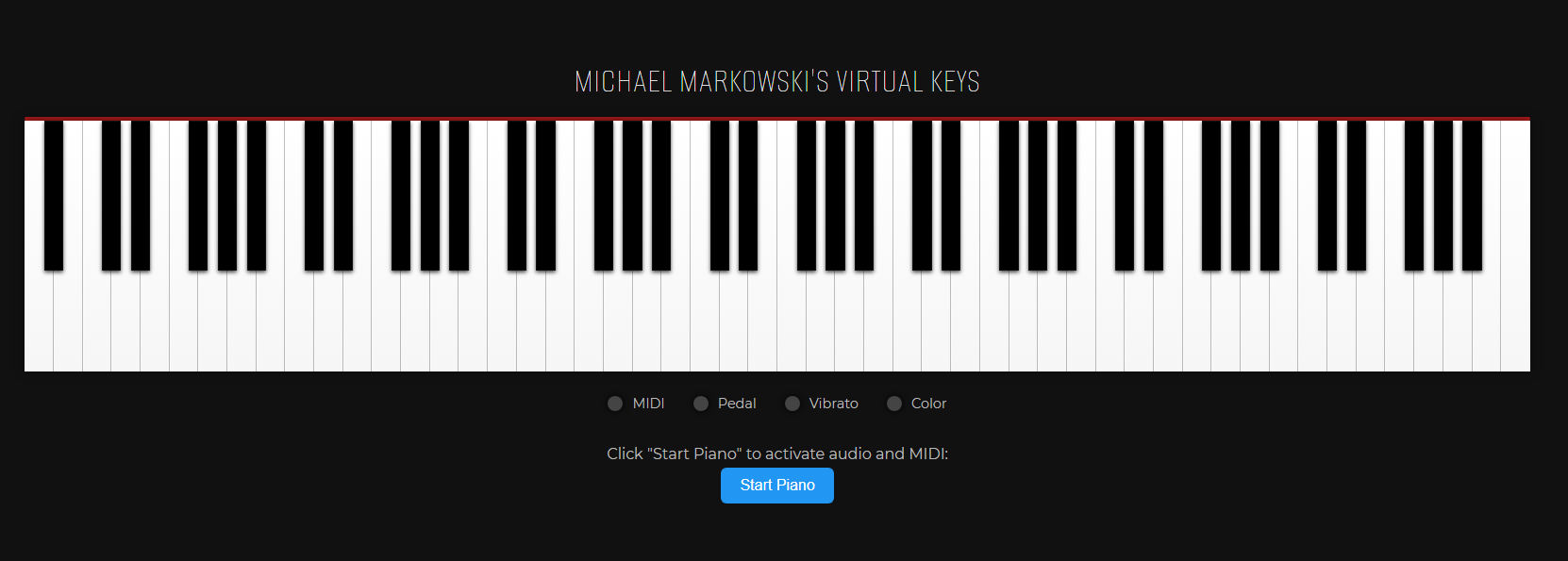
- Best for:A clean, 88-key Web MIDI piano that explicitly prompts you to “Start Piano” (great for autoplay/audio issues)
- MIDI input:Yes
- Standout features:Sustain detection, modulation-style controls, clear “Start” UX
- Limits to know:Some features are intentionally minimal-focus is playability and clarity
- Quick start:Open → click Start/Play → connect MIDI → Allow → play
Website:Michael Markowski’s Virtual Keys
10. PianoApp.net
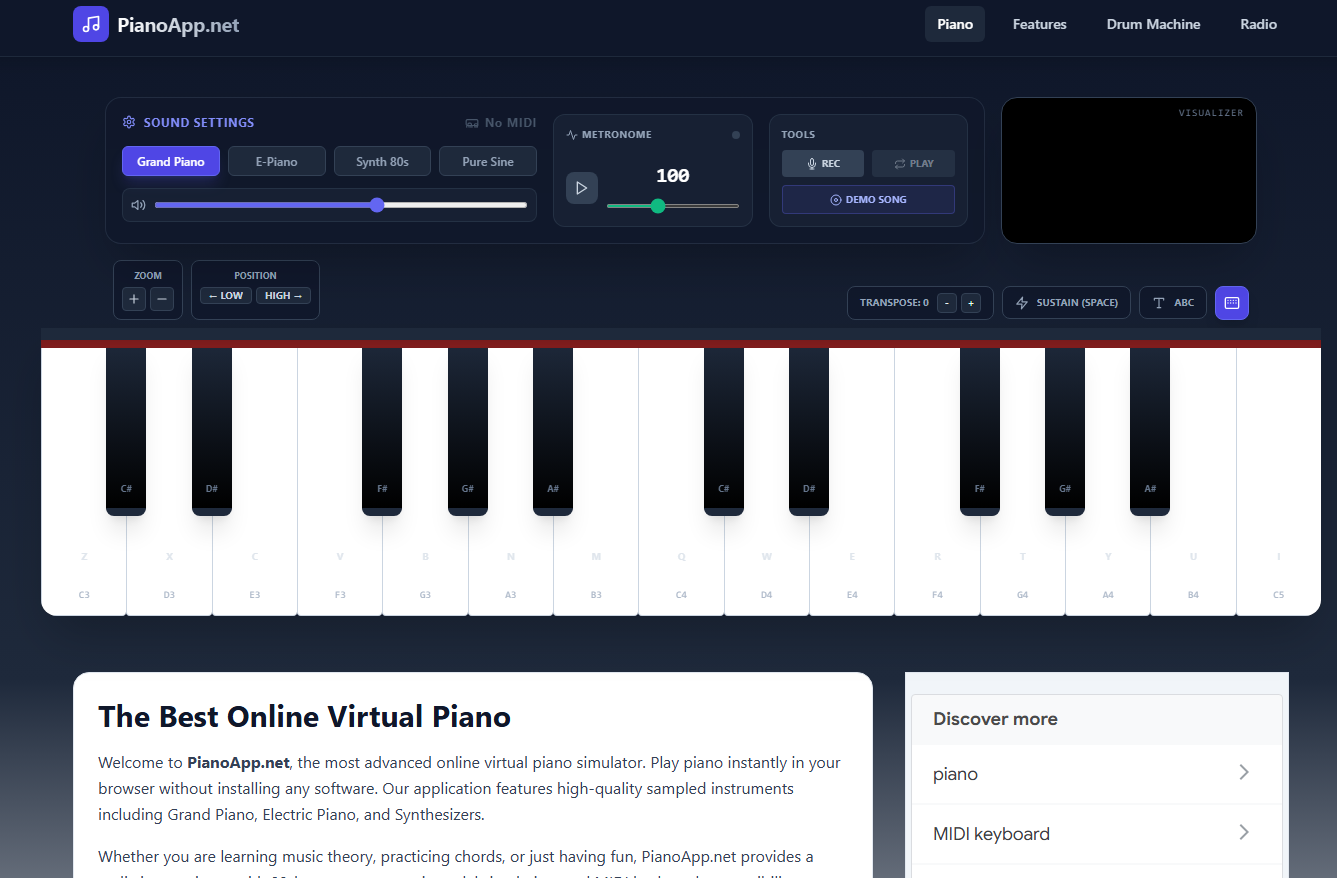
- Best for:A modern “virtual piano” experience with MIDI support and a more app-like feel
- MIDI input:Yes (as stated by the tool)
- Standout features:Multiple instrument sounds, “simulator” style interface
- Limits to know:Verify whether recording/export is audio vs MIDI before you build a workflow around it
- Quick start:Open → MIDI → Allow → select device → play
Best For Learning From MIDI Files (falling Notes + Feedback)
11. Midiano
- Best for:Learning songs from MIDI files with visual feedback
- MIDI input:Yes (for play-along/feedback workflows)
- Standout features:Load MIDI files, falling notes, practice-style feedback options
- Limits to know:Learning quality depends on MIDI file accuracy (timing/arrangement), not just the tool
- Quick start:Open → load .mid → connect MIDI → Allow → play along
Bonus capability (not universal):some trainers can route MIDI playback out to your keyboard so your digital pianobecomes the sound source-useful if your keyboard’s internal sounds feel better than browser synth audio.
12. NotePerfect
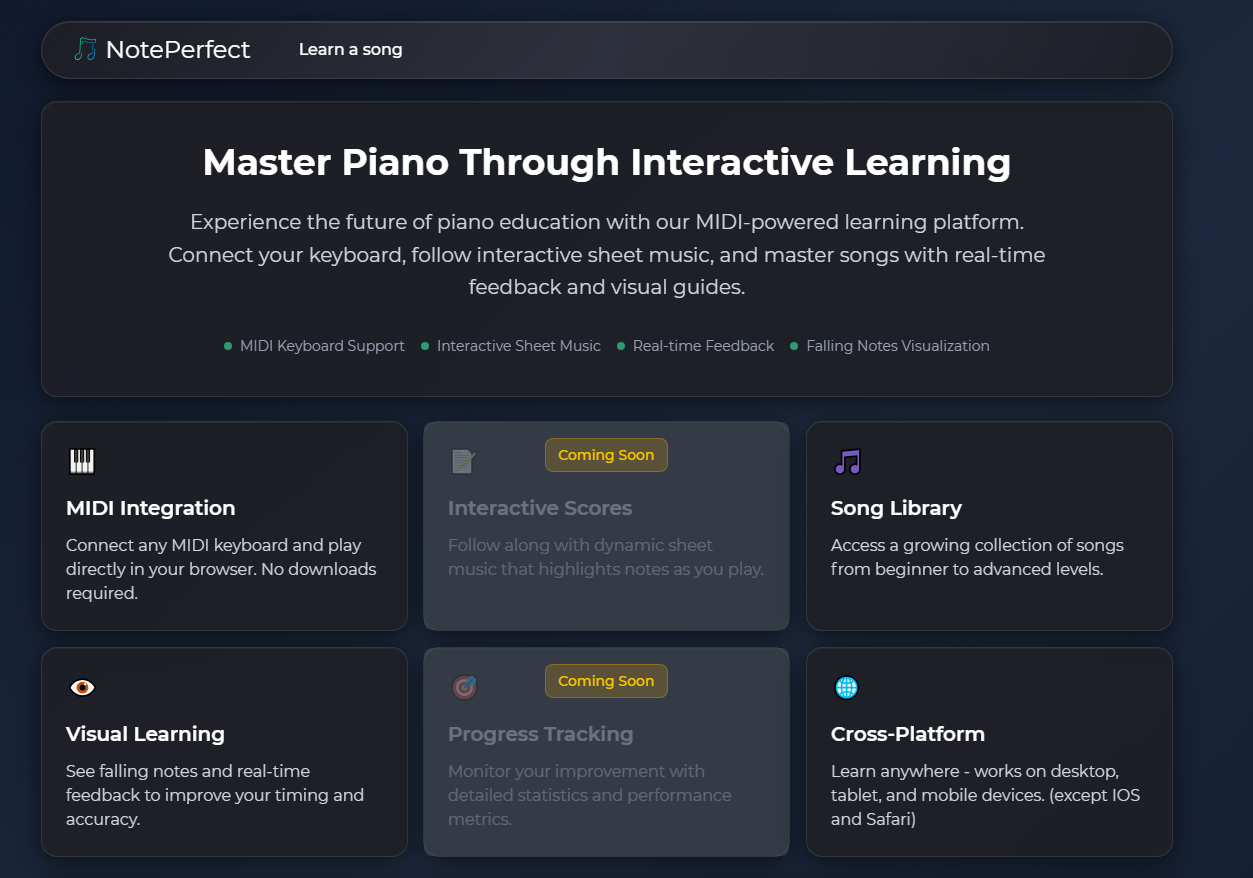
- Best for:Guided, interactive MIDI-style learning with falling notes
- MIDI input:Yes (for interactive play)
- Standout features:Lesson-like flow, feedback-oriented practice
- Limits to know:Content/lesson library may matter more than visuals-check if it matches your skill level
- Quick start:Open → choose lesson/MIDI → connect MIDI → Allow → play
Website:NotePerfect
13. Pianotify Learn Piano
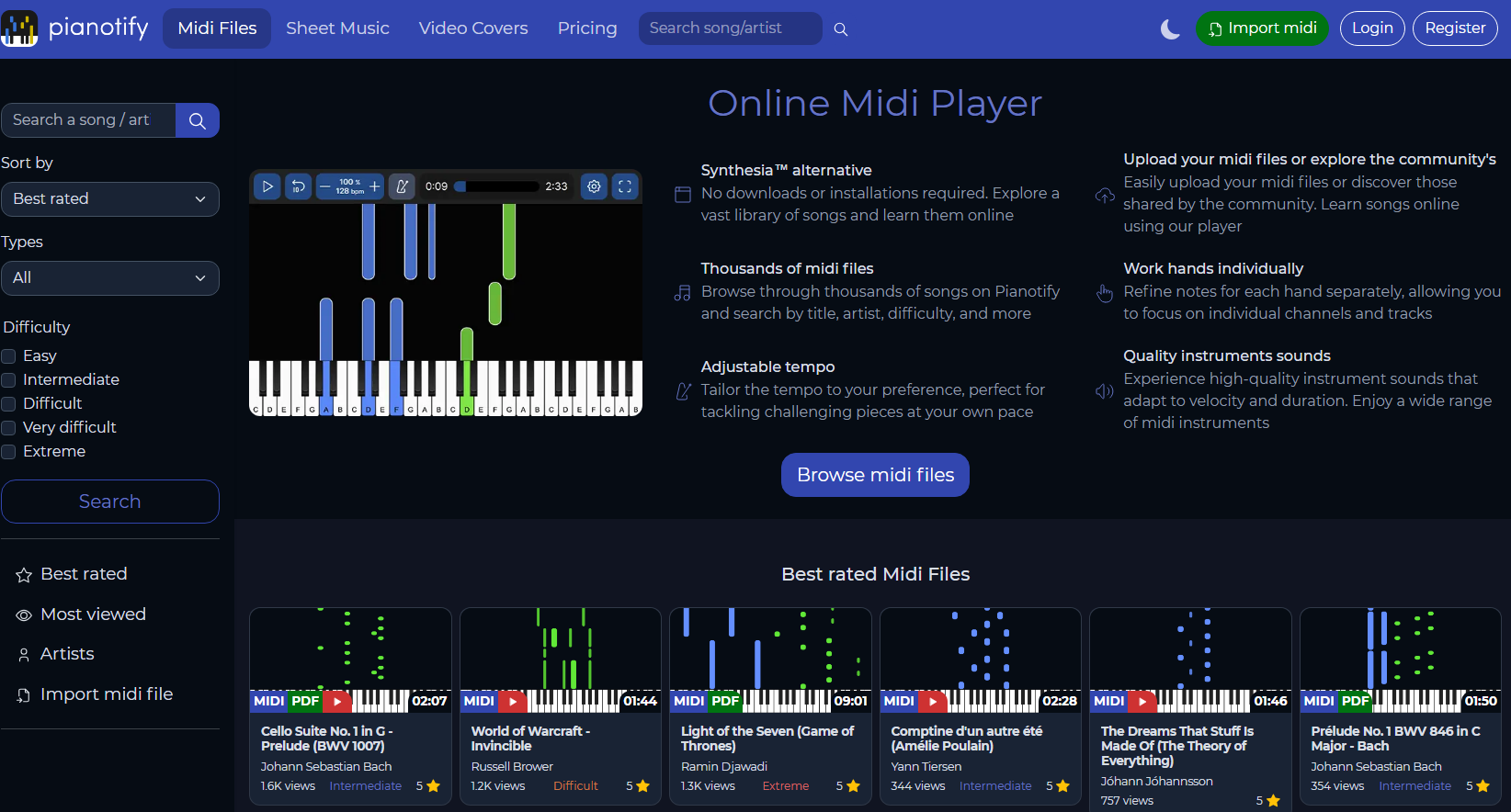
- Best for:Turning MIDI files into learnable tutorials
- MIDI input:Yes (commonly used for play-along)
- Standout features:MIDI import/upload, tutorial-style learning features
- Limits to know:“Generated tutorials” vary in quality depending on the source MIDI and arrangement complexity
- Quick start:Open → upload/import MIDI → connect MIDI → Allow → start practice mode
Website: Pianotify Learn Piano
14. TinySynth
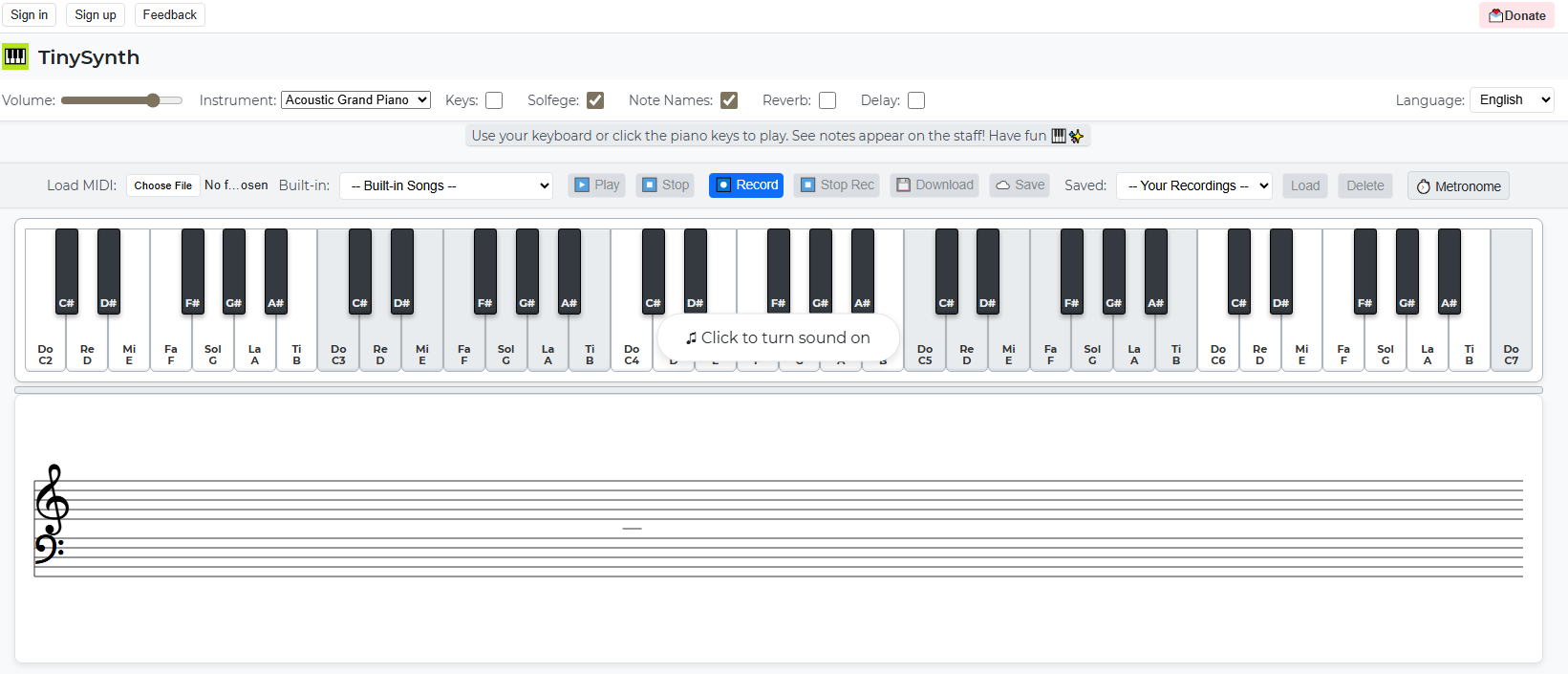
- Best for:A “learn-the-notes” workflow because it combines an online piano with staff visualization and MIDI recording
- MIDI input:Yes (positioned for play + record)
- Standout features:Staff notation visualization, recordMIDI
- Limits to know:Sound/engine and UI are intentionally lightweight-best for learning fundamentals and quick capture
- Quick start:Open → connect MIDI → Allow → play → record (if needed)
Need song files to practice with? Here are the best websites to get midi.
Best For Multiplayer Rooms / Collaboration
15. PianoNet.io
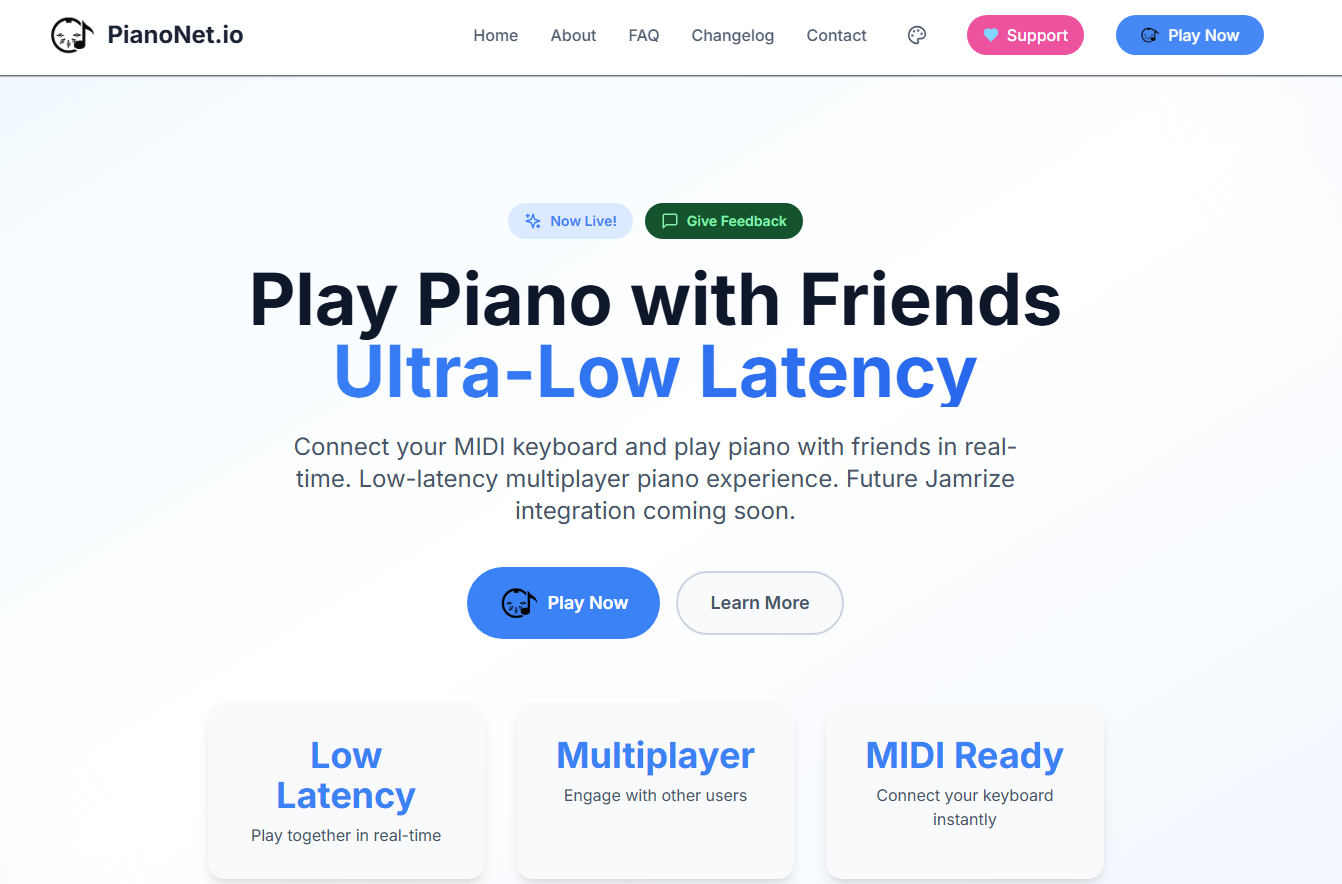
- Best for:Multiplayer pianosessions with a real-time focus
- MIDI input:Yes (platform-positioned for live play)
- Standout features:Multiplayer orientation, shared sessions
- Limits to know:Network conditions affect timing; use wired connections for best feel
- Quick start:Open → join/create room → connect MIDI → Allow → play
16. PianoGlow
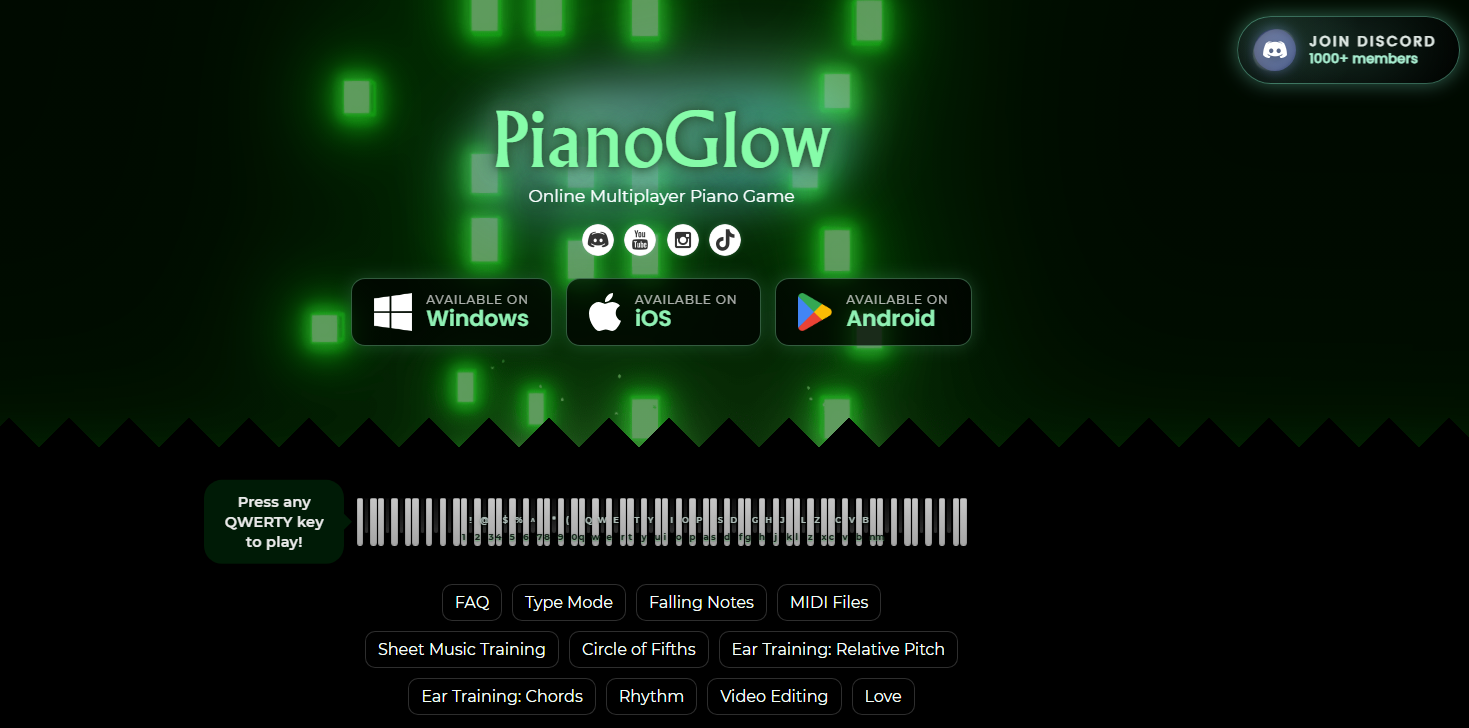
- Best for:Multiplayer play with game-like structure + learning modes
- MIDI input:Yes
- Standout features:Multiplayer focus, “practice through play” vibe
- Limits to know:Game mechanics may prioritize fun over strict musical timing/precision
- Quick start:Open → pick mode → connect MIDI → Allow → play
Website:PianoGlow
17. Pianoverse
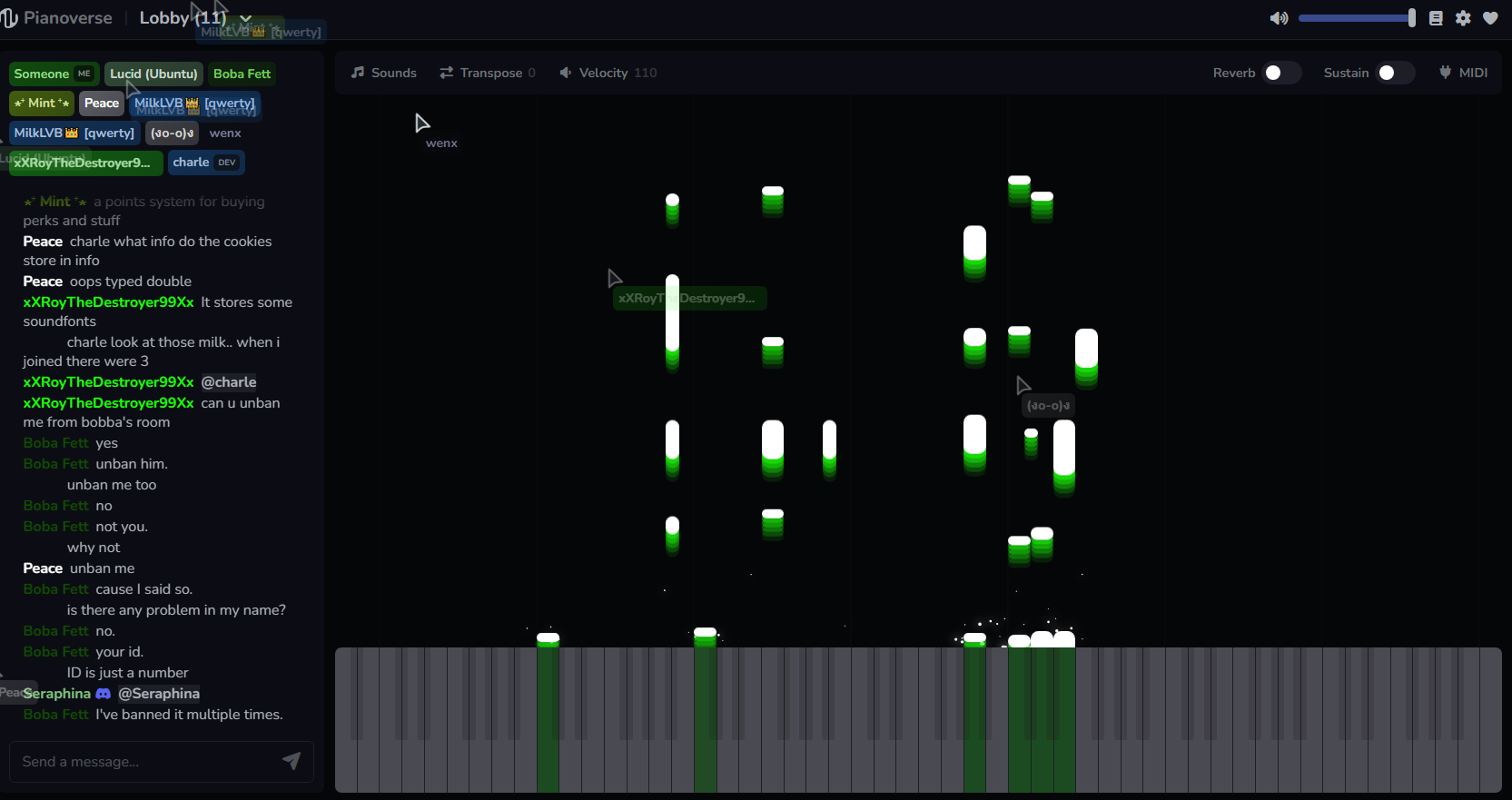
- Best for:“Play with friends” sessions in a virtual piano environment
- MIDI input:Yes (as positioned by the platform)
- Standout features:Social/multiplayer framing, quick sessions
- Limits to know:Collaboration features differ by platform-verify room tools (chat, moderation, invites)
- Quick start:Open → join friends/session → connect MIDI → Allow → play
Website:Pianoverse
18. Multiplayer Orchestra
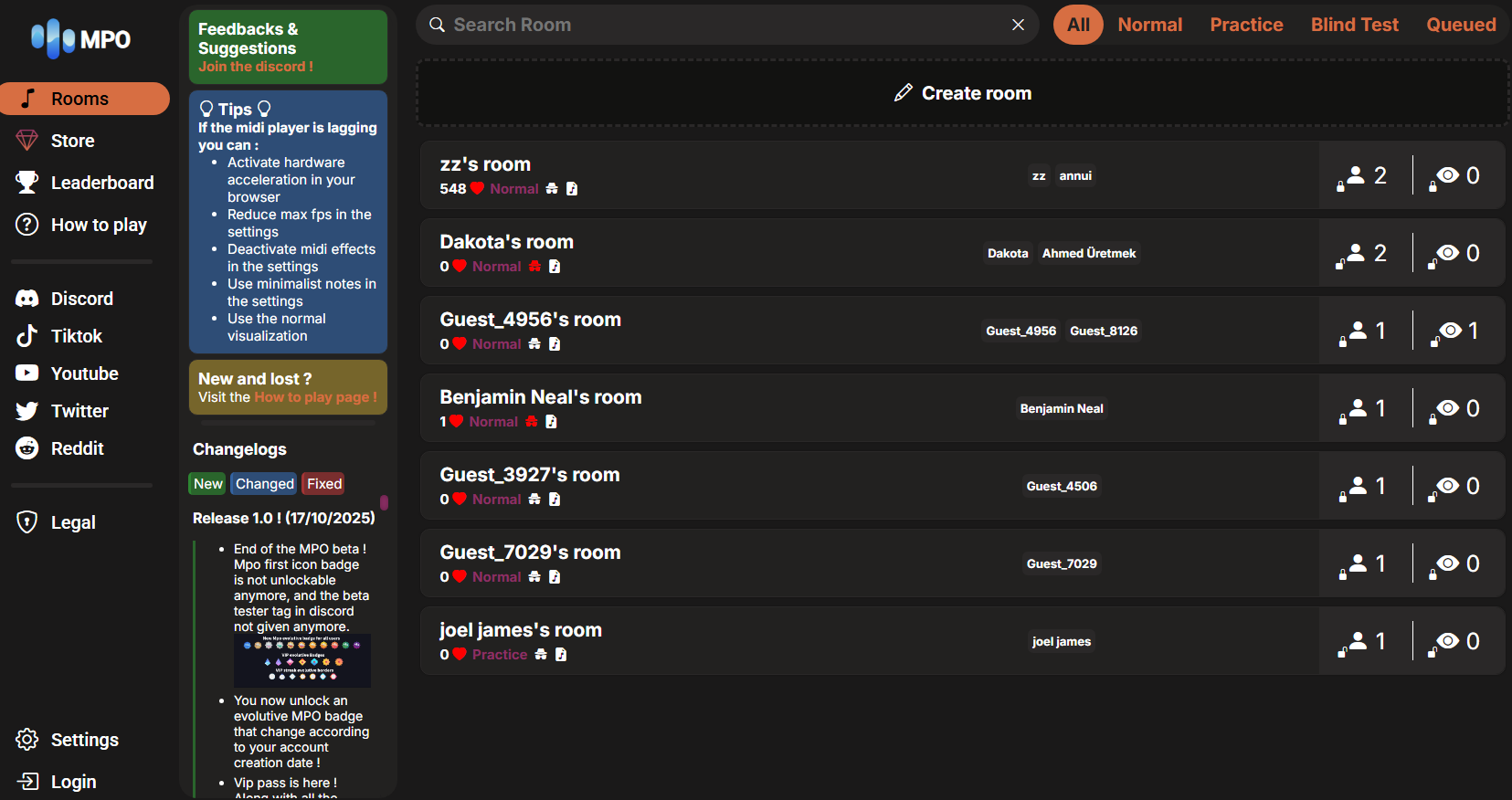
- Best for:Real-time multi-instrument collaboration (beyond just piano)
- MIDI input:Yes
- Standout features:Multi-instrument format, collaborative sessions
- Limits to know:Coordination is harder across networks; keep expectations realistic for tight ensemble timing
- Quick start:Open → choose instrument → connect MIDI → Allow → play
Website:Multiplayer Orchestra
Best For MIDI Visualization (piano Roll / Content Creation)
19. PianoVisual
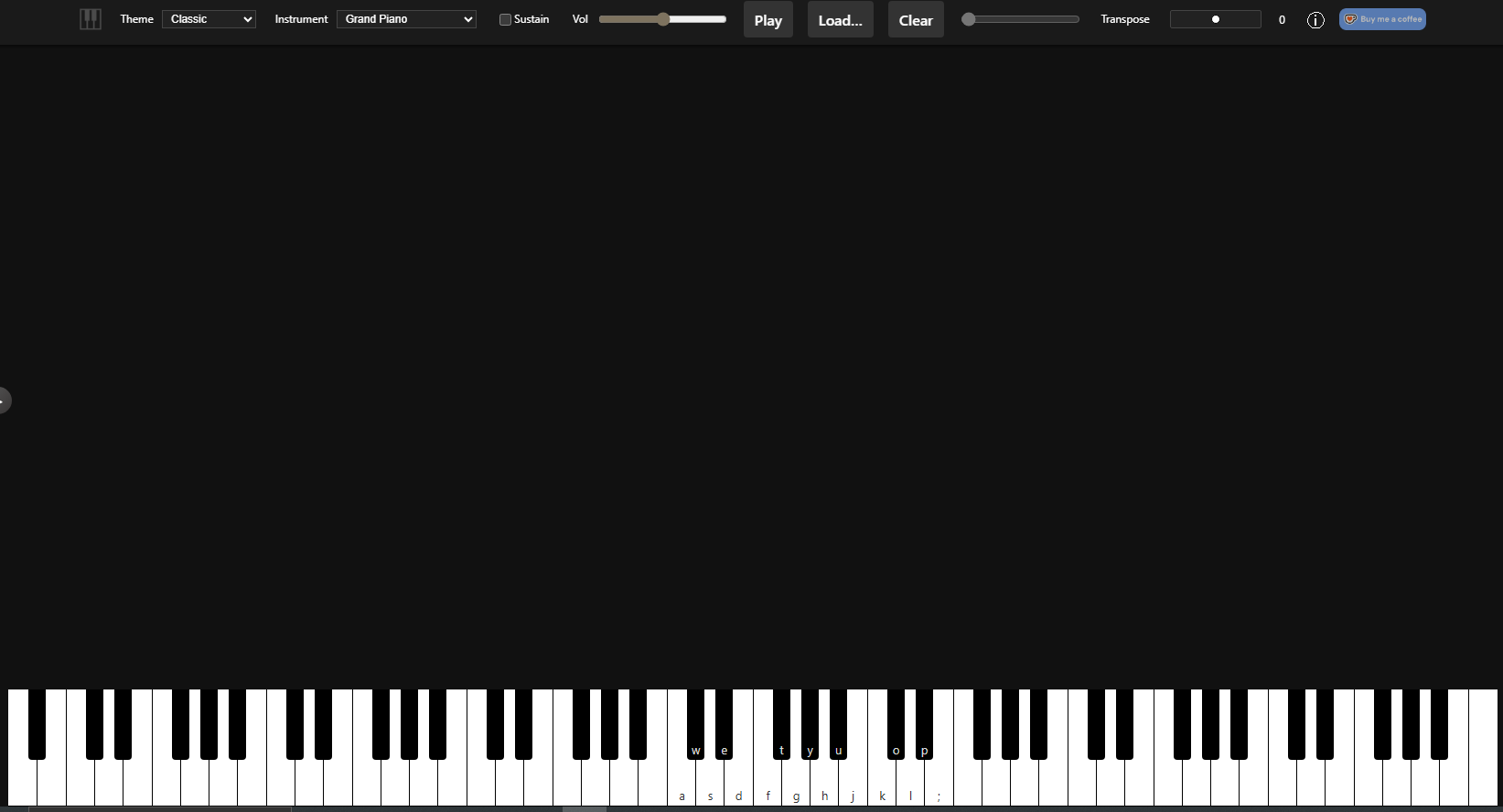
- Best for:Visualizing what you play and/or MIDI files in a piano-roll style
- MIDI input:Yes (USB-MIDI supported)
- Standout features:Visual emphasis, MIDI file playback/visualization, performance-friendly look
- Limits to know:Visualizers may not aim to be “lowest latency”-optimize audio routing if you’ll also perform live
- Quick start:Open → connect MIDI → Allow → select device → play (or load MIDI)
Website:PianoVisual
20. Flying Notes
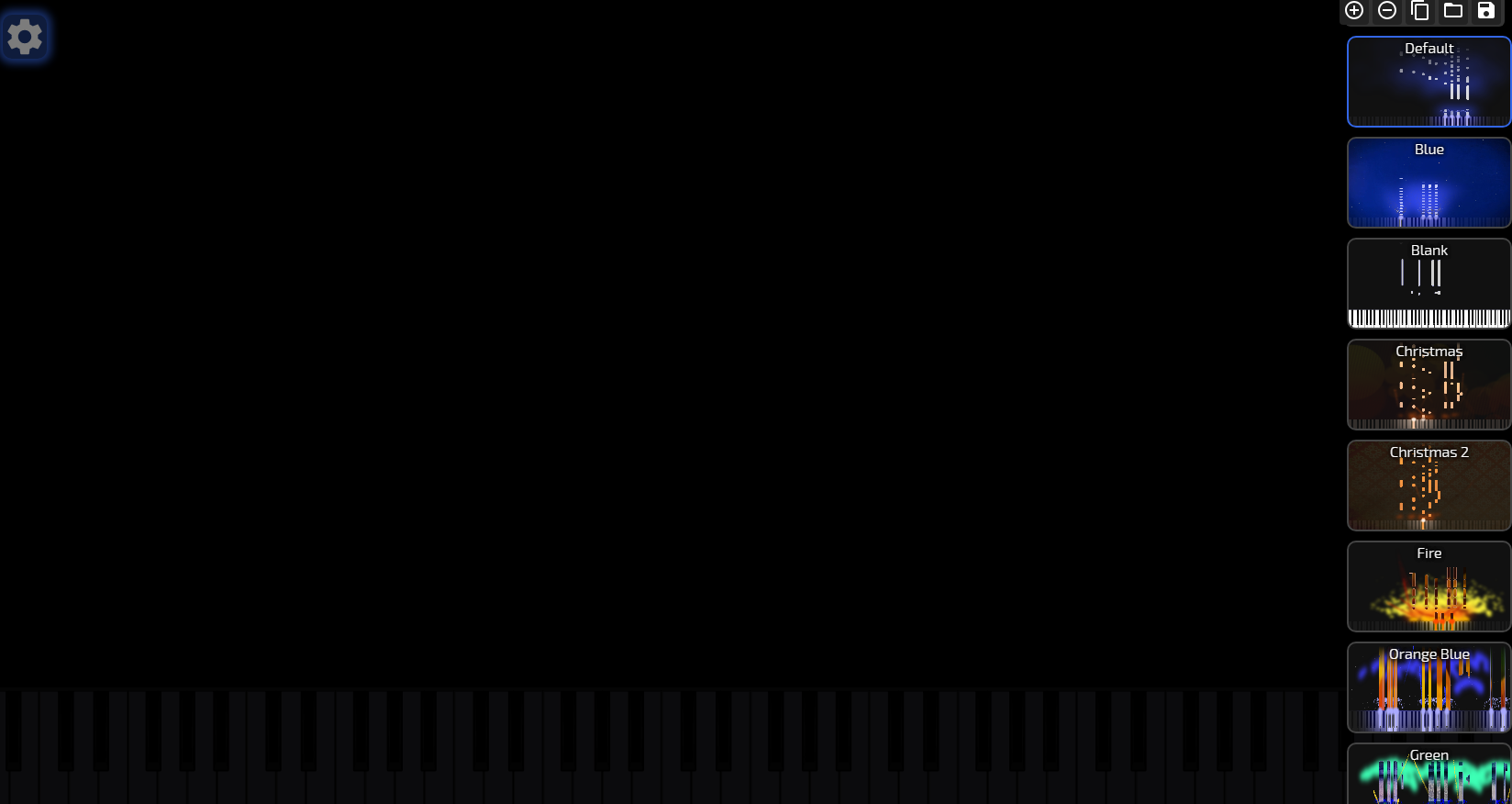
- Best for:Live MIDI visualizer aesthetics (great for practice + content)
- MIDI input:Yes (live visualizer positioning)
- Standout features:Strong visual feedback, immediate “see what you play” effect
- Limits to know:Some visualizers focus on visuals over practice tools (metronome/looping/export may be limited)
- Quick start:Open → connect MIDI → Allow → play
Website:Flying Notes
21. MIDI Toolbox Visualizer
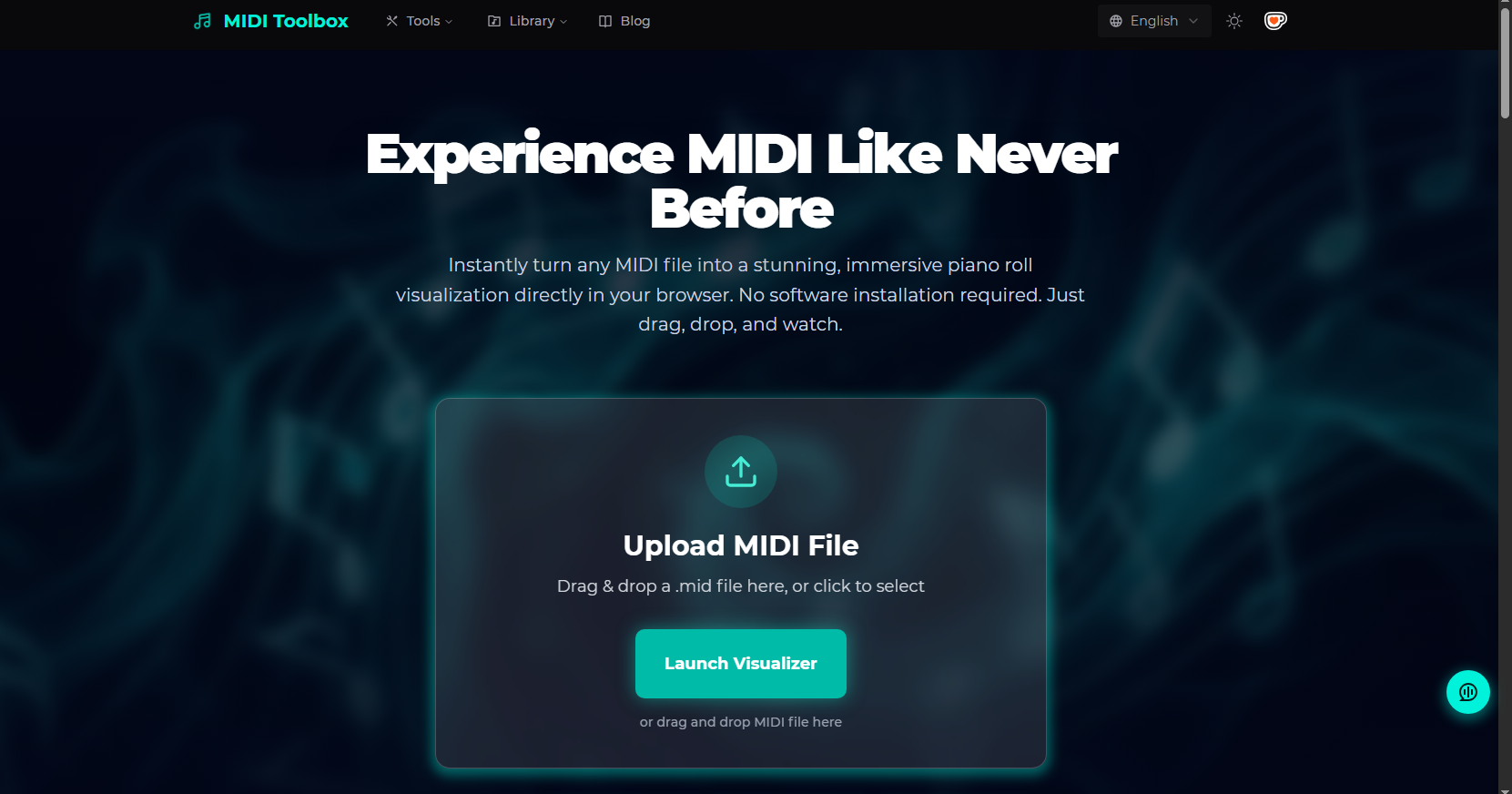
- Best for:Clean, in-browser piano-roll viewing of MIDI files
- MIDI input:Primarily MIDI file visualization (live input may vary)
- Standout features:Focused MIDI file visualizer workflow
- Limits to know:This is usually a file-first tool; don’t expect lesson feedback or multiplayer
- Quick start:Open → load MIDI file → play/visualize
Website:MIDI Toolbox Visualizer
22. IndiPiano MIDI Visualizer
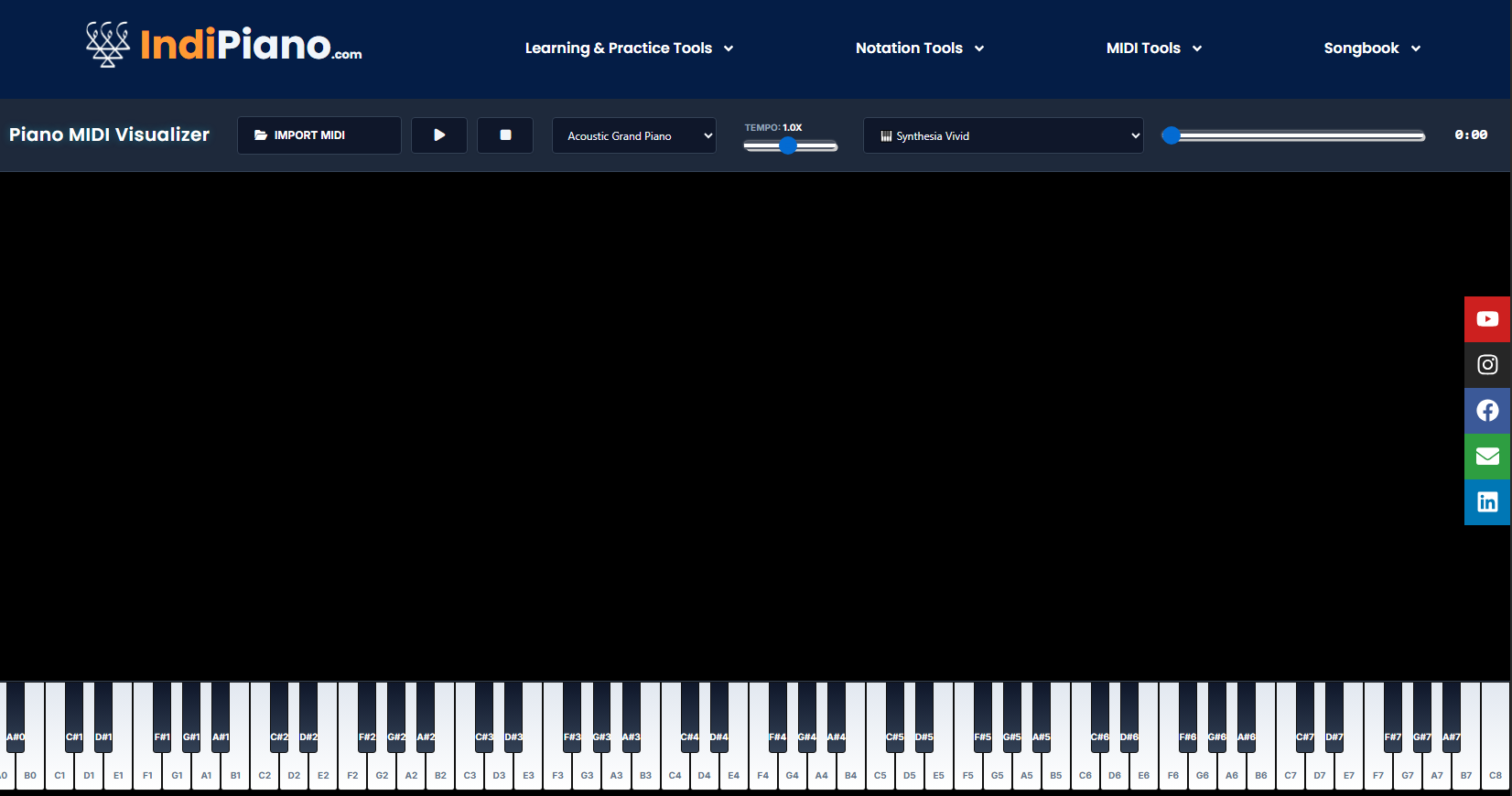
- Best for:Drag-and-drop MIDI visualization with practice controls
- MIDI input:Primarily MIDI file visualization (live input may vary)
- Standout features:Quick drag/drop workflow, practice-style playback controls
- Limits to know:If you need accuracy feedback, use a trainer (like Midiano) instead of a pure visualizer
- Quick start:Open → drag in MIDI → adjust playback → visualize
Website:IndiPiano MIDI Visualizer
23. DoraPiano
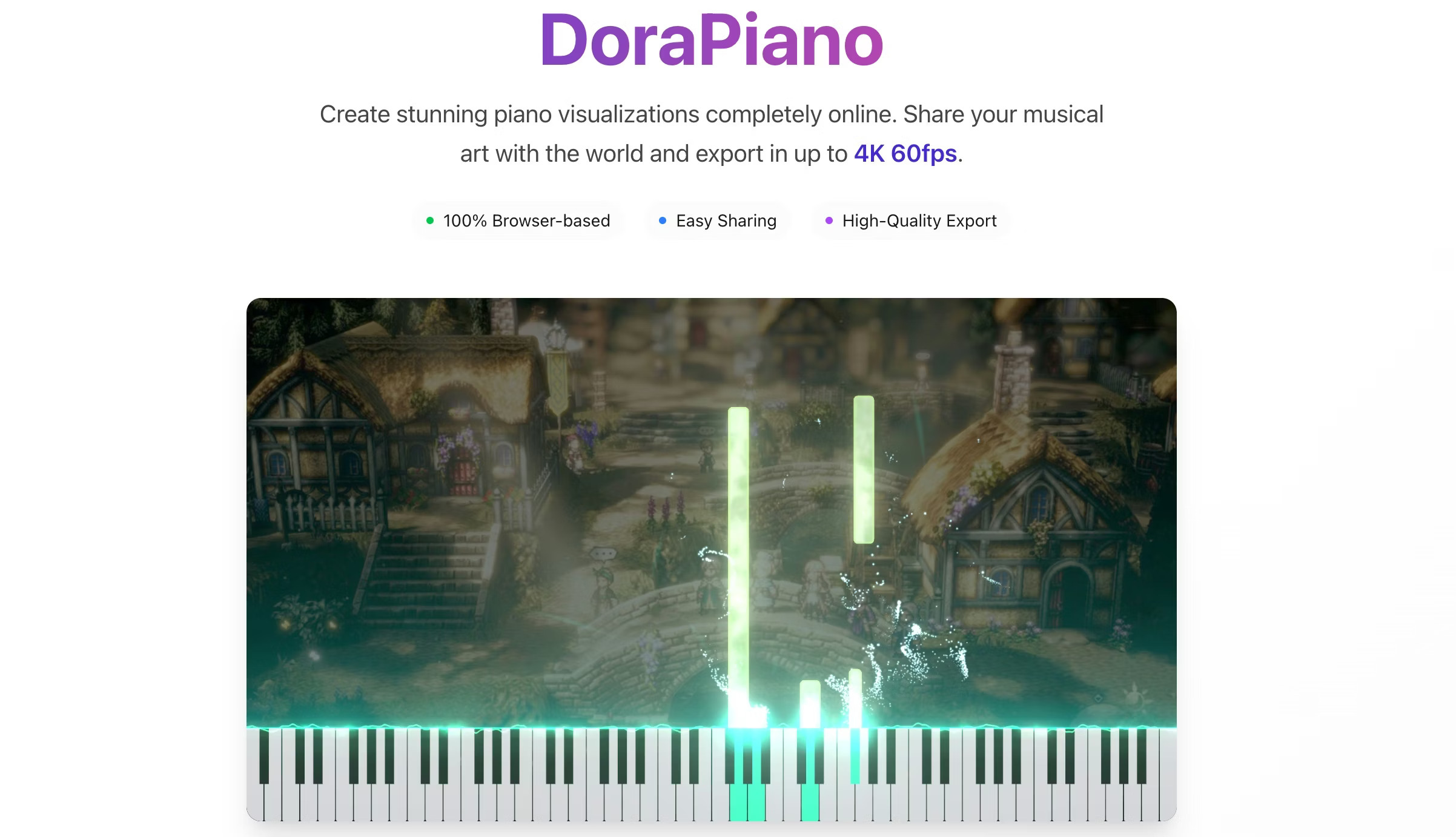
- Best for:Visualization workflows with export positioning
- MIDI input:File-first visualization (live input may vary)
- Standout features:Visual output emphasis
- Limits to know:“Export” can mean different things (video/audio/project)-verify inside the tool
- Quick start:Open → load MIDI → choose visual style/settings → export (if available)
Website:DoraPiano
24. Piano Projector
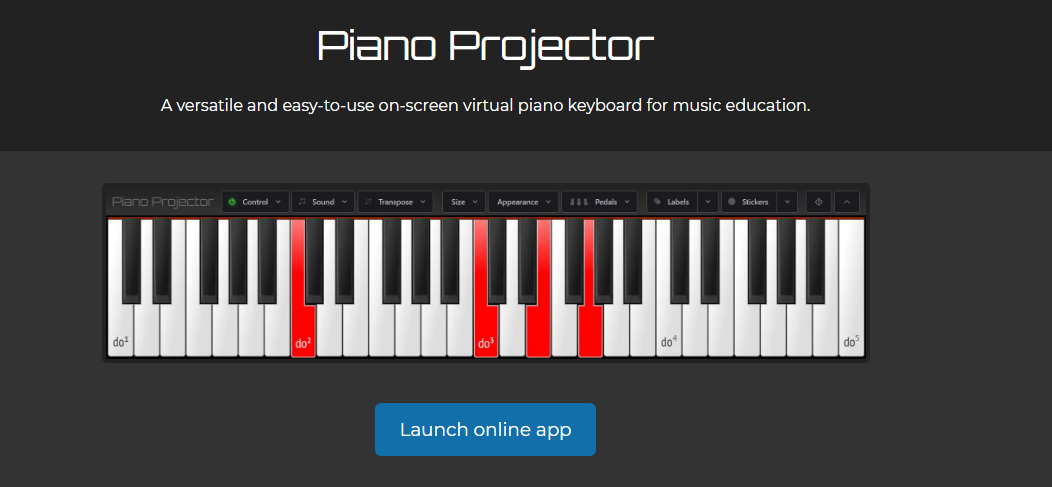
- Best for:Teachers/students who want a clean on-screen keyboard that highlights the notes played on a connected MIDI keyboard (great for lessons and projection)
- MIDI input:Yes
- Standout features:Big-screen clarity, education/demo-friendly UI
- Limits to know:It’s designed more for display/teaching than for “realistic piano tone” or advanced recording
- Quick start:Open → connect MIDI → Allow → play → project/share screen
Website:Piano Projector
Best For Recording/editing In The Browser (production Workflows)
25. PianoMode Virtual Piano Studio
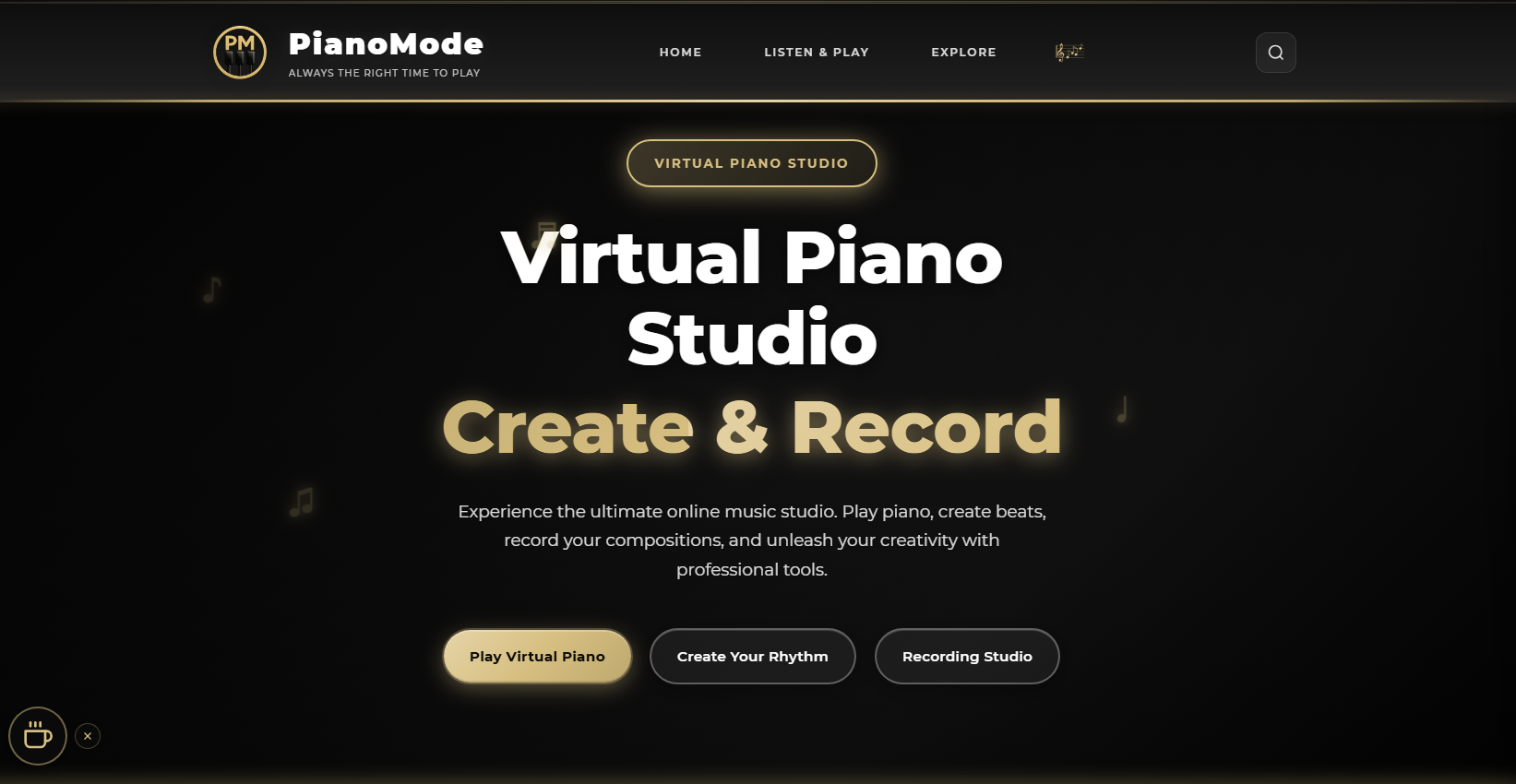
- Best for:A browser “mini-DAW” experience: play + record + layer tracks
- MIDI input:Yes (as stated by the tool)
- Standout features:Multi-track recording tools, production workflow vibe
- Limits to know:Verify export type (WAV/MP3 vs MIDI) before you rely on it for DAW handoff
- Quick start:Open → Connect MIDI → Allow → record a take → export
Website:PianoMode Virtual Piano Studio
26. SignalMIDI (Online MIDI Editor)
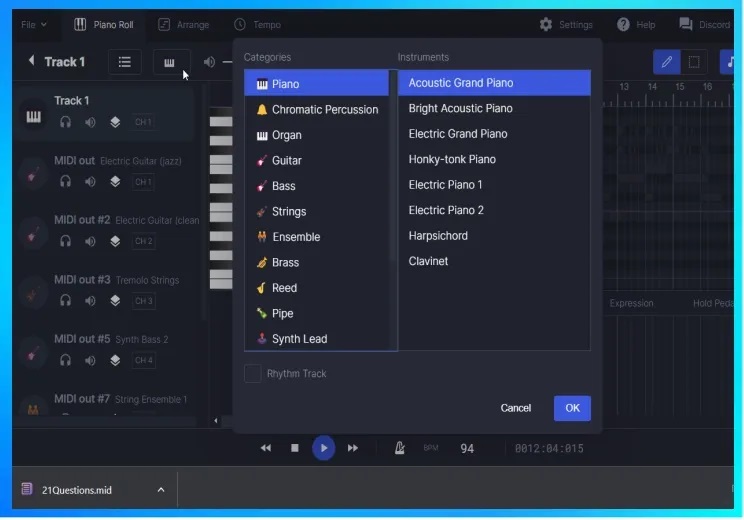
- Best for:Recording MIDI from a keyboard and editing/arranging it directly in the browser
- MIDI input:Yes (Web MIDI I/O supported)
- Standout features:Editor/sequencer workflow, record performance, export options
- Limits to know:Confirm how it handles your files/projects (save/export) before building a long-term workflow
- Quick start:Open → connect MIDI → Allow → record → edit → export
Before You Commit To Any Platform, Verify These 5 Things:
- Does it support live MIDI input(not just typing on your computer keyboard)?
- Does it require an account? (If yes, decide if that’s acceptable.)
- If you upload MIDI files: are you okay with that file leaving your device?
- Does “export” mean WAV/MP3 (audio) or .MID (MIDI)?
- Does it have an obvious “Start/Enable Audio” button (for autoplay restrictions)?
Getting Started: How To Connect Your MIDI Keyboard To Your Browser
Step-by-Step Hardware Setup
- Confirm your keyboard is actually a MIDI device. Look for “USB-MIDI,” “MIDI,” or a USB-B/USB-C data port (not charge-only).
- Go wired first (USB-MIDI). Use a direct cable or a powered hub if needed. Wireless adds variables you don’t want yet.
- Use a supporting browser and a secure site (HTTPS). Web MIDI access requires secure context and user permission.
- Open your chosen online MIDI piano, then trigger MIDI connection. Many sites only request MIDI access after you click a “MIDI” button (best practice for permissions).
- Approve the MIDI permission prompt carefully. Only allow trusted sites (see safety note below).
- Select the correct MIDI input inside the site/app. If the device list is blank, refresh once after connecting.
Safety note:Chrome documents that allowing MIDI device control can allow broad message access (including sensitive messages).
If you have multiple MIDI devices connected, explicitly pick the correct device + port from the list (multi-port devices can appear twice).
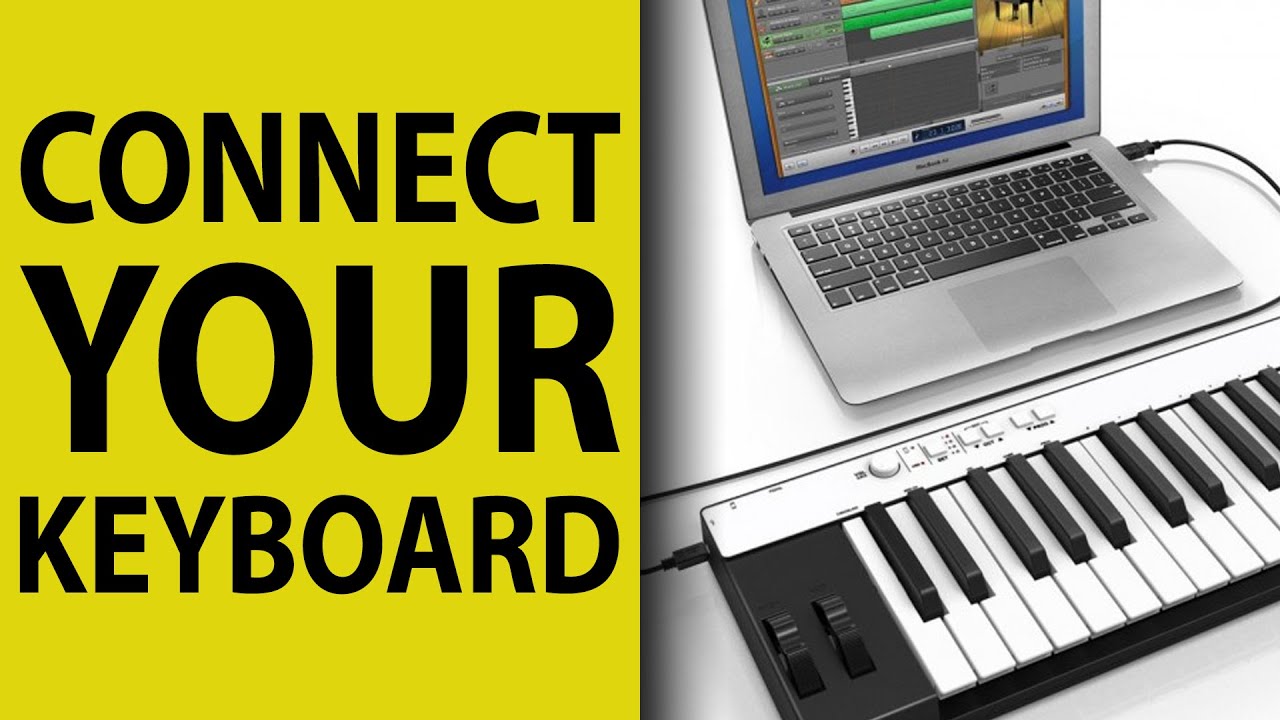
How to Connect a MIDI Keyboard to a Computer
Fast Diagnostic Flow (fixes “Device Not Found” faster than random guessing):
- Step 1 - Does your computer see the keyboard at all?If not: cable/port/hub/power.
- Step 2 - Does your browser support Web MIDI + show a permission prompt?If not: switch browser (Chrome/Edge) and confirm HTTPS.
- Step 3 - Does the site show your MIDI device in a device list?If not: reload after connecting or change Site settings for MIDI.
- Step 4 - Do keys highlight but you hear nothing?Click “Start/Play/Enable Audio” (autoplay restriction) and try again.
- Step 5 - If it still won’t show: close DAWs/MIDI utilities (they can lock MIDI ports), then reload the page and re-open the site’s MIDI menu.
Troubleshooting "Device Not Found" Errors
If the site can’t see your keyboard, isolate which layeris failing:
Browser layer (support/permissions):
- Try Chrome/Edge. Check current support if you’re on a different browser.
- Re-check site permissions for MIDI (blocked permissions can “stick”).
- Permission “stuck” fix (most common):address bar lock icon → Site settings → MIDI devices → Allow/Block → reload.
Web MIDI requirements layer (secure context / policy):
The API requires HTTPS and user permission; it can also be blocked by a site’s Permissions Policy.
OS/device layer (connection):
- Swap the cable (charge-only USB cables are common).
- Try a different USB port; remove unpowered hubs.
- Close other apps that might be holding the device (DAWs, MIDI utilities), then reload.
Two “boring” fixes solve most Web MIDI failures: (1) reload the page after the keyboard is connected, and (2) select the correct MIDI device and port in the site’s MIDI menu. If your device still won’t appear, close DAWs/MIDI utilities that may be holding the port, then reload again.
This is the exact troubleshooting loop that solves most “midi piano online” setups in Chrome/Edge.
If MIDI is connected but there’s no sound (very common):
- Click once inside the page or press the site’s “Start/Play/Enable Audio” button.
- Turn off Bluetooth headphones temporarily and test wired output.
- Reload after changing audio devices (some browsers don’t switch cleanly mid-session).
Once the device is detected, the next battle is feel-latency and lag are what make a good online MIDI piano feel “real.”
Optimizing Performance: Eliminating Latency And Lag
You’ll make your online MIDI piano feel tighter-more like an instrument and less like typing into a website. Latency has multiple components (input timing + processing + audio output).
The Impact Of Audio Buffer Sizes
In browsers, you rarely set “buffer size” directly like you would in a DAW, but the underlying idea still matters: audio is processed in chunks, and chunking contributes to latency. Web Audio even exposes a measurable baseline processing latency concept (baseLatency).
Practical moves that usually help:
- Prefer wired headphones/speakersover Bluetooth audio (Bluetooth audio stacks add delay).
- Close background audio apps/tabsthat fight for the audio device.
- If the site offers a “low latency / performance” mode, use it-then raise quality only after the feel is good.
- Restart the browserafter changing audio devices (it can clear weird routing states).
Wired Vs. Wireless: Why Bluetooth Is The Enemy Of MIDI
“Enemy” is shorthand for a real tradeoff: wireless adds timing variability. BLE MIDI exists as a spec and enables broad compatibility across platforms, but wireless transport still introduces more opportunities for jitter and latency than a direct USB cable.
A sane rule:
- Recording, tight rhythm practice, or multiplayer:use wired USB-MIDI.
- Casual practice / convenience:Bluetooth MIDI can be fine if you can tolerate softer timing.
With latency handled, your next step is choosing tools that won’t box you in-polyphony, sound quality, export, and collaboration features matter more than most people expect.
Top Features To Look For In A Virtual MIDI Interface
Polyphony Limits And Sample Quality
What to look for (and how to test fast):
- Polyphony:hold a sustain pedal and play dense chords; if notes drop, the engine is capped.
- Velocity response:play soft vs loud-does it actually change musically or just “volume bumps”?
- Pedal behavior (CC64):sustain should feel consistent, not sticky or delayed.
Recording And Exporting MIDI Files For Your DAW
Two different outputs get confused constantly:
- Audio recording= what you heard (good for sharing).
- MIDI export= what you played (good for editing and production).
If a platform doesn’t export MIDI performances:
- Record MIDI in your DAW directlywhile you play (your DAW is still the most reliable “MIDI recorder”).
- Use the online piano for sound/visuals, but keep the DAW as your source of truth for editable notes.
If a tool says “Export,” always verify the format (WAV/MP3 vs .MID) before you plan your workflow around it.
If your goal is better sound and full production control, pair your keyboard with a vst for midi keyboardsand treat the browser tool as practice/visual feedback.
Collaborative Features: Playing In Multiplayer Rooms
Collaboration features that matter:
- Rooms/lobbies:easy discovery and quick join.
- Chat + moderation:prevents spam from ruining sessions.
- Expectation setting:even “real time” play isn’t the same as being in one room-treat it as shared performance, not perfect ensemble timing.
Once you’ve picked a platform with the right features, you can make it feel like yourkeyboard with mapping and velocity tuning.
Advanced Tips: Mapping And Velocity Sensitivity Online
You’ll fix the “why does this feel wrong?” issues-overly loud notes, weak dynamics, sustain weirdness, and mismatched ranges-without buying new gear.
- Velocity curve comes first: If everything is loud, switch your keyboard’s velocity curve to a softer setting (or vice versa). Web apps can only interpret what your controller sends.
- Sustain (CC64) sanity check: If sustain doesn’t work, confirm the pedal is sending standard sustain messages (CC64). Some keyboards let you invert polarity-wrong polarity can feel “stuck.”
- Octave + transpose: Many online pianos map to middle-C assumptions; use octave shift/transposition to align your keyboard’s range to the app’s on-screen range.
- MIDI channel discipline: If you’re using splits/layers, confirm the app listens to the channel you’re sending-or set the keyboard to send on channel 1 for troubleshooting.
- Mapping & remapping: If a site supports custom mapping, map your most-used controls first: sustain, modulation, and any transport-like controls (play/pause) for MIDI-file trainers.
Frequently Asked Questions About Online MIDI Play
What Is A Midi Piano Used For?
A MIDI piano is used to control software instruments and learning tools: you play physical keys, and MIDI data triggers sounds, visuals, or feedback in an app.
What Are The Benefits Of Using MIDI?
MIDI lets you edit performances after recording (notes, timing, velocity), swap instrument sounds, and control learning tools with immediate feedback-without re-recording audio.
What Are The Disadvantages Of MIDI?
MIDI isn’t sound, so quality depends on the synth/samples used. It can also feel unnatural if latency or velocity mapping is poor.
What Are Common Problems With MIDI Keyboards?
The most common issues are: browser doesn’t support Web MIDI, permission is blocked, cable/hub problems, device grabbed by another app, or mismatched channels/velocity curves.
What Does MIDI Mean For Digital Piano?
For a digital piano, MIDI means it can send performance data (notes, velocity, pedal) to other devices or software-useful for learning apps and recording.
Do All Digital Piano Have MIDI?
No. Many do, but not all. Check the specs for “USB-MIDI” or “MIDI In/Out.” If it only has audio outputs, it may not send MIDI. (Specs vary by model.)
How Do I Use MIDI On My Virtual Piano?
Use a Web MIDI–capable browser, connect your keyboard via USB, click the site’s MIDI/connect button, then grant permission and select your MIDI input device.
Can I Play Piano With Laptop?
Yes-either with your laptop keyboard/mouse or by connecting a MIDI keyboard. For realistic timing and dynamics, a physical MIDI keyboard is far better.
Why Does My Browser Say “Web MIDI Isn’t Supported”?
Either your browser/OS doesn’t implement Web MIDI, or you’re not in a secure context (HTTPS). Check current browser support and try Chrome/Edge.
Why Do I See A Permission Prompt For MIDI?
Web MIDI access requires explicit user permission in supporting browsers due to security concerns, and Chrome now prompts for it.
Why Is There Latency And Lag When I Play Online?
Latency usually comes from audio processing and output routing. Web Audio has measurable processing latency, and Bluetooth audio can add noticeable delay.
Can I Record And Export MIDI Files For My DAW From An Online MIDI Piano?
Some platforms support recording/export, but many don’t. The most reliable approach is recording MIDI directly into your DAW while you play. MIDI and audio are different outputs.
Can I Use Bluetooth MIDI In The Browser?
Sometimes, but expect less predictable timing than wired USB. BLE MIDI is standardized for compatibility, but wireless transport still adds variability.
How Do Online Piano Classes Work?
Most online classes use videos, exercises, and feedback loops. MIDI improves the feedback part-apps can detect what you played and respond instantly.
What Are The Disadvantages Of A Digital Piano?
Compared to acoustic, digital pianos can have different action feel, pedaling nuance, and sound projection. The upside is headphone practice, recording, and MIDI integration.
Quick Recap
The fastest way to win with online midi pianois to (1) choose the right category (live player vs trainer vs visualizer), (2) use a Web MIDI–capable browser on HTTPS with the right permission, and (3) eliminate the predictable latency culprits before you blame your keyboard.
If you want a simple starting point: pick one live player and one trainer from the platform list, get your wiring and permissions stable, then tune velocity and output routing until it feels instrument-like.
If your goal is production: record MIDI into your DAW (most reliable), or use a browser MIDI editor like SignalMIDI for quick capture and edits before export.