Best Pianos - A Clear Shortlist For Every Player
The best piano is the one that matches your space, noise limits, budget, and touch expectations-most beginners do best with an 88-key weighted digital, while serious long-term players often graduate to an acoustic upright or grand.
In Short (Key Takeaways)
- Best first piano for most beginners:Yamaha P-145BT or Roland FP-10 (88 weighted keys, simple, portable).
- Best “I want it to feel real” upgrade:Yamaha P-225 or Roland FP-30X (more convincing feel/features without going huge).
- Best slim piano for small rooms:Casio PX-S series (check PX-S1100 vs PX-S5000 based on budget/features).
- Best home “furniture-style” digital:Yamaha Clavinova CLP-885 (premium cabinet + high-end key action).
- Best for gigging pros: Nord Stage 4 88 or Roland RD-2000 EX (performance workflow + stage reliability).
Below you’ll find a 33-piano shortlist, a clear digital vs. acoustic comparison, beginner picks, a practical explanation of weighted actions, pro-tier options, and FAQs (including a practical “brands to avoid” rule).
Quick Picks By Player Type
- Quiet practice / apartments:a digitalwith good headphones output and a stable stand.
- Traditional acoustic feedback:an acoustic upright or grand (and plan for tuning + humidity control).
- Small spaces / frequent moving:portable slab digital (light, easy to relocate).
- Furniture look + three pedals:console digital (fixed spot, cleaner setup).
- Weekly gigging:stage piano/keyboard (no speakers, fast controls, built to move).
Takeaway:Choose the typefirst-most “bad purchases” are the wrong category, not the wrong brand.
The 33 Best Pianos Of 2026
| Piano | Best for |
| 1. Yamaha P-145BT | Beginner digital piano (simple, portable) |
| 2. Roland FP-10 | Best beginner key feel in budget digital lane |
| 3. Yamaha P-225 | Step-up portable digital (more convincing feel/features) |
| 4. Roland FP-30X | Intermediate portable digital “sweet spot” |
| 5. Casio CT-S1 | Ultra-portable (non-weighted) with strong sound for size |
| 6. Alesis Recital Pro | Lowest-cost 88-key “weighted territory” option |
| 7. Donner DEP-20 | Budget bundle (stand + pedals often included) |
| 8. Yamaha PSR-E383 | Cheap portable starter keyboard (61 keys) |
| 9. Korg Liano | Ultra-portable 88 keys (lighter feel than hammer action) |
| 10. Kawai ES920 | Portable pro digital (action-first value) |
| 11. Yamaha P-525 | Premium portable digital (wooden-key tier feel) |
| 12. Roland FP-90X | Premium portable digital (expression + features) |
| 13. Kawai CA701 | Console digital with long wooden keys (grand-like pivot) |
| 14. Casio Celviano GP-510 | Hybrid-style feel (mechanical hammer movement concept) |
| 15. Yamaha Clavinova CLP-885 | Flagship “furniture-style” home digital |
| 16. Kawai CA901 | Flagship console with soundboard-style projection approach |
| 17. Roland LX-9 | Luxury modeled-engine console digital |
| 18. Casio Privia PX-S5000 | Premium slim digital for modern apartments |
| 19. Casio PX-870 | Budget home console digital |
| 20. Kawai KDP120 | Mid-range home console digital |
| 21. Yamaha CLP-835 | Premium home console digital |
| 22. Nord Stage 4 88 | Pro stage keyboard (splits/layers workflow) |
| 23. Yamaha CP88 | Pro stage piano (piano-first interface) |
| 24. Roland RD-2000 EX | Pro stage piano + controller depth |
| 25. Kawai MP11SE | Keys-first stage instrument (heavy, pianist-focused) |
| 26. Korg NAUTILUS (88-key) | Workstation (production ecosystem) |
| 27. Akai MPK88 | MIDI controller (studio hub; no internal sounds) |
| 28. Yamaha Montage M8x | Synth/workstation flagship (deep sound design) |
| 29. Yamaha U1 | “Forever upright” acoustic baseline |
| 30. Kawai K-500 | High-end upright (climate stability focus) |
| 31. Steinway Model S | Small grand luxury option |
| 32. Yamaha B3 | Entry-level upright step into acoustic |
| 33. Fazioli F212 | Boutique 7' grand, concert/studio tier |
What Defines The "Best Pianos"?
How We Built This List
We ranked pianosby the factors that change real outcomes for players:
- Touch first:action type, consistency, and control (soft → loud).
- Sound realism second:dynamics, decay, resonance behavior, speaker/headphone quality.
- Practice setup:pedal support, stand stability, noise control, app/recording convenience.
- Ownership reality:service network, parts availability, durability, and total cost.
The Anatomy Of Sound: Wood, Wire, And Iron
The “soul” of an acoustic piano is the soundboard. A solid soundboard generally can offer more resonance potential than laminated designs, but scaling, action regulation, voicing, and your room often matter just as much.
Practical upgrade insight: Some flagship digitals add soundboard-style speaker panels to change how sound “fills the room.” Treat this as room-projection feel-not the same thing as vibrating strings. (Kawai describes this approach on CA-series flagships.)
Action And Feel: Why "Weighted Keys" Are Just The Beginning
For a piano to be considered “the best,” it must offer graded hammer action: heavier in the bass, lighter in the treble.
Expert Tip (why your fingers care):Longer pivot behavior (more grand-like leverage) usually makes soft control + repeated notes easier-especially once you’re past beginner pieces.
Constraint to put first:If your goal is classical technique, avoid relying on 61-key or non-hammer actions as your only instrument long-term.
Quick Comparison: Digital Vs. Acoustic
- Price and Entry Cost:Digital pianos offer a much lower entry point for beginners, while quality acoustic pianos often start in the several-thousand-USD range andupdepending on size, condition, and market.
- Maintenance:Digital units are largely maintenance-free. Acoustic pianos typically need regular tuning(often annually or more depending on environment), plus occasional regulation/voicing.
- Volume Control:Digitals win for apartments due to headphones. Acoustics require a quiet home-or a silent system-whose cost varies significantly by model and installer.
- Life Expectancy:Acoustics can last decades with care. Digitals are electronics and may be replaced sooner due to technology changes or repairs becoming uneconomical (timelines vary by usage and model).
Hidden constraint most lists under-explain: Your room matters. Humidity swings can cause tuning instability and action issues. Yamaha suggests ~40–45% RH as a general target. C. Bechstein recommends ~40–60% RH and minimizing fluctuations.
Warning For Used Buyers
If buying a used acoustic, be careful with grey-market imports and missing service history. The climate “life” of the piano matters as much as the brand.Always hire a qualified technician. The Piano Technicians Guild notes that an RPT has passed exams in tuning/repair/maintenance.
Best Keyboard Pianos For Beginners (Under $800)
Beginner Setup Checklist
- Keys:88 if learning pianolong-term
- Action:hammer/weighted (not synth)
- Pedal:upgrade to a better sustain pedal if you practice often
- Stand:no wobble (seriously)
- Headphones:comfortable + low hiss
1. Yamaha P-145BT (P-Series)
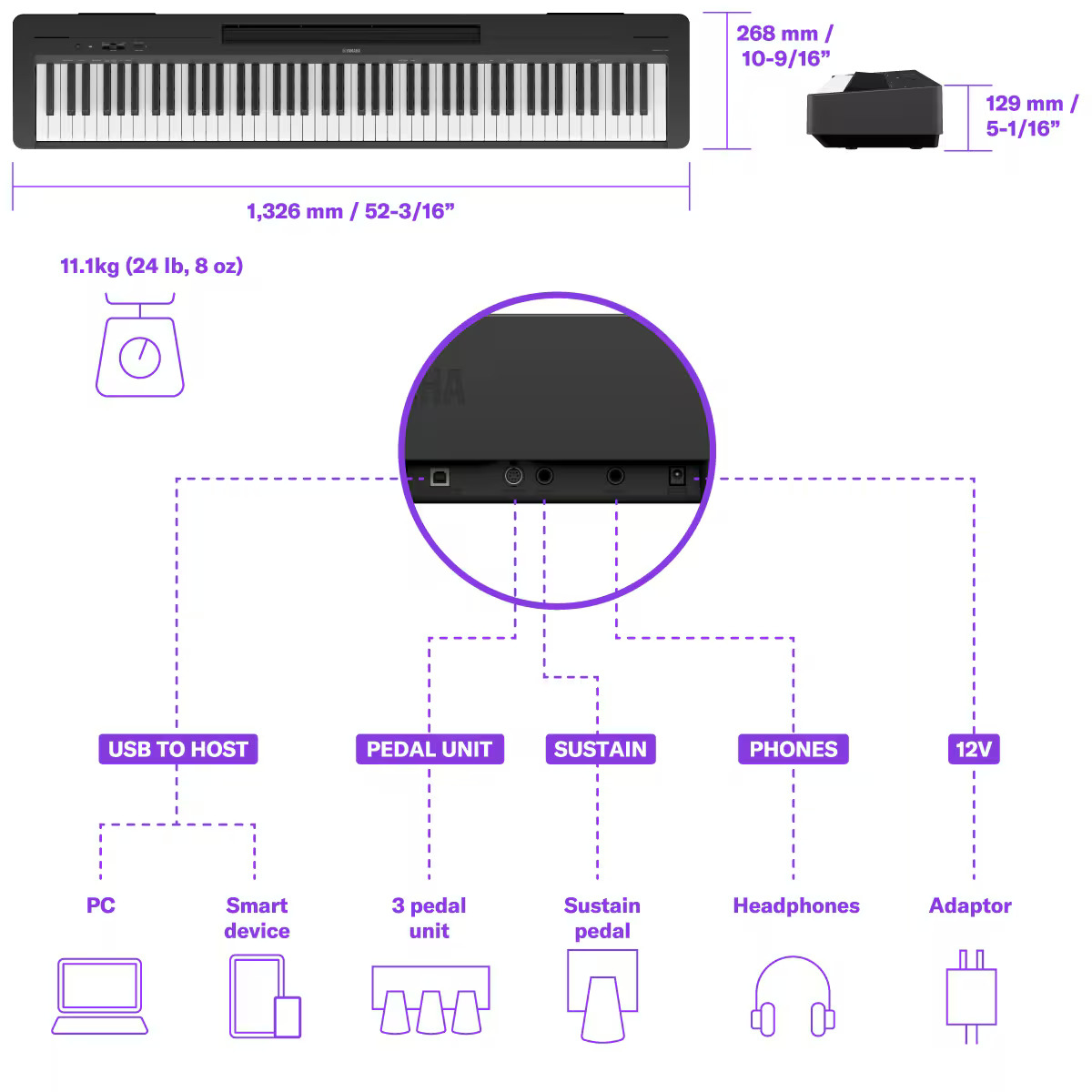
The benchmark for students, offering a compact footprint and the reliable GHC (Graded Hammer Compact) action. Great for learning classical piano songs for beginnerslike "Ode to Joy," though it lacks weighted keys.
- Best for: absolute beginners who want “simple and solid.”
- Why:Yamaha positions it as entry-level and beginner-focused; Bluetooth audio is a nice-to-have.
- Accessories provided:Music rest, sustain pedal, and AC adaptor.
- Watch-outs:You may outgrow speaker power before you outgrow the keys.
- Avoid if:you want lots of onboard features-this lane is about practice, not menus.
- Price Range:$500 – $550
2. Roland FP-10 (FP-Series)
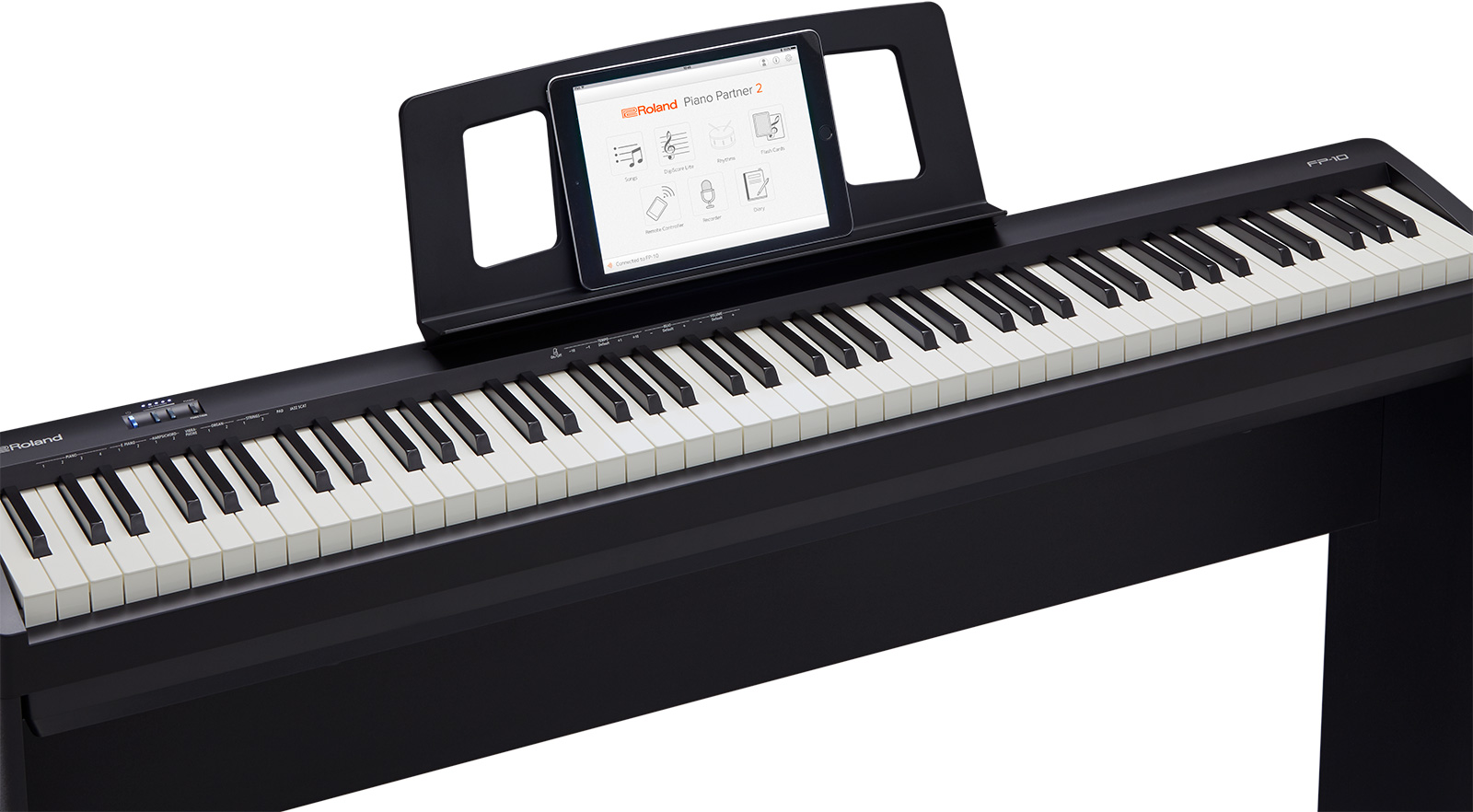
Widely considered to have the best key feel in its price class due to the PHA-4 Standard Keyboard with escapement.
- Best for: beginners who care about key feelearly.
- Why:Roland’s FP line is built around a serious piano action even at the entry level.
- Key Features:Rich, responsive tone; onboard stereo speakers; headphones output and quiet keyboard action; built-in Bluetooth MIDI and USB MIDI for seamless connection to the Roland Piano App, mobile devices, computers, and music software; Twin Piano mode.
- Watch-outs: Plan a better pedal and stand if you practice a lot.
- Avoid if:you need built-in “room-filling” speakers (consider FP-30X or a console).
- Price Range:$450 – $500
3. Yamaha P-225 (P-Series Step-up)
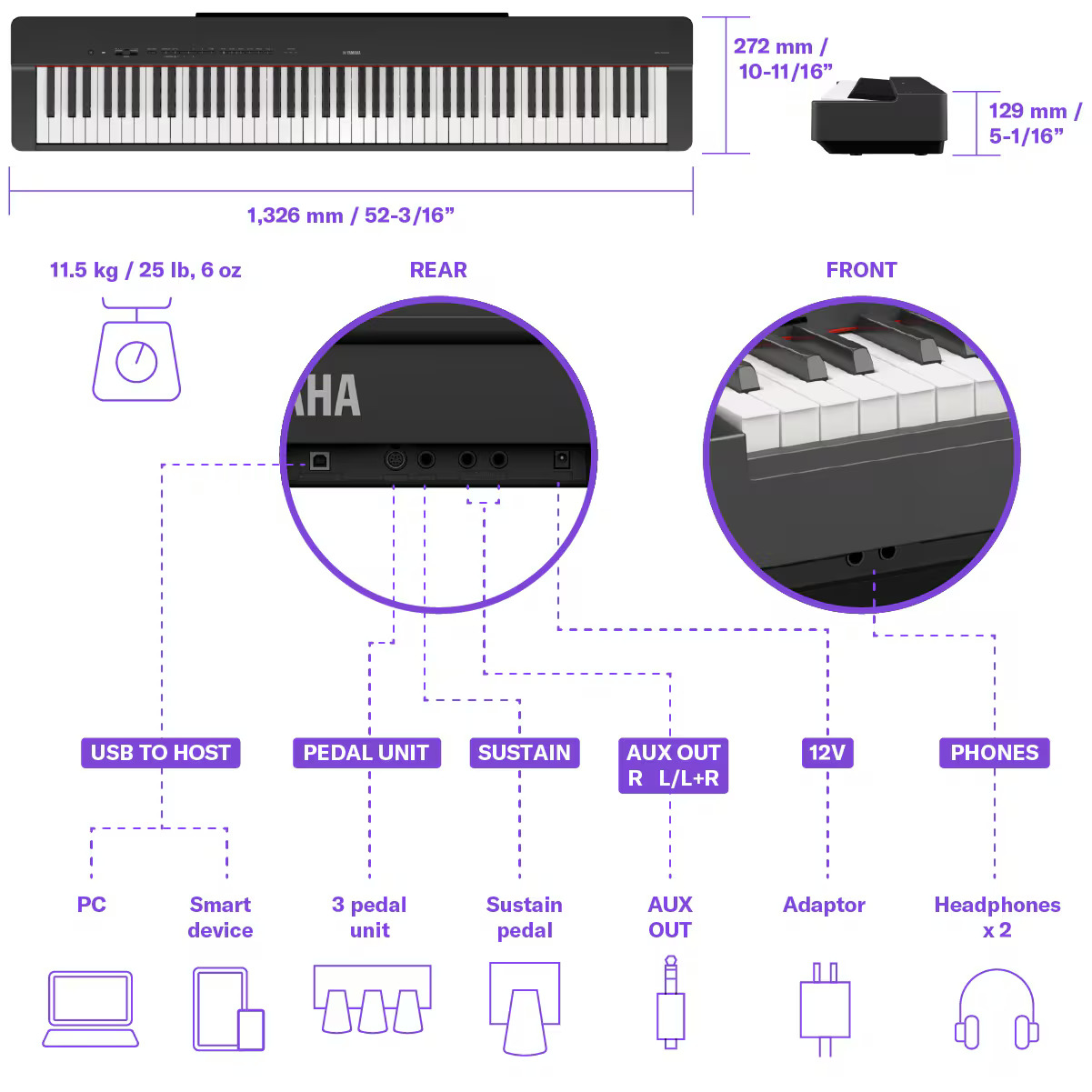
A portable powerhouse featuring a grand-piano feel and sophisticated CFX-derived sound design.
- Best for:Beginners who already know they’ll stick with it.
- Why:Yamaha frames it as a step up in sound quality and connectivity, bridging the gap between entry-level and mid-range.
- Key Features:88-key fully weighted GHC action; Yamaha CFX grand piano sound with VRM Lite; 24 voices; Bluetooth audio + USB MIDI; stereo line outputs; Smart Pianist app control; 3 months free flowkey Premium; lightweight/slim design with optional case for easy portability.
- Watch-outs:Don’t buy “more features” unless they support your specific practice goals.
- Avoid if:you’re tempted by features but don’t have a stable stand/bench-fix setup first.
- Price Range:$650 – $750
4. Roland FP-30X (FP-Series Sweet Spot)
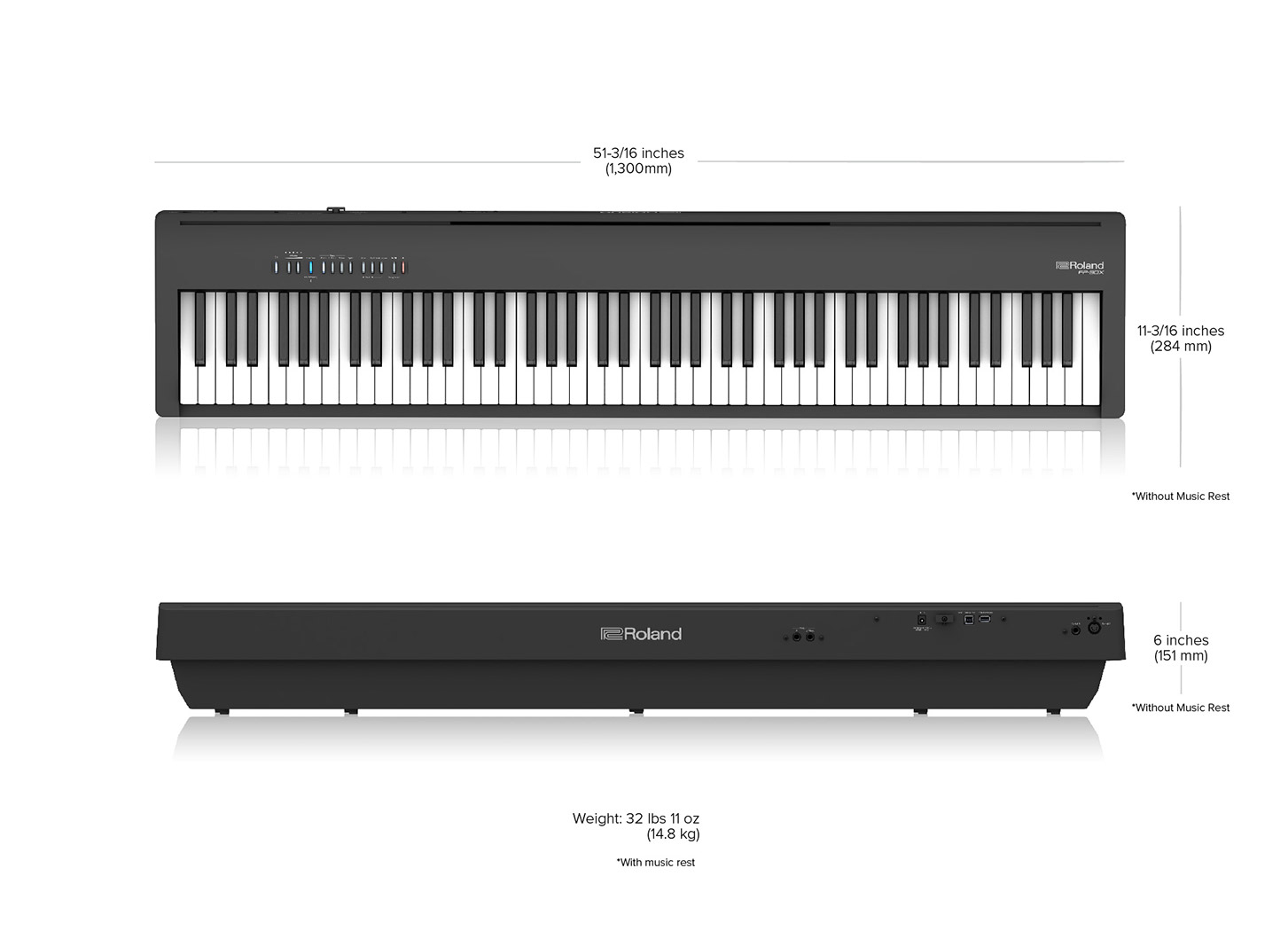
An upgrade over the FP-10 that offers a fuller sound and expanded features without requiring a full cabinet-style setup.
- Best for: Apartment players who want a richer audio experience.
- Why:Roland positions it as the "sweet spot" with better speakers and more polyphony for complex pieces.
- Key Features:SuperNATURAL Piano engine; 56 sounds (EPs, organs, strings, synths); PHA-4 keyboard; 22W stereo speakers + desktop mode; dual headphones & quiet action; Bluetooth audio/MIDI; Roland Piano App & GarageBand support; optional KSC-70 stand + KPD-70 pedals; compact design; black or white finish.
- Watch-outs:It is physically bigger and heavier than the base entry models.
- Avoid if:you need ultra-light portability (FP-10 or a lighter keyboard lane may suit).
- Price Range:$700 – $800
5. Casio CT-S1
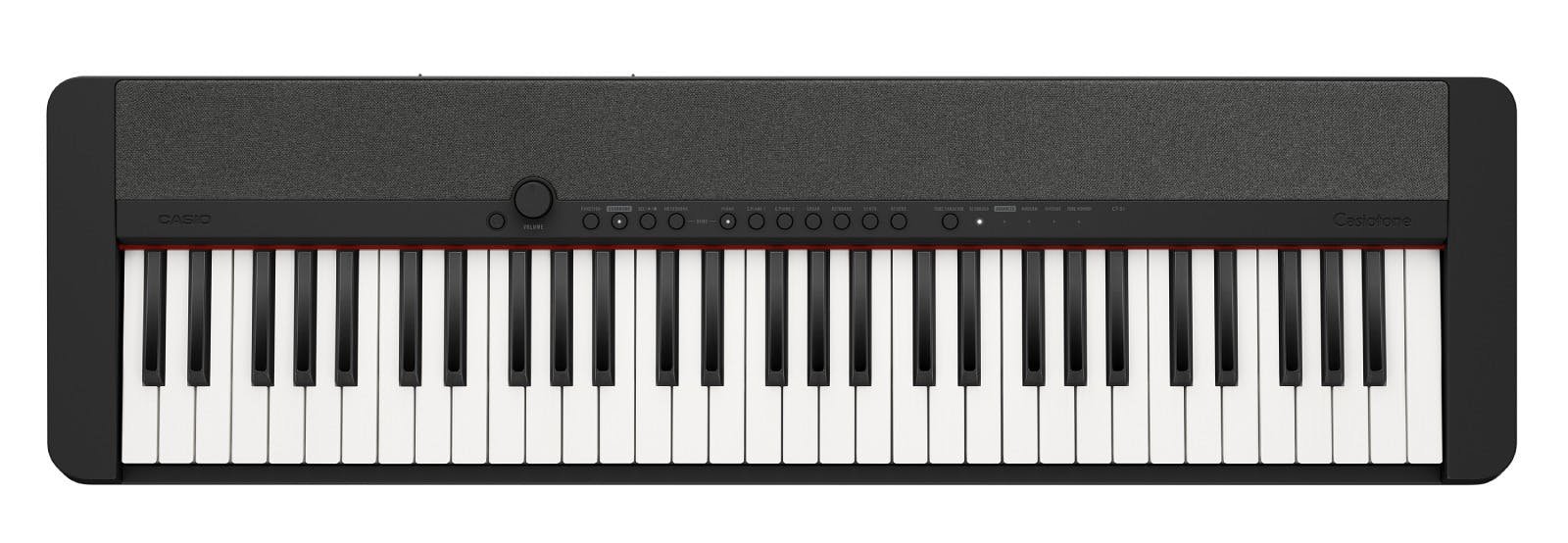
A top-tier non-weighted option designed for high-quality sound in a sleek, minimalist frame.
- Best for:Those with extreme space constraints who still want high-quality "AiX" sound samples.
- Why:Casio focuses on pure sound quality and portability over complex menus or weighted keys.
- Key Features:61 touch-sensitive textured keys; AiX Sound Source; 61 tones (Advanced & Vintage); Bass Reflex speakers + Surround mode; Bluetooth Audio/MIDI (optional); USB connectivity; Chordana Play & Casio Music Academy support; battery/AC powered; ultra-light (4.5kg); black, white, or red finish.
- Watch-outs:Lacks weighted keys, which is a drawback for developing traditional finger strength.
- Avoid if:your goal is classical technique-use 88 weighted keys as your baseline.
- Price Range:$200 – $260
6. Alesis Recital Pro
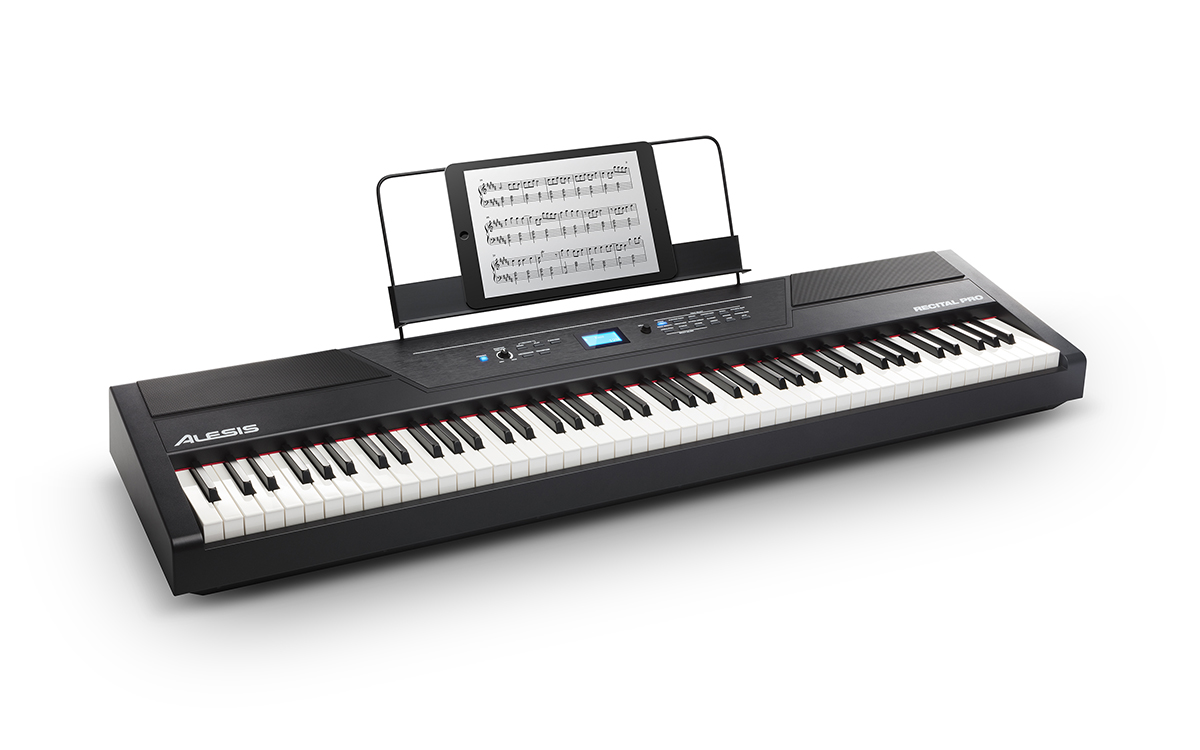
A budget-friendly entry into the 88-key weighted territory, providing a full-sized experience at a fraction of the cost.
- Best for:Casual hobbyists looking for a full 88-key layout on a budget.
- Why:It offers hammer-action keys and built-in speakers at one of the lowest price points on the market.
- Key Features:88 hammer-action keys with adjustable touch; 12 premium voices (Split/Layer); 20W speakers; 128-note polyphony; Lesson, Record, & Metronome modes; Modulation, Chorus, & Reverb FX; USB-MIDI; Stereo 1/4” & headphone outputs; battery or AC powered.
- Watch-outs:The action feel and sound samples are less refined than the Yamaha or Roland equivalents.
- Price Range:$350 – $400
7. Donner DEP-20
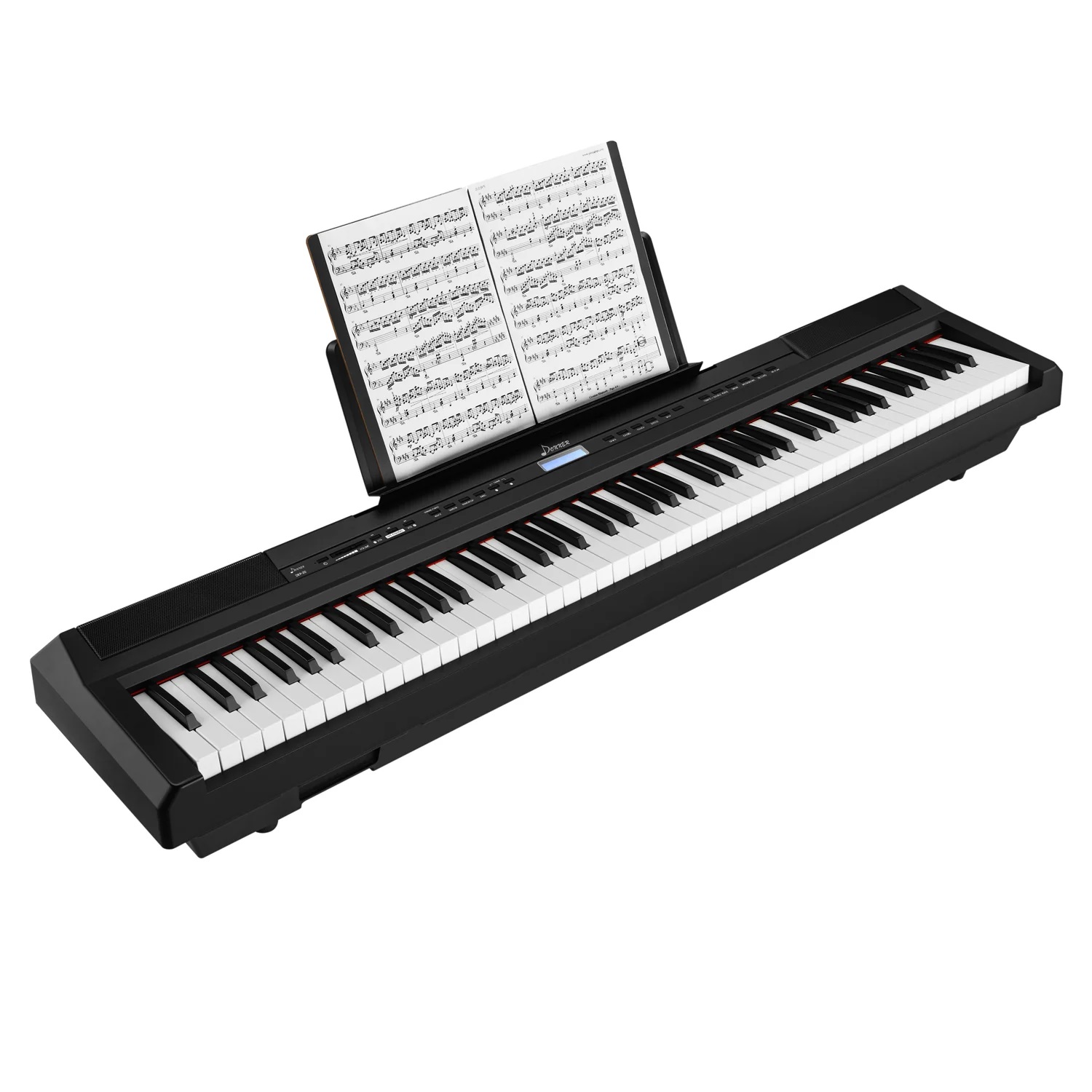
A full-featured digital pianopackage that provides a complete furniture-style aesthetic and functional versatility.
- Best for:Beginners who want a "complete" look with a stand and triple-pedal unit included.
- Why:It is highly competitive in price while offering features usually reserved for more expensive models.
- Key Features:88 full-weighted keys; 238 tones; 128-note polyphony; double keyboard mode; multi-media settings; integrated control panel.
- Watch-outs:Long-term durability and sound nuance may not match the major heritage brands.
- Price Range:$350 – $450 (varies by bundle)
8. Yamaha PSR-E383
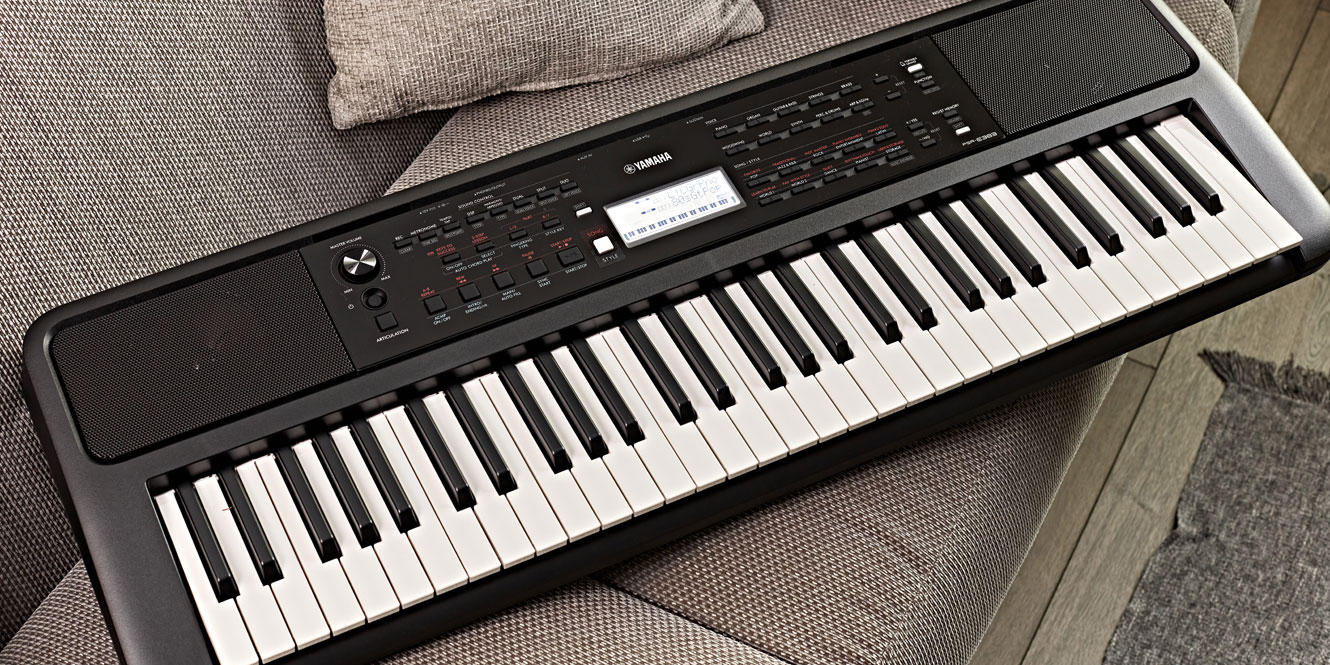
A reliable, portable arranger-style keyboard packed with fun sounds and built-in learning tools.
- Best for:Total beginners or kids starting out on a very tight budget.
- Why:It features touch-sensitive keys and backing styles that make practicing feel more like playing in a band.
- Key Features:650 high-quality voices (12 Super Articulation Lite); 260 auto-styles; touch-sensitive keys; 48-note polyphony; 41 DSP effects, Reverb & Chorus; 152 arpeggio types; Auto Chord Play; "Keys to Success" lesson functions; Duo mode; USB Audio/MIDI interface; battery or AC powered.
- Watch-outs:Only 61 keys (not full 88), so it is not ideal for serious classical piano technique long-term.
- Avoid if:you already know you want piano technique-go straight to 88 weighted.
- Price Range:$180 – $220
9. Korg Liano
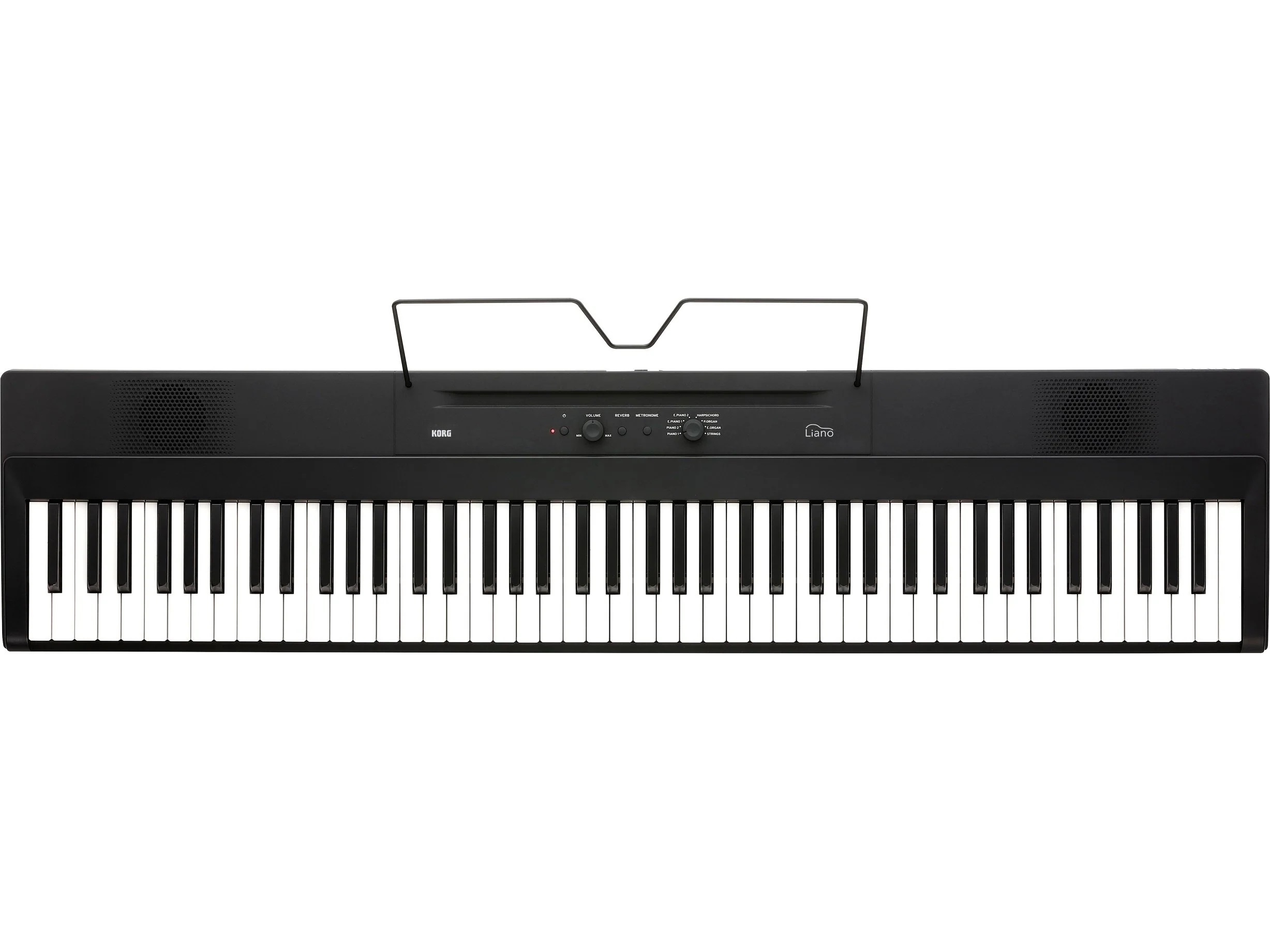
An ultra-portable 88-key keyboard that utilizes Korg's high-end sampling heritage in a lightweight design.
- Best for:Beginners needing a full-size range that is easy to move or store.
- Why:It is extremely lightweight and offers simple, intuitive operation with great-sounding piano presets.
- Key Features:88-key LS action (quick/responsive); 8 onboard sounds; 120-note polyphony; slim, ergonomic design (2.87" thick); ultra-lightweight (13.23 lbs); dual 8W speakers; USB Audio/MIDI connectivity; battery powered (8 hours via 6 AA); available in Black, Metallic Gray, Metallic Blue, and Pearl White.
- Watch-outs:Uses semi-weighted action (a lighter feel), so transitioning to a fully weighted acoustic piano may require an adjustment.
- Price Range:$400 – $450
Budget note:“Under $800” is realistic for some entry models in many markets, but treat it as a target, not a promise (Data as of January 2026).
Best Digital Pianos With Weighted Keys
Here’s the truth: most “best pianos” lists talk specs, but your hands don’t play spec sheets. They play key action.
Hammer Action Vs. Semi-weighted
- Hammer action / weighted keys:Built to imitate an acoustic’s resistance and leverage. This is what you want for piano technique.
- Semi-weighted:Better than synth action, but usually still not “piano training” feel (fine for production, not ideal as your only piano).
10. Kawai ES920
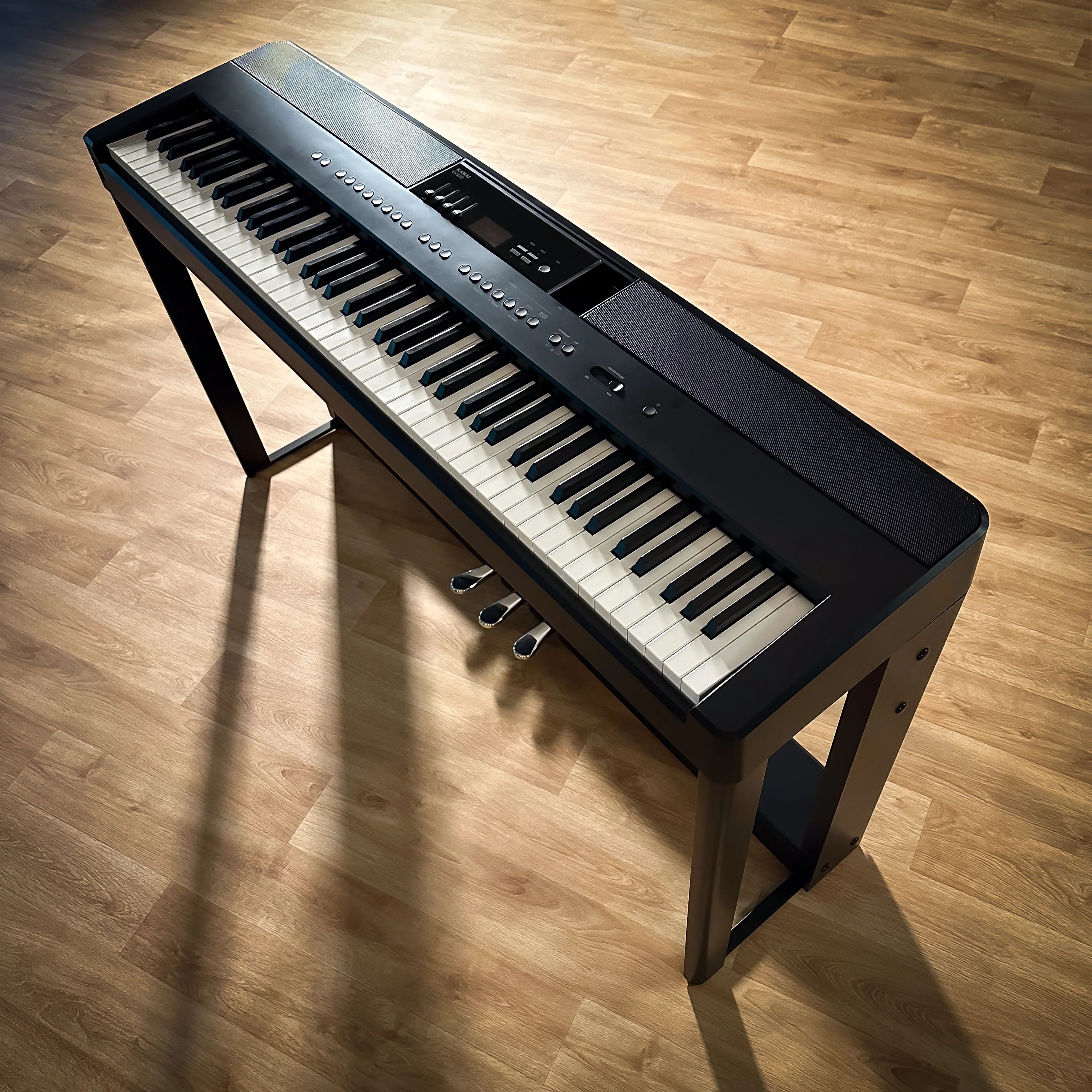
Features the Responsive Hammer III action, which uses structural reinforcements to eliminate "wobble" during fast passages.
- Best for:Gigging professionals or students who need a high-end action in a portable frame.
- Why: It offers Kawai's Harmonic Imaging XL sound technology with 40W speakers, delivering a concert grand experience without the weight of a cabinet.
- Key Features:Responsive Hammer III action; improved acoustic sounds & 10 touch curve presets; variety of EPs, Organs, and Strings; Onkyo-developed motherboard for clarity; 4-band EQ faders & OLED display; Bluetooth MIDI/Audio (aptX); PianoRemote app support; stylish lightweight chassis (37.5 lbs); compatible with optional designer stand, triple pedal bar, or portable triple pedal.
- Watch-outs:The chassis is lightweight plastic, which is great for transport but feels less "premium" than its internal technology.
- Price Range:$1,899 – $1,949
11. Yamaha P-525
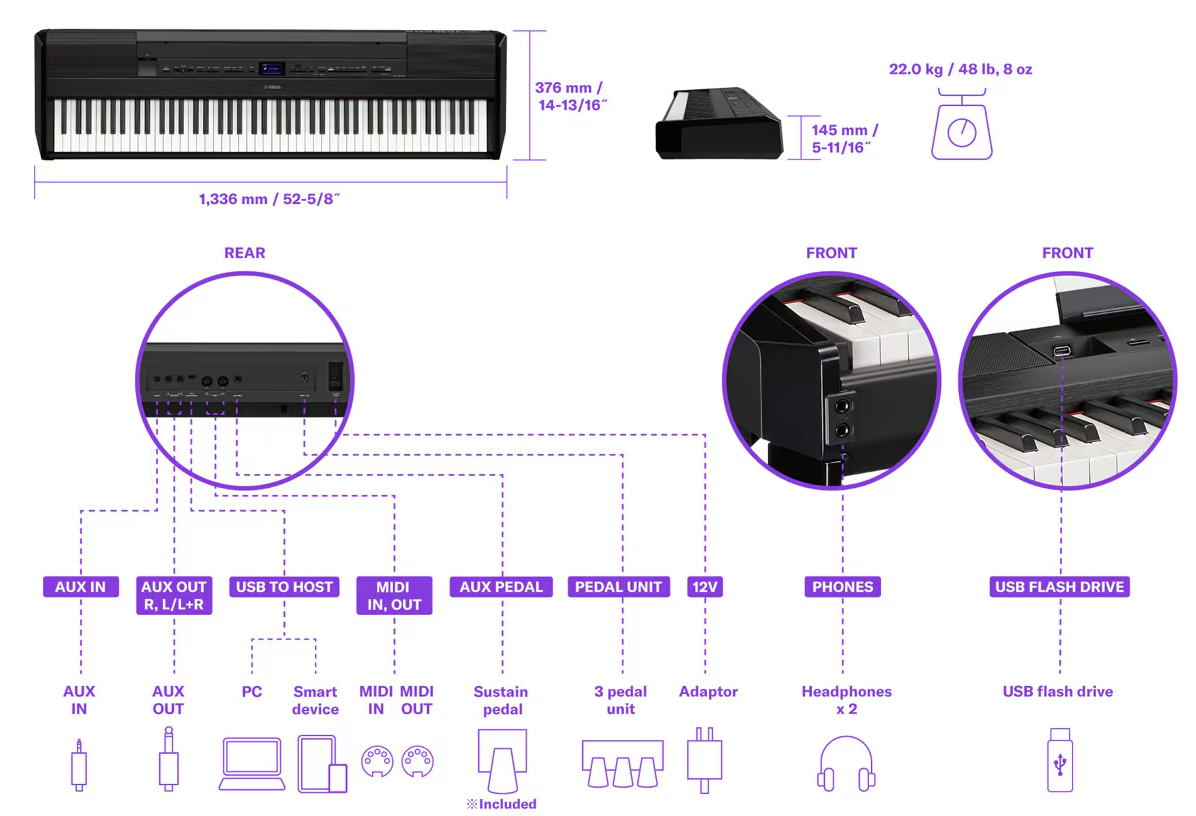
The flagship portable from Yamaha, using GrandTouch-S wooden keys for a more organic tactile experience.
- Best for:Serious pianistswho want the feel of a high-end Clavinova in a space-saving design.
- Why:It is the premier choice for players who want a genuine grand piano experience in a portable body, featuring the same solid wooden-key action found in Yamaha’s high-end Clavinova series.
- Key Features:GrandTouch-S wooden keys; Yamaha CFX & Bösendorfer Imperial samples; Binaural Sampling (CFX); 542 Voices (44 premium + 480 XG); Grand Expression & Virtual Resonance Modeling (VRM); Two-way speaker system; 2-track recording & Rhythm accompaniment; Bluetooth Audio/MIDI; Smart Pianist & Rec’n’Share app support; Registration Memory & Sound Boost; Intelligent Acoustic Control (IAC); optional L-515 stand & LP-1/FC35 triple pedals.
- Watch-outs:It is significantly heavier than entry-level portable pianos; you’ll need a very sturdy stand.
- Price Range:$1,699 – $1,799
12. Roland FP-90X
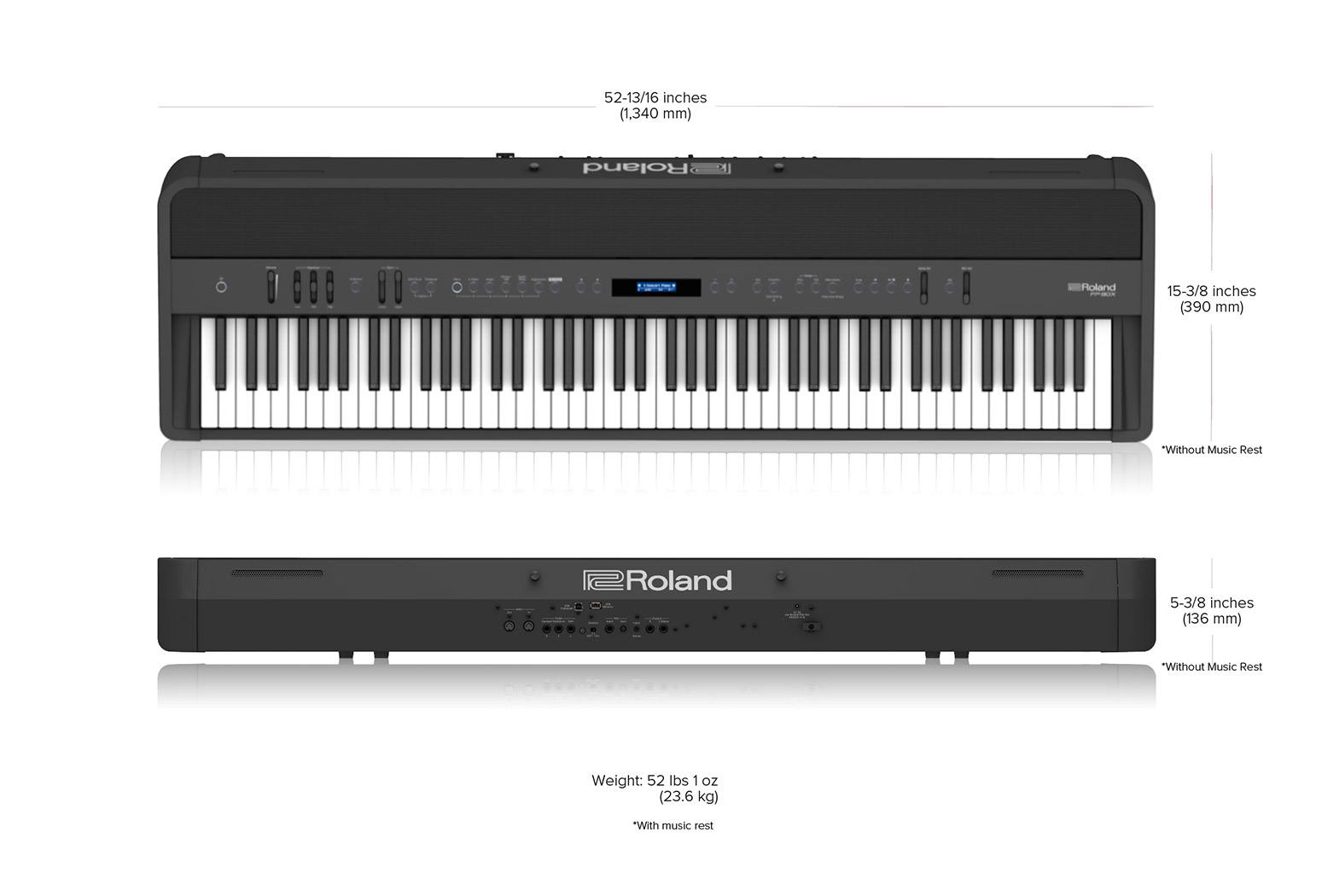
Uses physical modeling rather than simple recordings, allowing the sound to change dynamically based on how hard you strike the key.
- Best for:Players who want "limitless" expression and a highly customizable piano tone.
- Why:Roland’s PureAcoustic Modeling engine and PHA-50 hybrid wood/molded keys make this one of the most durable and expressive pianos in its class.
- Key Features:PureAcoustic Piano Modeling; PHA-50 hybrid wood/molded keys; Piano Designer editing; wide EPs & non-piano sounds; 60W four-speaker system; Headphones Acoustic Projection; dual headphone jacks; Bluetooth Audio/MIDI & USB; mic input with vocal effects; optional stands/pedals; black or white finish.
- Watch-outs:Modeled sound can feel "different" to those used to traditional sampling; it's worth testing in person.
- Price Range:$2,299 – $2,399
13. Kawai CA701
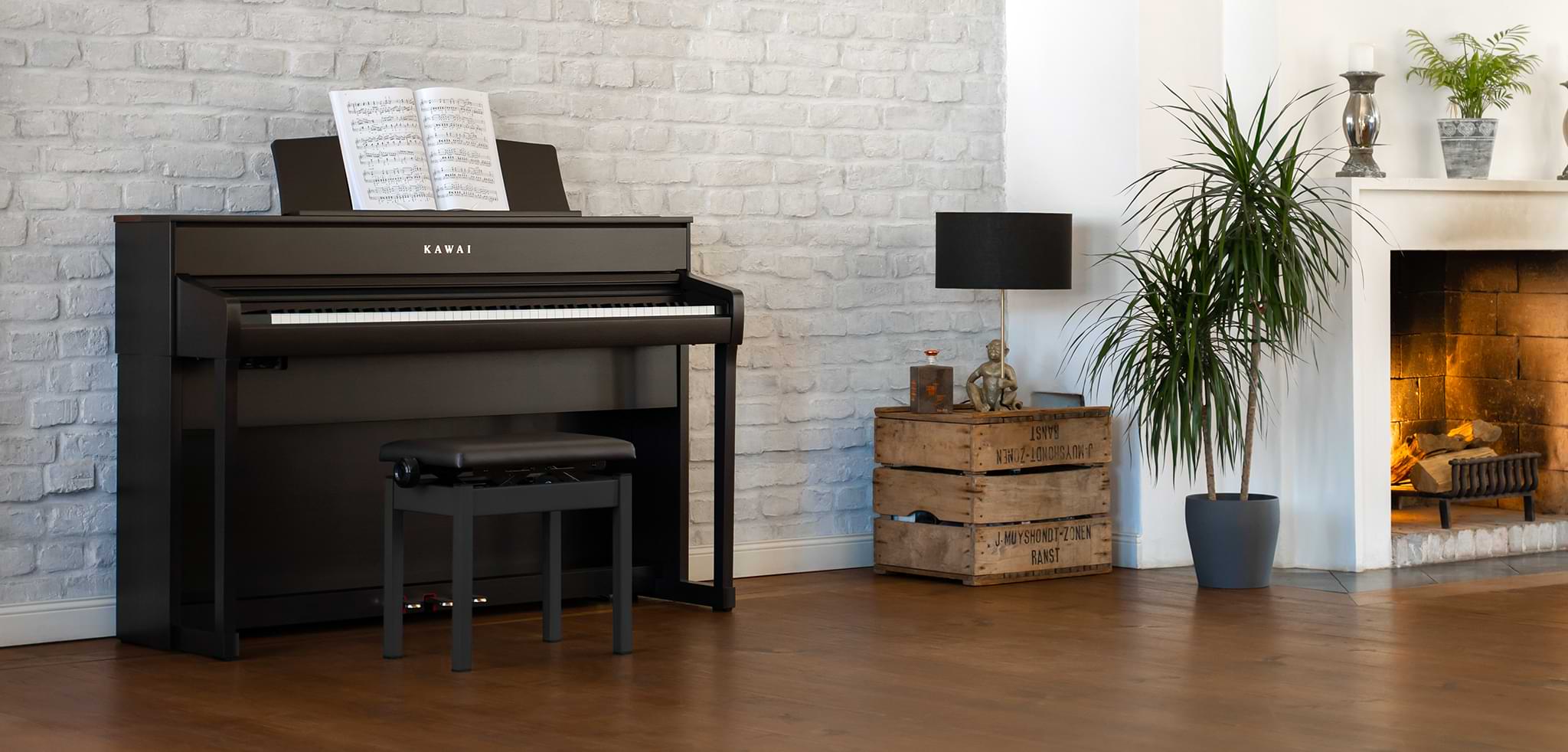
A console-style piano that utilizes long wooden keys that pivot on a center pin, just like a concert grand.
- Best for:Home players who want a permanent furniture piece with the most realistic "seesaw" action available.
- Why: The Grand Feel III action provides a pivot length matching a grand piano, ensuring the touch is consistent even when playing deep into the keys.
- Key Features:Grand Feel III wooden-key action; Ivory/Ebony Touch surfaces; SK-EX Competition Grand sounds; 360° diffuser speakers; 5" LCD touchscreen; Bluetooth MIDI/Audio v5; USB recording/overdub (MP3/WAV); Spatial Headphone Sound; premium cabinet.
- Watch-outs:It is a heavy, stationary piece of furniture; once it's assembled, it isn't meant to be moved.
- Price Range:$5,049 – $5,749 (Finish dependent)
14. Casio Celviano GP-510
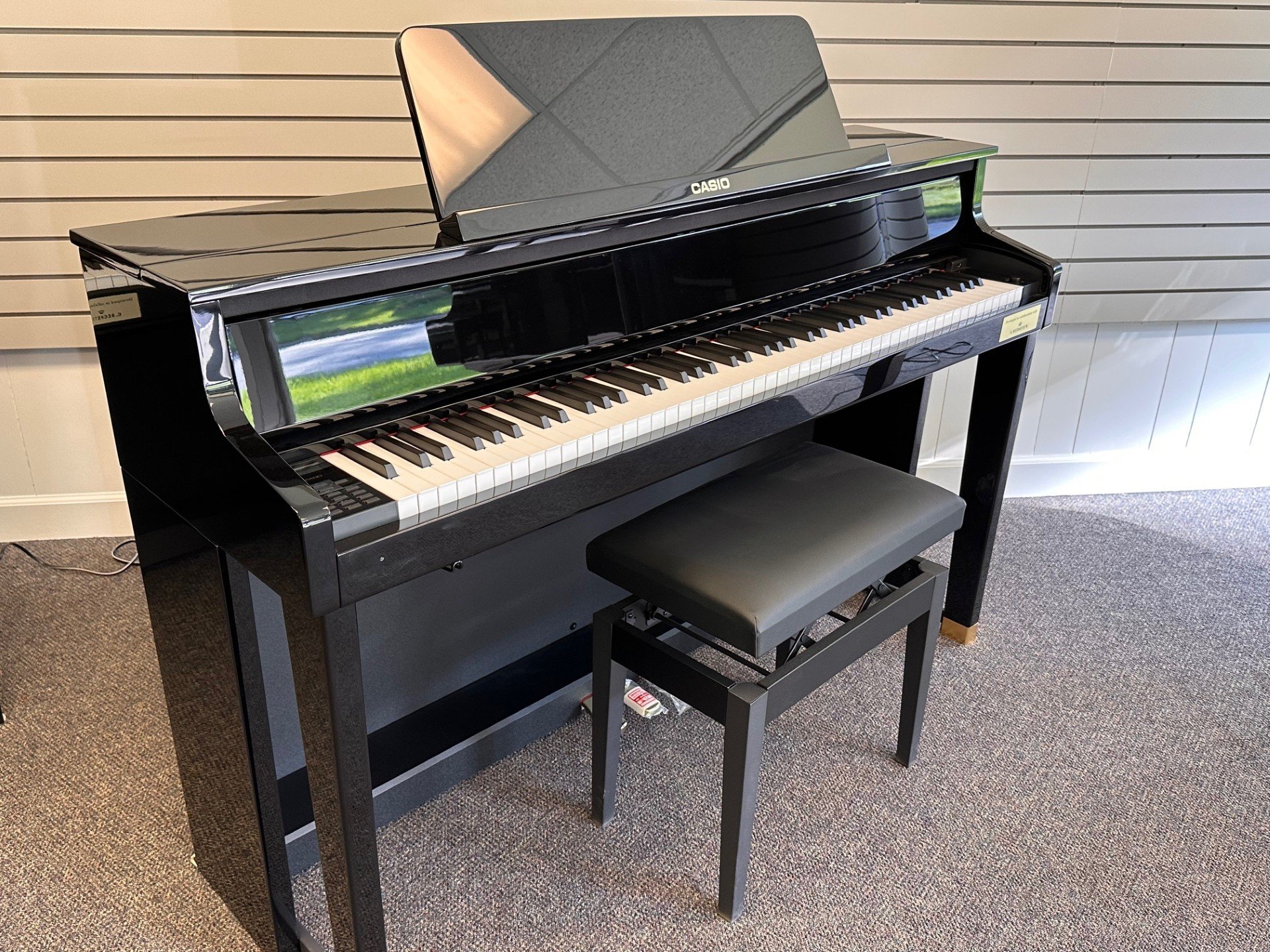
Developed in collaboration with C. Bechstein, this "Grand Hybrid" features full-length wooden hammers that actually move.
- Best for:Classical purists who want to see and feel a mechanical hammer action without the maintenance of strings.
- Why:It bridges the gap between digital and acoustic by using a real mechanical moving part system for every key.
- Key Features:Natural Grand Hammer Action with full-length Austrian spruce keys; Berlin, Hamburg & Vienna Grand tones; AiR Grand Sound Source with Multi-dimensional Morphing; 6-speaker/4-channel Grand Acoustic System; Grand Pedal System with continuous sensing; 12 Hall Simulators & Listening Position settings; Volume Sync EQ & Headphone Mode; Adjustable Lid with Lid Simulator; Acoustic Simulators (String, Damper, Aliquot resonance); mechanical action sounds (Pedal/Key noise); acrylic/phenol key surfaces.
- Watch-outs:The "Hybrid" label comes with a hybrid price tag; it’s a significant investment compared to standard digital consoles.
- Price Range:$7,499 – $7,999
“Specs that Matter: When comparing weighted digitals, prioritize (1) action quality, (2) pedal realism/half-pedal support, (3) speaker clarity at low volume, (4) headphone sound, (5) Bluetooth/USB MIDI.
Best Digital Pianos For Advanced Players (The Professional Tier)
This is where digitals stop being “practice tools” and start being instruments you can grow into: better actions, better speakers, better nuance.
What “pro Tier” Actually Means (not Marketing)
- More convincing key action(often longer pivot length; sometimes wooden keys).
- Better sound realism: multi-layer sampling and/or modeling, plus resonance behavior.
- Better amplification: speaker systems designed to feel like a cabinet piano.
15. Yamaha Clavinova CLP-885
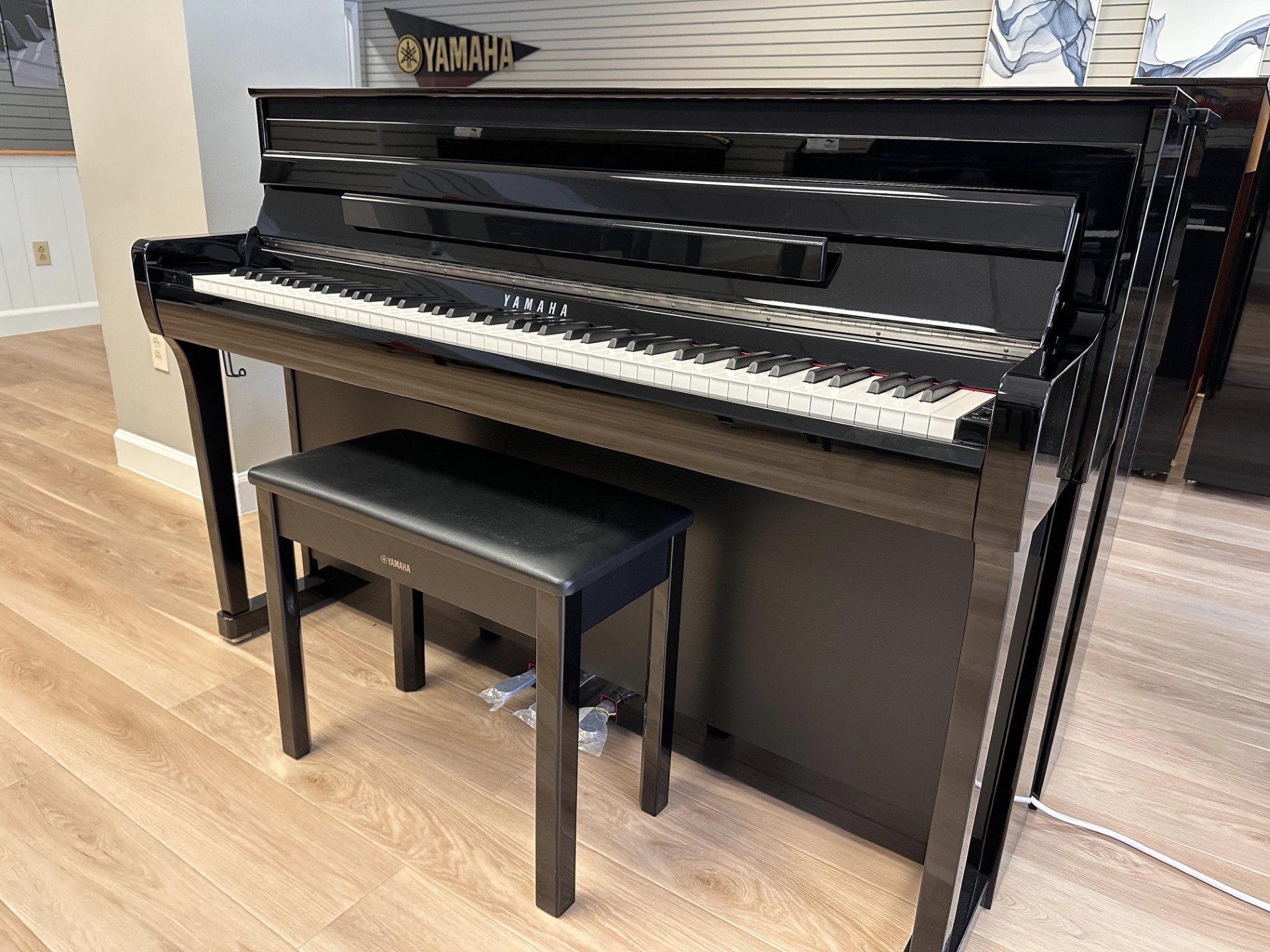
The flagship of the Clavinova line, offering a sophisticated blend of traditional craftsmanship and cutting-edge digital technology.
- Best for:Advanced learners who want a premium cabinet and immersive sound.
- Why:Yamaha positions it as a high-end Clavinova with a premium keyboard and strong built-in amplification for a massive sonic presence.
- Key Features:GrandTouch/GrandTouch-S keyboard action; Virtual Resonance Modeling (VRM); Yamaha CFX and Bösendorfer Imperial grand piano tones; Grand Expression Modeling; Bluetooth Audio/MIDI connectivity; built-in lesson functions; elegant cabinet design; headphone-optimized sound.
- Watch-outs:It is a heavy, permanent piece of furniture that requires a significant financial and space investment.
- Price Range:$7,700 – $9,800 (Finish dependent)
16. Kawai CA901
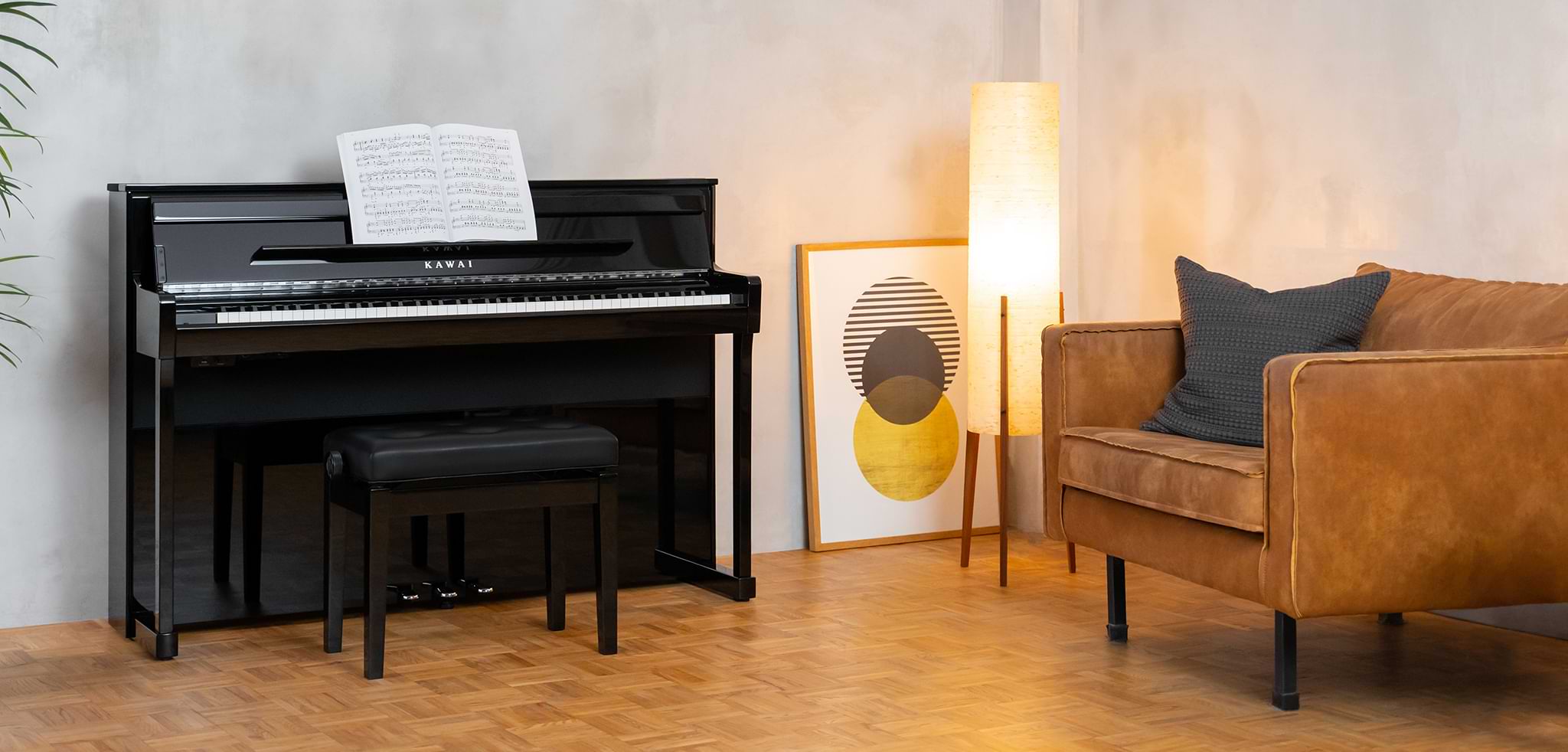
A premier digital piano featuring a real wooden soundboard to replicate the organic resonance of an acoustic grand.
- Best for:Players chasing an “acoustic-like” wooden-key experience in digital form.
- Why:Kawai highlights the CA901 as a flagship with an advanced Grand Feel III action and concert-artist positioning.
- Key Features:SK-EX Competition Grand (player-perspective sampling); TwinDrive soundboard speaker system; Grand Feel III wooden-key action; anti-glare LCD touchscreen; premium Dual DAC components; Virtual Piano Artisan (deep sound shaping); Bluetooth MIDI/Audio v5; refined upright cabinet design.
- Watch-outs:The soundboard is sensitive to room placement; it needs a bit of breathing room from the wall to sound its best.
- Price Range:$6,500 – $7,500
17. Roland LX-9
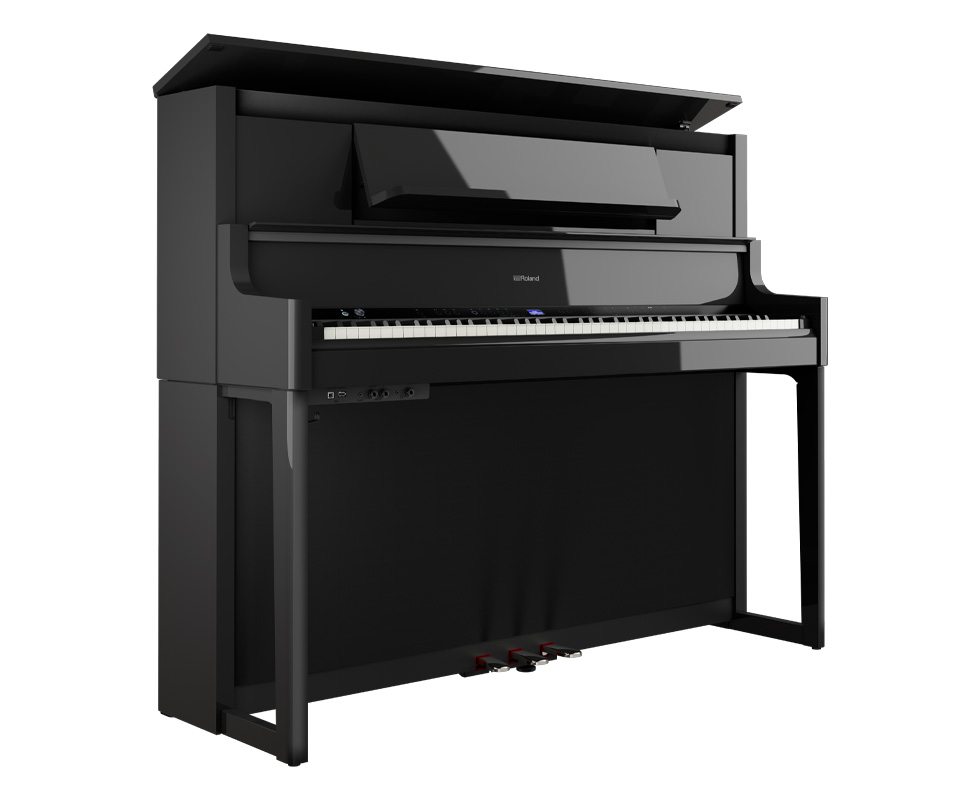
The pinnacle of Roland’s luxury lineup, focusing on a high-back cabinet design and a fully modeled piano engine.
- Best for:Those who want a flagship digital with modern engine features and a premium cabinet.
- Why: Roland explicitly frames the LX-9 as the flagship in its premium LX lineup, utilizing the Piano Reality Modeling technology.
- Key Features:Piano Reality Modeling (unlimited polyphony); Hybrid Grand keyboard (wood/molded) with haptic vibration; 8-speaker Piano Reality Projection system; High Precision Sensing; continuous detection pedals; smart touch blackout control panel; Bluetooth Audio/MIDI & Roland Piano App; USB recording; adjustable lid; available in polished ebony, polished white, or charcoal black.
- Watch-outs: The tall cabinet design may be visually imposing in smaller rooms.
- Price Range:$6,800 – $7,650
18. Casio Privia PX-S5000
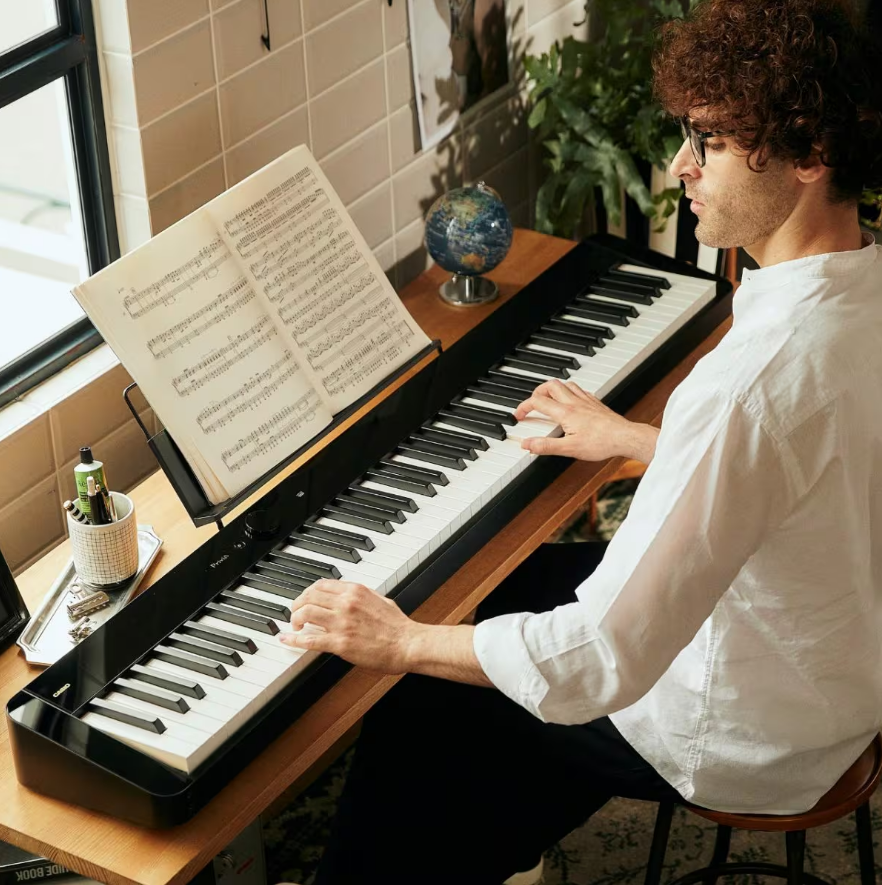
A sophisticated, space-friendly “premium Slim” model that brings high-end materials to a compact footprint.
- Best for:Modern apartments where you want better action without a big cabinet.
- Why:Casio highlights an upgraded engine and a Smart Hybrid Hammer Action that incorporates spruce wood into the keys.
- Key Features:88-key Smart Hybrid Hammer Action; Multi-Dimensional Morphing AiR sound engine; 192-note polyphony; 23 sounds; 10-level Acoustic Simulator (resonance/noise); Reverb, Hall, & Surround effects; Bluetooth MIDI/Audio; Casio Music Space app support; 96-setup Registration memory; MIDI/Audio recording; ultra-slim design with touch controls; battery or AC powered.
- Watch-outs:The ultra-slim design means the touch-panel controls can take some time to get used to.
- Price Range:$1,200 – $1,300
19. Casio PX-870
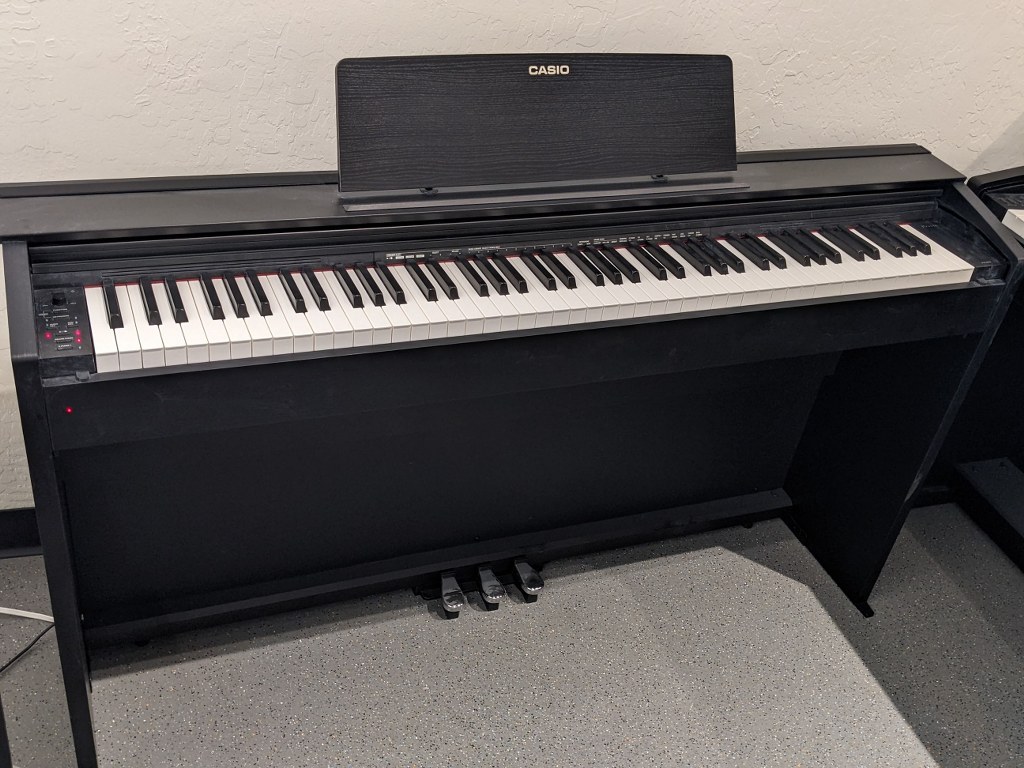
A reliable, budget-friendly console piano that offers a powerful sound projection system for home use.
- Best for:Home players wanting console-style convenience and strong built-in sound on a budget.
- Why: Features a powerful 4-speaker system, realistic tri-sensor action, and solid grand piano tones with top-mounted projection.
- Key Features:88 scaled, weighted hammer-action keys (ebony/ivory textures); high-resonance piano sound + 18 tones; 4-speaker sound projection system; onboard recording & practice tools; modern wooden cabinet with sliding key cover.
- Watch-outs:Not as premium in cabinet finish or key length as higher-end consoles.
- Price Range:$1,100 – $1,200
20. Kawai KDP120
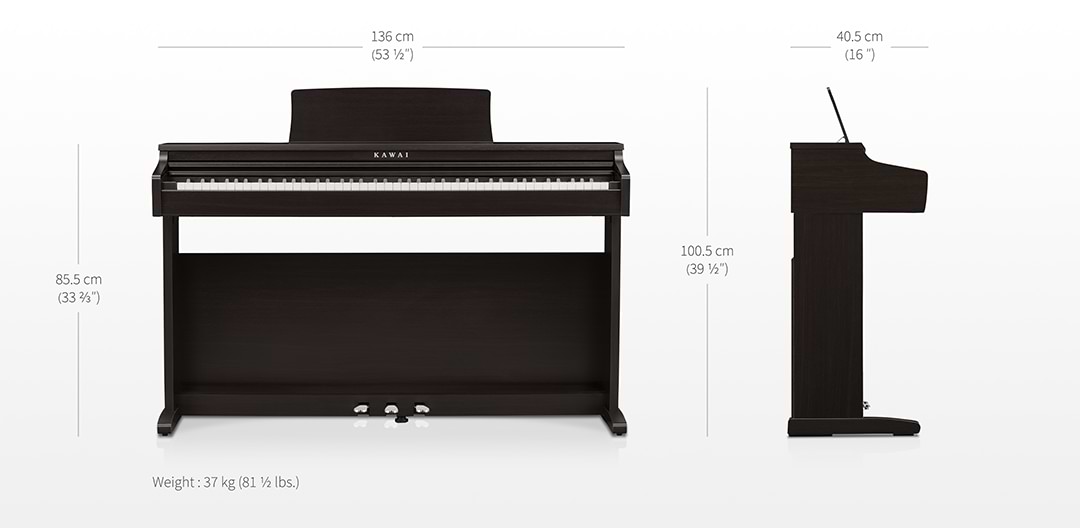
An excellent mid-range home console that balances a realistic touch with a clean, classic aesthetic.
- Best for:Mid-level players upgrading to a dedicated home console with reliable Kawai tone and feel.
- Why:Responsive Hammer Compact action, quality sampling, and a furniture-style cabinet for everyday practice.
- Key Features:3-sensor Responsive Hammer Compact II action; Shigeru Kawai SK-EX sounds (88-key sampling); 40W stereo amplification; Bluetooth MIDI & USB-MIDI; PianoRemote & PiaBookPlayer app support; built-in etudes & Alfred lessons; Enhanced SHS headphone sound; compact cabinet in three finishes.
- Watch-outs:Solid but not flagship-level resonance or speaker power.
- Price Range:$1,500 – $1,700
21. Yamaha CLP-835
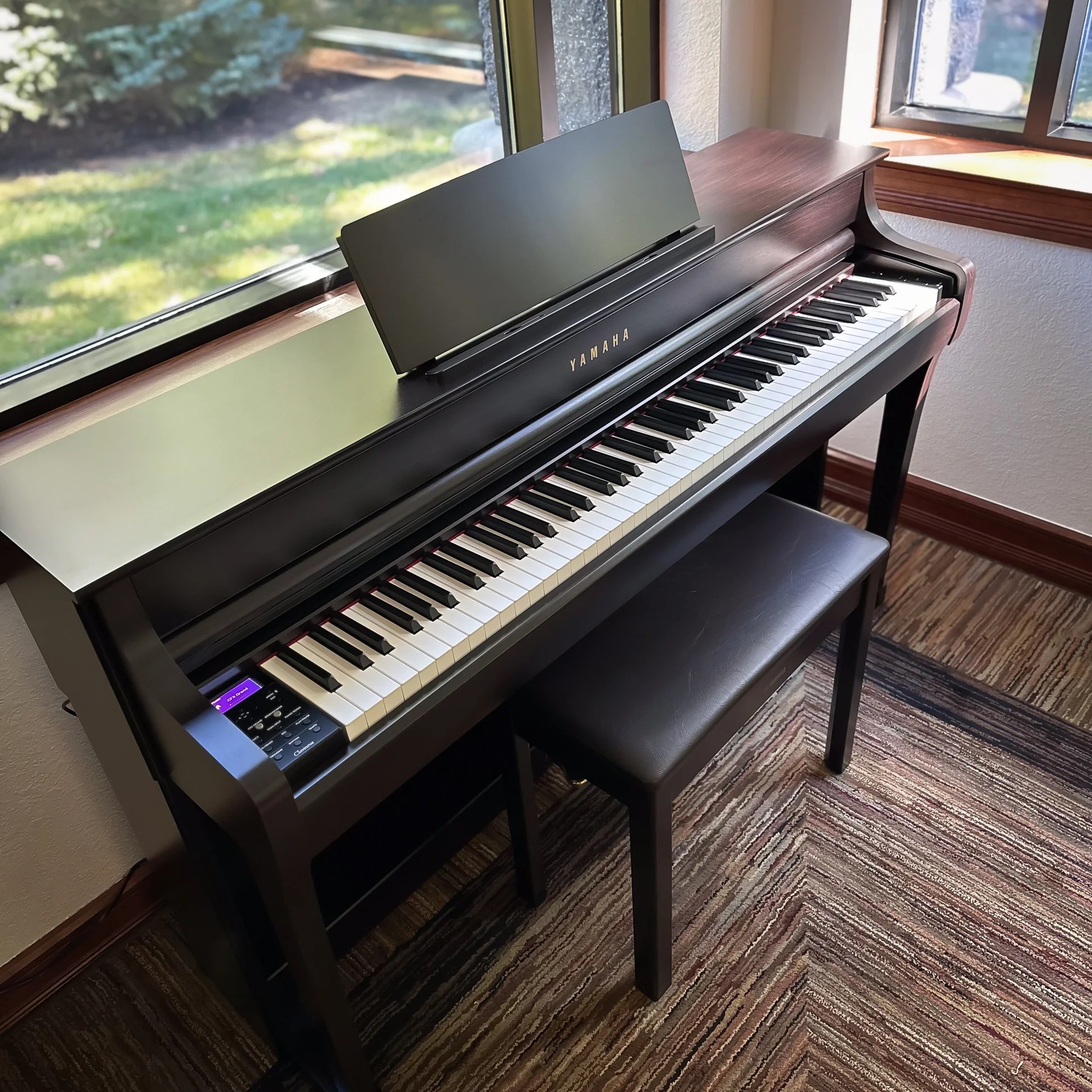
A premium home digital piano that provides a deep, immersive playing experience with world-class piano samples.
- Best for:Serious home players seeking near-acoustic immersion in a mid-premium cabinet.
- Why:GrandTouch action with wooden keys, CFX/Bösendorfer sampling, and advanced virtual resonance modeling.
- Key Features:GrandTouch-S keyboard with escapement; GrandTouch pedals; Binaural CFX & Bösendorfer sampling; Virtual Resonance Modeling (VRM) & Grand Expression Modeling; speaker system with diffuser technology; tall, space-saving acoustic cabinet; LCD display; Smart Pianist app integration with Sheet MusicReader.
- Watch-outs:Price creeps toward higher tiers; ensure your space fits the full console design.
- Price Range:$3,600 – $4,200
Double-check “wooden keys” claims per model-some lines reserve wood for higher trims. Always confirm the exact action on the manufacturer spec page before you buy.
Best Music Keyboards For Professionals (Workstations & Stage)
This section is for gigging musicians, worship players, touring acts, and studio creators who need piano + fast control.
Pick Your Pro Lane First (fast)
- Stage piano:Piano-first, fast access, realistic action, great for gigs.
- Stage keyboard:Multiple sound sections (piano/organ/synth) with performance controls.
- Workstation:Deep sound design + sequencing/arranging; heavier learning curve.
22. Nord Stage 4 88
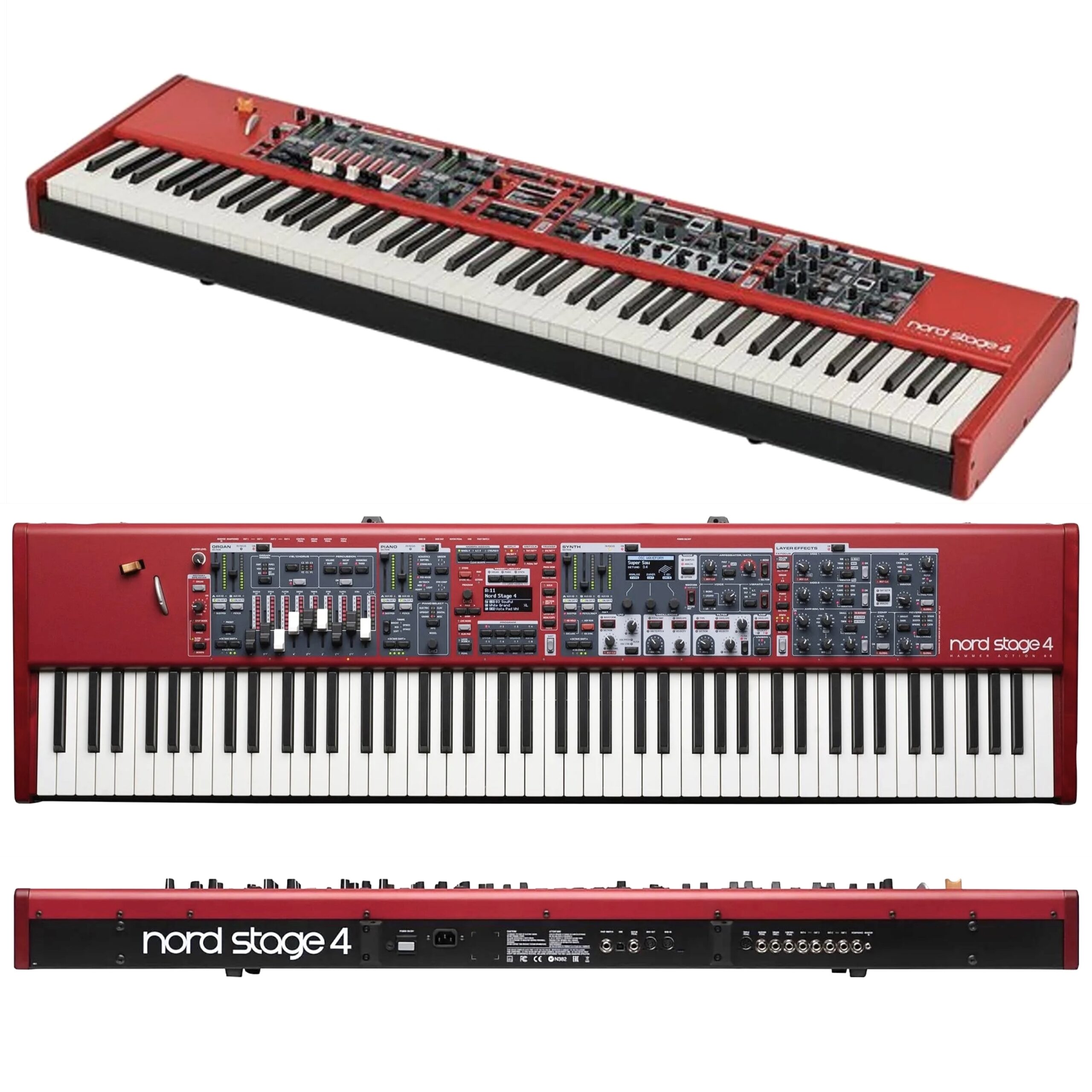
The quintessential stage keyboard, distinguished by its iconic red chassis and an interface designed for immediate, "knob-per-function" access.
- Best for:Performers who need quick splits/layers and hands-on control during a live set.
- Why:Nord emphasizes dedicated sections for Piano, Organ, and Synth, with independent effects for every layer and a premium triple-sensor weighted keybed.
- Key Features:Triple Sensor keybed with aftertouch; Nord Wave 2 Synth Engine (3 layers); physical drawbars with LED indicators; dedicated faders per layer; 2GB Piano/1GB Synth memory; award-winning Organ simulations; advanced polyphonic arpeggiator; independent per-layer effects; Layer Scene switching.
- Watch-outs:It lacks built-in speakers and is significantly more expensive than many competitors; you are paying for the "fastest" workflow in the industry.
- Price Range:$5,999 – $6,200
23. Yamaha CP88
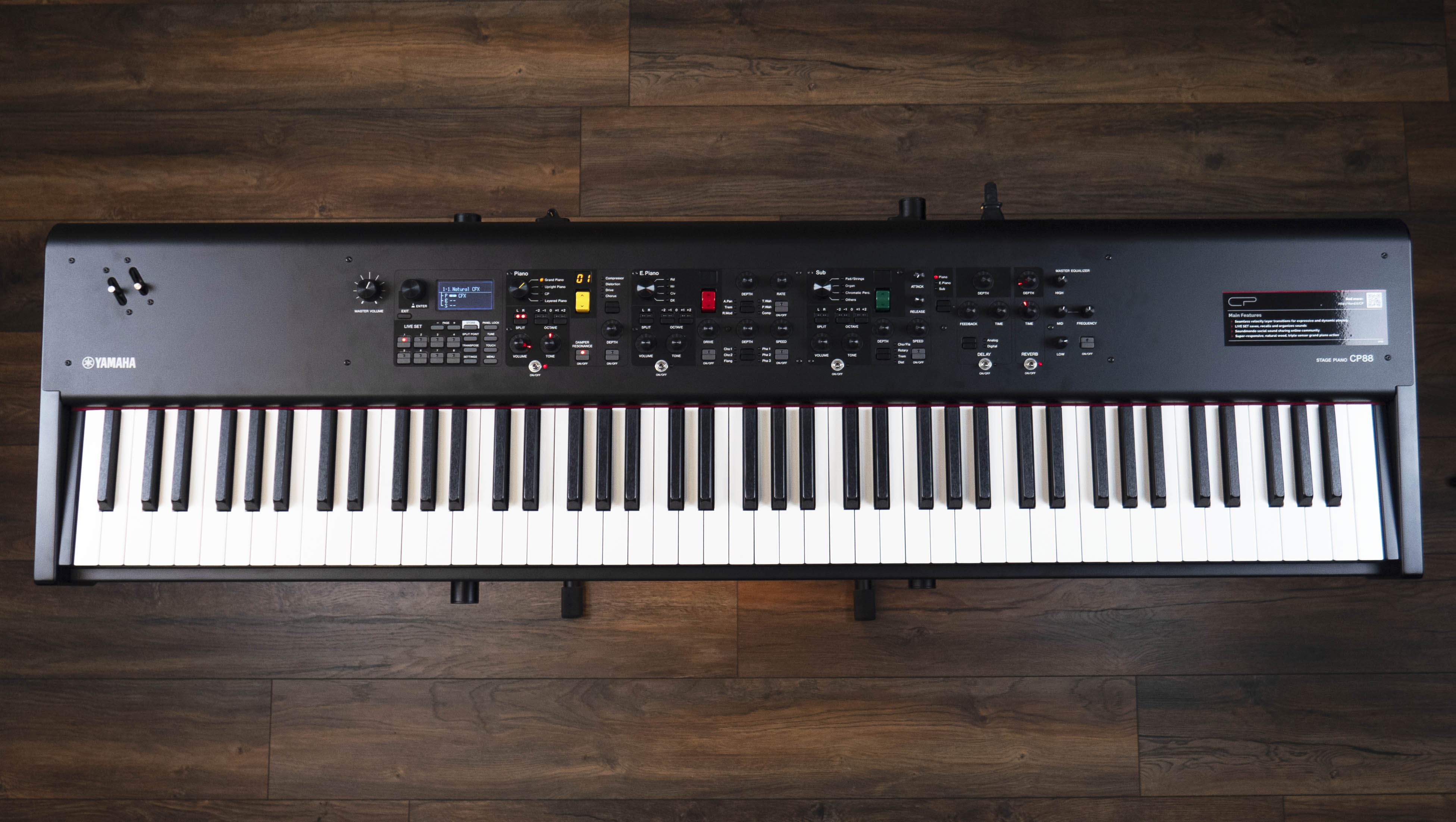
A straightforward, gig-ready stage piano that strips away complex menus in favor of a traditional, tactile experience.
- Best for:Pianists who want a no-nonsense interface with high-end acoustic and electric piano sounds.
- Why: Yamaha positions it around a "one-to-one" control philosophy and the NW-GH (Natural Wood Graded Hammer) action, which feels remarkably close to a real grand.
- Key Features:NW-GH3 natural wood action (88-key triple sensor); CFX, S700, and Bösendorfer Imperial grand samples; vintage U1 and SU7 uprights; dedicated Section effects + VCM (Virtual Circuitry Modeling); Master EQ, Delay, and Reverb; One-to-one WYSIWYG interface; 128-note polyphony; balanced XLR and 1/4" outputs; 2-channel USB Audio/MIDI interface; Seamless Sound Switching; Soundmondo social sound sharing; road-ready aluminum chassis (41 lbs).
- Watch-outs:The internal sound library is more focused on "core" keys rather than being a "catch-all" workstation for thousands of synth sounds.
- Price Range:$2,700 – $2,800
24. Roland RD-2000 EX
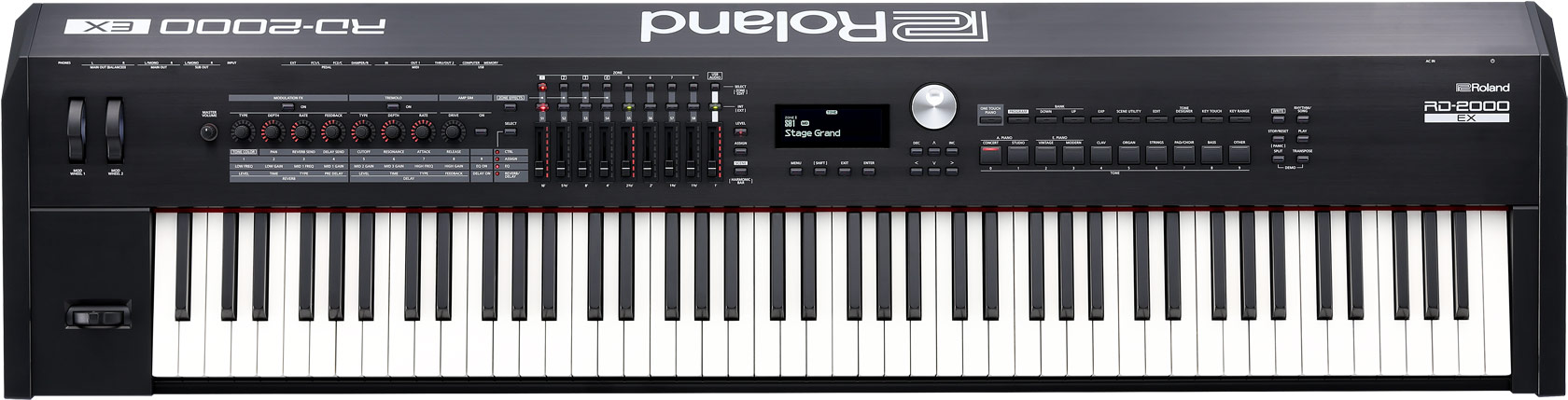
A sophisticated stage piano and master controller that combines two distinct sound engines for maximum versatility.
- Best for:Players who want deep piano modeling plus the ability to control an entire rig of external software and hardware.
- Why:For professionals who need a massive library of premium acoustic and electronic sounds paired with the industry’s most realistic wooden-key touch and deep software integration.
- Key Features:Dual sound engines (V-Piano & SuperNATURAL); PHA-50 hybrid wood/molded action; full polyphony (V-Piano) + 128-voice (SuperNATURAL); 9 sliders and 8 LED knobs; 8 assignable zones; 1,100+ sounds; 24-bit/192 kHz USB interface; XLR/balanced outputs; 2 Wave Expansion slots.
- Watch-outs:The interface has a steeper learning curve than the Nord or Yamaha due to its deep menu-diving and extensive customization options.
- Price Range:$2,800 – $2,900
25. Kawai MP11SE
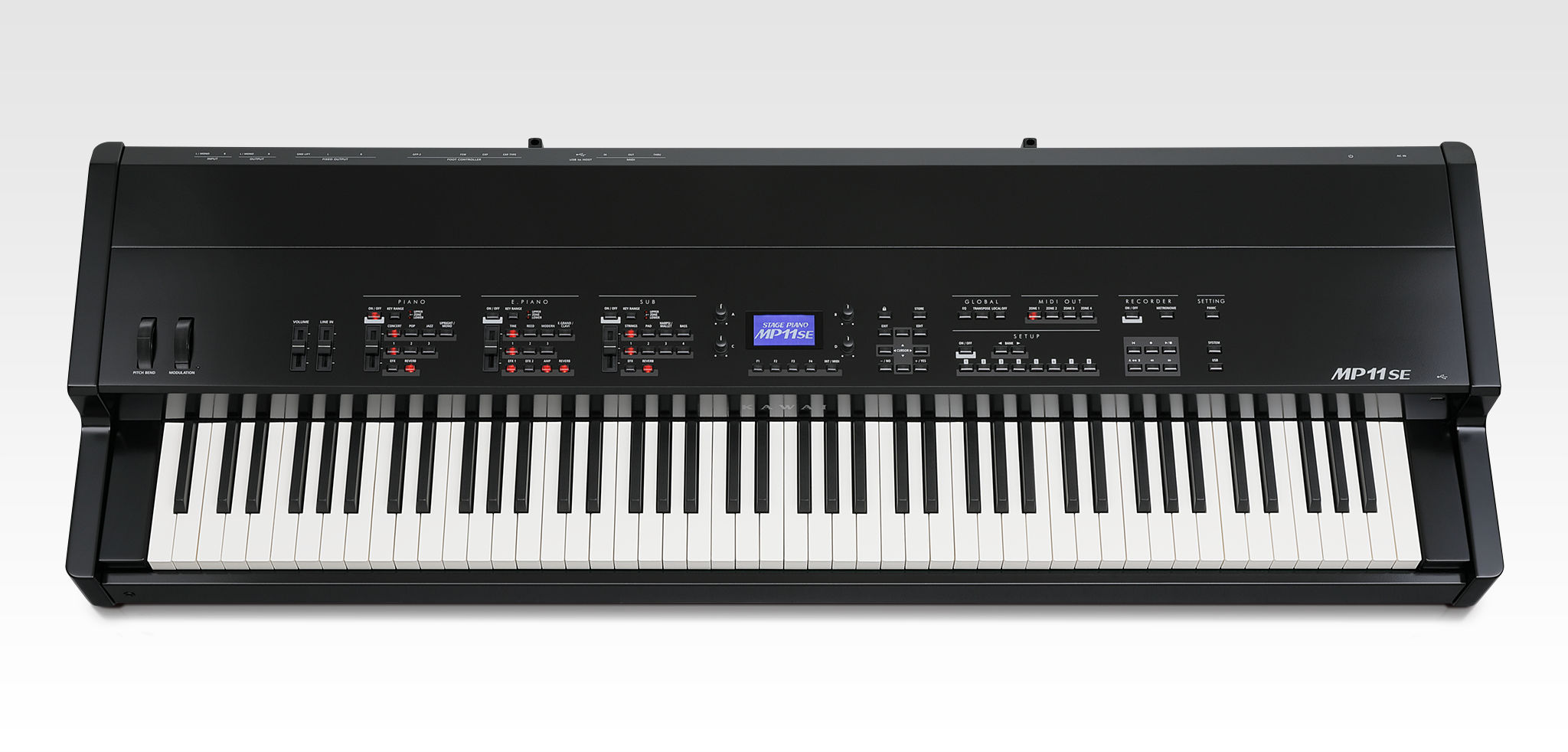
Often called "the pianist’s stage piano," this instrument prioritizes the physical mechanism of the keys above all else.
- Best for:“I refuse to compromise on keys” pianists who need a portable(ish) instrument for professional practice or performance.
- Why:It uses the Grand Feel action with extended wooden keys that pivot on a center pin-the same geometry found in acoustic grand pianos.
- Key Features:Class-leading Grand Feel wooden-key action; SK-EX, SK-5, and EX concert grand sounds; independent Piano, E.Piano, and Sub sections; 40 high-quality voices; 4-channel MIDI master controller; XLR balanced outputs & Line In with fader; Virtual Technician (22 parameters); GFP-3 triple pedal unit included; sturdy metal chassis with wooden side arms.
- Watch-outs:It is exceptionally heavy (72 lbs / 34 kg) and lacks a wide variety of non-piano sounds like brass or strings.
- Price Range:$3,500 – $3,700
26. Korg NAUTILUS (88-key)
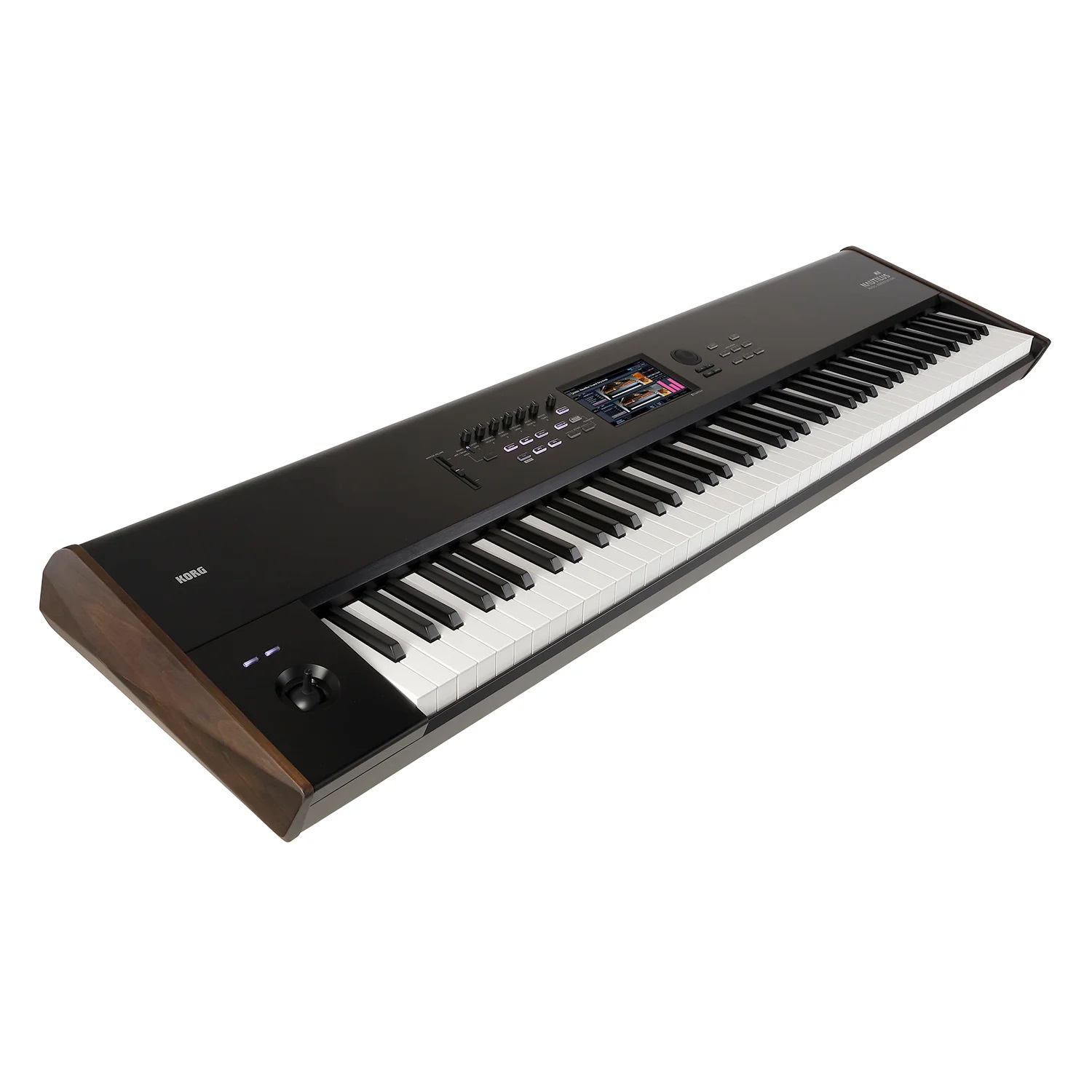
A flagship workstation that inherits the powerful nine-engine architecture of the legendary Korg Kronos.
- Best for:Composers and sound designers who need a world-class piano plus a full workstation ecosystem for song production.
- Key Features:9 sound engines (Piano, EP, Organ, Analog, FM, Physical Modeling); 7" Color TouchView; DYNAMICS & Realtime knobs; 16-track MIDI/Audio recording; Open Sampling; Smooth Sound Transition (SST); RH3 weighted action (88-key); 60GB SSD; 16 effects processors; dual arpeggiators/drum tracks.
- Watch-outs:The boot-up time is quite long (often over a minute), which can be a stressor for live performers during a power glitch.
- Price Range:$2,400 – $2,999
27. Akai MPK88
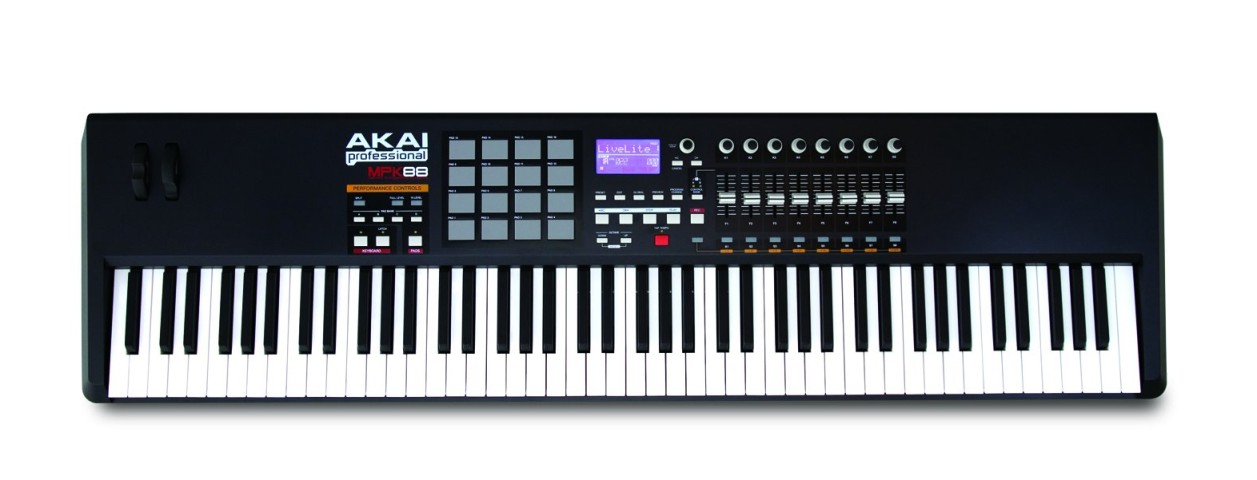
A "production powerhouse" that serves as the centerpiece of high-end studios, bridging the gap between a piano and a beat-making station.
- Best for:Producers who need hammer-action keys for piano parts but also want MPC pads for drum programming.
- Key Features:88 fully weighted hammer-action keys with aftertouch; 16 pressure-sensitive MPC pads (4 banks/64 total); 72 assignable Q-Link controls (knobs, faders, buttons); MPC Note Repeat, Swing, and built-in arpeggiator; Key Split/Layering; transport controls; MPC Full/16-Level; MIDI I/O & USB bus powered; robust metal chassis.
- Watch-outs:This is a MIDI controller only-it produces no sound on its own and must be connected to a computer or external sound module.
- Price Range: $340 – $450 (Secondary/Refurbished Market)
28. Yamaha Montage M8x
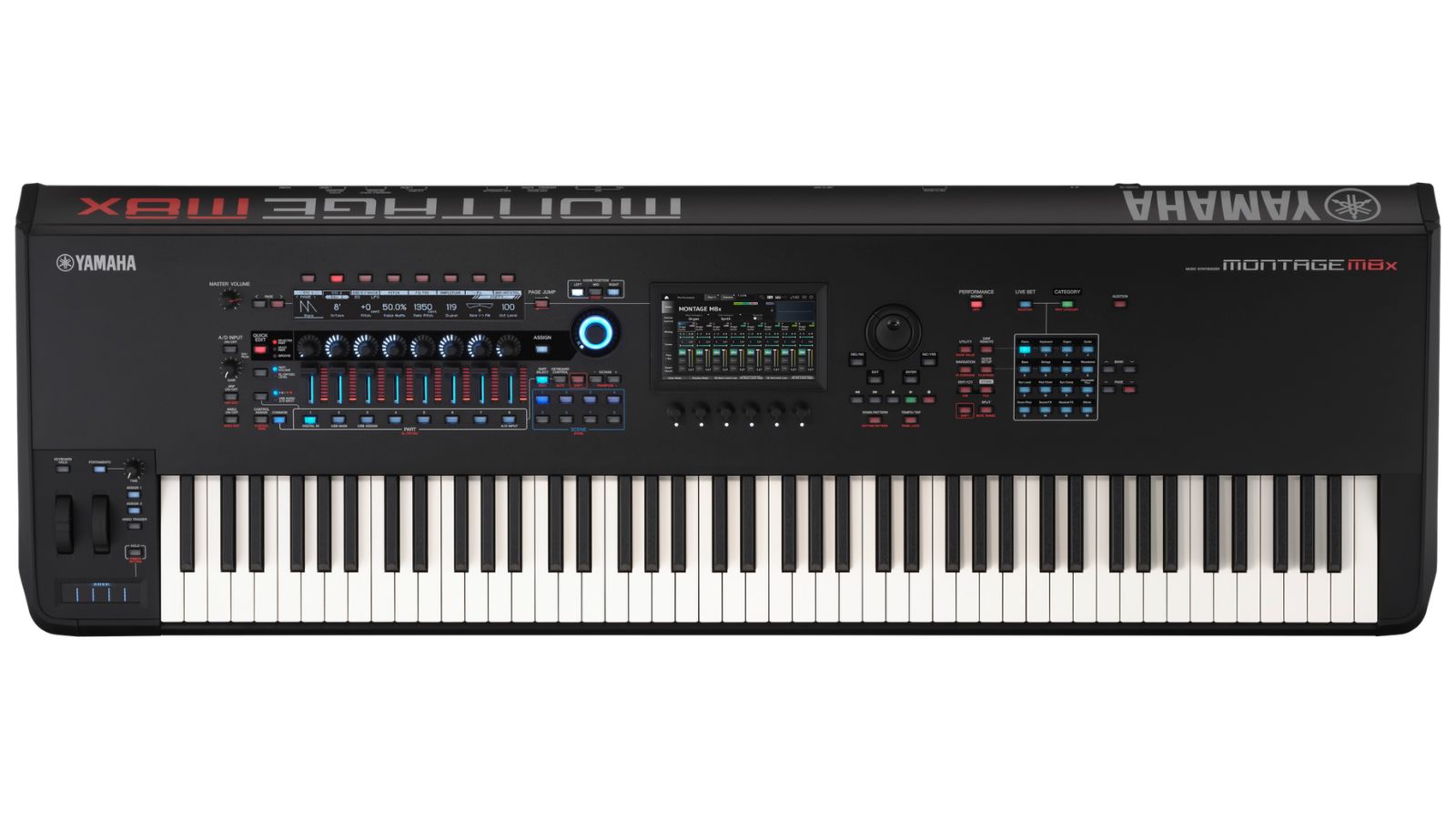
The ultimate synthesizer workstation, featuring a massive sound palette and a revolutionary new keybed technology.
- Best for:Professional synth players and modern composers who require expressive control over complex textures.
- Key Features:400-note total polyphony; Triple Sound Engines (AWM2, FM-X, and AN-X Analog Modeling); 88-key weighted action with Polyphonic Aftertouch; 5-segment ribbon controller; MIDI 2.0 high-resolution control; GEX action; Expanded Softsynth Plugin (E.S.P.) for DAW integration; 32-output/6-input USB audio interface; Seamless Sound Switching (SSS).
- Watch-outs:It is a massive investment in both cost and physical size; its power may be overwhelming for those just looking to "play piano."
- Price Range:$4,400 – $4,500
Takeaway:After you choose a category (stage vs workstation), brand strengths matter more than “top 10” hype-so let’s make brand trust practical.
The Best Acoustic Pianos (The Heritage Tier)
For those seeking the ultimate harmonic resonance, nothing replaces the vibrating strings of an acoustic instrument.
29. Yamaha U1
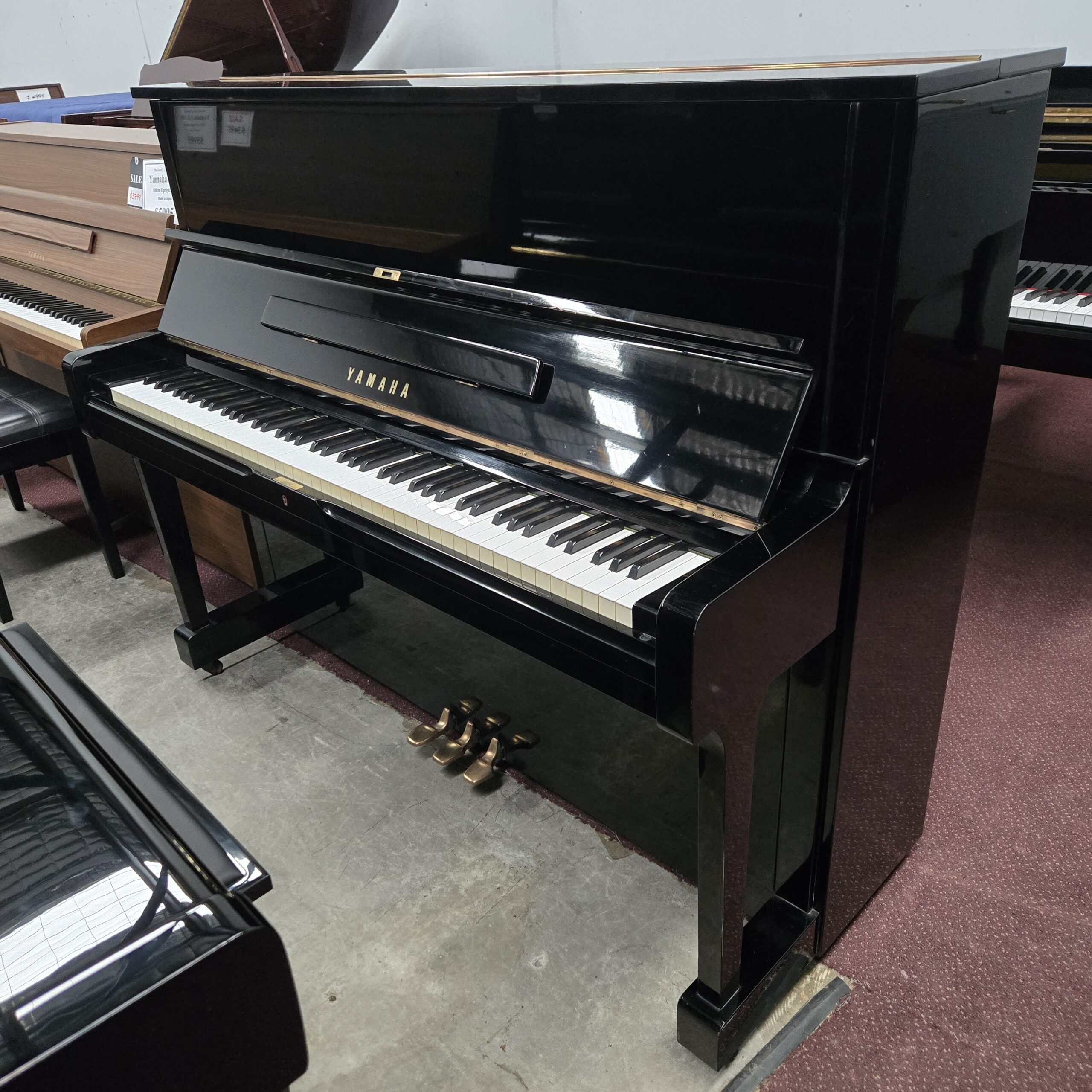
Often called "the perfect upright," it has been the world-standard choice for teaching studios, music schools, and professional homes for over half a century.
- Best for:Students and professionals who need a "forever" upright with a reliable, consistent touch.
- Why:Yamaha manufactures the U1 in Japan using premium spruce for the soundboard and a refined scale design that delivers a bright, clear, and full-bodied tone.
- Watch-outs:Because they are so popular, the used market is flooded with older units; ensure you are buying a "seasoned for destination" model to avoid wood-warping issues.
- Price Range:$11,900 – $14,500 (New)
30. Kawai K-500
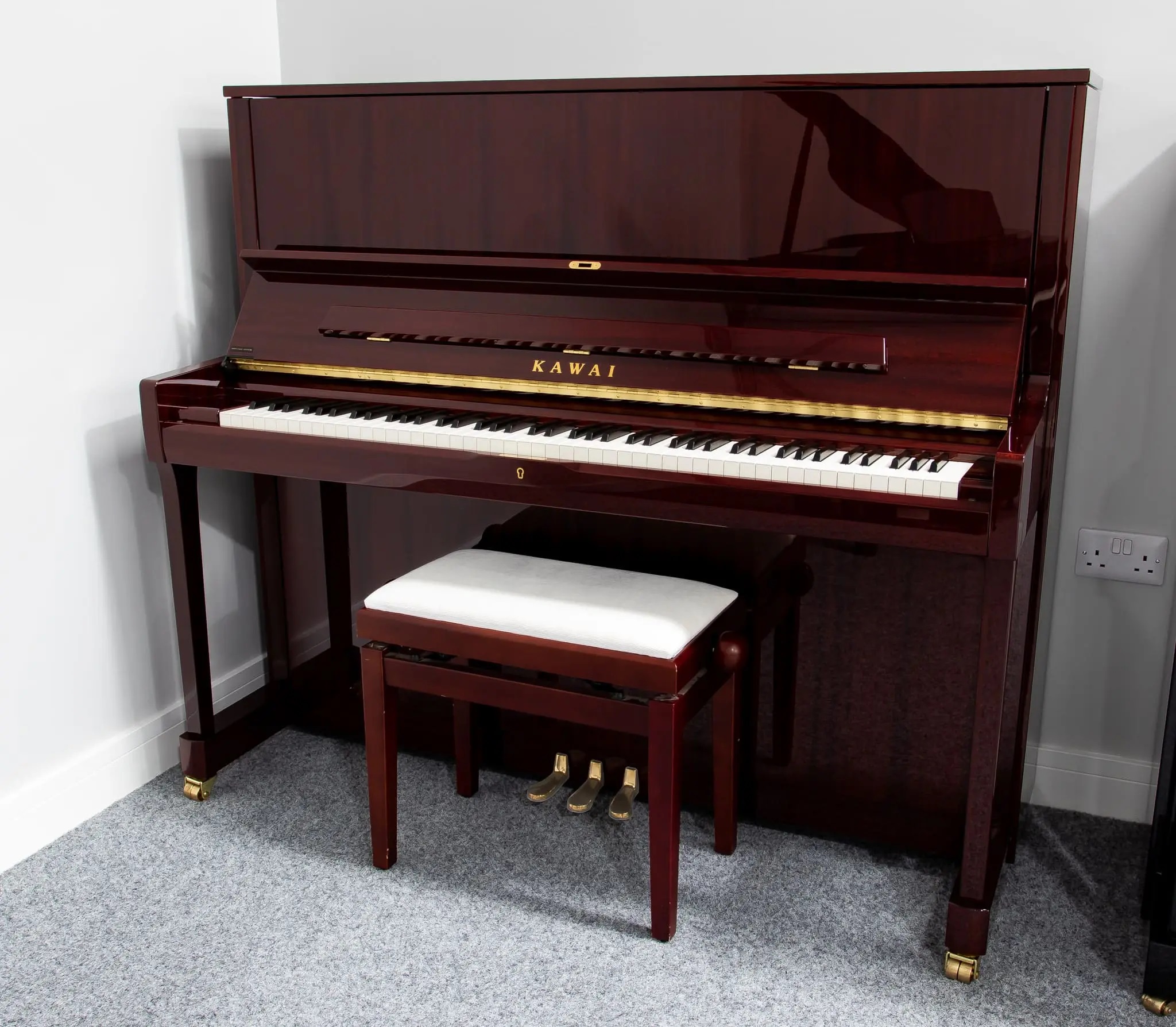
A professional upright known for its innovative Millennium III Action, which incorporates ABS-Carbon fiber to provide a faster, more stable touch.
- Best for:Players in varying climates who need an action that won't "sluggishly" react to humidity or dryness.
- Why:The carbon fiber components are virtually impervious to shrinking or swelling, while the 51" height provides a deep bass response that rivals small grand pianos.
- Watch-outs:The tone is generally "warmer" and "mellower" than a Yamaha; some players might find it lacks the "bite" needed for certain modern styles.
- Price Range:$14,895 to $16,595
31. Steinway Model S
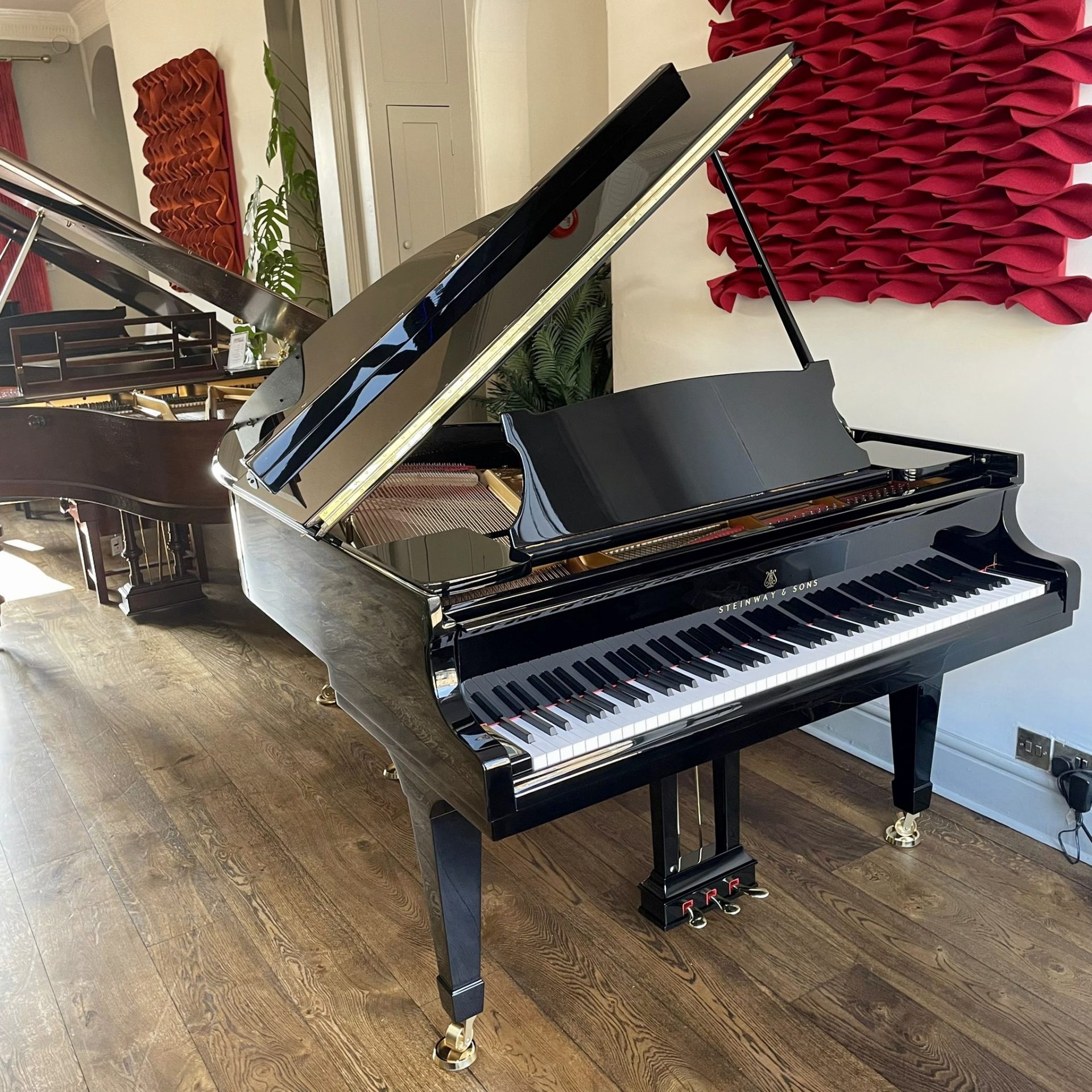
The smallest of the Steinway & Sons grands (5'1"), designed specifically to bring the legendary "Steinway Sound" into urban living spaces.
- Best for:Discerning pianists who want the prestige and "singing" tonal quality of a Steinway without the footprint of a concert grand.
- Why:It is handcrafted using the same premium materials as the larger models-including the Diaphragmatic Soundboard and the Hexagrip pinblock for tuning stability.
- Watch-outs:While it sounds massive for its size, physics still applies; the bass strings are shorter, so it cannot produce the same sub-bass thunder as a Model B or D.
- Price Range: $80,000 – $95,000 (New)
32. Yamaha B3
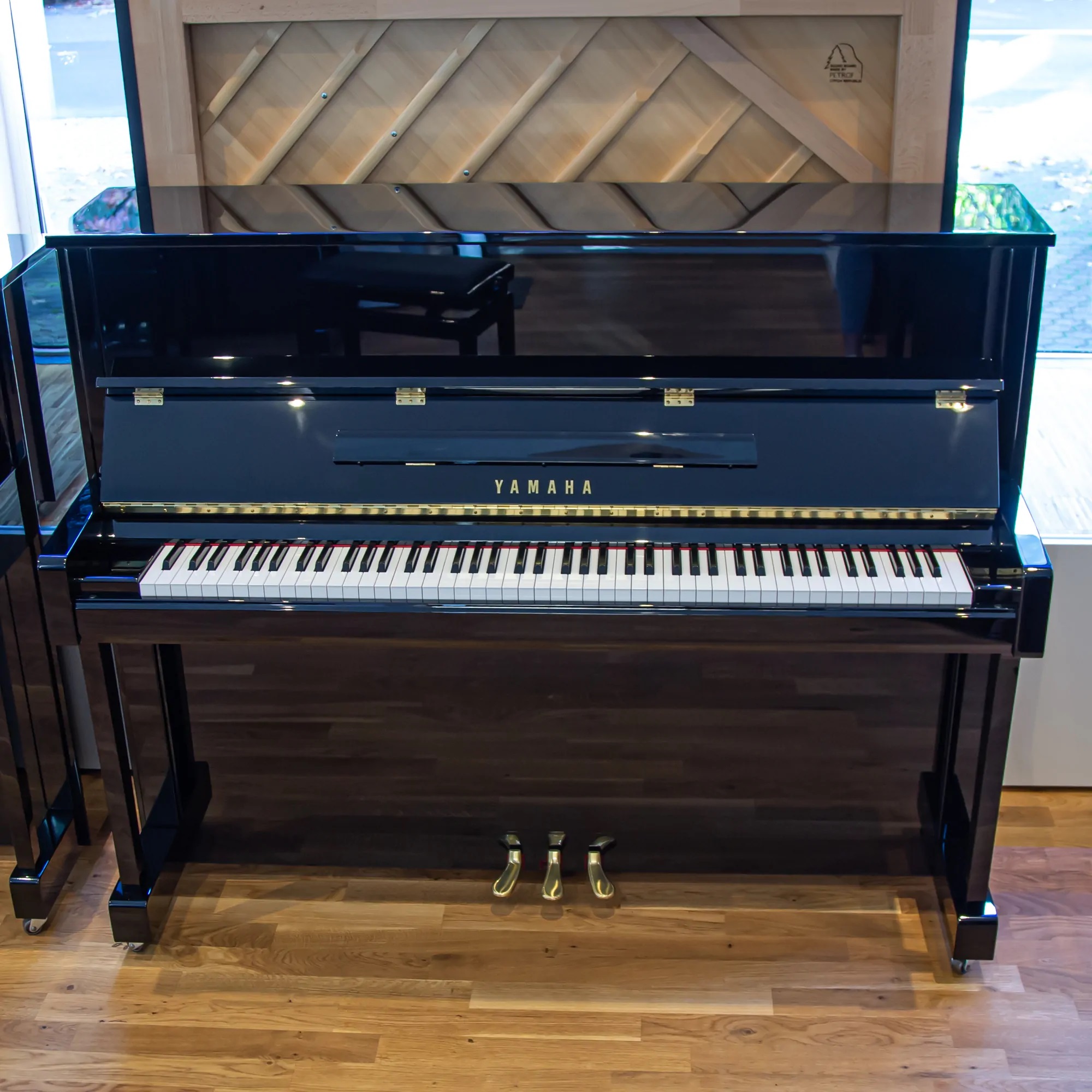
The flagship of Yamaha’s entry-level B-series, which uses the same frame and scale design as the professional U1 but at a more accessible price point.
- Best for:Serious beginners or budget-conscious home players who want U1-level performance without the "made in Japan" price tag.
- Why:It offers the height and string length of a professional piano (48") and features a solid spruce soundboard, providing a significant sonic jump over the smaller B1 and B2.
- Watch-outs:To lower the price, Yamaha uses slightly different cabinet materials and manufactures it in their Indonesian facility rather than Japan.
- Price Range:$8,500 – $10,500
33. Fazioli F212
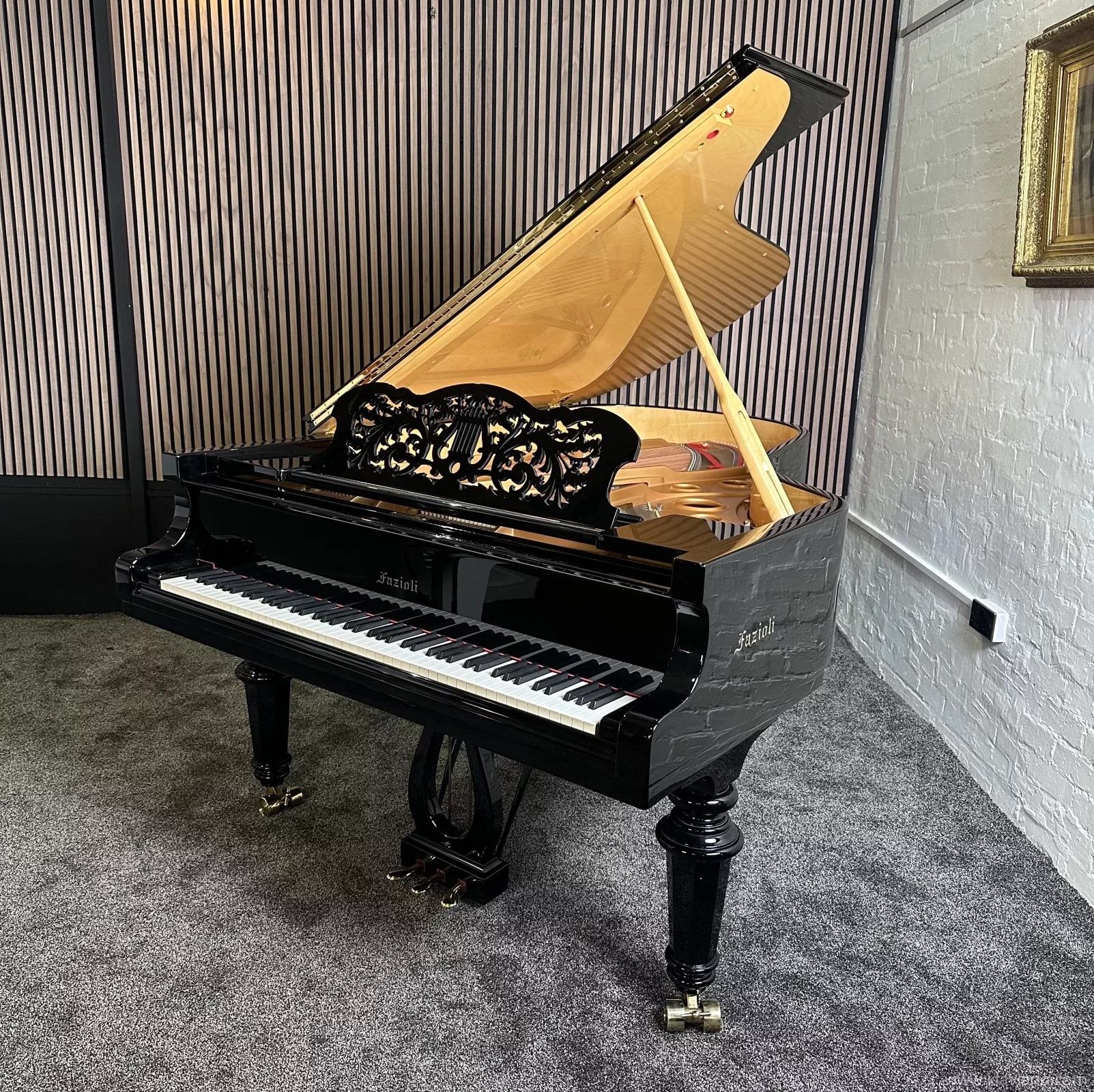
A boutique Italian masterpiece; this 7' grand is handcrafted in limited numbers, offering a level of clarity and power that is virtually unmatched in the industry.
- Best for:Concert-level artists and recording studios seeking a unique, high-definition alternative to the traditional German or American sound.
- Why:Fazioli uses red spruce from the Val di Fiemme (the same forest where Stradivarius sourced his violin wood) and offers a "fourth pedal" on some models to control soft dynamics without changing tone.
- Watch-outs: The price is astronomical, and the sound is extremely transparent-it will reveal every nuance of your playing, for better or for worse.
- Price Range:$195,000 – $215,000
Buying an acoustic piano from these brands is often a one-time purchase that can be passed down through generations.
“Acoustic reality check”:
- Humidity stability beats “brand prestige” for long-term health.
- A great technician can make a good piano feel great; a neglected great brand can feel awful.
- Plan moving + placement before purchase (stairs, door widths, floor load).
The Best Brands In 2026: Who Can You Trust?
Brand choice often dictates the "color" of the sound and the long-term reliability of the parts.
- Steinway & Sons:The industry benchmark. Known for a powerful, "growling" bass and a singing treble. Best for investment value.
- Yamaha:The safest "blind buy." Unmatched quality control and the most extensive service network in the world.
- Kawai:Kawai-the innovator. Their use of ABS-Carbon parts prevents the "sluggish" feel that old wooden pianos develop in humid environments.
- Casio:The value leader. In 2026, their Celviano and Privia lines compete directly with higher-priced brands in terms of slim design and tech integration.
- Bösendorfer:Bösendorferowned by Yamaha but built in Austria. These are "darker" sounding pianos, perfect for Romantic-era classical music.
- C. Bechstein:German precision. Known for a very clear, "bell-like" tone and incredible mechanical responsiveness.
- Sauter:Boutique German manufacturing. Their uprights use a unique "R2" double-escapement action that makes them play like grand pianos.
- Steingraeber & Söhne:Widely considered the finest "boutique" maker today. They innovate with carbon fiber soundboards and custom actions for disabled players.
- Blüthner: Famous for "Aliquot Stringing" (a fourth string in the treble that isn't struck but vibrates sympathetically), creating a shimmering, ethereal tone.
- Mason & Hamlin:The "American Heavyweight." Built with a Tension Resonator (massive steel ribs) that ensures the piano's crown and tone never collapse.
- Stuart & Sons:Australian disruptors. Stuart & Sonsbuild the world's only 108-key pianos (9 full octaves), using vertical string coupling for extreme sustain and clarity.
“Brands To Avoid” (a Practical Rule)
Avoid no-support situationsmore than “bad names”:
- No parts/service pathway in your area
- Grey-market imports with unclear history
- Used acoustics without inspection records
The Technician’s View:A common mistake is buying a “no-name” digital because it’s cheap. If velocity response is crude, the tone barely changes with touch-bad for musical development.
Alternatives If You Can’t Find These Exact Models
- Same category, same budget: prioritize action type, pedal support, and service/supportover brand name.
- If a model is discontinued: look for the newest equivalent in the same series(P-series, FP-series, etc.), then re-test the action.
How To Choose The Best Piano
If you are overwhelmed by specs, use this concise checklist to narrow your search in 60 seconds:
- Step 1:Define your goal (technique vs fun vs production).
- Step 2:Check environment (noise limits → digital; dedicated room + maintenance → acoustic).
- Step 3:The pivot test (short pivot = harder control deeper on the key).
- Step 4:Connectivity (Bluetooth/USB MIDI for apps, recording, and practice tools).
“Don’t skip this” step:Step 5: If you’ll record, plan your recording chain now.
A Simple In-store Feel Check (or On Delivery Day)
- Play very softly(pp) and see if notes still speak clearly.
- Play very loud(ff) and see if it stays controllable, not harsh.
- Do a slow scaleand check evenness key-to-key.
- Repeat one note quickly (trills) to feel repetition speed.
- Hold sustain and listen for muddy vs clearharmony.
- If you’ll use headphones: test hiss, comfort, and stereo image.
Frequently Asked Questions
Which Piano Brand Is Best?
No single brand is “best” for everyone; Yamaha, Kawai, Roland, and Casio each excel in different lanes (acoustic breadth, action feel, digital innovation, slim designs).
What Is A Good Quality Piano?
A good quality piano holds tuning well (acoustic), has predictable key response, and supports consistent practice without fighting you on touch, noise, or reliability.
Should I Buy Digital Or Acoustic As A Beginner?
If you need headphones, low upkeep, or portability, start digital; if you can manage maintenance and want full acoustic feedback, an upright can be worth it.
Do Beginners Need Weighted Keys?
If your goal is piano technique, yes-weighted/hammer action builds transferable control that synth and semi-weighted actions usually don’t.
What Is The Luxury Brand Of Piano?
“Luxury” usually refers to flagship concert-grand makers/lines (e.g., Steinway concert grands, Bösendorfer 280VC class, Fazioli concert grands, C. Bechstein concert grands).
What Is The Most Famous Piano In The World?
In many concert discussions, the Steinway Model D is the most commonly referenced “concert grand” icon.
Who Are The “Big 4” Piano Makers?
People use this phrase differently-today it often refers to major consumer makers across acoustic/digital categories (commonly Yamaha, Kawai, Roland, Casio), not a formal standard.
What Does “hammer Action” Mean?
Hammer action is a weighted key mechanism designed to mimic how acoustic piano keysresist and rebound when hammers strike strings.
Are Slim Digital Pianos Worse?
Not automatically-slim models can be excellent for space constraints, but you must test the action because compact designs can change leverage and feel.
What Piano Brands Should I Avoid?
Avoid “no support” situations: unknown brands with limited parts/service, or used pianos with unclear condition. Condition and inspection matter more than a list.
How Do I Inspect A Used Acoustic Piano Quickly?
Use a checklist to screen for obvious red flags, then hire a technician for the deeper mechanical evaluation.
Should I Hire A Piano Technician Before Buying Used?
Yes. PTG notes that the piano tech field is unregulated, and an RPT is credentialed via exams in tuning/repair/maintenance.
What Are The Best Old Piano Brands?
With older pianos, “best” depends on how it was maintained or rebuilt. A well-restored instrument can outperform a neglected “great brand.”
What Is The 80/20 Rule In Piano?
Most progress often comes from a small set of habits: slow practice, hands-separate work, and focused repetition of problem measures-not endless full run-throughs.
Is Donner A Good Piano Brand?
Donner is considered a strong "value" brand for beginners and hobbyists on a budget, but it is not typically ranked alongside heritage professional brands like Yamaha or Roland.
What’s The Quickest Way To Choose From This List?
Pick your lane (digital vs acoustic), insist on 88 weighted keys if learning piano, then choose the model that best fits your space and practice schedule.
Final Thoughts
If you want the safest “first piano” choice, prioritize 88 weighted keys, a stable stand, and a realistic practice setupover flashy features. Most people make faster progress with a piano that’s easy to practice daily-especially with headphones.
If you’re moving up the ladder, upgrade in this order: action feel → pedals → sound/amp → cabinet/build. That path keeps your technique improving instead of chasing specs.
If you’d like, you can use the shortlist above as your test plan: pick 3 models, do the 60-second feel test on each, and the right choice usually becomes obvious.
If you’re choosing between two close options, test them with the same short set of pieces from best piano songsso your comparison is apples-to-apples.